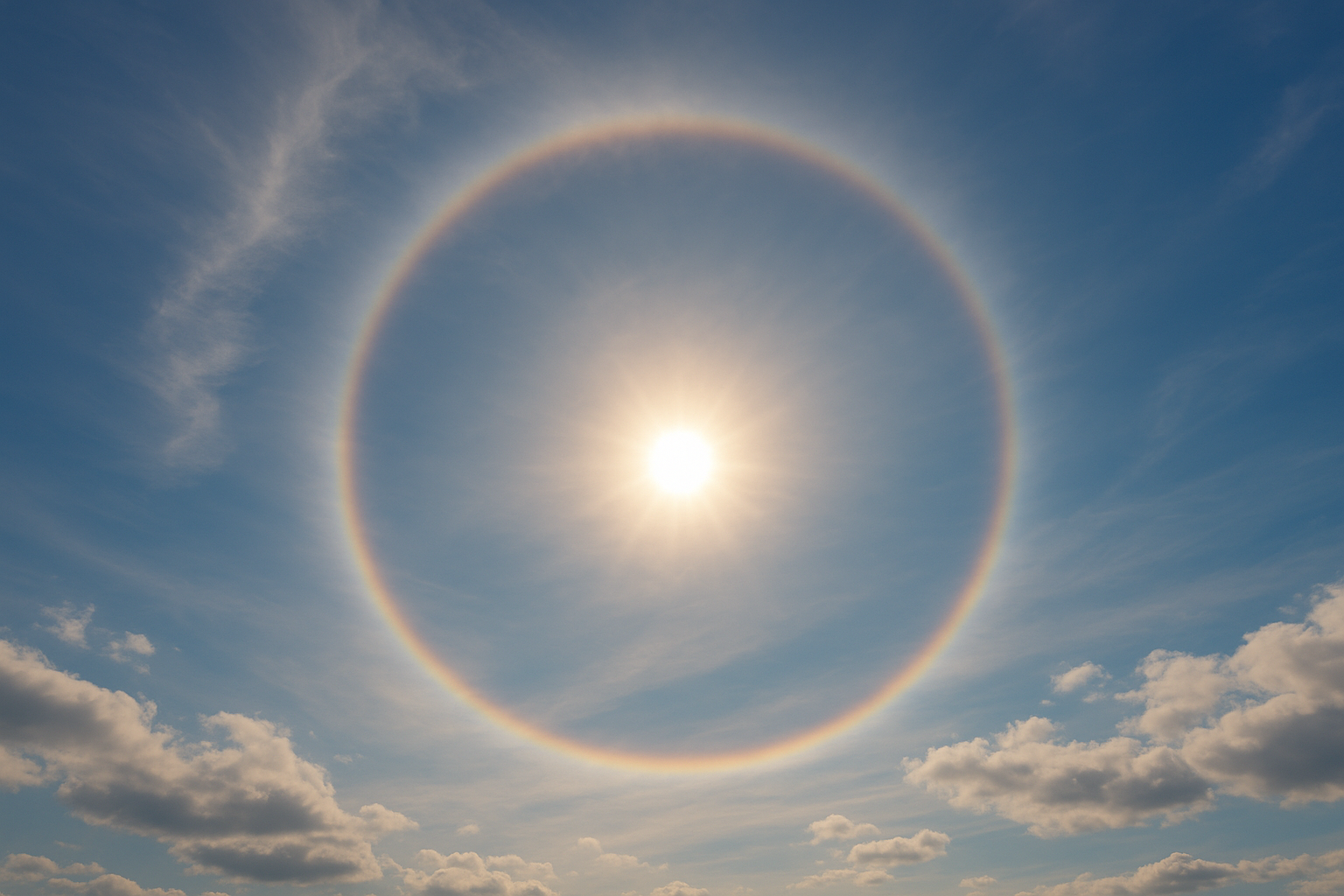
Winter is a magical time of year, blanketing the world in a white frost that sparkles like the heavens themselves. But among the swirling snowflakes and icy gusts, some say that mystical beings are at work, playing light-hearted tricks on unsuspecting humans. Below, we’ll explore the whimsical phenomenon known as the “Winter Halo Trick” and how you can become a savvy spotter of what some purport to be angelic pranks.
What is a Winter Halo?
While folklore often attributes halos to the playful activities of angels, scientifically, a winter halo is an atmospheric optical phenomenon formed by ice crystals in the upper atmosphere. According to the Atmospheric Optics website, these halos take on the shape of rings around the sun or moon, appearing when light interacts with these ice crystals. Common types include the 22-degree halo and the sundogs, which are bright spots flanking the sun.
Angel Pranks or Optical Illusions?
- The 22-degree Halo: This circle of light, 22 degrees away from the sun or moon, is often the most well-known halo.
- Sundogs: These colorful spots appear to either side of the sun and are often thought to be mischievous glimmers in the eyes of winter spirits.
- Pillars of Light: At sunrise or sunset, these vertical shafts appear, attributed to cones of light cast by heavenly guardians.
It’s easy to see why these breathtaking displays have inspired supernatural theories. After all, what better way for angels to communicate their presence than through breathtaking light patterns?
“Winter halos… are the products of ice crystals and the whims of angels, sweeping their halos across the sky to remind us of the harmony between nature and the divine.” – An anonymous proverb
Spotting Angel Pranks
With just a bit of imagination, even skeptics might enjoy the notion of spotting angelic pranks during winter halo phenomena. Here’s how to best marvel at these playful tricks unleashed by our spectral companions:
- Timing and Weather: Keep an eye on the weather forecast for cold, clear days with a sun or moon presence and high cirrus clouds.
- Location: Choose a spot away from light pollution for the best view of these natural wonders—open plains or hilltops work well.
- Equipment: No special tools are needed, though a pair of sunglasses will help gaze toward the sun safely when halos appear during daylight.
- Company: Share the experience with others who can spot different forms and make the sighting more animated.
The Science of Playfulness
Back in the realm of scientific speculation, these halos aren’t merely aesthetic quirks. They remind us of the beautifully dynamic environment above us, one where even the smallest moisture particles play a role in an ephemeral ballet. According to EarthSky, these optical phenomena serve as a reminder of nature’s interconnectedness, its capacity to surprise and delight humans across generations.
A Winter’s Tale of Heaven’s Humor
For some, belief in angels adds a mystical layer to winter halos, transforming a natural occurrence into a seasonal picnic of celestial joy. Whether or not you subscribe to this supernatural perspective, you might find comfort in knowing that even within the normally severe visage of winter, there lies the potential for whimsy and wonder—a collaboration between nature’s grit and grace.
So the next time you’re chilled by frosty breath and frozen fingertips, look up—perhaps it’s more than just ice and atmosphere. Perhaps, just perhaps, it’s a quiet trick, a gentle nudge from the universe reminding us all that magic and mystery are mere glances away, waiting in winter’s embrace.
Comments