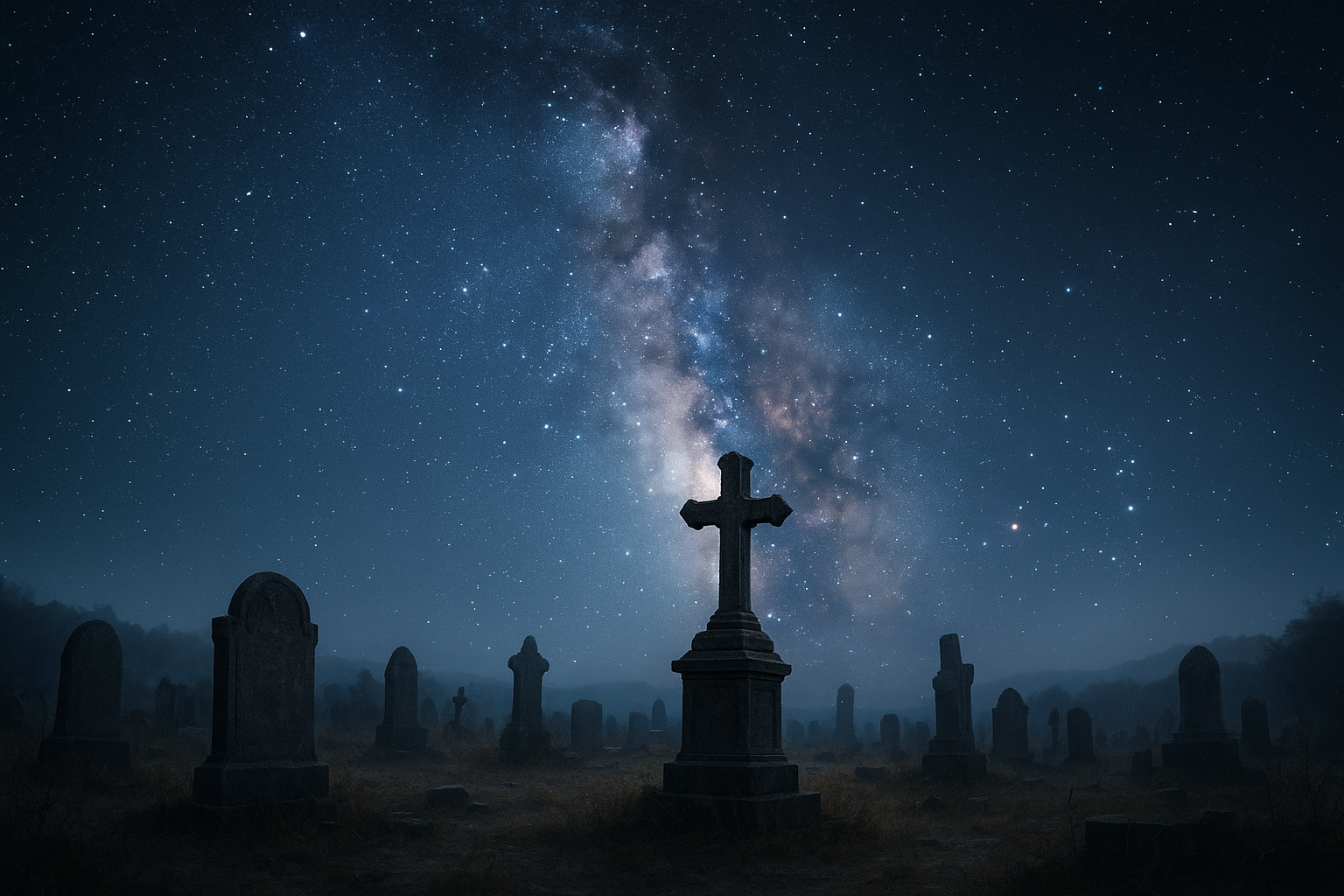
Starlit Graves: Mythic Death Across the Cosmos
Throughout human history, the cosmos has inspired countless myths and stories, often portraying it as a realm of mystery and power. In many cultures, the stars serve not only as navigational beacons or markers of time but also as the resting places of gods, heroes, and spirits. This mythic intertwining of celestial phenomena and death creates a rich tapestry of beliefs that reflect both our awe of the universe and our understanding of mortality.
The Celestial Sphere: A Mythic Perspective
The night sky, with its expanse of stars, has long been interpreted as a cosmic stage where the stories of life and death unfold. Through their observations, ancient cultures developed intricate mythologies that attributed spiritual significance to the constellations and planetary movements.
Myths of Cosmic Heroes and Heroines
- Orion: In Greek mythology, Orion was a giant huntsman whom Zeus placed among the stars as the constellation Orion after his death. Greek mythology often immortalized heroes in the sky, symbolizing their eternal presence and influence. “Orion, the great hunter, eternally pursues the Pleiades across the sky,” writes Encyclopaedia Britannica.
- Chilam Balam: The Maya believed that deceased kings and heroes ascended to the heavens and became stars. The sacred book, Chilam Balam, records stories of these celestial transformations, mirroring their enduring legacy.
- Sirius and Anubis: The ancient Egyptians connected the star Sirius to Anubis, the god of death. They viewed Sirius’s heliacal rising as a symbol of rebirth and renewal, coinciding with the annual flooding of the Nile and a new life cycle.
Cosmic Judgments and Afterlife Destinations
Various cultures have envisioned the cosmos as both a physical and spiritual realm. Here, cosmic events often coincide with beliefs about judgment, reward, and punishment in the afterlife.
“The Hopi believe that upon death, the spirit travels west to the ‘Afterlife World.’ As the spirit journeys, it is guided by the stars, which act as spirits of ancestors leading the deceased on their path,” explains Astronomer Bryan Bates in his study of Native American celestial navigation.
- Egyptian Duat: The Duat was the realm of the dead and a dimension within the sky for the Egyptians. This journey through the night sky was fraught with peril but guided by celestial markers such as the Milky Way.
- Nordic Valhalla: In Norse mythology, those who die in battle are chosen by Odin to reside in Valhalla, often envisioned as a place in the heavens. This realm of warrior spirits ties the concept of heroic death to a celestial afterlife.
Modern Interpretations and Symbolism
As our understanding of the universe has evolved, so has the symbolic use of celestial imagery in literature, art, and popular culture. Modern interpretations often reflect a blend of ancient mythologies with contemporary scientific discoveries.
- Stardust and Rebirth: Modern astrophysics posits that the elements within our bodies were formed within stars. This idea resonates with the notion of cosmic rebirth and aligns with ancient philosophies. As Carl Sagan famously said, “The cosmos is within us. We are made of star-stuff.” This view reinforces the mythic cycle of death and rebirth on a cosmic scale (Sagan, Smithsonian Magazine).
- Literary Themes: Many writers and poets draw upon these cosmic themes as metaphors for existential contemplation. Consider the works of Dante Alighieri, whose Divine Comedy portrays the heavens as both a literal and allegorical representation of the soul’s journey.
Conclusion: The Eternal Dance of Life and Death
The universe, with its grand and mysterious vistas, inspires a profound contemplation of life and death. Across cultures and time, humanity has turned its gaze upward, seeking narratives in the stars to make sense of existence and its inevitable end. This search for understanding and meaning echoes the eternal dance of life and death, woven into a cosmic fabric that continues to captivate our imaginations.
In embracing these myths, we connect with a universal heritage—a shared human experience that transcends individual cultures and speaks to the interconnected nature of life, death, and the cosmos itself. Whether seen as graves or cradles, the stars compel us to ponder our place in the universe and the stories we create to explain it.
Comments