Category: Uncategorized

  • Shadows of Thought – Philosophical Explorations in Silence

    Shadows of Thought – Philosophical Explorations in Silence

    In the cacophony of modern life, silence is a rare commodity. Yet, for philosophers and thinkers across the ages, silence has been a profound source of reflection and insight. The tranquility found in silence offers an untouched landscape, inviting deeper contemplation and self-awareness. This exploration into the shadows of thought reveals much about human consciousness and existence.

    The Philosophy Behind Silence

    Silence, far from being an absence of noise, can be seen as a space rich with potential. As Ludwig Wittgenstein, the Austrian-British philosopher, once stated, “Whereof one cannot speak, thereof one must be silent.” Wittgenstein’s approach suggests that silence is not just the absence of language, but a border for the limits of expression and understanding. Within these silent gaps lies the potential for new insights and truths to emerge.

    The Psychological Benefits

    Beyond its philosophical implications, silence has substantial psychological benefits. It provides a space for mental reflection, enhancing our ability to concentrate and make decisions. As researchers have pointed out, silence can reduce stress and foster a state of calm. In silence, we are able to listen more attentively to the subtle cues of our surroundings and our innermost thoughts.

    • Stress Reduction: A study reported in Environmental Health Perspectives highlights that two minutes of silence can be more relaxing than listening to music.
    • Enhanced Creativity: Silence allows the mind to wander, fostering creativity and innovative thinking.
    • Emotion Processing: In the Psychology Today, it’s noted that silence can aid in processing emotions, providing clarity and insight.

    Silence in Practice

    Practicing silence can be as simple as incorporating moments of quiet into daily routines. This can include silent meditation, mindful walks in nature, or even dedicating a few minutes before bedtime to sit quietly. These practices not only cultivate peace but also encourage philosophical reflection, as famously suggested by Jean-Paul Sartre, who found in silence a source of existential clarity.

    “In the silence of the heart, listening gives rise to understanding” – this transformative power of silence is echoed in many philosophical traditions, offering a path toward deeper self-realization.

    As we navigate through a world filled with relentless stimuli, the sanctity of silence becomes even more evident. It is in these pauses that we find the shadows of our thoughts, revealing the untouched depths of human consciousness. Embracing silence, we discover not only inner peace but also a gateway to profound philosophical and psychological exploration.

  • Twilight Aesthetics – Beauty in the Ephemeral and Dark

    Twilight Aesthetics – Beauty in the Ephemeral and Dark

    The allure of twilight aesthetics lies in its ability to capture the fleeting beauty of dusk and the enchantment found in darkness. Dominated by shadowy blues, soft purples, and muted grays, the twilight aesthetic creates a world that is both inviting and mysterious.

    At the heart of this aesthetic is its transient nature. Twilight signifies a time when day shifts into night, a metaphor for transformation and reflection. As Virginia Woolf beautifully articulated, “The dusk runs swiftly in the vale… like the other moment, returns again no more.” This captures the essence of twilight as a time that is as elusive as it is profound.

    Elements of Twilight Aesthetics

    • Color Palette: The color palette of twilight aesthetics includes indigo, violet, deep blues, and soft pinks. These colors evoke feelings of calm and introspection.
    • Natural Elements: Images of the sky during the golden hour, silhouetted trees, and shimmering water surfaces are a staple in twilight visuals.
    • Lighting: Dim lighting that mimics the gentle illumination of dusk adds a mysterious charm. Candlelight and fairy lights can recreate the look and feel of twilight indoors.

    Impact on Popular Culture

    This aesthetic has seeped into various facets of popular culture. It can be seen in everything from fashion and photography to home decor and film.

    “Twilight is a time of pause when nature changes her guard. The sun’s angle softens the edges of the earth; the atmospheric dusts that obscure the paths of the upper air become visible. Twilight brings the first stars into view.” – The New York Times

    The twilight aesthetic often finds its way into the world of fashion. Flowy fabrics, moody florals, and starry embellishments epitomize the ethereal essence of this style. Designers frequently draw inspiration from the delicate interplay of light and shadow, crafting pieces that evoke the serenity of dusk.

    Twilight inspired fashion runway
    Twilight inspired fashion on the runway showcases an interplay of light and shadow.

    Symbolism and Emotional Resonance

    Symbolically, twilight is associated with mystery, endings, and new beginnings. It’s a visual representation of transition, much like an emotional bridge between wakefulness and sleep, rationality and dreams. As The Guardian suggests, “twilight offers a space to escape into the beauty of the unknown” (source available here).

    Ultimately, twilight aesthetics invite us to pause, to breathe, and to find comfort in the ephemeral beauty of life’s transitions. As we witness the day bidding farewell, we are reminded of the serene beauty that temporality offers—a beauty that the twilight aesthetic masterfully encapsulates.

  • The Occult Labyrinth – Navigating Hidden Knowledge

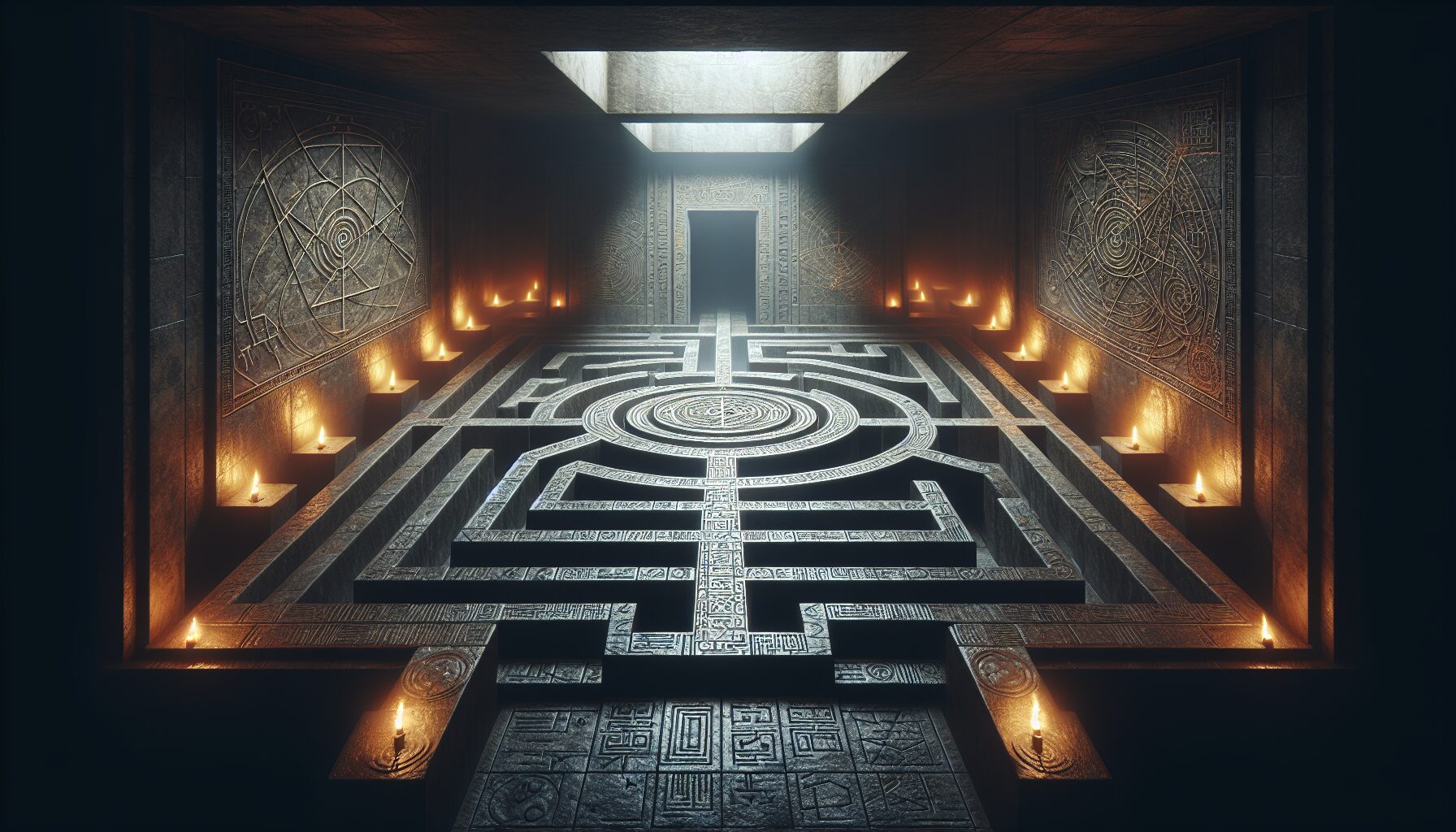
    The Occult Labyrinth – Navigating Hidden Knowledge

    Throughout history, humanity’s fascination with the mysterious and unknown has spawned a labyrinth of knowledge often concealed from plain sight. Known as the occult, this body of esoteric wisdom has been both revered and reviled, conjuring images of clandestine rituals and shadowy cabals. However, beyond the sensationalism, lies a profound and intricate world that seeks to unearth the unseen. This article navigates through the maze of the occult, exploring its roots, philosophies, and enduring allure.

    Origins and Evolution

    The term occult originates from the Latin word occultus, meaning hidden or secret. Historically, the occult has encompassed a wide range of practices and beliefs, including alchemy, astrology, hermeticism, and magical societies. While its exact origins are murky, traces of occult practices can be found scattered throughout ancient civilizations, from the mystical pyramids of Egypt to the arcane texts of Mesopotamia.

    During the Renaissance, the occult experienced a revival as scholars began to seek knowledge beyond the material world. Influential figures, such as Paracelsus and John Dee, emerged during this period, blending scientific inquiry with mystical exploration. As noted in Cambridge Core, “The Renaissance occult philosophy merged with scientific advancements, heralding a paradigm shift that challenged conventional thinking.”

    The Philosophical Underpinnings

    At its core, the occult is deeply philosophical, often questioning the nature of reality, the existence of higher dimensions, and the potential for human transformation. It is rooted in the belief that hidden forces shape our universe, forces that can be understood and harnessed through dedicated study and practice.

    “The real voyage of discovery consists not in seeking new landscapes, but in having new eyes.” — Marcel Proust

    Such perspectives highlight the occult’s emphasis on personal insight and spiritual awakening. The teachings often revolve around the concept of enlightenment, the attainment of profound understanding that transcends ordinary perception. This echoes ancient philosophies, such as Gnosticism, which propose that true knowledge is esoteric and accessible only to those who seek it with sincere intention.

    Alchemy: The Art of Transformation

    One of the cornerstones of the occult is alchemy, an age-old tradition that seeks the transmutation of base elements into noble substances. While often misconstrued as a quest for material wealth, alchemy is essentially a spiritual journey aimed at the purification and perfection of the soul.

    According to History.com, “Alchemy’s goals were not primarily physical; rather, they were spiritual and personal transformation.” This dual nature is depicted in the symbolic quest for the Philosopher’s Stone, a mythical substance that grants eternal life and divine wisdom.

    Astrology: Celestial Influences

    Astrology is another prominent facet of occult knowledge. By studying celestial bodies, astrologers purport to discern patterns and influences in human affairs. This practice dates back to the Babylonians and was later refined by the Greeks, who integrated it with astronomical observations.

    Skeptics often dismiss astrology as pseudo-science; however, its popularity persists, with many individuals seeking guidance in horoscopes and birth charts. The Guardian remarks that “In spite of modern skepticism, astrology endures, partly because it provides a sense of control and comfort for many.”

    Hermeticism: The Divine Connection

    Rooted in the teachings attributed to Hermes Trismegistus, Hermeticism is a pivotal influence on the occult. This spiritual tradition is characterized by the belief in a divine unity and the interconnectedness of all things, encapsulated in the maxim, “As above, so below.” Hermetic philosophy suggests that the microcosm and macrocosm reflect each other, emphasizing the potential for humans to attain divine consciousness through introspection and alignment with the cosmos.

    Occult Societies and Modern Movements

    Secret societies and organizations have played a significant role in the propagation of occult knowledge, often shrouding their activities in mystery and discretion. Groups like the Rosicrucians and the Hermetic Order of the Golden Dawn have been instrumental in preserving and developing esoteric traditions.

    In contemporary times, the occult has experienced a resurgence through new-age movements and alternative spirituality, influenced by modern literature, media, and the internet. The democratization of information has allowed these ancient teachings to reach a broader audience, encouraging a renewed interest in personal empowerment and spiritual exploration.

    The Continuing Allure

    In a world dominated by technology and empirical science, the enduring allure of the occult lies in its promise of deeper understanding and inner transformation. As a counterpoint to the materialist worldview, it invites seekers to question the established norms and explore the frontiers of consciousness.

    The occult’s paradoxical nature—being both intangible yet profoundly impactful—ensures that it remains a source of intrigue and fascination. As long as there are questions about the universe’s mysteries and the depths of the human soul, the occult will continue to captivate imaginations and inspire quests for hidden knowledge.

    Conclusion

    The labyrinth of the occult is vast, its pathways winding through the annals of history and into the hearts of those yearning for meaning beyond the observable. While not without its critics and controversies, the occult provides a unique perspective that complements the quest for understanding. Ultimately, it is the courage to navigate this labyrinth, armed with curiosity and an open mind, that yields the treasure of enlightenment.


  • Necropolis Ethics – Moral Lessons from Decay

    Necropolis Ethics – Moral Lessons from Decay

    Necropolis Ethics: Moral Lessons from Decay

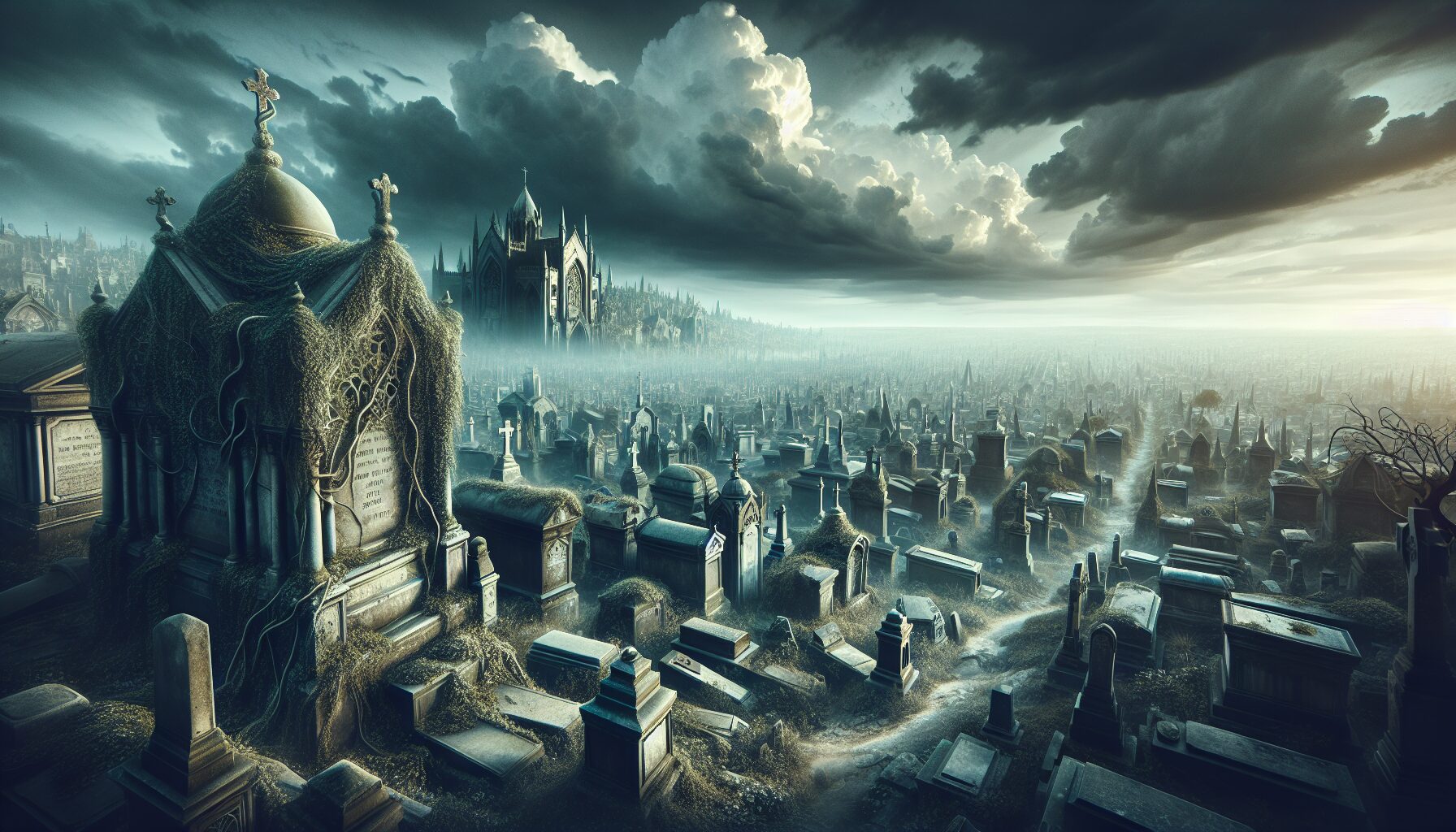
    The graveyards and necropolises that dot our landscapes are more than mere resting places for the dead. They are repositories of human history, culture, and morality. As places where the end of life meets the unyielding reality of nature’s cycle, these areas offer profound moral insights into life and death, identity, cultural memory, and environmental stewardship. This article delves into these themes, exploring the rich tapestry of ethical lessons woven into the decay and serenity of these sacred places.

    The Gravity of Impermanence

    Necropolises confront us with the stark reality of life’s impermanence. The philosopher Michel de Montaigne once remarked, “To philosophize is to learn to die.” Graveyards compel us to embrace mortality as an integral part of life. This acceptance fosters a mindset where one learns to cherish the present and live meaningfully.

    The realization that our time is finite can significantly influence our daily actions, provoking a moral re-evaluation of how we choose to spend our lives. As Seneca writes in On the Shortness of Life, “It is not that we have a short time to live, but that we waste a lot of it.” Graveyards teach us the value of each moment, urging us to cultivate virtues such as kindness, courage, and gratitude.

    Identity Beyond Death

    Engraved headstones tell stories of lives lived and lost—stories that transcend death and decay. These markers serve as permanent reminders of each individual’s impact on their community and loved ones. The inscriptions narrate tales not just of personal accomplishments, but also of collective cultural values. They challenge us to consider what our own legacy will be, putting into question the kind of moral and ethical values we wish to imprint on the world.

    Maintaining Historical Integrity

    • Preservation: Restoring and maintaining graveyards help to preserve historical narratives and the lessons they hold.
    • Respect for Diversity: Respecting tombstones of various cultures and religions fosters a multicultural appreciation essential for today’s global society.

    By protecting these relics of the past, we allow current and future generations to engage with history, reminding them of the shared human experience that transcends the boundaries of time and space.

    Cultural Memory and the Communal Conscience

    Cemeteries are a collective record of cultural memory. They embody rituals and traditions around death, providing insight into how societies perceive mortality. For instance, the ancient Egyptians’ intricate burial practices reflected profound beliefs in the afterlife, mirroring their moral worldview and societal values.

    Dr. Elizabeth Wickham, a noted anthropologist, stated, “Necropolises serve as both mirrors and architects of cultural memory. They reflect society’s ethics and, through this reflection, actively shape ongoing cultural and moral frameworks.”

    By engaging with these communal spaces, we deepen our understanding of both ourselves and the broader cultural narratives that influence our ethical compass. In pausing to reflect on these practices, we are reminded that the ethical customs surrounding death deeply influence the living. They ask us to judge whether these customs are still relevant, compelling us to either cherish or challenge the legacies left behind.

    Environmental Ethics of Necropolises

    As we progress toward more ecologically conscious practices, necropolises ask us to consider the environmental ethics of traditional burial practices. Traditional funerals can have a large ecological footprint due to formaldehyde embalming, cement vaults, and extensive land use. Modern alternatives are emerging:

    • Green Burials: This method avoids hazardous products and promotes the decomposition of bodies in a way that is harmonious with the earth.
    • Conservation Cemeteries: These preserve habitats and natural landscapes, blending burial needs with ecological conservation efforts.

    Such practices refrain from disrupting ecosystems, instead fostering a symbiotic relationship with the environment. These emerging alternatives encourage contemplation on how our final acts can align with a broader ethic of care for the planet, illustrating how our decisions have implications that extend beyond our lifespan.

    Conclusion: Living Through Death’s Lessons

    Often overlooked in daily discourse, necropolises are rich educational landscapes offering various ethical lessons. In reflecting on the decay they house and the stories they preserve, we perceive a broader understanding of morality shaped by impermanence, cultural memory, identity, and environmental stewardship. By embracing these lessons, we can enhance the virtues of empathy and awareness in our lives, perpetuating stories of not just how people lived but how they chose to be remembered.

    Dotted with the imprints of history and laden with the weight of moral inquiry, these cities of the dead demand not just quiet reverence but active engagement with what it truly means to live well and be remembered with honor.

  • Angels of Silence – Hidden Guides in Myth and Spirit

    Angels of Silence – Hidden Guides in Myth and Spirit

    Throughout history, the idea of angels as guiding spirits has captivated the human imagination. These often silent yet omnipresent beings are believed to assist, protect, and guide individuals on their journey through life. The concept of the “angels of silence,” in particular, suggests a more enigmatic group among these celestial guides—entities that work quietly, without acknowledgement or fanfare, adapting to the needs of the individual.

    Angels in Religious Texts

    Many religious traditions have mentioned angels guiding humanity. In Christianity, angels are frequently seen as messengers of God, with famed archangels like Michael and Gabriel delivering divine messages. However, not all angels announce their presence with grand gestures or fiery rhetoric.

    “Are not all angels ministering spirits sent to serve those who will inherit salvation?”

    Hebrews 1:14, The Holy Bible

    This passage suggests that many of these guiding spirits operate subtly, almost invisibly, yet profoundly influence human lives.

    The Silent Guards in Mythology

    Beyond religious texts, various mythologies around the world discuss spirits and entities that guard silently. In Hinduism, for example, the Devas are considered to be divine beings watching over and subtly guiding humans. Similarly, in Celtic mythology, there are tales of the Aos Sí or “The People of the Mounds,” mystical beings often considered guardians of the earth and protectors of humanity.

    These guardians rarely make themselves known in loud declarations, preferring methods that can be described as an angelic “whisper,” guiding intuition and fostering spiritual insight.

    The Role of Angels in Modern Spirituality

    In contemporary spiritual practices, the concept of angels extends to personal guides and protectors. Many individuals claim to feel the influence of such beings, describing them as forces that provide a sense of peace or an inner warning in times of need.

    “Angels speak to those who silence their minds long enough to hear.”

    This perception implies that by cultivating mindfulness and listening to one’s inner self, one might tune into the guidance of these silent protectors.

    Concluding Thoughts

    Whether enshrined in religious doctrines or expressed through ancient myths, the idea of silent, guiding angels remains a potent symbol of hope and protection. These angels of silence invite us to explore beyond the surface, to seek understanding not just in whispers but in the quiet presence that steadies our journey through the mysteries of life.

  • Ritual of the Abyss – Embracing the Unknown

    Ritual of the Abyss – Embracing the Unknown

    Ritual of the Abyss – Embracing the Unknown

    Ritual of the Abyss – Embracing the Unknown

    The human fascination with the unknown has been a driving force behind exploration, innovation, and self-discovery throughout history. This unyielding curiosity is mirrored in cultural rituals and practices, where the mysterious and the enigmatic are often embraced as a means of confronting the unknown. The “Ritual of the Abyss” serves as a powerful metaphor for this journey of exploration into the depths of the human psyche and beyond.

    The Symbolism of the Abyss

    The abyss has long been a symbol of the unknown, a void that represents uncharted territories both physically and mentally. In literature and mythology, the abyss often serves as a gateway to discovery and transformation. As philosopher Friedrich Nietzsche famously stated, “And if you gaze long enough into an abyss, the abyss will gaze back into you.” This notion highlights the deep connection between the quest for understanding and the introspective journey of facing one’s fears and limitations.

    Historical Contexts of the Abyss

    Rituals involving the abyss can be found in various cultures around the world. For instance, in Ancient Greek mythology, The Underworld was frequently portrayed as an abyss—a reflection of death and the unknown afterlife, epitomized by figures such as Charon, the ferryman of Hades. In a different context, medieval European traditions spoke of abyssal creatures, entities that lurked beyond the comprehension of man, serving as both a warning and a challenge.

    • Ancient Greece: The myth of Orpheus traveling to the Underworld.
    • Nordic Mythology: Hel, the realm of the dead, waiting beneath the roots of Yggdrasil.
    • Buddhist Philosophy: The void (Shunyata) as a space of potential transformation and enlightenment.

    Modern Interpretations and Practices

    Today, the concept of the abyss transcends its mythological origins and finds relevance in modern practices, ranging from extreme sports to therapeutic journeys. For many, engaging in activities that involve a calculated risk or venture into the unknown becomes a personal ritual. It allows individuals to challenge their perceived limitations and explore psychological and emotional depths.

    Extreme Sports and the Abyss

    Consider extreme sports such as deep-sea diving or skydiving, where participants literally plunge into the depths or fall into the vastness of the sky. These activities could be seen as modern expressions of the ritual of the abyss. By willingly confronting these physical abysses, participants gain a profound sense of accomplishment and transformation.

    “It’s not just about jumping into the void,” explains BASE jumper Steph Davis. “It’s about finding who you are in the moments when you’re completely present with the unknown.”

    Therapeutic Rituals

    Psychological practices have also drawn from the concept of the abyss. Techniques such as Jungian shadow work, which involves confronting and integrating one’s inner darkness, are rooted in the idea that facing the unknown aspects of oneself can lead to healing and self-discovery.

    • Shadow work encourages exploration of repressed emotions and hidden fears.
    • Therapies often use guided visualization of ‘descending into the depths’ as a metaphor for examining hidden facets of the psyche.

    Conclusion: Embrace the Abyss

    In embracing the abyss, humanity acknowledges the vastness of what lies beyond our knowledge and control. The ritual of the abyss is not about conquering the unknown but rather about acknowledging its existence and the ways it shapes our understanding of the world and ourselves. In doing so, it becomes a journey of personal growth and existential exploration.

    As philosopher Søren Kierkegaard noted, “Anxiety is the dizziness of freedom.” To engage with the abyss is to embrace freedom, a step into realms where potential and uncertainty coalesce. The abyss, therefore, serves as both a challenge and an invitation to deeper self-awareness and transformation—an eternal cycle of facing, knowing, and growing through the mysteries that define human life.

  • Gothic Horizons Revisited – Dark Culture in Modern Times

    Gothic Horizons Revisited – Dark Culture in Modern Times

    Gothic Horizons Revisited: Dark Culture in Modern Times

    The Gothic subculture has always been an enigmatic and perennial presence in the tapestry of modern culture. Emerging from the post-punk era of the late 1970s and early 1980s, Gothic culture has evolved from its shadowy roots into a multifaceted phenomenon. Today, as we revisit Gothic horizons, the allure of the dark mingles with modern sensibilities, creating a compelling dialogue between past and present.

    The Origins of Gothic Culture

    The Gothic subculture found its inception in the works of bands like Bauhaus, Siouxsie and the Banshees, and The Cure—each instrumental in crafting the soundscapes and aesthetics that fans would come to associate with the genre. The 1979 Bauhaus single “Bela Lugosi’s Dead” is often cited as a cornerstone in Gothic music history. Peter Murphy’s haunting baritone vocals set against stark, minimalist instrumentation paved the way for the architectural elegance of Gothic music and style.

    As the music scene burgeoned, so did the aesthetics. Venues like the Batcave in London served as hubs for Goths, presenting a blend of music, fashion, and art that thrived on a celebration of the macabre and the surreal.

    The Evolution of Gothic Fashion and Style

    Gothic fashion has always been characterized by a striking palette of blacks and velvety textures, adorned with lace, leather, and metal. In modern times, this fashion sense has evolved to include a wider spectrum of colors and influences—but the heart of it remains the same: a celebration of individuality and a rebellion against mainstream norms.

    • Haute Goth: High fashion has echoed Gothic vibes through designers like Alexander McQueen and Jean Paul Gaultier, who have integrated dark romanticism into their collections. The recent Met Gala themes, often embracing Gothic elements, have brought this style further into the limelight.
    • Cyber Goth: This modern twist fuses traditional Gothic style with elements of industrial and futuristic aesthetics. Bright neon colors, often paired with traditional black, create a striking contrast.

    Gothic Art and Literature Reinterpreted

    The influence of Gothic literature, with its roots in the dark romanticism of authors like Edgar Allan Poe and Mary Shelley, persists in contemporary storytelling. Modern Gothic literature—works like Neil Gaiman’s The Graveyard Book or Sarah Perry’s The Essex Serpent—is characterized by a rich narrative that delves into human psyche through the lens of the eerie and the supernatural.

    “Gothic tales thrive because they grapple with contemporary anxieties, making them feel immediate and relevant—a dark mirror held up to our times.” – The Paris Review

    Gothic Influence in Today’s Media

    Contemporary media continues to explore and evolve the themes prevalent in Gothic subculture. Television shows like Penny Dreadful or The Haunting of Hill House, along with movies like Crimson Peak by Guillermo del Toro, showcase the expansive Gothic imagination, threading through narratives of horror, mysticism, and emotional depth.

    Moreover, music continues to play a vital role. Artists like Chelsea Wolfe and The Birthday Massacre blend Gothic elements with electronic music, creating soundscapes that evoke both nostalgia and novel interpretations.

    The Global Reception of Gothic Culture

    What was once seen as a niche subculture has opened its gates to a broader audience. The worldwide appeal of Gothic culture is reflected in events such as the Wave-Gotik-Treffen in Leipzig, Germany, one of the largest festivals celebrating Gothic music and arts. The international proliferation of Gothic culture can also be seen in countries like Japan, where the “Gothic Lolita” fashion trend reimagines Gothic style with a unique cultural twist.

    “Gothic culture has a unique ability to adapt and re-invent, ensuring its survival and relevance in an ever-changing world.” – The New Yorker

    Conclusion

    Revisiting Gothic horizons in modern times offers a glimpse into how this subculture has transitioned from the margins to a celebrated element of contemporary culture. With its origins steeped in darkness and rebellion, today’s Gothic culture captures the spectrum of human emotions and experiences, offering both solace and inspiration to outsiders and insiders alike. As it evolves, it beckons us to see beyond the shadows, embracing a paradoxical light within darkness—a sentiment that is as profound now as it ever was.

  • Whispered Shadows – Subtle Lessons in Silence

    Whispered Shadows – Subtle Lessons in Silence

    Whispered Shadows: Subtle Lessons in Silence

    In a world that never pauses, where noise is constant and distractions are endless, silence often becomes an elusive concept. Yet, within the gentle stillness of silence lies a powerful teacher, whispering lessons that transform the soul.

    “Silence is a source of great strength.” — Laozi

    Silence, often misunderstood as emptiness, is actually brimming with potential. It is within silence that we find the space to heal, reflect, and grow. As Laozi, the ancient Chinese philosopher, recognized, silence harbors a strength that is both profound and enlightening. Embracing silence allows us to delve into the depths of our consciousness, granting us insights that might otherwise remain hidden beneath the surface noise.

    The Art of Listening

    One of the most profound lessons that silence teaches us is the art of listening—not just to others but to ourselves. In the serenity of silence, we can hear the gentle whispers of our own hearts, dreams, and aspirations.

    • Deep Reflection: When we step back from the noise, we can reflect deeply on our decisions and behaviors. This reflection can lead to personal growth and self-awareness.
    • True Intuition: In silence, intuition surfaces and guides us with clarity uninhibited by the cacophony of daily life.

    Connection Through Silence

    Interestingly, silence also fosters connection. In relationships, shared silence can be as powerful and intimate as words. It can communicate understanding, comfort, and solidarity. The connection forged in such silences can be profound, resonating deeply between souls. This is why moments of silence are often observed in times of collective grief or respect.

    In Buddhism, silence is revered as a path to spiritual enlightenment. As stated in The Dhammapada, a collection of sayings by the Buddha, “Better than a thousand hollow words, is one word that brings peace” (source).

    Embracing Whispered Shadows

    To harness the power of silence, one must not shy away from its whispered shadows. Practice mindfulness, spend time in nature, and allow yourself the gift of solitude. In doing so, you will discover that silence is not merely the absence of sound, but a rich space for introspection and renewal.

    In the end, the quietude of silence can illuminate the path we are meant to follow, shedding light on our deepest desires and quieting the clamor of the external world. By learning the subtle lessons of whispered shadows, we empower ourselves to live with grace and intention.

  • The Eternal Night – Darkness as Spiritual Teacher

    The Eternal Night – Darkness as Spiritual Teacher

    Throughout history, darkness has been depicted as a realm of fear and uncertainty. Yet, many spiritual traditions see it as a powerful teacher, offering profound lessons in introspection, resilience, and transformation. In this perspective, darkness becomes an essential component of the human experience, a time for reflection and growth rather than just absence of light.

    The Symbolism of Darkness

    Darkness, in spiritual terms, often symbolizes the unknown or the hidden aspects of the self. It prompts the shedding of external distractions to delve deep within. As psychologist Carl Jung suggested, “One does not become enlightened by imagining figures of light, but by making the darkness conscious.” (Goodreads). Embracing darkness involves confronting one’s shadows and emerging with a greater understanding of the self.

    Darkness in Different Spiritual Traditions

    • Buddhism: The concept of mara describes forces that obstruct enlightenment, often equated with inner darkness. Overcoming these forces is crucial for achieving spiritual progress.
    • Christian Mysticism: The “Dark Night of the Soul,” popularized by St. John of the Cross, refers to a period of spiritual desolation. It is a necessary phase one must endure to attain union with the divine.
    • Hinduism: The deity Kali, often depicted in dark hues, represents destruction and creation. She embodies the dark power of time and change, essential for transformation.

    Lessons from the Darkness

    Embracing darkness can lead to unparalleled personal transformation. Here are some key lessons this spiritual experience can impart:

    • Reflection: Darkness provides a quiet space necessary for introspection. It allows individuals to confront their thoughts and emotions without distraction.
    • Resilience: The challenges associated with periods of darkness build resilience. They teach individuals how to confront fear and uncertainty with courage.
    • Transformation: The process of navigating through personal darkness often results in profound transformation, similar to the metamorphosis of a caterpillar in a cocoon.

    Conclusion

    “The darker the night, the brighter the stars, the deeper the grief, the closer is God!” — Fyodor Dostoevsky

    The interplay between light and darkness is intrinsic to life. Embracing darkness as a spiritual teacher is about recognizing its role in our journey towards enlightenment. When seen not as a void but as a beginning, darkness becomes a friend and guide, leading to deeper understanding and spiritual renewal.

  • Veils of Mortality – Contemplating Life and Death

    Veils of Mortality – Contemplating Life and Death

    In the inevitability of life’s journey, one finds themselves facing the daunting concept of mortality. The mysterious veil that separates life from death incites both fear and fascination, prompting humankind to ponder the essence of existence and the legacy we leave behind. Throughout history, philosophers, scholars, and artists have sought to explore and understand this duality that defines our being.

    The Philosophical Perspective

    Philosophy has long debated the nature of life and death, with thinkers like Socrates suggesting that philosophy itself is a preparation for dying. Socrates, in Phaedo, famously proposed:

    “To fear death, my friends, is only to think ourselves wise, without being wise: for it is to think that we know what we do not know.”

    His argument hints at the limits of human understanding, urging us to view death not as an end, but as a continuum of existence beyond our current comprehension.

    Later, existentialists like Jean-Paul Sartre confronted death with a stark realism. Sartre declared,

    “Death is a part of my being, as inevitable as life itself.”

    In this outlook, death becomes an implicit force that shapes our choices, instilling a profound responsibility to live authentically. For existentialists, acknowledging mortality is key to understanding purpose and forging a life true to oneself.

    The Cultural Enigma

    Across cultures, rituals surrounding life and death reveal a diverse mosaic of beliefs and customs. In Mexican culture, Dia de los Muertos is a celebration that honors deceased loved ones, emphasizing the cyclical nature of life and death. This vibrant festival, as described by Caitlin Doughty in her book From Here to Eternity, highlights the belief that the dead can return to share in revelry with the living, breaking the somber taboo often associated with passing.

    In contrast, the Tibetan Buddhist Bardo Thodol, commonly known as the Tibetan Book of the Dead, provides guidance for the deceased as they transition through the Bardo, the state between death and rebirth. This text underscores the spiritual perspective that life flows into death and beyond, transcending the physical world.

    The Psychological Dimension

    Psychologists approach death awareness from a different angle, investigating its influence on behavior and mental health. The Terror Management Theory (TMT) posits that we manage our existential dread by clinging to cultural beliefs and individual self-esteem as buffers. A study conducted by Greenberg et al. suggested that reminders of mortality can bolster identity and culture, thereby improving individuals’ mental resilience.

    This knowledge fosters a more comprehensive understanding of how death awareness can have both negative and positive psychological effects, urging us to consider how we channel our energy and influence the world around us.

    Artistic Interpretations

    Art, in its myriad forms, often reflects humanity’s grappling with mortality. The delicate balance between life and death is captured poignantly in Edvard Munch’s painting The Dance of Life, where figures twirl on the brink of oblivion, capturing a dynamic tension between joy and the inevitable conclusion.

    Literature, too, provides a canvas for contemplation. In William Shakespeare’s Hamlet, the titular character quips in his famous soliloquy,

    “To be, or not to be: that is the question.”

    Through Hamlet’s existential musings, Shakespeare interrogates the value of life and the relief—or potential torment—death may bring.

    Conclusion

    As we peel back the veils of mortality, one truth emerges: life and death are intertwined, each defining the other. To contemplate mortality is to engage with the fundamental truths of our existence and to seek a deeper understanding of what it means to live.

    The fear of the unknown can be daunting, yet it is within this fear that the potential for profound insight and compassion lies. By embracing the transience of life, perhaps we find the courage to live more fully, to love more deeply, and to leave our mark in the ephemeral sands of time.