Tag: abstract

  • Abstract Portals – Gates Beyond Reality

    Abstract Portals – Gates Beyond Reality

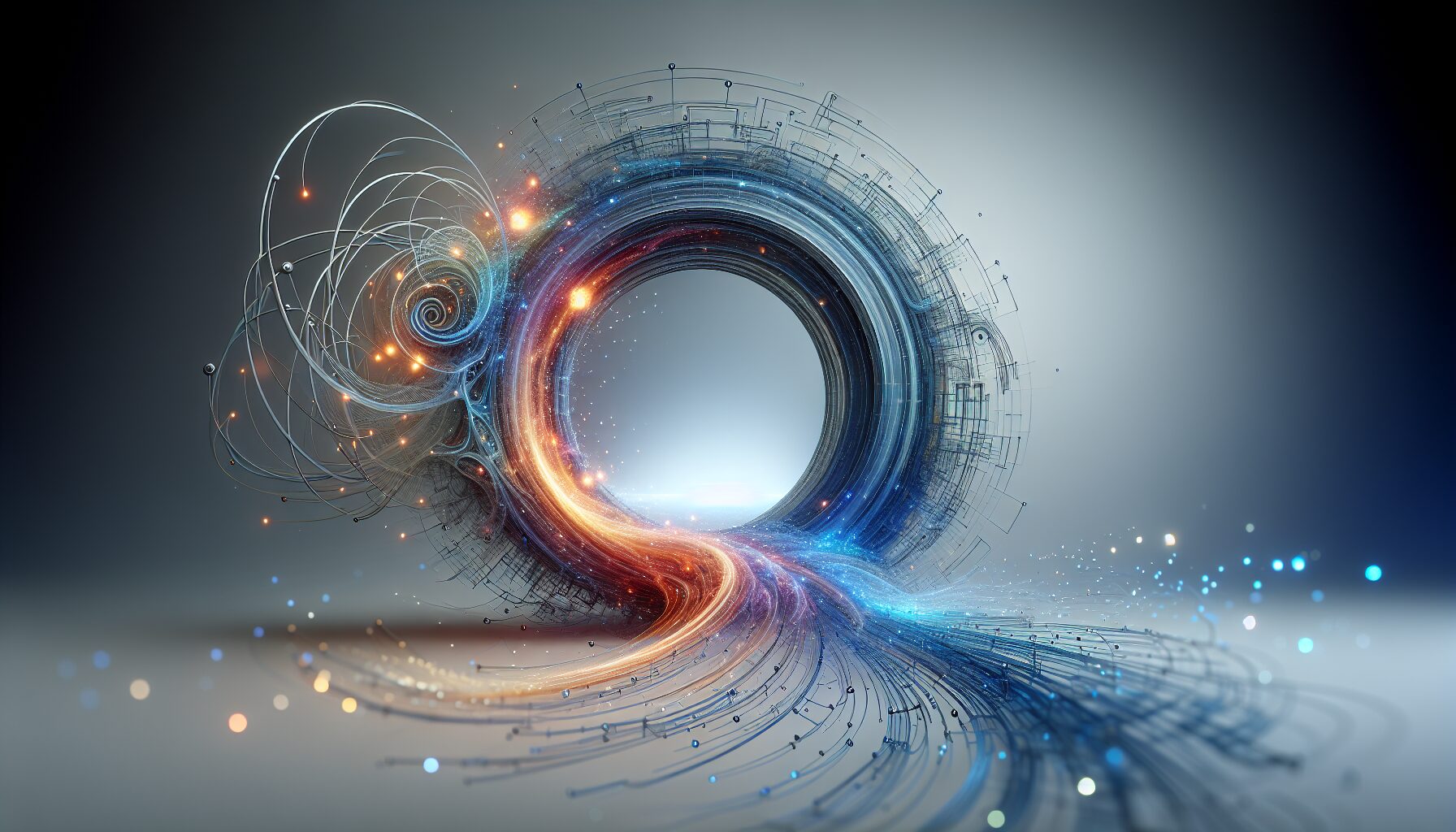
    In the realm where fantasy and the unknown intertwine, abstract portals serve as mystical gateways to other dimensions, realms, and universes. These ain’t just mere plot devices for captivating stories but represent deeper psychological and philosophical paradigms that have fascinated humanity since time immemorial.

    “The universe is full of magical things patiently waiting for our wits to grow sharper.” — Eden Phillpotts

    The concept of portals has been a cornerstone in speculative fiction, encompassing everything from wormholes in science fiction to magical wardrobes and rabbit holes in fantasy tales. These passages challenge the boundaries of reality, inviting the curious and the brave to venture beyond their world.

    The Allure of Otherworldly Passages

    The fascination with portals stems from a universal yearning for discovery and escape. They offer characters—and readers—a chance to leave ordinary life behind, exploring new realms filled with endless possibilities. But what drives this intrigue? Let’s delve into the reasons behind humanity’s enduring obsession with these enigmatic gates.

    • The Desire for Escape: Portals offer an escape from the mundane, providing a passage to worlds where magic is real, and adventure awaits. They allow us to break free from our current reality and explore the endless possibilities of the unknown.
    • Exploration of the Unknown: There’s an inherent curiosity about what lies beyond our perception. Portals are bridges to these hidden worlds, offering a playground for the imagination.
    • Transformation and Growth: Passing through a portal often signifies change. Characters—and by extension, readers—undergo transformative journeys, emerging with renewed understanding and purpose.

    Portals in Mythology and Folklore

    Portals aren’t a modern invention; they have roots in ancient myths and folklore. Cultures across the globe have legends and tales featuring mystical gateways:

    • The Norse Bifröst: In Norse mythology, the Bifröst bridge connects the world of the gods, Asgard, with Midgard, the world of humans. Seen as a rainbow bridge, it symbolizes the connection between the divine and mortal realms.
    • Fairy Rings: In Celtic folklore, fairy rings—mushroom circles—are said to be portals to the fairy realm. Stepping into one might lead to enchantment or, as some tales caution, peril.
    • Shinto Torii Gates: In Japan, torii gates mark the transition from the mundane to the sacred at Shinto shrines, serving as spiritual passageways.

    Literary Portals: Bridging Fantasy and Reality

    Many classic and contemporary works of fiction use portals as key narrative elements:

    • The Chronicles of Narnia by C.S. Lewis: The wardrobe that leads to Narnia is perhaps one of the most iconic portals, introducing readers to an unforgettable world of magic and talking animals.
    • Alice’s Adventures in Wonderland by Lewis Carroll: Alice’s fall down the rabbit hole is the perfect metaphor for a portal to the surreal and absurd.
    • Harry Potter by J.K. Rowling: Platform 9¾, the portal to the Hogwarts Express, symbolizes the entrance to a world brimming with magic and wonder.

    Scientific Hypotheses: The Realities of Fictional Constructs

    While portals are predominantly seen in a fantastical context, modern science hasn’t entirely ruled out their existence. Theoretical physics suggests the possibility of wormholes, which might function as cosmic shortcuts connecting distant parts of the universe. As physicist Albert Einstein and his colleague Nathan Rosen theorized, “A wormhole is much like a tunnel with two ends at separate points in spacetime” (source).

    Though speculative, such theories fuel our imagination, blurring the line between science fiction and reality. While the practicality and ethics of such interdimensional travel remain in question, the potential for discovery is truly limitless.

    The Symbolism of Portals: Personal and Collective Journeys

    In addition to their narrative roles, portals often symbolize personal growth, spiritual awakening, or transitioning phases in life. They reflect our inner desires to explore uncharted territories, both externally and within ourselves.

    In conclusion, abstract portals serve as beguiling symbols, opening doors to infinite possibilities, adventures, and existences. They remind us of the vast unknown yet to be explored, urging us to question, imagine, and perhaps even prepare for that moment when we might just step through the veil, leaving the mundane behind to discover what lies beyond. As long as human curiosity endures, so too will the allure of portals—these enigmatic gates beyond reality.
  • Abstract Runes – Symbols Beyond Understanding

    Abstract Runes – Symbols Beyond Understanding

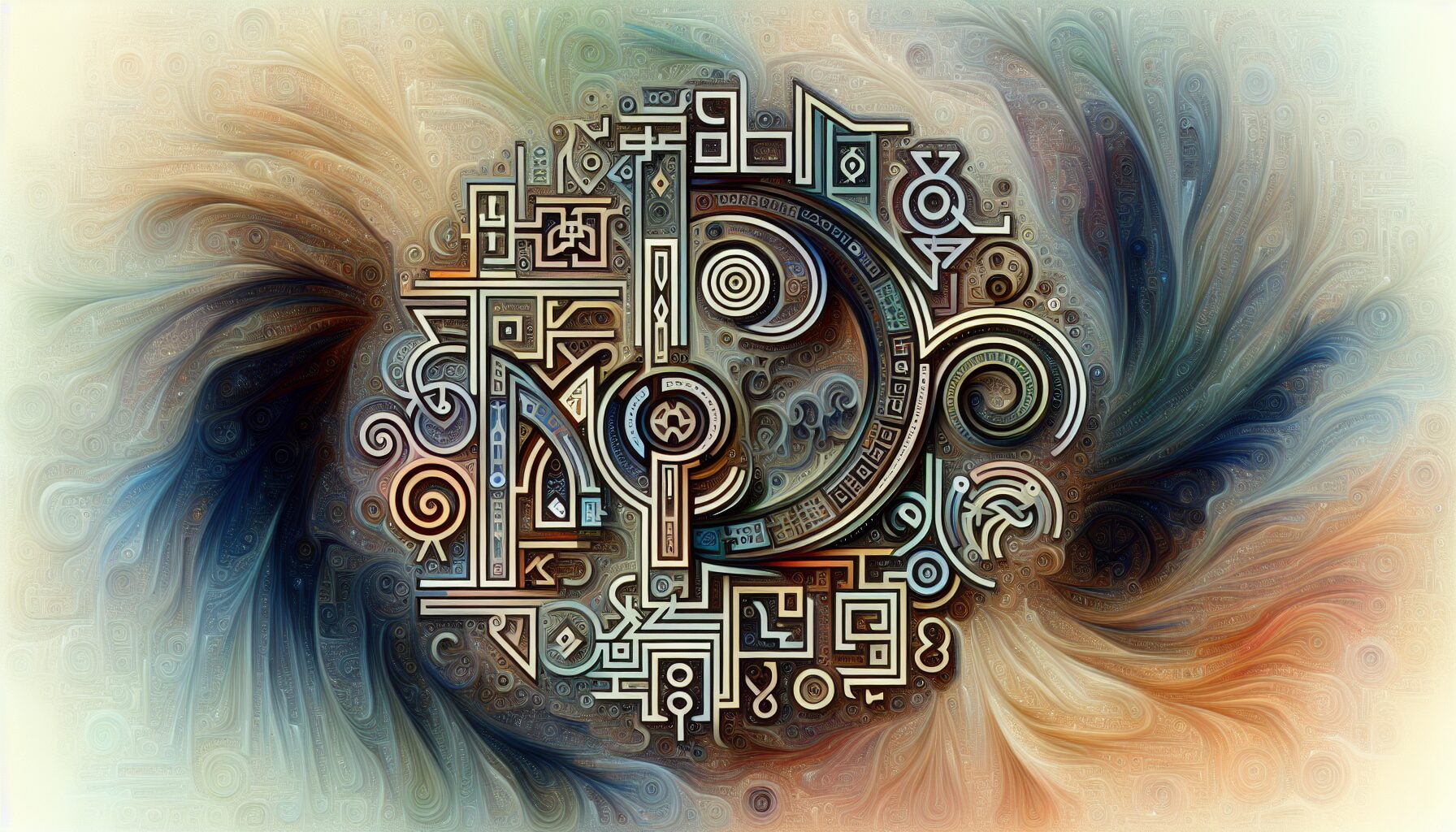
    Runes are ancient symbols that hold a mystic allure through their complex and enigmatic nature. Often associated with Northern European cultures, these symbols have transcended their historical roots to become a powerful element in modern mysticism and artistic expression. Runes have traditionally been employed not just as an alphabet, but as tools of divination, symbols of power, and gateways into the unknown realms.

    “Runes embody the universal energies and experiences of life. They are abstract, esoteric, and connect us to the ineffable.” – Freya Aswynn, British author and practitioner of Germanic Neopaganism.

    The allure of runes lies in their abstract symbolism, which goes beyond the mere conveyance of linguistic messages. Each rune carries a meaning, a story that connects with fundamental aspects of life, nature, and the cosmos. Collectively, they form a language of symbolism that continues to mystify and inspire.

    The Origin of Runes

    The earliest runes date back to around 150-800 AD and are part of the Futhark family. The most well-known versions are the Elder Futhark and Younger Futhark. Each rune is made up of straight lines, a design choice likely made for ease of carving into wood, stone, or bone.

    • Elder Futhark: Consisting of 24 runes, it is the oldest form of the runic alphabets and was widely used before the Christianization of Scandinavia.
    • Younger Futhark: This simplified version contains only 16 characters and was developed around the 9th century.

    While runes were used for practical communication, they also held magical properties for the Germanic peoples, serving as potent talismans and instruments of mystical operations.

    Runes in Divination and Magic

    In modern times, runes are often used in divination, much like tarot cards and astrology. Each rune embodies a specific archetype or energy, representing different facets of the human experience. For instance:

    • Fehu: Signifies wealth and abundance, often associated with material gain.
    • Uruz: Represents strength, health, and the untamed power of nature.
    • Raido: Symbolizes the journey of life, travel, and rhythm.

    When used in divination, these symbols invite the practitioner to engage in reflection, tapping into their subconscious to garner insights and guidance. They are drawn with hands veiled in reverence, acknowledging the energies they represent.

    Magic and runes are inseparably intertwined. Norse mythology hints at the runes as gifts to humanity from the gods, with Odin himself said to have discovered them by sacrificing himself on the Yggdrasil, the World Tree. This myth underscores the divine nature of these symbols and their role as mediums between the human and divine.

    Modern Interpretations and Artistic Expression

    Today, runes have found a place in modern culture, extending beyond their original spiritual use. They appear in various forms of contemporary media, illustrating their persistent and versatile nature. Runes are featured in artworks, tattoos, and even digital media, each new context breathing fresh interpretations and meanings into these ancient symbols.

    For instance, runes have become a key element in the design of video games, such as in “God of War” and “The Elder Scrolls,” where they serve as both decorative and functional in-game elements. This broadens their reach to new generations, captivating them with a sense of mystery and ancient wisdom.

    The Eternal Mystery of Abstract Runes

    At the heart of the fascination with runes is their abstract nature. Unlike languages constrained by grammar and syntax, runes traverse beyond the linear confines of understanding. Their very ambiguity allows for diverse interpretations, resonating deeply with those who seek personal and spiritual growth.

    “The runes themselves are not just letters, but keys to unlocking the mysteries of the universe and the soul.” – Norse Mythology for Smart People

    This abstract nature is both a challenge and a gift. It calls upon individuals to delve into their intuition, experiencing the runes not as static symbols but as dynamic forces woven into the fabric of existence. The true beauty of runes lies in this mystical dance of understanding and the perpetual discovery of the unknown.

    Conclusion

    Runes, with all their mystery and magic, remain an enticing realm for explorers of the mind and spirit. They remind us of our connection to nature and the divine, urging us to look beyond the visible and the known. In understanding these abstract symbols, we embark on a journey not just of knowledge, but of existential curiosity and personal transformation.

  • Arcane Codes – Secrets Hidden in Abstract Symbols

    Arcane Codes – Secrets Hidden in Abstract Symbols

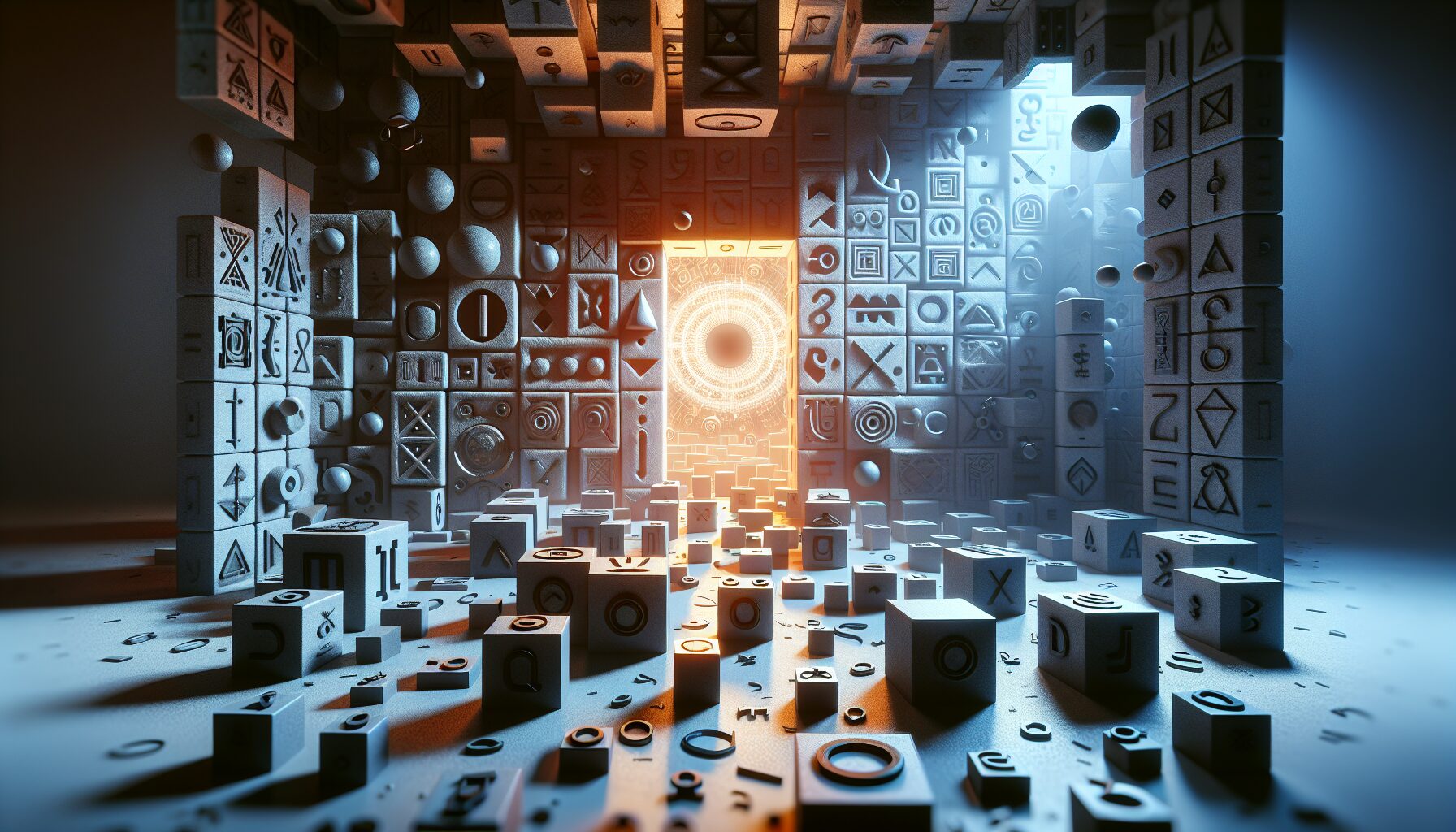
    Throughout history, humans have used symbols to communicate complex ideas, preserve secrets, and convey spiritual insights. These arcane codes often go unnoticed in our modern world, yet they hold the power to unlock profound mysteries. This article explores the history, significance, and application of abstract symbols in various cultures and traditions.

    The Language of Symbols

    Symbols serve as a bridge between the known and unknown realms, providing insight into the consciousness of different eras. According to Carl Jung, “The psychological mechanism that transforms energy is the symbol. The symbol is the psychological machine that transforms meaning into another, higher meaning” (Goodreads).

    • Mandala: In Hinduism and Buddhism, mandalas are intricate patterns representing the universe. They serve as spiritual guides and are used during meditation to focus the mind and invoke a state of peace.
    • Tree of Life: Found in various cultures, including the Kabbalistic tradition, the Tree of Life symbolizes interconnectedness and the path to spiritual enlightenment. Its roots and branches depict the continuum of life linking heaven and earth.
    • The Ouroboros: This ancient symbol of a serpent eating its own tail represents the cyclical nature of life, death, and rebirth. It illustrates the concept of eternal return, an idea recurring in many philosophical and spiritual texts.

    Historical Significance of Abstract Symbols

    Symbols have long been used to convey hidden meanings and foster communities bonded by shared knowledge. During the Medieval and Renaissance periods, allegorical art flourished, rich with symbolism reflecting religious and philosophical ideals. The secretive use of symbols was often necessary to avoid persecution.

    “Symbols are powerful because they are the visible signs of invisible realities” — Saint Augustine

    One noteworthy instance is the use of fish symbols by early Christians. Known as the Ichthys, this symbol not only represented Christ but also served as a covert means for believers to identify one another during times of persecution.

    Modern Applications of Arcane Codes

    Today, the use of symbols continues to pervade society in subtle forms. From corporate logos to national flags, these symbols encapsulate shared identities and values. For instance, the use of symbolism in branding harnesses the power of visual language to communicate a company’s ethos succinctly and memorably.

    • Logos: Companies strategically develop logos that resonate on an emotional level, creating a connection with their audience. Consider Apple’s logo, a simple bitten apple, which symbolizes knowledge and innovation.
    • Flags: National flags are steeped in symbolism; they embody a country’s history, ideals, and future aspirations. The American flag, for instance, uses stars and stripes to symbolize the original colonies and the union.

    Esoteric Knowledge and Secret Societies

    Throughout the ages, secret societies have utilized arcane symbols to encode knowledge and preserve ancient wisdom. The Freemasons, for example, deploy intricate symbols such as the square and compass to illustrate concepts of morality and personal development.

    “The most beautiful experience we can have is the mysterious. It is the fundamental emotion that stands at the cradle of true art and true science” — Albert Einstein

    Organizations like the Hermetic Order of the Golden Dawn, founded in the late 19th century, relied heavily on symbols derived from hermeticism, alchemy, and the Kabbalah. These symbols were employed in rituals designed to unlock higher states of consciousness and spiritual awakening.

    Interpreting the Unseen

    Unlocking the secret messages hidden within symbols requires a deep reflection and an open mind. While some symbols carry universal meanings, others are context-dependent and require understanding the culture or tradition from which they originate.

    The study and interpretation of symbols—symbology—can be a rewarding endeavor for those who seek to deepen their understanding of the world. As Thomas Merton aptly noted, “Art enables us to find ourselves and lose ourselves at the same time.” In this way, symbols provide both a guide and a challenge, drawing us into the exploration of the seen and unseen.

    Conclusion

    The arcane codes embedded in abstract symbols continue to shape our world, serving as a testament to the enduring power of symbolic language. Whether through ancient art or modern design, these symbols invite us to carry forward the wisdom of our ancestors and explore the depths of our own spiritual journeys.

    In a world where words often fail, symbols bridge gaps through their rich expression and profound simplicity. As we continue to navigate the complexities of life, may these ancient codes offer guidance, insight, and inspiration.