
Tag: across

  • The Silent Self – Depersonalization Across Dimensions

    The Silent Self – Depersonalization Across Dimensions

    In a rapidly evolving world, where the boundaries between the real and the virtual are increasingly blurred, the concept of the “self” is constantly challenged. One intriguing phenomenon that captures this challenge is depersonalization. This psychological condition, characterized by a feeling of disconnection from oneself, prompts several questions about identity, consciousness, and our existence across different dimensions.

    Understanding Depersonalization

    Depersonalization is commonly defined as a state in which a person feels detached from their thoughts, body, or feelings, almost as if they are observing themselves from outside their physical being. According to the Mayo Clinic, it is often accompanied by derealization, where the world around seems unreal or dreamlike.

    “Individuals often describe it as being in a movie or a dream, where everything seems foggy, and there’s a sense of watching oneself from a distance,” explains Dr. John Smith, a renowned psychiatrist specializing in anxiety disorders.

    The Causes: A Multidimensional Puzzle

    The triggers of depersonalization can be as varied as its experiences. From acute stress, trauma, and substance abuse to neurological anomalies, the root causes straddle the domains of psychology and physiology.

    • Psychological Stress: High levels of acute stress or anxiety can induce feelings of depersonalization as a coping mechanism, essentially allowing the mind to dissociate from an overwhelming situation.
    • Trauma: As a defense mechanism, individuals who have experienced trauma may become depersonalized to psychologically distance themselves from distressing memories.
    • Substance Use: Alcoholic and drug-induced states can create temporary episodes of disconnection from reality, though chronic use may lead to more lasting effects.
    • Neurological Factors: Irregular activity within certain brain regions, such as the prefrontal cortex, may play a role. As noted in a study published in The Journal of Neuroscience, there is evidence of neurophysiological disruptions in individuals with depersonalization disorder.

    Depersonalization in the Age of Digital Reality

    With the advent of virtual reality (VR) and the metaverse, the lines between the physical and the digital have never been thinner. This raises striking questions regarding our sense of self and the potential for depersonalization in digital realms.

    • Virtual Reality: Prolonged exposure to immersive VR environments can lead to virtual embodiment, where individuals report a detachment from their physical form.
    • Social Media: Online personas cultivated through social media platforms can result in an altered self-image, contributing to feelings of disassociation.
    • The Metaverse: As people create and interact via digital avatars, the ability to switch between identities challenges conventional understandings of selfhood.

    “The digital age not only transforms how we communicate but also how we perceive and construct our identities,” points out Dr. Sarah Lee, a digital culture scholar.

    Interpersonal Relationships: A Reflection of Identity?

    Depersonalization’s impact extends beyond the individual to affect interpersonal relationships. When someone feels detached, it can be challenging to connect with others emotionally or maintain intimacy.

    • Emotional Disconnect: Those experiencing depersonalization often report feeling emotionally numb, which can hinder genuine connections.
    • Identity Crisis: The lack of a stable sense of self may lead to confusion in defining roles within familial or social networks.
    • Communication Breakdown: An inability to articulate their internal experience can create barriers in relationships, leaving loved ones feeling helpless or confused.

    This phenomenon raises existential questions about the intrinsic nature of relationships and identity, echoing philosopher Jean-Paul Sartre’s assertion that “existence precedes essence.”

    Navigating the Dimensions: Coping and Understanding

    While depersonalization can be distressing, understanding and acknowledging its presence is a crucial step toward healing. Several approaches offer pathways to navigate this complex condition:

    • Therapy: Cognitive Behavioral Therapy (CBT) is often recommended to help reconstruct thought patterns and emphasize the connection between mind and body.
    • Mindfulness Practices: Techniques like meditation and yoga can help nurture a sense of presence and grounding in reality.
    • Psychoeducation: Learning about depersonalization and its triggers can empower individuals to manage symptoms effectively.

    “As we delve deeper into the realms of human psychology and consciousness, understanding depersonalization becomes essential. It is not merely a disorder but a reflection of our complex selves across various dimensions,” suggests Dr. Emily Wilson, a cognitive psychologist.

    Conclusion: The Silent Self

    In conclusion, depersonalization is a multifaceted phenomenon that challenges our perceptions of identity and consciousness across different dimensions. In an age where digital and physical realities converge, it is vital to explore and understand the complexities of the self. By doing so, we pave the way for a more profound comprehension of human existence and the silent intricacies of our inner selves.

    As technology and society continue to evolve, the exploration of conditions like depersonalization will remain integral to our understanding of the human psyche. Only through such exploration can we hope to reconcile the silent self with the myriad dimensions it inhabits.
  • The Astral Pantheon – Mythology Across Realms

    The Astral Pantheon – Mythology Across Realms

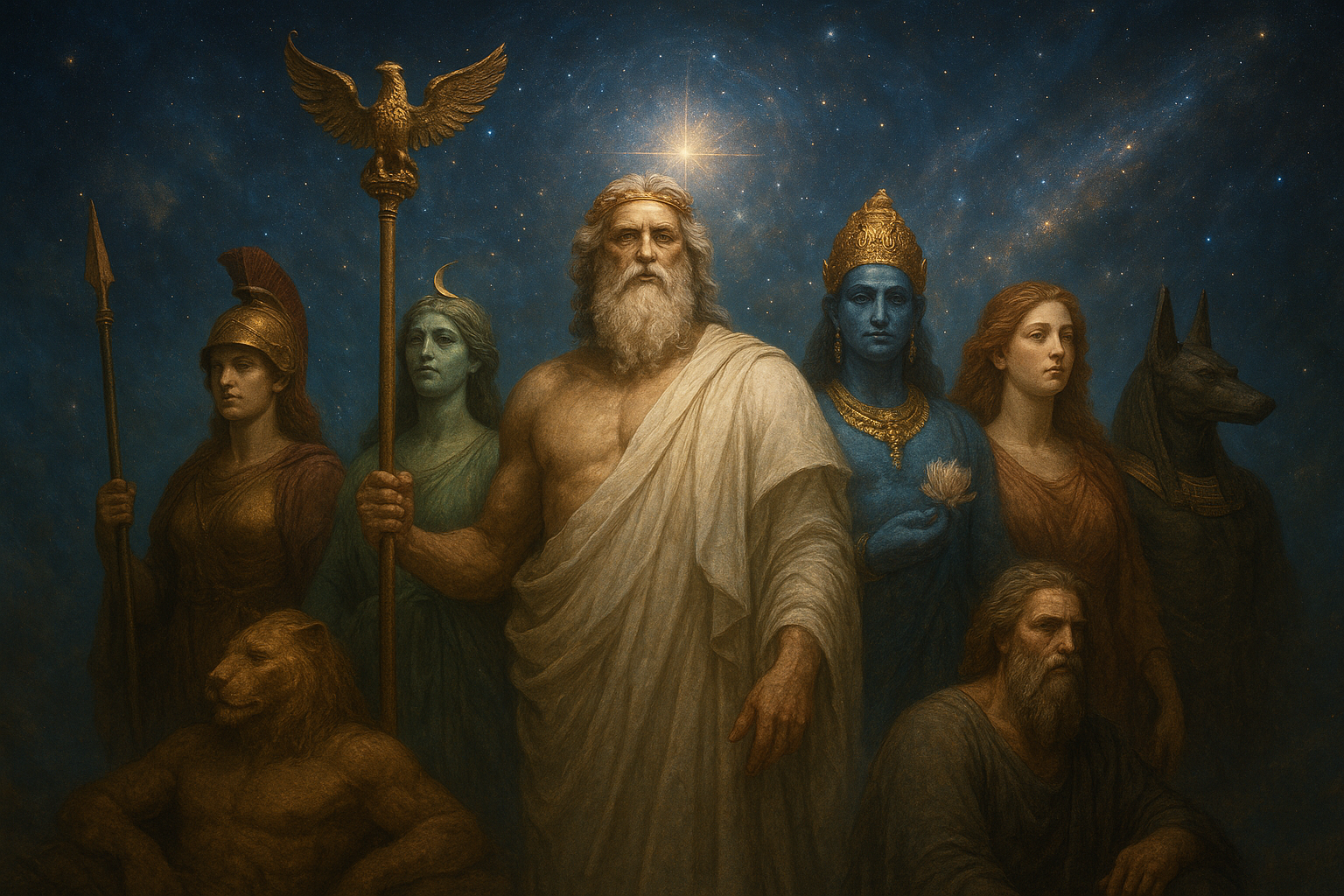
    Throughout history, humans have gazed upwards, mesmerized by the stars and the vast cosmos, often attributing divine qualities to the celestial bodies. This cosmic wonder has incubated a rich tapestry of astral deities and mythologies across diverse cultures. From the winged messengers of ancient Zoroastrianism to the heavenly chariots of Vedic texts, astral deities have played a significant role in shaping human civilization.

    Origins in Ancient Mythologies

    • Egyptian Skylore: In ancient Egypt, the sky was personified as the goddess Nut, who arched over the earth with her star-strewn body. Nut was seen as a protector of the dead and a symbol of resurrection, with pharaohs often depicted joining her in the afterlife to become stars themselves.
    • Mesopotamian Guardians: For the Babylonians, the stars were the domain of Sin, the god of the moon, who wielded great astrological influence. The god Anu was revered as the father of the gods, representing the epitome of the celestial cosmos.

    Influence of the Greek and Roman Pantheon

    The Greeks wove intricate tales that integrated their gods with the constellations seen in the night sky. Familiar figures such as Orion the Hunter and Andromeda were enshrined in the heavens as stars that linked human fate with celestial movements.

    “The heavens declare the glory of God; and the firmament sheweth his handiwork.” — Psalm 19:1 (KJV)

    This sentiment was mirrored in Roman culture, where constellations were named after heroic figures and mythological stories, echoing their origins in Greek astronomy.

    Eastern Concepts and Beyond

    • Chinese Celestial Bureaucracy: In ancient Chinese belief, the sky was a complex bureaucratic structure with the Jade Emperor presiding over it all. Each star and planet was seen as a celestial administrative unit with specific responsibilities influencing earthly affairs.
    • Hindu Astronomy: The Vedic concept of Navagraha, the nine celestial influencers, remains vital in Hindu astrology today. These astral deities, such as Surya (the sun) and Chandra (the moon), directly impact human lives according to Hindu belief.

    The Modern Cosmic Perspective

    Although technological advances have shifted our understanding of celestial bodies, the mythological allure remains potent. Astral deities continue to intrigue us, serving as powerful symbols in literature, film, and art — reminders of the timeless human quest to connect the earthly with the divine.

    The astral pantheon, with its countless interpretations across the annals of history, continues to enrich our collective imagination, reflecting a profound legacy of humanity’s connection with the universe.

  • Psychic Archetypes – Human Patterns Through Time

    Psychic Archetypes – Human Patterns Through Time

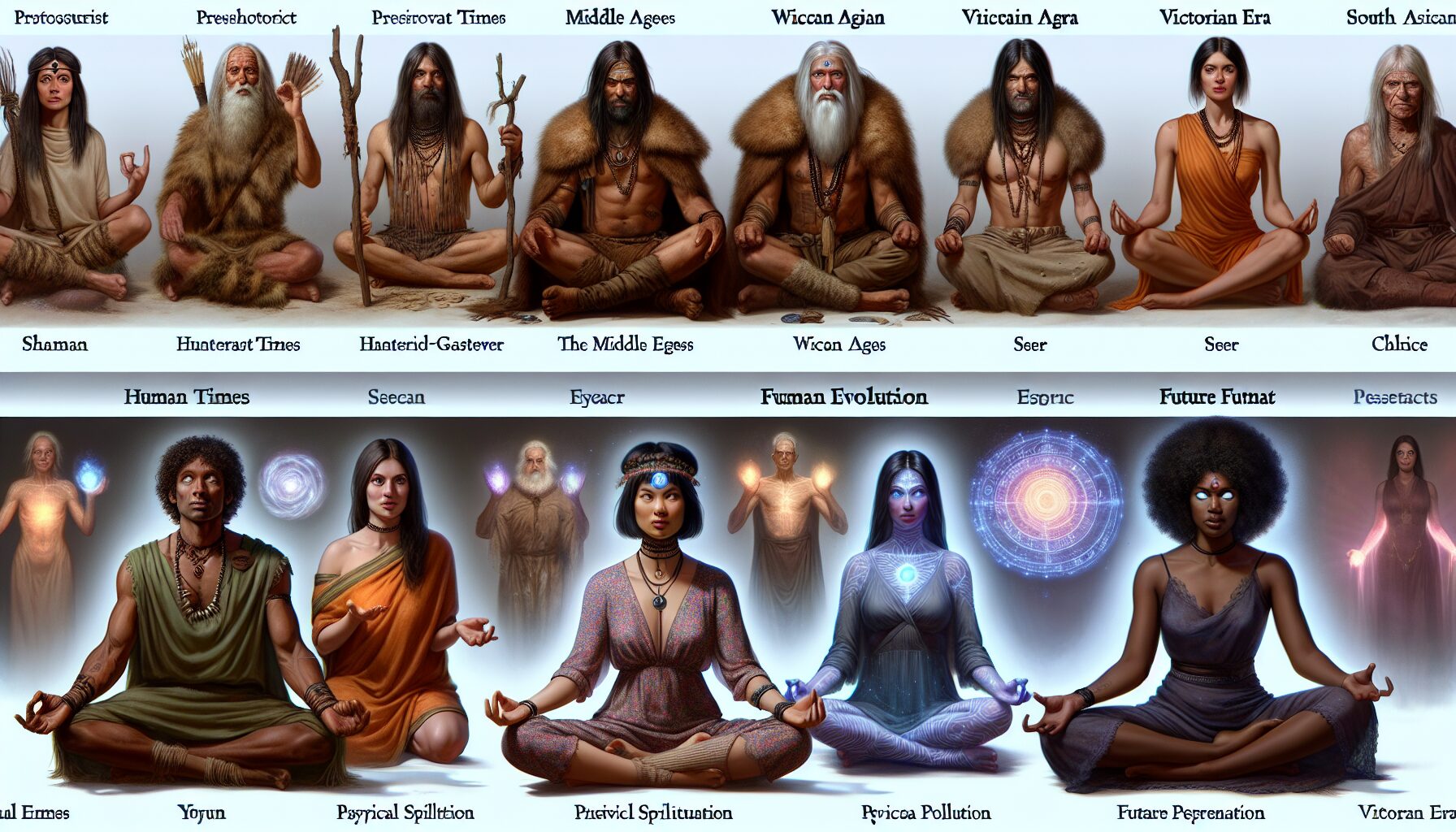
    Throughout history, human civilization has been captivated by the idea of archetypes—universal patterns and symbols residing in the collective psyche. These archetypes are recurring motifs found across cultures, encapsulating the essence of human experience in a truly profound way.

    The Origins of Archetype Theory

    The concept of archetypes was first popularized by Swiss psychiatrist Carl Gustav Jung. Jung proposed that these archetypes are not learned but innate elements of the human psyche, manifesting as common themes in dreams, myths, art, and behaviors worldwide.

    “Archetypes… are residues of the most ancient and universal types of expressions of the human mind. They tell us stories of the struggles and triumphs of humanity.” — C.G. Jung

    Jung identified several key archetypes, including the Self, the Shadow, the Anima/Animus, and the Persona. Each of these represents different facets of the human experience, navigating the inner world and reflected in our outer reality.

    Key Archetypes Across Cultures

    Despite cultural differences, similar archetypes emerge around the globe, embodying fundamental aspects of life and identity.

    • The Hero: Seen in figures such as Hercules from Greek mythology and Knight Arthur from the Arthurian legends, the Hero embarks on a journey filled with trials and transformations.
    • The Mother: The nurturing force represented by deities like Gaia or Demeter, symbolizing fertility, protection, and nourishment.
    • The Trickster: A shape-shifting character with cunning and wit, found in Norse Loki and Native American Raven mythologies, often disrupting norms to challenge or enlighten.

    The Psychological Significance of Archetypes

    Archetypes carry significant psychological weight. They guide individuals through their personal growth and development.

    “An understanding of the interplay between different archetypes leads to greater self-awareness and personal integration.” — Analytical Psychology Studies

    The Hero’s Journey, for instance, illustrates the path of self-discovery and transformation, suggesting that each person’s life is a quest filled with opportunities for growth and learning.

    Archetypes in Modern Culture

    The influence of archetypes extends into modern literature, film, and art. From the epic quests of Frodo Baggins in The Lord of the Rings to the introspective journey of Neo in The Matrix, these narratives tap into archetypal patterns that resonate deeply with audiences.

    Consider Star Wars, where archetypal characters like Luke Skywalker (the Hero), Yoda (the Wise Old Man), and Darth Vader (the Shadow) epitomize the timeless struggle between light and darkness, good and evil.

    The Future Role of Archetypes

    In an ever-evolving society, will archetypes continue to hold relevance? As psychologists and anthropologists delve deeper into the workings of the mind, the archetype framework may expand or adapt, yet their core essence will likely remain intact.

    They offer a lens through which to view contemporary challenges and uncertainties, providing insight into human behavior and inspiring creativity and tradition across generations.

    Psychic archetypes weave the tapestry of human history—from the distant past to an unknowable future—showcasing our shared journey through time. As we embrace these patterns, we perhaps draw closer to understanding the complexities of our collective psyche, enabling us to connect with one another on deeper, more meaningful levels.

    Conclusion

    Psychic archetypes signify a universal language of the human soul. As we continue to study and interpret these archetypes, we unlock timeless wisdom and find parallels between ancient lives and modern experiences. By embracing these enduring patterns, humanity may gain not only a greater sense of cultural identity but also profound personal insight.

    For further reading, consider exploring Jung’s seminal works, such as Collected Works, to dive deeper into his theories and insights.

  • Signals from the Dead – Alien Messages Across Time

    Signals from the Dead – Alien Messages Across Time

    Signals from the Dead: Alien Messages Across Time

    Throughout history, humanity has gazed at the skies, searching for signs of life beyond the confines of our planet. The search for extraterrestrial intelligence (SETI) has captivated the imagination of scientists and the public alike. But what if the signals we detect originate from civilizations that are long extinct? Are we destined to only ever listen to the echoes of alien ghosts filtering through the cosmos?

    The Age of the Universe and Fermi’s Paradox

    The universe is approximately 13.8 billion years old, according to Nature.com. With such an immense timescale, the potential for the rise and fall of civilizations across galaxies is astronomical. Fermi’s Paradox, often cited by scientists, highlights the apparent contradiction between the high probability of alien life and the lack of evidence or contact with such civilizations. If intelligent life is common in the universe, why haven’t we heard from anyone?

    “Where is everybody?” — Physicist Enrico Fermi

    The Persistence of Signals

    When considering the vastness of space and time, it’s plausible to assume that signals transmitted by civilizations once reaching for the stars could still be traversing the universe long after their originators have ceased to exist. The potential age of these signals raises numerous philosophical and technical questions regarding their detection and interpretation.

    • In 1974, the Arecibo Message, a radio message sent into space from the Arecibo Observatory, was aimed at the globular star cluster M13. This message was essentially a demonstration of human technology, not an attempt at communication.
    • The Wow! Signal, detected in 1977 by Jerry R. Ehman, remains one of the most intriguing signals ever captured, lasting for 72 seconds, and it has never been repeated or explained satisfactorily.

    These examples illustrate both the potential and the challenges of SETI: how to interpret brief, unique signals and decide whether they are meaningful or merely cosmic noise.

    Technosignatures and Time’s Thread

    As scientists focus on detecting technosignatures—indications of technology used by alien civilizations—they must grapple with the possibility that any detectable signals could have been transmitted millions or even billions of years ago. By the time these signals reach us, their creators could be extinct, leaving behind only the technological footprints of their existence.

    The Berkeley SETI Research Center defines technosignatures as evidence of technology’s impact on the environment or direct signals, such as radio transmissions, that may be detected by our technology.

    Reflections on the Loneliness of Time

    The concept of receiving messages from dead civilizations is a sobering one. It implies that the universe may indeed teem with life, yet the daunting factor of time may render us alone in practical terms, forever listening to the cosmic epitaphs of those who’ve already vanished.

    “If they’re sending signals to Earth, they’ve been doing so for hundreds of years with nobody at home.” — Scientist Jill Tarter on ancient signals.

    The implications of such a scenario stretch beyond science into the philosophical realm, prompting questions about the survival and longevity of human civilization amidst the relentless flow of cosmic time.

    Technological Limitations and Advanced Civilizations

    The search for extraterrestrial life is constrained by the limitations of our technology. Our ability to detect signals, even those that may have traveled vast distances, is still developing. Yet, even if we acquired the capability to detect ancient signals, we’d face the formidable task of interpreting them. Language barriers, differences in scientific understanding, or even the basic nature of the signal could pose insurmountable challenges.

    • Many scientists postulate the development of a Kardashev civilization, a hypothetical scale that measures a civilization’s technological advancement based on its energy consumption. Understanding the signals from such advanced cultures would require equally advanced methods of analysis and interpretation.

    Looking Ahead: A Future for SETI

    Despite the challenges, the pursuit of signals from extraterrestrial civilizations continues to drive interest and innovation across scientific communities worldwide. The possibility that we might detect the whispers of civilizations past fuels ongoing efforts to expand our capacity for cosmic eavesdropping.

    With the advancement of radio telescopes and the increasing interest in astro-archaeology, our chance of unearthing these ancient messages can only improve. The ongoing discoveries about exoplanets and their atmospheres, as revealed by research from NASA’s Exoplanet Exploration Program, further stoke the fires of scientific curiosity.

    Conclusion: The Echoes We Seek

    In the veil of cosmic silence, signals from civilizations past may indeed reverberate eternally. The quest for alien life transcends the mere hope of communication; it represents a profound search for company’s nature. As we listen across the eons that separate worlds, we uphold the enduring human passion for exploration and understanding—hoping that someday, the signals from the dead may yield a valuable truth, or perhaps a legacy, from across the abyss of time.

    In the meantime, humanity remains steadfast in its endeavor, clinging to the words of Carl Sagan, who famously reminded us that “we are made of star stuff,” intertwined with the fabric of the universe and perhaps, with the civilizations that came before us.