Tag: aliens

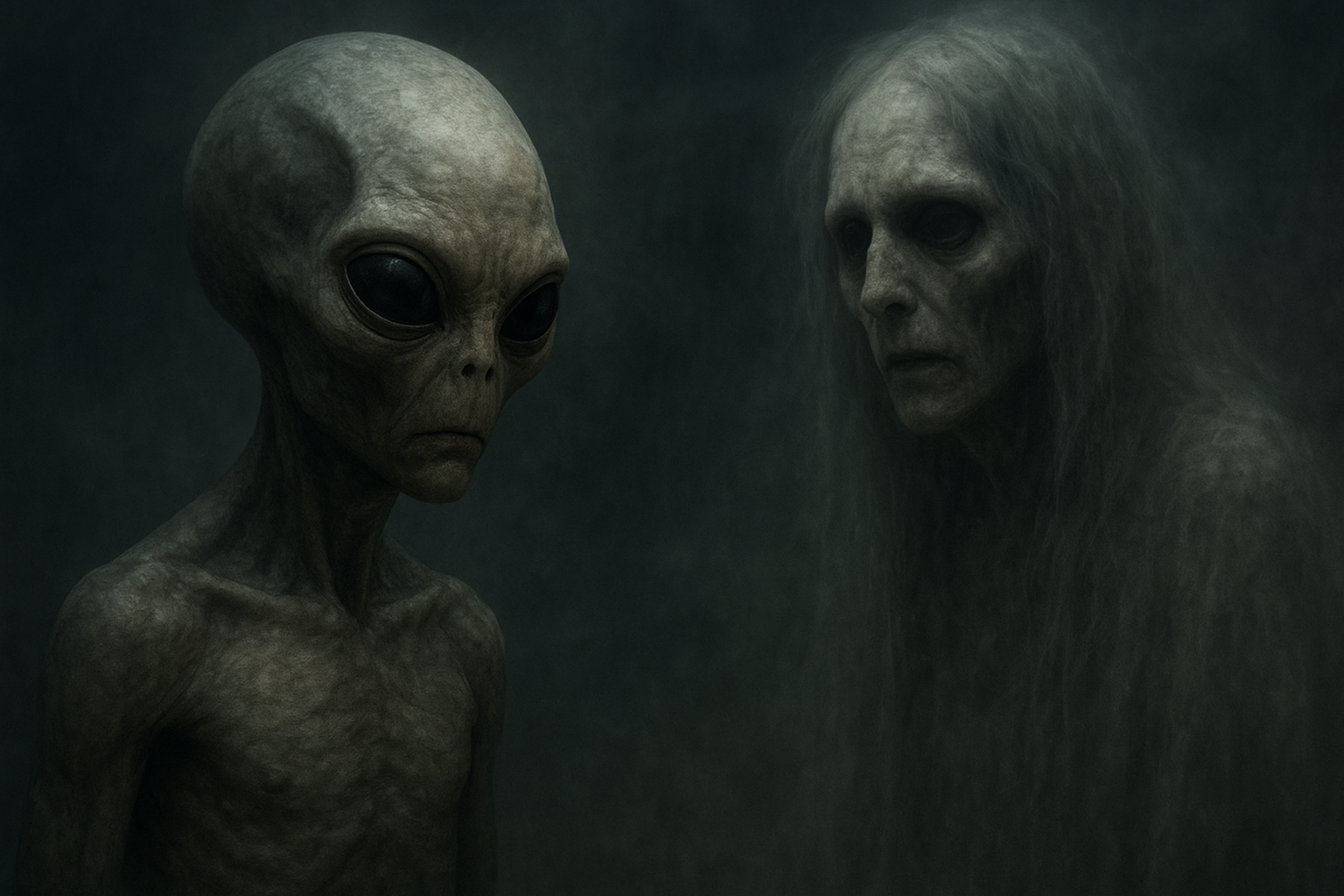
  • Alien Revenants – Extraterrestrials and Lost Souls

    Alien Revenants – Extraterrestrials and Lost Souls

    Throughout human history, tales of mysterious beings visiting Earth have captivated the imagination of many. Among the most intriguing narratives are those that intertwine the existence of extraterrestrials with the concept of lost souls or revenants. But can these otherworldly beings really be connected to the realm of spirits and ghosts?

    The Myth of Revenants

    The term revenant comes from the Latin word reveniens, meaning “returning.” Traditionally, revenants are associated with spirits of the deceased returning to the physical world. Various cultures have expressed this phenomenon differently. As noted in the British Journal of Psychology, “The concept of revenants can be seen in accounts of the vengeful dead in Roman literature and in medieval European folklore” (psychologyjournal.com).

    For centuries, stories of revenants have been interwoven with fables of vampires and ghosts. However, in the modern age, there is a growing interest in an intersection that may first seem improbable: the link between these mythic beings and extraterrestrials.

    Extraterrestrial Visitations

    In contrast to revenants, extraterrestrials are beings hailing from planets beyond Earth. The fascination with aliens became particularly widespread during the twentieth century, a boom correlated with technological progress and the space race era. Historical documentation about apparent UFO sightings is replete with instances that, to some, seem inexplicable by earthly means.

    According to the National Aeronautics and Space Administration (NASA), while there is currently no conclusive evidence of life beyond our planet, scientists continue to explore the universe, searching for signals from intelligent extraterrestrial life.

    Shared Characteristics: Aliens and Revenants

    Despite the perceivable differences, there are intriguing similarities between the tales of aliens and revenants:

    • Transcendental Origin: Neither revenants nor aliens originate from the known, tangible world. Revenants are said to rise from the spirit realm, while aliens presumably hail from distant stars.
    • Mysterious Powers: Both are often depicted with abilities beyond human capabilities. Revenants might be portrayed as having miraculous or malevolent powers, whereas aliens are frequently described as possessing advanced technology or psychic abilities.
    • Theme of Return: The narrative of a “return” is central to both concepts—revenants return from death, whereas aliens might return from their cosmic journeys with mysterious purposes.

    The Theoretical Link

    One of the most compelling aspects of this discussion lies in the theory suggesting that what some interpret as extraterrestrial encounters could indeed be spiritual experiences. A notable line from the Journal of Parapsychology suggests: “Alien abduction scenarios often include similarities to near-death experiences or perceived visitation by spirits of the deceased” (parapsychologyjournal.org).

    “The sense of otherworldliness and reports of strange occurrences suggest that the boundaries between alien and spiritual phenomena are not as distinct as once believed.”—Journal of Parapsychology

    Implications for Belief Systems

    This overlap raises fascinating questions about our understanding of existence. If extraterrestrial interactions bear semblances to encounters with revenants or spirits, it might suggest a more interconnected cosmos where the material and spiritual realms are not exclusive.

    Religious and cultural beliefs might offer a broader context in which both extraterrestrial life and revenants can coexist. Drawing parallels to concepts such as reincarnation, some believe that aliens could be deliberate reincarnations of souls, providing a medium for lost souls to communicate or find closure.

    Conclusion

    While the existence of either extraterrestrial beings or revenants remains unverified within the scientific community, their shared characteristics continue to inspire awe and curiosity. As our technological capabilities teem with new possibilities, perhaps future discoveries will reveal unexpected truths about these enigmatic visitors, whether they come from the ends of the universe or the echoes of the past.

    For now, the connection between alien revenants and lost souls remains a captivating mystery, reminding us of the limits of our current understanding and the endless possibilities beyond.

  • Extraterrestrial Myths – Aliens in Cultural Memory

    Extraterrestrial Myths – Aliens in Cultural Memory

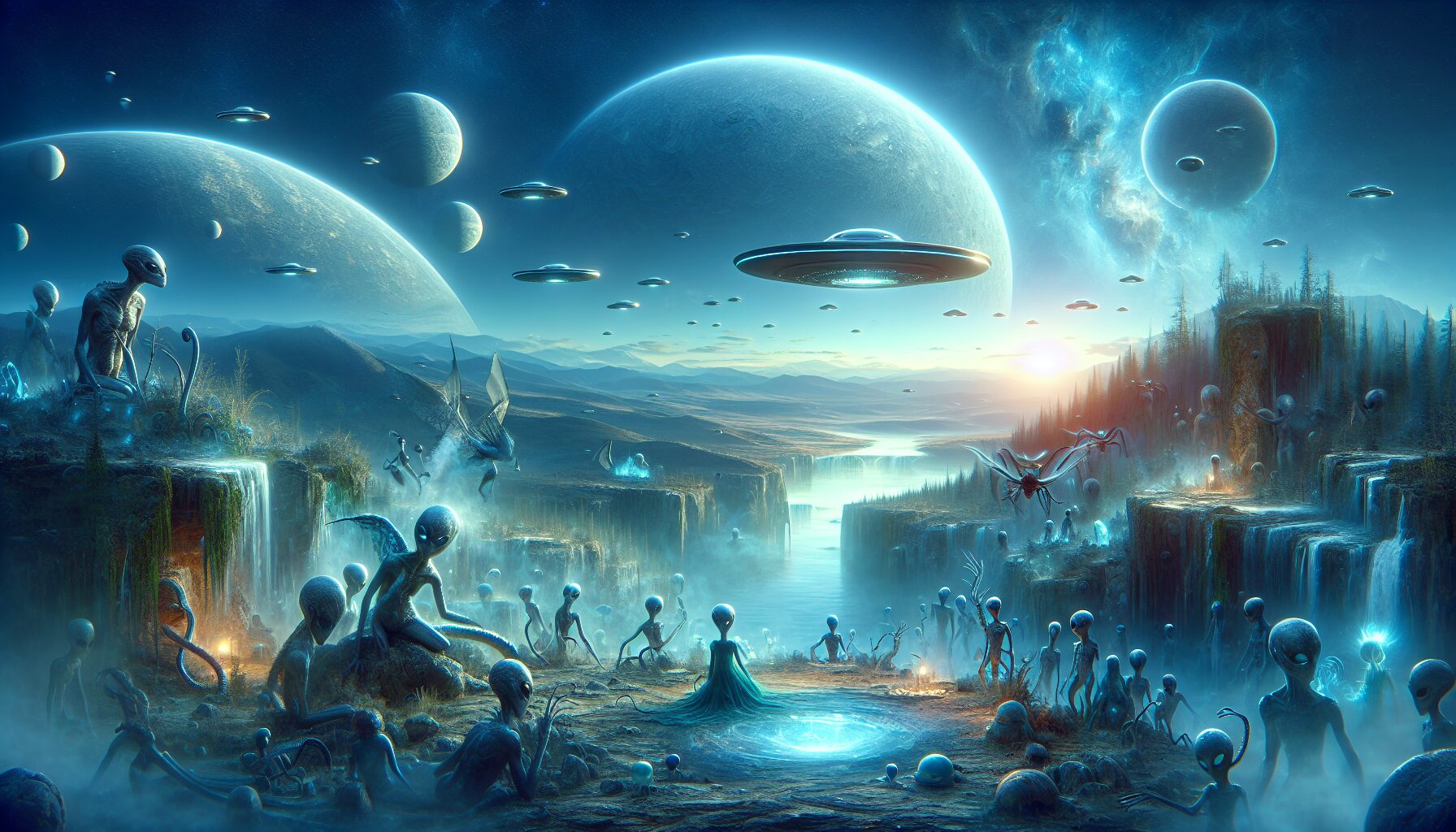
    The concept of extraterrestrial life, or aliens, has captured human imagination for centuries, woven intricately into the fabric of various cultures. These myths and legends reflect humanity’s eternal curiosity about the cosmos and our place within it. The portrayal of aliens has evolved over time, fueled by advances in scientific understanding and spurred by the creativity inherent in storytelling. This article delves into the rich tapestry of extraterrestrial myths across cultures and their impact on cultural memory.

    The Earliest Imaginations: Ancient Myths and Celestial Beings

    Long before the advent of modern science, ancient civilizations gazed at the night sky with wonder, interpreting celestial phenomena through the lens of mythology. Many of these myths include references to non-human entities often equated with extraterrestrial beings today.

    • Mesopotamian Legends: The Sumerians, who thrived in the Third Millennium BCE, left behind a pantheon of gods including Enki and Anu, associated with heavenly bodies. Some interpretations suggest that these gods were depicted as descending from the heavens, perhaps suggesting an early form of extraterrestrial genesis.
    • Hindu Epics: Texts like the Mahabharata mention flying machines called Vimanas, which some theorists controversially link to ancient encounters with advanced extraterrestrial technology.
    • South American Cultures: The Nazca Lines of Peru, created by the Nazca civilization, are massive geoglyphs that some believe to be messages or signals to skyward visitors. These interpretations, while not accepted by mainstream archaeology, demonstrate the speculation surrounding alien influence.

    Medieval and Early Modern Tales

    The Middle Ages and the Renaissance period saw a transformative shift in how humanity viewed the heavens, transitioning from mythological interpretations to nascent scientific inquiry. This era, however, was still rich with tales of celestial visitors.

    • European Folklore: Some folktales describe encounters with magical beings from “other worlds,” akin to later descriptions of extraterrestrial beings.
    • Celtic Myths: The Tuatha Dé Danann, a supernatural race in Irish mythology, are said to have arrived in ships and possessed immense knowledge and powers that some have compared to alien intelligence.
    • The Cheshire Manuscript: In this English document, dated to the 13th century, there are anecdotes of mysterious airships, hinting at a cultural memory touched by celestial curiosity.

    Modern Interpretation: Aliens in Literature and Media

    The narrative of extraterrestrial life gained significant momentum in the 19th and 20th centuries, primarily through fiction and later through the burgeoning medium of television and cinema.

    • War of the Worlds by H.G. Wells: Published in 1897, this novel was pivotal in popularizing the idea of hostile alien visitors. It sparked imaginations and fears about the potential reality of alien contact.
    • The Day the Earth Stood Still: This 1951 film introduced audiences to the benevolent alien, Klaatu, who came to Earth with a warning, helping to establish the trope of the enlightened extraterrestrial visitor.
    • Modern Streaming and Cinema: Contemporary series like The X-Files and blockbuster films like Independence Day continue to explore these themes, feeding into the enduring fascination with alien life.

    Extraterrestrial Influence in Modern Beliefs and Conspiracies

    As technology advanced, so too did beliefs in extraterrestrial visitation, often veering into the realm of conspiracy theories and pseudoarchaeology.

    • Area 51 and Roswell: Perhaps no location is more synonymous with alien conspiracies than Area 51. The 1947 Roswell incident, often cited as evidence of government concealment of alien technology, plays a critical role in alien lore in the cultural memory.
    • Ancient Aliens Theory: Popularized by authors like Erich von Däniken in his book Chariots of the Gods?, this theory suggests that extraterrestrial beings have been visiting Earth for millennia, influencing ancient civilizations.
    • Cultural Phenomena: Movements such as the Raëlian religion incorporate beliefs about extraterrestrial origins, highlighting how these concepts permeate even spiritual ideologies.

    “We choose to examine alien myths not merely as products of human fantasy, but as tokens of our profound quest to find meaning in the universe.” — Dr. Carl Sagan

    The Cultural Significance of Extraterrestrial Myths

    Extraterrestrial myths serve several purposes in human culture. They act as metaphors for the unknown, helping societies to confront existential questions about existence and the cosmos. Moreover, they reflect societal concerns at various historical junctures, whether fears of invasion or desires for utopian benefactors.

    The prevalence of alien myths also demonstrates humanity’s timeless drive to explore and the deep-seated need for understanding that propels scientific inquiry. These narratives enable cross-cultural dialogues, offering shared frameworks for contemplating life beyond Earth.

    Conclusion: From Ancient Stars to Modern Skies

    The rich heritage of extraterrestrial myths is testament to humanity’s enduring speculation about what lies beyond our world. Whether interpreted as gods, fictional invaders, or speculative science, these myths continue to influence cultural memory and inspire new generations of dreamers and thinkers.

    As we stand on the precipice of interstellar exploration, the stories, myths, and legends of extraterrestrial beings remind us of both our humble beginnings under star-filled skies and the exhilarating possibilities of the universe yet to be explored.

    For further reading, visit the Encyclopedia Britannica’s section on alien myths in world cultures.

  • Aliens as Angels of Death – Visitors or Harbingers?

    Aliens as Angels of Death – Visitors or Harbingers?

    Aliens as Angels of Death: Visitors or Harbingers?

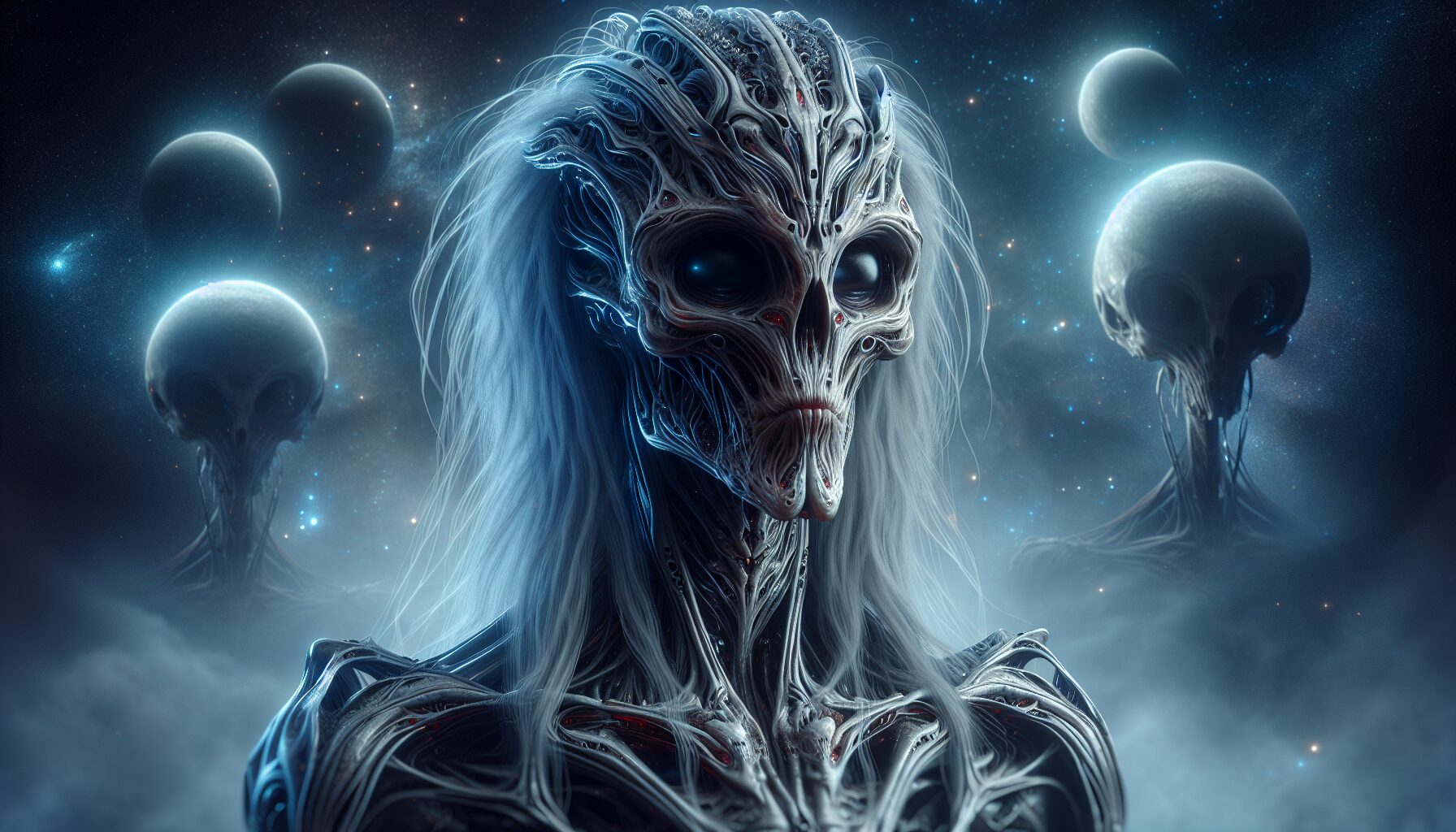
    The thought of extraterrestrial beings has captivated the human imagination for centuries. From ancient mythologies to modern science fiction, aliens are often depicted as mysterious entities with vast powers and unfathomable motives. A particularly intriguing theme is the portrayal of aliens as “Angels of Death,” enigmatic visitors who may serve as harbingers of doom or catalysts for transformation.

    Historical Perspectives on Extraterrestrial Visitations

    Humans have long wondered about the existence of life beyond our world. Ancient scriptures and texts occasionally mention celestial beings descending from the skies. In some interpretations, these beings were seen as angels or messengers who delivered divine decrees or catastrophic warnings.

    • The Book of Ezekiel in the Bible describes visions of heavenly crafts and interactions with divine beings.
    • In Hindu mythology, gods traversed the skies in flying chariots known as Vimanas. These vehicles sometimes served as tools of war and vengeance.

    While these interpretations are heavily saturated with the belief systems of their times, the parallels to modern-day UFO sightings and alleged alien abductions are hard to ignore.

    The Modern Mythology of UFOs and Aliens

    Since the late 20th century, the phenomenon of UFO sightings has become a focal point of both scientific inquiry and popular culture. Rigorous investigations by agencies such as the US Air Force’s Project Blue Book have attempted to categorize these occurrences, often with inconclusive results.

    The depiction of aliens in contemporary media ranges from benevolent saviors to annihilating forces—entities capable of both creation and destruction. This duality is highlighted in films and literature where extraterrestrial visitors serve as a mirror for humanity’s hopes and fears.

    Aliens as Harbingers of Destruction

    The idea of aliens acting as agents of annihilation is not just a construct of Hollywood. In The War of the Worlds by H.G. Wells, Martians invade Earth with superior technology, wreaking havoc on civilization. This narrative suggests a profound vulnerability in human endeavors, an existential risk posed by encounters with technologically advanced beings.

    Movies like Independence Day and The Day the Earth Stood Still further echo these themes, portraying alien invasions as warnings to humanity, urging a focus on global unity and peace. In both speculative and philosophical discussions, aliens are often posited as sentinels, whose encounters offer stark reflections on our self-destructive tendencies.

    “The most terrifying fact about the universe is not that it is hostile but that it is indifferent. But if we can come to terms with this indifference and accept the challenges of life within the boundaries of death—however mutable he may be—our existence as a species can have genuine meaning and fulfillment. However vast the darkness, we must supply our own light.”

    —Stanley Kubrick

    Angels of Death: Transformative or Terminal?

    It’s possible to envision aliens as heralds of transformation, serving as cosmic agents of evolutionary pressure. This perspective often shifts the narrative from one of destruction to one of change.

    • The transformative power of alien contact is explored in films like Contact, where communications with extraterrestrials challenge humanity’s place in the universe.
    • In the realm of speculative fiction, Arthur C. Clarke’s Childhood’s End depicts aliens as catalysts for human transformation, blending the apocalyptic with the transcendental.

    From this viewpoint, aliens as “Angels of Death” force humanity to confront its flaws and catalyze growth beyond its limitations. The threat of death is a powerful motivator for innovation and unity, driving the species to transcend its primal fears.

    Scientific Perspectives: Are We Alone?

    From a scientific standpoint, the question remains: are there truly extraterrestrial entities out there, and are they aware of us? The search for extraterrestrial intelligence (SETI) has long been a spearhead in this quest, analyzing signals from the cosmos for signs of alien life.

    The SETI Institute continues to monitor radio waves and investigate potential communication from other lifeforms. While no definitive signals have been confirmed, the vastness of the universe suggests numerous possibilities.

    The philosophical debate around aliens as either visitors or conquerors reflects broader existential questions about universal morality. If more advanced civilizations exist, would they share the same ethical principles, or would they impose their own?

    Conclusion: Navigating the Uncertainty

    As humanity ventures further into space, the possibility of encountering otherworldly beings becomes increasingly probable. Whether these aliens act as “Angels of Death” or benevolent allies may ultimately depend on how we perceive and prepare for their arrival.

    In contemplating aliens as either visitors or harbingers, humanity is reminded of its own vast capacity for creation and destruction. Whether these encounters will mark an end or a new beginning is a narrative yet to be written, an odyssey awaiting its heroes.

    As the philosopher Carl Sagan wisely noted, “For small creatures such as we, the vastness is bearable only through love.” The message is clear: whether the threat comes from within or without, the ultimate struggle is to preserve the light of civilization as we journey through the cosmic night.