Tag: angelic

  • The Choir of Angels – Mysticism and Harmonic Resonance

    The Choir of Angels – Mysticism and Harmonic Resonance

    Throughout the ages, the concept of angels and celestial beings has fascinated humanity. From religious texts to art and music, the angels have been portrayed as messengers of the divine, intermediaries between the heavens and the earth. But beyond religious symbolism, there lies a mystical and musical dimension to these ethereal beings – the concept of the Choir of Angels and their harmonic resonance. This article explores the mysticism surrounding angels, the symbolic meanings of angelic choirs, and their connection to harmonic resonance.

    The Mystical Angle of Angels

    In numerous spiritual traditions, angels are seen as beings of light and sound. They are considered to be the embodiment of divine messages and harmonies. The mysticism associated with angels often transcends a purely religious interpretation, offering insights into the complexities of the universe.

    • Christian Tradition: In Christianity, angels are seen as messengers of God. They deliver divine revelations, guide human souls, and participate in the eternal worship of God. The Christian tradition identifies nine choirs of angels, each with distinct roles and hierarchies.
    • Islamic Beliefs: In Islam, angels are considered to be made of light, acting as faithful servants of Allah. They are numerous and have specific duties, including recording deeds and administering the universe’s order.
    • Jewish Mysticism: Jewish traditions, particularly Kabbalah, depict angels as manifestations of God’s will and power, acting as carriers of divine light through the sefirot, or spiritual emanations.
    • New Age and Modern Interpretations: In New Age movements and modern spiritual practices, angels take on diverse roles, often associated with personal guidance and inner peace.

    The Celestial Choirs

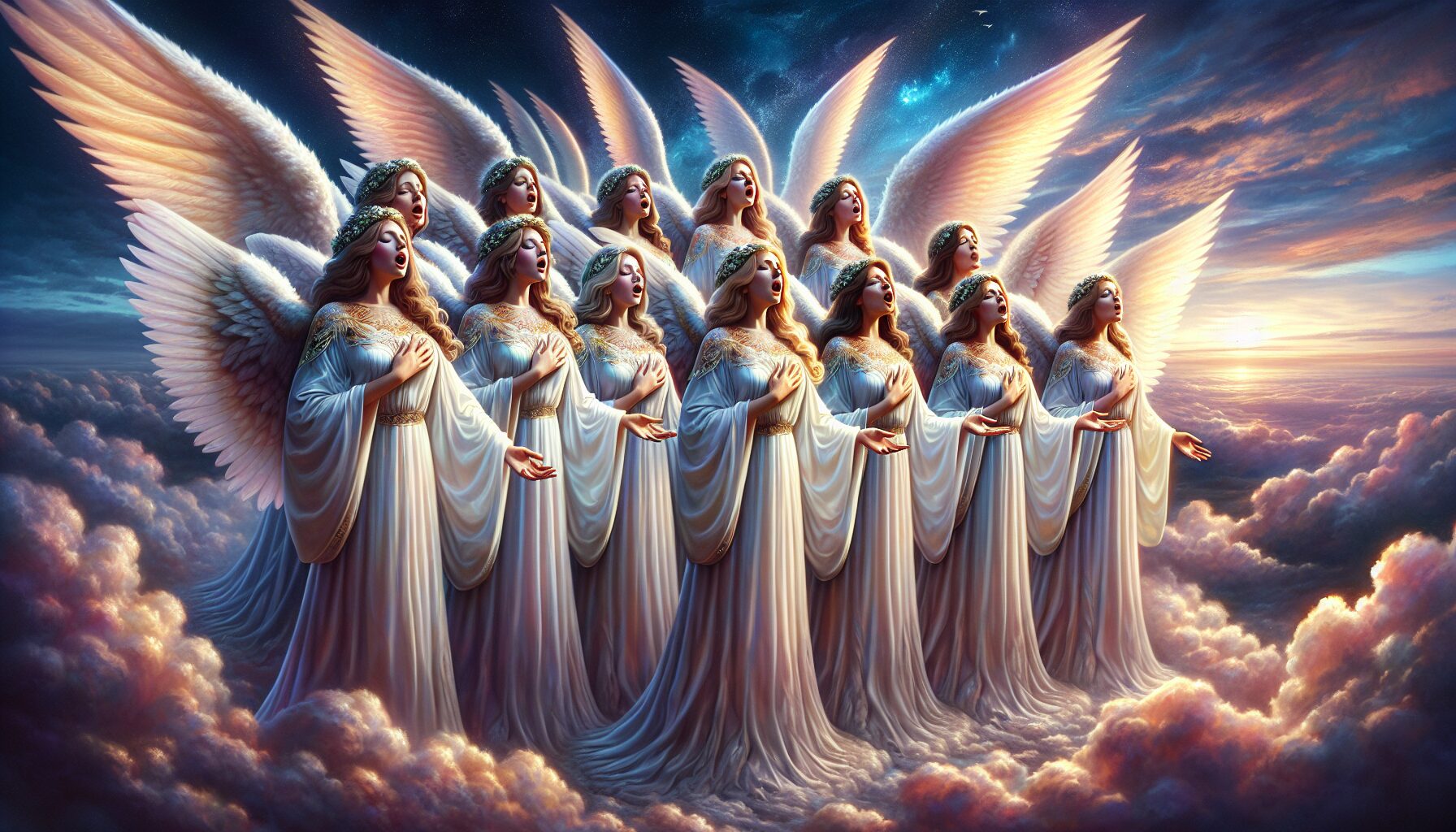
    The image of a celestial choir is not only majestic but laden with profound mystical symbolism. The concept of the Choir of Angels finds its roots in religious texts, particularly the writings of Pseudo-Dionysius the Areopagite, a Christian theologian of the late fifth to early sixth century. He described the nine hierarchies of angels, divided into three triads:

    • The First Triad: This triad consists of Seraphim, Cherubim, and Thrones, closest to God and directly connected to divine love and wisdom.
    • The Second Triad: Comprising Dominions, Virtues, and Powers, these angels govern creation and manage universal order.
    • The Third Triad: This includes the Principalities, Archangels, and Angels, the guardians of nations and individual souls.

    “The Angelic choir is the beauty of heavenly order,” says Thomas Aquinas in the Summa Theologica, encapsulating the idea that angels represent the harmony and order of the universe.

    Harmonic Resonance Explained

    In the context of angels, harmonic resonance refers to the idea that everything in the universe is interconnected through vibrations and frequencies. The universe is a vast symphony conducted by the divine, with angels partaking in this celestial music. Each hierarchy of angels resonates at specific frequencies, contributing to the overall harmony of the universe.

    The principle of harmonic resonance illustrates how specific frequencies can amplify others, creating synergy and balance. In the context of angelic choirs, this means each choir’s unique “sound” or frequency contributes to the harmonious celestial symphony. This concept is deeply rooted in mysticism, where sound and vibration are seen as vehicles of spiritual transformation.

    The Symbolism of Sound and Music

    Sound and music have long been associated with divine experiences. In many spiritual practices, music is a means of connecting to the divine, achieving higher states of consciousness, and fostering healing. The symbolism of the Choir of Angels aligns with these meanings:

    • Vibration of the Universe: According to some mystical traditions, the universe itself is a living entity vibrating with divine energy. Angels are thought to be the administrators of this vibrational energy, each note and sound contributing to cosmic order.
    • Sacred Geometry and Music: Pythagorean philosophy and sacred geometry often relate harmonious sounds to mathematical perfection. Angels, as perceived musicians of the heavens, illustrate the divine symmetry and balance within the universe.
    • Healing Frequencies: Sound healing practices, such as the use of Tibetan singing bowls or Gregorian chants, are believed to create vibrations that align individuals with higher frequencies, promoting healing and spiritual growth.

    “Music is a moral law. It gives soul to the universe, wings to the mind, flight to the imagination, and charm and gaiety to life and to everything,” affirms the philosopher Plato, reinforcing the spiritual essence music brings to existence.

    Modern Applications and Spiritual Practices

    In contemporary spiritual practices, the connection between angels, sound, and healing has gained popularity. Many people engage in meditative activities and rituals aiming to tap into the so-called “angelic frequencies” to achieve a peaceful and balanced state of being. These practices often include:

    • Meditation: Guided meditations focusing on angelic presence and harmonic resonance aim to elevate participants’ consciousness, inviting feelings of serenity and connectedness.
    • Sound Therapy: Utilizing instruments like tuning forks or crystal bowls, practitioners believe they can channel angelic energies and stimulate healing frequencies within the body.
    • Prayer and Chanting: Reciting angelic names or chants seeks to invoke the energies and support of the celestial choirs, offering comfort and divine guidance.

    Conclusion

    The fascination with the Choir of Angels and their harmonic resonance showcases humanity’s desire to connect with the divine and explore the mystical dimensions of existence. Whether through religious belief or modern spiritual practice, the imagery of angels as carriers of divine harmony offers profound insights into the interconnectedness and beauty of the cosmos. As we embrace the symphony of life, we might find inspiration in the ageless wisdom of the angelic choir, a harmonious reminder of the divine essence that resonates within and around us all.
  • Angelic Hierarchies – Mysticism of Celestial Orders

    Angelic Hierarchies – Mysticism of Celestial Orders

    The ethereal realm of angels captivates the human imagination, embodying a profound mystical tradition spanning religions and cultures. Angelic beings, often perceived as messengers between the divine and mortal realms, hold key roles in religious texts, art, and spiritual traditions. Exploring the angelic hierarchies unveils a celestial order radiating divine light and purpose.

    The Concept of Angelic Hierarchies

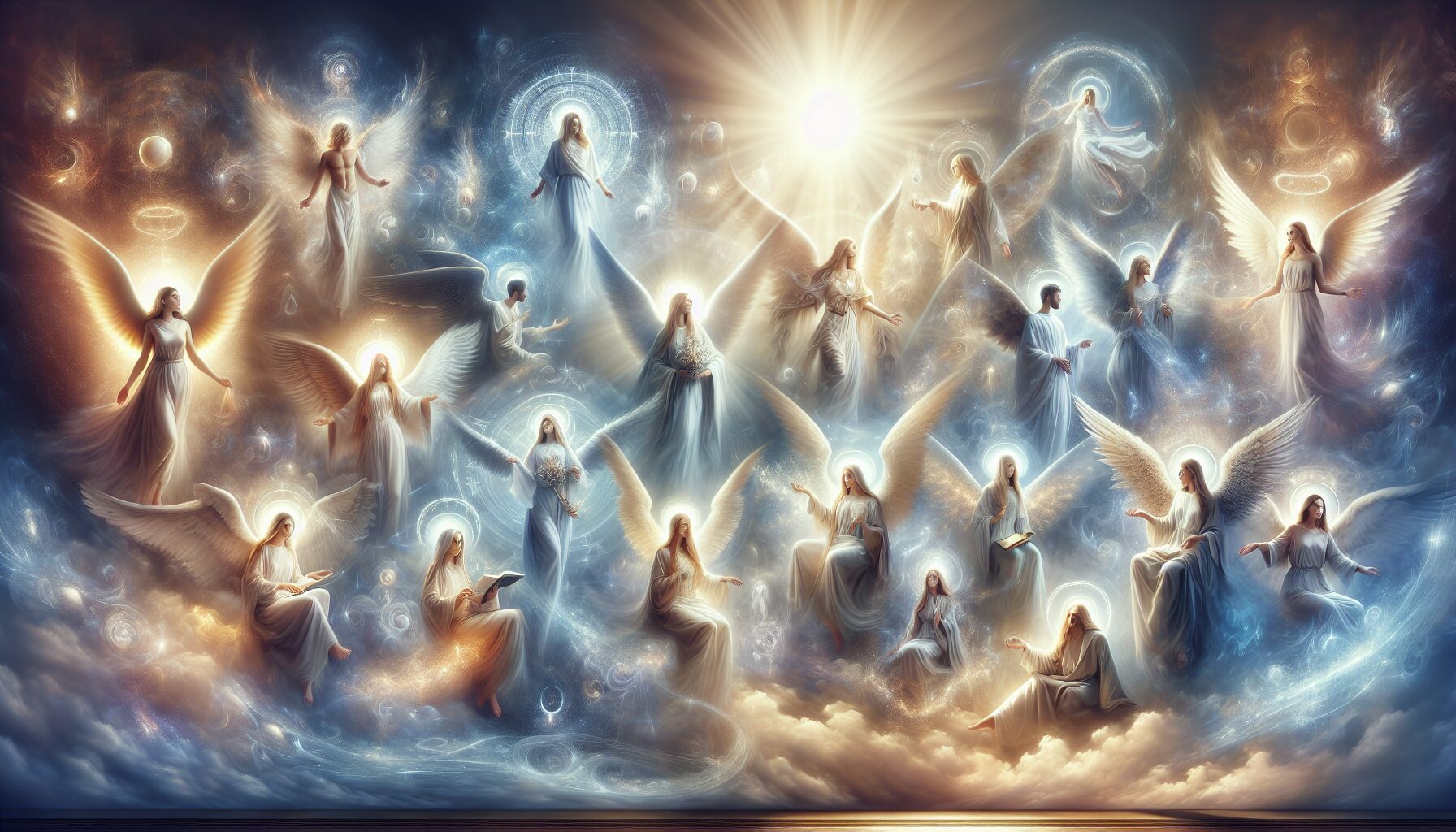
    The notion of angelic hierarchies was first systematically organized by Pseudo-Dionysius, a Christian theologian and philosopher of the late 5th to early 6th century. In his work, De Coelesti Hierarchia, he described a structured order that categorizes angels into three triads, each consisting of three orders or choirs.

    “The theologians have given us the nine angelic names…,” writes Pseudo-Dionysius, drawing from scripture and theological insights (Pseudo-Dionysius, De Coelesti Hierarchia).

    The First Triad: Closest to the Divine Throne

    • Seraphim: The seraphim are often depicted as fiery beings of pure light, surrounding God’s throne. According to Isaiah 6:2-4, they cry out “Holy, holy, holy” continuously. Their role is to cleanse, illuminate, and move heaven’s flaming love.
    • Cherubim: Known for their wisdom and knowledge, the cherubim are guardians of divine secrets. They are often shown as the keepers of the way to the tree of life (Genesis 3:24). Thomas Aquinas described them as “fullness of knowledge” (Summa Theologica, Part 1, Question 108, Article 5).
    • Thrones: These angels represent divine justice and authority. Known as the carriers of God’s throne, they help dispense divine judgment. Thomas Aquinas refers to them as angels who maintain a perfect view of God’s work with peace and humility.

    The Second Triad: Heavenly Governors

    • Dominions: The middle of the nine orders, dominions regulate the duties of lower angels. They oversee nations and large groups, ensuring that the cosmic order is maintained and are sometimes depicted with orbs or scepters.
    • Virtues: Charged with bestowing blessings and courage, virtues perform miracles in the world. The apostle Paul refers to them in his Epistle to the Ephesians and Colossians, suggesting their power manifests in miracles (Ephesians 1:21).
    • Powers: These angels repel evil and prevent the fall of the world into chaos. Often described as warrior angels, they preserve cosmic order and balance.

    The Third Triad: Angels of Our World

    • Principalities: Assigned to care for the Earth and its realms, principalities guide and instruct the ruling class and leaders, inspiring them toward ethical and just governance.
    • Archangels: Known as the chief messengers, archangels impart revelations and crucial announcements. Among the most famous are Gabriel, Michael, and Raphael. Each takes a significant role across different religious texts and stories.
    • Angels: Often referred to as guardian angels, these beings are closest to humanity. They watch over individuals, guiding them toward divine paths.

    Influences and Interpretations Across Cultures

    The angelic hierarchy’s resonance echoes across cultures and religions. In Jewish mysticism, the Angelic Hosts resonate with the hierarchical framework seen in Kabbalistic traditions, where angels govern different worlds in the Tree of Life structure. In Islam, the Quran references angels as messengers of Allah, aiding prophets and faithful followers.

    Art and literature continuously draw inspiration from these celestial hierarchies. Depictions of archangels and seraphim abound in Byzantine, Gothic, and Renaissance art, capturing the mystical aura associated with these divine beings.

    The Symbolism and Purpose of Angelic Beings

    Angelic hierarchies signify the spiritual ascent toward God, suggesting a cosmic order that mirrors divine principles. Each angelic choir carries specific symbols and purposes that reflect their unique roles within the celestial hierarchy. This hierarchical structure emphasizes themes of order, purity, and spiritual insight, underscoring the transcendental nature of existence beyond the mortal plane.

    Contemplation and Modern Mysticism

    In contemporary spirituality, the angelic hierarchy continues to be a source of fascination and meditation. Some individuals seek deeper communion with angelic forces, using prayer, meditation, and rituals to connect with these celestial beings. The pervasive influence of angels in modern spiritual practices highlights humanity’s enduring quest for divine knowledge and benevolent guidance.

    The mysticism of angelic hierarchies remains a profound testament to the universal quest for understanding and experiencing divinity in its many forms. From their luminous presence in holy scriptures to their revered status in spiritual communities, angels represent an eternal bridge between the earthly and the heavenly, urging us toward a higher plane of consciousness.

    In essence, angelic hierarchies speak to the timeless human desire to comprehend the mysteries of the universe, the divine order, and the essence of spiritual existence. As we seek to unravel the celestial tapestry woven within these guardian realms, we’re drawn ever closer to the divine light that guides and inspires us across time and space.

  • Celestial Graffiti: Angels in Public Art

    Celestial Graffiti: Angels in Public Art

    The presence of angels in public art is a phenomenon that transcends cultural boundaries and historical periods, embodying a universal symbol of hope, spirituality, and guidance. From frescoes and sculptures to modern street art, the depiction of these celestial beings continues to inspire and captivate the public imagination. This article explores how angels have seamlessly integrated into the realm of public art, enhancing communal spaces and enriching urban landscapes.

    Historical Significance

    For centuries, angels have played an integral role in art and religious iconography. In the words of art historian Dr. Lewis Williams, “Angels serve as the ultimate muse, bridging the tangible and the ethereal in ways that connect deeply with the human psyche.” These figures have appeared in numerous biblical artworks and have gradually evolved in their representation to reflect the values and aesthetics of different times.

    Modern Interpretations

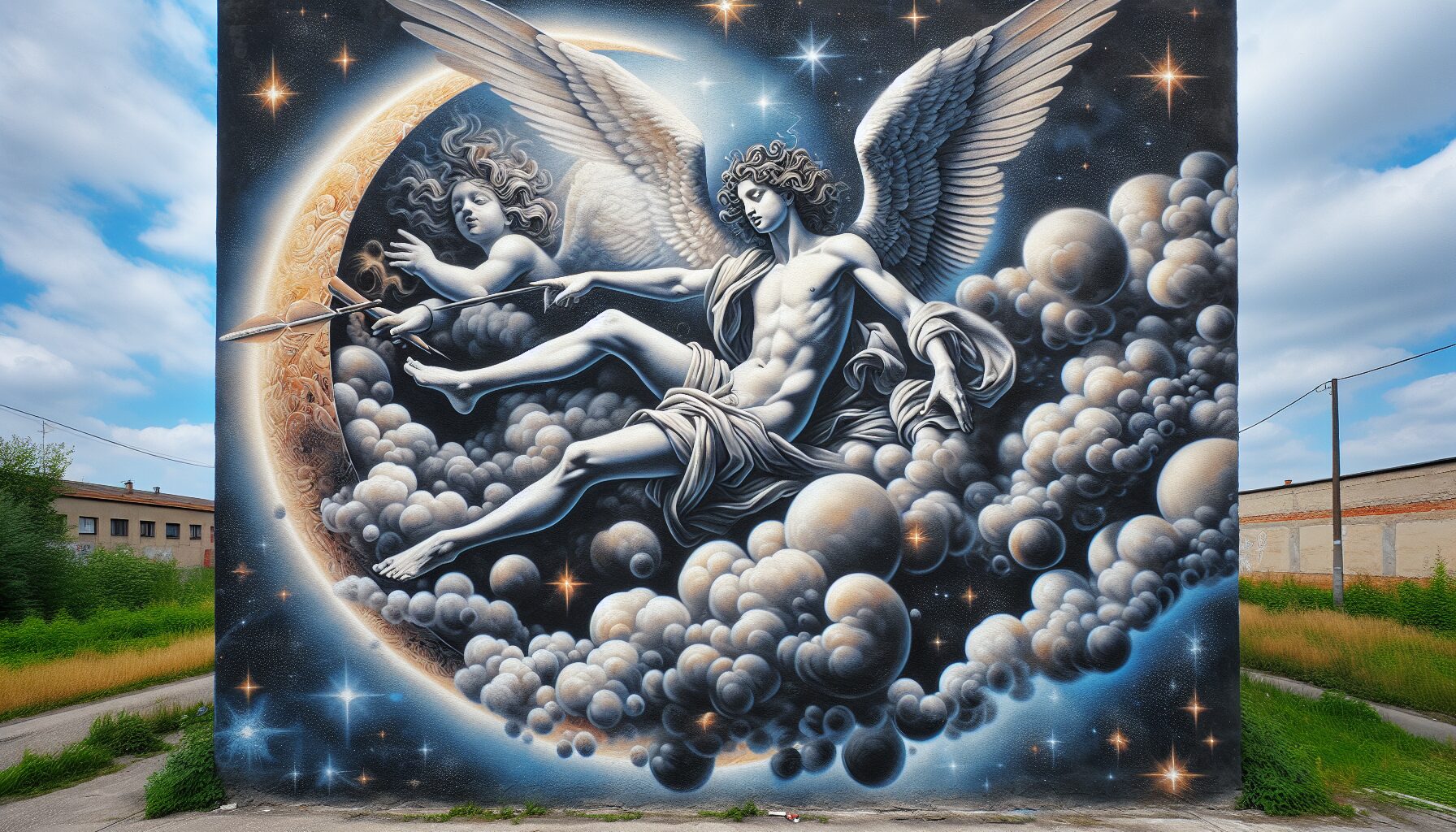
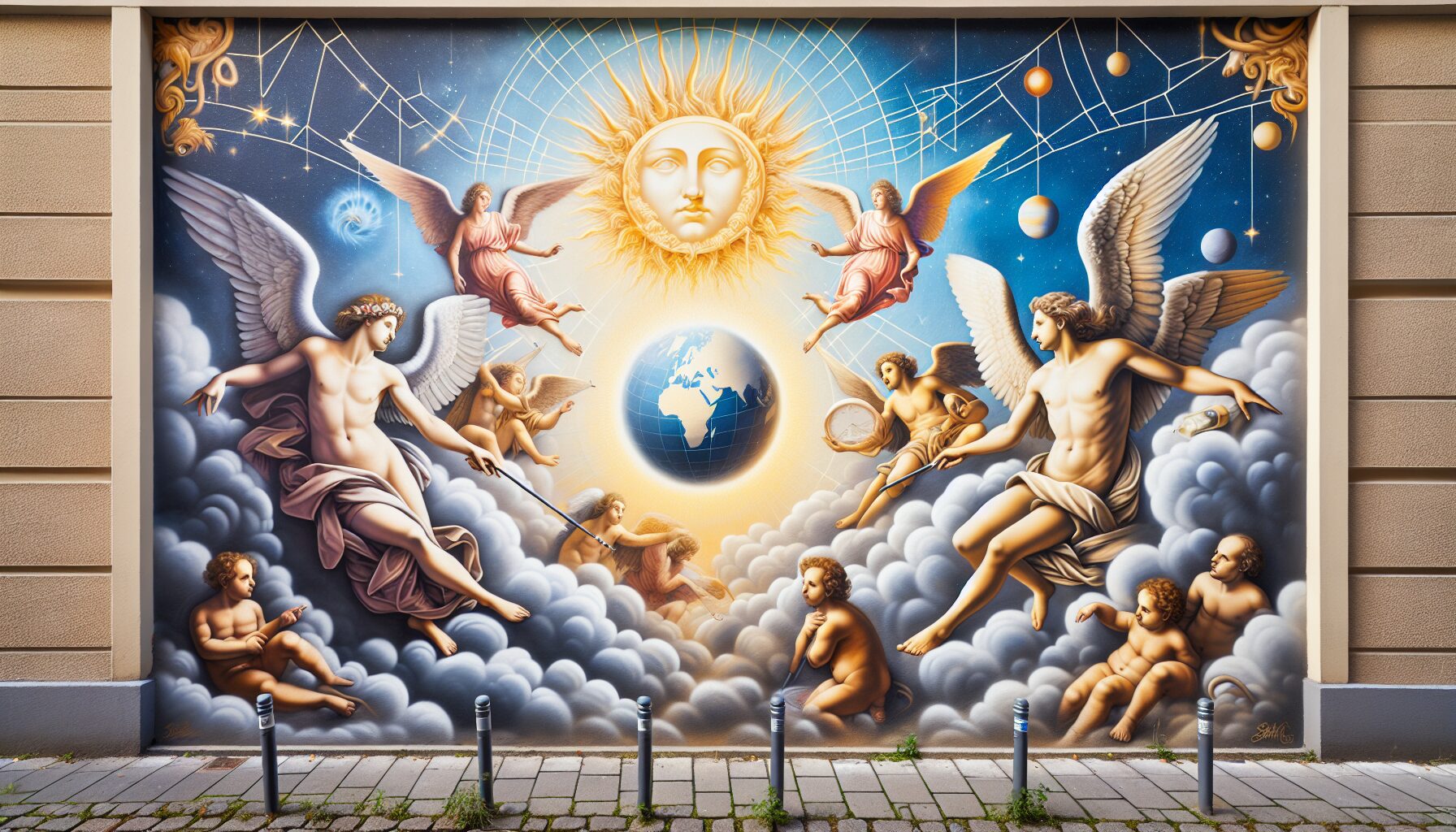
    • Street Art: In contemporary urban art, angels often appear as graffiti or murals. These pieces can be found on alleyways and building facades, where artists use the angel motif to convey messages of hope or to memorialize individuals.
    • Sculptures: Angel sculptures adorn parks and public squares, providing both aesthetic beauty and a focal point for community gatherings. These timeless figures invite contemplation and serve as emblems of peace and solace.
    • Interactive Installations: Modern installations invite viewers to engage with angelic figures in public spaces, offering experiences that range from virtual reality environments to kinetic sculptures that react to audience movement.

    Angels as Cultural Connectors

    Artists across the globe utilize angelic imagery to create a sense of unity within public spaces. For instance, street artist Eduardo Kobra created a stunning mural called “Angel of Hope” in São Paulo, which has become a landmark and a symbol of social change. You can view more details about his work on Kobra’s official site.

    “In each piece, the aim is not just to beautify but to speak, to remind people of the unseen guardians that protect and guide us.” — Eduardo Kobra

    The Future of Angelic Art

    The enduring popularity of angels in public art reflects a collective yearning for connection and guidance. As urban environments continue to evolve, artists will undoubtedly find new ways to reinterpret and reintroduce these celestial guardians into the public sphere. Whether through digital media or interactive installations, the angelic form will likely remain a powerful and poignant element within the tapestry of public art.

  • Celestial Graffiti: Angels in Street Art

    Celestial Graffiti: Angels in Street Art

    You need to be logged in to view this content. Please . Not a Member? Join Us