Tag: arcane

  • The Arcane Void – Mystery Encoded in Emptiness

    The Arcane Void – Mystery Encoded in Emptiness

    The Arcane Void: Mystery Encoded in Emptiness

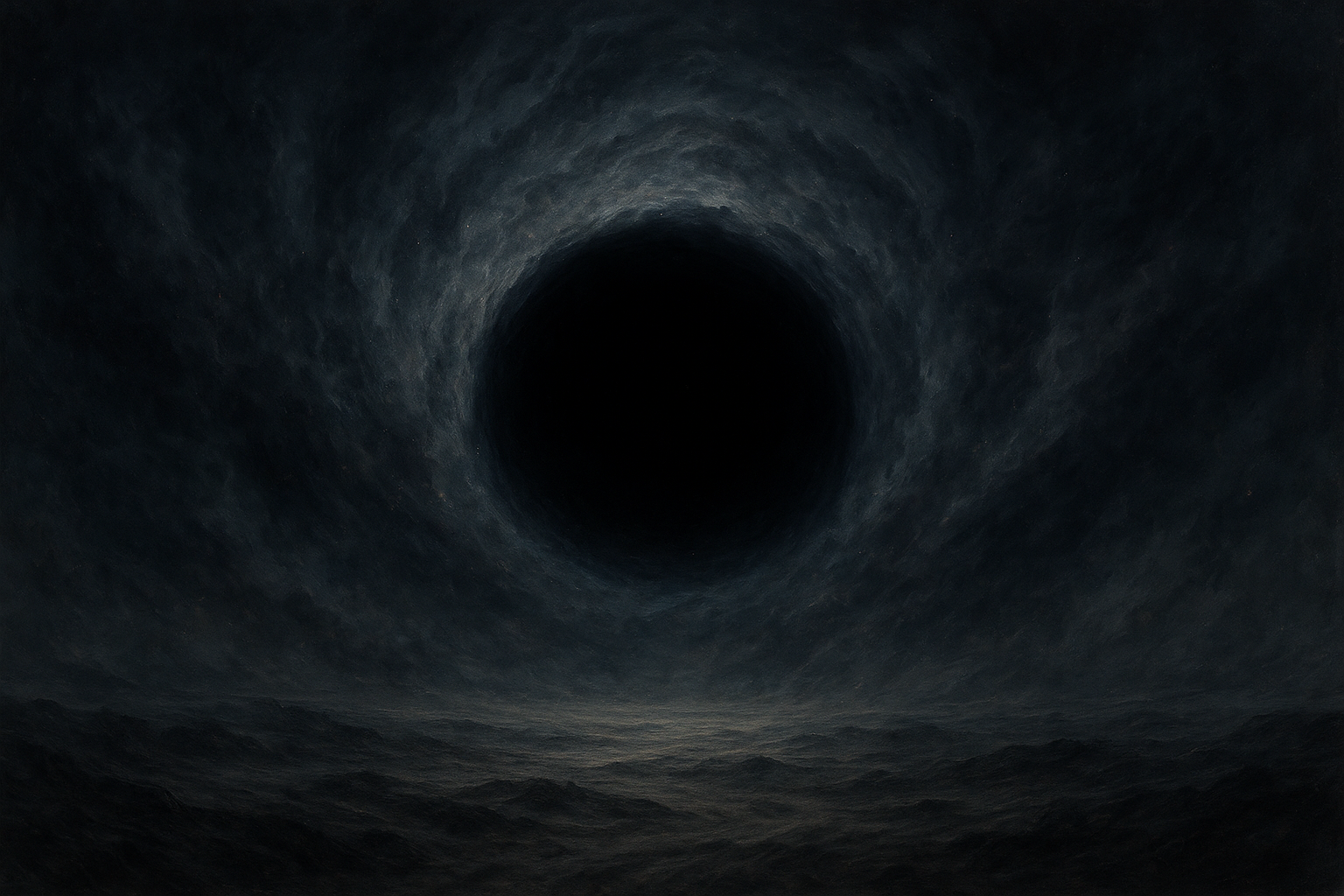
    The concept of the void, an enigmatic emptiness that resonates across various disciplines, stretches beyond mere absence. It embodies profound philosophies, stirring emotions and inciting a relentless quest for understanding. What makes the void so captivating is its ubiquity and its haunting presence that continues to challenge our perceptions of reality. In delving into the arcane void, we explore a space where science, art, psychology, and philosophy intersect, creating a tapestry rich with mysteries encoded in emptiness.

    The Philosophical Perspective

    The void as a philosophical concept dates back to ancient Greek thought, particularly with the pre-Socratic philosopher Parmenides, who posited that emptiness, or “nothingness,” was an impossibility. In direct contrast, the atomists, including Democritus, perceived the void as essential for motion and existence. This dichotomy set the stage for ongoing debates.

    “Nothingness—or the void—engages philosophers’ minds since it raises questions about existence itself, challenging assumptions about space, time, and the nature of reality.”

    The existentialists, such as Jean-Paul Sartre, later explored the void in human emotions and psychology, suggesting that humans often face an inherent void at the core of their existence. This void can evoke anxiety, compelling individuals to seek meaning or face an unsettling freedom. Sartre is famously quoted as stating, “Existence precedes essence,” interpreting the void as a backdrop against which humans define themselves.

    The Scientific Enigma

    In the realm of science, the void takes on a tangible form in terms of cosmic spaces and quantum physics. The universe’s vastness, marked by dark voids between celestial bodies, is both a literal and figurative expanse of emptiness. In cosmology, these voids challenge our understanding of the universe’s structure.

    Astronomically speaking, voids are large expanses between galaxy filaments, with few or no galaxies. Dr. J. Richard Gott, a professor of astrophysical sciences, remarked in a Space.com article, “Our current understanding of the universe’s architecture emerges largely from studying these cosmic voids—they are as informative as the galaxies themselves.”

    Quantum Mechanics and the Void

    In quantum theory, the emptiness of the void is deceptive. According to the principles of quantum mechanics, what appears as empty space is teeming with transient quantum particles that continuously flicker in and out of existence. The vacuum, therefore, is a seething medium of potentials—a background that challenges the very definition of emptiness.

    “These virtual particles lend the vacuum a curious kind of presence, capable of affecting the real world in observable, albeit extremely subtle, ways.”

    The Artistic Interpretation

    The void has served as a potent source of inspiration for artists throughout history, often used to reflect existential themes and the human condition. Artists employ the concept to evoke emotion, leaving spaces deliberately unfilled to generate tension and evoke contemplation.

    Yves Klein, the French artist known for his monochrome paintings, famously explored the void through his work. In his “Leap into the Void” photograph, he symbolized a transcendence into nothingness—engaging viewers in a conversation about the nature of existence and the role of the unknown in art.

    “The void not only frames the known but becomes part of the narrative, provoking the viewer to engage with the absence and its implications.”

    Psychological Dimensions

    On the psychological front, the void often symbolizes an emotional state of emptiness or alienation. It is akin to feelings of hollow despair or the lack of meaning that individuals may experience. Viktor Frankl, a psychologist and Holocaust survivor, identifies this sense of a void or “existential vacuum” in his work “Man’s Search for Meaning.”

    Frankl observed:

    “This emptiness manifests in boredom and apathy, which he refers to as the ‘existential vacuum,’ a reflection of the loss of meaning in modern life.”

    In modern psychology, the void is often explored within existential therapies, which focus on helping individuals find meaning amidst the emptiness. This approach aligns with humanistic theories that emphasize personal growth and self-actualization.

    Concluding Thoughts

    The arcane void persists as a canvas upon which humanity projects its fears, inquiries, and creative impulses. From ancient philosophy to contemporary science, art, and psychology, the void remains a space that is both forbidding and inviting, drawing us into its depths. In attempting to decode the mysteries held within the void, we embark on an endless journey of exploration, discovery, and, perhaps, occasional comprehension.

    The void, it seems, might always remain partly elusive, inviting us to engage with its enigma, prompting us to define our own existence against its shadowy backdrop. As we continue to explore, both physically and intellectually, we may seek not to fill the void, but to understand and embrace the profound truths it harbors.

  • Phantom Codex – Arcane and Occult Mysteries

    Phantom Codex – Arcane and Occult Mysteries

    Phantom Codex: Arcane and Occult Mysteries

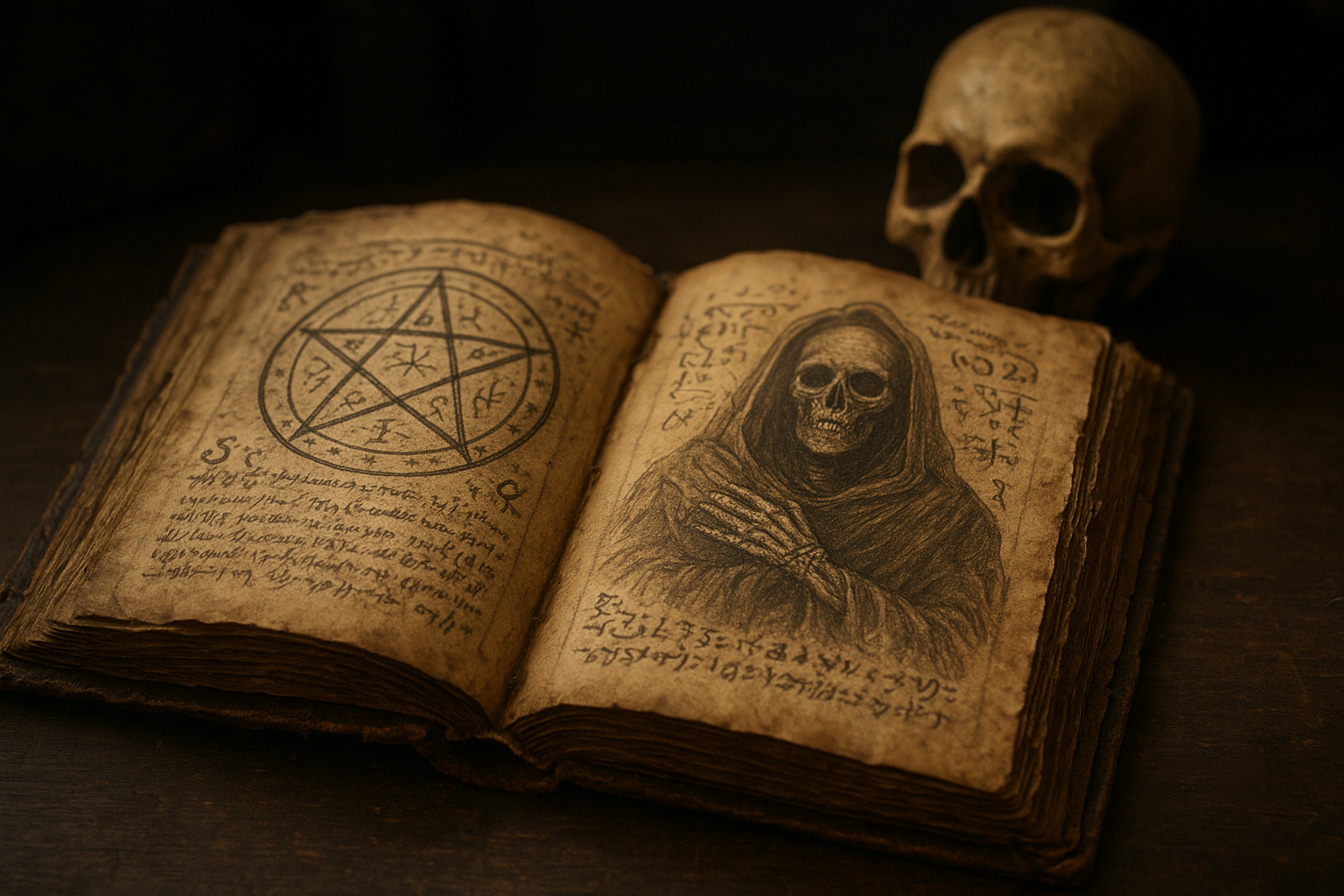
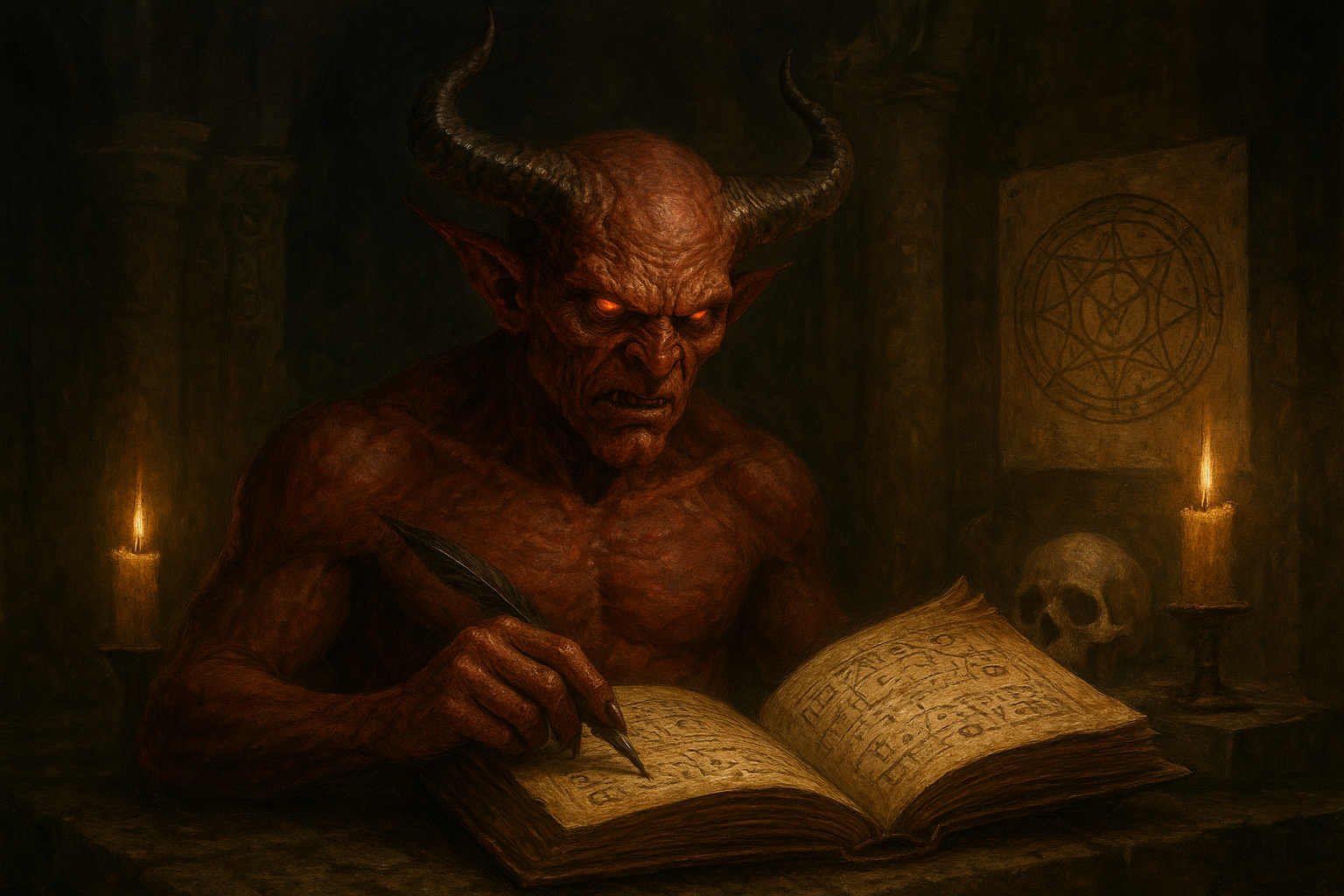
    Throughout human history, the lure of the mysterious and the occult has captivated the curiosity of many. Hidden among these mysteries is the concept of the Phantom Codex, an elusive manuscript purportedly holding arcane and otherworldly secrets.

    The Origins of the Codex

    The exact origins of the Phantom Codex are shrouded in enigma. Some researchers believe it to be a creation of medieval alchemists who sought to transmute base materials into gold and achieve eternal life. Others suggest it is a modern fabrication, a testament to our enduring fascination with the unknown.

    “The real mystery is not the Phantom Codex itself, but the power of belief in the unknown.” — Dr. Henrietta Morrow, Occult Historian

    One of the most intriguing stories about the codex involves its supposed connection to the Hermetic Order, an ancient society famed for their esoteric knowledge and mystical rituals.

    Decoding the Secrets

    According to lore, the Phantom Codex is bound in a language lost to time, illustrated with cryptic symbols and diagrams. Many believe it contains the following:

    • Secrets to manipulating natural forces
    • Formulas for alchemical transformations
    • Instructions for contacting otherworldly beings

    The allure of decoding such secrets has driven countless scholars to dedicate their lives in pursuit of understanding its contents. However, no concrete evidence of the codex’s existence has been presented, transforming it into more of an ideological pursuit than a physical one.

    The Cultural Impact

    The cultural impact of the Phantom Codex is undeniable, influencing writers, filmmakers, and artists. Its presence can be noted in works of fiction that explore themes of hidden knowledge and the thirst for power, remarkably echoing those of H.P. Lovecraft and his tales of cosmic horror.

    Grimoires, like the Phantom Codex, contribute to society’s appreciation and romanticization of the mystical, reminding us of the vast spectrum of human understanding.

    The Undying Fascination

    The Phantom Codex may remain elusive, but the legends surrounding it show no signs of fading. Its mystique lies in the balance between existence and non-existence, the real and the imagined, challenging our perceptions of reality.

    In this age of information, where many seek to demystify the world through science and reason, the Phantom Codex stands as a reminder of the eternal allure of the unknown. The pursuit of these arcane and occult mysteries continues to inspire and daunt those drawn into its shadowy embrace.

  • Arcane Funeral – Petit Mort in Ritual Context

    Arcane Funeral – Petit Mort in Ritual Context

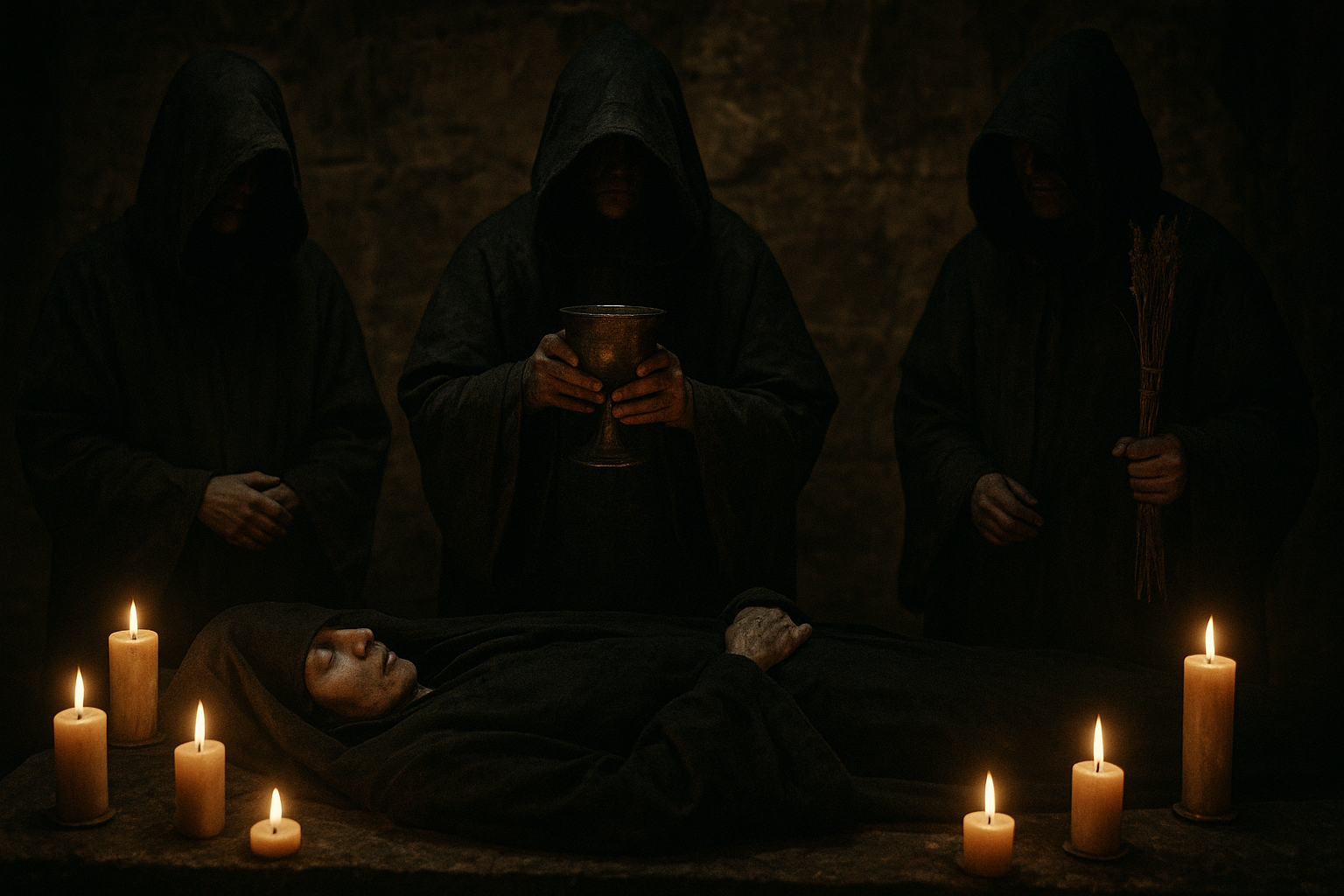
    Throughout history, the concept of death has been approached with a myriad of rituals and beliefs, demonstrating humanity’s diverse cultural tapestry. Among these rituals, the “arcane funeral” represents an intriguing intersection of mortality, spirituality, and mythology. This article explores the “Petit Mort,” or “little death,” within the ritual context, touching upon its meanings, applications, and cultural significance.

    Understanding “Petit Mort”

    Petit Mort, a French term literally translating to “little death,” is most often interpreted in contemporary contexts to describe the brief loss or alteration of consciousness that is post-orgasm. Sigmund Freud famously regarded it as a fleeting glimpse of the death instinct, a concept he called Thanatos.

    “The goal of all life is death.” – Sigmund Freud, Beyond the Pleasure Principle

    While modern references to Petit Mort are often secular and intimate in nature, the term’s deeper esoteric and philosophical significance cannot be ignored. It lends itself well to discussions around arcane death rituals precisely because it encapsulates the essence of transition—a moment when one is poised between existence and non-existence.

    The Metaphorical Arcane Funeral

    The notion of an arcane funeral extends beyond mere physical death; it bridges the world of the living with the metaphysical realm. In various rituals, death is not solely an end but a transformative commencement. Here are prominent cultural perspectives:

    • Egyptian Funerary Practices: Ancient Egyptians believed in an elaborate journey to the afterlife. The deceased had to undergo a series of rituals and transformations, such as the “Opening of the Mouth” ceremony, to be able to speak and eat in the next world. This was their own form of Petit Mort, a necessary passage to the eternal life [Smithsonian Magazine].
    • Tibetan Sky Burial: Practiced in regions with limited agriculture, the sky burial is a practical and symbolic act wherein the body is given to the elements, emphasizing the transient nature of life. It is a ritualistic “little death,” acknowledging the deceased’s connection to the universe and the cycle of life [National Geographic].
    • Mesopotamian Underworld Journey: The Mesopotamians had a vivid conception of the afterlife, where the deceased underwent a series of challenges in the underworld to reach peace. The myth of Inanna’s descent embodies this journey, parallel to the concept of Petit Mort [Wikipedia].

    Psychoanalytic and Philosophical Aspects

    The psychoanalytic ideologies posit that each “little death” represents a deeper understanding, a knowledge that stems from confronting our mortality. Carl Jung, for instance, viewed death not only as a literal event but a symbol of psychological transformation.

    “The soul itself is fundamentally a fantasy phenomenon. By virtue of this detachment it can, if ever so little, escape from the net of the inescapable.” – C.G. Jung, Collected Works

    This symbolic intersection of life and death in arcane contexts becomes a tool for understanding existential questions and spiritual growth. Petit Mort, therefore, serves as a microcosm of life’s cyclical nature, a profound acknowledgment of the beginning embedded within the end.

    Modern Interpretations and Applications

    In contemporary spiritual and psychological practices, the concept of Petit Mort and arcane funerals have found new relevance. Practices like meditation, transcendental experiences, and existential therapy often use symbolisms of small deaths to achieve greater self-awareness and healing.

    Many spiritual retreats incorporate the symbology of death and rebirth as a part of their curriculum, encouraging participants to shed their previous selves and embrace a new phase of conscious life. These exercises reinforce the idea that acknowledging continuous, small transitions enhances one’s life journey.

    Conclusion

    The arcane funeral, interpreted through the lens of the Petit Mort, reflects the non-linear passage of life, a motif recurring throughout history and across cultures. These rituals and beliefs underscore humanity’s quest for understanding life and death—a testimony to our intrinsic curiosity about what lies beyond.

    As we continue to evolve in our spiritual and existential quests, the metaphysical contemplation of these “little deaths” within rituals will undoubtedly remain a powerful force that influences how we cope with the enigma of death and celebrate the continuum of life. Embracing the duality of life and death, as arcane rituals suggest, enables us to transcend the trivial and touch upon the profound mysteries of existence.

  • Infernal Codes – Demons and the Arcane Law

    Infernal Codes – Demons and the Arcane Law

    In the ever-expanding digital realm, a new breed of malware is haSteking the world by storm, referred to as “Infernal Codes.” These are not just simple scripts designed to disrupt; they are complex, enigmatic, and akin to demonic entities, lurking in the shadows of the Internet.

    The term “Infernal Codes” conjures images of evil incarnations within your devices. However, these malicious codes are entirely digital, crafted by programmers with a penchant for chaos and disruption. While not fundamentally different from traditional malware in their objectives, their sophistication and deceitfulness make them stand out.

    “Infernal Codes operate like demons—they possess systems, spread silently, and are immensely difficult to exorcize,” notes Dr. Carla Vespucci, a cybersecurity expert at the University of Gothenburg.

    The Anatomy of Infernal Codes

    • Complex Obfuscation: Much like a demon cloaking itself in mystery, these codes use advanced obfuscation techniques to hide their true intentions.
    • Persistence: They are designed with resilience in mind, making them exceptionally hard to remove, even for seasoned IT professionals.
    • Self-Propagating Nature: Once unleashed, they spread relentlessly across the network, not unlike a digital plague.

    The rise of such sophisticated malware calls for an equally evolved set of cybersecurity protocols. As noted in a report by Cybersecurity Journal, traditional anti-virus solutions often fall short and are likened to using archaic rituals in a modern exorcism.

    Enforcing the Arcane Law

    The battle against these infernal entities is ongoing, with cybersecurity experts acting as modern-day spellcasters. As the arcane law focusing on these malignant codes develops, regulations and strategic countermeasures are becoming more pronounced. Key to their strategy is the adoption of advanced machine learning algorithms and artificial intelligence to anticipate and neutralize threats before they manifest.

    “The future of cybersecurity lies in understanding and outsmarting the very algorithms that drive these digital demons,” states James O’Brien, CTO of SecureNet Solutions.

    For IT professionals, acquaintance with these codes is paramount, not just for protection, but for preparedness in an ever-evolving digital battlefield. This encapsulates both the technical and philosophical understanding required to maintain dominion over the cyberspace.

    As we attempt to lay down the arcane law against these infernal entities, one thing remains certain: the ongoing narrative between coders and their creations, the digital wizards and their infernal adversaries, will continue to captivate and challenge the digital world.

  • Arcane Eclipse – Occult Darkness Beyond Perception

    Arcane Eclipse – Occult Darkness Beyond Perception

    The concept of an arcane eclipse speaks to our intrinsic curiosity about the mysteries that lie beyond the veil of ordinary perception. The occult, a realm inhabited by secrets and esoteric wisdom, persists as a fascinating and complex subject, drawing in those who seek deeper understanding. Ultimately, these mysteries serve as a reflection of our own enigmatic nature and our insatiable thirst for knowledge.

    The Nature of Occult Darkness

    Occultism, by definition, deals with the hidden or the unknown. It is concerned with mystical experiences, alchemy, witchcraft, and astrological musings that attempt to explain the universe’s darker, less comprehensible facets. This complexity naturally evokes wonder and trepidation in equal measure. As Carl Jung aptly stated, “The meeting of two personalities is like the contact of two chemical substances: if there is any reaction, both are transformed.” (source).

    The Eclipse as Metaphor

    An eclipse, traditionally perceived as a cosmological event where one celestial body moves into the shadow of another, provides the perfect metaphor for illustrating the obscured nature of the occult. This alignment creates a temporary darkness that paradoxically enhances the clarity of the accompanied light. Our exploration of these occult mysteries seeks to uncover a clarity hidden within obscurity—as if harnessing the power of the cosmic interplay between darkness and light.

    “Mystery creates wonder and wonder is the basis of man’s desire to understand.” – Neil Armstrong

    Historical and Cultural Implications

    • Cultural Interpretations: Different cultures have uniquely approached the idea of the occult, ranging from Native American vision quests to the elaborate rituals of European alchemists.
    • Historical Significance: Throughout history, figures such as Nicholas Flamel and John Dee delved into a world filled with symbols and enigmatic traditions, often seen as bridging the divine and mortal realms.

    The narratives surrounding these figures indicate an enduring struggle to grasp realities beyond ordinary perception, effectively using the ‘arcane eclipse’ as a means to eclipse ignorance with revelation.

    Conclusion

    The concept of an arcane eclipse—wherein the dark, hidden characteristics of the occult come to light—encourages us to merge rational understanding with the inexplicable. Thus, it stands as a compelling reminder of the significance of exploring the darker aspects of knowledge. In confronting the shadows, we find pathways to illuminate the intricate depths of human perception and possibly gain insight into the profound mysteries of existence.

  • Arcane Abyss – Emptiness and Hidden Knowledge

    Arcane Abyss – Emptiness and Hidden Knowledge

    Arcane Abyss: Emptiness and Hidden Knowledge

    The notion of an ‘Arcane Abyss’ conjures images of deep, dark voids brimming with secrets unknown to the commonplace world. It symbolizes the mysterious interface where emptiness and hidden knowledge coexist, a concept that has piqued the curiosity of philosophers, mystics, and seekers for centuries.

    The Concept of the Abyss

    At its core, the concept of the abyss represents an unfathomable chasm, both literal and metaphorical. The abyss is often depicted in literature and mythology as a formidable void, a place beyond the reach of ordinary perception. Philosopher Friedrich Nietzsche warned, “And if you gaze long enough into an abyss, the abyss will gaze back into you.” This idea encapsulates a paradox: in seeking the abyss’ concealed knowledge, one risks being consumed by it.

    Historical Perspectives on Emptiness

    The idea of emptiness as a source of potential has been explored in multiple cultural and philosophical traditions. In Buddhism, for example, the notion of Śūnyatā or “emptiness” is a core tenet that suggests the absence of inherent existence in all phenomena. It is through understanding this emptiness that one can achieve liberation and enlightenment.

    “Form is emptiness, emptiness is form,” states the Heart Sutra, one of Buddhism’s most profound teachings.

    This truth promotes the idea that emptiness is not a void lacking in everything, but rather the fertile ground for potential.

    Mythological Roots and Hidden Knowledge

    Throughout mythology, the abyss is often depicted as a guardian of hidden knowledge. In Greek mythology, the abyss is likened to Tartarus, a deep, gloomy part of the underworld where secrets of the cosmos were believed to be hidden. In the Norse sagas, Yggdrasil, the world tree, extends its roots into the mysterious depths of the unknown, symbolizing access to cosmic wisdom.

    • The Greek Oracle of Delphi’s Pythia would enter trances induced by abyssal fumes, believed to convey cryptic messages from the gods.
    • In Norse mythology, Odin, in his quest for knowledge, sacrifices his eye to drink from the Well of Mimir, which lay in the depths of the abyss, representing the pursuit of wisdom despite great personal cost.

    Modern Interpretations and the Quest for Knowledge

    Modern interpretations of the arcane abyss often intersect with psychological theories and the quest for self-discovery. Carl Jung’s concept of the ‘Shadow’ involves confronting the abyss within oneself. The shadow represents the unknown ‘darker’ side of our personality, encompassing both suppressed desires and untapped potential.

    Jung asserted, “Knowing your own darkness is the best method for dealing with the darknesses of other people.” By peering into our personal abyss, we unearth hidden facets of ourselves, thereby gaining deeper psychological insight.

    Science Meets the Abyss

    Science, too, flirts with the abyss in its quest to unravel the universe’s secrets. The explorations of black holes, often termed ‘cosmic abysses,’ exemplify humanity’s desire to decipher hidden knowledge. Astrophysicist Stephen Hawking described black holes as “a black body with no hair” referring to their seemingly simple physical characteristics that conceal complex information about the universe.

    “We are all now connected by the Internet, like neurons in a giant brain.” – Stephen Hawking

    This broader access to collective knowledge mirrors the interconnectedness characteristic of the abyss, where one discovery influences and enriches another.

    The Abyss in Popular Culture

    In popular culture, the concept of the abyss continues to inspire writers and filmmakers as they explore themes of emptiness and hidden knowledge. Movies like Interstellar depict protagonists voyaging into the abyss of space, portraying the search for new discoveries as a confrontation with both fear and enlightenment.

    • The feature film Event Horizon presents a literal and metaphorical void into which a spaceship ventures to unlock cataclysmic secrets.
    • Lovercraftian literature often situates its narrative in front of cosmic abysses, filled with ancient esoteric knowledge that can drive one to madness.

    Spiritual and Philosophical Approaches

    On a spiritual level, exploring the abyss involves meditation and introspection, looking inward into the infinite depths of the mind. Such practices echo the philosophical assertion posited by Socratic thought: “The unexamined life is not worth living.” Delving into one’s inner abyss can reveal hidden truths and shed light on one’s true nature.

    Conclusion: Embracing the Arcane Abyss

    The arcane abyss remains a potent metaphor for the pursuit of knowledge beyond the known. It challenges us to confront the emptiness of our understanding and invites us to uncover the profound wisdom lurking in the unknown. As we stand on the precipice of this abyss, it is not only the darkness we should fear but the unrealized light that knowledge might bring.

    Engaging with the arcane abyss requires courage and a willingness to embrace uncertainty. Whether through myth, philosophy, spirituality, or science, the journey into the abyss is a timeless quest with the promise of discovery and transformation. Like the universe itself, the arcane abyss is simultaneously a challenge and an invitation—to explore, to understand, and to illuminate the dark corners of our reality.

  • Infernal Whispers – Demons and the Arcane

    Infernal Whispers – Demons and the Arcane

    The realms of the arcane are often shrouded in mystery and fear, as they venture into territories unknown and infamously dominated by demons, those malevolent beings purported to lurk in the shadows of our reality. The relationship between demons and the arcane arts is a complex web of power dynamics, human ambition, and spiritual peril.

    The Origins of Demonic Lore

    Demons have been a part of human mythology and religious literature for millennia, appearing in ancient texts such as The Epic of Gilgamesh and the Bible. These beings are often portrayed as malevolent creatures, intent on sowing chaos and destruction. In Christian theology, demons are seen as fallen angels, led by the infamous Lucifer in his rebellion against God. This narrative has profoundly influenced Western culture’s perception of demons as sinister and corrupters of the soul.

    Meanwhile, other cultures also have their interpretations of demonic entities. In Hinduism, asuras are aggressive spirits often at odds with the devas, representing a dichotomy between chaos and order. The folkloric tales from diverse cultures collectively contribute to a rich tapestry of demonic mythos, each understanding inferring different attributes and intentions to these beings.

    Arcane Arts and Their Practitioners

    Practitioners of the arcane arts, or mages, have historically been depicted as figures that straddle the worlds of reality and the supernatural. Armed with an understanding of ancient rituals and spells, they wield powers that can heal or harm, create or destroy.

    J.K. Rowling, the renowned author of the Harry Potter series, provides a modern take on the arcane, describing a world where magic is both a gift and a responsibility. She writes,

    “Magic is a particularly tricky business. It sometimes has an outcome that you least expect.”

    (source: J.K. Rowling Official Site).

    The allure of the arcane lies in its potential to transcend the ordinary. However, this power often comes at a steep price. Literature and folklore frequently caution that the pursuit of arcane knowledge can lead to unintended consequences, such as pacts with demons, which promise power but envelop the soul in darkness.

    Demons in Contemporary Fiction

    Contemporary fiction continues to explore the intriguing interplay between demons and magic. Novels such as Cassandra Clare’s The Mortal Instruments series and Neil Gaiman’s Good Omens (co-authored with Terry Pratchett) portray demons as multifaceted characters, sometimes even possessing the capacity for good.

    Cassandra Clare emphasizes the moral ambiguity of demons. In an interview, she noted,

    “Demons can represent the internal struggles we face, those parts of ourselves we must confront and understand.”

    (source: Cassandra Clare Official Site).

    Similarly, Neil Gaiman and Terry Pratchett’s Good Omens whimsically dances with the concept of demonic entities, depicting them not as intrinsically evil but as beings with their own agendas, capable of surprising humanity with acts of kindness.

    The Risks of Summoning

    The act of summoning demons is a risky endeavor within the realm of the arcane arts. Summoners may seek the aid of demons for a plethora of reasons—knowledge, power, revenge, or love—but the peril lies in the costs associated with these deals. Often depicted in literature as cunning bargainers, demons are masterful at exploiting human frailties and desires to their advantage.

    In The Master and Margarita by Mikhail Bulgakov, the arrival of the demonic figure Woland in Soviet Russia illustrates the seductive but ultimately destructive nature of demonic pacts, as he manipulates those around him, leaving chaos and insight in his wake.

    Concluding Thoughts

    The narrative of demons and the arcane is one that resonates with many due to its exploration of the eternal struggle between light and dark, good and evil. As we wrap ourselves in tales of magic and the macabre, we are reminded not only of the possibilities suggested by the arcane but also of the boundaries that guard against the unknown.

    Whether depicted as terrifying creatures or misunderstood forces, demons continue to capture our imagination, reflecting our deepest fears and desires through the mirror of myth and magic. As our world continues to evolve, so too will the legends of demons and the arcane, serving as a cautionary tale and scintillating curiosity from which we may all learn.

  • Abstract Magic – Arcane Structures Beyond FormThe Hollow Pantheon – Mythology of Lost Souls

    Abstract Magic – Arcane Structures Beyond FormThe Hollow Pantheon – Mythology of Lost Souls

    Abstract Magic – Arcane Structures Beyond Form

    Abstract Magic – Arcane Structures Beyond Form

    The concept of magic transcends the boundaries of what is tangible and logical. Throughout history, magic has been described as a mysterious force that lies beyond the grasp of conventional wisdom, shaping civilizations and inspiring awe. As humanity delves deeper into the mysteries of its existence, a new breed of magic, termed here as Abstract Magic, has arisen—one that defies traditional forms to embrace the ethereal and the arcane.

    The New Age of Magic: Boundless and Formless

    In the ages of yore, magic was often associated with arcane rituals, enchanted objects, and powerful incantations. Today’s Abstract Magic, however, eclipses these earlier forms, presenting itself as an entity beyond substance and structure. It suggests that magic is not confined to the physical realm; instead, it resides within the psychic landscapes of collective consciousness.

    “Magic may just be humanity’s attempt to reach beyond the constraints of reality, to touch the divine chaos of creation.” — Dr. Elise Manning, Mythologist and Ancient History Scholar

    This abstract understanding of magic is both revolutionary and reminiscent of older mystical philosophies. It aligns with the theories of quantum mechanics, where certainty and predictability evaporate at the subatomic level, leaving only the strange dance of possibilities.

    The Hollow Pantheon: Mythology of Lost Souls

    Every civilization has spun tales of gods, heroes, and spirits, embodying virtues and vices that reflect the human condition. Among these myths lies a lesser-known assembly known as The Hollow Pantheon. Unlike the classical deities, the gods and goddesses of The Hollow Pantheon are spectral forms, embodiments of concepts rather than anthropomorphic figures.

    • Eratos: The God of Aether, a formless deity representing unlimited potential and the chaotic energy of creation.
    • Nebula: The Goddess of the Veil, reigning over mysteries and unseen truths, her influence felt in the enigmatic whispers of the wind.
    • Morpheon: The Liminal Guide, who navigates the boundary between dreams and reality, offering visions that reshape destiny.

    The Hollow Pantheon draws its mythology from the lost souls of time—those untethered spirits who wander the annals of history. Each story within the Pantheon speaks to themes of transcendence, transformation, and the stark beauty of an unknowable force.

    Resonance with Modern Thought

    The contemporary embrace of The Hollow Pantheon aligns with the evolving understanding of identity and purpose among modern societies. As technological advances blur the lines between digital and physical realms, the ethereal nature of The Pantheon finds its place in the tapestry of today’s worldview. The digital nomad, the interconnected soul seeking meaning in a virtual world, may find comfort in the narratives of The Hollow Pantheon.

    “Perhaps these myths are not lost but merely waiting to be rediscovered, speaking to the parts of ourselves that yearn for something more than the material.” — Roselyn Fields, Modern Mythologist

    The Future of Magic and Myth

    As humanity stands on the brink of a new epoch, the lines between science, magic, and mythology continue to blur, merging into an indivisible trinity. The Abstract Magic that once seemed as elusive as a whisper in the wind now finds expression in digital art, virtual realities, and the expanding horizon of quantum science. Similarly, The Hollow Pantheon serves as a reminder of where humanity has been and where it is heading—toward a synergy of the seen and unseen, the real and fantastical.

    In this age of digital enlightenment, magic is not just something one witnesses in the performance of a conjuror but something one carries within—a spark, a potential, an arcane structure beyond form.

  • Abstract Rites – Arcane Practices of Hidden Knowledge

    Abstract Rites – Arcane Practices of Hidden Knowledge

    Abstract Rites: Arcane Practices of Hidden Knowledge

    Humanity has always been captivated by the enigmatic and the mysterious. From the earliest civilizations to the modern age, individuals and groups have explored abstract rites—arcane practices shrouded in secrecy and clandestine rituals, embodying our collective quest for hidden knowledge. How do these traditions intertwine with the very fabric of human curiosity and understanding? This article delves into the depths of such practices and their enduring legacy.

    The Roots of Arcane Practices

    The origin of secretive rites and arcane traditions can be traced back to ancient cultures that thrived on myth, mystery, and the divine. These ancient practices were often designed to ensure the harmony between the spiritual and earthly realms. Some of the most notable early examples include:

    • Egyptian Mysteries: Profoundly spiritual, these ceremonies often revolved around the deities Osiris and Isis, aiming to impart sacred knowledge to initiates and ensure the perpetuation of cosmic order. The “Book of the Dead” is a quintessential work that details the rituals associated with death and the afterlife.
    • Eleusinian Mysteries: Rooted in Greek mythology, these ancient rites associated with Demeter and Persephone promised initiates special knowledge and a hopeful prospect in the afterlife. As Gregory Nagy, a classicist at Harvard University, describes, “The Eleusinian Mysteries… involved a series of rituals believed to effect a transformation, a transition into a newer life of awareness and enlightenment.”
    • Druidic Traditions: The Druids of the Celtic lands held rich oral traditions and spiritual practices that have intrigued historians. While much remains unknown, their rites were intimately woven with nature, the cycles of the sun and moon, and the storytelling method of transmitting wisdom across generations.

    Modern Takes on Ancient Practices

    In today’s world, arcane practices have evolved yet retain their core essence, adapting attractive narratives to contemporary seekers of hidden knowledge. One of the most famous examples is the Hermetic Order of the Golden Dawn, a society established in the late 19th century that synthesized various esoteric traditions into a cohesive system aimed at spiritual enlightenment. As noted by historian Christopher McIntosh, “The Golden Dawn… was a syncretic blend of Kabbalah, Tarot, astrology, and alchemy… serving as a bridge from traditional magic to modern spiritual practices.”

    Another prominent modern practice deeply rooted in ancient wisdom is Wicca, which draws on various diverse traditions to form a nature-based belief system that centers on the veneration of the Goddess and the God. It emphasizes a deep connection with nature, lunar cycles, and the magic inherent in the natural world.

    The Allure of the Secret

    The allure of secretive rites lies in their promise of imparting those who participate with transformative wisdom and power. Many individuals are drawn to these practices by a profound desire for:

    • Belonging: Initiates often develop a strong bond with fellow practitioners. Being part of an exclusive group that shares esoteric knowledge can satisfy a fundamental human need for connection and community.
    • Personal Transformation: Arcane practices often promise significant spiritual or psychological transformation. Participants may hope to gain insight into life’s mysteries or achieve deeper self-understanding.
    • Power and Control: For some, secretive rituals might offer perceived power over the unknown, facilitating control over aspects of life considered to be beyond ordinary influence.

    Charges of Secrecy and Controversy

    The clandestine nature of these practices has often led to controversy, confusion, and sometimes fear. Throughout history, secret societies and arcane rituals have been met with suspicion, their practices sometimes exaggerated or vilified by those outside their folds. Whether viewed as harbingers of hidden truth or threats to societal order, they frequently occupy a contentious place in cultural discourse.

    “The secrecy inherent in such practices breeds a kind of mystique and sometimes fear, making them subjects of speculation and, in some cases, cultural fascination.” – Dan Harms, Folklorist

    Why Hidden Knowledge Still Matters

    As humanity transitions deeper into the 21st century, the persistence of arcane practices and their appeal remains intact. Hidden knowledge continues to capture the imagination, serving as a reminder of the continuous blending of the mystical and the rational, the spiritual and the empirical in the human quest for understanding.

    In spaces where science has not yet penetrated, where empirical evidence is elusive, or where subjective experience reigns supreme, arcane practices find fertile ground. They act as placeholders for the unknown, as conduits through which modern individuals can tangibly engage with concepts as abstract as truth, consciousness, and the cosmos.

    Conclusion

    From the sacred halls of Egyptian temples to modern urban gatherings, the pull of abstract rites remains a powerful aspect of human culture. Whether invoking past gods, engaging with nature’s rhythm, or questing for hidden knowledge, these arcane practices stitch together humanity’s past, present, and future aspirations.

    With mystery as their constant companion and spiritual enlightenment as their goal, abstract rites continue to thrive in the modern age—inviting this generation and the next into the ever-expanding search for the secrets they hold.

  • Arcane Cartography – Mapping the Unseen

    Arcane Cartography – Mapping the Unseen

    From the mystical aeons of ancient civilizations to the digital realms of modern fantasy, the art of arcane cartography has always captured the human imagination. This map-making of the unseen intertwines myth, legend, and imagination with geographical representation, creating a tapestry that challenges our understanding of what maps are meant to convey.

    The Ancient Origins: Mapping the Cosmos and the Underworld

    Early examples of arcane cartography can be traced back to ancient civilizations where maps were infused with spiritual and mythical significance. The Babylonians created star maps and cosmological charts which not only illustrated celestial bodies but also their perceived divine paths.

    • Babylonian Star Maps: These were not just scientific instruments but served as a guide to understanding the fate and divine will associated with certain stars and constellations. [British Museum]
    • Egyptian Duat Maps: The ancient Egyptians drew detailed visual guides to the Duat, the realm of the dead, illustrating the journey one would take in the afterlife, complete with deities and obstacles encountered along the way.

    Medieval Manuscripts: Imaginary Lands and Floating Islands

    In the Middle Ages, cartographers embraced a more imaginative approach, blending real geography with folklore. This era saw the birth of mappa mundi, medieval European world maps which often disregarded accurate scaling in favor of a more symbolic representation.

    • Hereford Mappa Mundi: A famous example, it includes not only geographical locations but also imaginary realms like the land of the Sciapods, people with one giant foot.
    • Isle of Avalon: Mystical islands, such as Avalon from Arthurian legends, were often placed at the fringes of world maps, representing realms that transcended the known world.

    Renaissance and Enlightenment: The Birth of Scientific Cartography with Arcane Echoes

    With advancements in navigation and physics during the Renaissance, maps became more scientific, yet the mystical element never fully disappeared. Thus, maps of this era often reflected both scientific rigor and an acknowledgment of worlds unseen and unexplored.

    “Maps encourage boldness. They’re like cryptic love letters. They make anything seem possible.” – Mark Jenkins

    The pursuit of mapping unknown realms extended into the maritime charts, where mythical creatures like sea serpents and leviathans were commonly illustrated to denote uncharted waters and potential dangers.

    The Modern Embrace of Fantasy Worlds

    In contemporary times, arcane cartography has found a flourishing home in the realm of fantasy literature and video games. The advent of digital technology has enabled maps to become interactive, layered, and more elaborate than ever before.

    • J.R.R. Tolkien’s Middle-earth: Perhaps the most renowned fantasy map, it provides an intricate and highly detailed vision of the lands, political territories, and journeys trademark to the epic tales of The Lord of the Rings.
    • Video Game Realms: Games such as The Elder Scrolls and The Legend of Zelda capitalize on detailed cartographic systems, allowing players to navigate and uncover layer upon layer of hidden lore.

    A Continuing Journey into the Unknown

    The legacy of arcane cartography urges us to question and explore realms beyond the mere physical. Our need to map the intangible and the mystical is a testament to our boundless curiosity. While technology advances and our world becomes increasingly mapped and measured, it is clear that there will always remain “places” beyond our understanding, waiting to be charted by the cartographers of the future.

    In the words of renowned cartographer and explorer Peter Whitfield, “The great affair is to move.” This encapsulates the essence of arcane cartography – it is a call to venture continuously into the unknown, to chart the undiscovered, and to embrace the eternal mystery of the unseen.

    The tradition of mapping the unseen marries our past with our future, reminding us that as long as there are dreams and stories yet to be told, there will always be new maps to draw.