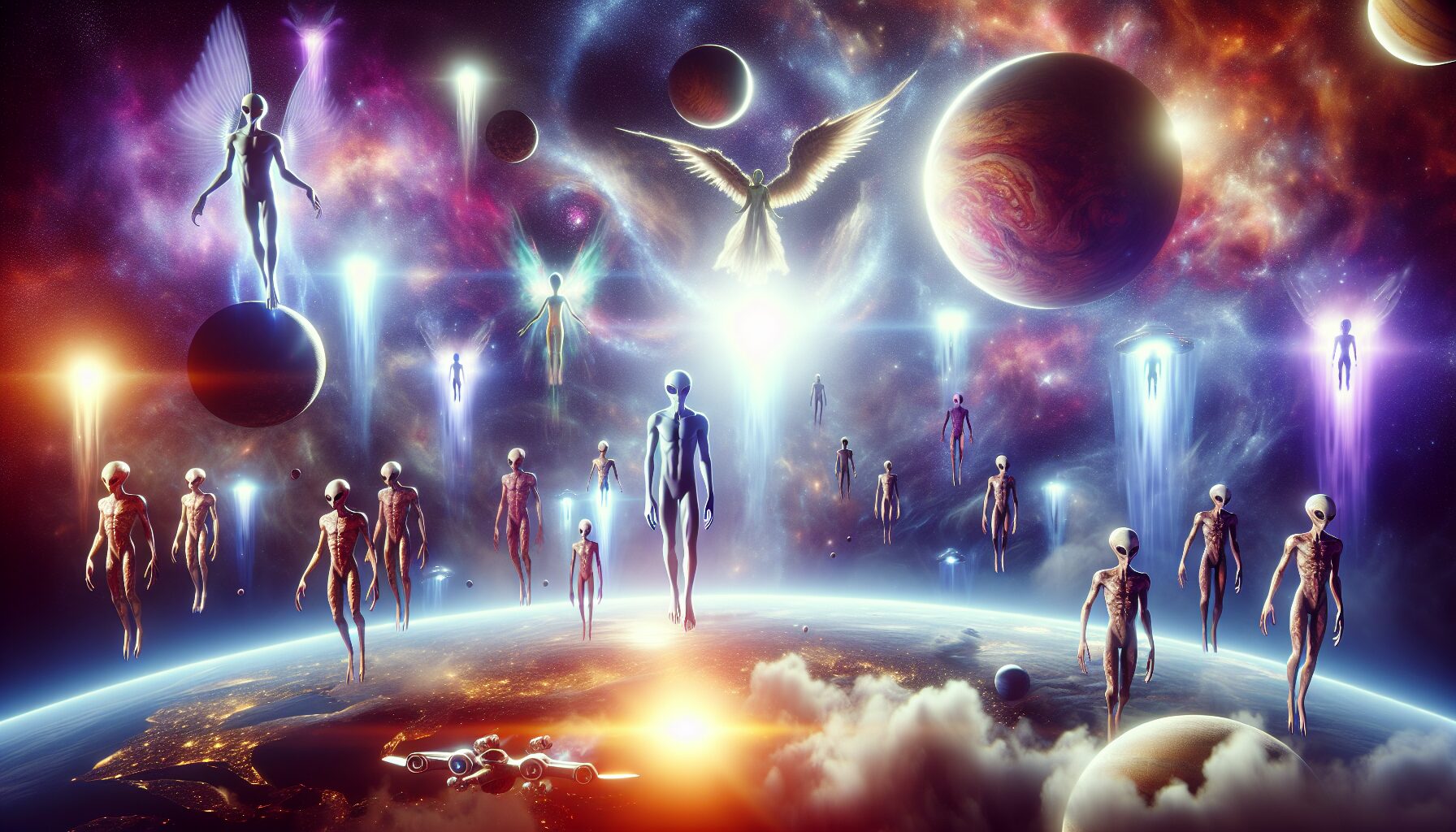
Tag: beings

  • Angels in Silence Revisited – Hidden Guides and Archetypes

    Angels in Silence Revisited – Hidden Guides and Archetypes

    Angelic figures have been a part of human belief systems across cultures and epochs, serving as symbols of divine guidance, protection, and hope. Despite their ubiquity in religious texts and artistic expressions, the presence of angels is often more subtle than the dramatic depictions allow, reminding us of their enigmatic and often silent roles in our lives.

    Angels: A Universal Archetype

    Angels appear across various religious traditions, from the heavenly messengers in Christianity to the guardian spirits in Islam and the protective deities in Hinduism. These spiritual entities serve as archetypes of goodness and enlightenment, transcending cultural boundaries to offer solace and guidance to believers.

    • Christian Angels: In Christianity, angels are considered messengers of God, appearing in key biblical moments to deliver divine instructions or comfort. The angel Gabriel, for example, announced the birth of Jesus to the Virgin Mary.
    • Islamic Angels: Islam also boasts a rich hierarchy of angels, with Gabriel, or Jibril, seen as the archangel responsible for revealing the Quran to Prophet Muhammad.
    • Hindu Devas: In Hinduism, devas are benevolent celestial beings who oversee various elements of the universe, collaborating with gods to maintain cosmic order.

    “Angels are the only mystical figures present in virtually every modern religious tradition.” – Danielle Trussoni, Angelology

    The Silent Guides

    While angels are often characterized as heralds of momentous events, many traditions also depict them as silent presences. In this role, they act less as intervenors and more as guides, offering direction through subtle influences rather than overt manifestations.

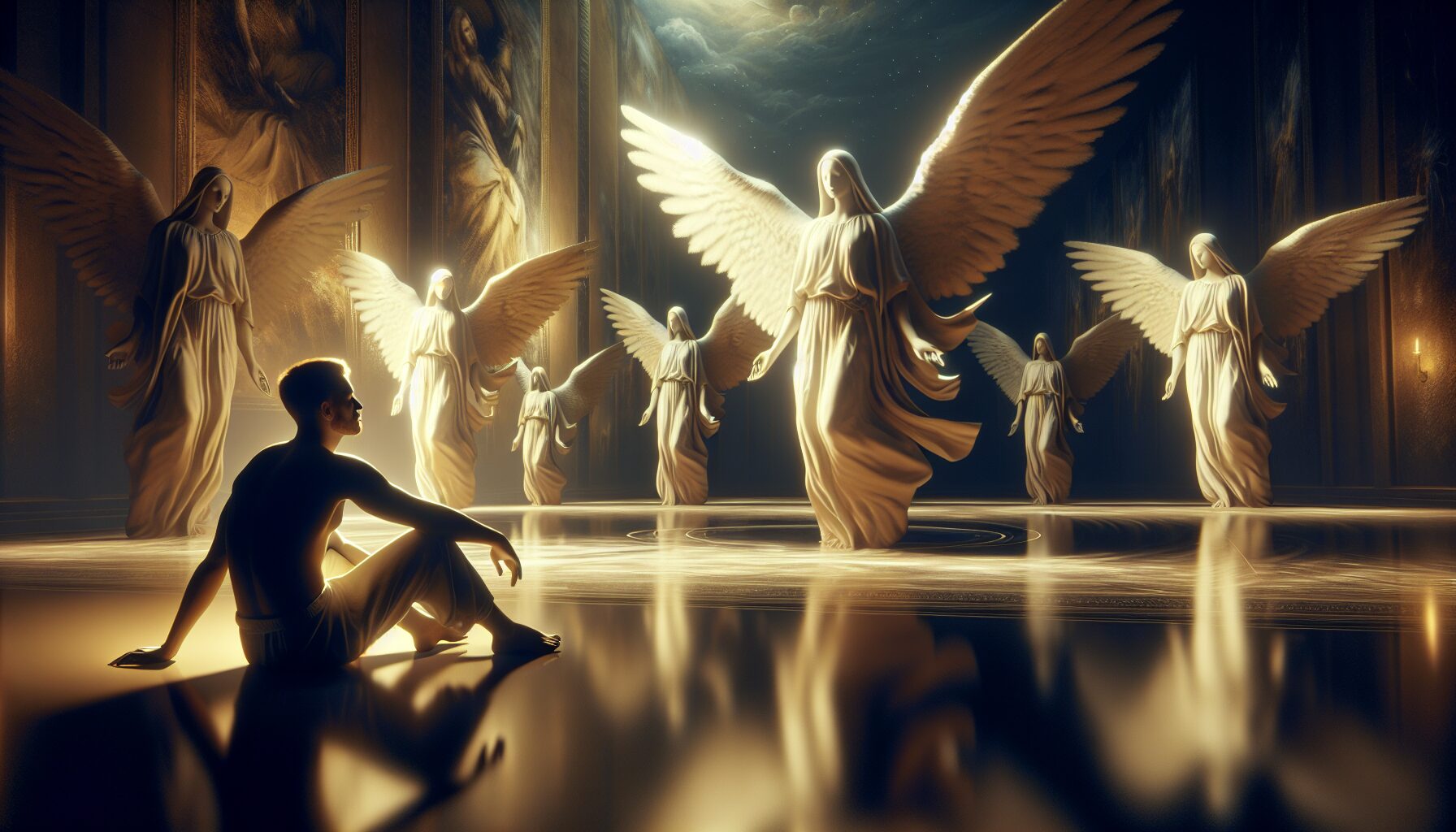
    The silence of angels is well-illustrated in the concept of guardian angels, believed to protect individuals throughout their lives. These entities operate quietly in the background, providing reassurance and steering destinies while remaining largely unseen.

    The Influence of Angels in Literature

    Literature is replete with instances where angels appear as silent influencers, guiding protagonists towards epiphanies or aiding them in crises without direct interaction. One classic example is the role of angels in John Milton’s Paradise Lost, where they embody the struggle between divine order and human free will.

    Moreover, contemporary works often portray angels as complex characters embodying both celestial and earthly attributes. In Anne Rice’s novel Angel Time, angels are depicted as ethical beings involved in moral dilemmas, guiding humans through their silent and impactful presence.

    Personal Accounts and Modern Interpretations

    Many modern spiritual movements and personal narratives continue to highlight the significance of these hidden guides. Testimonials abound from individuals claiming to be saved by an unseen force—interpreted by some as angelic intervention. These accounts often paint angels as manifestations of archetypal energies that can be tapped into during meditation and personal reflection.

    Artists and thinkers in the New Age movement have also explored the symbolic nature of angels, seeing them as representations of human virtues like compassion, love, and truth. Dr. Doreen Virtue, a renowned author on angel therapy, suggests that, “angels are beings of light who help us channel our higher selves and reach our fullest potential”. Her writings have opened up discussions regarding the therapeutic benefits of engaging with angelic symbols.

    Conclusion: Rediscovering the Silence

    The presence of angels, both as mythic archetypes and silent guides, remains a compelling aspect of spiritual life. While their dramatic interventions in scripture and art are memorable, it’s their quieter, more subtle roles that often resonate with individuals today. Whether they are seen as literal beings or symbolic ideals, angels provide a framework for understanding the unseen influences in our lives.

    In revisiting their silent aspect, we acknowledge our innate need to explore the unknown and the comfort we derive from believing in guardians beyond the visible world. As we navigate our lives, let us embrace the possibility that amidst the noise, there are indeed angels in silence guiding us along unseen paths.

  • Angels of Silence – Hidden Guides in Myth and Spirit

    Angels of Silence – Hidden Guides in Myth and Spirit

    Throughout history, the idea of angels as guiding spirits has captivated the human imagination. These often silent yet omnipresent beings are believed to assist, protect, and guide individuals on their journey through life. The concept of the “angels of silence,” in particular, suggests a more enigmatic group among these celestial guides—entities that work quietly, without acknowledgement or fanfare, adapting to the needs of the individual.

    Angels in Religious Texts

    Many religious traditions have mentioned angels guiding humanity. In Christianity, angels are frequently seen as messengers of God, with famed archangels like Michael and Gabriel delivering divine messages. However, not all angels announce their presence with grand gestures or fiery rhetoric.

    “Are not all angels ministering spirits sent to serve those who will inherit salvation?”

    Hebrews 1:14, The Holy Bible

    This passage suggests that many of these guiding spirits operate subtly, almost invisibly, yet profoundly influence human lives.

    The Silent Guards in Mythology

    Beyond religious texts, various mythologies around the world discuss spirits and entities that guard silently. In Hinduism, for example, the Devas are considered to be divine beings watching over and subtly guiding humans. Similarly, in Celtic mythology, there are tales of the Aos Sí or “The People of the Mounds,” mystical beings often considered guardians of the earth and protectors of humanity.

    These guardians rarely make themselves known in loud declarations, preferring methods that can be described as an angelic “whisper,” guiding intuition and fostering spiritual insight.

    The Role of Angels in Modern Spirituality

    In contemporary spiritual practices, the concept of angels extends to personal guides and protectors. Many individuals claim to feel the influence of such beings, describing them as forces that provide a sense of peace or an inner warning in times of need.

    “Angels speak to those who silence their minds long enough to hear.”

    This perception implies that by cultivating mindfulness and listening to one’s inner self, one might tune into the guidance of these silent protectors.

    Concluding Thoughts

    Whether enshrined in religious doctrines or expressed through ancient myths, the idea of silent, guiding angels remains a potent symbol of hope and protection. These angels of silence invite us to explore beyond the surface, to seek understanding not just in whispers but in the quiet presence that steadies our journey through the mysteries of life.

  • Angels of the Edge – Liminal Beings in Myth and Art

    Angels of the Edge – Liminal Beings in Myth and Art

    Angels of the Edge: Liminal Beings in Myth and Art

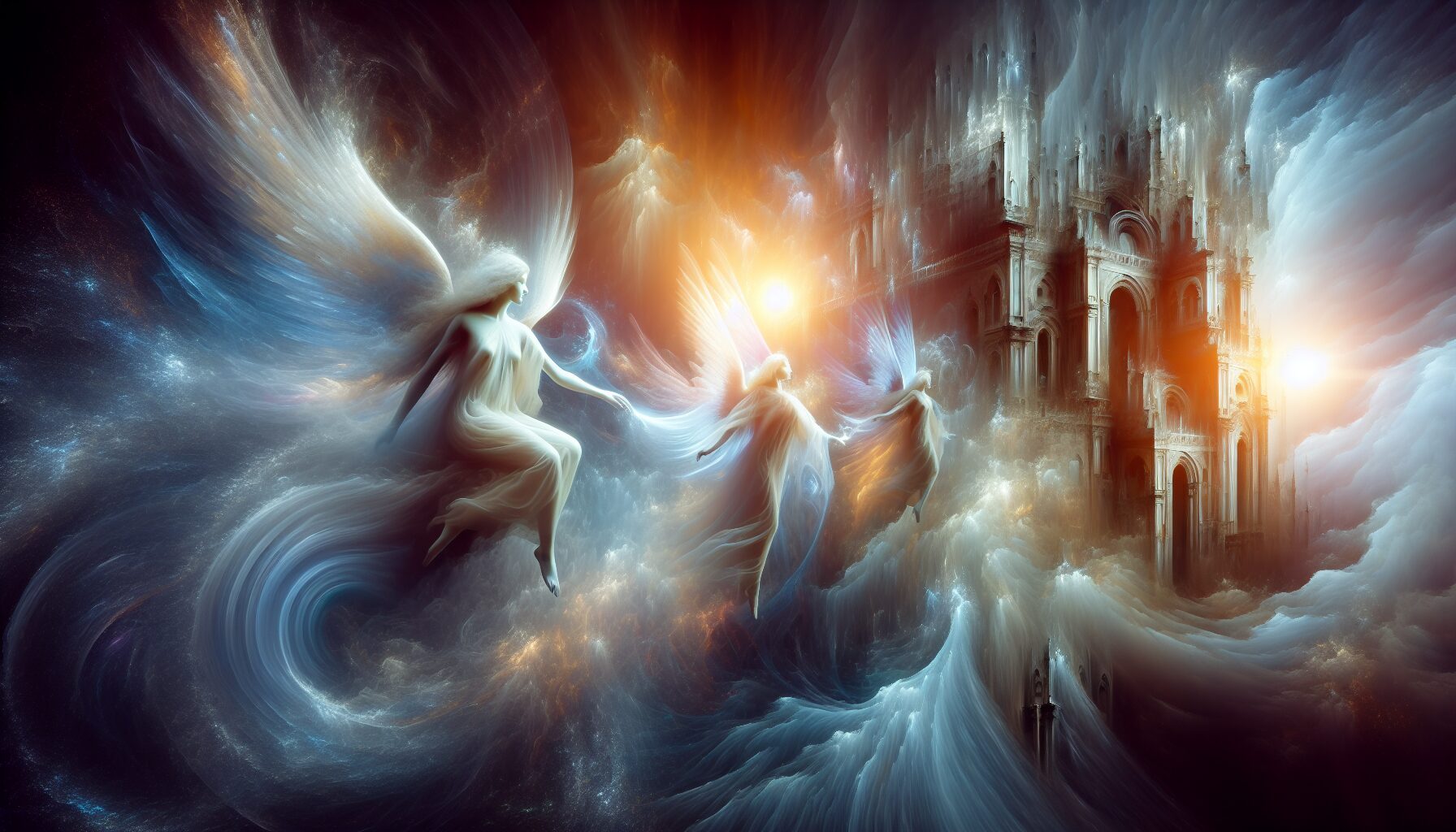
    Throughout history, liminal beings have captured the human imagination, standing as enigmatic figures at the boundaries of reality and the unknown. Among these figures, angels hold a prominent place, transcending cultures and time with their mystique and multifaceted portrayals in myth and art.

    Understanding Liminality

    The term liminal refers to the threshold or edge between different states of being. Victor Turner, a cultural anthropologist, described liminality as the space between, the phase where transformation occurs. Liminal beings exist in this space, often challenging the dichotomies of existence, such as life and death, or good and evil.

    The Mythical Role of Angels

    In various religious contexts, angels serve as messengers of the divine, intermediaries between heaven and earth. In the Judeo-Christian tradition, angels like Gabriel and Michael are depicted as powerful entities that guide and protect humans, often appearing at pivotal moments. Similarly, in Islam, angels are considered servants and warriors of God, integral in guiding humanity.

    “We are like angels with just one wing and we can only fly by embracing each other.” – Luciano De Crescenzo

    Angels in Art

    Artists have long been fascinated by the concept of angels, and this is reflected in countless artworks that explore their ethereal beauty and otherworldly presence. During the Renaissance, painters like Sandro Botticelli and Leonardo da Vinci depicted angels with delicate features, bathed in divine light, symbolizing purity and grace.

    • Baroque Period: Artists such as Caravaggio infused angels with dramatic intensity and emotion, embodying the ferocity and majesty often associated with these beings.
    • Modern Interpretations: In contemporary times, artists and filmmakers reinterpret angels, sometimes blending them with themes of science fiction and fantasy, reflecting societal changes and evolving spiritual understandings.

    The Enduring Appeal of Angels

    The enduring fascination with angels lies in their ability to embody the dualities of existence, offering a window into our fears, hopes, and aspirations. As beings of the edge, they challenge us to ponder the mysteries of the universe and our place within it. Whether through religious texts or modern media, angels continue to resonate with people across the globe, a testament to their lasting power as liminal guides.

    For further exploration, see National Geographic for a deeper dive into the symbolic meanings of angels across cultures.