Tag: celestial

  • Starlit Graves – Mythic Death Across the Cosmos

    Starlit Graves – Mythic Death Across the Cosmos

    Starlit Graves: Mythic Death Across the Cosmos

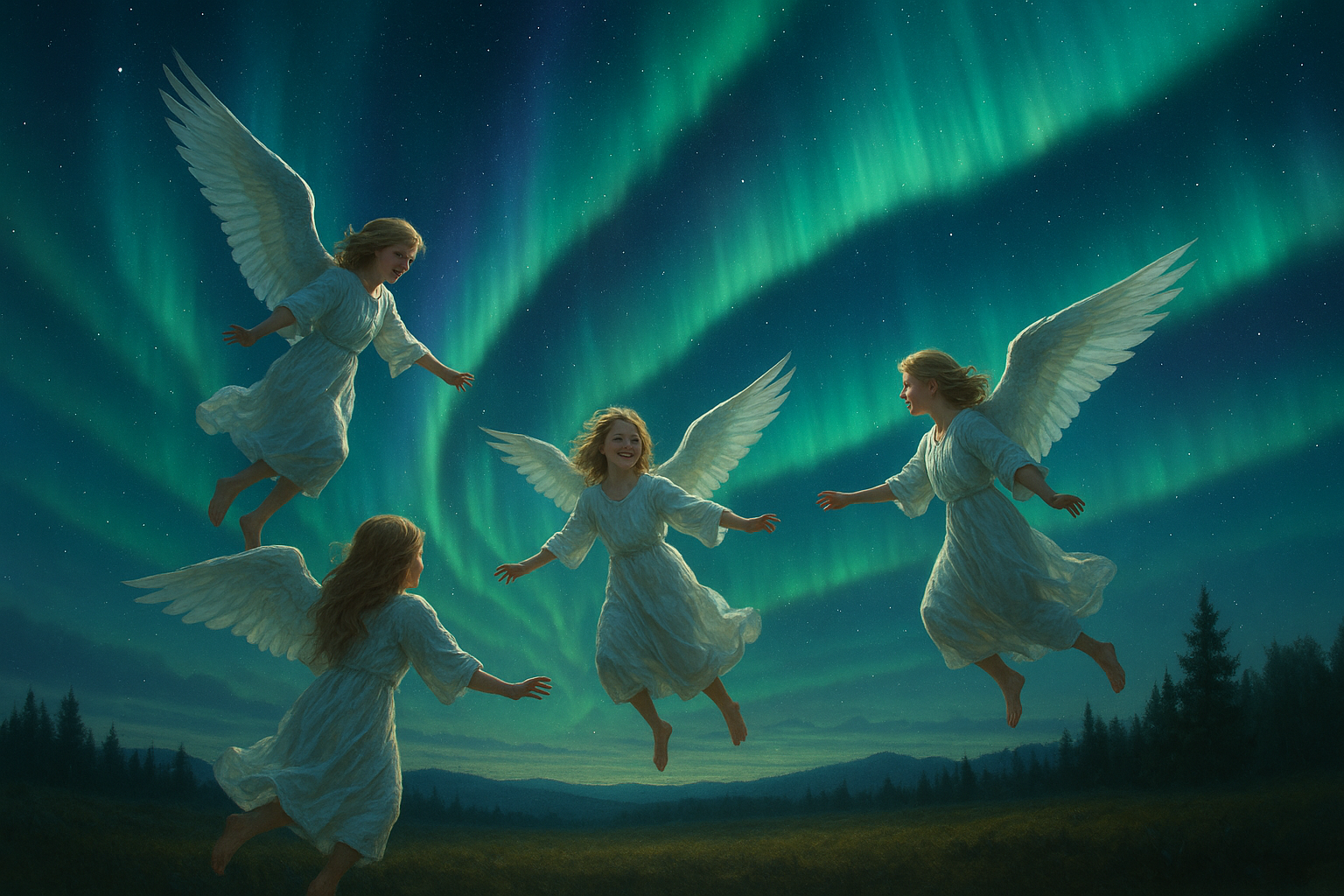
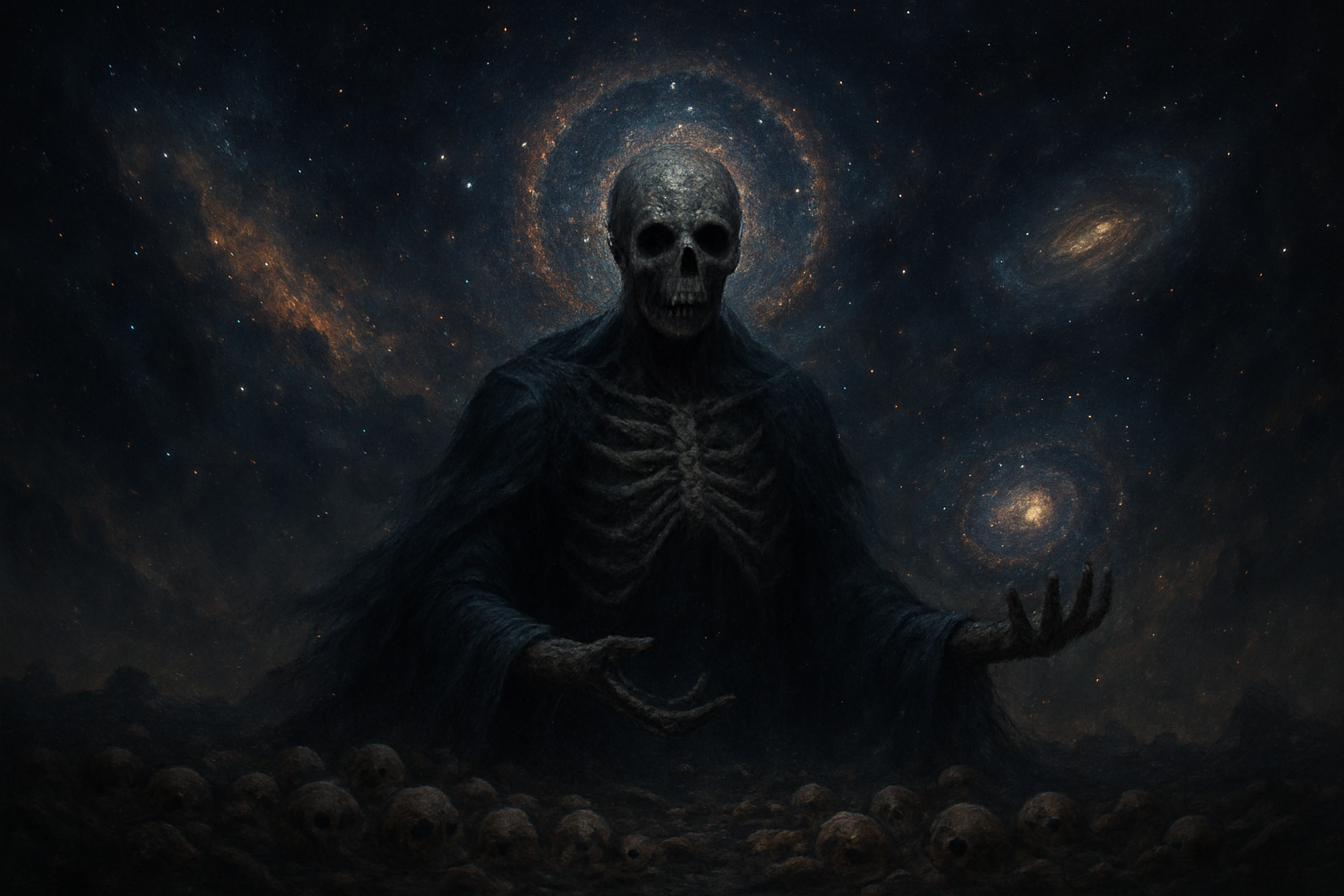
    Throughout human history, the cosmos has inspired countless myths and stories, often portraying it as a realm of mystery and power. In many cultures, the stars serve not only as navigational beacons or markers of time but also as the resting places of gods, heroes, and spirits. This mythic intertwining of celestial phenomena and death creates a rich tapestry of beliefs that reflect both our awe of the universe and our understanding of mortality.

    The Celestial Sphere: A Mythic Perspective

    The night sky, with its expanse of stars, has long been interpreted as a cosmic stage where the stories of life and death unfold. Through their observations, ancient cultures developed intricate mythologies that attributed spiritual significance to the constellations and planetary movements.

    Myths of Cosmic Heroes and Heroines

    • Orion: In Greek mythology, Orion was a giant huntsman whom Zeus placed among the stars as the constellation Orion after his death. Greek mythology often immortalized heroes in the sky, symbolizing their eternal presence and influence. “Orion, the great hunter, eternally pursues the Pleiades across the sky,” writes Encyclopaedia Britannica.
    • Chilam Balam: The Maya believed that deceased kings and heroes ascended to the heavens and became stars. The sacred book, Chilam Balam, records stories of these celestial transformations, mirroring their enduring legacy.
    • Sirius and Anubis: The ancient Egyptians connected the star Sirius to Anubis, the god of death. They viewed Sirius’s heliacal rising as a symbol of rebirth and renewal, coinciding with the annual flooding of the Nile and a new life cycle.

    Cosmic Judgments and Afterlife Destinations

    Various cultures have envisioned the cosmos as both a physical and spiritual realm. Here, cosmic events often coincide with beliefs about judgment, reward, and punishment in the afterlife.

    “The Hopi believe that upon death, the spirit travels west to the ‘Afterlife World.’ As the spirit journeys, it is guided by the stars, which act as spirits of ancestors leading the deceased on their path,” explains Astronomer Bryan Bates in his study of Native American celestial navigation.

    • Egyptian Duat: The Duat was the realm of the dead and a dimension within the sky for the Egyptians. This journey through the night sky was fraught with peril but guided by celestial markers such as the Milky Way.
    • Nordic Valhalla: In Norse mythology, those who die in battle are chosen by Odin to reside in Valhalla, often envisioned as a place in the heavens. This realm of warrior spirits ties the concept of heroic death to a celestial afterlife.

    Modern Interpretations and Symbolism

    As our understanding of the universe has evolved, so has the symbolic use of celestial imagery in literature, art, and popular culture. Modern interpretations often reflect a blend of ancient mythologies with contemporary scientific discoveries.

    • Stardust and Rebirth: Modern astrophysics posits that the elements within our bodies were formed within stars. This idea resonates with the notion of cosmic rebirth and aligns with ancient philosophies. As Carl Sagan famously said, “The cosmos is within us. We are made of star-stuff.” This view reinforces the mythic cycle of death and rebirth on a cosmic scale (Sagan, Smithsonian Magazine).
    • Literary Themes: Many writers and poets draw upon these cosmic themes as metaphors for existential contemplation. Consider the works of Dante Alighieri, whose Divine Comedy portrays the heavens as both a literal and allegorical representation of the soul’s journey.

    Conclusion: The Eternal Dance of Life and Death

    The universe, with its grand and mysterious vistas, inspires a profound contemplation of life and death. Across cultures and time, humanity has turned its gaze upward, seeking narratives in the stars to make sense of existence and its inevitable end. This search for understanding and meaning echoes the eternal dance of life and death, woven into a cosmic fabric that continues to captivate our imaginations.

    In embracing these myths, we connect with a universal heritage—a shared human experience that transcends individual cultures and speaks to the interconnected nature of life, death, and the cosmos itself. Whether seen as graves or cradles, the stars compel us to ponder our place in the universe and the stories we create to explain it.

  • Celestial Dissociation – Depersonalization in Angelic Realms

    Celestial Dissociation – Depersonalization in Angelic Realms

    Celestial Dissociation: Depersonalization in Angelic Realms

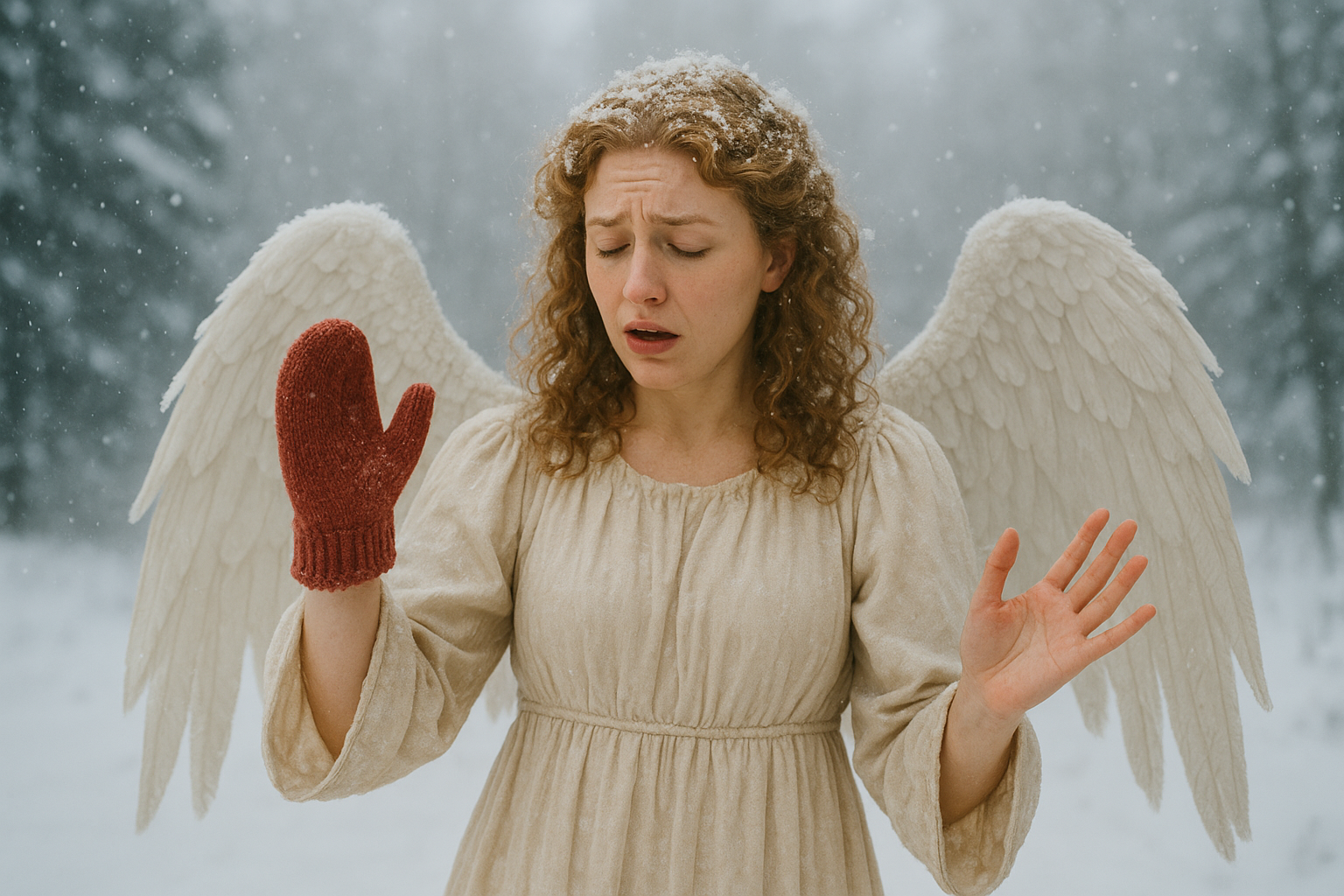
    In the intricate tapestry of the cosmos, the notion of celestial beings such as angels has captured human imagination for centuries. These angelic entities, often seen as messengers of divine will and protectors of humanity, exist in realms beyond our conventional understanding. However, the humanization of such beings in art, literature, and theology begs the question: can entities of such cosmic magnitude experience psychological phenomena akin to those in humans, such as depersonalization?

    Understanding Depersonalization

    Depersonalization is defined by the American Psychiatric Association as an experience where an individual feels detached from their thoughts, feelings, and body experiences. It is often characterized by emotional numbing and a sense of observing oneself from an external perspective, as though one were living in a dream.

    According to Dr. John F. Kihlstrom, a cognitive psychologist, “Depersonalization is a fascinating dissociative disorder that reminds us, though we take it for granted, that the seamless integration of mind, body, and self can sometimes break down.”

    Angelic Realms and Perception

    The angelic realms, as described in numerous spiritual texts and traditions, are not bound by the physical laws that govern the human experience. These celestial domains are said to exist in dimensions where time and space may operate differently, if at all. In Christian theology, angels are created beings, with numerous ranks and functions, from archangels to cherubim, all holding specific roles that contribute to the divine cosmic order.

    However, the portrayal of angels in many theological doctrines suggests an inherent emotional and moral consciousness. Biblical narratives, such as those found in The Book of Revelation, depict angels participating in both worship and judgment, implying an ability to process events and make decisions. Yet, as spiritual beings, they may also encounter experiences that parallel human psychological states, including those resembling depersonalization. The notion raises intriguing questions about the emotional and perceptual dimensions of such celestial beings.

    Celestial Entities and Transcendental Experiences

    If angels are capable of experiencing states akin to depersonalization, such experiences would likely diverge significantly from the human form of the condition. Theologians and mystics suggest that angels, in their celestial agency, are privy to perspectives of time and existence far removed from human understanding, potentially allowing them to observe the world with both intimacy and detachment.

    Some scholars propose that such detached observation may not be dissociative in the pathological sense but rather a mode of transcending the limitations of singular identity. Angelologist and philosopher Emmanuel Swedenborg posited that celestial beings partake in divine contemplation, allowing their individuality to momentarily dissolve into the vastness of the divine plan.

    “Angels never cease, not even for a moment, to be in the presence of the Lord, thus, in a state of love,” wrote Swedenborg in his landmark work, Heaven and Hell. “By this means, all that they think is wise and all that they act upon is true.”

    Parallels in Human Experience

    Comparisons can be drawn between this celestial form of observation and the human pursuit of transcendence through practices such as meditation and prayer. Both seek to achieve a spiritual state of being that transcends the typical confines of the conscious ego, albeit only temporarily. In these states, individuals often report feeling a dissociation from their immediate self and a connection to a larger, collective consciousness.

    Thomas Metzinger, in his book Being No One, explores the idea of selfhood and suggests a model where personal identity can decouple from self-perception, affording individuals a separate vantage point of the self without the constraints of the ego. In this realm of thought, angelic depersonalization could indeed reflect an enlightened state, rather than a disorder.

    Concluding Thoughts

    Ultimately, the concept of depersonalization in angelic realms invites us to reimagine the spiritual dimensions and the psychological parallels between human and celestial entities. The potential for these beings to experience such phenomena expands our understanding of consciousness and identity beyond the human-centric models. It challenges longstanding perceptions by proposing that all consciousness, whether celestial or corporeal, is subject to states and modes of experience that highlight the interconnectedness of all existence.

    As we contemplate these possibilities, we continue to bridge the gap between the worlds we inhabit and the ethereal domains we strive to understand. The dialogue between science, spirituality, and imagination remains ever rich and expansive, promising new insights into the ultimate nature of consciousness itself.

  • Angelic Laments – Mourning in Celestial Hierarchies

    Angelic Laments – Mourning in Celestial Hierarchies

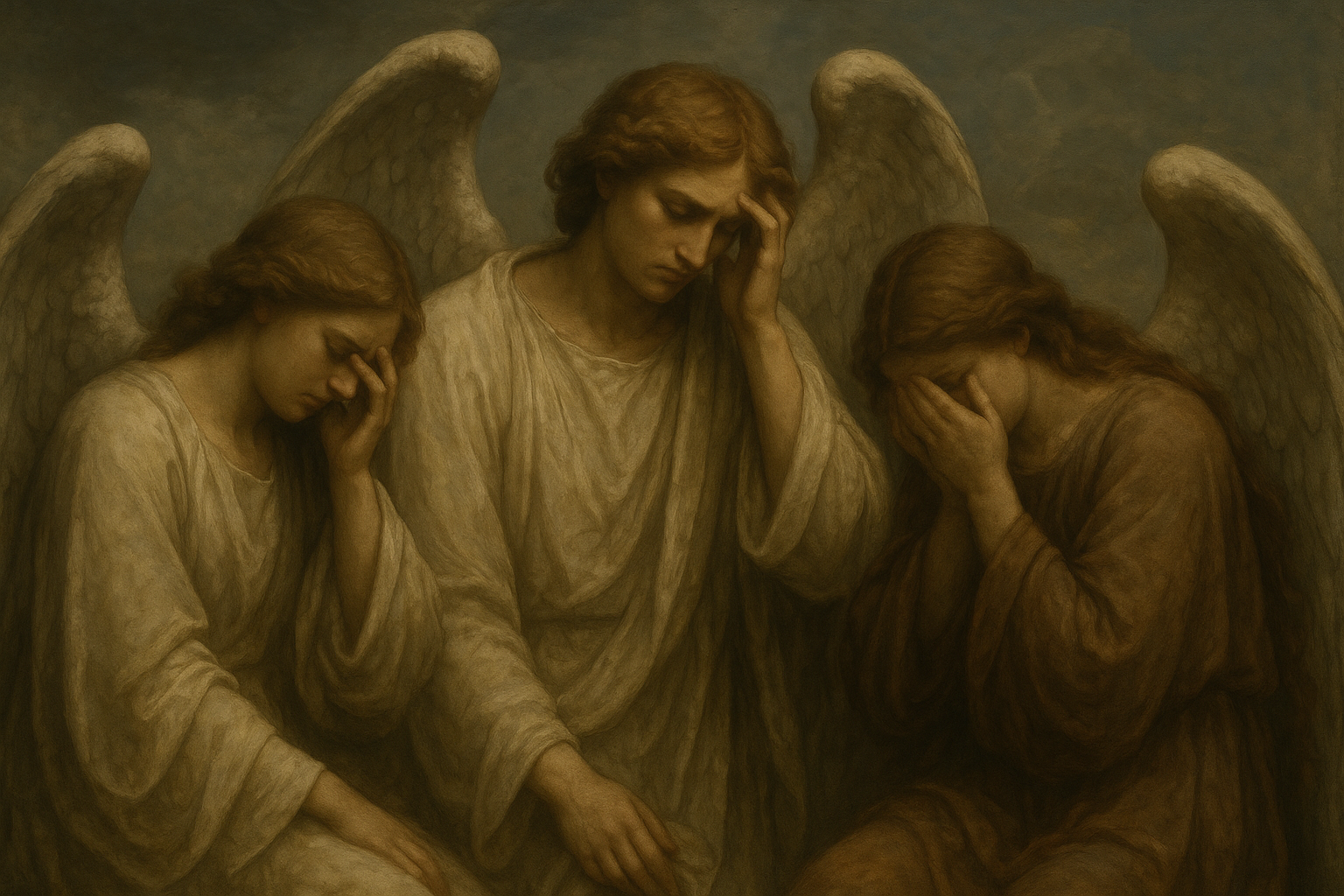
    In many religious and mythological contexts, angels are depicted as divine celestial beings closely associated with themes of light, purity, and protection. Yet, within these heavenly domains, there exists an often overlooked aspect of their existence: the concept of mourning and how grief is expressed among the celestial hierarchies.

    The Nature of Angels

    Angels are generally perceived as intermediaries between God and humanity, delivering messages and offering guidance. They are revered across various cultures and religions, with distinct roles and attributes assigned to them.

    • In Christianity, angels are considered messengers of God, capable of both protecting humans and executing divine judgment.
    • In Judaism, various types of angels serve different functions, such as guarding the gates of heaven or recording the deeds of individuals.
    • In Islam, angels are believed to be made of light and are without free will, existing to serve Allah in obedience and piety.

    Exploring the Concept of Mourning

    Given their seemingly perfected existence, the concept of mourning within the angelic realm can appear contradictory. However, several texts and interpretations suggest that even angels experience a form of grief, especially when confronting the disobedience of humanity or witnessing the fall from grace of their fellow beings.

    “The angels, not half so happy in Heaven, / Went envying her and me— / Yes! that was the reason (as all men know, / In this kingdom by the sea) / That the wind came out of the cloud by night, / Chilling and killing my Annabel Lee.” —Edgar Allan Poe, Annabel Lee

    This poetic expression by Poe, while metaphorical, touches on the idea that angels are touched by emotions deeply rooted in the human condition, such as envy and loss. This suggests that they might indeed possess the capability, or at least an awareness, of mourning.

    The Fall and Mourning of Angels

    One of the most significant narratives involving angelic mourning is that of the fallen angels, most prominently depicted in John Milton’s Paradise Lost. Milton presents Lucifer, the most radiant of angels, as he falls from grace, pulling legions of fellow angels into his rebellion against God. The sorrow stemming from this betrayal resonates throughout their celestial peers.

    “Hail horrors, hail / Infernal world, and thou profoundest Hell / Receive thy new possessor: One who brings / A mind not to be changed by place or time. / The mind is its own place, and in itself / Can make a Heaven of Hell, a Hell of Heaven.” —John Milton, Paradise Lost

    Although Milton mainly focuses on the defiance and pride of the fallen, hints of regret and loss weave through their experience, suggesting a deeply resonant grief that accompanies their fall.

    Catholic Perspectives on Angelic Grief

    In Catholic teachings, while angels are considered incapable of error post-supernatural discipline (the state angels achieve after their trial and self-choice for God), the notion of them grieving for humanity’s sins is present. Their laments are more of a reflection of their commitment to divine justice and order, manifesting as a deep, albeit abstract, sorrow for human transgressions.

    The Catholic education resource EWTN suggests that angels experience sadness in a way that aligns with their nature: “Their sadness is purely intellectual and relates to the deviation from God’s plan, with whom they are perfectly aligned.”

    Angelic Lament in Art and Culture

    The portrayal of mourning angels in art and literature provides a visual and narrative exploration of celestial grief. In sculptures and paintings, angels are often depicted with tears or in postures of lament, suggesting deep emotional resonance with loss and sorrow.

    • Rodin’s Angels: The famous “Gates of Hell” by Auguste Rodin explores the harrowing emotions associated with the fall, including the depiction of anguished celestial beings among the damned.
    • Literary Mourning: In Dante Alighieri’s Divine Comedy, angels appear in varied forms, at times expressing sorrow for the souls they encounter in the Inferno’s realms.

    Philosophical Interpretations of Angelic Mourning

    Philosophers have long pondered the implications of angelic grief and what it reveals about the broader themes of justice, morality, and divine empathy. The intertwining of justice and emotion among celestial beings reflects an intricate balance between cosmic order and emotional intelligence.

    Thomas Aquinas, in Summa Theologica, discusses the nature of angelic intellect and will, suggesting that while angels operate on a different plane of emotions, their intellectual apprehension allows them a form of “grief.” They may not mourn as humans do, but their comprehensive understanding of divine injustice creates an intellectually-derived lament.

    The Human Connection

    The concept of angelic mourning resonates deeply with human experiences of grief and loss. It serves as a poignant reminder that even the divine contemplates the complexities of existence and the evocative power of justice and empathy.

    The notion that angels, who epitomize purity and divine alignment, could mourn over the missteps of humanity or their peer’s fall from grace suggests an unprecedented level of understanding and compassion transcending earthly boundaries. It positions mournful angels as intermediaries not merely of God’s will but also of celestial empathy, providing humanity with strength and solace in times of tribulation.

    Ultimately, the study and depiction of angelic laments help bridge the gap between divine perfection and flawed human nature, offering a unique lens through which to explore the interconnectedness of emotion, morality, and spirituality.

    Conclusion

    Angelic laments encapsulate the complex tapestry of sorrow and understanding that exists within celestial hierarchies. They reinforce the idea that even within realms of divine order, the echoes of grief and compassion persist, offering insights into the eternal dance between righteousness and empathy. Through the layered interpretations in religion, literature, and art, these divine figures continue to embody both the unyielding justice of the heavens and the profound, albeit otherworldly, compassion for the fallen.

  • Celestial Extinction – Petit Mort Across the Planes

    Celestial Extinction – Petit Mort Across the Planes

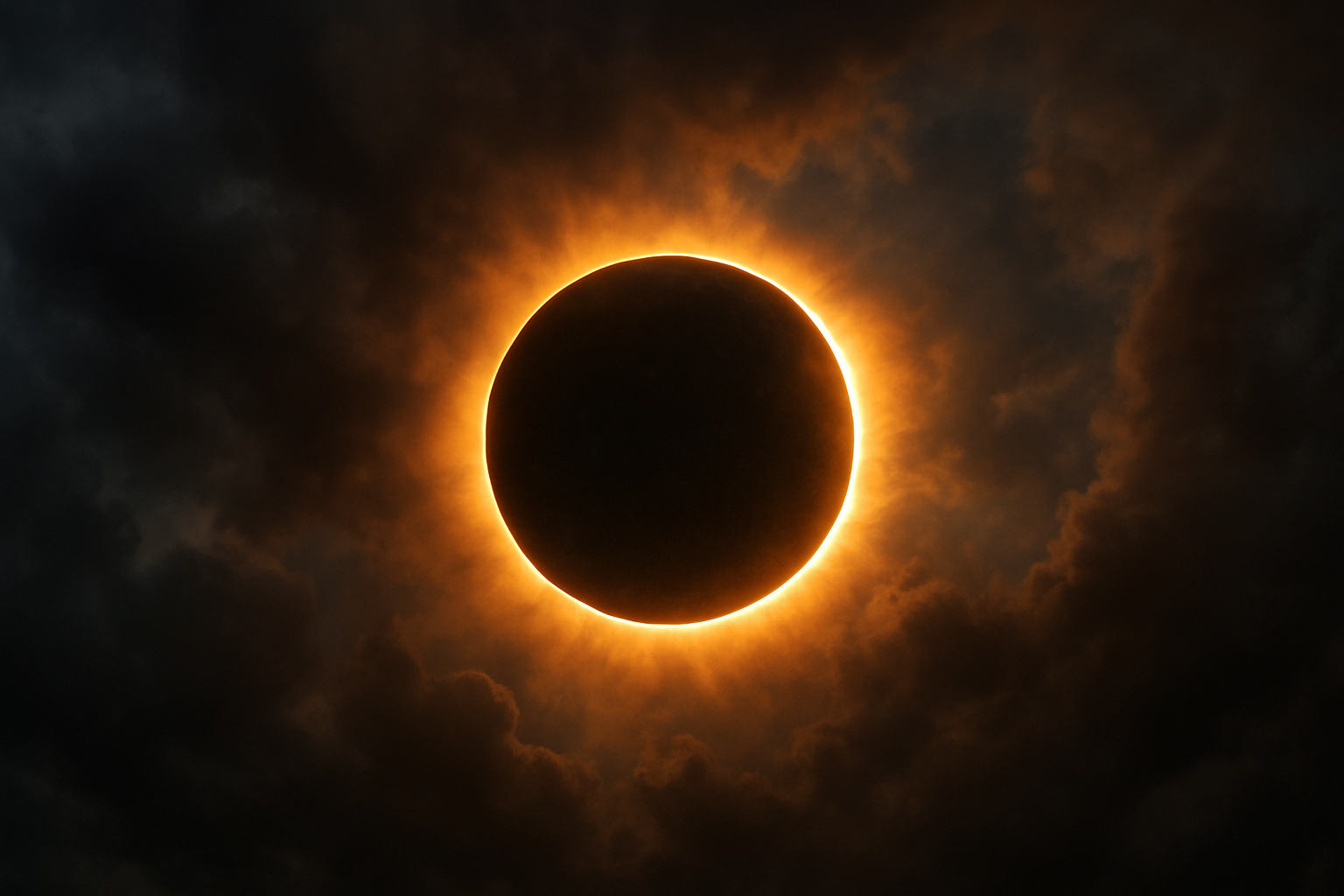
    The cosmos, a tapestry of seemingly endless wonder, teems with the light of stars and the enigmatic beauty of celestial bodies. Yet, just as life has its ethereal moments of transition, so too do stars and planets experience their own unique forms of extinction. This article explores the poetic tristesse of celestial deaths, often referred to as “petit mort”, the small death, across the vastness of space.

    The Fading Glow of Stars

    Stars are the quintessential elements of our universe, the fierce beacons of light that guide sailors and inspire poets. Their life cycle is grounded in the balance of nuclear fusion and gravitational forces. However, this glamorous existence is finite.

    • Red Giants and White Dwarfs: As a star exhausts its hydrogen fuel, it expands into a red giant. Eventually, the outer layers are shed, and the core contracts into a white dwarf. This process marks a star’s transition from a brilliant blaze to a cold ember, signifying a gradual fading into darkness.
    • Supernovae: Larger stars end their lives in spectacular explosions known as supernovae. According to NASA’s observations, these cataclysmic events are among the brightest and most powerful known phenomena in the universe, releasing vast amounts of energy and enriching the cosmos with heavy elements.
    • Black Holes and Neutron Stars: If the remnant core of a massive star is great enough, it may collapse into a black hole, a region of spacetime from which nothing can escape. Alternatively, it may form a neutron star, a dense stellar corpse left to spin in the vacuity of space.

    Planetary Disappearance

    While stars dominate the narratives of cosmic death, planets also face their end, albeit in less cataclysmic but equally fascinating transitions.

    • Rogue Planets: Some planets are cast adrift from their parent stars, becoming rogue planets that wander the galaxy alone. According to the European Southern Observatory, these celestial nomads are “not bound to any star and are free-floating through the galaxy.”
    • Inward Migration: Planets can also move toward their host star over time until they are consumed. This process, often observed in exoplanet systems, can result in a planet’s fiery end as it gets engulfed by its sun.
    • Impact Events: Collisions with asteroids or comets can spell disaster for planets. The famous impact that led to the extinction of dinosaurs on Earth is a reminder of the fragility of planetary life.

    The Romantic Notion of Celestial Extinction

    Despite the harsh realities of destruction, celestial extinction can be seen through a romantic lens. As French philosopher Gaston Bachelard once noted, “The imagination enlarges our perception of poetic space”. The cycles of celestial death and rebirth illustrate the predictability and inevitability of change.

    “We are all made of star stuff,” Carl Sagan eloquently stated. This cycle of creation and annihilation reflects the interconnectedness of the cosmos, where dying stars seed the birth of new stars and perhaps new worlds.

    The Implications for Human Understanding

    The study of celestial extinction has profound implications for our understanding of the universe and our place within it. From philosophical questions about permanence and destruction to practical concerns about the future of technology and our search for extraterrestrial life, the concept of extinction stretches across disciplines.

    • Technology and Knowledge: Understanding the processes behind celestial extinction leads to technological advances, such as developing better models to predict the life cycles of stars.
    • Philosophical Reflections: As philosopher A.N. Whitehead observed, “The history of philosophy is the study of oversimplifications.” Celestial extinction challenges oversimplifications, encouraging deeper inquiries into the nature of existence.
    • Search for Extraterrestrial Life: Studying these processes helps scientists understand the potential habitability of other planets and the conditions that might lead to life, or its end, in distant star systems.

    Conclusion

    Celestial extinction, the cosmological petit mort, is a reminder of the ephemeral nature of existence and the countless narratives written across the skies. From the quiet fading of a white dwarf to the violent drama of a supernova, these processes highlight the cyclical, interconnected story of the universe—a story that despite its scale, finds resonance in our hearts.

    As we look up at the night sky, we see only a fraction of its beauty, aware that every star has a tale, a lifetime, and eventually, an end. It is in these endings that we find the seeds of new beginnings, an eternal dance between life and death mirrored in the celestial sphere.

    For more insights into the cosmic ballet, visit the Space.com and explore humankind’s quest to understand the universe.

  • Stellar Alchemy – Science Interpreted as Magic

    Stellar Alchemy – Science Interpreted as Magic

    The night sky has long been the canvas for humanity’s imagination, with constellations serving as celestial storybooks that narrate myths and legends. Yet, the true magic lies not in the stories of old, but in the science that underpins the stars themselves—a field often described as stellar alchemy.

    The Awe-Inspiring Birth of Stars

    Stars begin their life in the densest regions of space, known as molecular clouds. When these clouds collapse under their own gravity, the high temperatures and pressures lead to nuclear fusion, the process that allows stars to shine. Stephen Hawking once eloquently described this as “the way the universe attempts to comprehend itself.” This fusion of hydrogen atoms into helium releases an immense amount of energy, essentially brewing elements that will one day form planets, plants, and people.

    Elements Forged in Starry Crucibles

    In the cosmic kitchens of stars, the heat and pressure catalyze reactions that forge elements heavier than helium. Over a star’s lifetime, these processes produce elements such as carbon, nitrogen, and oxygen, which are the building blocks of life. This is the alchemy of the cosmos—a stellar transmutation that transforms basic elements into the rich tapestry of the periodic table.

    As Carl Sagan famously said, “We are made of star stuff.”

    This phrase poetically captures the origin of the elements that compose our bodies, emphasizing the mystical connection between humanity and the celestial sphere.

    Supernovae: The Explosive Finale

    As stars reach the end of their life cycle, they may explode as supernovae, an event of unmatched brilliance and violence. These explosions scatter the heavy elements created during the star’s life into space, enriching the galaxy’s interstellar medium and sowing the seeds for the next generation of stars and planets.

    The Magic of Understanding

    Stellar alchemy unveils the magic that weaves the fabric of the universe. What once appeared to be a subject of folklore is now understood through the lens of modern astrophysics. This understanding does not diminish the wonder; rather, it enhances it. As the renowned physicist Richard Feynman once remarked, “The first principle is that you must not fool yourself—and you are the easiest person to fool.” Understanding the reality behind celestial phenomena reveals the true wonder of nature and our place within it.

    As we gaze up at the night sky, it’s comforting to know that we are both the observers and participants in this cosmic ballet—a magical display, enacted with the grand choreography of science.

    For more on the science behind the stars, you can visit NASA’s Astrophysics Division.

  • The Astral Pantheon – Mythology Across Realms

    The Astral Pantheon – Mythology Across Realms

    Throughout history, humans have gazed upwards, mesmerized by the stars and the vast cosmos, often attributing divine qualities to the celestial bodies. This cosmic wonder has incubated a rich tapestry of astral deities and mythologies across diverse cultures. From the winged messengers of ancient Zoroastrianism to the heavenly chariots of Vedic texts, astral deities have played a significant role in shaping human civilization.

    Origins in Ancient Mythologies

    • Egyptian Skylore: In ancient Egypt, the sky was personified as the goddess Nut, who arched over the earth with her star-strewn body. Nut was seen as a protector of the dead and a symbol of resurrection, with pharaohs often depicted joining her in the afterlife to become stars themselves.
    • Mesopotamian Guardians: For the Babylonians, the stars were the domain of Sin, the god of the moon, who wielded great astrological influence. The god Anu was revered as the father of the gods, representing the epitome of the celestial cosmos.

    Influence of the Greek and Roman Pantheon

    The Greeks wove intricate tales that integrated their gods with the constellations seen in the night sky. Familiar figures such as Orion the Hunter and Andromeda were enshrined in the heavens as stars that linked human fate with celestial movements.

    “The heavens declare the glory of God; and the firmament sheweth his handiwork.” — Psalm 19:1 (KJV)

    This sentiment was mirrored in Roman culture, where constellations were named after heroic figures and mythological stories, echoing their origins in Greek astronomy.

    Eastern Concepts and Beyond

    • Chinese Celestial Bureaucracy: In ancient Chinese belief, the sky was a complex bureaucratic structure with the Jade Emperor presiding over it all. Each star and planet was seen as a celestial administrative unit with specific responsibilities influencing earthly affairs.
    • Hindu Astronomy: The Vedic concept of Navagraha, the nine celestial influencers, remains vital in Hindu astrology today. These astral deities, such as Surya (the sun) and Chandra (the moon), directly impact human lives according to Hindu belief.

    The Modern Cosmic Perspective

    Although technological advances have shifted our understanding of celestial bodies, the mythological allure remains potent. Astral deities continue to intrigue us, serving as powerful symbols in literature, film, and art — reminders of the timeless human quest to connect the earthly with the divine.

    The astral pantheon, with its countless interpretations across the annals of history, continues to enrich our collective imagination, reflecting a profound legacy of humanity’s connection with the universe.

  • The Forgotten Pantheon – Mythology of the Cosmos

    Throughout human history, the night sky has served not only as a natural calendar and a navigation guide but also as a rich tapestry for storytelling. While many are familiar with the Greek, Roman, and Norse interpretations of the cosmos, there exists a forgotten pantheon—a compendium of celestial tales and deities that spin a narrative often overshadowed by mainstream mythologies.

    Starry Origins: Creation Myths of the Cosmos

    Many cultures have their unique perspectives on the creation of the universe, often attributing it to divine forces. For instance, the Maasai people of East Africa have a profound tale about the origins of the cosmos. They believe that in the beginning, there was only darkness, and then a god named Enkai created the universe. Stars were the offspring of the Moon, supporting a cosmic family half-forgotten by modern astronomers.

    Similarly, in Japanese folklore, there exists the story of Izanagi and Izanami, the divine couple who, through divine wands, stirred the waters below the heavens to create the Japanese islands. Their actions led to the formation of stars as droplets of divine substance, illuminating the sky.

    Cosmic Deities and Celestial Beings

    • The African Celestial Rhino: Among the Tswana people of Botswana, a celestial rhinoceros known as Kgosikgolo wanders the night sky. This mythological being is seen as an eternal watchman of the heavens, representing strength and resilience.
    • Ainu Star Maidens: In the Ainu culture of Japan, stars are seen as maidens, daughters of the great god “Kamuy.” They dance across the sky, and their movements dictate the cycles of life and nature.
    • Maya Astral Spirits: The ancient Maya revered the stars not just as distant balls of gas, but as manifestations of their gods. The Hero Twins, Hunahpu and Xbalanque, defeated the Lords of the Underworld and ascended into the heavens as the sun and moon, illuminating the world with their divine presence.

    The Celestial Dance: Astrology and Ancient Beliefs

    Astral bodies have always influenced human civilizations, with astrology being the bridge between celestial phenomena and human affairs. For the ancient Babylonians, astrology was a science interwoven with mythology. The movement of stars and planets was believed to be the writings of gods across the heavens, foretelling significant events on Earth.

    “The stars in the night sky have been maps, stories, and cosmic guides throughout the history of humanity.”

    In Chinese tradition, the Dragon and Phoenix become celestial indicators, symbolizing the emperor and empress. The positions of these constellations at different times of the year were used to dictate imperial decisions and predict the fates of dynasties.

    The Mystical Zodiac of Ancient Cultures

    The concept of a zodiac is prevalent across various civilizations, each with its unique interpretation:

    • The Egyptian Zodiac: Ancient Egyptians divided the sky into 36 decans, each associated with a god’s influence. They believed that certain decans, when seen at dusk or dawn, held divine messages from the gods.
    • Indigenous Australians: Known for their deep spiritual connection with the land and sky, Indigenous Australians have a zodiac rooted in the creation stories of the Dreamtime. The Emu in the Sky, formed by dark clouds between the stars, is a significant element in their astral lore.
    • Native American Star Maps: For tribes such as the Lakota, stars were not just points of light but symbols of their ancestors. The Lakota Sioux’s beliefs include the legend of the Seven Sisters, mirroring the Greek Pleiades but with its own cultural significance and teachings.

    The Tales Written in the Sky

    Across cultures, the mythologies of the cosmos serve as a canvas upon which societies project their dreams, fears, and explanations of the universe:

    In Mongolian myths, Orion’s Belt is known as the Three Beauties, representing three unforgettable queens known for their beauty and grace. This contrasts with the Asian interpretation of the same three stars as representing the Kuja Dosa, a warning of potential misfortune.

    Meanwhile, the Celtic people named the constellation we know as the Big Dipper the Plough or sometimes the 7 Oxen, describing the inexorable toil of farm life set against the backdrop of the universe’s eternal turning wheel.

    The Enduring Legacy of Celestial Mythology

    These tales, imbued with endless creativity and cultural significance, illustrate a universal human need to find order and meaning in celestial patterns. As modernity races forward, these myths risk being overshadowed by scientific advancement. Yet, they persist, whispering the eternal truth of humanity’s cosmic insignificance and boundless imagination.

    “The cosmos is within us. We are made of star-stuff. We are a way for the universe to know itself.” – Carl Sagan

    In conclusion, exploring the forgotten pantheon of cosmic mythology opens a window into how different cultures perceived the stars as divine actors in the universal play. It reveals a world where science and magic converge, where celestial narratives are as much a part of the human experience as the stars are part of the night sky.

    Therefore, as we gaze upwards, let us remember the vibrant mythologies, the sacred stories, and the forgotten pantheons that help us bridge the gap between earthly existence and cosmic wonder.

  • The Celestial Codex – Mythology Encoded in Stars

    The Celestial Codex – Mythology Encoded in Stars

    The night sky has always been a source of wonder and mystery. As ancient civilizations gazed upwards, they saw more than celestial bodies; they saw sacred stories, legends, and myths etched into the vast cosmic canvas. The “Celestial Codex” reveals a fascinating intersection of mythology and astronomy, a dialogue between human imagination and the infinite universe.

    The Dawning of Celestial Mapping

    From the Greeks to the Egyptians, every civilization perceived the night sky as a grand tableau where mighty Gods, epic heroes, and legendary creatures roamed among the stars. According to Encyclopedia Britannica, the ancient Greeks were particularly instrumental in charting the sky, recognizing 48 constellations that vividly brought their mythology to life. Today, 88 official constellations are recognized by the International Astronomical Union.

    Greek Mythology: Legends Among the Stars

    Many constellations are directly tied to ancient Greek mythology:

    • Orion: The mighty hunter Orion’s tragic tale is immortalized in a constellation that boasts Betelgeuse and Rigel, some of the brightest stars in our sky. Orion’s story of hubris and punishment unfolds beautifully across the heavens.
    • Pleiades: Known as the seven sisters, the Pleiades are a cluster of stars also mentioned in Homer’s “The Odyssey”. They were said to be transformed into stars to escape the unwanted pursuit of Orion.
    • Perseus: Representing the hero who slayed Medusa, Perseus is a prominent constellation that intertwines with other myths like that of Andromeda and Cassiopeia, weaving a stellar tapestry of adventures and aspirations.

    Other Cultures, Other Stars

    While Greek myths are prevalent, they are not exclusive. Cultures around the globe have mapped the stars with their own narratives:

    • Chinese Astronomy: In China, star lore is intricately tied to their history and achievements. The Beidou (Big Dipper) was crucial for navigation and played a key role in ancient Chinese religion and mythology, representing the handle of the Celestial Emperor’s chariot.
    • Indigenous Australian Astronomy: The Aboriginal peoples of Australia have one of the longest continuous scopes of sky-watching in human history. Constellations like the Emu in the Sky do not focus on stars, but rather the dark patches between them. It represents creation stories and is an integral part of cultural practices.
    • Egyptian Sky Lore: The ancient Egyptians illustrated their cosmology through the movement of stars. The constellation Sopdet, associated with the star Sirius, was crucial for their calendar and linked to the prosperity brought by the annual flooding of the Nile.

    The Modern Era: Science and Story

    Advancements in technology and science have redefined our relationship with the stars. However, the myths remain as a cultural legacy, a reminder of humanity’s enduring curiosity about the cosmos. Carl Sagan famously said in “Cosmos”, “The cosmos is within us. We are made of star-stuff. We are a way for the universe to know itself.” This perspective harmonizes a scientific understanding of the universe with the mythological significance we have historically ascribed to it.

    Enduring Influence

    “We are all in the gutter, but some of us are looking at the stars.” — Oscar Wilde

    The celestial myths endure not just in storytelling but in art, literature, and cultural expressions worldwide. They remind us of our shared heritage, one that transcends geographical boundaries and is rooted in the universal experience of looking skyward.

    Conclusion: The Mythological Legacy

    The night sky, a constant canvas of human imagination, continues to captivate us. As we advance in our scientific pursuits, the celestial codex remains a timeless bridge connecting us to our ancestors. These myths encapsulated in our stars remind us of the stories that define us and the universe we seek to understand. As humanity continues to explore outer space, the mythological legacy woven into the stars serves as both a reminder of our past and an inspiration for our future.

    “`

  • Angelic Parables – Lessons From the Celestial Realm

    Angelic Parables – Lessons From the Celestial Realm

    Throughout history, humans have woven intricate stories that highlight the virtues and teachings of celestial beings. These angelic parables have served as moral compasses, guiding humanity through the complexities of life. By drawing wisdom from the celestial realm, these tales often present profound insights into human nature and the spiritual journey.

    The Role of Angels in Parables

    Angelic figures have frequently appeared in religious texts and folklore, symbolizing messengers of divine wisdom and conduits of moral guidance. In Christianity, for instance, the Bible contains several references to angels acting as bearers of significant messages. Gabriel, an archangel, is famously known for announcing the birth of Jesus to Mary, emphasizing his role in delivering divine plans.

    The concept of parables, however, extends beyond religious scriptures and often thrives in various cultural narratives. These symbolic stories, imbued with angelic elements, serve as reflections on ethical dilemmas, human virtues, and the divine order.

    Timeless Lessons From Angelic Narratives

    • The Power of Compassion: A recurring theme in angelic parables is the transformative power of compassion. These stories frequently depict angels showing mercy and understanding, urging humans to cultivate empathy towards one another. As the Talmud notes, “The highest form of wisdom is kindness.”
    • The Value of Humility: Angels often represent humility, reminding us of our place within the grand tapestry of creation. In many narratives, pride is portrayed as a barrier to spiritual enlightenment, echoing the sentiment of John 3:30, “He must become greater; I must become less.”
    • The Pursuit of Faith: Angelic beings are epitomes of faith, assisting humans in moments of doubt and uncertainty. These celestial guides encourage believers to sustain their trust in the divine plan, even when earthly concerns cast shadows of doubt.

    A Modern Perspective on Angelic Parables

    In today’s context, angelic parables continue to resonate with audiences by offering solace and insight amidst the chaos of modern life. These tales remain a beacon of hope, illuminating the path to moral and spiritual fulfillment. As C.S. Lewis poignantly remarked in his book Mere Christianity, “You have never talked to a mere mortal. Nations, cultures, arts, civilizations—these are mortal, and their life is to ours as the life of a gnat.”

    Ultimately, angelic parables inspire us to strive for a harmonious existence, reminding us of our connection to the celestial and the eternal lessons it imparts.

  • The Titan\’s Atlas – Mythology of Other Worlds

    The Titan\’s Atlas – Mythology of Other Worlds

    The Titan’s Atlas – Mythology of Other Worlds

    Throughout human history, myths and legends have served as windows into the intriguing cultures and values of societies. One such myth, captivating in its depth and symbolism, is that of Atlas, the mighty Titan tasked with holding up the sky. From ancient Greece to modern interpretations, Atlas symbolizes the enduring burdens and responsibilities that transcend the earthly realm, hinting at a mythology of other worlds.

    The Burden of Atlas

    In Greek mythology, Atlas was a Titan condemned to hold up the heavens for eternity as a punishment for his role in the Titanomachy, the epic battle between Titans and Olympians. This image of Atlas, muscles straining under the celestial weight, has been immortalized in art and literature, representing more than just physical strength. The story of Atlas reflects the theme of enduring responsibility and perseverance through insurmountable challenges.

    “Atlas, the founder of astronomy, showed mankind the turning sky, holding up celestial forces which are the source of our understanding of the universe.” – Diodorus Siculus

    Interpreting Atlas Across Cultures

    As the myth of Atlas spread, it evolved, intertwining with various cultural motifs and philosophies. In Roman interpretations, Atlas became associated with astronomical knowledge, a fitting representation of the Titan’s connection to the cosmos. The enduring power of Atlas’s image invites parallels to mythologies from across the globe, where colossal figures often depict links between earth and the divine.

    In Norse mythology, for instance, the cosmic ash tree Yggdrasil holds the universe together. According to the Encyclopedia Britannica, it symbolizes the structure of the cosmos, much like the myth of Atlas embodies a foundational pillar connecting earthly and celestial realms. Both myths convey the intricate balance and interconnectedness of all existence.

    The Titan’s Role in Modern Culture

    Today, Atlas’s legacy continues in a myriad of ways, from literature and film to brand names and logos, underscoring its enduring influence. The symbolism of Atlas has even transcended into scientific exploration, with namesakes like the National Aeronautics and Space Administration (NASA) Atlas program, which hints at the quest to support new realms beyond Earth.

    • Atlas as an icon of resilience
    • Representation in art and pop culture
    • Inspiration for scientific exploration

    The story of Atlas reminds us of the broader human struggle to understand our place in the universe while carrying our own burdens. As we explore other worlds, both mythological and physical, Atlas serves as a powerful symbol of strength, perseverance, and curiosity.