Tag: celestial

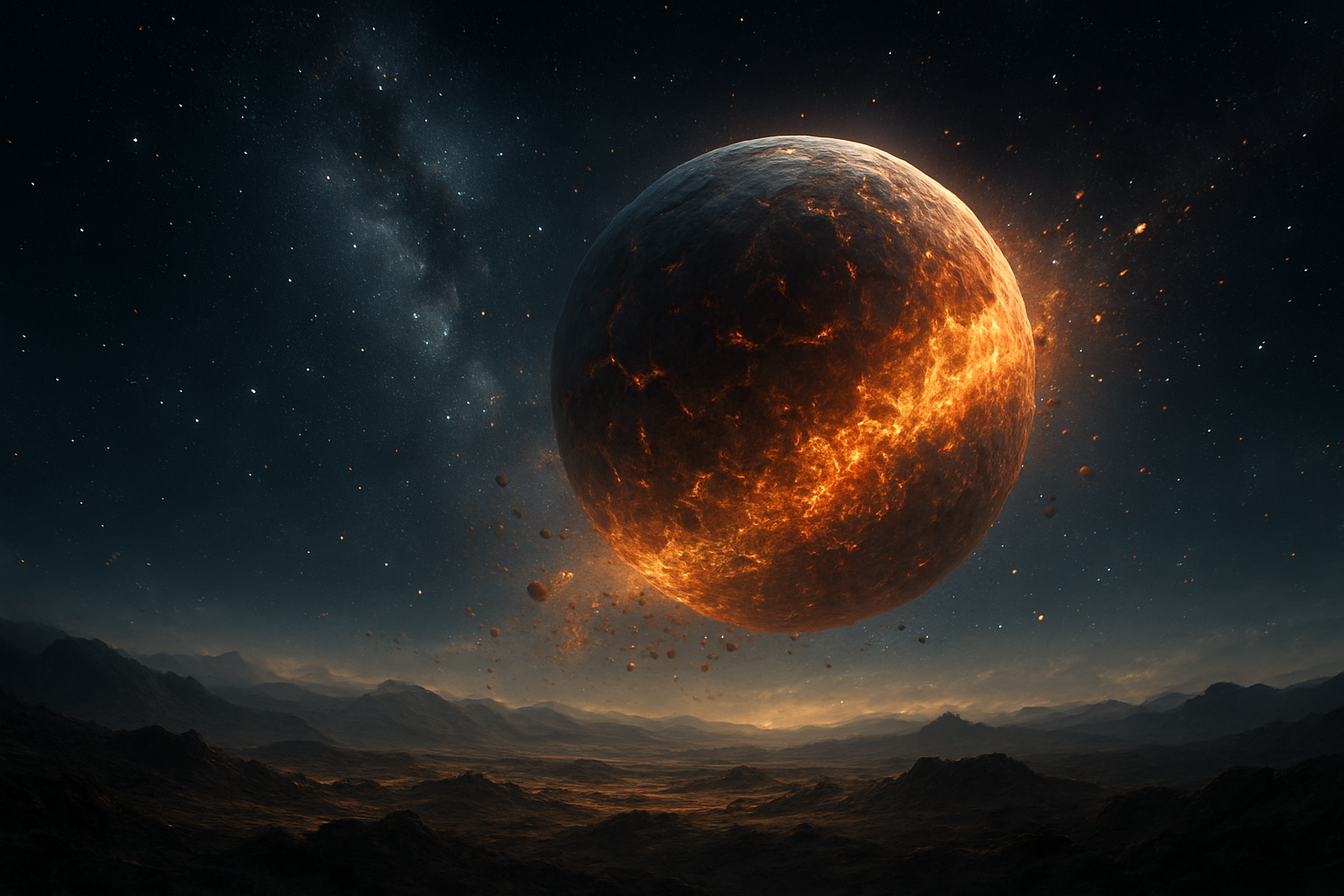
  • Celestial Extinction – Petit Mort Across the Planes

    Celestial Extinction – Petit Mort Across the Planes

    The cosmos, a tapestry of seemingly endless wonder, teems with the light of stars and the enigmatic beauty of celestial bodies. Yet, just as life has its ethereal moments of transition, so too do stars and planets experience their own unique forms of extinction. This article explores the poetic tristesse of celestial deaths, often referred to as “petit mort”, the small death, across the vastness of space.

    The Fading Glow of Stars

    Stars are the quintessential elements of our universe, the fierce beacons of light that guide sailors and inspire poets. Their life cycle is grounded in the balance of nuclear fusion and gravitational forces. However, this glamorous existence is finite.

    • Red Giants and White Dwarfs: As a star exhausts its hydrogen fuel, it expands into a red giant. Eventually, the outer layers are shed, and the core contracts into a white dwarf. This process marks a star’s transition from a brilliant blaze to a cold ember, signifying a gradual fading into darkness.
    • Supernovae: Larger stars end their lives in spectacular explosions known as supernovae. According to NASA’s observations, these cataclysmic events are among the brightest and most powerful known phenomena in the universe, releasing vast amounts of energy and enriching the cosmos with heavy elements.
    • Black Holes and Neutron Stars: If the remnant core of a massive star is great enough, it may collapse into a black hole, a region of spacetime from which nothing can escape. Alternatively, it may form a neutron star, a dense stellar corpse left to spin in the vacuity of space.

    Planetary Disappearance

    While stars dominate the narratives of cosmic death, planets also face their end, albeit in less cataclysmic but equally fascinating transitions.

    • Rogue Planets: Some planets are cast adrift from their parent stars, becoming rogue planets that wander the galaxy alone. According to the European Southern Observatory, these celestial nomads are “not bound to any star and are free-floating through the galaxy.”
    • Inward Migration: Planets can also move toward their host star over time until they are consumed. This process, often observed in exoplanet systems, can result in a planet’s fiery end as it gets engulfed by its sun.
    • Impact Events: Collisions with asteroids or comets can spell disaster for planets. The famous impact that led to the extinction of dinosaurs on Earth is a reminder of the fragility of planetary life.

    The Romantic Notion of Celestial Extinction

    Despite the harsh realities of destruction, celestial extinction can be seen through a romantic lens. As French philosopher Gaston Bachelard once noted, “The imagination enlarges our perception of poetic space”. The cycles of celestial death and rebirth illustrate the predictability and inevitability of change.

    “We are all made of star stuff,” Carl Sagan eloquently stated. This cycle of creation and annihilation reflects the interconnectedness of the cosmos, where dying stars seed the birth of new stars and perhaps new worlds.

    The Implications for Human Understanding

    The study of celestial extinction has profound implications for our understanding of the universe and our place within it. From philosophical questions about permanence and destruction to practical concerns about the future of technology and our search for extraterrestrial life, the concept of extinction stretches across disciplines.

    • Technology and Knowledge: Understanding the processes behind celestial extinction leads to technological advances, such as developing better models to predict the life cycles of stars.
    • Philosophical Reflections: As philosopher A.N. Whitehead observed, “The history of philosophy is the study of oversimplifications.” Celestial extinction challenges oversimplifications, encouraging deeper inquiries into the nature of existence.
    • Search for Extraterrestrial Life: Studying these processes helps scientists understand the potential habitability of other planets and the conditions that might lead to life, or its end, in distant star systems.

    Conclusion

    Celestial extinction, the cosmological petit mort, is a reminder of the ephemeral nature of existence and the countless narratives written across the skies. From the quiet fading of a white dwarf to the violent drama of a supernova, these processes highlight the cyclical, interconnected story of the universe—a story that despite its scale, finds resonance in our hearts.

    As we look up at the night sky, we see only a fraction of its beauty, aware that every star has a tale, a lifetime, and eventually, an end. It is in these endings that we find the seeds of new beginnings, an eternal dance between life and death mirrored in the celestial sphere.

    For more insights into the cosmic ballet, visit the Space.com and explore humankind’s quest to understand the universe.

  • Stellar Alchemy – Science Interpreted as Magic

    Stellar Alchemy – Science Interpreted as Magic

    The night sky has long been the canvas for humanity’s imagination, with constellations serving as celestial storybooks that narrate myths and legends. Yet, the true magic lies not in the stories of old, but in the science that underpins the stars themselves—a field often described as stellar alchemy.

    The Awe-Inspiring Birth of Stars

    Stars begin their life in the densest regions of space, known as molecular clouds. When these clouds collapse under their own gravity, the high temperatures and pressures lead to nuclear fusion, the process that allows stars to shine. Stephen Hawking once eloquently described this as “the way the universe attempts to comprehend itself.” This fusion of hydrogen atoms into helium releases an immense amount of energy, essentially brewing elements that will one day form planets, plants, and people.

    Elements Forged in Starry Crucibles

    In the cosmic kitchens of stars, the heat and pressure catalyze reactions that forge elements heavier than helium. Over a star’s lifetime, these processes produce elements such as carbon, nitrogen, and oxygen, which are the building blocks of life. This is the alchemy of the cosmos—a stellar transmutation that transforms basic elements into the rich tapestry of the periodic table.

    As Carl Sagan famously said, “We are made of star stuff.”

    This phrase poetically captures the origin of the elements that compose our bodies, emphasizing the mystical connection between humanity and the celestial sphere.

    Supernovae: The Explosive Finale

    As stars reach the end of their life cycle, they may explode as supernovae, an event of unmatched brilliance and violence. These explosions scatter the heavy elements created during the star’s life into space, enriching the galaxy’s interstellar medium and sowing the seeds for the next generation of stars and planets.

    The Magic of Understanding

    Stellar alchemy unveils the magic that weaves the fabric of the universe. What once appeared to be a subject of folklore is now understood through the lens of modern astrophysics. This understanding does not diminish the wonder; rather, it enhances it. As the renowned physicist Richard Feynman once remarked, “The first principle is that you must not fool yourself—and you are the easiest person to fool.” Understanding the reality behind celestial phenomena reveals the true wonder of nature and our place within it.

    As we gaze up at the night sky, it’s comforting to know that we are both the observers and participants in this cosmic ballet—a magical display, enacted with the grand choreography of science.

    For more on the science behind the stars, you can visit NASA’s Astrophysics Division.

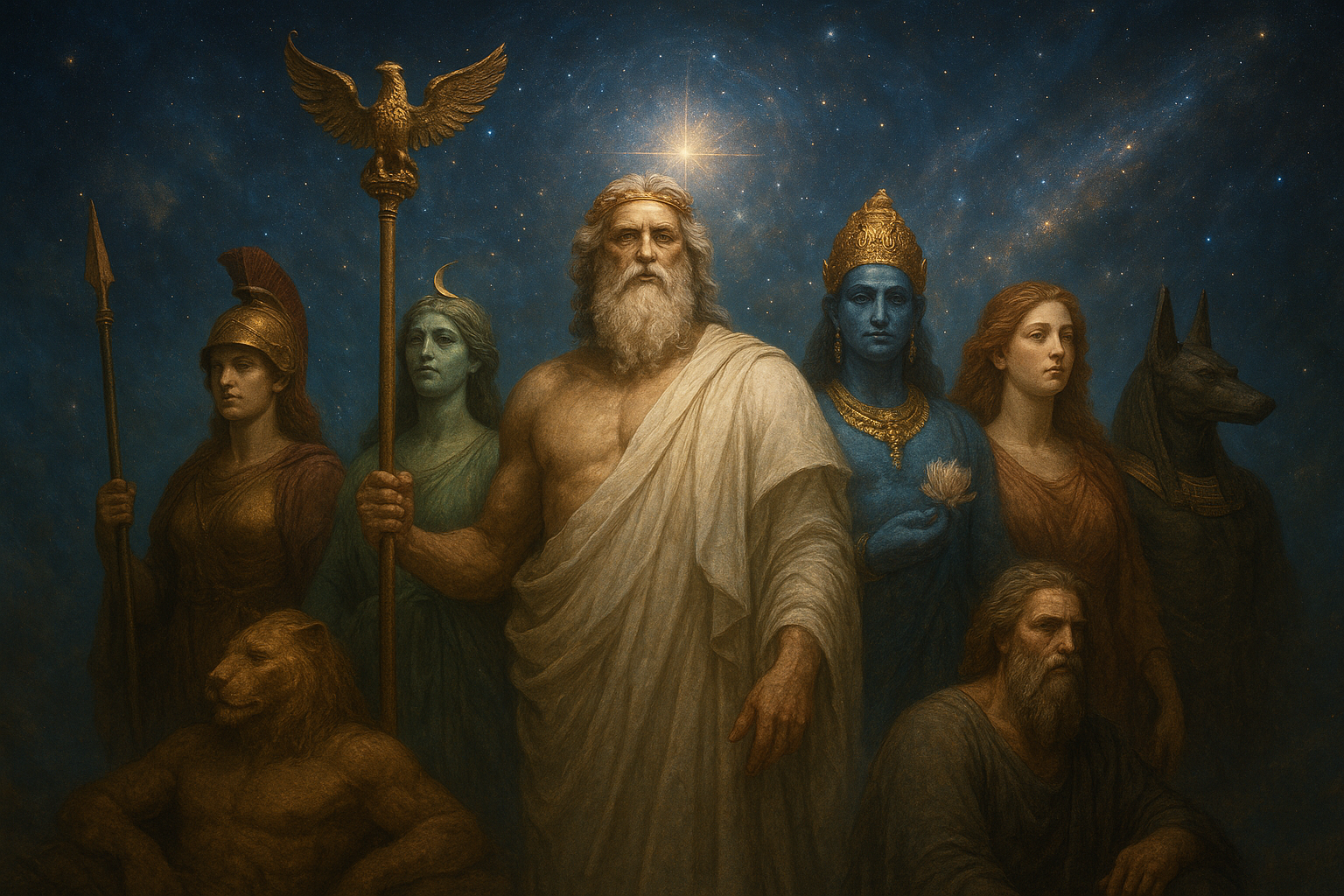
  • The Astral Pantheon – Mythology Across Realms

    The Astral Pantheon – Mythology Across Realms

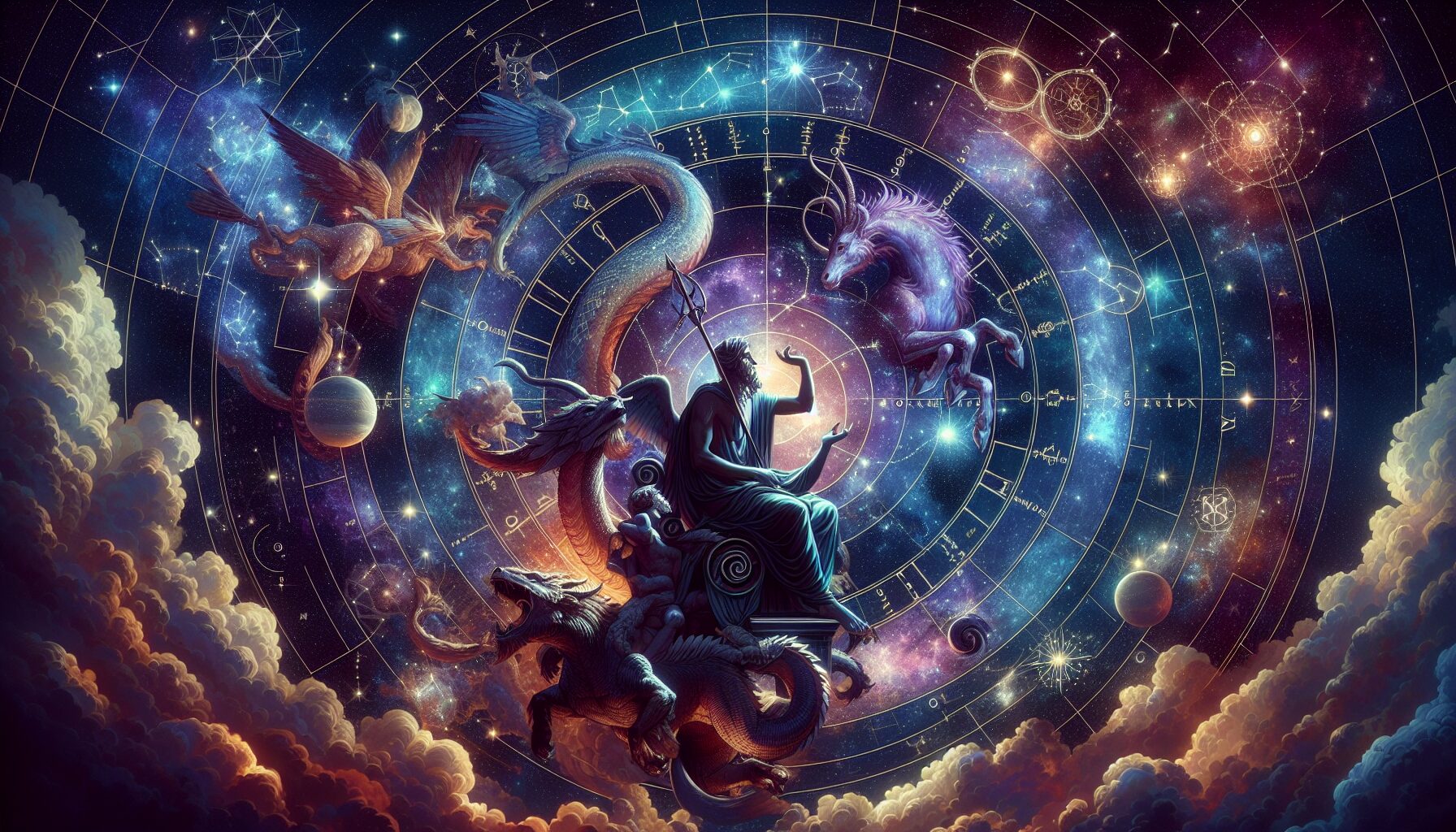
    Throughout history, humans have gazed upwards, mesmerized by the stars and the vast cosmos, often attributing divine qualities to the celestial bodies. This cosmic wonder has incubated a rich tapestry of astral deities and mythologies across diverse cultures. From the winged messengers of ancient Zoroastrianism to the heavenly chariots of Vedic texts, astral deities have played a significant role in shaping human civilization.

    Origins in Ancient Mythologies

    • Egyptian Skylore: In ancient Egypt, the sky was personified as the goddess Nut, who arched over the earth with her star-strewn body. Nut was seen as a protector of the dead and a symbol of resurrection, with pharaohs often depicted joining her in the afterlife to become stars themselves.
    • Mesopotamian Guardians: For the Babylonians, the stars were the domain of Sin, the god of the moon, who wielded great astrological influence. The god Anu was revered as the father of the gods, representing the epitome of the celestial cosmos.

    Influence of the Greek and Roman Pantheon

    The Greeks wove intricate tales that integrated their gods with the constellations seen in the night sky. Familiar figures such as Orion the Hunter and Andromeda were enshrined in the heavens as stars that linked human fate with celestial movements.

    “The heavens declare the glory of God; and the firmament sheweth his handiwork.” — Psalm 19:1 (KJV)

    This sentiment was mirrored in Roman culture, where constellations were named after heroic figures and mythological stories, echoing their origins in Greek astronomy.

    Eastern Concepts and Beyond

    • Chinese Celestial Bureaucracy: In ancient Chinese belief, the sky was a complex bureaucratic structure with the Jade Emperor presiding over it all. Each star and planet was seen as a celestial administrative unit with specific responsibilities influencing earthly affairs.
    • Hindu Astronomy: The Vedic concept of Navagraha, the nine celestial influencers, remains vital in Hindu astrology today. These astral deities, such as Surya (the sun) and Chandra (the moon), directly impact human lives according to Hindu belief.

    The Modern Cosmic Perspective

    Although technological advances have shifted our understanding of celestial bodies, the mythological allure remains potent. Astral deities continue to intrigue us, serving as powerful symbols in literature, film, and art — reminders of the timeless human quest to connect the earthly with the divine.

    The astral pantheon, with its countless interpretations across the annals of history, continues to enrich our collective imagination, reflecting a profound legacy of humanity’s connection with the universe.

  • The Forgotten Pantheon – Mythology of the Cosmos

    Throughout human history, the night sky has served not only as a natural calendar and a navigation guide but also as a rich tapestry for storytelling. While many are familiar with the Greek, Roman, and Norse interpretations of the cosmos, there exists a forgotten pantheon—a compendium of celestial tales and deities that spin a narrative often overshadowed by mainstream mythologies.

    Starry Origins: Creation Myths of the Cosmos

    Many cultures have their unique perspectives on the creation of the universe, often attributing it to divine forces. For instance, the Maasai people of East Africa have a profound tale about the origins of the cosmos. They believe that in the beginning, there was only darkness, and then a god named Enkai created the universe. Stars were the offspring of the Moon, supporting a cosmic family half-forgotten by modern astronomers.

    Similarly, in Japanese folklore, there exists the story of Izanagi and Izanami, the divine couple who, through divine wands, stirred the waters below the heavens to create the Japanese islands. Their actions led to the formation of stars as droplets of divine substance, illuminating the sky.

    Cosmic Deities and Celestial Beings

    • The African Celestial Rhino: Among the Tswana people of Botswana, a celestial rhinoceros known as Kgosikgolo wanders the night sky. This mythological being is seen as an eternal watchman of the heavens, representing strength and resilience.
    • Ainu Star Maidens: In the Ainu culture of Japan, stars are seen as maidens, daughters of the great god “Kamuy.” They dance across the sky, and their movements dictate the cycles of life and nature.
    • Maya Astral Spirits: The ancient Maya revered the stars not just as distant balls of gas, but as manifestations of their gods. The Hero Twins, Hunahpu and Xbalanque, defeated the Lords of the Underworld and ascended into the heavens as the sun and moon, illuminating the world with their divine presence.

    The Celestial Dance: Astrology and Ancient Beliefs

    Astral bodies have always influenced human civilizations, with astrology being the bridge between celestial phenomena and human affairs. For the ancient Babylonians, astrology was a science interwoven with mythology. The movement of stars and planets was believed to be the writings of gods across the heavens, foretelling significant events on Earth.

    “The stars in the night sky have been maps, stories, and cosmic guides throughout the history of humanity.”

    In Chinese tradition, the Dragon and Phoenix become celestial indicators, symbolizing the emperor and empress. The positions of these constellations at different times of the year were used to dictate imperial decisions and predict the fates of dynasties.

    The Mystical Zodiac of Ancient Cultures

    The concept of a zodiac is prevalent across various civilizations, each with its unique interpretation:

    • The Egyptian Zodiac: Ancient Egyptians divided the sky into 36 decans, each associated with a god’s influence. They believed that certain decans, when seen at dusk or dawn, held divine messages from the gods.
    • Indigenous Australians: Known for their deep spiritual connection with the land and sky, Indigenous Australians have a zodiac rooted in the creation stories of the Dreamtime. The Emu in the Sky, formed by dark clouds between the stars, is a significant element in their astral lore.
    • Native American Star Maps: For tribes such as the Lakota, stars were not just points of light but symbols of their ancestors. The Lakota Sioux’s beliefs include the legend of the Seven Sisters, mirroring the Greek Pleiades but with its own cultural significance and teachings.

    The Tales Written in the Sky

    Across cultures, the mythologies of the cosmos serve as a canvas upon which societies project their dreams, fears, and explanations of the universe:

    In Mongolian myths, Orion’s Belt is known as the Three Beauties, representing three unforgettable queens known for their beauty and grace. This contrasts with the Asian interpretation of the same three stars as representing the Kuja Dosa, a warning of potential misfortune.

    Meanwhile, the Celtic people named the constellation we know as the Big Dipper the Plough or sometimes the 7 Oxen, describing the inexorable toil of farm life set against the backdrop of the universe’s eternal turning wheel.

    The Enduring Legacy of Celestial Mythology

    These tales, imbued with endless creativity and cultural significance, illustrate a universal human need to find order and meaning in celestial patterns. As modernity races forward, these myths risk being overshadowed by scientific advancement. Yet, they persist, whispering the eternal truth of humanity’s cosmic insignificance and boundless imagination.

    “The cosmos is within us. We are made of star-stuff. We are a way for the universe to know itself.” – Carl Sagan

    In conclusion, exploring the forgotten pantheon of cosmic mythology opens a window into how different cultures perceived the stars as divine actors in the universal play. It reveals a world where science and magic converge, where celestial narratives are as much a part of the human experience as the stars are part of the night sky.

    Therefore, as we gaze upwards, let us remember the vibrant mythologies, the sacred stories, and the forgotten pantheons that help us bridge the gap between earthly existence and cosmic wonder.

  • The Celestial Codex – Mythology Encoded in Stars

    The Celestial Codex – Mythology Encoded in Stars

    The night sky has always been a source of wonder and mystery. As ancient civilizations gazed upwards, they saw more than celestial bodies; they saw sacred stories, legends, and myths etched into the vast cosmic canvas. The “Celestial Codex” reveals a fascinating intersection of mythology and astronomy, a dialogue between human imagination and the infinite universe.

    The Dawning of Celestial Mapping

    From the Greeks to the Egyptians, every civilization perceived the night sky as a grand tableau where mighty Gods, epic heroes, and legendary creatures roamed among the stars. According to Encyclopedia Britannica, the ancient Greeks were particularly instrumental in charting the sky, recognizing 48 constellations that vividly brought their mythology to life. Today, 88 official constellations are recognized by the International Astronomical Union.

    Greek Mythology: Legends Among the Stars

    Many constellations are directly tied to ancient Greek mythology:

    • Orion: The mighty hunter Orion’s tragic tale is immortalized in a constellation that boasts Betelgeuse and Rigel, some of the brightest stars in our sky. Orion’s story of hubris and punishment unfolds beautifully across the heavens.
    • Pleiades: Known as the seven sisters, the Pleiades are a cluster of stars also mentioned in Homer’s “The Odyssey”. They were said to be transformed into stars to escape the unwanted pursuit of Orion.
    • Perseus: Representing the hero who slayed Medusa, Perseus is a prominent constellation that intertwines with other myths like that of Andromeda and Cassiopeia, weaving a stellar tapestry of adventures and aspirations.

    Other Cultures, Other Stars

    While Greek myths are prevalent, they are not exclusive. Cultures around the globe have mapped the stars with their own narratives:

    • Chinese Astronomy: In China, star lore is intricately tied to their history and achievements. The Beidou (Big Dipper) was crucial for navigation and played a key role in ancient Chinese religion and mythology, representing the handle of the Celestial Emperor’s chariot.
    • Indigenous Australian Astronomy: The Aboriginal peoples of Australia have one of the longest continuous scopes of sky-watching in human history. Constellations like the Emu in the Sky do not focus on stars, but rather the dark patches between them. It represents creation stories and is an integral part of cultural practices.
    • Egyptian Sky Lore: The ancient Egyptians illustrated their cosmology through the movement of stars. The constellation Sopdet, associated with the star Sirius, was crucial for their calendar and linked to the prosperity brought by the annual flooding of the Nile.

    The Modern Era: Science and Story

    Advancements in technology and science have redefined our relationship with the stars. However, the myths remain as a cultural legacy, a reminder of humanity’s enduring curiosity about the cosmos. Carl Sagan famously said in “Cosmos”, “The cosmos is within us. We are made of star-stuff. We are a way for the universe to know itself.” This perspective harmonizes a scientific understanding of the universe with the mythological significance we have historically ascribed to it.

    Enduring Influence

    “We are all in the gutter, but some of us are looking at the stars.” — Oscar Wilde

    The celestial myths endure not just in storytelling but in art, literature, and cultural expressions worldwide. They remind us of our shared heritage, one that transcends geographical boundaries and is rooted in the universal experience of looking skyward.

    Conclusion: The Mythological Legacy

    The night sky, a constant canvas of human imagination, continues to captivate us. As we advance in our scientific pursuits, the celestial codex remains a timeless bridge connecting us to our ancestors. These myths encapsulated in our stars remind us of the stories that define us and the universe we seek to understand. As humanity continues to explore outer space, the mythological legacy woven into the stars serves as both a reminder of our past and an inspiration for our future.

    “`

  • Angelic Parables – Lessons From the Celestial Realm

    Angelic Parables – Lessons From the Celestial Realm

    Throughout history, humans have woven intricate stories that highlight the virtues and teachings of celestial beings. These angelic parables have served as moral compasses, guiding humanity through the complexities of life. By drawing wisdom from the celestial realm, these tales often present profound insights into human nature and the spiritual journey.

    The Role of Angels in Parables

    Angelic figures have frequently appeared in religious texts and folklore, symbolizing messengers of divine wisdom and conduits of moral guidance. In Christianity, for instance, the Bible contains several references to angels acting as bearers of significant messages. Gabriel, an archangel, is famously known for announcing the birth of Jesus to Mary, emphasizing his role in delivering divine plans.

    The concept of parables, however, extends beyond religious scriptures and often thrives in various cultural narratives. These symbolic stories, imbued with angelic elements, serve as reflections on ethical dilemmas, human virtues, and the divine order.

    Timeless Lessons From Angelic Narratives

    • The Power of Compassion: A recurring theme in angelic parables is the transformative power of compassion. These stories frequently depict angels showing mercy and understanding, urging humans to cultivate empathy towards one another. As the Talmud notes, “The highest form of wisdom is kindness.”
    • The Value of Humility: Angels often represent humility, reminding us of our place within the grand tapestry of creation. In many narratives, pride is portrayed as a barrier to spiritual enlightenment, echoing the sentiment of John 3:30, “He must become greater; I must become less.”
    • The Pursuit of Faith: Angelic beings are epitomes of faith, assisting humans in moments of doubt and uncertainty. These celestial guides encourage believers to sustain their trust in the divine plan, even when earthly concerns cast shadows of doubt.

    A Modern Perspective on Angelic Parables

    In today’s context, angelic parables continue to resonate with audiences by offering solace and insight amidst the chaos of modern life. These tales remain a beacon of hope, illuminating the path to moral and spiritual fulfillment. As C.S. Lewis poignantly remarked in his book Mere Christianity, “You have never talked to a mere mortal. Nations, cultures, arts, civilizations—these are mortal, and their life is to ours as the life of a gnat.”

    Ultimately, angelic parables inspire us to strive for a harmonious existence, reminding us of our connection to the celestial and the eternal lessons it imparts.

  • The Titan\’s Atlas – Mythology of Other Worlds

    The Titan\’s Atlas – Mythology of Other Worlds

    The Titan’s Atlas – Mythology of Other Worlds

    Throughout human history, myths and legends have served as windows into the intriguing cultures and values of societies. One such myth, captivating in its depth and symbolism, is that of Atlas, the mighty Titan tasked with holding up the sky. From ancient Greece to modern interpretations, Atlas symbolizes the enduring burdens and responsibilities that transcend the earthly realm, hinting at a mythology of other worlds.

    The Burden of Atlas

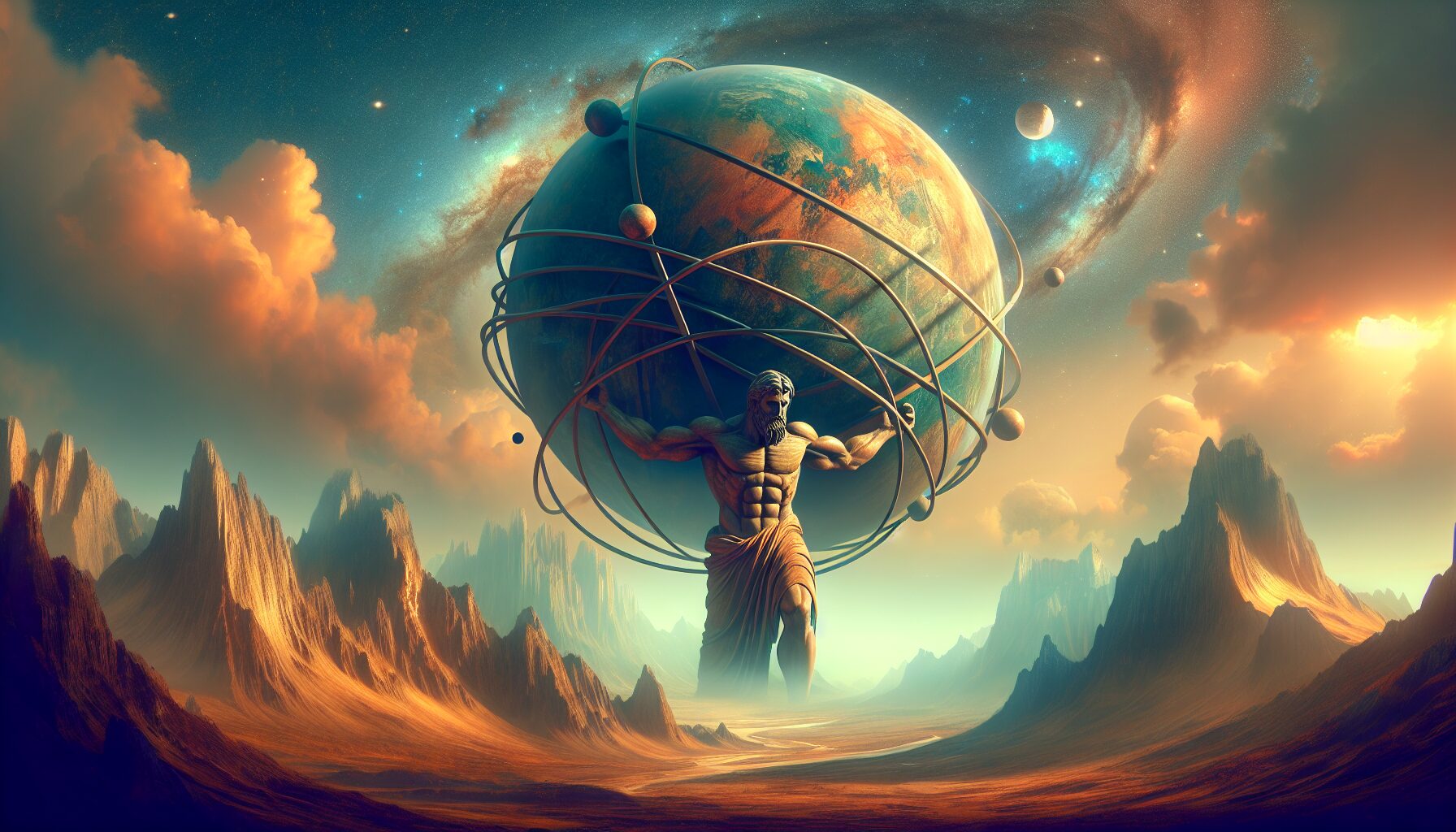
    In Greek mythology, Atlas was a Titan condemned to hold up the heavens for eternity as a punishment for his role in the Titanomachy, the epic battle between Titans and Olympians. This image of Atlas, muscles straining under the celestial weight, has been immortalized in art and literature, representing more than just physical strength. The story of Atlas reflects the theme of enduring responsibility and perseverance through insurmountable challenges.

    “Atlas, the founder of astronomy, showed mankind the turning sky, holding up celestial forces which are the source of our understanding of the universe.” – Diodorus Siculus

    Interpreting Atlas Across Cultures

    As the myth of Atlas spread, it evolved, intertwining with various cultural motifs and philosophies. In Roman interpretations, Atlas became associated with astronomical knowledge, a fitting representation of the Titan’s connection to the cosmos. The enduring power of Atlas’s image invites parallels to mythologies from across the globe, where colossal figures often depict links between earth and the divine.

    In Norse mythology, for instance, the cosmic ash tree Yggdrasil holds the universe together. According to the Encyclopedia Britannica, it symbolizes the structure of the cosmos, much like the myth of Atlas embodies a foundational pillar connecting earthly and celestial realms. Both myths convey the intricate balance and interconnectedness of all existence.

    The Titan’s Role in Modern Culture

    Today, Atlas’s legacy continues in a myriad of ways, from literature and film to brand names and logos, underscoring its enduring influence. The symbolism of Atlas has even transcended into scientific exploration, with namesakes like the National Aeronautics and Space Administration (NASA) Atlas program, which hints at the quest to support new realms beyond Earth.

    • Atlas as an icon of resilience
    • Representation in art and pop culture
    • Inspiration for scientific exploration

    The story of Atlas reminds us of the broader human struggle to understand our place in the universe while carrying our own burdens. As we explore other worlds, both mythological and physical, Atlas serves as a powerful symbol of strength, perseverance, and curiosity.

  • Celestial Messengers – Angels Between Dimensions

    Celestial Messengers – Angels Between Dimensions

    Celestial Messengers: Angels Between Dimensions

    Throughout history, angels have been prominent figures in various religious and spiritual traditions. Often depicted as divine messengers, these celestial beings are believed to exist between the human world and higher dimensions. But what role do they play in our lives, and how have they been perceived across cultures?

    The Role of Angels in Religious Texts

    In many religious texts, angels are portrayed as intermediaries between humans and the divine. The Bible frequently references angels delivering God’s messages to humans, as in the story of Gabriel announcing to Mary that she would bear the Son of God.

    “The angel went to her and said, ‘Greetings, you who are highly favored! The Lord is with you.’” – Luke 1:28

    Similarly, in Islamic tradition, angels (“malāʾika” in Arabic) are essential to the faith. According to Islamic belief, the angel Jibril (Gabriel) revealed the Quran to Prophet Muhammad.

    Angels Across Cultures

    Various cultures around the world have different interpretations and depictions of angels:

    • Hinduism: While the concept does not align directly with the Abrahamic traditions, deities and celestial beings like devas play a similar role.
    • Ancient Greece: The daimon or daemon was an intermediary spirit, somewhat akin to an angelic figure.
    • Indigenous Beliefs: Many indigenous cultures have spirit guides or ancestral spirits serving as protectors and messengers.

    The Concept of Angels in Modern Spirituality

    In contemporary spirituality, the belief in angels has transcended traditional religion, often embraced by individuals seeking guidance from higher dimensions. Angel therapy, which involves harnessing the perceived power of angels to heal and guide individuals, gained popularity due in part to figures like Doreen Virtue.

    “People love to believe in angels because they’re like a bridge between the known and unknown, seen and unseen. Angels are associated with goodness, purity, and bringing light.” – Doreen Virtue

    This movement typically promotes personal empowerment through the idea that angels can be invoked to assist in facing life challenges.

    Scientific Perspectives

    Despite a lack of empirical evidence, interest in the metaphysical aspects of angels has piqued some scientific curiosity. Several psychologists and researchers analyze why humans are drawn to angelic imagery and the notion of protective, otherworldly beings. For many, angels serve as a comforting symbol that transcends the limitations of the mortal world, offering hope and solace.

    “Humans have long been fascinated by the possibility of a higher power looking out for us. Angels personify the spiritual and emotional security that many people crave.” – Dr. Andrew Newberg, neuroscientist at the University of Pennsylvania

    Angels in Art and Literature

    Angels have been a source of inspiration in art and literature throughout history. From Renaissance paintings of cherubic beings to contemporary fiction featuring angels as protagonists, these celestial entities continue to captivate artists and audiences alike.

    • Art: During the Renaissance, artists like Michelangelo and Raphael depicted angels in their iconic frescoes and canvases, often using them to portray themes of divinity and salvation.
    • Literature: In John Milton’s Paradise Lost, angels play pivotal roles in the narrative, exploring themes of obedience and rebellion.

    The Enduring Mystery of Angels

    Angels remain enduring symbols of the mystical and the divine across human history. Whether as guardians, messengers, or guides, they represent humanity’s timeless quest for connection with something greater. While their existence between dimensions may lack scientific substantiation, their presence in cultural and spiritual consciousness endures, continuing to intrigue and inspire.

    As our understanding of the universe expands, the question of angels existing between dimensions may someday find ground in science or remain a cherished mystery of human belief.

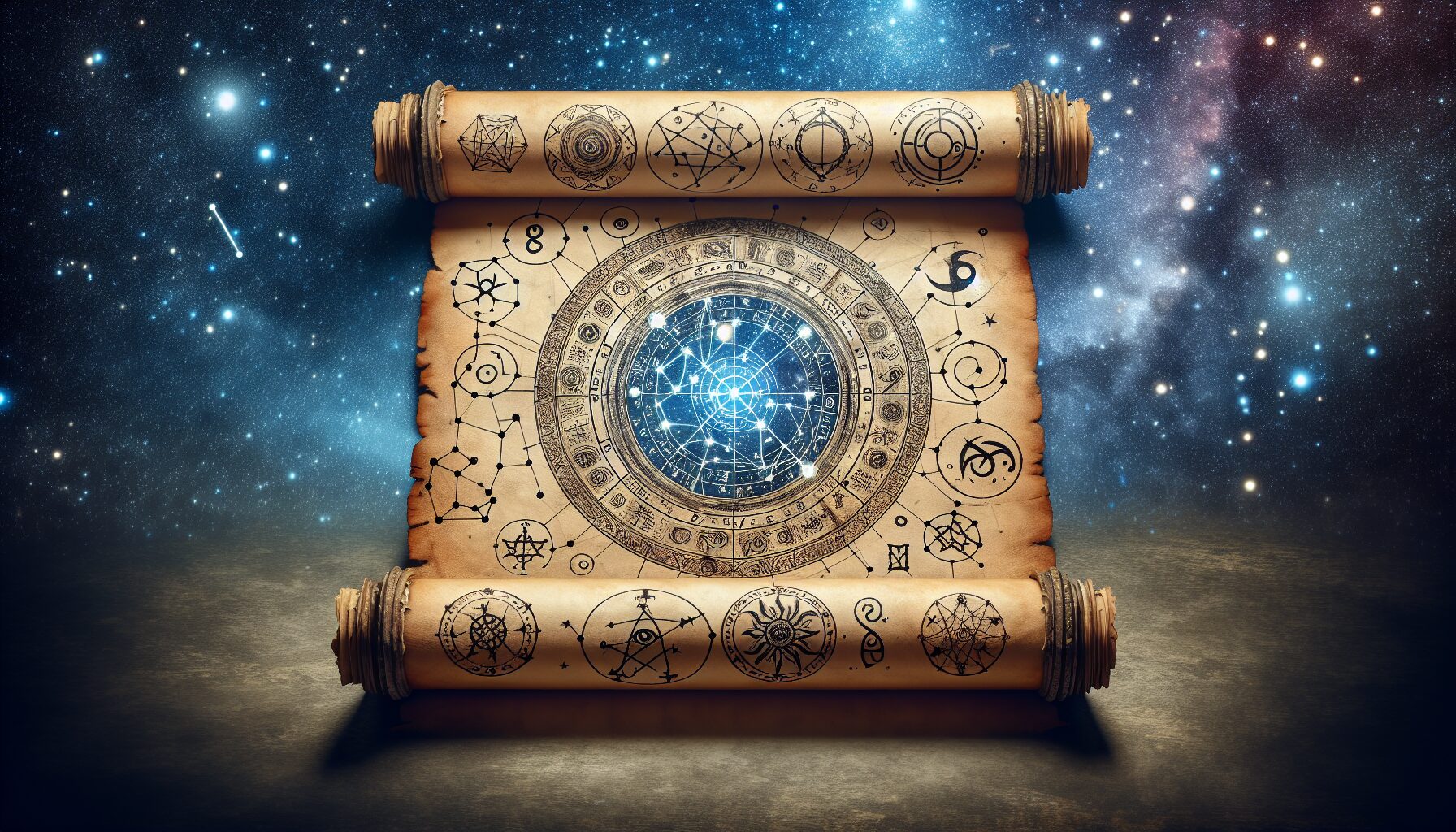
  • Time-Scribed Scrolls – Archetypes Written in the Stars

    Time-Scribed Scrolls – Archetypes Written in the Stars

    Time-Scribed Scrolls: Archetypes Written in the Stars

    For millennia, humans have looked to the stars for guidance, inspiration, and understanding of the world and themselves. The night sky, with its twinkling tapestry of celestial bodies, has served as an eternal canvas where humanity has projected myths, hopes, and cosmic archetypes. These heavenly symbols become time-scribed scrolls, filled with timeless wisdom that speaks to both personal and collective unconsciousness.

    The Origins of Celestial Archetypes

    Celestial archetypes originate from a blend of astrology, mythology, and astronomy. Ancient civilizations, from the Babylonians and Egyptians to the Greeks and Chinese, each saw the cosmos as a series of narratives that explained human traits and events. These cosmic symbols were not just stories but served as guiding principles or archetypes.

    • Babylonian Zodiac: The Babylonians were among the first to map the stars into what we know as the zodiac. This ancient system relies on twelve divisions of the sky, each associated with specific qualities and myths.
    • Greek Influence: The Greeks further enshrined these celestial symbols, linking gods and legendary heroes to the stars. Their tales of Hercules, Aries, and others still resonate, illustrating human virtues and flaws.
    • Chinese Astronomy: In the East, the Chinese developed their own celestial system, where the animals of the zodiac embody qualities such as wisdom, courage, and perseverance.

    “Astronomy compels the soul to look upwards and leads us from this world to another.” – Plato

    Psychological Insights: Jung and Universal Archetypes

    Carl Jung, a seminal figure in psychology, introduced the concept of the collective unconscious—a part of the unconscious mind shared by all human beings, containing memories and images of common experiences. Jung described these shared motifs as archetypes: symbols deeply embedded in our collective psyche.

    Jung’s work bridges the understanding of celestial archetypes as more than just ancient stories—they are integral to understanding human behavior and consciousness. He believed that these archetypes are manifested in dreams, myths, and legends, pointing out that these symbols are expressions of our inner realities and the broader human experience.

    The Zodiac and Personality

    The twelve signs of the zodiac are perhaps the most recognized celestial archetypes today. Each sign corresponds to specific personality traits that, like mythological characters, embody different facets of the human experience:

    • Aries: The warrior spirit, symbolizing courage and initiative.
    • Taurus: Represents stability, reliability, and a love for beauty.
    • Gemini: The twins, denoting duality, communication, and adaptability.
    • Cancer: The nurturer, embodying emotion, intuition, and protection.
    • Leo: The leader, with qualities of creativity, warmth, and valor.
    • Virgo: Associated with diligence, detail, and service.
    • Libra: The scales, signifying balance, harmony, and justice.
    • Scorpio: The transformative force, with depth, passion, and mystery.
    • Sagittarius: The seeker, adventurous, optimistic, and philosophical.
    • Capricorn: The strategist, symbolizing ambition, discipline, and perseverance.
    • Aquarius: The innovator, representing idealism, originality, and reform.
    • Pisces: The dreamer, embodying empathy, healing, and imagination.

    Myth and Meaning in the Stars

    Human cultures have always bred stories to explain the celestial movements, ascribing deities and legends to the movements of heavenly bodies. Consider the mythos of Orion, the mighty hunter from Greek mythology, whose constellation tells a story of strength, pride, and eventual humility. His tale serves as a reminder of human limitations and the beauty of the journey, regardless of the outcome.

    Constellations such as the Pleiades have been revered across cultures, from the ancient Greeks to the Indigenous Australians, each interpreting these stellar patterns in ways that reflect their worldview.

    The Modern Resonance of Celestial Archetypes

    In contemporary society, these ancient symbols continue to provide comfort and reflection, even for those who no longer see them as divinities but rather as metaphoric guides. Astrology remains a popular discipline, not solely for predicting the future but as a tool for introspection and understanding.

    The movement of celestial bodies is said to align with human experiences, offering a celestial backdrop to personal growth and change. In astrology, the concept of transits describes how current planetary movements interact with an individual’s birth chart, illuminating patterns, challenges, and opportunities.

    “It is not in the stars to hold our destiny but in ourselves.” – William Shakespeare

    Embracing the Cosmic Journey

    The sky continues to act as a mirror reflecting our hopes, dreams, and fears. As we embrace this deep connection with the cosmos, we can see these constellations and celestial bodies as reminders of our interconnectivity with the universe and with each other. Whether used for entertainment, introspection, or spiritual guidance, the stories written in the stars offer an opportunity to explore the depths of our psyche.

    The celestial archetypes are more than ancient symbols—they are signposts on our journey of understanding, offering wisdom and insight written in the stars. They remind us of our shared humanity and the timeless stories that bridge the gaps between past and present, earth and sky.

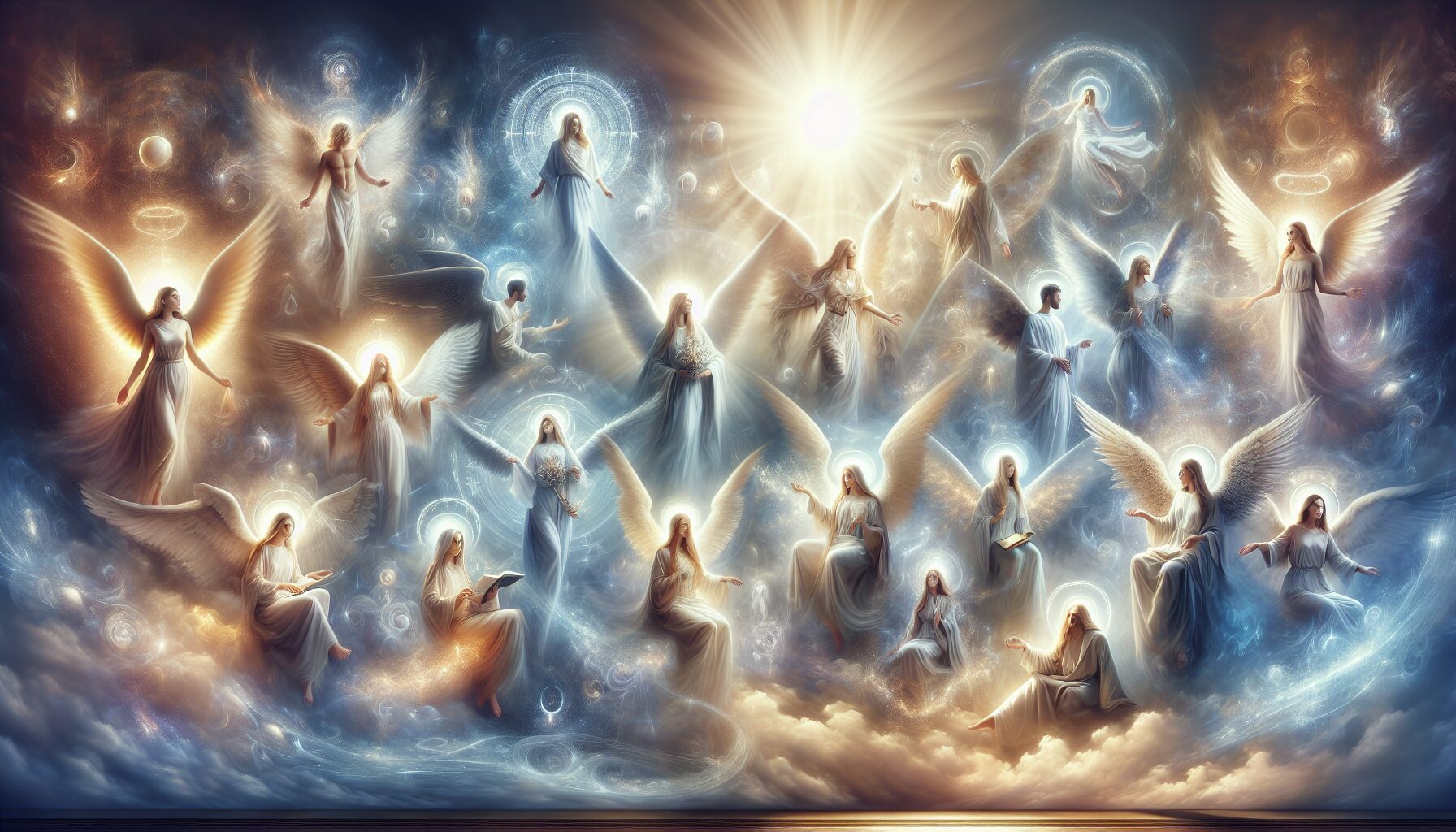
  • Angelic Hierarchies – Mysticism of Celestial Orders

    Angelic Hierarchies – Mysticism of Celestial Orders

    The ethereal realm of angels captivates the human imagination, embodying a profound mystical tradition spanning religions and cultures. Angelic beings, often perceived as messengers between the divine and mortal realms, hold key roles in religious texts, art, and spiritual traditions. Exploring the angelic hierarchies unveils a celestial order radiating divine light and purpose.

    The Concept of Angelic Hierarchies

    The notion of angelic hierarchies was first systematically organized by Pseudo-Dionysius, a Christian theologian and philosopher of the late 5th to early 6th century. In his work, De Coelesti Hierarchia, he described a structured order that categorizes angels into three triads, each consisting of three orders or choirs.

    “The theologians have given us the nine angelic names…,” writes Pseudo-Dionysius, drawing from scripture and theological insights (Pseudo-Dionysius, De Coelesti Hierarchia).

    The First Triad: Closest to the Divine Throne

    • Seraphim: The seraphim are often depicted as fiery beings of pure light, surrounding God’s throne. According to Isaiah 6:2-4, they cry out “Holy, holy, holy” continuously. Their role is to cleanse, illuminate, and move heaven’s flaming love.
    • Cherubim: Known for their wisdom and knowledge, the cherubim are guardians of divine secrets. They are often shown as the keepers of the way to the tree of life (Genesis 3:24). Thomas Aquinas described them as “fullness of knowledge” (Summa Theologica, Part 1, Question 108, Article 5).
    • Thrones: These angels represent divine justice and authority. Known as the carriers of God’s throne, they help dispense divine judgment. Thomas Aquinas refers to them as angels who maintain a perfect view of God’s work with peace and humility.

    The Second Triad: Heavenly Governors

    • Dominions: The middle of the nine orders, dominions regulate the duties of lower angels. They oversee nations and large groups, ensuring that the cosmic order is maintained and are sometimes depicted with orbs or scepters.
    • Virtues: Charged with bestowing blessings and courage, virtues perform miracles in the world. The apostle Paul refers to them in his Epistle to the Ephesians and Colossians, suggesting their power manifests in miracles (Ephesians 1:21).
    • Powers: These angels repel evil and prevent the fall of the world into chaos. Often described as warrior angels, they preserve cosmic order and balance.

    The Third Triad: Angels of Our World

    • Principalities: Assigned to care for the Earth and its realms, principalities guide and instruct the ruling class and leaders, inspiring them toward ethical and just governance.
    • Archangels: Known as the chief messengers, archangels impart revelations and crucial announcements. Among the most famous are Gabriel, Michael, and Raphael. Each takes a significant role across different religious texts and stories.
    • Angels: Often referred to as guardian angels, these beings are closest to humanity. They watch over individuals, guiding them toward divine paths.

    Influences and Interpretations Across Cultures

    The angelic hierarchy’s resonance echoes across cultures and religions. In Jewish mysticism, the Angelic Hosts resonate with the hierarchical framework seen in Kabbalistic traditions, where angels govern different worlds in the Tree of Life structure. In Islam, the Quran references angels as messengers of Allah, aiding prophets and faithful followers.

    Art and literature continuously draw inspiration from these celestial hierarchies. Depictions of archangels and seraphim abound in Byzantine, Gothic, and Renaissance art, capturing the mystical aura associated with these divine beings.

    The Symbolism and Purpose of Angelic Beings

    Angelic hierarchies signify the spiritual ascent toward God, suggesting a cosmic order that mirrors divine principles. Each angelic choir carries specific symbols and purposes that reflect their unique roles within the celestial hierarchy. This hierarchical structure emphasizes themes of order, purity, and spiritual insight, underscoring the transcendental nature of existence beyond the mortal plane.

    Contemplation and Modern Mysticism

    In contemporary spirituality, the angelic hierarchy continues to be a source of fascination and meditation. Some individuals seek deeper communion with angelic forces, using prayer, meditation, and rituals to connect with these celestial beings. The pervasive influence of angels in modern spiritual practices highlights humanity’s enduring quest for divine knowledge and benevolent guidance.

    The mysticism of angelic hierarchies remains a profound testament to the universal quest for understanding and experiencing divinity in its many forms. From their luminous presence in holy scriptures to their revered status in spiritual communities, angels represent an eternal bridge between the earthly and the heavenly, urging us toward a higher plane of consciousness.

    In essence, angelic hierarchies speak to the timeless human desire to comprehend the mysteries of the universe, the divine order, and the essence of spiritual existence. As we seek to unravel the celestial tapestry woven within these guardian realms, we’re drawn ever closer to the divine light that guides and inspires us across time and space.