Tag: death

  • Meditating on Death – Ancient Practices of Impermanence

    Meditating on Death – Ancient Practices of Impermanence

    Across cultures and epochs, the contemplation of death has been a profound practice to gain wisdom and serenity. Such meditations on impermanence encourage a deeper appreciation for life, urging individuals to live with intention. This article explores some ancient practices that have continued to offer solace and insight into the fleeting nature of existence.

    Tibetan Buddhism and the Bardo Thödol

    Among Tibetan Buddhists, the Bardo Thödol, commonly known in the West as the Tibetan Book of the Dead, offers profound teachings on the transitional states between death and rebirth. According to Encyclopaedia Britannica, the text serves as a guide for the deceased during the state of transition, called bardo. This practice not only prepares the living to confront mortality but offers a vision of life’s transitory beauty.

    Stoic Reflections on Mortality

    The Stoics, ancient philosophers of Greece and Rome, often reflected on death to cultivate wisdom. Marcus Aurelius, in his Meditations, advises, “You could leave life right now. Let that determine what you do and say and think.” Through daily reminders of death, known as Memento Mori, stoics embraced the impermanence of life to instill courage and clarity in their actions. Such teachings continue to captivate modern seekers of wisdom.

    The Egyptian Practice of Ritual Mourning

    For ancient Egyptians, death was a journey, not an end. They held elaborate rituals to prepare for the afterlife, but also practiced personal mourning as a meditation on loss and transformation. According to the History Channel, the preservation of bodies through mummification further highlighted their belief in the ongoing process of death and rebirth. Engaging in these practices allowed them to maintain a deep connection with both the deceased and the sacred journey of life.

    Japanese Zen Buddhism and Impermanence

    In Japanese Zen Buddhism, the concept of Mono no Aware—the pathos of things—emphasizes the beauty of transience. This aesthetic, drawn from Japanese poetry and art, encourages mindfulness of life’s ephemeral nature. As author William R. Lafleur notes in his work on Zen practices, “The beauty of life lies in its impermanent stages.” Such insights foster a nurturing appreciation for every fleeting moment of existence.

    “You could leave life right now. Let that determine what you do and say and think.” – Marcus Aurelius

    By embracing these ancient practices, individuals can embark on a journey toward understanding life’s impermanence. Such reflections not only bring solace to those contemplating the end but also illuminate the preciousness of every moment we have.

  • Sky Burial – Feeding Death to the Vultures of Heaven

    Sky Burial – Feeding Death to the Vultures of Heaven

    High up in the Tibetan plateau, where the sky stretches endlessly and the air is thin with the whispers of ancient rituals, lies a practice both profound and deeply spiritual: the sky burial. Known locally as “jhator,” this sacred rite reflects a unique understanding of life, death, and the cyclical nature inherent to both.

    “The Tibetans have learned to see death as a bridge to a better life, and the sky burial is a heartfelt acknowledgment of that journey,”

    Sky burial is a funerary tradition primarily observed by the Tibetan Buddhists, a people who perceive the earthly body as an empty vessel once life has departed. This ritual serves not only as a means to dispose of the body but also as an act of charity, offering sustenance to the creatures who are integral to their highland ecosystem: the vultures.

    • Symbolic Rebirth: The practice underscores the belief in samsara, the cycle of death and rebirth. The body’s consumption by vultures is seen as an act of returning to nature, an important step in the deceased’s spiritual journey.
    • Practicality and History: In the rocky terrains of Tibet, traditional burial or cremation is often impractical. The historical context adds a layer of practicality to this ethereal tradition.
    • Ecosystem Connection: The ritual is deeply connected to the surrounding ecology. Vultures, regarded as heavenly emissaries, help maintain the environmental balance by consuming carrion that could otherwise spread disease.

    The process is carefully orchestrated. Monks or designated attendants commence by ritually preparing the body, which is often draped in white cloth, symbolizing purity. Chanting sacred mantras, the monks invite the vultures, who descend upon the scene with the quiet dignity that seems almost reverent.

    Despite its apparent starkness, the sky burial is viewed not with horror but with reverence. It is a gentle reminder of impermanence, nudging the living towards mindfulness and compassion. In a world often marked by the fear of death, this practice boldly embraces it, fostering a serene acceptance of life’s ultimate passage.

    For those unacquainted with Tibetan rituals, sky burial might initially provoke unease. Yet, in understanding its spiritual essence, one finds profound beauty in the cycle of life and death. As NPR noted, “In vulture’s flight from mountain to sky, the soul is said to take its journey to the heavens.” In this cycle, the sky burial stands as a poignant tribute to the timelessness of life itself, a ceremony that feeds both the earth and the heavens.

  • Bardo States – The Space Between Death and Rebirth

    Bardo States – The Space Between Death and Rebirth

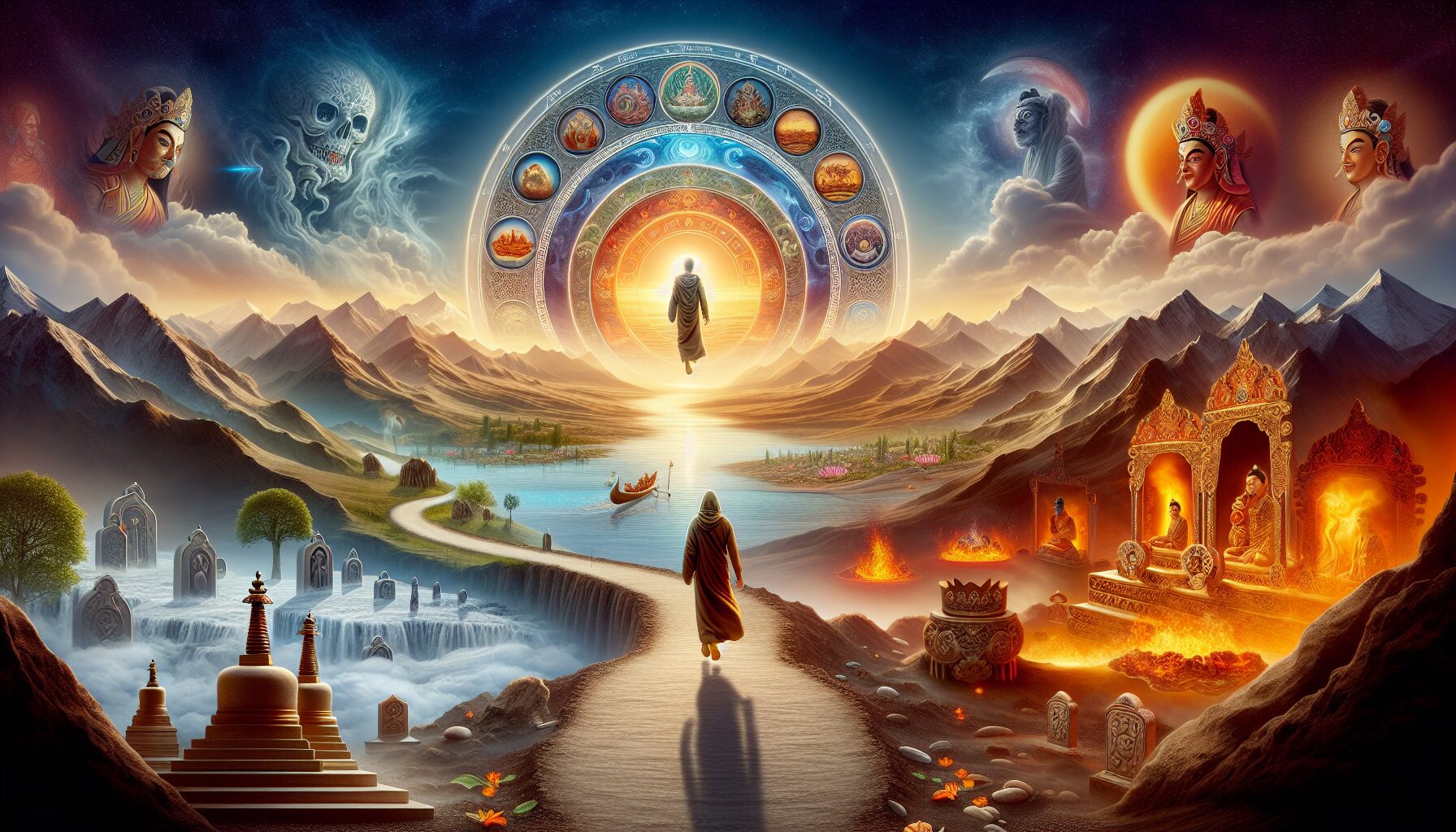
    The concept of Bardo is an integral part of Tibetan Buddhism and offers a unique perspective on death and the transition to rebirth. The word “Bardo” translates to “intermediate state” and refers to the transitional phases experienced between death and the next life. Within Tibetan Buddhist teachings, these states are pivotal in determining the fate of the soul and offer opportunities for spiritual awakening and growth.

    The Origins of Bardo

    The concept of Bardo is primarily derived from the Tibetan Book of the Dead, or Bardo Thodol, which is a revered text in Tibetan Buddhism. According to Robert A.F. Thurman, a professor of Buddhist Studies at Columbia University, the Tibetan Book of the Dead is “a manual of the transcendence through the different stages that the spirit goes through after death” (Encyclopedia Britannica).

    The text is believed to have been composed in the 8th century by Padmasambhava, an influential figure in bringing Buddhism to Tibet. It has since served as a spiritual guide for those navigating the journey from death to rebirth, offering insights into how individuals can achieve liberation from the cycle of birth and death, known as Samsara.

    The Six Bardo States

    • Chikhai Bardo: This state occurs at the moment of death. It is characterized by the dissolution of the body’s elements and the release of consciousness from its physical vessel. During this phase, individuals experience the “clear light of reality,” which provides an initial opportunity for liberation if recognized and embraced.
    • Chonyid Bardo: Following the moment of death, this state encompasses the experiences of visions and hallucinatory phenomena. It is characterized by encounters with various peaceful and wrathful deities. Recognizing these visions as projections of one’s own mind can lead to enlightenment.
    • Sidpa Bardo: This state involves the process leading to rebirth. During Sidpa Bardo, individuals confront their karmic imprints, which influence their next incarnation. Recognizing the nature of these imprints offers opportunities to influence a positive rebirth.
    • Meditative Bardo: This state occurs during deep meditation in the current life. It offers a glimpse into the nature of Bardo experiences, emphasizing the importance of meditation in preparing for the death and rebirth cycles.
    • Dream Bardo: The state experienced during dreams, where practitioners develop the ability to recognize and use dreams as opportunities for spiritual practice.
    • Living Bardo (or Kyeney Bardo): The present moment of life, viewed as a transitional state conducive to spiritual growth and preparation for death.

    The Role of Bardo in Spiritual Practice

    For practitioners of Tibetan Buddhism, understanding and practicing the teachings related to the Bardo states are essential for spiritual development. By meditating on the Bardo states, practitioners cultivate mindfulness and a deeper awareness of life’s transient nature.

    “The bardo teachings offer a clear view of the ultimate nature of mind, which is the basis of both samsara and nirvana. Through the teachings, one can gain freedom from delusion and attain wisdom” — Sogyal Rinpoche, author of The Tibetan Book of Living and Dying.

    This awareness, combined with proper guidance and practice, can lead individuals to recognize the true nature of consciousness and attain liberation.

    Contemporary Perspectives on Bardo

    While Bardo teachings are deeply rooted in Tibetan Buddhism, their concepts have also attracted the interest of Western thinkers and psychologists. The parallels drawn between Bardo experiences and psychological models of transformation and transition have led to a broader understanding and appreciation of these ancient teachings.

    Notably, Swiss psychologist Carl Jung referenced Bardo teachings, noting the parallels between Tibetan Buddhist concepts and Western psychological thought. Jung writes that the Bardo Thodol presents a “way of liberation” that involves confronting “the archetypal figures which personify the spirits of the dead” (International Journal of Jungian Studies).

    Furthermore, researchers in the fields of thanatology and consciousness studies explore Bardo states as valuable models for understanding death, dying, and the transformative potential inherent in these experiences.

    The Relevance of Bardo in Today’s World

    In the contemporary world, Bardo teachings address universal themes of mortality and transformation. By offering a structured framework for understanding the processes of death and rebirth, these teachings encourage individuals to live with greater intentionality and compassion. The philosophical underpinnings of Bardo challenge practitioners to cultivate a deeper sense of presence and adaptability—a message particularly relevant in times of social upheaval and change.

    Through meditative practices and contemplation on the Bardo states, both Buddhists and those from different spiritual backgrounds can gain insights into the essence of consciousness and the interconnectedness of all life. Recognizing the transient nature of our current existence fosters qualities of mindfulness, empathy, and a commitment to live life ethically, honoring the interconnected web of all beings.

    Conclusion

    The teachings on Bardo states offer profound wisdom about the nature of existence, emphasizing transformation through awareness and spiritual practice. By exploring these intermediate states, practitioners are encouraged to live authentically, embrace impermanence, and ultimately seek liberation from the cycle of samsara. In doing so, they not only prepare for their journeys beyond this life but also enrich their current life’s purpose and meaning.

    Whether one approaches Bardo from a traditional Buddhist perspective or as a universal symbol of growth and transformation, its teachings continue to illuminate the path toward awareness and liberation, guiding individuals through the mysterious terrain that bridges life, death, and rebirth.

  • Death as Teacher – What Tibetan Masters Tell Us

    Death as Teacher – What Tibetan Masters Tell Us

    In the realm of Tibetan Buddhism, death is not the end but a profound teacher that guides us through life’s transformations. Tibetan masters have long imparted wisdom on how understanding and embracing death can lead to a more fulfilling and enlightened life.

    The Tibetan Book of the Dead

    Among the most significant texts in Tibetan Buddhism is the Bardo Thodol, commonly known in the West as The Tibetan Book of the Dead. This ancient scripture is a guide for the living and the dead alike. It offers teachings on how to navigate the bardo—the transitional state between death and rebirth—to achieve liberation.

    “The concept of death in Buddhism is not about the end; it’s the great transformation that can lead to enlightenment.” — Lama Thubten Yeshe

    The Lessons of Impermanence

    Tibetan masters teach that death reminds us of the impermanent nature of all things. This understanding encourages practitioners to relinquish attachments and ego, which are viewed as barriers to spiritual growth. The awareness of impermanence serves as a catalyst for living more consciously.

    • Meditation on Death: Through meditation practices, individuals learn to visualize their own death, which helps diminish fear and increase appreciation for life.
    • Compassion and Detachment: By contemplating death, one is often led to cultivate greater compassion for others and reduce unhealthy attachments to material possessions and trivial concerns.

    Practical Guidance

    Tibetan masters also offer practical advice for facing death with dignity and peace. They emphasize the importance of mental preparation and mindfulness. Lama Surya Das advises, “The key is to stay focused, to maintain awareness and equanimity.”

    The Living Wisdom

    Contemplating death is not an innate tendency in many cultures, yet Tibetan spiritual leaders find great wisdom in this practice. It is a reminder of the preciousness of human life and a prompt to live with purpose and authenticity.

    “Death is our greatest teacher because it instills in us the understanding that everything is temporary.” — Sogyal Rinpoche

    In conclusion, Tibetan masters have turned death from a feared specter into a teacher of profound wisdom. By embracing the inevitability of death, they argue one learns how to live fully and authentically. This timeless wisdom offers not only solace but also practical steps for those seeking a deeper understanding of life’s ultimate journey.

  • The Tibetan Book of the Dead – Guide Through the Bardo

    The Tibetan Book of the Dead – Guide Through the Bardo

    The Tibetan Book of the Dead, also known as Bardo Thodol, serves as a sacred text of Tibetan Buddhism, offering spiritual insight and guidance for the living and the dead as they navigate the transitional states of existence. This revered scripture is a profound compilation of esoteric teachings meant to aid the soul’s journey through the intermediate state known as the Bardo, bridging life, death, and rebirth.

    Understanding the Bardo

    The term “Bardo” translates to “intermediate state” or “in-between state,” descriptive of any transition between two states of being. While the most well-known application of this term pertains to the transition between death and rebirth, it can also refer to various transitions in life including moments of deep meditation or even the waking and sleeping states.

    The Bardo Thodol identifies three main Bardos, or states, directly related to dying and rebirth:

    • Chikhai Bardo: The Bardo of the moment of death.
    • Chonyid Bardo: The Bardo of the experiencing of reality, often associated with the after-death state.
    • Sipai Bardo: The Bardo of becoming, leading to rebirth.

    The Origin of the Text

    The origins of the Tibetan Book of the Dead are traced back to the teachings of Padmasambhava, a sage credited with the spread of Buddhism in Tibet during the eighth century. The text is reputed to have been discovered by Karma Lingpa in the 14th century and functioned as both an instructor for guiding the deceased through the Bardos and a scriptural source for the living to understand life’s ephemeral nature.

    Teaching and Practice

    “Now, when the Bardo of dying dawns upon me, I will abandon clinging to this life, enter the nature of the great perfection, and attain the supreme body of light.” – The Tibetan Book of the Dead

    The core message of the Tibetan Book of the Dead emphasizes non-attachment and the recognition of the nature of the mind. Upon death, the text instructs the soul to recognize the true nature of reality and let go of fear, thus achieving liberation. This vital teaching becomes a guide not only for the deceased but also serves as a meditative framework for practitioners throughout their lives.

    For practitioners, understanding these teachings involves rigorous study and practice under the guidance of qualified teachers. It encourages preparation for the moment of death through meditation and mindfulness, thereby facilitating a more conscious transition and enhancing one’s spiritual awareness.

    The Cultural Impact

    The Tibetan Book of the Dead has had significant cultural and spiritual impacts beyond the confines of Tibetan Buddhism. Its teachings have permeated into Western spirituality and psychology as well, with pioneering figures such as Carl Jung acknowledging the value of its insights in understanding the human mind and the process of individuation.

    In contemporary times, the text’s influence extends to modern literature and media, with interpretations and adaptations cited by authors across the globe. Notably, the American writer, Timothy Leary, along with Richard Alpert (later known as Ram Dass), explored these themes in their work The Psychedelic Experience, connecting the mystical experiences detailed in the Tibetan Book of the Dead with modern psychedelic consciousness.

    Legacy and Reflection

    As a spiritual masterpiece, the Tibetan Book of the Dead continues to be a significant resource for those seeking to understand and prepare for death. Its quintessential lessons about the impermanence of life and the importance of living with awareness resonate deeply with human existential quests across cultures.

    This enduring guide through the mysteries of life and death remains a beacon of wisdom, inviting readers to explore not only the afterlife but the essence of living well. Its teachings remind us of the pivotal role of compassion, mindfulness, and spiritual awakening as tools to transcend our earthly fears and attachments.

    In the words of Carl Jung, “The world in which we live is full of mysteries, and none more enigmatic than that of our own existence.” It is this enigma that the Tibetan Book of the Dead embraces—guiding individuals toward understanding and liberation.

  • Aliens as Angels of Death – Visitors or Harbingers?

    Aliens as Angels of Death – Visitors or Harbingers?

    Aliens as Angels of Death: Visitors or Harbingers?

    The thought of extraterrestrial beings has captivated the human imagination for centuries. From ancient mythologies to modern science fiction, aliens are often depicted as mysterious entities with vast powers and unfathomable motives. A particularly intriguing theme is the portrayal of aliens as “Angels of Death,” enigmatic visitors who may serve as harbingers of doom or catalysts for transformation.

    Historical Perspectives on Extraterrestrial Visitations

    Humans have long wondered about the existence of life beyond our world. Ancient scriptures and texts occasionally mention celestial beings descending from the skies. In some interpretations, these beings were seen as angels or messengers who delivered divine decrees or catastrophic warnings.

    • The Book of Ezekiel in the Bible describes visions of heavenly crafts and interactions with divine beings.
    • In Hindu mythology, gods traversed the skies in flying chariots known as Vimanas. These vehicles sometimes served as tools of war and vengeance.

    While these interpretations are heavily saturated with the belief systems of their times, the parallels to modern-day UFO sightings and alleged alien abductions are hard to ignore.

    The Modern Mythology of UFOs and Aliens

    Since the late 20th century, the phenomenon of UFO sightings has become a focal point of both scientific inquiry and popular culture. Rigorous investigations by agencies such as the US Air Force’s Project Blue Book have attempted to categorize these occurrences, often with inconclusive results.

    The depiction of aliens in contemporary media ranges from benevolent saviors to annihilating forces—entities capable of both creation and destruction. This duality is highlighted in films and literature where extraterrestrial visitors serve as a mirror for humanity’s hopes and fears.

    Aliens as Harbingers of Destruction

    The idea of aliens acting as agents of annihilation is not just a construct of Hollywood. In The War of the Worlds by H.G. Wells, Martians invade Earth with superior technology, wreaking havoc on civilization. This narrative suggests a profound vulnerability in human endeavors, an existential risk posed by encounters with technologically advanced beings.

    Movies like Independence Day and The Day the Earth Stood Still further echo these themes, portraying alien invasions as warnings to humanity, urging a focus on global unity and peace. In both speculative and philosophical discussions, aliens are often posited as sentinels, whose encounters offer stark reflections on our self-destructive tendencies.

    “The most terrifying fact about the universe is not that it is hostile but that it is indifferent. But if we can come to terms with this indifference and accept the challenges of life within the boundaries of death—however mutable he may be—our existence as a species can have genuine meaning and fulfillment. However vast the darkness, we must supply our own light.”

    —Stanley Kubrick

    Angels of Death: Transformative or Terminal?

    It’s possible to envision aliens as heralds of transformation, serving as cosmic agents of evolutionary pressure. This perspective often shifts the narrative from one of destruction to one of change.

    • The transformative power of alien contact is explored in films like Contact, where communications with extraterrestrials challenge humanity’s place in the universe.
    • In the realm of speculative fiction, Arthur C. Clarke’s Childhood’s End depicts aliens as catalysts for human transformation, blending the apocalyptic with the transcendental.

    From this viewpoint, aliens as “Angels of Death” force humanity to confront its flaws and catalyze growth beyond its limitations. The threat of death is a powerful motivator for innovation and unity, driving the species to transcend its primal fears.

    Scientific Perspectives: Are We Alone?

    From a scientific standpoint, the question remains: are there truly extraterrestrial entities out there, and are they aware of us? The search for extraterrestrial intelligence (SETI) has long been a spearhead in this quest, analyzing signals from the cosmos for signs of alien life.

    The SETI Institute continues to monitor radio waves and investigate potential communication from other lifeforms. While no definitive signals have been confirmed, the vastness of the universe suggests numerous possibilities.

    The philosophical debate around aliens as either visitors or conquerors reflects broader existential questions about universal morality. If more advanced civilizations exist, would they share the same ethical principles, or would they impose their own?

    Conclusion: Navigating the Uncertainty

    As humanity ventures further into space, the possibility of encountering otherworldly beings becomes increasingly probable. Whether these aliens act as “Angels of Death” or benevolent allies may ultimately depend on how we perceive and prepare for their arrival.

    In contemplating aliens as either visitors or harbingers, humanity is reminded of its own vast capacity for creation and destruction. Whether these encounters will mark an end or a new beginning is a narrative yet to be written, an odyssey awaiting its heroes.

    As the philosopher Carl Sagan wisely noted, “For small creatures such as we, the vastness is bearable only through love.” The message is clear: whether the threat comes from within or without, the ultimate struggle is to preserve the light of civilization as we journey through the cosmic night.

  • The Alien Skull – Archetype of the Other’s Death

    The Alien Skull – Archetype of the Other’s Death

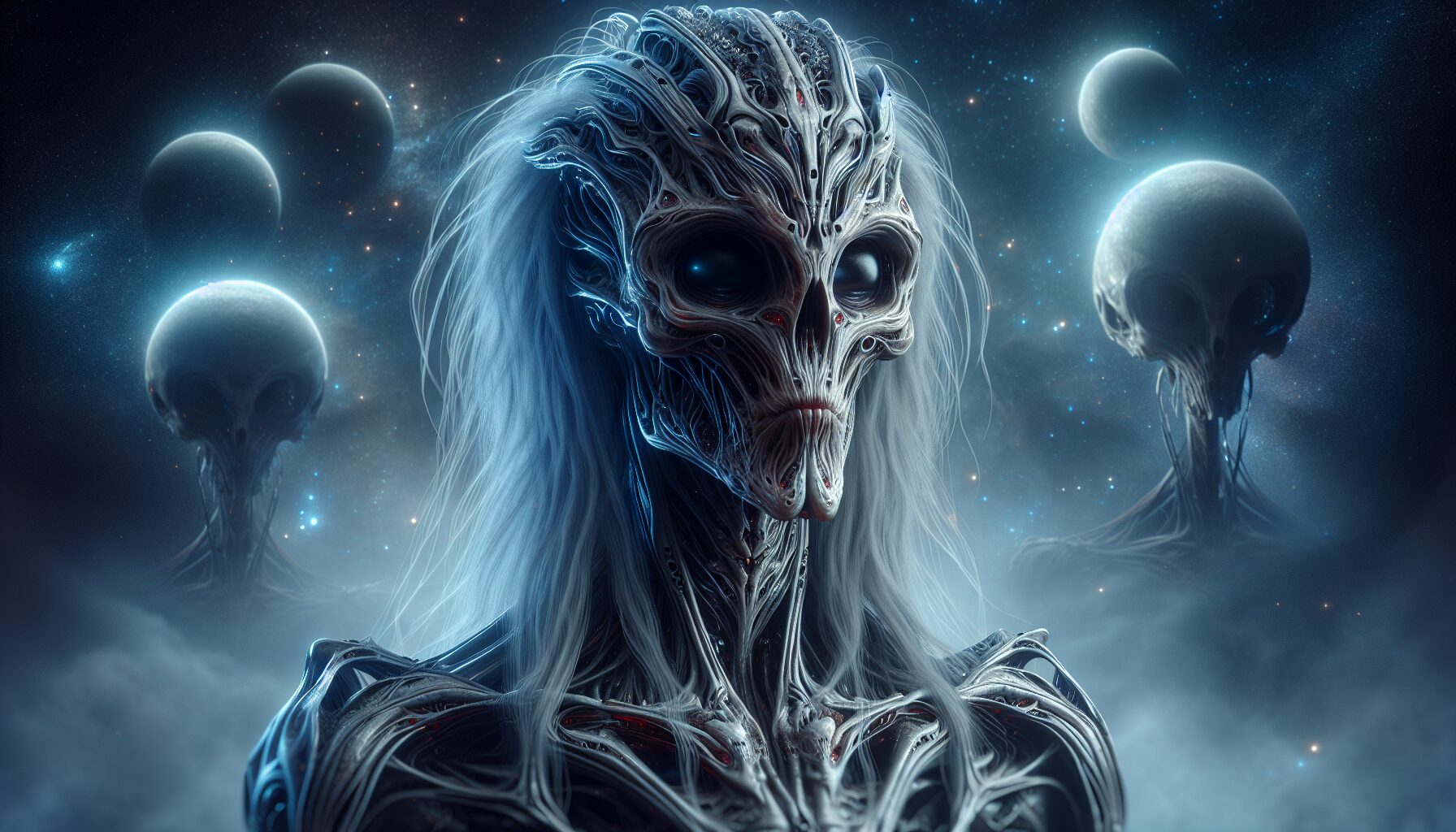
    The concept of the alien skull has intrigued and disturbed humanity for centuries. As an enduring archetype, it serves as a profound symbol of the “Other”—the unknown, the unfamiliar, and ultimately, the realm of death and what lies beyond.

    The Alien Skull as a Symbol

    The skull, in general, epitomizes death. When depicted in the context of an alien entity, it becomes a fusion of fear, curiosity, and the mystery of the unknown universe. From ancient times, cultures have been fascinated with the notion of extraterrestrial life, often depicting such beings with exaggerated cranial structures, which has perpetuated the alien skull as an enduring symbol.

    Joseph Campbell, an eminent scholar of mythology, noted that, “the alien represents the death of the normal way of understanding the world, it is the ultimate Other.” (The Joseph Campbell Foundation) This quote highlights the alien’s role in challenging human perception, forcing an encounter with the unfamiliar which often results in a metaphoric ‘death’ of old ideas and beliefs.

    Encountering the Unknown

    Alien skulls have become iconographic in art, literature, and media, standing as emblems of the confrontation with the unexplored. They serve as the quintessential image evoking the uneasy balance between fascination and dread. As humans gaze into the eye sockets of these hypothetical skulls, they peer into the void, confronting existential questions about life, mortality, and identity.

    “The alien skull is much more than a relic from space, it is the ultimate memento mori, a reminder of our own mortality and the fragility of life as we know it.”
    Dr. Elisa Fernandez, Anthropologist

    Modern Interpretations and Depictions

    In contemporary science fiction, alien skulls are often depicted in various forms—from the sleek, elongated craniums of the classic ‘greys’ to the rugged, bony structures of more monstrous creations. These depictions, whether in films like ‘Alien‘ or games such as ‘Halo,’ continue to capture the public imagination, serving as a canvas upon which human fears and fascination with the cosmos can be projected.

    Through these narratives, we are continually reminded that the alien skull is not merely a symbol of something foreign but also a reflection of our eternal quest to understand the very nature of existence.

    In analyzing the alien skull, we recognize it as both a literal and figurative archetype of death—the end of certainty, the unsettling presence of the unknown, and the death of the familiar.

  • Death Stars – Science Fiction as Metaphor for Cosmic Annihilation

    Death Stars – Science Fiction as Metaphor for Cosmic Annihilation

    In the vast tapestry of science fiction, few constructs have captured the imagination as powerfully as the Death Star from the Star Wars franchise. This moon-sized space station is famously capable of obliterating entire planets with its superlaser, serving as the ultimate symbol of formidable might and tyrannical control. But beyond its role as an antagonist’s dream weapon, the Death Star functions as a metaphor for cosmic annihilation and humanity’s existential fears.

    The Birth of the Death Star

    First introduced in 1977’s Star Wars: Episode IV – A New Hope, the Death Star embodies totalitarian power; its mere existence challenges the concept of freedom and survival. George Lucas, the creator of Star Wars, crafted the Death Star as a symbol of the ultimate technical terror. A tool of oppression for the Galactic Empire, it demonstrates a universe where technology has surpassed benevolent human control, stepping into the realm of god-like power.

    “The ability to destroy a planet is insignificant next to the power of the Force.” – George Lucas

    The Death Star as Metaphor

    • Technological Overreach: The Death Star serves as an allegory for humanity’s own constructs that flirt with extinction-level capabilities—whether nuclear arsenals or other weapons of mass destruction, challenging the ethical limitations of science and technology.
    • Environmental Collapse: Beyond immediate physical destruction, the Death Star mirrors human concerns about environmental degradation where modern advances could trigger irreversible impacts on our home planet.
    • Existential Dread: In a universe as vast as ours, the potential for unknown cosmic threats evokes a sobering reflection on our own fragility. The Death Star represents fears that humanity could be swept away by forces beyond understanding or control.

    A Cosmic Reflection

    The Death Star’s legacy has long endured within popular culture, exemplifying a narrative tradition where science fiction serves as a vehicle for exploring larger truths about the human condition. In contemplating the Death Star’s destructive potential, we are invited to reflect on our roles as stewards of the real-world technologies we create.

    As a warning and a reflection, the Death Star encourages a dialogue about our power to shape, defend, or destroy the universe we inhabit. It remains a poignant reminder that, while science fiction often indulges flights of fancy, it can also ground us in the sobering realities of our potential for cosmic annihilation.

    For more on the cultural impact of the Star Wars universe and its technological metaphors, see this official Star Wars site.

  • The Death of the UFO Era – From Myth to Silence

    The Death of the UFO Era – From Myth to Silence

    The 20th century was abuzz with tales of unidentified flying objects (UFOs), capturing the imagination of millions worldwide. From alleged sightings and government cover-ups to mysterious abductions, UFOs were a cultural phenomenon that straddled the line between reality and myth. However, in recent years, the clamor surrounding these celestial enigmas has dwindled into an almost eerie silence.

    The Zenith of UFO Mania

    Post-World War II America witnessed an explosion in UFO sightings. The infamous Roswell incident in 1947 kickstarted a frenzy, as rumors of crashed alien spacecraft inundated the media. This period marked the golden age of UFOs, where films, books, and TV shows perpetuated the mystery and intrigue of extraterrestrial life.

    “The fascination with UFOs in the 1950s and 60s encapsulated the fears and hopes of a generation teetering on the brink of atomic age horizon discovery.”

    — National Geographic

    The Shift in Perception

    With the advent of advanced technology, what was once inexplicable started becoming all too explicable. Drones, satellites, and advanced military jets filled our skies, demystifying many phenomena that were previously attributed to UFOs. The age of information brought rational explanations to purported extraterrestrial events.

    In addition, organizations such as NASA and SETI (Search for Extraterrestrial Intelligence) delve into the cosmos with scientific rigor, searching for life with telescopes and data analysis rather than tales and conjecture.

    Government Disclosure and Growing Apathy

    In a surprising twist, once-classified information began to surface with the U.S. government’s release of the Pentagon UFO videos in 2020. However, instead of reigniting the fervor of past decades, it was met with a collective shrug.

    “The lack of excitement or fear over official confirmations of ‘unidentified aerial phenomena’ points to a growing public desensitization to the unknown.”

    — Forbes

    From Myth to Silence

    The death of the UFO era appears not with a bang but with a whimper. The myth of UFOs has slowly dissolved into silence, overshadowed by the realities of technological advancement and scientific discourse. In contemporary society, the fascination with UFOs has waned, leaving room for new mysteries to capture our collective curiosity.

    As we advance, perhaps our species will find its myths and fantastical desires once again, but for now, the era of UFOs is quietly closing.

  • UFOs as Death Omens – Portents of the Sky

    UFOs as Death Omens – Portents of the Sky

    The sight of unexplained phenomena in the sky has long captivated human imagination and curiosity. These sightings, often described as unidentified flying objects (UFOs), not only fascinate but also instill fear and wonder. Throughout history, many cultures have regarded these mysterious skyward occurrences as omens, particularly foretelling death or disaster. But where does this belief originate, and how has it evolved over time?

    Historical Context and Folklore

    Historically, strange lights and aerial phenomena have been recorded in various parts of the world, often associated with significant events. Ancient texts, like those from the Roman and Chinese civilizations, document instances where unusual objects in the sky preceded critical occurrences. According to Roman historian Titus Livius, during the consulship of Gnaeus Octavius and Gaius Scribonius, “a phantom navy was seen shining in the sky” before the defeat of the Roman armies.

    “In the Withered Hill was the dwelling-place of the spirits. They said that the spirits would come down in their ships and set fire to the world.” – Arthur George, Mythology and Folklore of the Ermte Region

    Modern Encounters and Interpretations

    In more recent times, UFO sightings have continued to be linked with ominous predictions. The 20th century saw a surge in these sightings, coinciding with times of conflict and social upheaval. The infamous “[Phoenix Lights](https://www.history.com/news/the-phoenix-lights-20-years-later)” event in 1997, which involved a series of widely sighted UFOs over Arizona, has been interpreted by some as a prelude to significant geopolitical and environmental changes.

    Modern interpretations often blend ancient beliefs with contemporary fears, associating UFO activity with apocalyptic themes prevalent in popular media. UFOs have become fixed symbols in our cultural imagination, often viewed as harbingers of doom in films and literature.

    Psychological and Cultural Influences

    The human mind has always sought to find patterns in chaos. As such, when unidentified phenomena appear, it is often tempting to link them with significant life events, such as death. Carl Jung suggested that UFOs could be projections of our collective unconscious—a representation of the psyche grappling with uncertainty in the world.

    “The disks do not behave in accordance with physical laws, but as though they were weightless, or even had their own remote control.” – Carl Jung, Flying Saucers: A Modern Myth of Things Seen in the Skies

    Conclusion

    Whether seen as signs of impending doom or as mere curiosities, UFOs have occupied a unique place in our cultural narrative. While some see them as objectively mysterious, others interpret them through the lens of fear and reverence, grounded in ancient beliefs. As we continue to explore the skies and seek understanding, the narratives surrounding UFOs as death omens will likely persist, echoing humanity’s age-old intrigue with the unknown.