Tag: divination

  • Divination Through Angels: Practices and Tools

    Divination Through Angels: Practices and Tools

    Divination Through Angels: Practices and Tools

    The practice of divination has been around for centuries and is used by many cultures as a tool for guidance and insight. It involves communication with angels, spirits and other divine entities in order to gain clarity and gain insight into one’s life.

    Traditionally, people would seek out a diviner to receive messages from the angels or other divine entities. These messages can be in the form of visions, dreams, or even direct physical signs. These physical signs can range from a sudden feeling of an angel near or a certain feeling or sensation in the body.

    Today, many people choose to use divination to gain insight and guidance in their daily lives. They may choose to use tools such as angel cards, pendulums, or even Tarot cards to gain greater clarity.

    There are many different types of divination practices, including:

    • Reading the tea leaves
    • Using crystal balls
    • Communicating with animals
    • Using pendulums
    • Using angel cards

    Whether a person chooses to use these divination tools or other tools, the most important thing is to approach the practice with an open mind and heart.

    If you have any questions or concerns about divination, it’s always best to consult a reputable source, such as a professional diviner.

  • Divine Desk Magic: Everyday Occult Fun

    Divine Desk Magic: Everyday Occult Fun

    Divine Desk Magic: Everyday Occult Fun

    by Jane Leland

    Have you ever wondered if there is a hidden magic in your everyday life? Many of us have been in situations where we find the universe’s magic to be a bit difficult to accept or understand. Fortunately, there is a way to make it easier. With this easy, everyday article, you can learn about the world of divination and how to incorporate it into your everyday life.

    Divination is a method used by many to gain insight and knowledge. It is a method that is believed to come from a higher power, so when you use it, you may be communicating with the divine. There are many types of divination, such as reading your horoscope or using a crystal ball, but in this article, we will focus on the simpler ones.

    The most common type of divination is called Oracle Cards. They are beautiful cards, each with different shapes, symbols, and messages. To use them, you can start by cutting the deck into thirds, placing the top cards on the table. This will give you 13 cards, each with a different message. You can choose a number from the deck and place the corresponding card in front of you. If the card is upside down, it means a bad omen. If it is right side up, it means something good. A card that has a picture on it is called an action card. It is a symbol of the actions or choices you can make in your life. There is also a card called a manifestation card, which means you have to manifest or create your own magic.

    Divination can be done at any time of day. Some people prefer to do it in the morning, while others prefer to do it in the evening. It really depends on your preference. Some people prefer to do it on their own, while others prefer to do it with a partner or a group. The key to using divination is to allow yourself to be open to its insights and to trust the guidance given to you.

    Divination is an easy way to gain insight into your life. All you have to do is learn a few simple methods to gain more knowledge about what it means to you. With the use of Oracle Cards, you can get in touch with your higher power and gain insight into your future. You can also choose to use these tools to create your own magic in everyday life.

    So if you are looking for a little extra magic in your everyday life, try these methods and see what it can do for you.


    Author: Jane Leland

  • Divination via Doodles – What your sketches say about your future.

    Divination via Doodles – What your sketches say about your future.

    Divination via Doodles – What Your Sketches Say About Your Future.

    Divination has been used for centuries to gain insight and guidance in life. However, with the advancement of technology, the way people practice divination has changed considerably.

    Today, many people are using divination through doodles as a way to gain clarity and insight. With the help of symbols and patterns, people can interpret the meanings behind their doodles and gain a greater understanding of their lives and future. It is believed that this method of divination is more accurate and reliable than traditional forms.

    The most important part of divination through doodles is to take note of the shapes and symbols that appear in your artwork. Some believe that these shapes and symbols have specific meanings, while others believe that they can be interpreted based on the context in which they appear.

    For example, if a circle appears in a doodle, it is often seen as a symbol of balance and harmony. Similarly, if a triangle appears, it may be indicative of conflict or difficulty in the future. By interpreting these shapes, people can gain a greater understanding of their lives and even predict their future.

    Ultimately, divination through doodles can be a fun and creative way to gain insight and guidance in life. It is believed that with a bit of practice, anyone can become proficient in divination through doodles.

    User

  • Quantum Divination – Science and Fate Intertwined

    Quantum Divination – Science and Fate Intertwined

    Quantum Divination: Science and Fate Intertwined

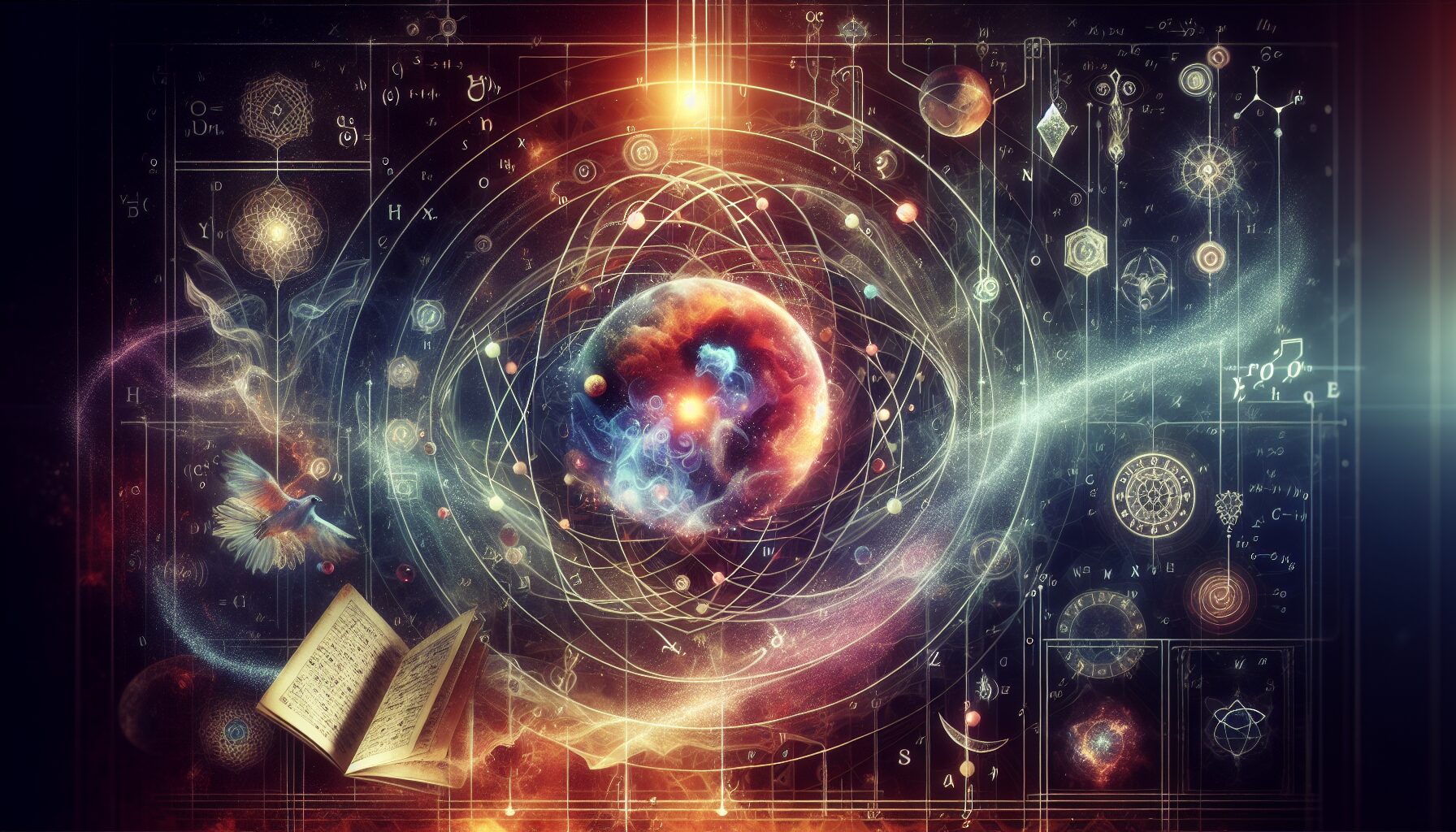
    Quantum mechanics, the physics of the very small, has intrigued scientists and the general public alike. Among its most fascinating aspects is the concept of superposition, where particles can exist in multiple states at once until observed. This idea, when metaphorically extended, often intersects with age-old human desires to predict the future, leading to the intriguing concept of quantum divination.

    In essence, quantum divination ponders whether the principles of quantum mechanics might someday illuminate the mysteries of fate and destiny. While this notion remains in the speculative realm, some scholars and visionaries are exploring the potentials of these theories.

    “If we are to begin predicting the future using quantum theory, we must first accept its inherent unpredictability,” said Dr. Jane Bennett, physicist at the University of Oxford. “Quantum mechanics doesn’t dictate certainty, but rather probability, which aligns closely with how we perceive fate and chance.”

    Science Meets Mysticism

    Throughout history, cultures have employed various divination methods, from tarot cards to astrology, to gain insights into what lies ahead. Quantum divination, in its contemporary form, suggests that the probabilistic nature of quantum mechanics could provide a new scientific approach to understanding these mystical practices.

    • Quantum Entanglement: This phenomenon, where entangled particles influence each other regardless of distance, hints at invisible connections across the universe, much like the interconnectedness predictors of destiny speak about.
    • Wave Function Collapse: Before observation, a particle exists in all possible states. The observer’s action causes the wave function to ‘collapse’ into one state. This parallels how divination seeks to manifest one potential future out of many possibilities.

    However, it is crucial to note that these scientific phenomena are not divination tools. They remain within the confines of heavily tested scientific theories, providing descriptions of subatomic behaviors rather than literal life predictors.

    Current Perspectives and Future Directions

    While mainstream science remains cautious, some researchers speculate on the philosophical implications of quantum theories. Dr. Lisa Randall, a theoretical physicist at Harvard University, noted:

    “The intersection of quantum mechanics and human intuition might not predict lottery numbers or life events, but it invites a renewed contemplation of how deeply intertwined our universe may be.”

    As of now, quantum divination remains more of a philosophical exercise than a proven method. Its allure lies in its ability to make us question the limits of human knowledge and the potential for science to explore what has historically been considered mystical.

    For those interested in exploring the deep connections between science, philosophy, and divination, quantum mechanics offers a rich, albeit speculative, field for thought. While it won’t replace traditional divination methods yet, its underlying principles encourage a broader understanding of fate and probability’s role in our lives.

  • Postcards from Nowhere: Mail Art as Divination

    Postcards from Nowhere: Mail Art as Divination

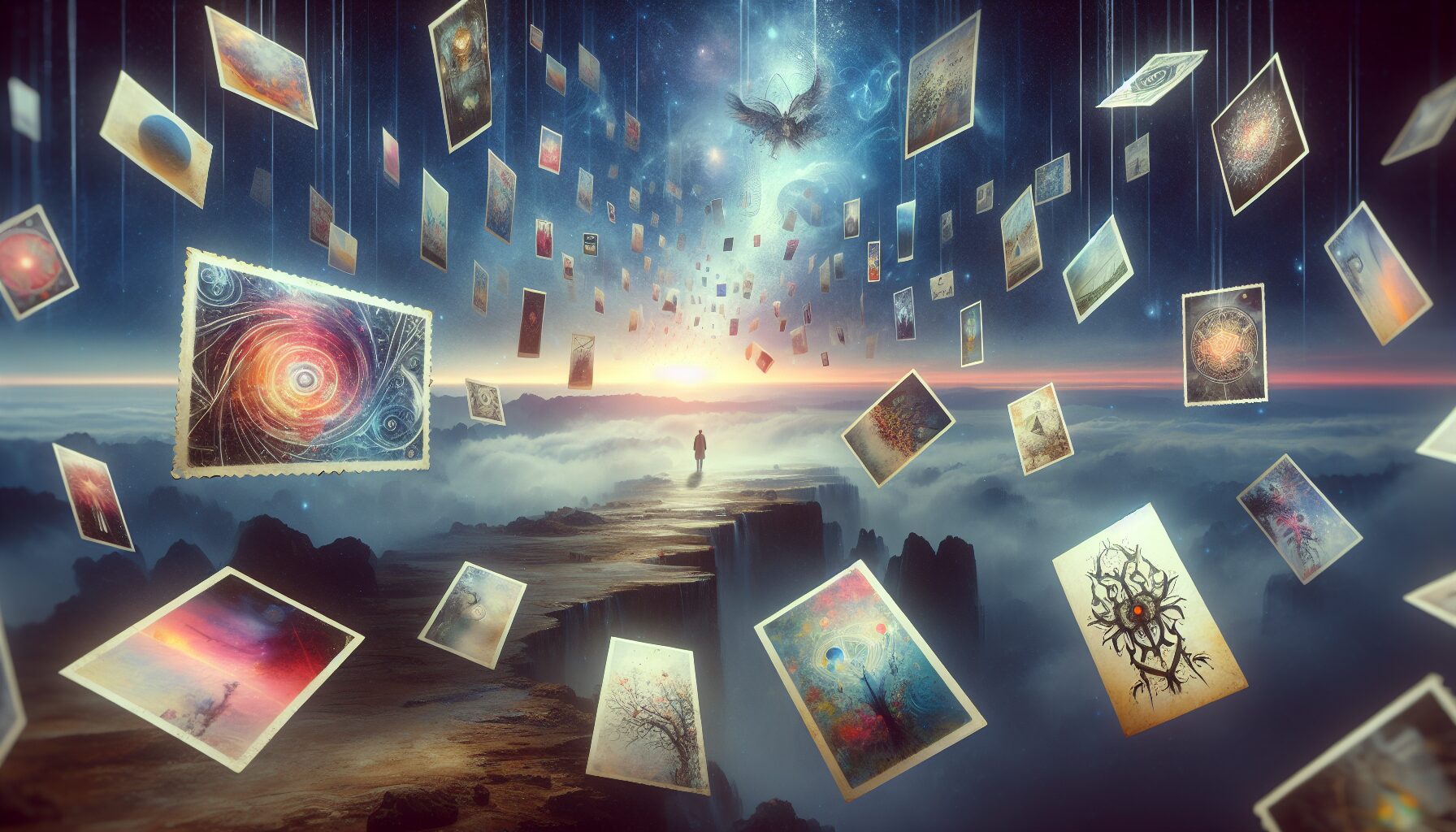
    The art of communication has undergone significant transformations over the centuries, from spoken word to the digital age’s instant messages. Yet, amidst these changes, an intriguing and often overlooked form of expression persists: mail art. This unique practice blends tactile experiences with creative impulses, and in recent years, has taken on an almost mystical quality akin to divination.

    The Genesis of Mail Art

    Mail art, sometimes called correspondence art, began to emerge in the 1960s as part of the avant-garde movement. Artists sought to transcend geographic boundaries, using postal systems as their medium. According to The Metropolitan Museum of Art, “Mail art networks democratized artistic practice, embracing amateurism and accessibility.”

    This epistolary art form invites participants to exchange artworks through the mail, embodying democratized communication channels and fostering a global art community. Artists like Ray Johnson, often regarded as a pioneer of mail art, initiated the New York Correspondence School, encouraging interactions that were both intimate and public.

    Symbolism and Interpretation in Mail Art

    The essence of mail art intersects with the mystical when it serves as a vehicle for symbolic communication. The sender and receiver engage in a process that mirrors divination, where meanings are interpreted beyond their surface value. This phenomenon is reminiscent of reading tarot cards, where the cards’ imagery becomes infused with personal meaning through the querent’s perspective.

    “Art is a means of accessing that realm of communication which lies beyond the visible and tangible, offering material results imbued with the spiritual and unknowable.” – Elizabeth Finch, Artforum

    Like the tarot reader, the artist takes on the role of the diviner, crafting messages that evoke introspection. Each piece of mail art becomes a speculative clue, and its journey through the postal system infuses it with its own narrative and meaning.

    The Journey as the Message

    According to the Tate, “The emphasis in mail art is often as much on the act of communication and the journey of the object as it is on the finished artwork itself.” The element of chance inherent in this journey is akin to systems of divination like reading runes or interpreting omens. The mail art piece shifts from a mere message to a narrative shaped by its passage through hands and lands.

    The postal system becomes an oracular channel, dictating the fate of each piece. It may arrive altered, damaged, or intact; these variations and accidents yield interpretations unforeseen by the sender, enriching the work with an aura of serendipitous magic.

    Collaborative Creativity

    Mail art naturally lends itself to collaborative creativity, engaging multiple parties in the production of a single work. This collaboration can be seen as a form of collective divination, where each participant’s inputs alter the piece’s “prophecy.” Such communal creation echoes the spirit of ancient oracles, where multiple priestesses contributed to a singular vision.

    An example of this was the “Add and Pass” technique, where recipients were encouraged to add to the artwork before mailing it further. Each addition altered the original, creating a continuously evolving piece that embraced uncertainty and change, much like the continual revelations in a divinatory process.

    A Modern Renaissance

    With the rise of the digital age, mail art experienced a decline; however, the early 21st century has witnessed a revival. Artists and non-artists alike crave a return to tangible, physical exchanges amid the fleeting nature of digital communication.

    Mail art’s resurgence parallels a rekindled interest in divination and the mystical, suggesting that humans incessantly yearn for meaning beyond what is easily accessible. Platforms like Instagram and Reddit host thriving communities dedicated to mail art, providing forums for sharing, exchanging, and interpreting creations.

    Mail Art as Modern Divination

    Today, mail art continues to serve as a bridge between the mundane and the magical. Each exchange is rich with potential narratives, inviting both sender and recipient to engage in an interpretive dance akin to divining meaning from celestial constellations.

    “It’s an act of faith that your work will find its way to an audience. Like sending out a message and waiting for a reply from the universe.” – Caitlin McKenna, mail art enthusiast.

    The practice of mail art reminds us of the sacred art of waiting. In a world governed by immediacy, crafting and sending mail art can feel like planting seeds in a secret garden and trusting in the eventual bloom. This mystical patience, spurred by curiosity and the enchantment of the unknown, elevates mail art to an act of personal and communal divination.

    Conclusion

    Mail art, a beautiful intersection of creativity and mysticism, allows individuals to engage in global dialogue through personal lenses, interpreting and imbuing their creations with layers of meaning. It speaks to the human thirst for connection, the divine, and the inherent artistry of life’s random patterns.

    As we continue to navigate an increasingly virtual world, mail art remains a steadfast reminder of the magic in the tangible, inviting us to send and receive postcards from the uncharted expeditions of our own imagination.