
Tag: eclipse

  • The Forgotten Eclipse – Mythology of Ending

    The Forgotten Eclipse – Mythology of Ending

    Throughout history, solar and lunar eclipses have captivated human imagination, often representing profound transformative events. While the eclipse is a common occurrence in celestial mechanics, its mythological interpretations across cultures usually lean towards awe, fear, and the revelation of mysteries. One such lesser-known narrative is the concept of the “Forgotten Eclipse,” a mythical event that symbolizes endings and new beginnings.

    Understanding the “Forgotten Eclipse”

    The “Forgotten Eclipse” isn’t documented in the annals of modern astronomy but thrives within the oral traditions of ancient cultures. It is described as an eclipse that heralds an ending so profound that its witnesses are compelled to forget their past grievances and embrace a fresh start. This notion of forgotten endings finds its roots in multiple cultures across the globe:

    • The Norse Mythology: The Norse legend of sun-chasing wolves, Sköll and Hati, portrays them as themselves eclipses. Their consumption of the celestial bodies heralds Ragnarök—a series of events that lead to the end of days and the emergence of a new world. This narrative underlines the destructive yet renewing power of eclipses.
    • Hindu Astrology: In Hindu traditions, eclipses occur due to the demon Rahu swallowing the sun or moon. Rahu’s temporary triumph and the return of celestial order present a cyclical opportunity for rebirth, allowing humanity to set resolutions anew.

    Cultural Symbolism of Eclipses as Endings

    The impact of eclipses is not confined to mythical tales; they also serve as metaphors for change and transformation in human lives. A notable example can be found in the records of the ancient written texts, where solar eclipses often marked the end of dynasties or the death of rulers. This aligns with the beliefs of civilizations such as the Chinese and the Maya, who meticulously tracked eclipses, considering them omens. According to Space.com, “eclipses have stirred fear, inspired curiosity, and have been associated with myths, legends, and even religious beliefs throughout history.”

    “It is only with the heart that one can see rightly; what is essential is invisible to the eye.” — Antoine de Saint-Exupéry, The Little Prince

    Thus, the “Forgotten Eclipse” harmonizes the dual nature of endings and beginnings, shaping our transitions through epochs. As humanity advances, the tales behind eclipses remind us of the cyclical nature of life and the need to move beyond historical burdens to embrace a renewed world.
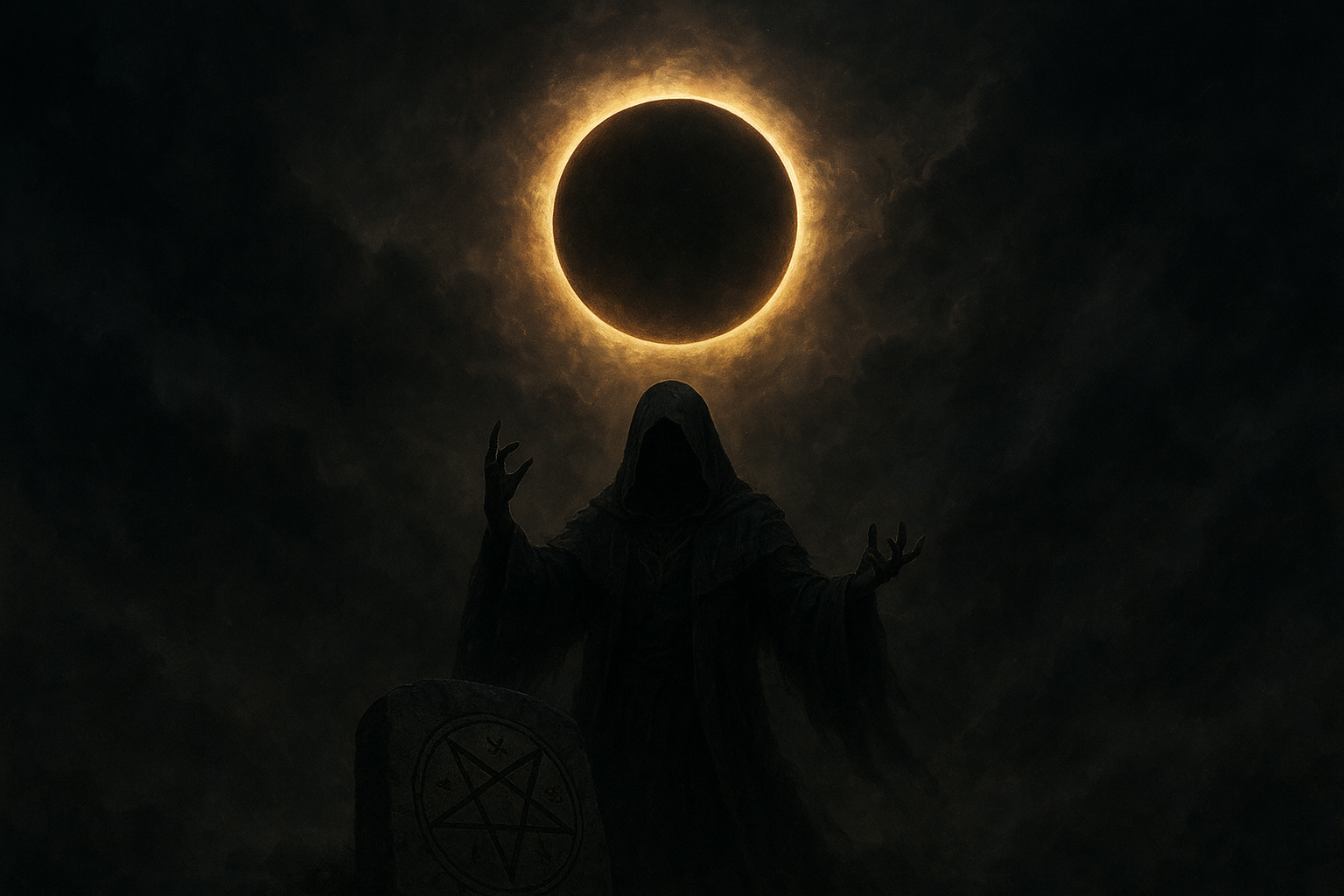
  • Arcane Eclipse – Occult Darkness Beyond Perception

    Arcane Eclipse – Occult Darkness Beyond Perception

    The concept of an arcane eclipse speaks to our intrinsic curiosity about the mysteries that lie beyond the veil of ordinary perception. The occult, a realm inhabited by secrets and esoteric wisdom, persists as a fascinating and complex subject, drawing in those who seek deeper understanding. Ultimately, these mysteries serve as a reflection of our own enigmatic nature and our insatiable thirst for knowledge.

    The Nature of Occult Darkness

    Occultism, by definition, deals with the hidden or the unknown. It is concerned with mystical experiences, alchemy, witchcraft, and astrological musings that attempt to explain the universe’s darker, less comprehensible facets. This complexity naturally evokes wonder and trepidation in equal measure. As Carl Jung aptly stated, “The meeting of two personalities is like the contact of two chemical substances: if there is any reaction, both are transformed.” (source).

    The Eclipse as Metaphor

    An eclipse, traditionally perceived as a cosmological event where one celestial body moves into the shadow of another, provides the perfect metaphor for illustrating the obscured nature of the occult. This alignment creates a temporary darkness that paradoxically enhances the clarity of the accompanied light. Our exploration of these occult mysteries seeks to uncover a clarity hidden within obscurity—as if harnessing the power of the cosmic interplay between darkness and light.

    “Mystery creates wonder and wonder is the basis of man’s desire to understand.” – Neil Armstrong

    Historical and Cultural Implications

    • Cultural Interpretations: Different cultures have uniquely approached the idea of the occult, ranging from Native American vision quests to the elaborate rituals of European alchemists.
    • Historical Significance: Throughout history, figures such as Nicholas Flamel and John Dee delved into a world filled with symbols and enigmatic traditions, often seen as bridging the divine and mortal realms.

    The narratives surrounding these figures indicate an enduring struggle to grasp realities beyond ordinary perception, effectively using the ‘arcane eclipse’ as a means to eclipse ignorance with revelation.

    Conclusion

    The concept of an arcane eclipse—wherein the dark, hidden characteristics of the occult come to light—encourages us to merge rational understanding with the inexplicable. Thus, it stands as a compelling reminder of the significance of exploring the darker aspects of knowledge. In confronting the shadows, we find pathways to illuminate the intricate depths of human perception and possibly gain insight into the profound mysteries of existence.