Tag: emptiness

  • Abstract Nightfall – Emptiness Encounters the Soul

    Abstract Nightfall – Emptiness Encounters the Soul

    The concept of nightfall often symbolizes more than the mere end of daylight. It represents the deeper dive into our existential fears and desires. In the poetic and philosophical realm, this transition into darkness beckons introspection, vulnerability, and the encounter with the self amidst the vacuum of existence.

    The Philosophy of Emptiness

    Philosophers from various traditions have grappled with the idea of emptiness, attempting to decipher its implications for human consciousness and fulfillment. In Buddhism, for instance, emptiness (or śūnyatā) is a pivotal concept. It suggests the absence of an inherent, independent self or essence, positing that all phenomena are interdependent and ultimately void of a permanent identity.

    “Form is emptiness, emptiness is form,” a profound assertion found in the Heart Sutra, encapsulates this philosophical view. It challenges us to perceive the ephemeral nature of existence.

    The existentialists also explore emptiness, though often with a more disquieting lens. Jean-Paul Sartre famously opined that “existence precedes essence,” proposing an existence fraught with the absence of predetermined purpose, thus thrusting humanity into a “nothingness” from which meaning must be carved.

    Nightfall: A Metaphor for the Internal Journey

    Nightfall serves as a potent metaphor in literature and art, representing the segue into the subconscious mind. As daylight wanes, the outer world recedes, prompting exploration into the uncharted territories of our interior landscapes. The encounter with this internal “night” often uncovers fears, desires, and truths we otherwise keep at bay under the sunlit veneer of day-to-day existence.

    • Fearlessness in Vulnerability: The cloak of night can either amplify our anxieties or ironically serve as a comforting veil, a space where deeper truths can emerge free from the harsh light of rational scrutiny.
    • The Canvas of Dreams: Dreams serve as a conduit, a negotiation space between the conscious and the unconscious. In this creative nightscape, the soul grapples with unresolved conflicts, constructing meaning from the abstract chaos.

    The Art of Embracing The Void

    Confronting emptiness at nightfall demands a willingness to engage with the void, affirming life not through external validations but through intrinsic understanding and acceptance.

    “Our task is to kiss the earth and do our best to keep it, and to build as much zing into it as we can,” Hans Hofmann once said, illustrating an artist’s resolve to transform void into vital presence (Brain Pickings).

    This transformation is an active, creative engagement with life’s inherent uncertainties. By embracing the void, we allow ourselves the courage to dream and craft personal meaning.

    Contemplative Cultures and Nightfall Rituals

    Many cultures have ritualized the transition of day into night, recognizing it as not just a temporal shift but a sacred passageway. Practices such as meditation, prayer, or journaling during this time serve as tools to decode personal narratives hidden within the folds of darkness.

    • Japanese Zen Gardens: The Zen garden exemplifies the beauty and power of simplicity, encouraging contemplation on the often overlooked spaces of silence and shadow.
    • Western Contemplative Traditions: The Christian practice of Compline, for instance, marks the end of the day’s labors, fostering a moment of reflection and peace.

    In these rites, the soul finds both chaos and clarity, mirroring the metaphysical dance of nightfall and the dawn. Through allowing the darkness to speak to us, we embark on a journey that often finds its narrative in the profoundly personal.

    Conclusion: Embracing the Abstract Night

    In the abstract night, emptiness and the soul encounter one another in a dance as old as time. Navigating this encounter involves acknowledging the intertwined fabric of fear and inspiration, void and fulfillment.

    The challenge remains to wield the night’s potential for introspection not as a source of dread but rather as an opportunity for renewal and profound self-awareness. Through engaging with the abstract nightfall—by witnessing and embracing the soul’s encounter with emptiness—we truly discover what it means to be human.


  • Infernal Emptiness – Demonic Archetypes of Absence

    Infernal Emptiness – Demonic Archetypes of Absence

    In the realm of demonic lore, few concepts are as intriguing and paradoxical as the idea of infernal emptiness. This is the notion that demonic entities are not merely malevolent forces, but also represent profound absences. These archetypes of absence compel us to explore the spaces where darkness reigns not by the presence of evil, but by the vacuum of light, hope, and essence.

    The Nature of Absence in Demonology

    Throughout history, demons have often been seen as agents of chaos and destruction. However, a deeper examination reveals that many demonic figures embody a more profound absence. This absence takes on various forms, from the lack of empathy and compassion to the void of meaning and purpose.

    “For indeed, darkness is largely the absence; and it is not the forces of evil that invade but rather the voids in which light fails to suffice,” suggests C.G. Jung, the renowned Swiss psychiatrist. This perspective reframes demons not just as invaders, but as entities that thrive in the spaces left unguarded by human neglect or spiritual deficiency.

    Demonic Archetypes Representing Absence

    • Astaroth: The Space of Forgotten Knowledge

      Astaroth, a demon often associated with laziness, is considered a major source of emptiness concerning knowledge and wisdom. This figure represents the forgotten lore, the abandoned wisdom that once was and could be again if not for humanity’s neglect.

    • Baal: The Void of Community

      Representing the absence of community, Baal embodies the breakdown of societal structures and the isolation of the individual. Where unity should strengthen, Baal’s influence creates divides, ensuring that solidarity crumbles into the emptiness of alienation.

    • Azazel: The Gentleness Left Behind

      Azazel, often associated with scapegoating and atonement, signifies the existence of absence within the soul. This demon thrives in the voids where gentleness and empathy are intentionally abandoned, leaving behind a barren inner landscape.

    The Psychological Implications of Demonic Absence

    Understanding demons as archetypes of absence allows us to confront our own deficiencies. The notion of infernal emptiness acts as a mirror, forcing individuals to acknowledge the parts of their lives and societies that they have neglected.

    “The demons are content to gnaw away at our souls, not by presenting an overwhelming force, but by letting us fall into our own emptiness,” says Psychology Today.

    This perspective invites a re-evaluation of how individuals approach personal growth and community development. By recognizing these absences, people can work towards filling them with positive action and intention, reclaiming these voids from demonic influence.

    Cultural Reflections on Infernal Emptiness

    The archetypes of absence observed in demonic figures are not just limited to the confines of folklore and myth. They permeate culture, literature, and modern media, reflecting humanity’s deep-seated fears and shortcomings. From Shakespeare’s Macbeth to modern horror narratives, the theme of a void where something vital is missing recurs as a central motif.

    In literature, the absence can often symbolize a deeper societal commentary. Shakespeare’s exploration of ambition without conscience, for instance, can be viewed as a reflection of infernal emptiness within the soul. Similarly, modern horror films, such as The Babadook, exploit the idea of absence within familial relationships and mental health to create narratives that resonate with contemporary audiences.

    Reclaiming the Void: A Pathway Forward

    To counteract the effects of infernal emptiness, individuals and communities must strive to fill their voids with purpose and positive values. This involves active participation in creating connections, seeking knowledge, and nurturing empathy.

    The New York Times highlights this journey as essential, noting that, “It’s our urgent task to heal the divides of absence left by our own inattention.”

    In doing so, people can transform spaces of absence into areas of abundance, warding off the metaphorical demons that seek to inhabit those voids. By understanding and confronting the archetypes of absence, humanity gains a chance to reclaim its narrative from the clutches of infernal emptiness.

    Demonic archetypes, while daunting, provide a valuable lens through which to examine the human condition. As humanity advances further into the 21st century, these figures offer both a warning and an opportunity: to recognize the voids within and strive to fill them with light, rather than letting them be consumed by darkness.

  • Emptiness Encoded – Depersonalization in the Mind

    Emptiness Encoded – Depersonalization in the Mind

    Emptiness Encoded: Depersonalization in the Mind

    The phenomenon of depersonalization is a curious and disorienting one, characterized by a sense of disconnection from oneself and reality. Those experiencing it often describe feeling as though they are observing themselves from outside their body, or that their thoughts and actions no longer feel like their own. It is both an unsettling and a captivating topic that invites a deeper exploration into the mind’s enigmatic workings.

    “It was as if the world around me had been muted,” said James B., a 26-year-old software engineer, recounting his experiences with depersonalization. “I could see and hear everything, but it all felt incredibly distant, like I was an observer rather than a participant in my own life.”

    Understanding Depersonalization

    Depersonalization is more than just a fleeting feeling of detachment. It is a dissociative disorder that can persist for minutes, hours, or even longer. According to the Mayo Clinic, it often coexists with other mental health disorders, such as depression, anxiety disorders, and post-traumatic stress disorder (PTSD). The intricacies of its manifestation and its impact on daily life are profound, often causing significant distress to those affected.

    Causes and Triggers

    The exact cause of depersonalization remains elusive, but several factors may contribute to its onset:

    • Severe Stress: Traumatic events, whether recent or residual from the past, can trigger this dissociative state.
    • Mental Illness: Conditions such as anxiety and depression often feature a component of depersonalization.
    • Substance Use: Certain narcotics or withdrawal from drugs can initiate or exacerbate symptoms.

    The Impact and Path to Recovery

    For many, the journey through depersonalization is challenging. It impacts everyday functionality, relationships, and one’s general view of the world. Despite these challenges, recovery is achievable. Therapeutic approaches like cognitive-behavioral therapy (CBT) have shown efficacy in helping individuals regain a sense of stability and connection to reality.

    Grounding techniques also offer immediate relief, helping to re-anchor the mind in the present. Techniques may include mindful breathing, focusing on physical sensations, or engaging in simple, repetitive physical tasks.

    “It’s like learning to find your footing again,” James added. “By grounding myself in the moment, I’ve started to feel more like ‘me’ again.”

    In conclusion, while depersonalization can feel like an overwhelming emptiness, understanding it is the first step toward overcoming its shadow. Through awareness, therapeutic intervention, and patience, one can navigate back to a life lived in vibrant color rather than muted shades of disconnect.

  • Abstract Vanishing – Emptiness in Form and Mind

    Abstract Vanishing – Emptiness in Form and Mind

    The realm of art and psychology are often interconnected, illustrating how abstract concepts can profoundly affect the human psyche. One such notion is the idea of emptiness, both in form and mind. This concept is a recurring theme in abstract art, deeply resonating with our cognitive processes and emotional experiences.

    The Essence of Emptiness in Art

    Abstract art has long grappled with the paradox of emptiness. Artists like Mark Rothko and Kazimir Malevich have famously exploited color and form—or the lack thereof—to invoke intense emotional responses. In Rothko’s words,

    “A painting is not a picture of an experience; it is an experience.”

    Indeed, emptiness in art is not merely the absence of structure or content but a deliberate choice that invites viewers to engage more actively with the artwork.

    According to Dr. Ellen Winner, a professor of psychology at Boston College specializing in art perception, “The less an artwork tells us directly, the more we fill in with our own mental stories.”

    Psychological Interpretations of Emptiness

    In the field of psychology, emptiness may refer to a state of a lack of subjective meaning or engagement in one’s activities, often leading to feelings of ennui and insignificance. Psychologists explore how this state of mind can influence human behavior and relationships, suggesting ways to cultivate fulfillment and purpose.

    The Appeal of Minimalism

    Minimalist environments and practices, much like abstract art, emphasize simplicity and clarity. They invite introspection by reducing external clutter, thus highlighting the internal landscape. Minimalism speaks to the desire for psychological clarity amid the chaos of modern life. By eliminating distractions, individuals often find amplified focus and emotional relief.

    The Philosophical Underpinnings

    Philosophically, the concept of emptiness can be traced back to Buddhist teachings, which advocate for the notion of ‘sunyata’—emptiness as a fundamental nature of all phenomena. This perspective encourages a liberation from attachment and a deeper understanding of the transient nature of existence.

    Emptiness, in this light, is not a void to be feared but a realization to be embraced. It underscores the impermanent and interdependent nature of reality. As the Buddha addressed,

    “Form is emptiness, emptiness is form.”

    Understanding this can lead to profound insights into the mind’s workings and our interactions with the world.

    Mindfulness and Embracing Emptiness

    Practices like mindfulness and meditation have become popular pathways to exploring the constructive aspects of emptiness. By focusing on the present moment and releasing judgments about the past and future, individuals can attain a greater understanding of themselves and lessen the burden of mental clutter.

    • Acceptance: Embracing things as they are without wishing for change.
    • Presence: Being fully engaged in the present moment.
    • Detachment: Developing a sense of self that is not dependent on external successes or failures.

    These practices aim to refine our mental states by clearing the mind of preoccupations, thereby opening up space for creativity, tranquility, and contentment.

    Conclusion

    The intersection of emptiness in abstract art and psychology offers a compelling view into human perception and cognition. It challenges us to reconsider our relationship with void and uncertainty, viewing them not as drawbacks but as opportunities for deeper engagement and personal growth.

    By acknowledging and embracing emptiness, both in form and mind, we open ourselves to new interpretations, both in art and life. Such a perspective transforms emptiness from a daunting absence into a canvas of potential, inviting introspection, connection, and ultimately, understanding.

  • The Empty Throne – Emptiness in Archetypal Power

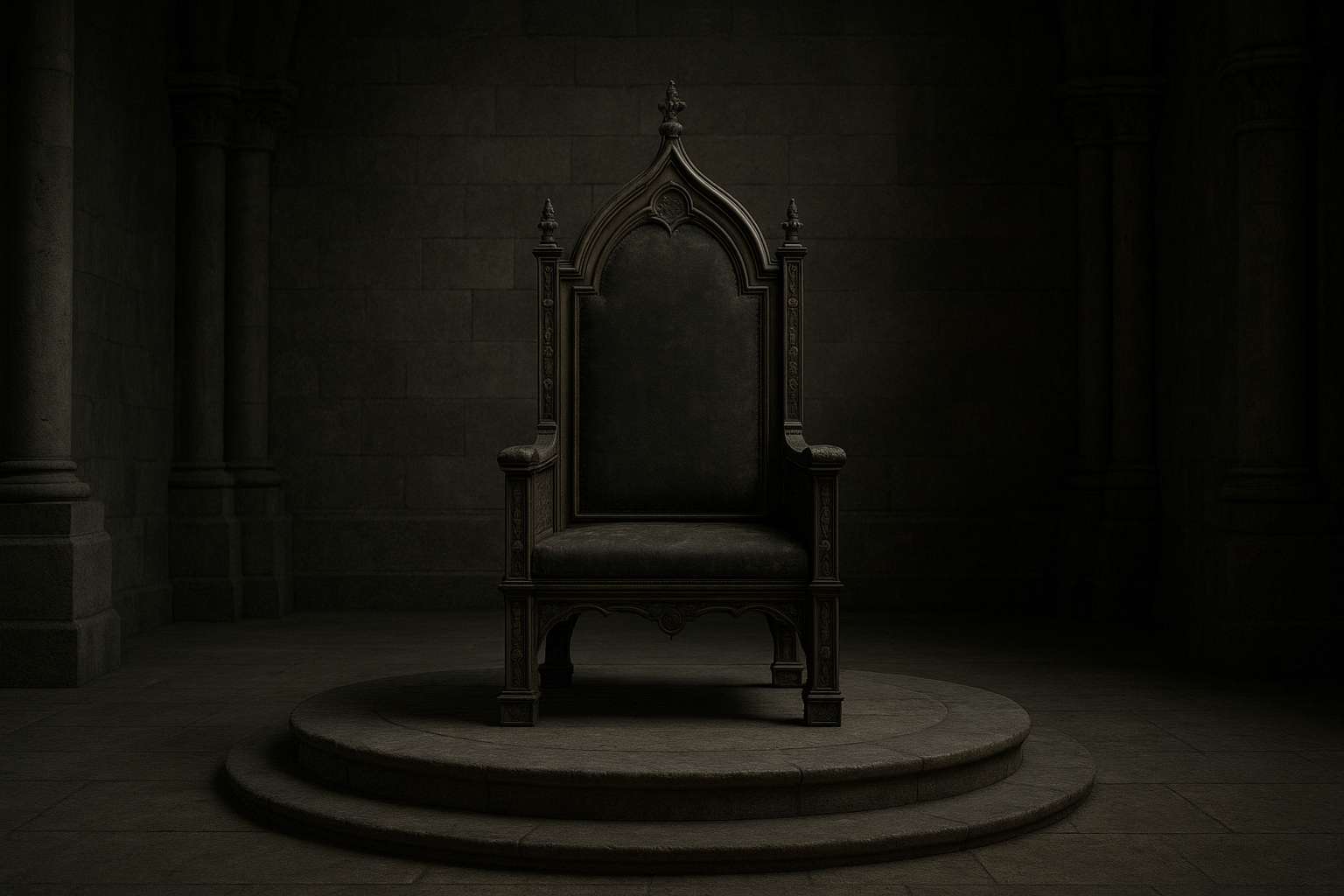
    The Empty Throne – Emptiness in Archetypal Power

    For millennia, the throne has stood as a symbol of power and authority in human civilization. However, the concept of an “empty throne” invites a more profound exploration of the nature of power and its archetypal significance. When the seat of power remains unoccupied, it suggests both an absence of leadership and a tantalizing opportunity for change. In mythology, literature, and modernity, the empty throne symbolizes the complex dynamics of power, the void it creates, and the possibilities it offers.

    The Archetype of the Throne

    The throne is more than just a seat—it is an archetype embodying the pinnacle of authority. According to Carl Jung, archetypes derive from the collective unconscious and represent universal symbols that transcend time and culture (Wikipedia). In this light, the throne becomes a manifestation of power revered and recognized by all. From King Arthur’s legendary Round Table to the Iron Throne in George R.R. Martin’s A Song of Ice and Fire, it encapsulates legitimacy, leadership, and the burden of command.

    The Dynamics of Emptiness

    Yet, when devoid of an occupant, the throne takes on a different attribute—emptiness. This emptiness can lead to an environment ripe with uncertainty and expectation. As philosopher Jean-Paul Sartre once implied, emptiness allows for freedom and potential but also calls forth anxiety and instability (Stanford Encyclopedia of Philosophy). In the context of power structures, an empty throne challenges the status quo, questioning who is deserving to fill the void and with what new ideals.

    A Catalyst for Change

    Throughout history, empty thrones have often preceded significant transformations. The fall of mighty empires or the demise of influential rulers frequently left thrones unoccupied, ushering in periods of both turmoil and growth. Such vacancies provide a critical juncture where new narratives can emerge, releasing the old guard and inviting novel ideas and leadership.

    “Power is like being a lady… if you have to tell people you are, you aren’t.” — Margaret Thatcher

    In essence, Thatcher’s words highlight that a throne’s authority flows not from its existence but from the capacity of its occupant to command respect and enact meaningful change. Therefore, an empty throne becomes not just a void, but a canvas on which the future is painted. In either a metaphorical or literal sense, the empty throne serves as an ever-present reminder of the transient nature of power and the enduring quest for authenticity and transformation.

    • Archetypal Power: Represents universal symbols recognized across cultures.
    • Emptiness and Opportunity: Suggests potential for growth and change.
    • Historical Catalysts: Often precedes dynamic shifts in power structures.
  • Arcane Abyss – Emptiness and Hidden Knowledge

    Arcane Abyss – Emptiness and Hidden Knowledge

    Arcane Abyss: Emptiness and Hidden Knowledge

    The notion of an ‘Arcane Abyss’ conjures images of deep, dark voids brimming with secrets unknown to the commonplace world. It symbolizes the mysterious interface where emptiness and hidden knowledge coexist, a concept that has piqued the curiosity of philosophers, mystics, and seekers for centuries.

    The Concept of the Abyss

    At its core, the concept of the abyss represents an unfathomable chasm, both literal and metaphorical. The abyss is often depicted in literature and mythology as a formidable void, a place beyond the reach of ordinary perception. Philosopher Friedrich Nietzsche warned, “And if you gaze long enough into an abyss, the abyss will gaze back into you.” This idea encapsulates a paradox: in seeking the abyss’ concealed knowledge, one risks being consumed by it.

    Historical Perspectives on Emptiness

    The idea of emptiness as a source of potential has been explored in multiple cultural and philosophical traditions. In Buddhism, for example, the notion of Śūnyatā or “emptiness” is a core tenet that suggests the absence of inherent existence in all phenomena. It is through understanding this emptiness that one can achieve liberation and enlightenment.

    “Form is emptiness, emptiness is form,” states the Heart Sutra, one of Buddhism’s most profound teachings.

    This truth promotes the idea that emptiness is not a void lacking in everything, but rather the fertile ground for potential.

    Mythological Roots and Hidden Knowledge

    Throughout mythology, the abyss is often depicted as a guardian of hidden knowledge. In Greek mythology, the abyss is likened to Tartarus, a deep, gloomy part of the underworld where secrets of the cosmos were believed to be hidden. In the Norse sagas, Yggdrasil, the world tree, extends its roots into the mysterious depths of the unknown, symbolizing access to cosmic wisdom.

    • The Greek Oracle of Delphi’s Pythia would enter trances induced by abyssal fumes, believed to convey cryptic messages from the gods.
    • In Norse mythology, Odin, in his quest for knowledge, sacrifices his eye to drink from the Well of Mimir, which lay in the depths of the abyss, representing the pursuit of wisdom despite great personal cost.

    Modern Interpretations and the Quest for Knowledge

    Modern interpretations of the arcane abyss often intersect with psychological theories and the quest for self-discovery. Carl Jung’s concept of the ‘Shadow’ involves confronting the abyss within oneself. The shadow represents the unknown ‘darker’ side of our personality, encompassing both suppressed desires and untapped potential.

    Jung asserted, “Knowing your own darkness is the best method for dealing with the darknesses of other people.” By peering into our personal abyss, we unearth hidden facets of ourselves, thereby gaining deeper psychological insight.

    Science Meets the Abyss

    Science, too, flirts with the abyss in its quest to unravel the universe’s secrets. The explorations of black holes, often termed ‘cosmic abysses,’ exemplify humanity’s desire to decipher hidden knowledge. Astrophysicist Stephen Hawking described black holes as “a black body with no hair” referring to their seemingly simple physical characteristics that conceal complex information about the universe.

    “We are all now connected by the Internet, like neurons in a giant brain.” – Stephen Hawking

    This broader access to collective knowledge mirrors the interconnectedness characteristic of the abyss, where one discovery influences and enriches another.

    The Abyss in Popular Culture

    In popular culture, the concept of the abyss continues to inspire writers and filmmakers as they explore themes of emptiness and hidden knowledge. Movies like Interstellar depict protagonists voyaging into the abyss of space, portraying the search for new discoveries as a confrontation with both fear and enlightenment.

    • The feature film Event Horizon presents a literal and metaphorical void into which a spaceship ventures to unlock cataclysmic secrets.
    • Lovercraftian literature often situates its narrative in front of cosmic abysses, filled with ancient esoteric knowledge that can drive one to madness.

    Spiritual and Philosophical Approaches

    On a spiritual level, exploring the abyss involves meditation and introspection, looking inward into the infinite depths of the mind. Such practices echo the philosophical assertion posited by Socratic thought: “The unexamined life is not worth living.” Delving into one’s inner abyss can reveal hidden truths and shed light on one’s true nature.

    Conclusion: Embracing the Arcane Abyss

    The arcane abyss remains a potent metaphor for the pursuit of knowledge beyond the known. It challenges us to confront the emptiness of our understanding and invites us to uncover the profound wisdom lurking in the unknown. As we stand on the precipice of this abyss, it is not only the darkness we should fear but the unrealized light that knowledge might bring.

    Engaging with the arcane abyss requires courage and a willingness to embrace uncertainty. Whether through myth, philosophy, spirituality, or science, the journey into the abyss is a timeless quest with the promise of discovery and transformation. Like the universe itself, the arcane abyss is simultaneously a challenge and an invitation—to explore, to understand, and to illuminate the dark corners of our reality.

  • Emptiness Between Stars – Mystery in the Void

    Emptiness Between Stars – Mystery in the Void

    Emptiness Between Stars: Mystery in the Void

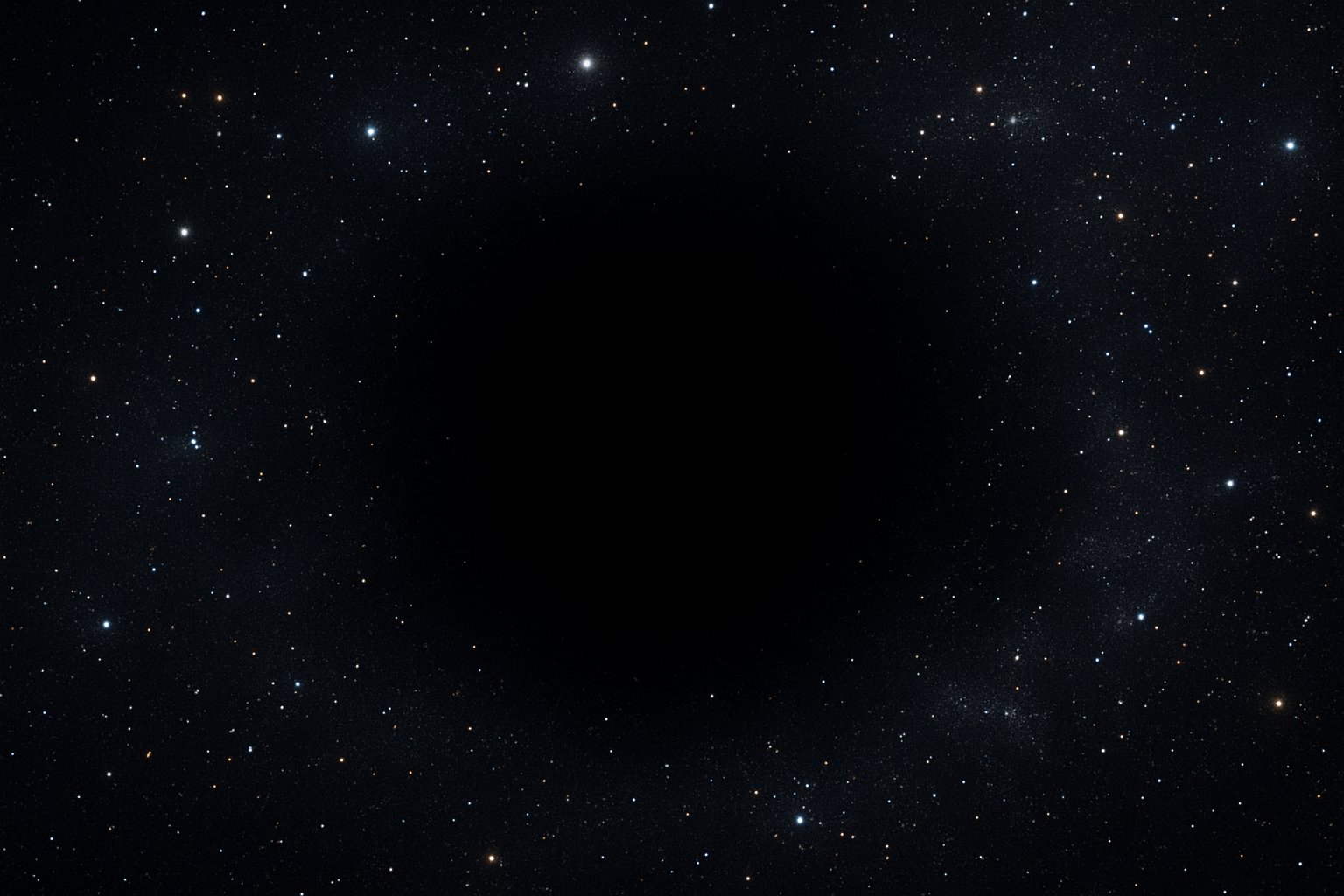
    The universe is an ever-expanding void, filled with celestial bodies that have fascinated humankind since time immemorial. However, what’s even more intriguing than these stellar phenomena is the vast emptiness that surrounds them—the seemingly endless stretch of nothingness that scientists have dubbed interstellar space. Although it is often overlooked amidst the brilliance of stars and galaxies, this profound emptiness between stars holds the deepest mysteries of our cosmos.

    The Nature of Interstellar Space

    Interstellar space is the region beyond the outer boundary of the solar system’s influence, a domain where the Sun’s gravitational pull gives way to the dynamics of the Milky Way galaxy. In terms of volume, it dominates our galaxy, yet it is populated by sparse specks of matter, remnants of supernovae, and invisible forces that we are only beginning to understand. This cosmic void is not entirely devoid of matter or energy—particles of gas and dust, magnetic fields, and cosmic rays wander through it, creating a rich medium for exploration.

    “Space is hard—and it is because we are standing at the epoch of new space exploration that we are confronted more than ever with the crunchiness of the universe that lies beyond.” — Nicole Stott, NASA Astronaut

    The Interstellar Medium

    At the heart of the mystery of interstellar space lies the interstellar medium (ISM), a tenuous collection of gas, dust, and energetic particles. Approximately 99% of the ISM consists of gas in ionic, atomic, and molecular forms, while the remaining 1% is made up of dust particles. Although sparse, this medium plays a crucial role in the life cycle of stars, acting as both a womb and a grave for these celestial giants.

    • Cosmic Clouds: The ISM isn’t homogeneous; instead, it forms vast clouds known as nebulae. These cosmic entities serve as the birthplaces of stars and planets, with their gravitational collapse leading to the formation of these bodies.
    • Stellar Nurseries: The most famous of these stellar nurseries, like the Orion Nebula, paint a picture of how this seemingly void space can become a cradle for new stars.

    Understanding the ISM’s composition and behavior is key to unravelling the nature of star formation and the dynamics of galactic evolution.

    Mysteries in the Void

    The vast emptiness between stars also raises numerous questions—a dance of mystery and knowledge. Among the most fascinating of these are the concepts of dark matter and dark energy, enigmatic forces thought to make up the majority of our universe.

    • Dark Matter: Unlike baryonic matter (the ordinary matter that makes up planets, stars, and galaxies), dark matter does not interact with electromagnetic forces, making it invisible and detectable only through its gravitational effects.
    • Dark Energy: Even more perplexing, dark energy is hypothesized to be responsible for the universe’s accelerated expansion, a discovery awarded the Nobel Prize in Physics in 2011.

    “We know that dark matter makes up about 27% of the content of the universe. The only problem is, we don’t know what it is.” — Jan Tauber, European Space Agency

    These invisible phenomena suggest that the empty spaces between stars may not be as empty as they seem, hiding forces that could fundamentally alter our understanding of physics and the universe itself.

    The Voyagers’ Journey Through the Void

    No discussion of interstellar space would be complete without mentioning humanity’s first forays into the void—the Voyager spacecraft. Launched in 1977, Voyagers 1 and 2 have traveled beyond the heliosphere, our Sun’s domain, into interstellar space. These craft have provided invaluable data about the properties of the void and continue to push the boundaries of human exploration.

    • Pioneering Discoveries: The Voyagers have measured changes in particle densities, magnetic fields, and cosmic rays, offering direct evidence of the ISM’s elusive nature.
    • Endurance in Space: Their longevity and the continuous data they provide are testaments to human ingenuity, acting as beacons of exploration beyond our solar neighborhood.

    “Every time we obtain a new data set, we find ourselves asking more questions.” — Ed Stone, Voyager Project Scientist

    As the Voyagers journey onwards, they symbolize the flame of curiosity that drives us to explore and understand these cosmic blank slates.

    The Philosophical Implications of Emptiness

    The notion of emptiness carries profound philosophical implications transcending the boundaries of science. Throughout history, space has been a metaphor for infinity, an infinite backdrop to our existence that has fueled both existential pondering and artistic expression.

    The Cosmic Perspective:

    • Renowned astrophysicist Carl Sagan eloquently summarized this notion: “The cosmos is within us. We are made of star-stuff. We are a way for the universe to know itself.” Sagan’s words emphasize our intrinsic connection to the universe, encouraging us to reflect on our place within it.
    • The void inspires not only scientific inquiry but also existential thought, prompting questions about our role in a seemingly indifferent universe.

    Whether through the eye of a telescope or the lens of philosophical inquiry, the emptiness between stars challenges us to look beyond the confines of our blue planet and reach for answers in the great unknown.

    Looking Forward

    The empty spaces between stars hold questions that beckon future generations of astronomers and philosophers alike. As our technology progresses, new missions and telescopes may one day peer deeper into the void, uncovering secrets that have been veiled by darkness and distance.

    As the universe continues to expand, so too does our understanding. The emptiness between the stars is more than just nothingness—it is a tantalizing invitation to explore, to discover, and to contemplate the infinite possibilities that lie within the shadowy realms of space.