Tag: form

  • Abstract Vanishing – Emptiness in Form and Mind

    Abstract Vanishing – Emptiness in Form and Mind

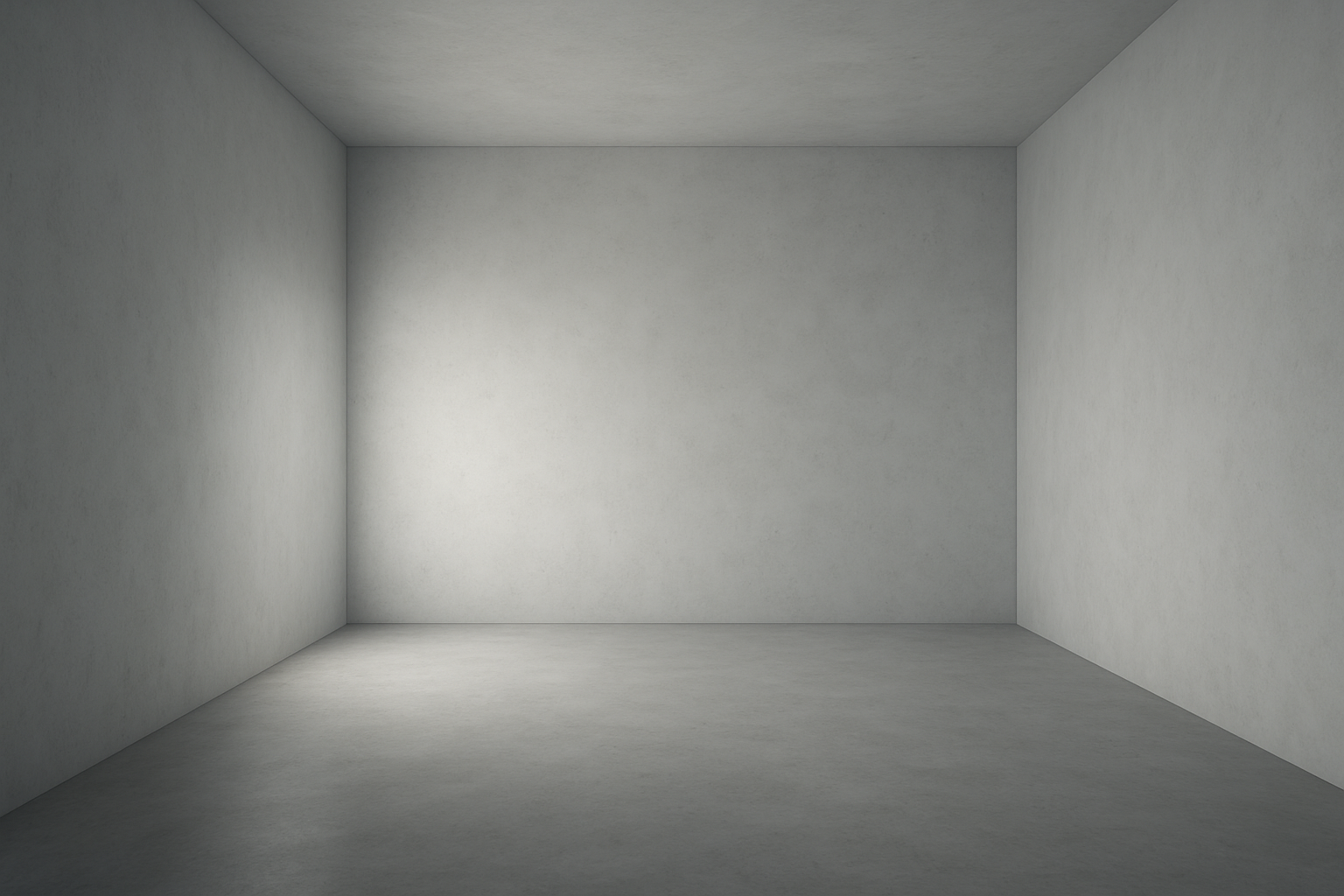
    The realm of art and psychology are often interconnected, illustrating how abstract concepts can profoundly affect the human psyche. One such notion is the idea of emptiness, both in form and mind. This concept is a recurring theme in abstract art, deeply resonating with our cognitive processes and emotional experiences.

    The Essence of Emptiness in Art

    Abstract art has long grappled with the paradox of emptiness. Artists like Mark Rothko and Kazimir Malevich have famously exploited color and form—or the lack thereof—to invoke intense emotional responses. In Rothko’s words,

    “A painting is not a picture of an experience; it is an experience.”

    Indeed, emptiness in art is not merely the absence of structure or content but a deliberate choice that invites viewers to engage more actively with the artwork.

    According to Dr. Ellen Winner, a professor of psychology at Boston College specializing in art perception, “The less an artwork tells us directly, the more we fill in with our own mental stories.”

    Psychological Interpretations of Emptiness

    In the field of psychology, emptiness may refer to a state of a lack of subjective meaning or engagement in one’s activities, often leading to feelings of ennui and insignificance. Psychologists explore how this state of mind can influence human behavior and relationships, suggesting ways to cultivate fulfillment and purpose.

    The Appeal of Minimalism

    Minimalist environments and practices, much like abstract art, emphasize simplicity and clarity. They invite introspection by reducing external clutter, thus highlighting the internal landscape. Minimalism speaks to the desire for psychological clarity amid the chaos of modern life. By eliminating distractions, individuals often find amplified focus and emotional relief.

    The Philosophical Underpinnings

    Philosophically, the concept of emptiness can be traced back to Buddhist teachings, which advocate for the notion of ‘sunyata’—emptiness as a fundamental nature of all phenomena. This perspective encourages a liberation from attachment and a deeper understanding of the transient nature of existence.

    Emptiness, in this light, is not a void to be feared but a realization to be embraced. It underscores the impermanent and interdependent nature of reality. As the Buddha addressed,

    “Form is emptiness, emptiness is form.”

    Understanding this can lead to profound insights into the mind’s workings and our interactions with the world.

    Mindfulness and Embracing Emptiness

    Practices like mindfulness and meditation have become popular pathways to exploring the constructive aspects of emptiness. By focusing on the present moment and releasing judgments about the past and future, individuals can attain a greater understanding of themselves and lessen the burden of mental clutter.

    • Acceptance: Embracing things as they are without wishing for change.
    • Presence: Being fully engaged in the present moment.
    • Detachment: Developing a sense of self that is not dependent on external successes or failures.

    These practices aim to refine our mental states by clearing the mind of preoccupations, thereby opening up space for creativity, tranquility, and contentment.

    Conclusion

    The intersection of emptiness in abstract art and psychology offers a compelling view into human perception and cognition. It challenges us to reconsider our relationship with void and uncertainty, viewing them not as drawbacks but as opportunities for deeper engagement and personal growth.

    By acknowledging and embracing emptiness, both in form and mind, we open ourselves to new interpretations, both in art and life. Such a perspective transforms emptiness from a daunting absence into a canvas of potential, inviting introspection, connection, and ultimately, understanding.

  • Decay as Liberation – Dissolution of Form Into Spirit

    Decay as Liberation – Dissolution of Form Into Spirit

    Decay as Liberation: Dissolution of Form Into Spirit

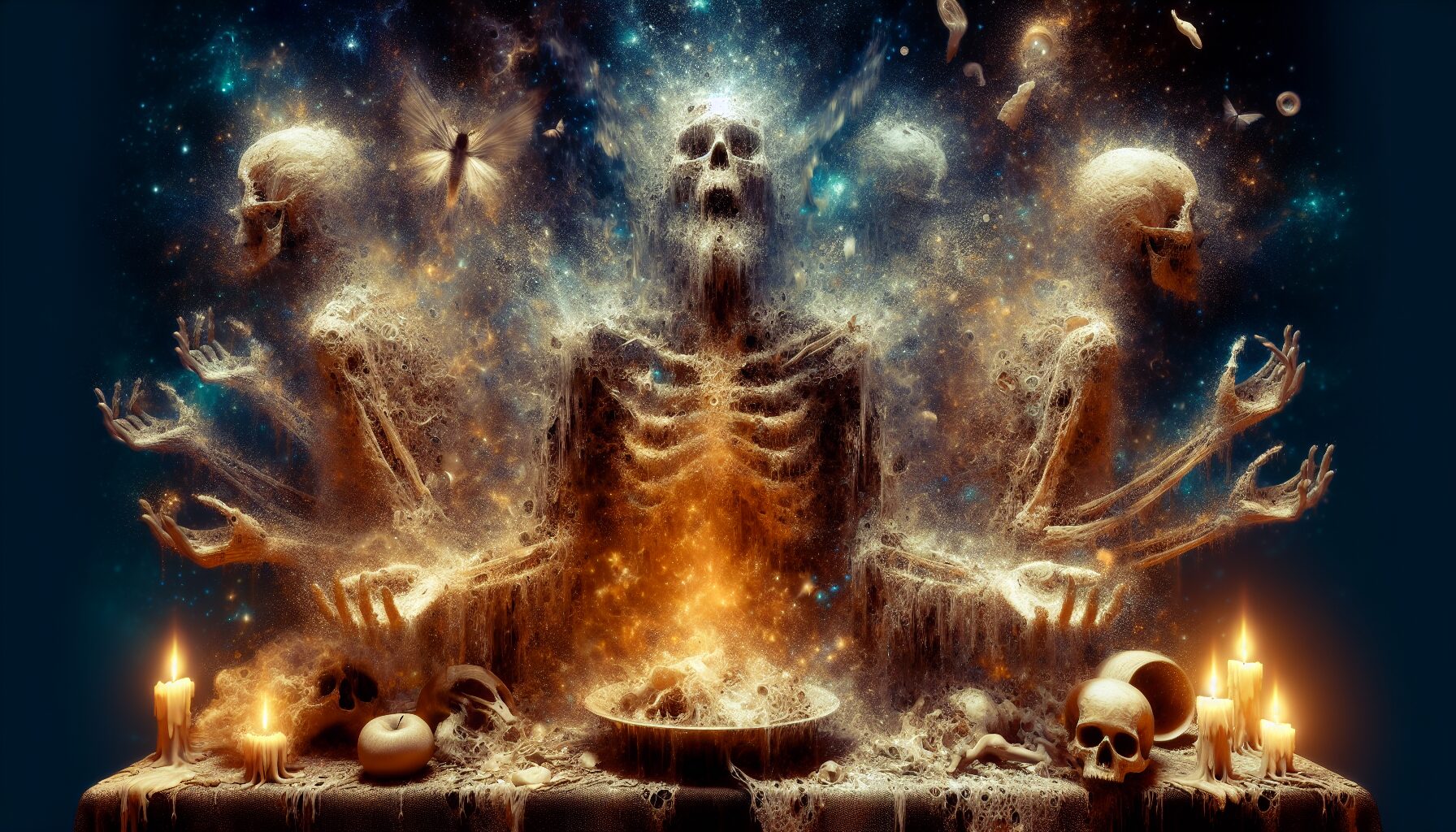
    In a world inherently subjected to change and deterioration, decay often carries negative connotations, a symbol of destruction and loss. However, when viewed through the lens of philosophical inquiry, decay can emerge as a potent metaphor for liberation. It signifies the dissolution of rigid forms, allowing for the emergence of the spirit, the essence, or truth that lies beneath the surface.

    The Philosophical Context of Decay

    Philosophy has long been occupied with the nature of change and transformation. Heraclitus, the pre-Socratic philosopher, famously stated, “No man ever steps in the same river twice.” His assertion captures the essence of constant flux, a recurrent theme in philosophy. Decay, in this context, is not merely a physical process but a necessary precondition for the transformation that fuels creativity and growth.

    Nietzsche embraced decay as a pathway to authenticity and self-overcoming. In his view, traditional structures and values, once rigid and unquestioned, decay over time, making way for new modes of being. Nietzsche’s concept of the “Übermensch” or Overman, is born from the ashes of decayed morality, symbolizing liberation from societal constraints and personal rebirth.

    Decay in Nature and Spiritual Awakening

    In the natural world, decay plays an indispensable role. Decomposition transforms dead matter into fertile soil, nurturing new life. This cycle of decay and renewal is essential for ecological balance and diversity, and offers a profound metaphor for spiritual liberation.

    The Taoist philosophy embraces this perspective, recognizing the harmony and interconnectedness of nature’s processes. Lao Tzu, in the Tao Te Ching, writes of the importance of humility and acceptance of life’s transient nature. By recognizing and accepting decay, we align ourselves with the Tao, the natural flow of the universe, thus achieving spiritual liberation.

    “To the mind that is still, the whole universe surrenders.” – Lao Tzu

    Decay as Liberation in Modern Thought

    Contemporary philosophy and psychology continue to explore the concept of decay as a form of liberation. Existentialists, for example, argue that the awareness of one’s mortality confronts us with the necessity of authentic existence. Jean-Paul Sartre suggests that understanding and accepting the inevitability of decay and death can liberate individuals from superficial attachments, unveiling the true essence of being.

    Similarly, in the modern spiritual framework, the process of self-examination often involves “decomposing” entrenched beliefs and identities. Spiritual teachers like Eckhart Tolle advocate for the dissolution of the ego to achieve enlightenment. Tolle posits that liberation arises when we let go of egoic identities and perceive the deeper, timeless essence of who we are.

    “Realize deeply that the present moment is all you ever have. Make the Now the primary focus of your life.” – Eckhart Tolle

    Art and Literature: Echoes of Weakening Structures

    Art and literature, through various movements, have also captured the aesthetic of decay as a transformative force. Romantic poets, such as Percy Bysshe Shelley, celebrated the ruins as symbols of the sublime—a beauty found in the delicate balance between creation and destruction. Shelley’s poem “Ozymandias” reminds us of the inevitable decay of human power, suggesting a liberation from the hubris that often accompanies it.

    In modern art, movements such as Surrealism and Dadaism have embraced decay as a reaction against established norms. These movements dissolved conventional forms and boundaries, paving the way for liberation and innovation in art and thought. As André Breton, the founder of Surrealism, asserted:

    “The imaginary is what tends to become real.” – André Breton

    Conclusion: Embracing the Liberation of Decay

    Decay, far from being merely a negative process of loss, serves as a powerful emblem of liberation. It navigates us through the dissolution of forms to reveal underlying truths, spiritual awakening, and authentic existence. Both in nature and the realms of human thought, decay dismantles the old, clearing the path for renewal and transformation.

    By reconciling with decay, we may embrace the freedom that lies beyond the dissolution—the freedom to rebuild, to redefine, and to rediscover the spirit within. As philosophers, artists, and spiritual seekers remind us, the liberation wrought by decay invites an inner revolution, propelling us toward deeper understanding and higher planes of existence.

  • Letters from the Hollow: Epistolary Experiments

    Letters from the Hollow: Epistolary Experiments

    Letters from the Hollow: Epistolary Experiments

    Introduction to Epistolary Storytelling

    The art of epistolary storytelling breathes life into narratives through a series of letters, newspaper clippings, emails, or diary entries that reveal the inner thoughts and happenings of characters from a deeply personal perspective. This narrative device offers readers an intimate glimpse into the minds of its characters, blurring the lines between reader and narrator, and engaging them in a unique and immersive storytelling experience.

    The Historical Roots of Epistolary Narratives

    The epistolary form is one of the oldest methods of storytelling, with examples dating back to ancient times. In its long history, this form has evolved, capturing the imaginations of readers with its authenticity and directness. Notable historical examples include Samuel Richardson’s Clarissa and Bram Stoker’s Dracula.

    “The power of the epistolary novel lies in its ability to let readers peer into the hearts of its characters through their own words.” — Literary scholar Robert McCrum

    Modern Epistolary Experiments

    In contemporary literature, authors have pushed the boundaries of the epistolary form, experimenting with new mediums and formats that reflect the digitally connected world we live in today. Social media platforms, emails, and text messages have become the modern-day letters, reshaping how stories are told and experienced.

    Digital Storytelling and Social Media

    With the rise of digital communication, epistolary storytelling has spread into platforms like Twitter, Instagram, and blogs. Authors create entire worlds within the constraints of character limits or visual posts, such as David Mitchell, who released his short story, The Right Sort, entirely on Twitter in a series of 280-character tweets.

    Epistolary Novels that Transcend Mediums

    Books like Robin Sloan’s Mr. Penumbra’s 24-Hour Bookstore successfully integrate technology and traditional literary forms, using emails printed as part of the narrative to enhance the story’s modern context. Another noteworthy mention is Steven Hall’s The Raw Shark Texts, which cleverly incorporates visual text and abstract layouts alongside conventional prose.

    Reader Engagement and Interpretation

    The epistolary form requires active reader engagement as they piece together the narrative from disparate pieces. This form of storytelling invites readers to interpret and connect the dots, creating a more participatory experience. As the lines blur between fiction and correspondence, readers might even find themselves questioning the nature of truth within the story.

    “Each letter reveals pieces of the puzzle, urging readers to become detectives in their own right.” — The Guardian

    The Future of Epistolary Storytelling

    As technology progresses, the possibilities for epistolary storytelling are limitless. Virtual reality and augmented reality offer avenues for epistolary narratives to become even more immersive. Imagine stepping into a virtual world where you can read letters as they are being written or engage in real-time conversations that advance the story.

    Interactive Epistolary Experiences

    Interactive fiction is taking epistolary storytelling into new terrain. Platforms like Twine allow writers to craft stories that branch off in multiple directions based on reader choices, creating a dynamic narrative that is unique to each reader’s journey.

    The Soul of Epistolary Storytelling

    Regardless of technological advancements, the heart and soul of epistolary storytelling remain unchanged—the power of intimate, personal communication. As long as humans have stories to tell and emotions to express, the epistolary form will endure, continuously reshaping itself to reflect the times.

    Conclusion

    Letters from the Hollow: Epistolary Experiments serves as a testament to the enduring power of the written word, capturing fleeting thoughts and emotions through letters and digital correspondence. As writers push the boundaries of storytelling, the epistolary form will continue to evolve, forging new paths for creative expression, ensuring that every hollow is filled with the sound of letters calling out, eager to be read and understood.