Tag: formation

  • Arcane Frostflowers – Secret Symbols Growing in Snow

    Arcane Frostflowers – Secret Symbols Growing in Snow

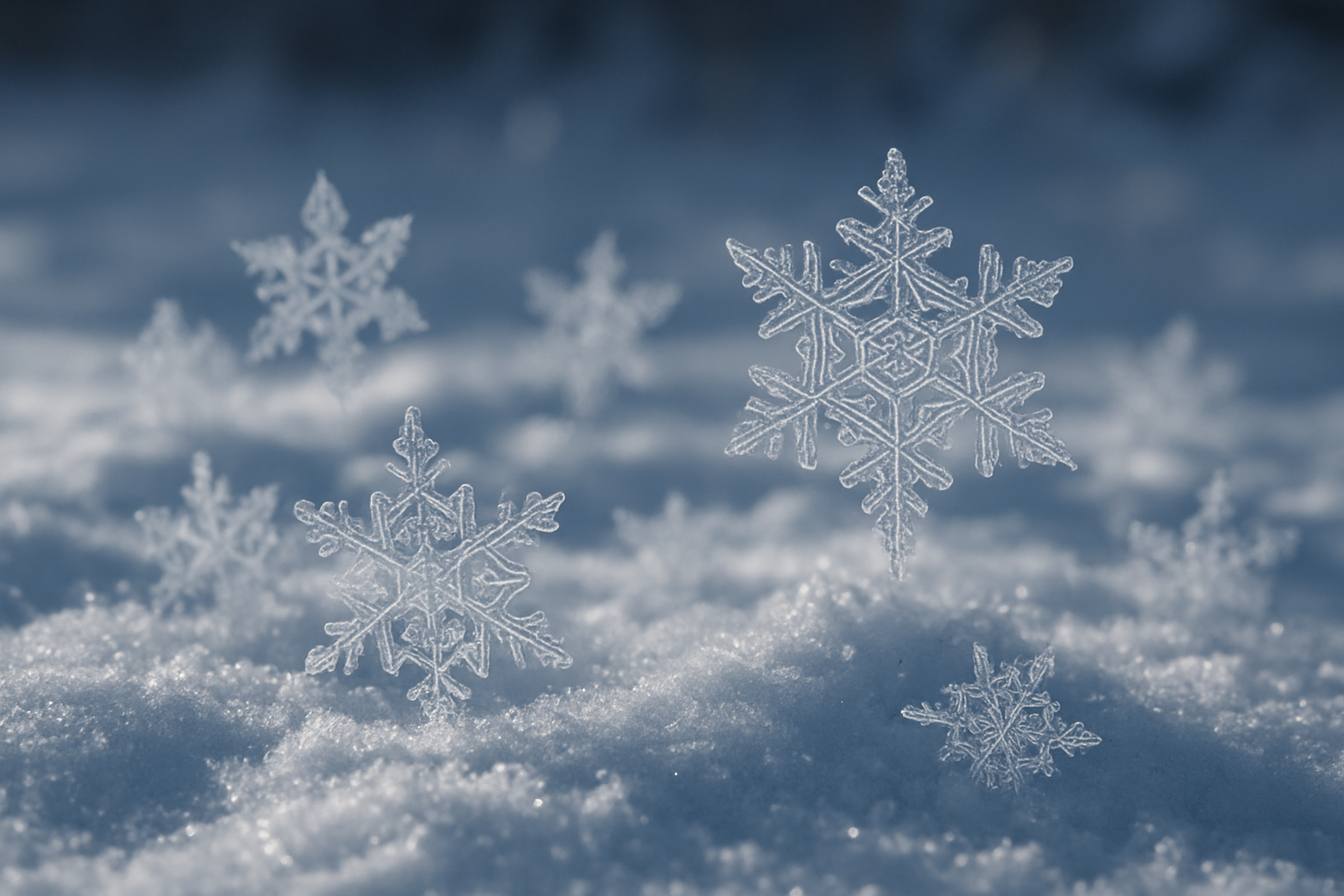
    In the realms of uncharted terrains and wintery wonders, frostflowers stand out as a mysterious phenomenon not only for their transient beauty but also for the enigmatic secrets they might hold. These delicate ice structures, primarily found in the coldest environs, have intrigued scientists, artists, and the spiritually inclined alike.

    The Science Behind Frostflowers

    Frostflowers are a natural spectacle occurring on sea ice and cold surfaces. They form when a combination of specific cold conditions and humidity levels trigger an icy bloom. Typically appearing on young sea ice or even the thin layer of ice covering bodies of water, these flowers consist of tiny ice crystals that grow perpendicular to the surface.

    • Temperature Influence: For frostflowers to form, the temperature has to be significantly below the freezing point. The moisture in the air condenses and freezes upon contact with the cold surfaces.
    • Wind Factors: Gentle winds are essential for the creation of these structures, allowing moisture to be consistently supplied to the surface.
    • Salinity Impact: Since many frostflowers originate from sea ice, the salt content in the underlying water can influence their formation.

    According to research conducted by Douglas R. MacAyeal, “The extremely cold air immediately above the ice surface has much less capacity to hold moisture than the slightly warmer air above it, leading to condensation and frost flower formation.” (Nature Journal)

    Cultural and Symbolic Interpretations

    Beyond the scientific explanation, frostflowers hold a rich tapestry of cultural and symbolic meanings. Historically, such natural phenomena have been steeped in mysticism and regarded as messages from the divine.

    • Ancient Nordic Legends: The Nordic cultures, known for their snow-draped landscapes, often associated frostflowers with the whispers of gods, considering them omens of prosperity or warnings based on their patterns and distribution.
    • Japanese Symbolism: In Japan, frostflowers, although rare, are seen as a winter counterpart to cherry blossoms and represent beauty, ephemerality, and a poetic mystery that embraces both nature and the spiritual.
    • Native American Beliefs: Some Indigenous tribes of North America interpret frostflowers as the Earth’s winter diary, inscripted with tales of past, present, and future.

    Spiritual Significance and Meditation

    For the spiritually inclined, frostflowers are more than just natural beauty. They are seen as manifestations of frozen thoughts or hidden insights. The ephemeral nature of their existence makes them powerful symbols in meditation and mindfulness practices.

    “Frostflowers remind us of the transient beauty and the ever-changing nature of life. They capture the moment’s essence frozen in time.” — Dr. Patricia Holm, Environmental Philosopher

    Many meditation practitioners use the image of a frostflower as a focal point, allowing the intricate patterns to guide their thoughts inward, reflecting on impermanence and the purity of the present moment.

    The Role of Climate Change

    While the formation of frostflowers has long been a natural occurrence, modern environmental changes threaten their existence. With rising global temperatures and the subsequent thinning of sea ice, scientists are closely monitoring these delicate formations.

    According to Climate Scientist Dr. James Hansen, “The reduction in ice cover can significantly alter the conditions necessary for frost flower formation, impacting both their beauty and the ecological roles they play in polar regions.”

    Frostflowers contribute to the albedo effect, reflecting sunlight and helping regulate global temperatures. They also serve as microhabitats for cold-adaptant microorganisms and contribute to atmospheric chemical processes.

    Artistic Inspirations

    Frostflowers have served as inspiration for artists across different mediums, from painting and poetry to modern digital creations. The intricate and unique designs are seen as nature’s art, different with every freeze-thaw cycle, echoing the creative process of humans capturing transient beauty.

    • Poetry: Poets such as Robert Frost have captured the essence of snowy landscapes, though not explicitly about frostflowers, the style and subject evoke similar sentiments.
    • Visual Art: Many artists use frostflowers as motifs, symbolizing purity and elegance. Their fractal-like structures inspire abstract representations.

    In conclusion, frostflowers, while scientifically understood, retain an aura of mystery. Their formation, symbolism, and significance continue to captivate human imagination, earning them a cherished place in the annals of nature’s grand artistry. As winter landscapes come alive with these icy blossoms, may we hold onto the lesson they quietly teach about the fleeting yet profound beauty of existence.
  • The Cold Beauty of Black Holes – Death at the Edge of Space

    The Cold Beauty of Black Holes – Death at the Edge of Space

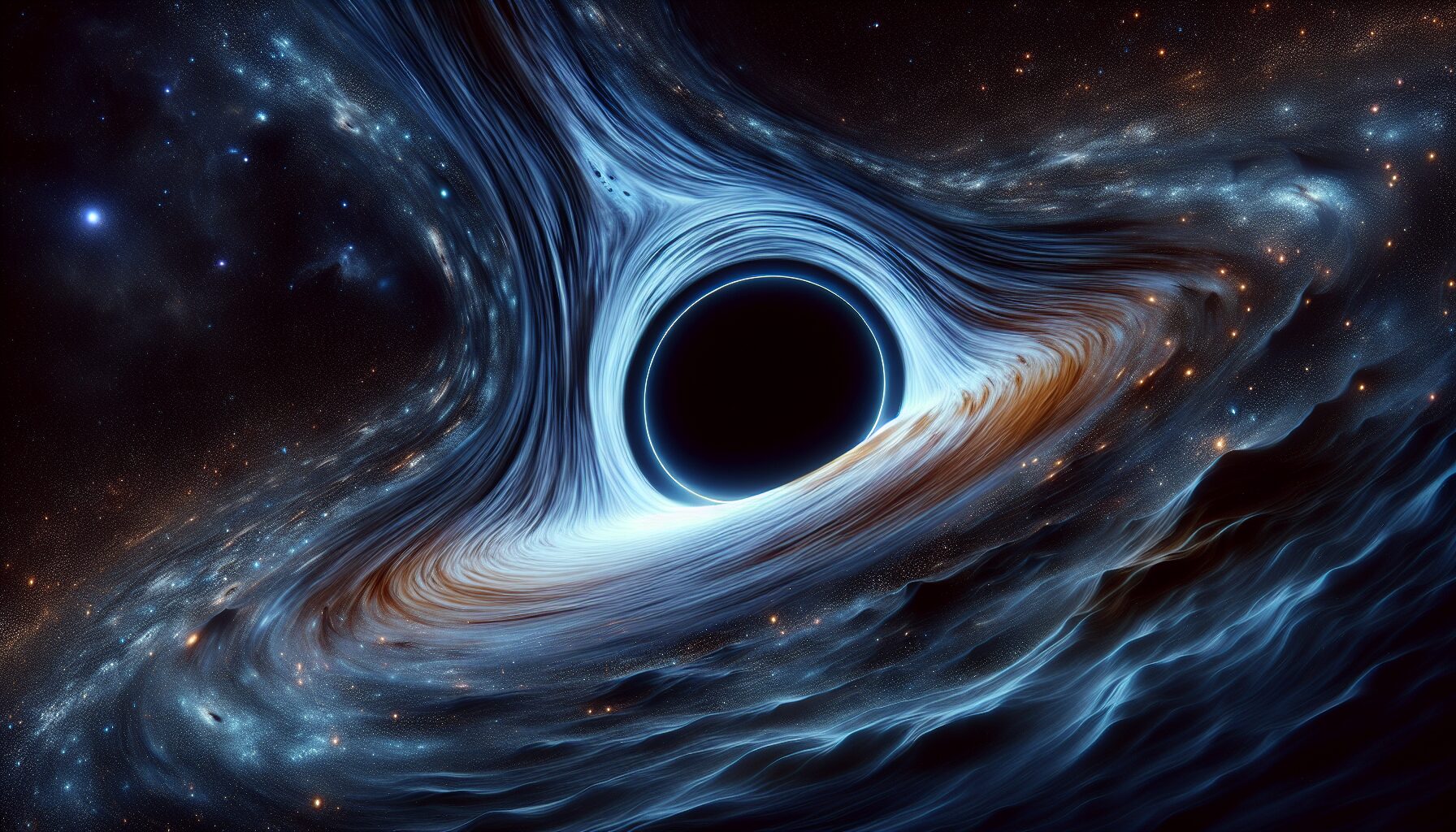
    Black holes have long captured the imagination of scientists and the public alike. These mysterious cosmic phenomena represent both an end and a beginning—a paradox of annihilation and the ultimate frontier. With their immense gravitational pull, black holes consume everything in their reach, including light, making them appear cold and dark. Yet, their ability to warp space and time presents them as a subject of immense beauty for those who dare to look closer.

    The Formation of Black Holes

    Black holes arise from the remnants of massive stars, marking the final stages of stellar evolution. When a star exhausts its nuclear fuel, its core collapses under the force of gravity. If the core’s mass is above a certain threshold, it continues to collapse until a singularity is formed—a point of infinite density where the laws of physics as we know them cease to apply.

    • Stellar-mass Black Holes: These form from stars with masses 3-10 times that of the Sun.
    • Intermediate-mass Black Holes: Rarer than stellar-mass black holes, their formation remains a topic of active research.
    • Supermassive Black Holes: Occupying the centers of galaxies, their origin is less understood, though theories suggest mergers of smaller black holes or direct collapse of gas clouds.

    The Event Horizon

    The boundary around a black hole is called the event horizon. It represents the point beyond which nothing can escape the gravitational grasp of the black hole—not even light. The concept of the event horizon conveys a chilling sense of finality, echoing Albert Einstein’s general theory of relativity.

    “Across the event horizon, nothing escapes the gravitational pull. It is a border that the universe dares not cross.” – Stephen Hawking

    Exploring Singularities

    At the heart of a black hole lies the singularity, where gravitational forces compress matter to infinite density. Singularities challenge our understanding of physics and occur where quantum mechanics and general relativity clash. Insights into these enigmas could pave the way for groundbreaking advancements in theoretical physics, prompting researchers to pursue quantum gravity theories like string theory or loop quantum gravity.

    Theoretical Wonders

    While these cosmic giants obliterate with impunity, phenomena like Hawking radiation hint at their complexities. Proposed by Stephen Hawking, this radiation suggests that black holes could eventually evaporate, emitting particles due to quantum effects near the event horizon. This discovery bridged a critical understanding between quantum mechanics and cosmology, opening avenues for research into the universe’s asymmetries and fate.

    The Role of Black Holes in Galactic Evolution

    Far from being mere space-faring vacuums, black holes significantly influence their surrounding environments and play pivotal roles in galaxy formation and evolution. Supermassive black holes, in particular, are pivotal for shaping galaxies:

    • Regulating Star Formation: By ejecting streams of energetic particles, they can prevent excessive star formation, maintaining galactic balance.
    • Galactic Center Dynamics: As gravity anchors galaxies, feeding supermassive black holes with surrounding matter can fuel quasars—extremely luminous objects that emit massive amounts of energy.

    The Allure of Black Holes

    Despite their foreboding nature, black holes captivate the human mind. Theoretical physicist and cosmologist Kip Thorne has notably contributed to our understanding of black holes, earning the Nobel Prize for his work detecting gravitational waves emitted by merging black holes. Thorne’s insights have not only progressed our grasp on cosmic phenomena but also inspired popular culture, influencing Hollywood portrayals such as the representation of a supermassive black hole in Interstellar.

    Future Exploration

    As technological innovations in telescopes and detectors advance, scientists are optimistic about unlocking further black hole mysteries. The historic first image of a black hole’s shadow, captured by the Event Horizon Telescope in 2019, was a landmark achievement revealing these enigmas that lie at the cosmic peripheries.

    The path forward for black hole research is both daunting and thrilling. As Kip Thorne once noted, “Black holes are time machines. We know in principle how to construct them, but the technology is far beyond us.” Humanity stands at the cusp of cosmic discovery, beckoning researchers and dreamers to delve deeper into the shadowy depths of the universe.

    In conclusion, black holes are wondrous manifestations of the universe. They symbolize ends and beginnings, destruction, and formation. Through them, we learn life’s impermanence and the potential of endless horizons.