Tag: funeral

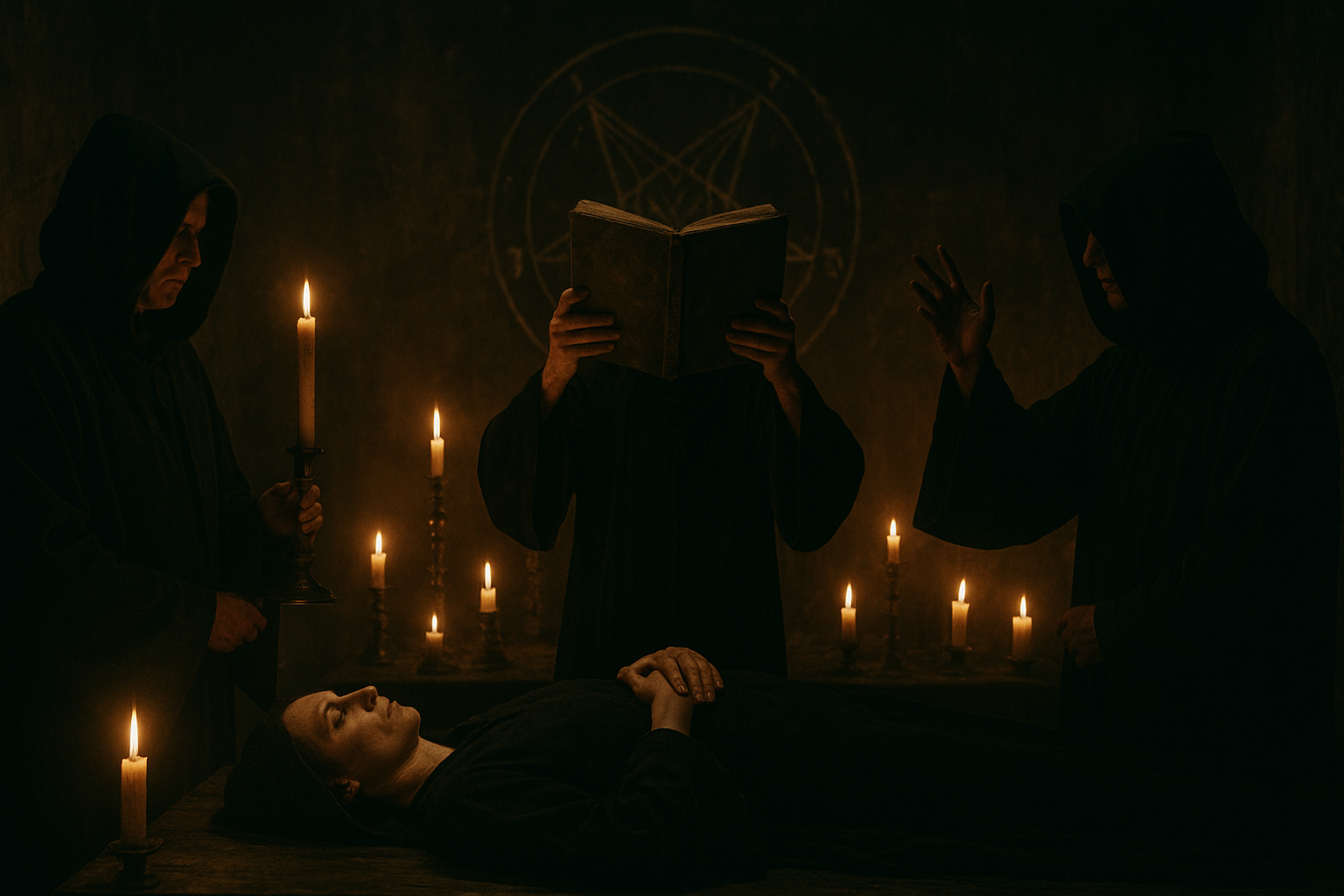
  • Arcane Funeral Rites – Occult Ceremonies of Passage

    Arcane Funeral Rites – Occult Ceremonies of Passage

    Arcane Funeral Rites: Occult Ceremonies of Passage

    Humanity has long been fascinated by the mysteries of life and death. From the dawn of civilization, various cultures have devised elaborate rituals to honor the dead, reflect beliefs about the afterlife, and soothe the living. In the tapestry of global funeral practices, occult ceremonies hold a shadowy allure, promising insight into the unknown and a connection to ancient wisdom.

    The Origins of Occult Funeral Rites

    The term “occult” originally meant “hidden” or “secret.” While today it often carries connotations of dark magic or forbidden practices, many occult funeral rites were simply rituals shrouded in secrecy, passed down within small communities or chosen families. These rites often reflect an intimate relationship with the natural world and the forces believed to govern life and death.

    Occult funeral practices can be found across the globe, from the venerable traditions of the Druids to the mystical ceremonies of Ancient Egyptian priests. Understanding these rituals provides us with a glimpse into the metaphysical worldviews of our ancestors and their nuanced relationship with mortality.

    Celtic Funeral Rites: Communion with the Spirit World

    The Druids, the spiritual leaders of the ancient Celts, played a crucial role in Celtic funeral rites. These rituals were less about mourning and more about celebration, signaling a passage to the Otherworld—a place rich with wisdom and eternal joy.

    Druids often performed ceremonies in sacred groves, believed to be the nexus between our world and the next. These places resonated with the spirits of nature, aligning the energies required for safe passage into the afterlife. Ceremonies included chanting, offerings to the gods, and the use of sacred fires to purify and guide the soul.

    “The Druid tradition teaches that death is not the end, but a transformation—a journey to the Otherworld. Their rites provided communion with the spirits and ensured no journey was undertaken alone,” says John Matthews, a renowned historian and mycologist, in his book The Element Encyclopedia of the Celts.

    Egyptian Book of the Dead: Guiding the Departed

    Ancient Egyptian funerary practices stand as one of the most documented and intricate occult traditions in history. Egyptians believed in preserving the body through mummification, ensuring the soul’s continuance in the afterlife. The Book of the Dead served as a spiritual guide, containing spells, hymns, and instructions to navigate the afterlife’s challenges.

    Each deceased individual was provided with a personalized scroll, unique to their journey. This sacred text was believed to protect and assist the spirit, equipping it with the wisdom necessary to face judgment and gain entry into the Field of Reeds, their vision of paradise.

    “For the Egyptians, death was another adventure. Their meticulous rituals reflected a society deeply connected to spiritual exploration and the mysteries of the universe,” writes Egyptologist Dr. Salima Ikram in Ancient Egypt and the Afterlife.

    Voodoo: Living Amongst the Spirits

    Voodoo (or Vodou) offers another fascinating perspective on death and the afterlife. Primarily practiced in Haiti and the African diaspora, Voodoo funerals involve elaborate rituals to ensure the deceased’s soul passes safely into the afterlife, where ancestors guide and watch over the living.

    The Voodoo ceremony, or Waka, typically takes place a year and a day after death. During this time, the soul is believed to reside in the spirit world, waiting for the ceremony that will release it to embark towards eternal rest.

    Voodoo rituals are vibrant, involving rhythmic drumming, dancing, and singing. Offerings are made to the loa, deities that serve as intermediaries between the human and spirit worlds. These acts are performed with the hope of gaining favor and securing a peaceful afterlife for the departed.

    “Voodoo rites present a profound communion with the invisible world. They remind us that life and death are two sides of the same coin, eternally entwined,” according to Wade Davis, an anthropologist and author of The Serpent and the Rainbow.

    Wiccan Traditions: Embracing the Cycle of Life and Death

    Modern Wiccan traditions echo ancient pagan practices, viewing death as a part of the natural cycle of life. Wiccans celebrate the departed through rituals that emphasize the soul’s rebirth and the continuity of life.

    • Samhain: Celebrated on October 31, Samhain represents a time when the veil between the worlds is thinnest, making communication with the dead easier. Wiccans pay homage to their ancestors by lighting candles and setting places for the deceased at the table.
    • The Wiccan Requiem: Conducted in a coven, this ceremony involves chanting and casting a circle of protection. Participants call upon deities to guide the spirit into the Summerland, the Wiccan paradise, where the soul rests before reincarnation.

    “In Wiccan beliefs, death is not to be feared but welcomed as a return home, a reunion with the earth and the sacred cycle of life,” writes Marion Green in The Path of the Hedge Witch.

    Implications and Continuing Influence

    Occult funeral rites continue to fascinate and resonate within contemporary spiritual practices. These ceremonies speak to a universal desire to understand what lies beyond, and to assure the living that their loved ones’ spirits are at peace.

    As today’s societies seek meaningful ways to honor their dead, such mystical traditions offer rich sources of inspiration. They remind us that while death may be the ultimate mystery, it is an integral component of the human experience, inviting us into a larger and timeless journey.

    In exploring these hidden paths and secret traditions, we find that death, though cloaked in shadows, can also illuminate the pathways of spirituality, connecting us profoundly to those who have come before us.

    Whether through rituals that celebrate rebirth, guide spirits to paradise, or seek the favor of deities, occult funeral rites invite reflection on the deepest mysteries of existence, reminding us that in every ending lies a new beginning.
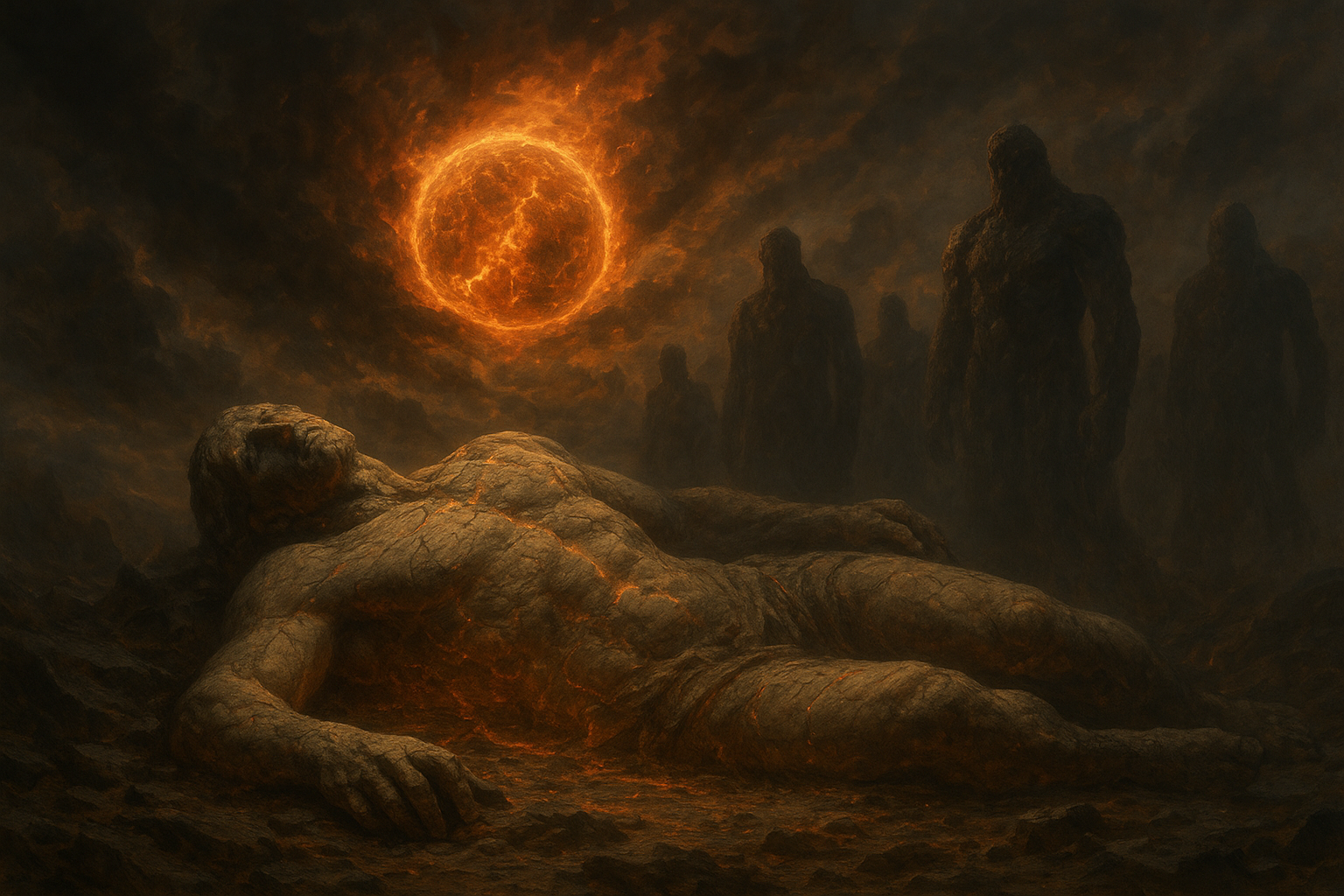
  • The Titan’s Funeral – Mythology of Cosmic Endings

    The Titan’s Funeral – Mythology of Cosmic Endings

    In the tapestry of human culture, end-of-the-world myths captivate our imagination, exploring themes of destruction, renewal, and the cyclical nature of existence. From Norse Ragnarök to the Hindu great disillusion, these narratives weave cosmic endings into the stories of gods and giants. Within this rich tradition, the concept of a “Titan’s Funeral” stands as a symbolic representation of the ultimate sacrifice and rebirth.

    The Titan Archetype in Mythology

    Titans play a central role in many mythologies as primordial beings embodying great power and vast potential. In Greek mythology, Titans are the children of Uranus (Sky) and Gaia (Earth). They once reigned supreme before being overthrown by the Olympian gods. Such tales echo themes of divine conflict and transition, typical of myths addressing cosmic order and chaos.

    The Greek poet Hesiod, in his work Theogony, describes the dramatic battles between Titans and Olympians, known as the Titanomachy. After their defeat, many Titans were cast into Tartarus, a deep abyss used as a dungeon of torment and suffering for the wicked.

    “…hold the ground, many-rooted and shade-mountainous Olympus. But these, banished far from Heaven’s everlasting gods, are in the froggy gulf of deep Tartarus.”

    Cosmic Endings across Cultures

    While the Titans’ saga may not explicitly describe a “funeral,” the idea aligns with the broader theme of cosmic endings. Let’s explore similar motifs across different mythologies:

    • Norse Mythology:

      Ragnarök, the prophesied end of the world, involves a series of events including a great battle, natural disasters, and the submersion of the world. Here, gods, giants, and creatures like the wolf Fenrir play crucial roles. The saga describes the death of major figures such as Odin, Thor, and Loki, which might be considered a “funeral feast” that marks the end of an era.

      “There will be many hard battles, and many lost lives. Come, gather with your kin, for this is the twilight of the gods.”

    • Hindu Mythology:

      The concept of Pralaya refers to the cyclical dissolution of the universe, with all creation submerged until the next cycle of existence begins. In these spans, divine entities like Vishnu take on roles framing cosmic destruction and renewal, resonating with the notion of cosmic endings.

      “When creation becomes wild and unpure, when the best becomes the worst, then I come to destroy the unfaithful and protect the faithful.”

    • Egyptian Mythology:

      The legend of Osiris, the god of the afterlife, fertility, and resurrection, blends death and rebirth. Osiris’s death and resurrection could symbolize the cycle of life and rebirth inherent in cosmic transformations.

      “I am Osiris, who is enduring in the land of the living, forever.”

    Symbolism of the Titan’s Funeral

    The concept of a Titan’s Funeral can be viewed symbolically as acknowledging the death of an order, thus paving the way for new beginnings. The funeral signifies:

    • Endings and Purity: Just as a funeral marks the end of a life, this concept symbolizes the ultimate cessation of a previous cosmic phase.
    • Sacrifice and Transformation: The demise of Titans and deities alike symbolizes great sacrifices leading to transformational processes, where endings are necessities for births of new eras.
    • Hope and Renewal: Death of titanic figures is not simply end; it signals hope, insisting that creation is cyclical and one end births new possibilities.

    Titanic Rebirth in Modern Culture

    Modern storytelling continues to draw inspiration from such mythologies, particularly seen in books, films, and art. This cultural lineage emphasizes unavoidable endings and embraces the hope for renewal. For instance, works like J.R.R. Tolkien’s The Lord of the Rings, with its ages of men and elves, and the narrative arc of Game of Thrones, with its intricate power struggles and prevailing motifs of ice and fire, echo these themes of cosmic rebirth.

    The Enduring Legacy of Cosmic Mythologies

    Ultimately, these mythologies offer not only narratives of destruction and despair but narratives rich with meaning and inspiration. They remind humanity that while calamity seems inevitable, what follows the last chapter is an endless opportunity for rebirth and creation. Perhaps the Titan’s Funeral is not a story of finality but one of sustained hope and renewal, encouraging new growth from the ashes of the old.

    Conclusion

    Across cultures and times, the death of giants like Titans and the circumstance of cosmic endings reign unto the ethos of creation myths. They resonate with universal truths about the human experience, questioning our understanding of life and suggesting deeper reflections about endings. Through the concept of the Titan’s Funeral, humanity contemplates the mystery of existence, blending cycles of destruction with the dawn of renewal, immortalising the belief that every end is just the beginning of a new story.

  • Funeral of the Self – Anti-Consumerist Spirituality

    Funeral of the Self – Anti-Consumerist Spirituality

    Funeral of the Self: Embracing Anti-Consumerist Spirituality

    In a world where materialism and consumerism often dictate the rhythm of life, a spiritual journey dubbed the “Funeral of the Self” seeks to dismantle the ego and the relentless pursuit of material possessions. This anti-consumerist movement emphasizes simplicity, mindfulness, and the reflection on one’s true purpose beyond the accumulation of goods.

    The Rise of Anti-Consumerist Thought

    The “Funeral of the Self” concept is not a call for extreme asceticism but an awareness of the limitations and inner emptiness that often accompany consumerism. The philosophy encourages individuals to metaphorically “bury” their materialistic inclinations in order to foster a more meaningful and fulfilling existence. This perspective draws inspiration from various spiritual and philosophical sources:

    • Buddhism: Central to Buddhist teachings is the understanding that attachment leads to suffering. By relinquishing attachment to material goods, individuals can potentially reduce personal suffering and attain a greater state of inner peace.
    • Stoicism: As philosopher Seneca put it, “It is not the man who has too little, but the man who craves more, that is poor.” Stoicism champions the idea of self-control and the cultivation of virtues over the pursuit of external wealth.
    • Minimalism: The minimalism movement, often associated with millennials, advocates for living with less. This lifestyle seeks to refocus priorities on experiences and relationships rather than possessions.

    A Shift Towards Inner Fulfillment

    This spiritual approach encourages individuals to assess their lives beyond the clutter of consumerism. As noted by The New York Times, “Many are seeking meaning and fulfillment in realms untouched by material goods, exploring practices such as meditation, communal living, and voluntary simplicity.” These practices are thought to cultivate an environment where the authentic self can thrive.

    Practical Steps to Embrace Anti-Consumerism

    Adopting this spiritual path involves a conscious effort to reevaluate one’s values and habits. Here are some practical steps:

    • Simplify: Declutter physical spaces and focus on what is truly necessary.
    • Mindful Consumption: Before purchasing, consider the need and impact of the item.
    • Reflect on Purpose: Regular meditation or journaling can help in understanding one’s true desires and purpose beyond material needs.
    • Community Engagement: Engage with others on similar paths for support and shared experiences.

    The “Funeral of the Self” is not just a rejection of consumerism, but a transformative journey towards a life of greater intention and spiritual wealth. As we navigate today’s consumer-driven culture, this movement provides a compelling pathway towards inner liberation and authentic living.