Tag: galactic

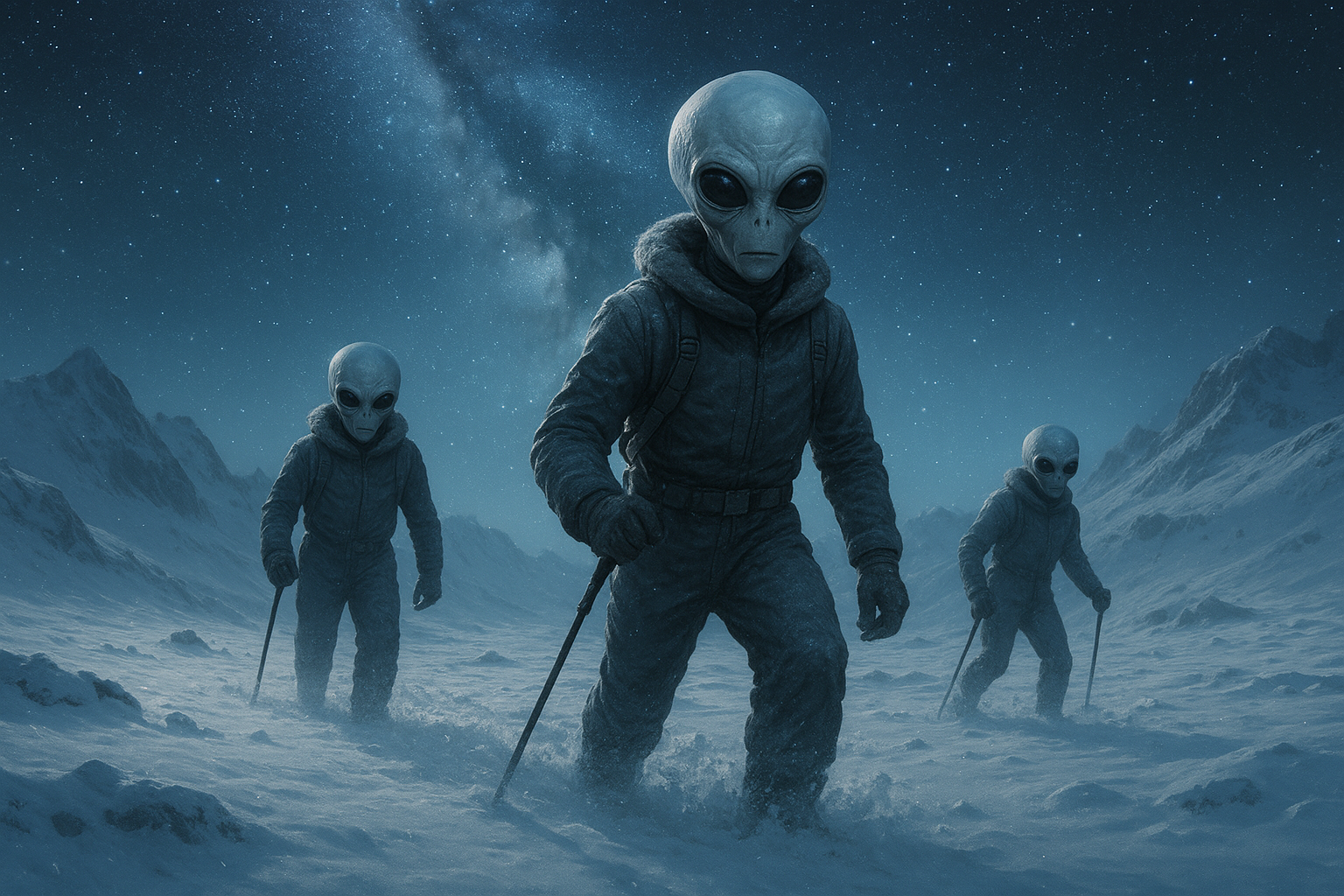
  • Galactic Snow Travelers – Aliens of the Cold Void

    Galactic Snow Travelers – Aliens of the Cold Void

    In the unfathomable expanse of the universe, where the void is punctuated by sparse worlds of unimaginable conditions, there exists the concept of the Galactic Snow Travelers. These hypothetical extraterrestrial beings have piqued the imagination of scientists and enthusiasts alike, inspired by both scientific discovery and science fiction. These imagined denizens of icy realms challenge our understanding of where life can exist and how it can adapt to extremities beyond our earthly paradigm.

    The Science of Icy Exoplanets

    To appreciate the possibility of life in the cold void, one must first understand the nature of icy exoplanets. These planets, which are located in the outer regions of their solar systems, are often characterized by frozen surfaces, deep subsurface oceans, or thick atmospheres rich in volatile ices. A prime example within our own solar system includes the Jovian moon Europa, which is believed to harbor a subsurface ocean beneath its icy crust.

    According to NASA, “Europa is thought to have an iron core, a rocky mantle, and an ocean of salty water beneath a shell of ice,” suggesting that while the surface is inhospitable, the ocean beneath might be capable of supporting life (source).

    Galactic Snow Travelers: A Thought Experiment

    Imagine, if you will, a species that thrives in these frigid environments. The Galactic Snow Travelers might possess unique adaptations that allow them to live, hunt, and reproduce in the extreme cold. Here are some speculative adaptations that might make their existence possible:

    • Thermal Adaptation: Much like our Earth’s extremophiles, these beings could have proteins that operate optimally at low temperatures, preventing their cells from freezing.
    • Anti-Freeze Biochemistry: Similar to certain fish in Earth’s polar regions, they might have blood or fluids containing natural antifreeze compounds, allowing them to remain active in sub-zero environments.
    • Energy Derived from Chemical Reactions: Rather than relying on solar energy, which is sparse in such distant worlds, they might derive energy from chemical reactions occurring beneath ice layers, akin to chemosynthesis observed in deep-sea Earth vents.
    • Reflective or Insulating Skin: To minimize heat loss, their skin or scales might possess properties that reflect infrared radiation or provide excellent insulation.

    Cultural and Technological Implications

    While physiological adaptations are a staple of speculative biology, the cultural and technological implications of these snow travelers are equally intriguing. These beings might develop unique technologies suited to their icy homes. Consider the following possibilities:

    • Ice-Based Construction: Structures built entirely from ice, utilizing the abundant material in their surroundings much like human pioneers in cold regions utilized ice and snow to build shelters.
    • Thermal Manipulation Tools: Advanced tools that can manipulate heat at a molecular level, allowing them to carve ice, travel across frozen expanses, or even communicate via thermal signals.
    • Cultural Significance of Ice: Ice might hold symbolic or spiritual significance, perhaps integral to their art, mythology, or even governance systems.

    The Search for Cold-Life Biosignatures

    The quest to discover such life is intensely linked to our search for biosignatures on icy exoplanets or moons. Scientists employ several indirect methods to detect signs of life or habitable conditions. These include:

    • Spectroscopy: By examining the light absorption properties of a planet’s atmosphere, researchers can identify chemicals like methane or oxygen that might suggest biological activity.
    • Seismic Measurements: On moons like Europa, measuring the ice’s response to gravitational interactions can help infer the presence of subsurface oceans.
    • Robotic Explorations: Missions like Europa Clipper set to launch in the 2020s aim to investigate Jovian moons directly, searching for signs of life beneath the ice (source).

    The Philosophical and Ethical Dimensions

    The potential discovery of such life forms raises profound philosophical questions. What does it mean for humanity to find life that has evolved entirely separately from Earth? How would this affect our understanding of life as a universal phenomenon? Furthermore, the ethical implications of interacting with such alien life are bound to spark intense debate:

    “Whether we encounter microbial life or an advanced civilization, the existence of aliens would provide crucial insights into our own place in the cosmos.” – Dr. Neil deGrasse Tyson

    Would our interactions harm these pristine environments or potentially threaten their existence? The considerations are complex and require humanity to tread carefully in our pursuit of knowledge.

    Conclusion

    The idea of Galactic Snow Travelers challenges the imagination and stretches our understanding of life’s adaptability. While still a product of speculative fiction and science, it inspires a reevaluation of life’s potential distribution throughout the universe. As we step closer to exploring these frozen frontiers, the prospect of discovering life in the cold void remains a tantalizing question that might redefine what it means to be alive.

    In a universe as vast and varied as ours, the concept of Galactic Snow Travelers reminds us that life might find a way in the most unexpected of places, waiting quietly beneath an icy surface, dreaming of stars.
  • Galactic Feather-Folk – A Friendly Introduction

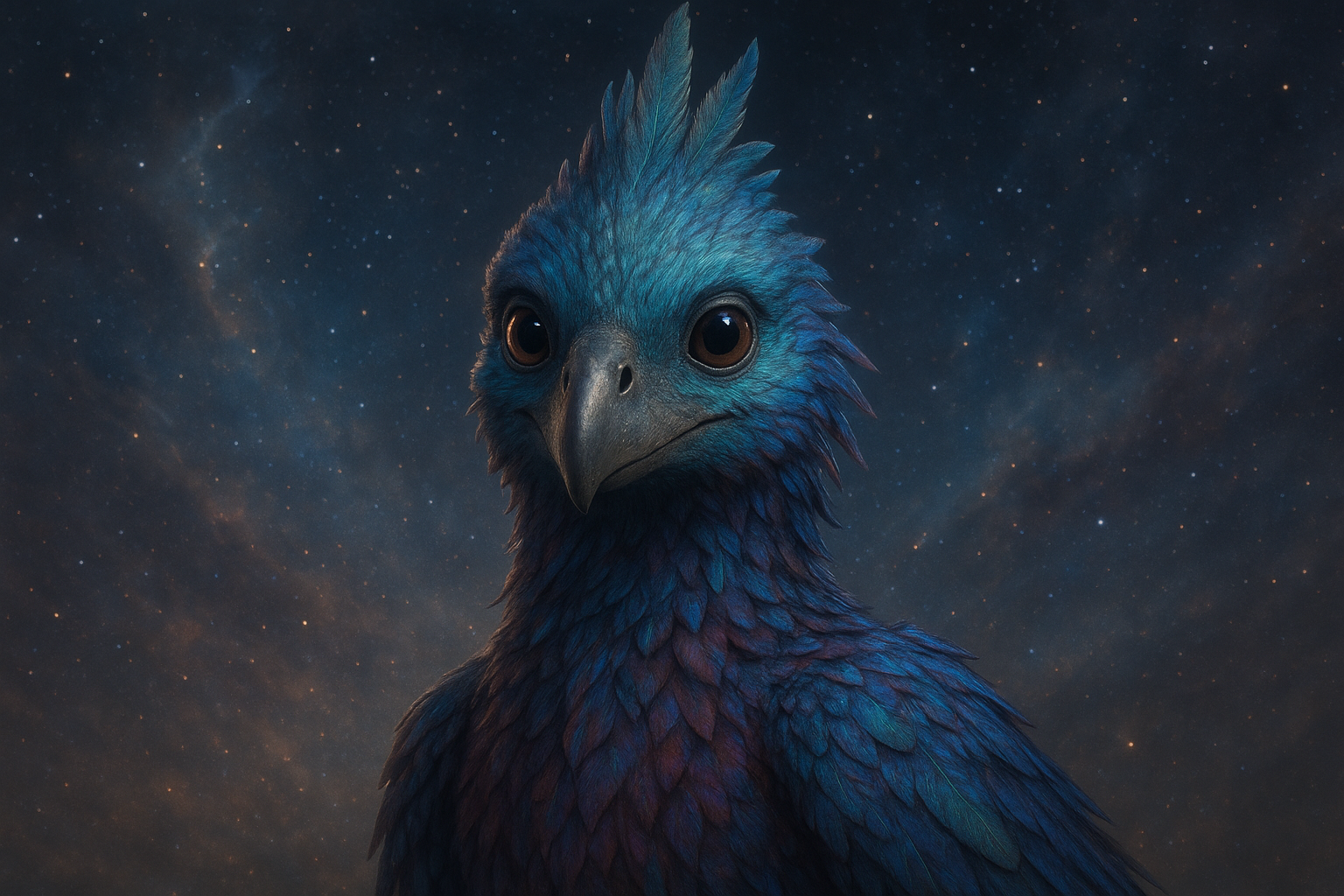
    Galactic Feather-Folk – A Friendly Introduction

    As we gaze up into the endless cosmos, we often wonder if we are alone. Yet, tales of the Galactic Feather-Folk, intriguing creatures said to dwell among the stars, awaken our imagination and offer a delightful curiosity into the possibilities of intelligent life beyond Earth.

    Who Are the Galactic Feather-Folk?

    The Galactic Feather-Folk are depicted as vibrant beings, draped in iridescent feathers with hues that shift and shimmer with their every movement. These mythical entities are believed to possess advanced wisdom and a penchant for peace, harmony, and cosmic exploration.

    “The universe is full of magical things, patiently waiting for our wits to grow sharper.” – Eden Phillpotts

    With their imaginary roots deeply embedded in various cultures’ folklores and speculative science fiction, the Feather-Folk capture the essence of intelligent avians who might soar from planet to planet on wings of curiosity and kindness.

    Attributes and Abilities

    • Empathic Communication: The Feather-Folk are said to communicate through a sophisticated form of empathic telepathy, connecting with others’ emotions rather than vocal sounds.
    • Cosmic Navigation: Legend claims they possess an innate ability to navigate the cosmic seas, reading the stars as one might read a book.
    • Planetary Ambassadors: As interstellar diplomats, they foster peace between planets, bridging gaps with their deep understanding of sentient life across galaxies.

    The Cosmic Connection

    The stories of the Galactic Feather-Folk inspire us to ponder not just the wonders of the universe, but also the bonds we could potentially share with extraterrestrial beings. Could a bridge of understanding await us out there, amid the stars?

    In our modern era, where astronomical endeavors are rapidly advancing, the lore of the Galactic Feather-Folk serves as a captivating muse. These tales encourage humanity to seek knowledge and foster peace—bringing us closer to a real cosmic community.

    Learn more about the search for extraterrestrial life with SETI.

    Conclusion

    The allure of the Galactic Feather-Folk lies in their representation of hope, curiosity, and harmony. While they may remain fictional, for now, they embody our aspirations for a universe filled with awe-inspiring beauty and boundless friendship.

    “The cosmos is within us. We are made of star-stuff. We are a way for the universe to know itself.” – Carl Sagan

    Whether real or imagined, the Galactic Feather-Folk remind us of the infinite possibilities that lie beyond our skies, whispering a promise of kinship among the stars.

  • Galactic Cannibalism – When Stars Are Consumed by Other Stars

    Galactic Cannibalism – When Stars Are Consumed by Other Stars

    Galactic Cannibalism: When Stars Are Consumed by Other Stars

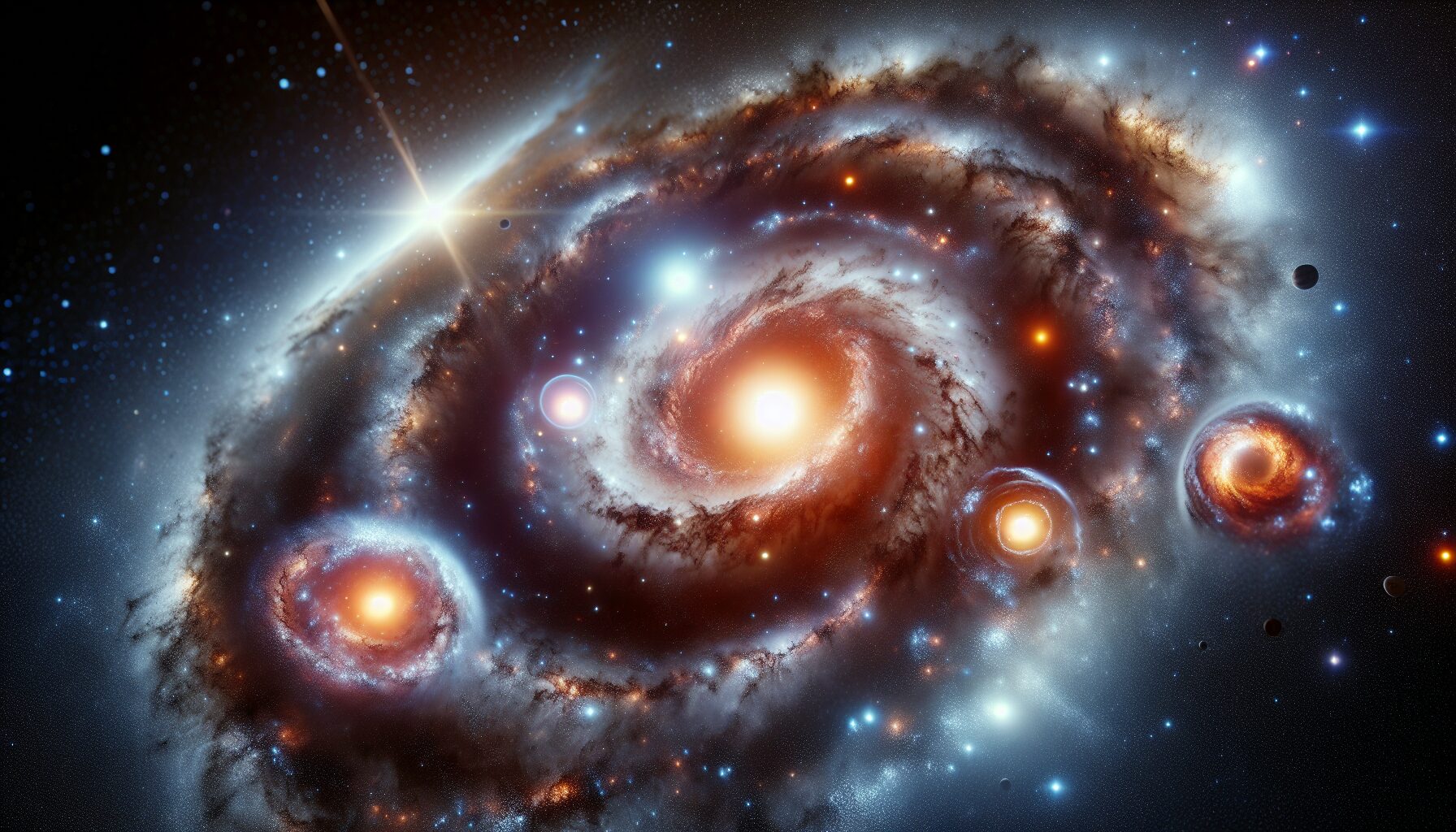
    In the vast universe, the interactions between celestial bodies can sometimes result in phenomenal cosmic events. Among these intriguing phenomena, galactic cannibalism stands out as an evocative term capturing the violent and transformative processes by which galaxies consume one another. But, how often does it happen that entire stars are swallowed in this celestial banquet?

    Understanding Galactic Cannibalism

    At its core, galactic cannibalism refers to the process by which a larger galaxy absorbs a smaller one. This process often unfolds over billions of years and can significantly alter the structure and composition of the absorbing galaxy. But why does this happen?

    • Galactic cannibalism is primarily driven by gravitational forces. As galaxies move through space, they are bound by gravity, which can pull them together, especially when they are in close proximity.
    • When galaxies collide or come close enough, the gravitational pull becomes strong enough to draw stars, gas, and dust from the smaller galaxy into the larger one.
    • This process leads to stellar mergers, formation of new stars, and the enrichment of the galactic halo with new materials.

    Do Stars Really Get Consumed?

    The term “consumed” might be a bit misleading when speaking of stars in the context of galactic cannibalism. Stars themselves are not literally devoured like food; rather, they are incorporated into the structure of the larger galaxy during the merging process. Here’s how:

    • As the galaxies merge, stars from the smaller galaxy are stripped away and become part of the larger galaxy’s halo, bulge, or disk through dynamic interactions.
    • Some stars may end up in newly formed tidal streams—long, thin regions of stars located on the periphery of galaxies—indicating the path of a disrupted galaxy.
    • In more extreme cases, stellar collisions can occur, though they are typically rare even in densely packed galaxies.

    The Evidence: Galactic Archaeology

    Galactic cannibalism is not just a theoretical concept—it is an observable phenomenon. Astronomers have gathered substantial evidence through observations and simulations that illustrate how galaxies grow and evolve.

    “The Milky Way is currently cannibalizing several smaller galaxies, including the Sagittarius Dwarf Spheroidal Galaxy.” – Linda Smith, a researcher at the Space Telescope Science Institute.

    Some of the most compelling evidence includes:

    • Stellar streams: These are trails of stars stripped from cannibalized galaxies. Observations of streams around our own Milky Way reveal ongoing mergers.
    • Computer simulations: Simulations that recreate the gravitational interactions between galaxies support the existence of tidal streams and other observable features.
    • Galactic bulges and halos: Many galaxies have thick halos and bulges containing older stars, indicative of past mergers and a history of cannibalism.

    Impact of Galactic Cannibalism

    While destructive in nature, galactic cannibalism is a pivotal force shaping the universe. The impacts are manifold:

    • Star formation: The influx of gas during mergers can trigger starburst events, leading to the birth of new stars.
    • Evolution: Galactic cannibalism plays a significant role in galaxy evolution, helping smaller galaxies coalesce into massive elliptical galaxies.
    • Black holes: The collision of galaxies can lead to the mergers of supermassive black holes, contributing to their growth and potentially impacting galaxy dynamics.

    Astronomer Kathryn Johnston states in Scientific American, “The Milky Way has the habit of tearing apart and ingesting its celestial companions, leaving recognizable traces far from its own center.”

    The Future of Galactic Cannibalism

    The universe continues to evolve, and with it, the dance of galaxies. Our own Milky Way is on course to merge with the Andromeda Galaxy in approximately 4.5 billion years. What can we expect?

    • The resulting merger is expected to create an entirely new galaxy, often referred to as Milkomeda or Milkdromeda.
    • This merger will redefine the local galactic group, creating vast tidal tails and likely sparking new waves of star formation.
    • While the event will be spectacular, the vast distances between stars mean individual stellar collisions are unlikely, ensuring the Sun and solar system face little direct threat.

    Conclusion

    Galactic cannibalism, far from being a metaphor for cosmic destruction, represents a fundamental process of creation and transformation. Through the complex dance of gravitational attraction, galaxies evolve, merge, and transform into new cosmic structures.

    As we uncover more about these processes, we gain crucial insights into the dynamic nature of the universe and our own galactic origins—reminding us of the ever-changing and interconnected cosmos we inhabit.