Tag: gods

  • The Hollow Pantheon Returns – Myth and Vanishing Gods

    The Hollow Pantheon Returns – Myth and Vanishing Gods

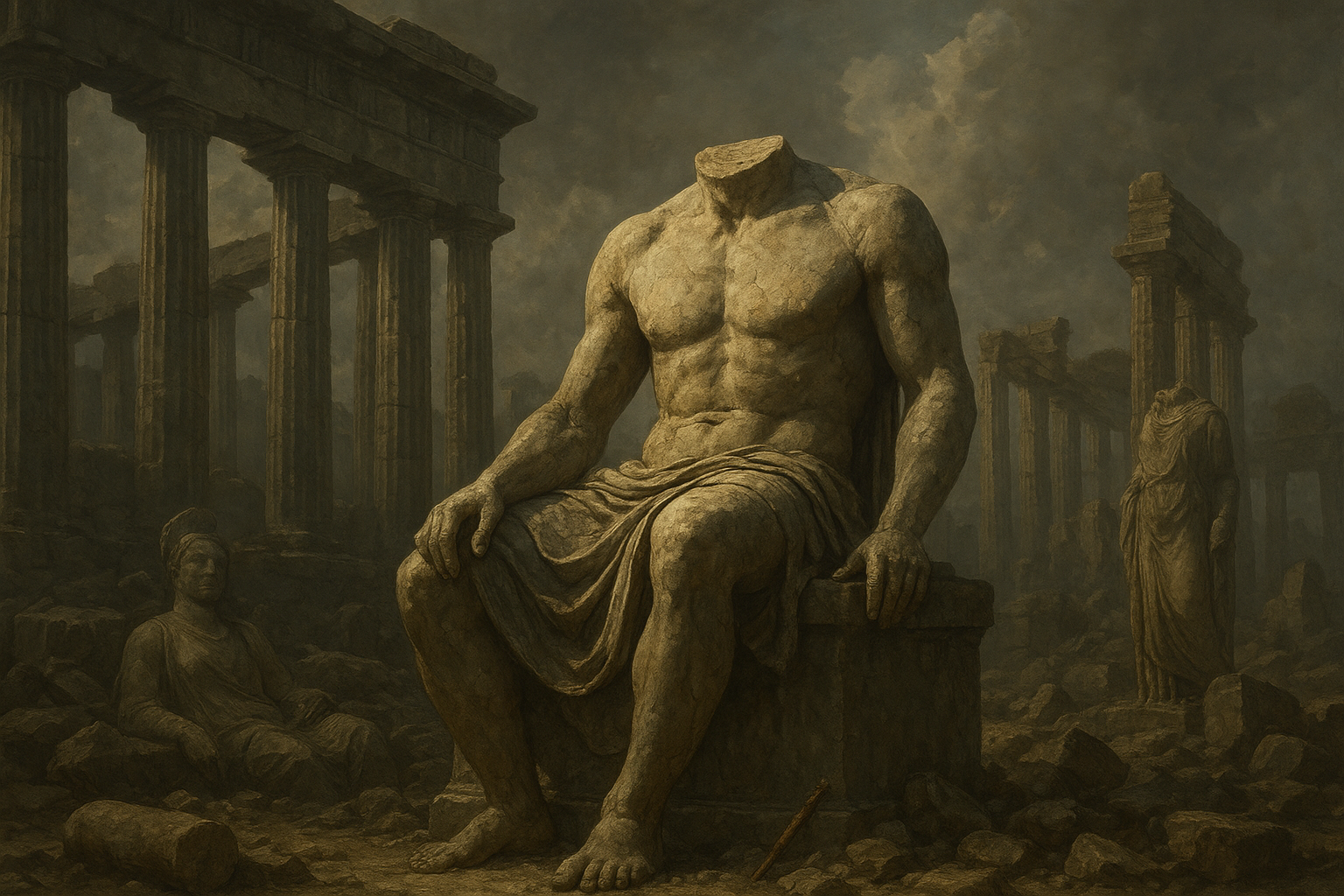
    Mythology has long held a mirror to human societies, reflecting cultural values and existential questions while explaining the mysteries of nature and the universe. Yet, as time progresses, the once held esteemed gods of ancient pantheons have faded from the collective consciousness. In an era increasingly dominated by science and empirical evidence, the allure of ancient myths begs the question: what becomes of these myths and their gods?

    The Rise and Influence of Mythological Pantheons

    Throughout history, civilizations have crafted elaborate mythologies to comprehend the enigmas of existence. From the complex deities of the ancient Greeks to the divine dynasties of Egypt and the Norse gods standing proud in Scandinavia, myth served as a bridge between humanity and the unknown.

    • Greek Pantheon: The Olympian gods – led by Zeus and including figures like Athena, Apollo, and Hera – were central to Greek culture and religion. Their narratives, chronicled by poets such as Homer and Hesiod, offered explanations for natural phenomena and social order.
    • Egyptian Deities: In Egypt, gods like Ra, the sun god, and Osiris, god of the afterlife, were integral to daily life and afterlife beliefs, with elaborate rituals supporting their worship.
    • Norse Gods: With Odin, Thor, and Freya, the Norse pantheon explored themes of war, exploration, and fate, encapsulating the harsh and dynamic life of Northern Europe.

    These gods were more than characters in ancient tales; they inspired art, governance, and moral codes, deeply interwoven into the fabric of their societies.

    The Vanishing of the Gods in a Modern Age

    With the spread of monotheism and scientific rationalism, polytheistic religions waned. The expansion of Christianity throughout Europe played a significant role in diminishing the old gods. Scholar Thomas P. Finn notes that many Norse traditions were absorbed into Christian practices, leading to a gradual eclipse of these deities.

    “The gods of yesterday pass into oblivion, and their stories become articles for historians and literary enthusiasts rather than living, breathing parts of daily life.” — Thomas P. Finn

    Moreover, the Enlightenment further propelled society away from mythological explanations. A focus on observation and empirical evidence slowly rendered mythical explanations obsolete. The gods retreated into the artworks, myths, and archaeological remnants they once animated.

    The Revival and Adaptation of Ancient Myths

    Interestingly, while these gods no longer preside over human lives, they are far from forgotten. Their myths have witnessed a resurgence, being repurposed and recontextualized for a contemporary audience. This revival largely owes itself to their adaptability and the universal themes they address.

    • Literature: Writers like Neil Gaiman have reincarnated these ancient tales in works such as “American Gods”, examining the role and evolution of myth in a secular world.
    • Film and Television: Movies such as the “Thor” series from Marvel Studios have reintroduced Norse mythology to a global audience, wrapping age-old narratives in modern storytelling.
    • Video Games: Titles like “God of War” adapt these myths into visceral experiences, attracting players to explore mythological themes interactively.

    These adaptations keep mythology alive, asserting its relevance by exploring timeless human concerns such as identity, power, and mortality.

    Myth as a Source of Cultural Identity and Moral Reflection

    Mythology serves as a repository of collective human experience and wisdom. The tales often encapsulate moral and ethical dilemmas, offering reflections pertinent even today. According to Joseph Campbell in “The Hero with a Thousand Faces”, myths are “clues to the spiritual potentialities of the human life” (Joseph Campbell, 1949).

    By examining mythological stories, modern societies can glean insights into past mentalities and values, allowing for introspection on contemporary moral frameworks. They act as a cultural compass, helping societies navigate the complexities of modern life by drawing upon age-old narratives understood and revered by ancestors.

    Conclusion: The Pantheon’s Timeless Resonance

    Though science and rationalism have usurped myth’s explanatory power, the allure of myths persists. They serve as vessels for cultural identity, artistic inspiration, and philosophical pondering. In the modern consciousness, gods may no longer hold dominion or evoke literal worship, but their symbolic potency remains undiminished. They fill a niche that logically defies extinction, resonating through time as a testament to humanity’s unending quest for understanding and meaning.

    Ultimately, the return of a hollow pantheon speaks not of resurrection but evolution. It highlights humanity’s ability to creatively reinterpret and contemporize the past, ensuring that despite their physical absence, the gods never truly vanish. They are simply reborn, reimagined by each generation, thus maintaining their significance through the ages.
  • The Vanishing Pantheon – Mythology of Dissolution

    The Vanishing Pantheon – Mythology of Dissolution

    The Vanishing Pantheon – Mythology of Dissolution

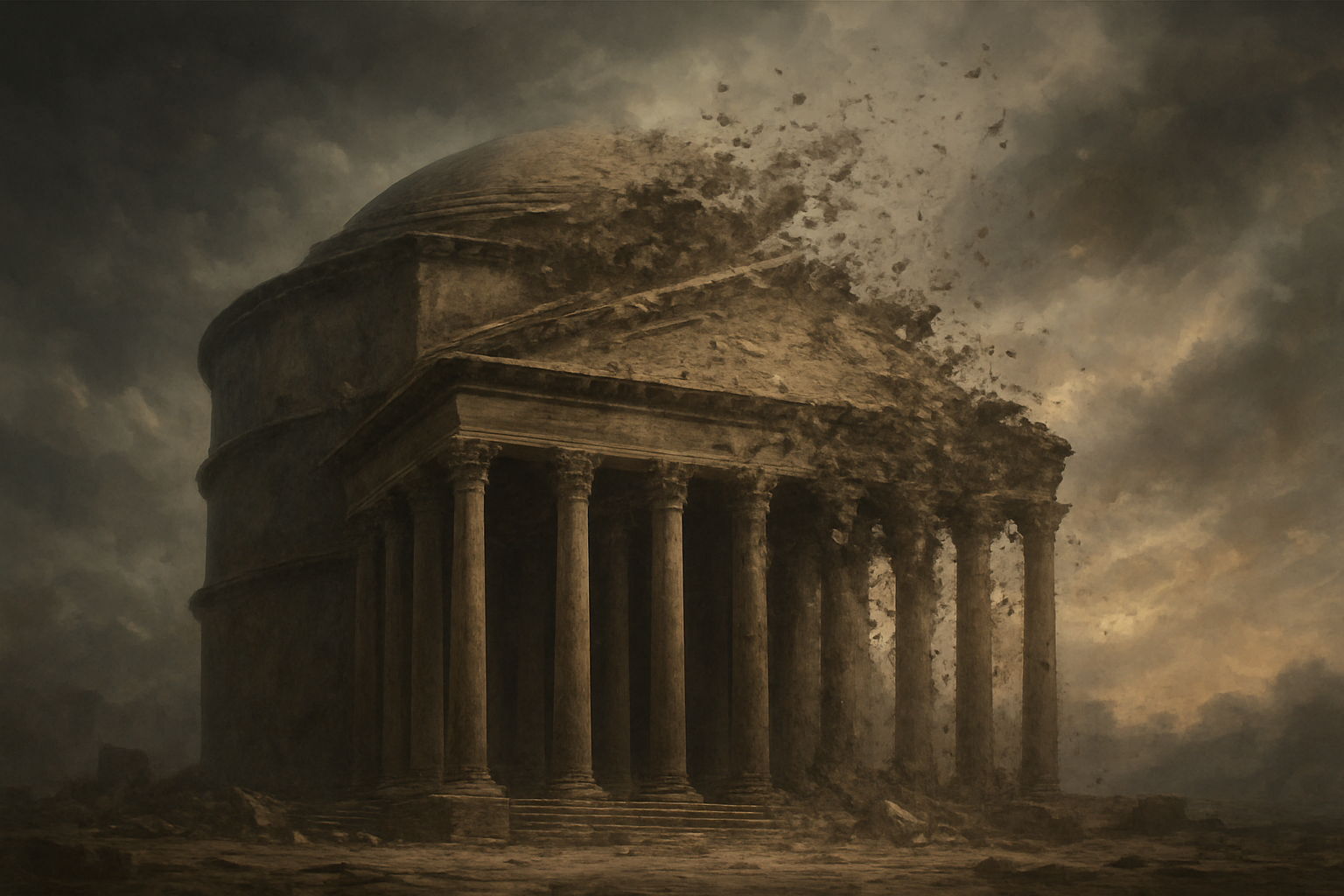
    Throughout human history, myths and legends have served as powerful lenses through which cultures interpret the mysteries of existence. As societies change, so too do their divine pantheons, sometimes expanding but often contracting, as gods and stories fade into obscurity. This phenomenon—a vanishing pantheon—is where mythologies dissolve and reshape, reflecting the evolving beliefs and priorities of civilizations.

    The Mythical Landscape

    In antiquity, civilizations like the Greeks and Romans possessed complex pantheons with gods who personified natural elements, human emotions, and societal values. These deities were integral to everyday life, with rituals and stories reinforcing their presence. As time passed, however, factors such as cultural shifts, the rise of monotheistic religions, and colonial conquests led to the disintegration or transformation of these mythologies.

    Factors Leading to the Dissolution of Pantheons

    • Religious Evolution: The rise of monotheistic faiths often resulted in the collapse or assimilation of polytheistic beliefs. For instance, the spread of Christianity throughout the Roman Empire significantly reduced the prominence of Roman gods.
    • Cultural Syncretism: As cultures interacted through trade and conquest, pantheons merged. The Egyptian and Greek integrations resulted in hybrids like the god Sarapis, reflecting both traditions.
    • Societal Change: Shifts in societal structures and priorities can render certain deities obsolete. In times of societal upheaval, such as the fall of empires, the old gods often fade away with the civilizations that worshipped them.

    A Modern Reflection

    In contemporary times, the allure of ancient mythologies persists, yet their roles have transformed. Today, these stories often serve more as cultural touchstones or inspirations for literature and film rather than as active religious beliefs. Neil Gaiman, in his novel American Gods, explores this theme, depicting old gods struggling to survive in a modern world dominated by new “gods” of technology and commerce. Gaiman’s work is a testament to the ongoing relevance and reinterpretation of myth in understanding human culture.

    “A myth is a lie that conveys a truth.”

    — Neil Gaiman

    The vanishing pantheon is not merely about loss but transformation. As the gods of old disappear into the folds of history, their stories continue to resonate, echoing the eternal human quest to find meaning in the world.

  • The Phantom Pantheon – Myth of Vanishing Gods

    The Phantom Pantheon – Myth of Vanishing Gods

    The Phantom Pantheon: Myth of Vanishing Gods

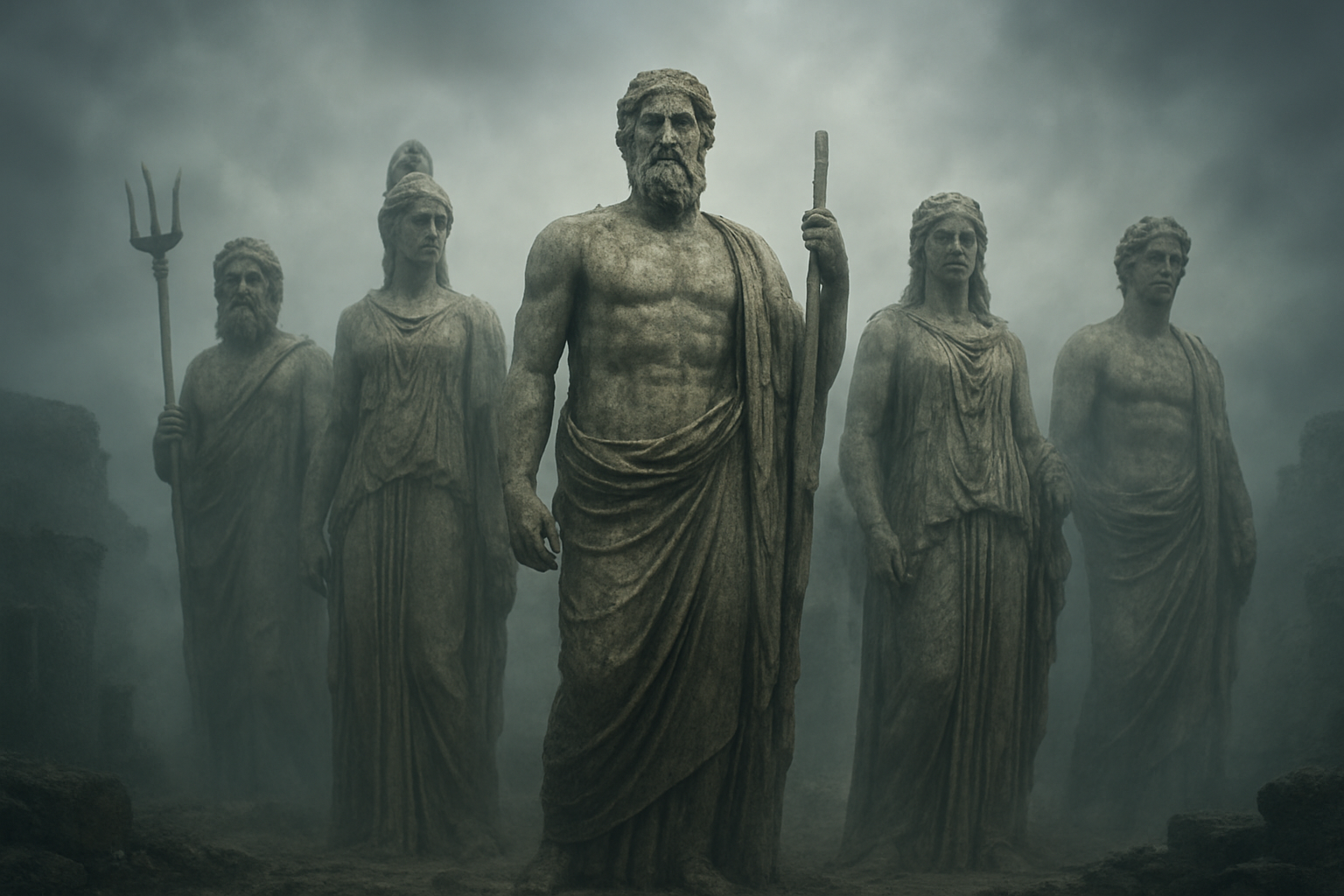
    Throughout human history, gods have played an integral role in shaping culture, morality, and civilization. However, not all deities have stood the test of time. Many gods who were once worshipped fervently have faded into obscurity, becoming part of what some call the “Phantom Pantheon.” These vanishing gods raise intriguing questions about the nature of belief, memory, and the evolution of spirituality.

    The Rise and Fall of Divine Beings

    In ancient times, polytheistic religions thrived across various cultures, each with its own pantheon of gods. As societies evolved, many of these gods slipped into the shadows, replaced by new beliefs. This phenomenon poses an interesting puzzle: why do some gods endure while others vanish?

    For instance, Ra, the sun god of ancient Egypt, was once central to Egyptian religion but receded as new religious currents, like Christianity and Islam, spread across the globe. Neil Gaiman captures the essence of this phenomenon when he writes in American Gods, “Gods die when they are forgotten.”

    The Factors Behind Vanishing Gods

    Several factors can contribute to the decline of a deity:

    • Cultural Shifts: As cultures merge and societies change, religious beliefs often evolve. For example, the Greek pantheon diminished as Roman religion grew and Christianity spread.
    • Political Influence: New political powers may enforce their own religious ideologies, leading to the abandonment of old gods. The Roman Empire’s adoption of Christianity is a classic example.
    • Changing Nature of Worship: The nature of worship itself can change, as seen in the movement from animism to organized religions with centralized gods.

    Mythological Memory: The Role of Storytelling

    Despite their disappearance from active worship, these ancient gods often continue to exist in mythological memory. Storytelling plays a crucial role in preserving their legends. The tales of Thor and Odin from Norse mythology, for instance, endure in literature and popular culture, despite the decline of Norse heathenism.

    “Myth is much more important and true than history. History is just journalism and you know how reliable that is.” – Joseph Campbell

    Campbell’s words highlight the enduring nature of myths beyond their religious origins, living on in stories and symbols.

    Modern Reflections and Reinterpretations

    Today, many ancient gods find new life in modern contexts. Pagan and neo-pagan movements have revived interest in old traditions, often reinterpreting these deities in contemporary spiritual practices.

    • Pop Culture Influence: Cinematic universes, video games, and literature breathe new life into old gods. Characters like Zeus and Athena appear in works like the Percy Jackson series, bringing ancient stories to a new audience.
    • Spiritual Revival: Groups like the Order of Bards, Ovates, and Druids focus on Celtic gods and practices, reflecting a desire to reconnect with ancestral heritage.

    The Mystery and Appeal of the Phantom Pantheon

    The concept of vanishing gods is compelling because it forces us to confront the impermanence of belief. It also raises existential questions about the nature of divinity and the human need for connection with something greater than ourselves.

    The Phantom Pantheon symbolizes the power of belief and the capacity for change inherent in human spirituality. As we navigate the complexities of modern life, these ancient stories may continue to provide insights and inspiration.

    Conclusion

    The myth of vanishing gods serves as a reminder of the fluid nature of faith through ages. While some deities have faded from immediate recollection, their essence lingers in cultural memory, art, and narrative. The Phantom Pantheon invites us to explore how spiritual endurance transcends time, offering new perspectives and guidance even in the modern era.

    Ultimately, the myth of disappearing deities resonates with the continuity of human longing for meaning, connection, and understanding in an ever-changing world.

  • The Labyrinth of the Gods – Myth and Metaphor

    The Labyrinth of the Gods – Myth and Metaphor

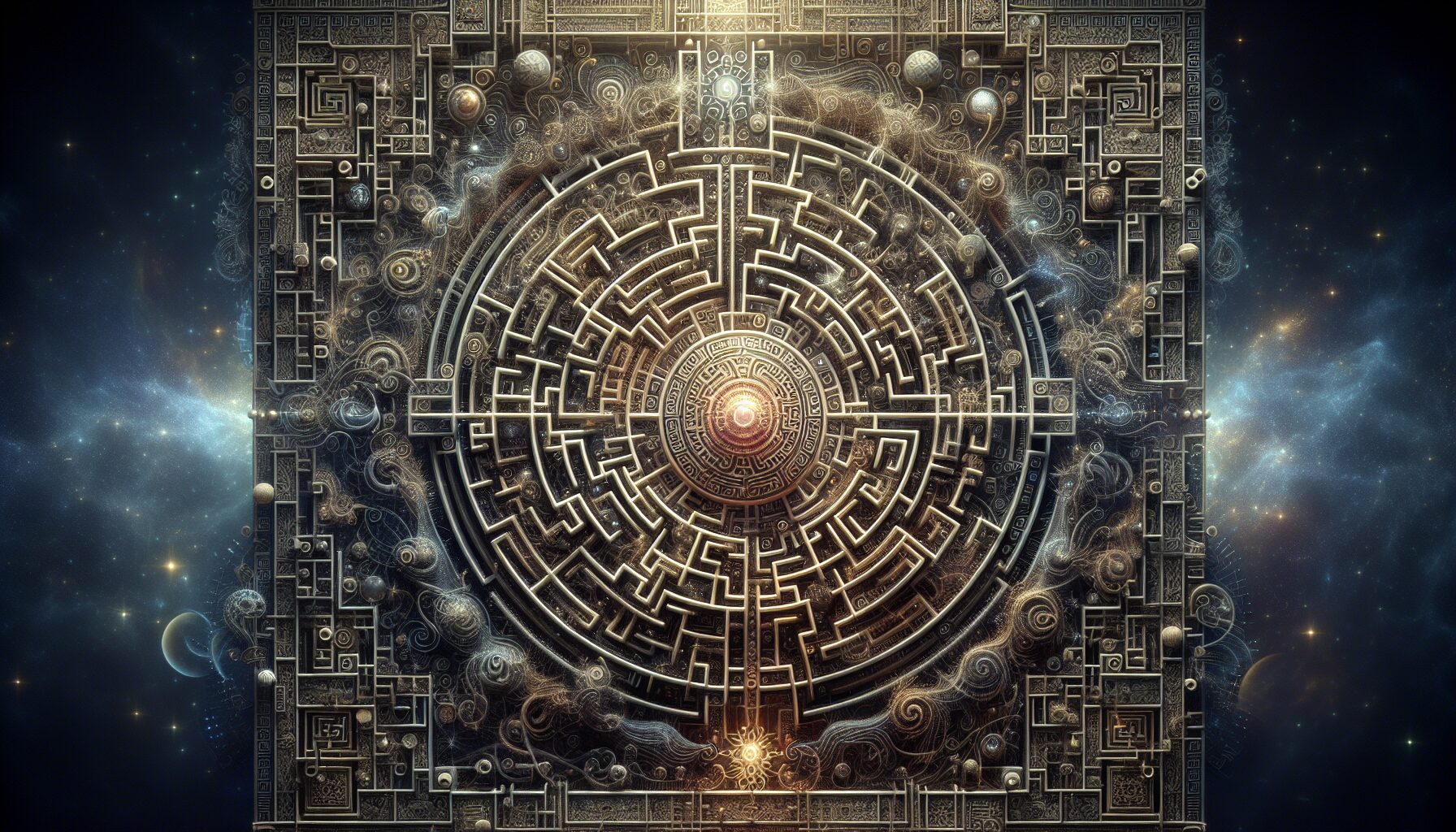
    Throughout human history, myths and metaphors have served as the guiding threads through the labyrinthine corridors of cultural identity and existential inquiry. The labyrinth, a poignant symbol that runs deep within the mythologies of various civilizations, embodies both a physical and spiritual journey toward self-discovery and understanding of the divine.

    Origins of the Labyrinth

    The most celebrated labyrinth in myth is perhaps the one on Crete, described in Greek mythology. Built by the master craftsman Daedalus, it was a bewildering double maze intended to contain the Minotaur, a creature with the body of a man and the head of a bull. This myth speaks volumes about the complexity inherent in the relationship between humans and gods, illustrating the struggle of man against fate and divine intervention.

    “In the Labyrinth, the Minotaur represents more than monster or man – it is the symbol of our potential for both destruction and rebirth,” says Joseph Campbell, a preeminent scholar of mythology.

    The Labyrinth as Metaphor

    The labyrinth also serves as a powerful metaphor for the human quest for knowledge and enlightenment. The journey through the labyrinth is akin to the journeys that individuals undertake in their personal lives – filled with twists, turns, and sometimes, daunting dead-ends. It mirrors the spiritual path, where each step is fraught with challenges that test our resolve and character.

    In literature and psychology, the labyrinth motif is often used to explore the complexities of the mind. The psychoanalyst Carl Jung viewed the labyrinth as a model of the unconscious: an intricate structure within which the self is hidden and through which one must navigate to achieve individuation. Jung’s work is profoundly woven into myriad discussions about the symbolism of the labyrinth as both a puzzle and a journey towards self-realization.

    Labyrinths Across Cultures

    The motif of the labyrinth is not restricted to Greek mythology alone. Various cultures have constructed labyrinths, each with its own unique interpretation:

    • Nordic Mythology: The Vikings carved labyrinthine designs to symbolize protection and ensure safe passage. These Troy Towns were believed to trap malevolent spirits or to confuse and fend off what was evil.
    • Native American Traditions: The Hopi people envisioned labyrinths as symbolic of Mother Earth’s womb, highlighting birth, life, death, and rebirth.
    • Christian Symbolism: In the Middle Ages, labyrinths were used in cathedrals, such as the famous Chartres Cathedral in France, serving as a path for pilgrimage and reflecting the soul’s journey toward salvation.

    Relevance in Modern Mythology and Media

    The labyrinth continues to be a prevalent theme in modern storytelling and media, serving as a universal symbol of introspection and transformation. From novels and films to interactive video games, the motif remains deeply embedded in narratives where protagonists must navigate their internal and external labyrinths to emerge changed or enlightened.

    Take, for instance, the film Pan’s Labyrinth by director Guillermo del Toro. It deftly intertwines mythical elements with reality, positioning the labyrinth as a place of moral and spiritual testing, a place where the boundaries between the real and the surreal blur.

    “I have a complicated relationship with fantasy and mythology, and what I love about the image of the labyrinth is that it is both a trap and a way out,” explains del Toro (IndieWire).

    The Timeless Appeal of the Labyrinth

    The labyrinth’s endearing allure lies in its dual purpose: it serves as both a dwelling of transformation and an unraveling of the divine mystery. As we venture through our personal labyrinths, the myths and metaphors invite us to reflect upon our own journeys, much like Theseus, guided by the thread of Ariadne, mustered the courage to navigate darkness and confrontation with the Minotaur.

    In this ongoing dialogue between the metaphysical and the tangible, the labyrinth remains a testament to the ever-evolving relationship between mankind, its inner psyche, and the divine. It bridges the age-old stories of gods and heroes with our modern quest for meaning, identity, and connection.

  • Echoes of Forgotten Gods – Archetypes Reawakened

    Echoes of Forgotten Gods – Archetypes Reawakened

    For centuries, the concept of universal archetypes has captivated the minds of psychologists, mythologists, and philosophers alike. These archetypes, deeply embedded in the collective unconscious, resurface time and again, revealing the profound resonance they hold within human culture and psyche. As we navigate modernity, could the echoes of forgotten gods be a manifestation of these timeless patterns?

    The Nature of Archetypes

    Archetypes were first prominently introduced by Carl Jung, the Swiss psychiatrist and psychoanalyst who worked closely with Sigmund Freud. Jung defined archetypes as “universal, archaic symbols and images that derive from the collective unconscious”—structures shared by people all over the world (The Carl Jung Website).

    • The Hero: This archetype embarks on an adventurous quest, exemplifying courage and resilience.
    • The Mother: A nurturing, life-giving figure often associated with creation and growth.
    • The Trickster: Known for their cleverness and deceit, often serving as a catalyst for change.

    These archetypes play a foundational role in shaping narratives, whether they’re ancient myths or contemporary stories. They forge a connection between the human experience and the spiritual, transcendent aspects of life.

    Modern Reawakenings

    In today’s world, the echoes of these archetypes can be perceived in numerous ways. With the rise of superhero movies and fantastical storytelling, the Hero archetype is undeniably thriving. Characters such as Marvel’s Thor, who draws directly from Norse mythology, embody the qualities of both ancient gods and modern heroes.

    “Superheroes are modern mythology,” says Dr. Will Brooker, a professor of film and cultural studies at Kingston University, highlighting the enduring appeal and adaptability of these archetypal figures. (The Guardian)

    Psychological and Cultural Impact

    The resurgence of these archetypes in modern culture points to a psychological yearning for connection to deeper truths and shared human experiences. As Joseph Campbell, an American professor of literature known for his work in comparative mythology and religion, once remarked, “The great thing about myths is that they point beyond themselves to deeper truths.”

    By engaging with these timeless stories and characters, individuals find meaning and identity in an increasingly complex world. They serve as reminders of our intrinsic similarities, uniting us across cultures and ages.

    Thus, the echoes of forgotten gods, represented through potent archetypes, continue to wield their power, reshaping narratives and illuminating the labyrinthine pathways of the human psyche, urging us to remember and reawaken to the timeless truths they carry.