Tag: halos

  • Frozen Halo Rings – Mystical Weather Phenomena Explained

    Frozen Halo Rings – Mystical Weather Phenomena Explained

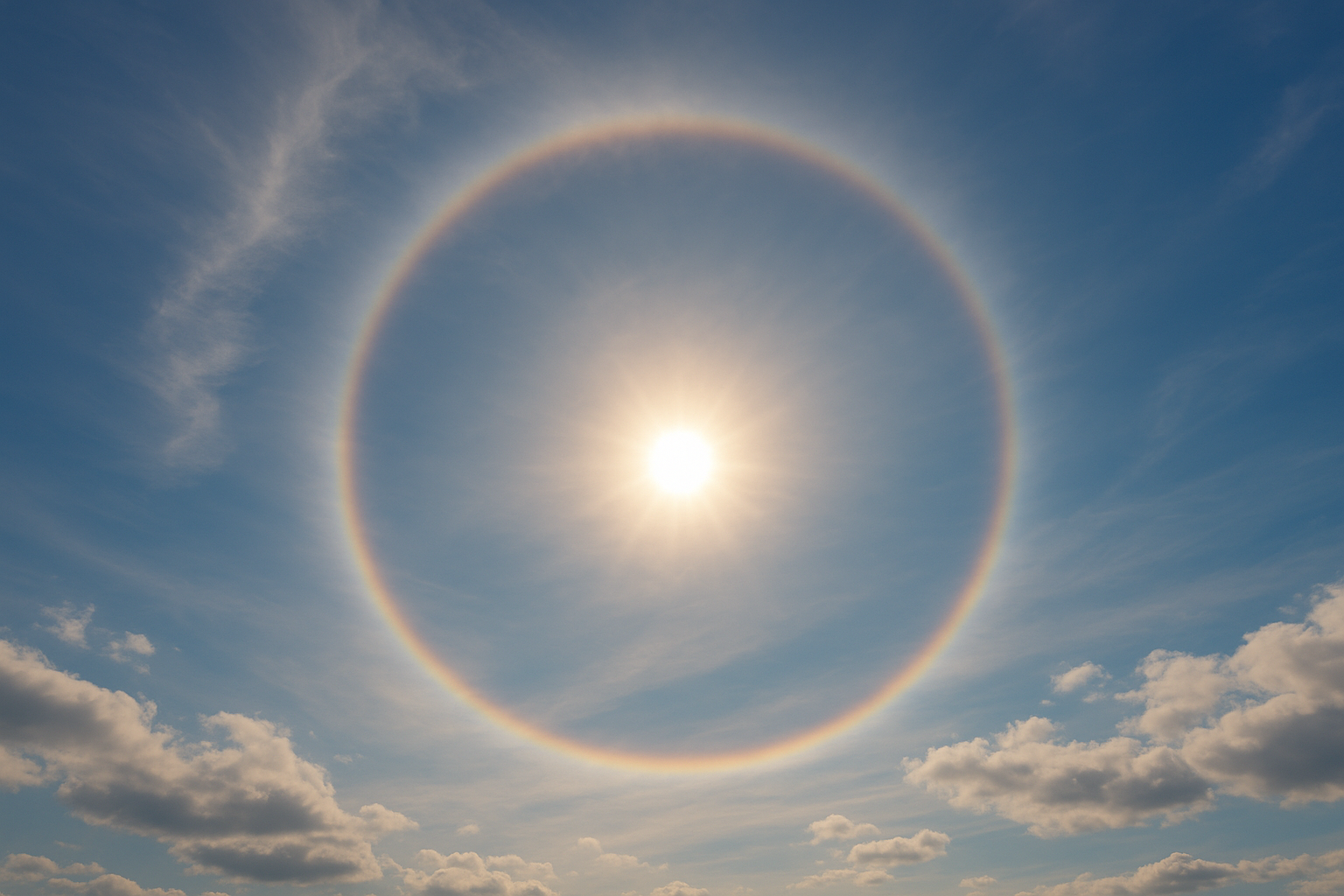
    Among the fascinating displays Mother Nature has to offer, the ethereal beauty of frozen halo rings stands out. These halo rings, with their mystical appearance, have captured human imagination and wonder throughout history. But what exactly are they, and how are they formed?

    The Science Behind Frozen Halo Rings

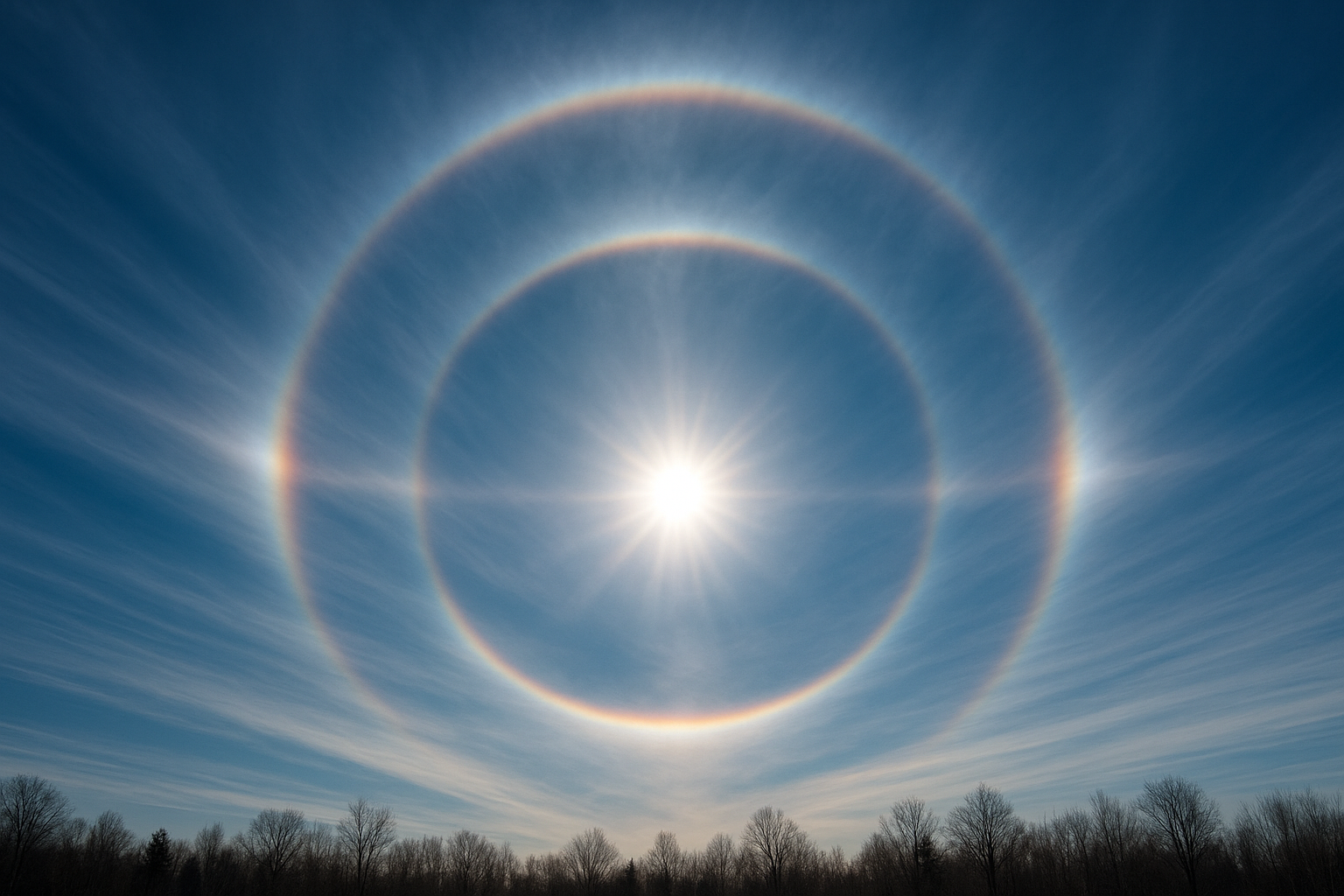
    Frozen halo rings are circular optical phenomena that encircle the sun or the moon. They occur due to the refraction, reflection, and dispersion of light through ice crystals suspended in the atmosphere. According to the American Meteorological Society, these halos typically appear when cirrostratus clouds—which are high-altitude ice crystal clouds—are present in the sky.

    • Refraction: As light passes through the hexagonal ice crystals, it is bent at a 22-degree angle. This bending of light causes the halo to be visible as a circle around the sun or moon.
    • Reflection: Some light is also internally reflected within the crystals, contributing to the brightness and defined edges of the halo.
    • Dispersion: The dispersion of light into different colors can sometimes result in the halo exhibiting a faint spectrum of colors.

    Historical and Cultural Significance

    Throughout history, frozen halo rings have been regarded as omens or mystical signs. Ancient cultures interpreted these halos as messages or warnings from gods. In a study conducted by the History Channel, researchers found that Vikings considered halos to be the shields of their gods, anticipating events of great importance.

    “Halos are a common atmospheric optical phenomenon observed all over the world, yet they never fail to capture the awe and curiosity of everyone who sees them.” — National Weather Service

    When and Where to See Frozen Halo Rings

    Frozen halo rings are most commonly seen during the winter months in polar and temperate regions, where cold temperatures and ice crystal clouds are more prevalent. However, they can appear at any time of year when the atmospheric conditions are right.

    Next time you spot a halo around the sun or moon, take a moment to appreciate this stunning atmospheric spectacle—a reminder of the beautiful intricacies of our planet’s weather systems. As science continues to unravel the mysteries behind such phenomena, our appreciation for these natural wonders only grows deeper.
  • Halo Drift – Following Light in Silent Landscapes

    Halo Drift – Following Light in Silent Landscapes

    Halo Drift – Following Light in Silent Landscapes

    Halo Drift – Following Light in Silent Landscapes

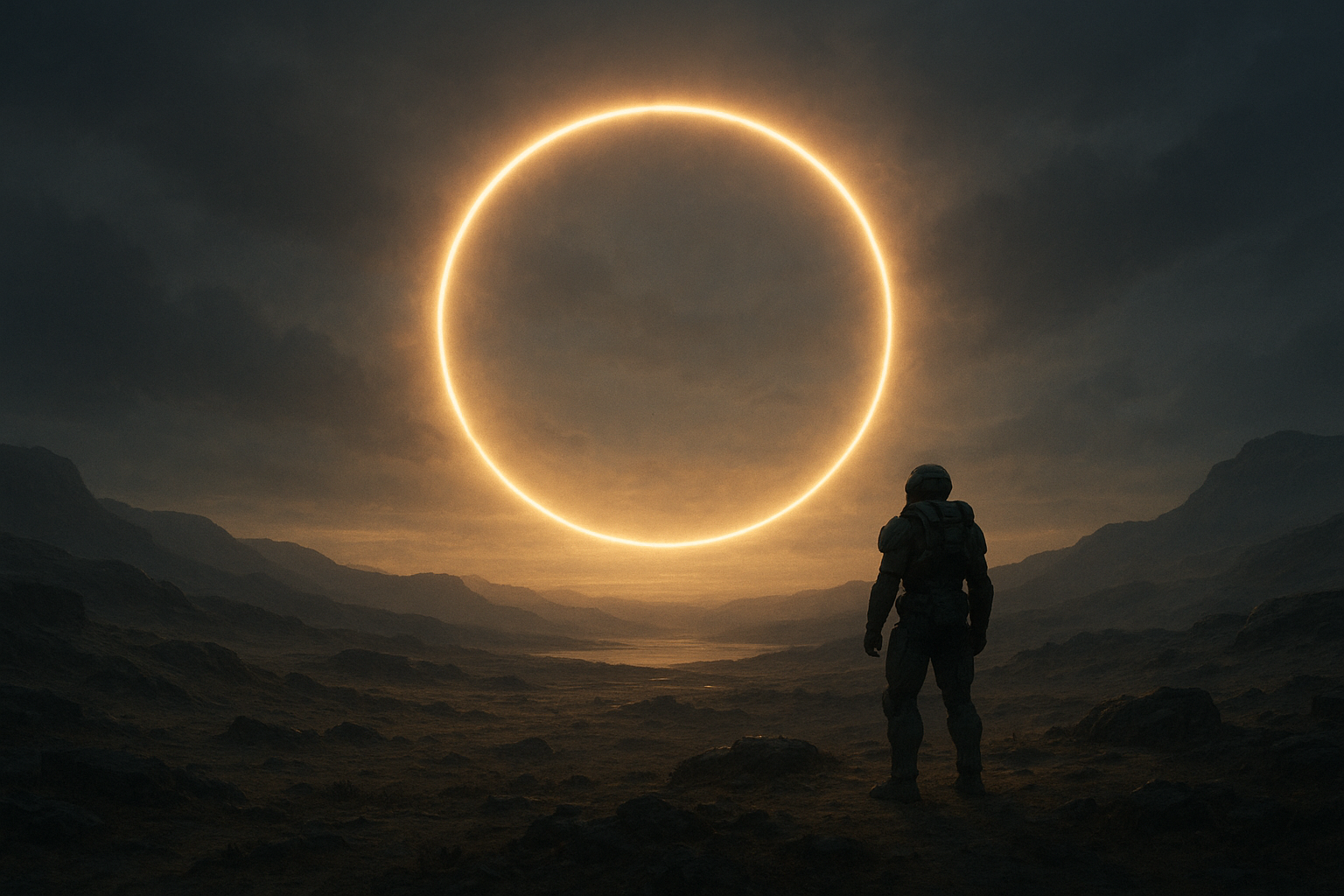
    The silent landscapes of our world often hold within them a profound beauty—a beauty that is both ethereal and ephemeral. In these landscapes, the phenomena of light takes on a unique form, known as halo drift. This article explores the enchanting concept of halo drift, a dance of light that echoes the philosophical contemplation of existence within the hushed confines of nature’s untouched domains.

    The Phenomenon of Halo Drift

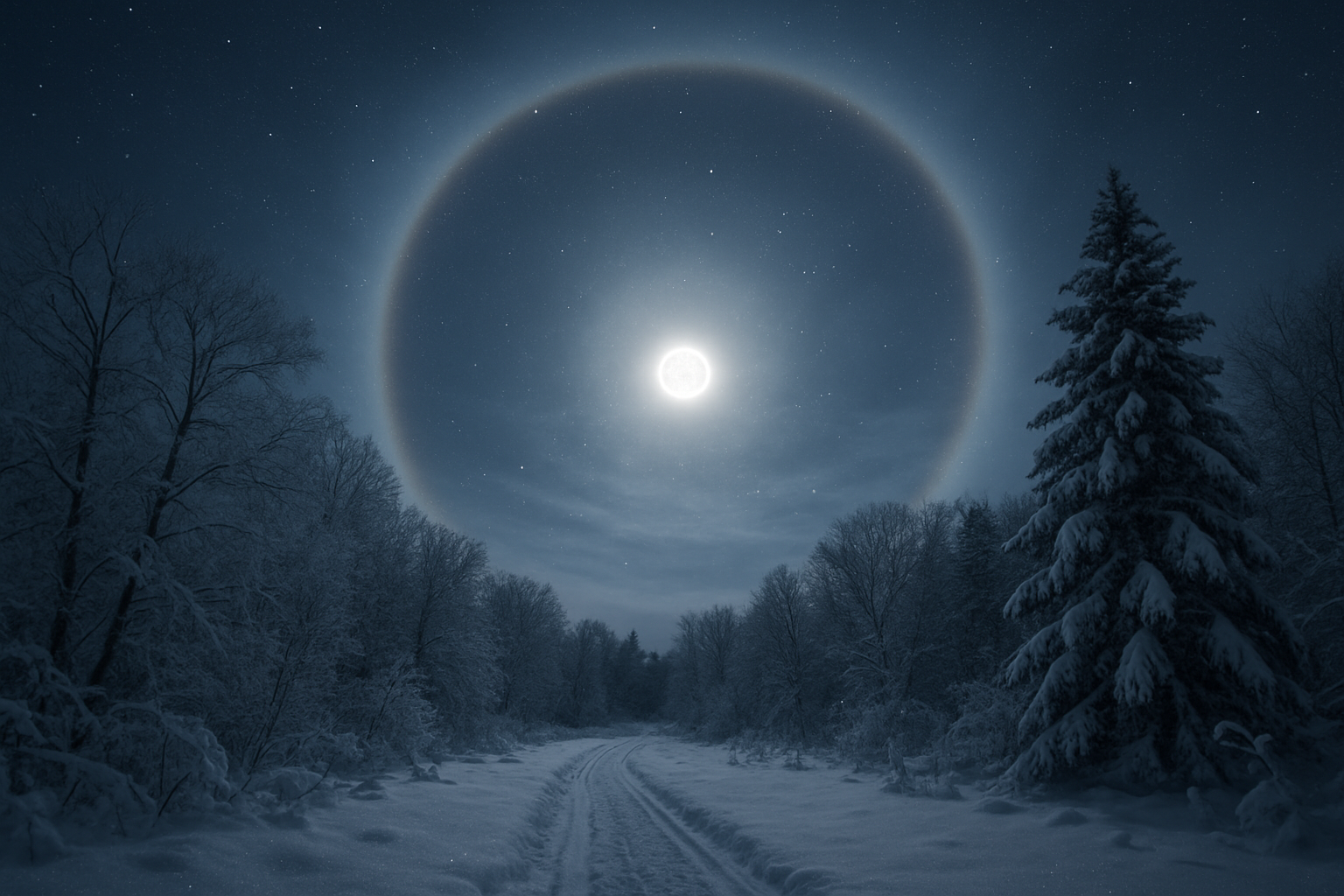
    Halo drift refers to the optical phenomena caused by the refraction, reflection, and dispersion of light through ice crystals suspended in the atmosphere. These crystals create a halo effect, illuminating landscapes in a subtle, ethereal glow. Observers often witness halos around the sun or moon, casting a serene aura over the landscape beneath.

    “Light is, quite literally, the way we see the world. By following its trails, we are led inevitably to a reconnection with nature’s silent but profound tapestries.” – An excerpt from a Princeton University research on light paths.

    Philosophical Perspectives

    The presence of halos prompts us to consider deeper philosophical questions. Viewing a halo is akin to engaging in a philosophical journey, inviting introspection and reflection. The serene beauty of a glowing halo in an otherwise stark landscape compels us to ponder our relationship with the natural world and our quest for beauty in simplicity.

    • Perception of Reality: Halos challenge our perception of reality, demonstrating that much of what we perceive depends on the presence or absence of light. Are the landscapes ultimately silent, or do halos simply reveal a hidden vibrancy?
    • Transience and Impermanence: The ephemeral nature of halo phenomena reminds us of the impermanent nature of life and beauty. The brief moments when landscapes are adorned by halos speak to the transient and ever-changing nature of existence.

    Through literature and folklore, many cultures have revered such visions as manifestations of the divine, suggesting that these natural spectacles invite contemplation on the divine essence within and around us. According to The Stanford Encyclopedia of Philosophy, beauty has historically been linked to divine harmony and the metaphysical order of the universe.

    Scientific Underpinnings

    The scientific explanation of halo drift involves the refraction of sunlight or moonlight through ice crystals floating in the troposphere. These ice crystals, typically hexagonal in shape, refract light, creating a spectrum of colors as they diffuse around the light source. The resultant halos are most commonly observed at high latitudes, where colder atmospheric conditions facilitate ice crystal formation.

    “Halos, a phenomenon born out of the union of light and ice, challenge the very limits of our understanding of atmospheric optical phenomena.” – Encyclopedia Britannica.

    The Intersection of Nature and Human Experience

    While the science of halo drift provides clarity on the optical mechanics of these phenomena, the human experience of them often surpasses explanation. This interaction highlights the deep connection between human experience and the natural world.

    • Emotional Resonance: Experiencing halo drift can evoke a deep sense of peace and wonder, drawing attention to the silent conversation happening between the natural world and the observer.
    • Artistic Inspiration: Artists and photographers have long drawn inspiration from halos, capturing their ethereal beauty on canvas and film to preserve the fleeting visual dialogue.

    Writer and poet, John Muir, often spoke of the sublimation of human spirit when faced with the purity of nature’s phenomena, as evidenced in his work where he meticulously documented the silent, yet vibrant, dialogues of light and atmosphere.

    Conclusion

    Halo drift presents itself as a dance of light across silent landscapes, inviting observers into a world where silence speaks volumes. It offers a space for contemplation, aligning itself with the philosophical ethos of finding meaning and beauty in nature’s seemingly silent whispers. As we traverse these hushed paths of light, we are reminded of the interconnectedness of all things, the transience of our moments, and the profound beauty that lies in fleeting visions.

    Halo drift thus continues to be both a scientific curiosity and a reservoir of artistic and philosophical inquiry, one that beckons us to follow the light and listen to the silence.

  • The Winter Halo Cycle – Understanding Light in the Dark

    The Winter Halo Cycle – Understanding Light in the Dark

    The winter months bring with them a magical phenomenon that captivates and mesmerizes those fortunate enough to witness it: the winter halo. These celestial circles of light, often surrounding the sun or the moon, are not just enchanting occurrences but also offer intriguing insights into atmospheric conditions.

    The Science Behind Winter Halos

    Winter halos occur when high-altitude ice crystals in cirrus clouds refract and reflect light. As sunlight or moonlight passes through these hexagonal ice crystals, it is bent at a 22-degree angle, creating a halo effect. According to the Scientific American, “ice crystals act like prisms and mirrors, refracting and reflecting light to cause different visual phenomena.”

    Types of Winter Halos

    • 22-Degree Halo: The most common type, visible as a bright circle with a radius of approximately 22 degrees around the celestial body.
    • Sundogs: Also known as parhelia, these are bright spots that appear on either side of the sun, often during sunrise or sunset.
    • Pillar of Light: Vertical shafts of light extend above and sometimes below a light source, caused by reflection of light off the surfaces of falling ice crystals.
    • Moonbows: A rare sight, these halos are similar to rainbows but appear around the moon.

    The Cultural Significance of Halos

    Beyond their scientific explanation, winter halos have long been intertwined with folklore and mythology. Historically, they have been seen as omens or heavenly signs. For instance, in Norse mythology, halos around the sun were considered harbingers of stormy weather or even divine messages from the gods.

    “Halos have been interpreted in various ways, from weather predictions to spiritual alerts, each culture adding its unique significance to the phenomenon.” – Wired

    When to Spot a Winter Halo

    The best time to observe a halo is during cold, clear days, especially when cirrus clouds are present. Locations with minimal light pollution increase your chances of witnessing these stunning displays.

    Winter halos remind us of the intricate beauty of nature, highlighting how simple ice crystals can transform into extraordinary spectacles of light. For more information on when and how to see them, NASA’s Climate Science website offers practical insights from atmospheric scientists.

  • The Winter Halo Trick – A Lighthearted Guide to Spotting Angel Pranks

    The Winter Halo Trick – A Lighthearted Guide to Spotting Angel Pranks

    Winter is a magical time of year, blanketing the world in a white frost that sparkles like the heavens themselves. But among the swirling snowflakes and icy gusts, some say that mystical beings are at work, playing light-hearted tricks on unsuspecting humans. Below, we’ll explore the whimsical phenomenon known as the “Winter Halo Trick” and how you can become a savvy spotter of what some purport to be angelic pranks.

    What is a Winter Halo?

    While folklore often attributes halos to the playful activities of angels, scientifically, a winter halo is an atmospheric optical phenomenon formed by ice crystals in the upper atmosphere. According to the Atmospheric Optics website, these halos take on the shape of rings around the sun or moon, appearing when light interacts with these ice crystals. Common types include the 22-degree halo and the sundogs, which are bright spots flanking the sun.

    Angel Pranks or Optical Illusions?

    • The 22-degree Halo: This circle of light, 22 degrees away from the sun or moon, is often the most well-known halo.
    • Sundogs: These colorful spots appear to either side of the sun and are often thought to be mischievous glimmers in the eyes of winter spirits.
    • Pillars of Light: At sunrise or sunset, these vertical shafts appear, attributed to cones of light cast by heavenly guardians.

    It’s easy to see why these breathtaking displays have inspired supernatural theories. After all, what better way for angels to communicate their presence than through breathtaking light patterns?

    “Winter halos… are the products of ice crystals and the whims of angels, sweeping their halos across the sky to remind us of the harmony between nature and the divine.” – An anonymous proverb

    Spotting Angel Pranks

    With just a bit of imagination, even skeptics might enjoy the notion of spotting angelic pranks during winter halo phenomena. Here’s how to best marvel at these playful tricks unleashed by our spectral companions:

    • Timing and Weather: Keep an eye on the weather forecast for cold, clear days with a sun or moon presence and high cirrus clouds.
    • Location: Choose a spot away from light pollution for the best view of these natural wonders—open plains or hilltops work well.
    • Equipment: No special tools are needed, though a pair of sunglasses will help gaze toward the sun safely when halos appear during daylight.
    • Company: Share the experience with others who can spot different forms and make the sighting more animated.

    The Science of Playfulness

    Back in the realm of scientific speculation, these halos aren’t merely aesthetic quirks. They remind us of the beautifully dynamic environment above us, one where even the smallest moisture particles play a role in an ephemeral ballet. According to EarthSky, these optical phenomena serve as a reminder of nature’s interconnectedness, its capacity to surprise and delight humans across generations.

    A Winter’s Tale of Heaven’s Humor

    For some, belief in angels adds a mystical layer to winter halos, transforming a natural occurrence into a seasonal picnic of celestial joy. Whether or not you subscribe to this supernatural perspective, you might find comfort in knowing that even within the normally severe visage of winter, there lies the potential for whimsy and wonder—a collaboration between nature’s grit and grace.

    So the next time you’re chilled by frosty breath and frozen fingertips, look up—perhaps it’s more than just ice and atmosphere. Perhaps, just perhaps, it’s a quiet trick, a gentle nudge from the universe reminding us all that magic and mystery are mere glances away, waiting in winter’s embrace.