Tag: icons

  • Occult Iconography in Medieval Churches

    Occult Iconography in Medieval Churches

    Occult Iconography in Medieval Churches

    For centuries, churches have been a prominent feature of human life. They are a place of worship, a place to seek spiritual help, and a source of cultural understanding. Many churches also possess powerful symbolic power due to their use of religious icons. These icons are created to help people understand and engage with their faith. In medieval times, these icons were created with great care and attention, often containing intricate details and intricate patterns.

    The use of icons in medieval churches was not simply limited to religious iconography. They were also used as a tool to create an identity for the church. The images and symbols used in the church often reflected the religious, political, and cultural beliefs of the era. These icons often represented key figures, saints, and symbols that had been used in the Church to create a sacred atmosphere.

    One of the most iconic of these symbols is the stained glass window. These windows were created to represent stories from the Bible and to provide a source of illumination. The use of bright colors and intricate patterns in these windows reflect the importance of the Church in medieval life. It was also used to represent important religious figures and events, including the Last Supper and the Nativity.

    These icons were not only used for religious purposes. They were also used in political settings. Kings and other powerful figures would often have their own private chapels decorated with these symbols to reflect their power. They were also used in secular settings as a means of communication. They would be used to represent the importance of the Church in the lives of everyday people.
    What were some of the key differences in iconography used in medieval churches compared to that of contemporary churches?
    In medieval churches, the use of stained glass windows was a prominent feature and was often used to represent key figures and stories from the Bible. Additionally, icons were used to reflect the importance of the Church in everyday life and were often used in political settings and as a source of communication. In contemporary churches, the use of electronic screens and audio-visual components is commonplace, and the use of iconography is often used to reflect a more contemporary and secular approach to religion.
  • The Hidden Symbols in Orthodox Liturgy

    The Hidden Symbols in Orthodox Liturgy

    Hidden Symbols in Orthodox Liturgy

    • The use of icons in Orthodox worship
    • The use of incense in Orthodox worship
    • The use of incense in Orthodox worship
    • The use of holy water in Orthodox worship
    • The use of candles in Orthodox worship
    • The use of icons in Orthodox worship
    • The use of incense in Orthodox worship
    • The use of holy water in Orthodox worship
    • The use of candles in Orthodox worship

    The use of icons in Orthodox worship is a common practice, as the icons depict the holy figures, events, and concepts of the faith. Iconography is a fundamental aspect of Orthodox worship, and can be found in almost all Orthodox churches, and also in the home. Icons are used for prayer, as well as for the veneration of the Holy Trinity and other figures in the faith. Icons are also used to commemorate the Annunciation, Pentecost, the Assumption of Mary, and many other events in the Orthodox calendar. The icons are used in Orthodox worship to focus the worshipper’s attention on the holy figures, their lives, and their teachings.

  • The use of incense in Orthodox worship is a practice that dates back centuries. The incense is used to evoke a sense of reverence and wonder during the worship service. In some Orthodox churches, incense is used to commemorate important events, including the Annunciation and Pentecost. In some Orthodox homes, the incense is used daily, often in a manner that may be similar to incense use in the Byzantine liturgy.
  • The use of holy water in Orthodox worship is a common practice. Holy water is often used to bless those who have attended the service, and to wash the feet of the clergy. Holy water is also used to commemorate the Annunciation and Pentecost. In some Orthodox homes, the water used for holy water may be different from the water used for other purposes.
  • The use of candles in Orthodox worship is also a common practice. Candles are used to focus attention on particular holy figures, events, or concepts. In some Orthodox homes, candles may be used daily, and there may be a tradition of lighting candles for important occasions, such as the birth and death of a loved one.
  • The use of icons in Orthodox worship is a common practice. The icons depict the holy figures, events, and concepts of the faith. In some Orthodox churches, icons are used during the worship service, and are often located in the area of the altar. In some Orthodox homes, icons may be used daily, and may be located in the home.
  • The use of holy water in Orthodox worship is a common practice. Holy water is often used to bless those who have attended the service, and to wash the feet of the clergy. In some Orthodox homes, the water used for holy water may be different from the water used for other purposes.
  • The use of candles in Orthodox worship is also a common practice. Candles are used to focus attention on particular holy figures, events, or concepts. In some Orthodox homes, candles may be used daily, and there may be a tradition of lighting candles for important occasions, such as the birth and death of a loved one.
  • The use of icons in Orthodox worship is a common practice. The icons depict the holy figures, events, and concepts of the faith. In some Orthodox churches, icons are used during the worship service, and are often located in the area of the altar. In some Orthodox homes, icons may be used daily, and may be located in the home.
  • Occult Symbolism in Orthodox Art

    Occult Symbolism in Orthodox Art

    Occult Symbolism in Orthodox Art

    • Introduction
    • History of Orthodox Art
    • Introduction to Occult Symbolism
    • Examples of Occult Symbols in Orthodox Art
    • Conclusion

    Greek Orthodox Art has a long history of occult symbolism. For centuries, these symbols and symbols have been used to protect the worshipper and provide guidance in their daily lives. With the rise of the Byzantine Empire, these symbols began to be used in religious artworks, frescoes, mosaics, and icons.

    These symbols were used to represent the Greek gods, saints, and various spiritual figures. The use of symbols was believed to create a powerful barrier between the physical world and the spiritual realm. The symbols were used to bring attention to specific events, to provide protection from evil spirits, and to request blessings from the gods.

    In Orthodoxy, the use of icons is considered to be the most important manifestation of the presence of the sacred icons. The icons are considered to represent the presence of God, who is considered to be invisible, and they are used in religious ceremonies, prayers, and during worship.

    In the Orthodox Christian tradition, the use of icons to represent the sacred is based on the belief that the icons have the ability to become “divine”. The icons of the saints and holy figures are considered to have the presence of the Holy Spirit. The icons are used to help communicate with God and to seek His blessings.

    In terms of the use of occult symbols, the icons of Orthodox saints are often used in the Church to pray for the repose of their soul.

    Many of the icons that are used in Orthodox Art today are considered to be of a more “ancient” tradition. The icons are often depicted in frescoes, mosaics, frescoes, and mosaics. These icons are not only found in churches, but also in homes, as well as in cemeteries. The use of these icons is often considered to be a way to honor the deceased.

    Many of these symbols are still used today, as a way to help protect the worshipper and provide guidance. However, these symbols are no longer used in the same way as they were used in the Byzantine Empire. The use of these symbols has been replaced by the use of icons in Orthodox Art.

    In Orthodox Christianity, the use of icons to represent the sacred is based on the belief that the icons have the presence of the Holy Spirit. The icons are used to help communicate with God and to seek His blessings.

    Many of these icons are considered to be of a more “ancient” tradition, and are often depicted in frescoes, mosaics, and frescoes. These icons are not only found in churches, but also in homes, as well as in cemeteries. The use of these icons is often considered to be a way to honor the deceased.

    Many of these symbols are no longer used in the same way as they were used in the Byzantine Empire. The use of these symbols has been replaced by the use of icons in Orthodox Art.

    User

  • Sacred Geometry in Orthodox Icons

    Sacred Geometry in Orthodox Icons

    Sacred Geometry in Orthodox Icons
    Author: Anonymous
    I have been doing my best to bring to light, the hidden aspects of sacred geometry in orthodox icons. I have been using icons as symbols to convey their messages. I have been studying and researching their use in the Eastern Orthodox faith for over twenty years, and I will try to share what I have found.

    In a nutshell, sacred geometry is a science, and its use in iconography is an art. The purpose of this article is to examine their relationship in a number of areas. I have used the following term for sacred geometry, as it can be difficult to explain the term in a single sentence: Sacred geometry is a form of geometry that has a mystical character.

    For a long time, the use of sacred geometry in iconography has been frowned upon. A lot of the icons of orthodox art are done without consideration of sacred geometry, which means they are only aesthetically pleasing. In order to make them meaningful, one has to consider the use of sacred geometry. Sacred geometry is not simply decoration, but can be a real form of art.

    Sacred geometry can be an essential component of any iconography. It can be used as a symbol in itself to convey the message of the icon. It can be used to create a sense of harmony in a piece of art. It can be used as a device to provide a deeper meaning of the icon. It can be used to create an atmosphere of mystery and reverence. Sacred geometry can also be used as an aid to meditation.

    In order to understand sacred geometry in iconography, it is essential to become familiar with the basic properties of geometry. These include:
    – the use of the circle in sacred art
    – the use of the triangle
    – the use of the square as a symbol of the four cardinal virtues
    – the use of the spiral, as it is a symbol of the Divine in the iconography of Orthodoxy
    – the use of the pentagram, as it is a symbol of Christ in the iconography of Orthodox art
    – the use of numbers in Orthodox iconography, and the number three in particular.

    These basic principles of geometry are not only used in iconography, but are also found in the most basic elements of iconography such as:
    – the use of the cross
    – the use of the icons of the Trinity in the iconography of Orthodox art.
    – the use of animals and fish in the iconography of the Orthodox faith.
    – the use of the Orthodox Church as a symbol of the Holy Trinity.
    – the use of the colors red, white, and blue in Orthodox iconography.
    – the use of the Orthodox Cross in iconography.

    When an icon is done well, and its iconography has the basic elements, it will be a pleasing, harmonious, and meaningful piece of art. In the case of sacred geometry, it will be a meaningful, and therefore a pleasing and harmonious piece of art.
    User

  • Whispered Icons: Creating Sacred Miniatures

    Whispered Icons: Creating Sacred Miniatures

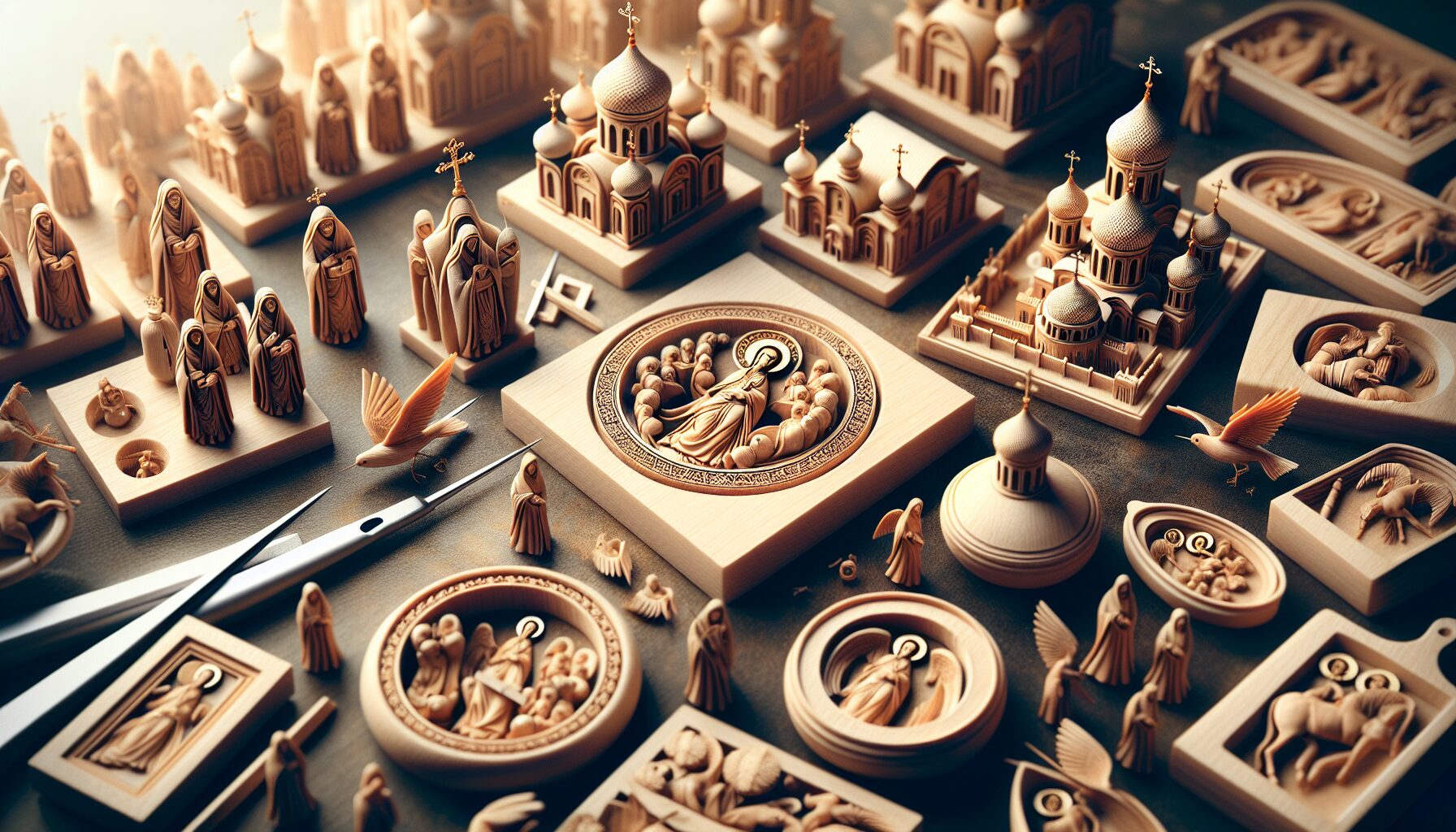
    In the hushed corners of ancient monasteries and hidden ateliers of devout artisans, the creation of sacred miniatures has long been considered a divine act of devotion and skill. These ‘whispered icons’ not only serve as spiritual tokens but also as windows into a realm where art and faith intertwine seamlessly.

    The Origins of Sacred Miniatures

    The tradition of crafting sacred miniatures can be traced back to the early days of religious worship. According to The Metropolitan Museum of Art, miniatures found their place within illuminated manuscripts of the medieval period, fusing intricate artwork with spiritual texts. These small, detailed images acted as focal points during contemplation and prayer, allowing the observer a closer connection to the divine.

    “Illuminated manuscripts were not just books—they were holy acts of creation, crafted with devotion and skill to honor the divine.”

    – Art Historian Dr. Jane Dempsey

    The Artistry Behind Miniatures

    The meticulous process of miniature creation requires not just artistic prowess but deep spiritual dedication. Artists spend countless hours laboring over each tiny figure, often under magnifying glasses, to ensure that every detail is perfect. Essential tools in this sacred craft include:

    • Pigments: Derived from natural sources such as minerals, plants, and even insects, these vibrant pigments offer longevity and depth. Gold leaf is frequently used to add a holy luminance to the miniatures.
    • Brushes: Paintbrushes made of fine animal hairs, such as sable, allow for the precision required in crafting minute details.
    • Supports: Traditional supports include vellum—processed calfskin—or delicate paper, prepared meticulously to accept pigments smoothly.

    These elements are combined within a framework of religious symbolism and prayer, making the creation process as sacred as the images themselves.

    The Symbolism in Miniatures

    Sacred miniatures often depict scenes from holy texts, iconography of saints, or symbolic representations of theological concepts. Their iconography is rich in symbolism:

    • Colors: Each color bears its significance, like blue representing the heavens and divine wisdom, while red symbolizes sacrifice and divine love.
    • Figures and Gestures: The placement and gestures of figures can indicate narratives or convey blessings and teachings.
    • Objects: Common symbols such as doves, crosses, or stars are used to communicate deeper meanings beyond the obvious visual depictions.

    Modern-day Resonance

    While technology and modern art forms have evolved, the allure of sacred miniatures persists, captivating both artists and worshippers worldwide. Modern-day artisans continue to honor this tradition, merging historical techniques with contemporary interpretations.

    The British Library showcases ongoing exhibitions that highlight the significance of illuminated miniatures, proving their timeless ability to inspire and convey spiritual narratives.

    “Despite the shifting sands of time and trends, the artistry and spirituality encapsulated in these miniature works remain as potent today as they were centuries ago.”

    – Curator Emily Robertson

    The Spiritual Practice of Creating Miniatures

    For many contemporary artists, the creation of sacred miniatures is not merely an artistic endeavor but a spiritual practice. It involves entering a meditative state where each brushstroke becomes an act of worship. This dedication often results in pieces that not only portray but also embody the spiritual truths they represent.

    Concluding, the creation of sacred miniatures remains a profound cultural and religious practice. Through mastery of technique and deepening of spirit, these ‘whispered icons’ continue to invite both creator and observer into a timeless dialogue with the divine.