
Tag: imagination

  • Cloudtag – The Oldest Game in the Heavens

    Cloudtag – The Oldest Game in the Heavens

    Since time immemorial, humans have looked to the skies in search of meaning, entertainment, and connection. Among these celestial pastimes, “Cloudtag” is perhaps the oldest game ever played, captivating our ancestors long before sophisticated forms of literature and art came into existence. Though its origins remain shrouded in mystery, the essence of Cloudtag lies in imagination and interpretation, transcending the centuries to continue enchanting people around the world today.

    “You must not blame me if I talk to the clouds. Each cloud has a story of its own, a thought or a conception.” — Ralph Waldo Emerson

    Cloudtag, at its heart, is a game of perception. Observers gaze up into the skies, identifying shapes amidst the ever-changing formations of clouds. Dependent solely on individual creativity, cloud shapes morph into animals, mythical beasts, or entire landscapes. In ancient cultures, these cloud formations were often interpreted as divine messages or omens, speaking to the observer through their boundless forms.

    The Cultural Significance of Clouds

    Considered a spiritual pursuit by many ancient cultures, the act of staring into the clouds was often intertwined with mythologies and religious narratives:

    • Ancient Greece: The Greeks believed that clouds were homes to the gods, a domain ruled by Zeus himself. Their ever-shifting shapes manifest the temperamental forces of nature, serving as a platform where mortals could divine the will of the divine.
    • Indigenous Cultures: Indigenous peoples often viewed clouds as messages from their ancestors or spirits, believing these celestial observations could guide them in their day-to-day lives.
    • Eastern Philosophies: In Taoism, clouds were seen as symbols of the transient nature of life, reflecting both beauty and the impermanence of the earthly realm.

    The Magic of Modern Cloudtag

    In our modern era, Cloudtag remains a beloved pastime for dreamers and children alike. With no tools or special equipment needed, participants simply lie back and let their imagination wander. The beauty of the game lies in its simplicity—it is both accessible and endlessly variable.

    Today, social media platforms have further propelled Cloudtag into the digital age. Platforms like Instagram and Pinterest boast myriad photographs of clouds, each capturing an individual interpretation, from dragons and swans to cities and faces. Hashtags such as #cloudtag and #cloudspotting invite a global community to participate in this age-old game, transforming the sky into a shared canvas that unites people across time and space.

    Ultimately, Cloudtag reminds us of the power of imagination and the eternal human fascination with the skies. In a world where technology increasingly dominates our lives, it offers a simple yet profound way to connect with the universe and each other.
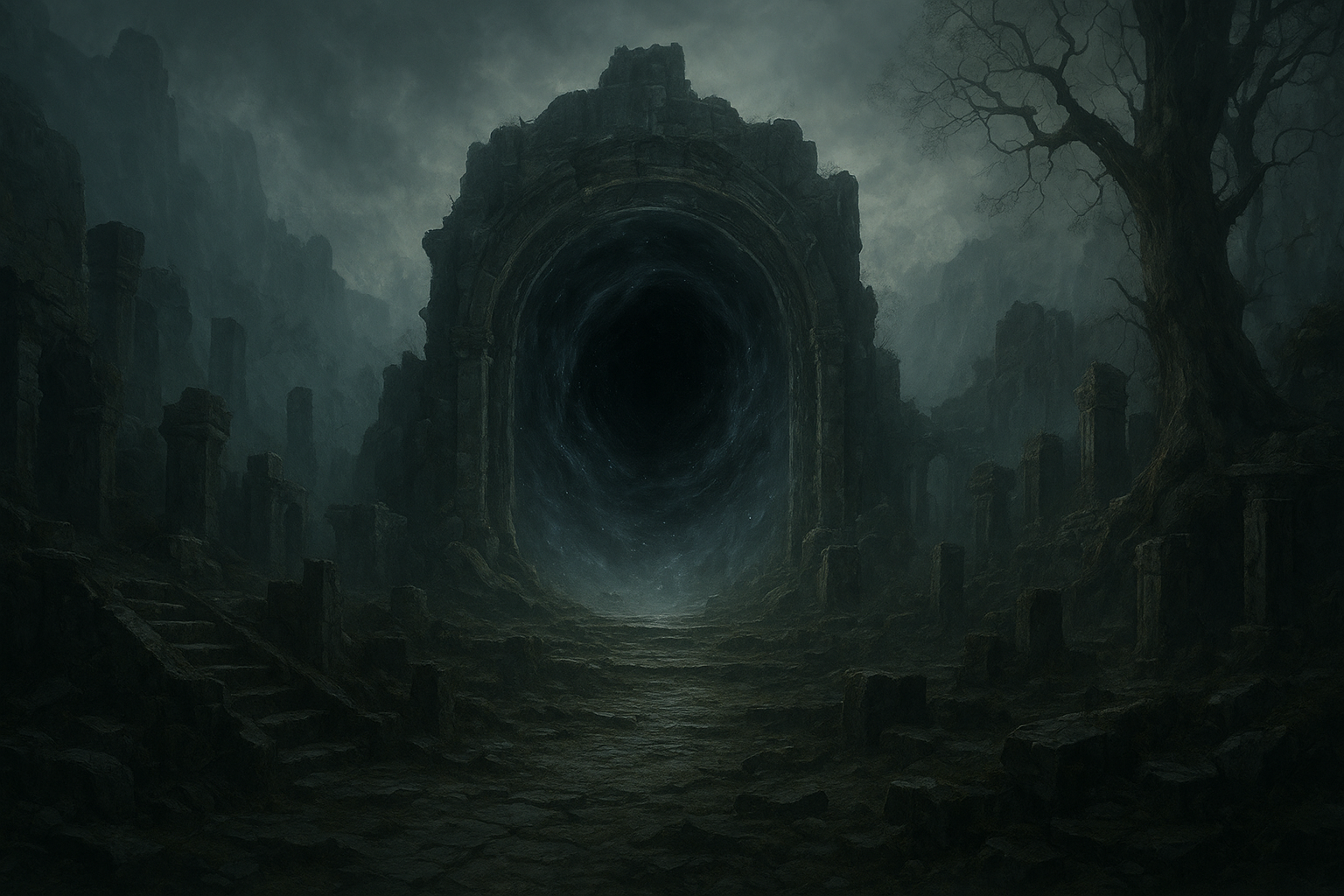
  • The Secret Void – Mystery in Hidden Realms

    The Secret Void – Mystery in Hidden Realms

    For centuries, the allure of hidden realms has captivated the human imagination. Whether woven into the fabric of ancient mythologies, explored in literary works, or depicted in modern cinema, the concept of secret voids and mysterious realms evokes a sense of wonder and intrigue. What lies beneath the surface of these enigmatic domains? And why are they so compelling?

    The Allure of the Unknown

    Human beings have always been fascinated by the unknown. This fascination is evident in the ancient myths passed down through generations, tales of realms hidden from ordinary view, accessible only to the chosen few. The idea of secret worlds—be they under the sea, beneath the earth, or in parallel dimensions—has fueled stories that stretch across time and culture.

    “The oldest and strongest emotion of mankind is fear, and the oldest and strongest kind of fear is fear of the unknown.” – H.P. Lovecraft

    Lovecraft’s observation underscores why these secret voids leave such a profound impact on our psyche. They tap into a primal curiosity, a need to explore the borders of our understanding.

    Mythological Precedence

    Many cultures feature hidden realms in their mythologies. In Greek mythology, Hades is not just a god but also the underworld—a vast domain hidden beneath the earth. Similarly, Norse mythology speaks of Svartalfheim, the land of the dark elves, and Helheim, the realm of the dead.

    These stories often position hidden realms as places of extraordinary power and danger. They are secretive worlds that test the heroes’ courage and wisdom, revealing essential truths about life and death.

    Literary Explorations

    Authors have long drawn inspiration from these mythical concepts, crafting narratives that explore the depth and breadth of hidden realms. Lewis Carroll’s Alice’s Adventures in Wonderland takes readers down a rabbit hole to a whimsical and nonsensical world. Similarly, C.S. Lewis’s Narnia series invites protagonists through a seemingly ordinary wardrobe into a realm filled with magic and mystery.

    • J.R.R. Tolkien’s Middle-earth: With its intricate history, unique languages, and expansive wilderness, Middle-earth serves as a reminder that the most profound secrets are often hidden in plain sight.
    • J.K. Rowling’s Wizarding World: Accessible through fleetingly visible portals, this magical realm continues to captivate audiences with its blend of enchantment and intrigue.

    The Science of Hidden Dimensions

    Beyond myths and literature, the notion of hidden realms finds relevance in scientific discourse. Concepts like string theory propose the existence of multiple dimensions beyond the three we perceive.

    String theory suggests that the universe comprises tiny, vibrating strings of energy that exist in higher-dimensional spaces. While these dimensions remain imperceptible to us, they might hold the key to understanding the very nature of reality.

    “There is more in heaven and earth, Horatio, than is dreamt of in your philosophy.” – William Shakespeare, Hamlet

    Shakespeare’s words encapsulate the scientific quest to uncover the mysteries concealed within these hidden realms. The search for knowledge fuels our imagination and propels our technological advances, allowing us to glimpse what may once have seemed impossible.

    Exploration Through Modern Media

    Cinema and digital media continue to explore and expand upon the idea of hidden realms. Films like Inception delve into layered realities and subconscious worlds, while series like Stranger Things unveil pocket dimensions fraught with danger and enchantment.

    With the advent of virtual reality, audiences can now experience hidden realms, blurring the line between the virtual and the real. These technological advancements have redefined how we explore the unknown, making the investigation of hidden realms more interactive and immersive.

    Conclusion

    The secret voids and hidden realms of myth, literature, science, and media remind us of humanity’s inherent drive to explore and understand the unknown. They are places where the impossible becomes possible, where the boundaries of reality stretch and sometimes blur.

    As we continue to ponder these mysteries, our fascination with hidden realms is unlikely to fade. Instead, it will drive us to deeper inquiries and investigations, encouraging us to delve into the depths of imagination and reality alike.

    What do these enigmatic realms say about our world and ourselves? The answers may be closer than we think, hidden in the nexus between myth and reality.