
Tag: journeys

  • The Feather Compass – Letting Angelic Signs Guide Winter Journeys

    The Feather Compass – Letting Angelic Signs Guide Winter Journeys

    The Feather Compass: Letting Angelic Signs Guide Winter Journeys

    Winter, with its serene blanket of snow and hushed landscapes, offers a unique opportunity to tune into the subtle whispers of the universe. Among the signs that often go unnoticed is the appearance of a feather—a simple yet profound gift from the angels. These celestial symbols serve as a compass, guiding us through both the literal and metaphorical journeys that winter brings.

    The Significance of Feathers

    Feathers have long been seen as messages from the spiritual realm. They are believed to signify angelic presence and guidance. According to Amy Leigh Mercree, author and spiritual guide, “Feathers appear in our path, symbols of the healing power of beauty and a reminder to slow down and pay attention to what they whisper.” Their lightness and ability to drift with the wind remind us of life’s delicacy and the importance of trust in our own unseen paths.

    Interpreting Feather Signs

    When you find a feather on a winter walk, it’s not just a coincidence. It is an invitation to pause, reflect, and listen. Below are a few considerations to keep in mind:

    • Color Matters: Each feather color can have a different meaning. White feathers are often associated with peace and protection, while a gray feather might suggest finding balance during confusing times.
    • Pay Attention to Timing: The moment you find a feather can be significant. Consider what you were thinking or praying about at the time—this could be your angels’ way of providing reassurance.
    • Location and Environment: The place where the feather is discovered can add another layer of meaning. A feather appearing at your doorstep may symbolize incoming news or guests, while one found on a forest path might encourage introspection and solitude.

    Embracing Angelic Guidance

    To harness the guidance of these angelic signs, incorporate moments of meditation in nature. Set intentions before starting your walk, remaining open to messages that may appear in the form of feathers or other signs.

    “Snowflakes swirl and dance, a gentle winter ballet, as if the angels themselves have decided to inhabit the sky.” – John Geddes

    As the temperatures drop and the year draws to a close, embracing the feather compass can transform ordinary walks into sacred pilgrimages. Allow these winter journeys to renew your spirit and direct your steps in the right direction, knowing that you are lovingly guided by unseen hands.

    Incorporate the wisdom and warmth of angelic signs into your winter rituals, and you may find that each feathered messenger leads you closer to peace and enlightenment.
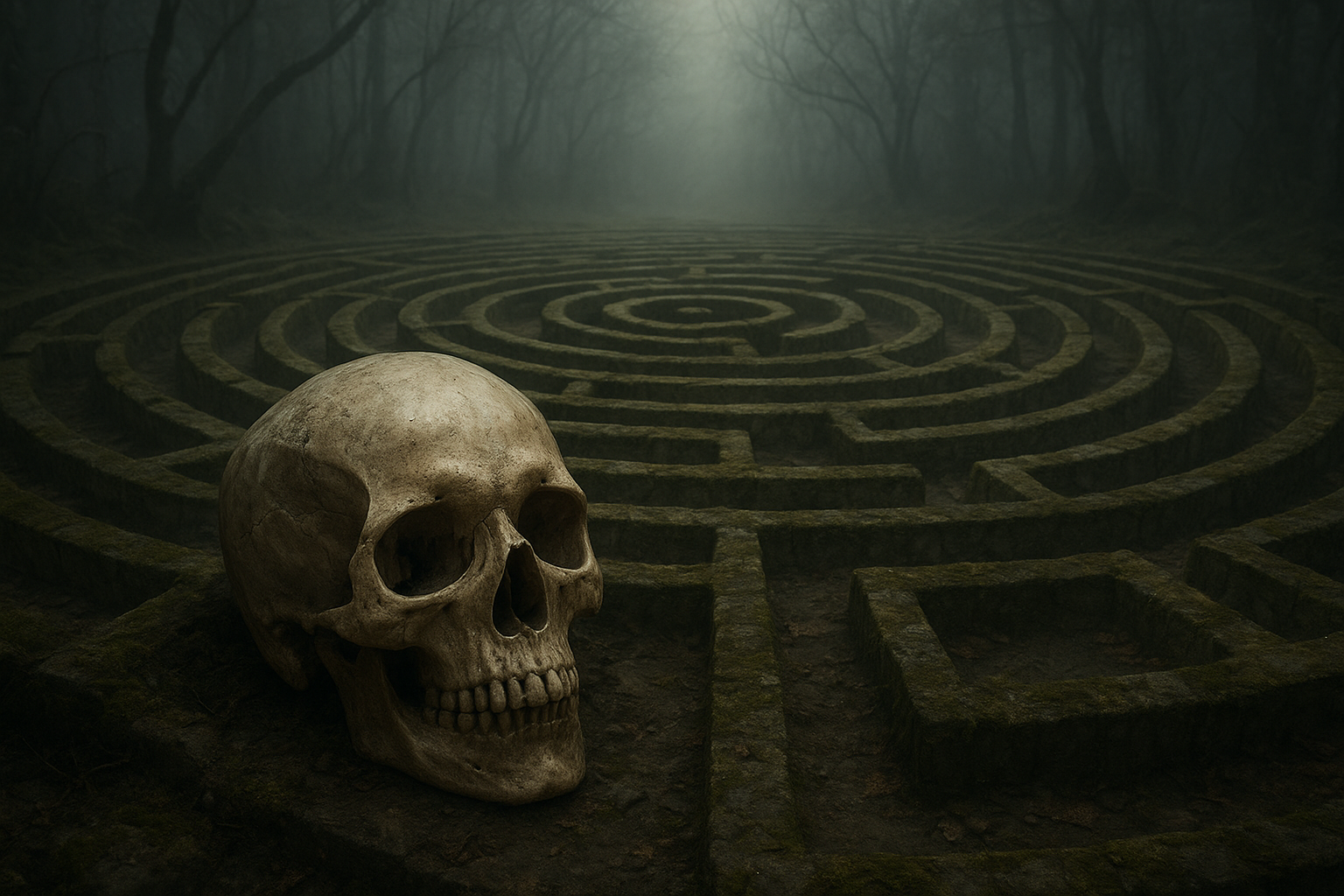

  • Petit Mort Labyrinth – Death in Mystical Journeys

    Petit Mort Labyrinth – Death in Mystical Journeys

    Across the vast landscape of fantasy fiction lies an enigmatic element that captivates both characters and readers alike: the concept of the Petit Mort Labyrinth. This metaphorical space, where death intertwines with mystical journeys, offers a profound exploration of mortality, transformation, and ultimately, rebirth.

    The phrase “petit mort”, originally French for “little death”, is often used to describe the brief loss or weakening of consciousness. In the context of fantasy and mystical tales, it signifies those pivotal moments when characters venture through a symbolic labyrinth of trials, facing the shadow of death to emerge renewed.

    “The way to immortality is to first live a life worth remembering,” noted Bruce Lee, capturing the essence of why characters in fantasy often face such perilous challenges.

    The Labyrinth as a Metaphor

    Throughout literature, labyrinths have become symbols of the complex journey of life, enacted within a structured, yet deceptively convoluted path. In myth and myth-inspired fantasy, as seen in tales from Greek mythology to Tolkien’s works, labyrinths embody the perilous path one must traverse to gain enlightenment or fulfillment.

    • Initiation and Trials: Characters often enter the labyrinth as a rite of passage, confronting both psychological and physical obstacles that test their resolve and virtues.
    • Confrontation with Death: Encounters within the labyrinth frequently illustrate the thin veil between life and death, where each choice may symbolize a descent into mortality or the triumph over it.
    • Transformation and Rebirth: Emerging from the labyrinth, characters are often profoundly changed, symbolizing death to their old selves and rebirth with new insights or strengths.

    Mystical Journeys in Modern Fantasy

    In modern fantasy literature, authors like J.R.R. Tolkien and J.K. Rowling have adeptly used the thematic concept of the labyrinth to represent the intricate dance with death. In The Lord of the Rings, characters face mortal danger within the Mines of Moria, confronting depths both literal and existential. Similarly, in Harry Potter and the Goblet of Fire, the Triwizard Tournament’s maze challenges Harry to confront the looming specter of death.

    Ultimately, the Petit Mort Labyrinth within these narratives reminds us of the profoundly transformative power of embracing the unknown. As characters navigate this mystical space, they reflect our own quests for meaning amidst the shadows of mortality. In both fantasy and reality, such journeys illuminate the resilience of the human spirit.

  • The Obscure Path – Liminal Journeys in Thought and Spirit

    The Obscure Path – Liminal Journeys in Thought and Spirit

    The concept of journeys often conjures images of destinations, tangible or otherwise. Yet, there exists a unique category that embraces the spaces between: the liminal journeys. These obscure paths challenge our understanding of transitions, holding significance in both thought and spirit. Rooted in the Latin word limen, meaning threshold, liminality represents a place where change is the only constant.

    The Nature of Liminal Spaces

    Liminal spaces are traditionally those transitional realms where the usual limits of thought and identity dissolve, leaving both the individual and collective consciousness in a state of flux. Anthropologist Victor Turner, known for his work on the concept of liminality, illustrated these transitional phases as “betwixt and between”—neither here nor there, yet critical for eventual transformation.

    “During the liminal period, the characteristics of the ritual subject are ambiguous; he passes through a cultural realm that has few or none of the attributes of the past or coming state.”
    Victor Turner

    This transformative potential of liminal spaces finds resonance in various domains, transcending cultural rituals and bleeding into personal spiritual evolution, artistic endeavors, and even contemporary psychology.

    Personal and Spiritual Explorations

    In the realm of spirituality, liminal journeys are those profound periods of soul-searching and existential questioning. These phases often arrive unbidden, much like the “dark night of the soul” described by Christian mystics, where spiritual growth occurs in the desolate void of certainty.

    • Transformation Through Transition: Spiritual traditions across the world recognize the necessity of these ambiguous periods. Whether it is the fasting of Ramadan, the silence of Vipassana, or the retreat of a Christian monastic life, each tradition invites its adherents into a liminal space to foster genuine transformation.
    • Rites of Passage: Many initiation rites in various cultures serve as gateways, propelling individuals through a liminal phase to emerge as renewed entities, spiritually and culturally integrated. This communal recognition of liminality affirms the importance of such journeys beyond the self.

    Such experiences, while ancient, have a pervasive influence, helping individuals navigate contemporary life’s complexity. As modern society faces unprecedented challenges, the ability to traverse these obscure paths has become increasingly pertinent.

    Liminality in Modern Thought

    Psychology and the Liminal Mind: Modern psychology explores liminal states as spaces of cognitive freedom and creative potential. By stepping into the unknown, individuals can unshackle from preconceived notions, enabling innovative problem-solving and therapeutic breakthroughs. Carl Jung, in his studies of the collective unconscious, recognized the critical role of such transitional spaces in the path toward individuation—becoming the truest version of oneself.

    “All the most powerful ideas in history go back to archetypes.”
    Carl Jung

    These powerful archetypes often emerge most vividly in the liminal states where the conscious and unconscious minds intersect. Here, creativity flourishes, often acting as a catalyst for personal and societal advancement.

    Cultural and Artistic Liminality

    The arts have long been a sanctuary for the liminal, providing a canvas for expression that conventional modes of thought cannot contain. Liminal art, which thrives at the borders of the known and unknown, invites its audience to question and explore rather than merely observe.

    • Subversion of Norms: Contemporary movements in art, literature, and theater often embrace transgressive ideas, challenging the boundaries of what is understood, acceptable, or possible.
    • Virtual Liminality: The digital age has birthed new liminal spaces, where virtual and augmented realities offer experiences unanchored from physical constraints. The immersive nature of these platforms allows users to explore identity and alternate realities in novel ways.

    Embracing the Liminal

    Ultimately, to explore the liminal is to embrace uncertainty and transformation—a challenge and an opportunity. These thresholds are not merely voids to be passed through but are, in essence, fertile grounds for growth and renewal. In acknowledging the value of these obscure paths, we not only enrich our understanding of the world but also of ourselves.

    The universal truth of liminal journeys lies in their inevitability and necessity. They remind us that to be human is to navigate these obscure paths repeatedly, each time emerging with greater wisdom and resilience. As we stand on the cusp of change, it is the courage to embrace what lies “betwixt and between” that ultimately defines our journey.

    As author Rumer Godden eloquently wrote, “There is always one moment in childhood when the door opens and lets the future in.” Now, as then, embracing the liminal permits the future to unfold in ways both mysterious and profound.

  • Nightly Pilgrimage – Journeys Through Dark Spiritual Landscapes

    Nightly Pilgrimage – Journeys Through Dark Spiritual Landscapes

    You need to be logged in to view this content. Please . Not a Member? Join Us
  • The Obscure Path – Philosophical Journeys in the Dark

    The Obscure Path – Philosophical Journeys in the Dark

    You need to be logged in to view this content. Please . Not a Member? Join Us
  • Walking With Shadows: Urban Spiritual Journeys

    Walking With Shadows: Urban Spiritual Journeys

    You need to be logged in to view this content. Please . Not a Member? Join Us