Tag: lifes

  • Primordial Shadows – Darkness and Archetypes of Death

    Primordial Shadows – Darkness and Archetypes of Death

    In the tapestry of human consciousness, darkness has always been more than an absence of light. It holds the echoes of ancient fears and the whispers of our deepest mysteries. The very notion of darkness, intertwined with death, forms a fundamental archetype that has been explored across cultures and generations. The primordial shadows within us call out, urging us to explore their meaning and the archetypes they present.

    The Nature of Darkness

    Darkness, in its literal and metaphorical senses, represents the unknown, the hidden, and often, the feared. From the pitch-black caves of our ancestors to the psychological depths we dive into today, darkness holds a power that is at once intimidating and fascinating. As Joseph Campbell noted in The Hero With a Thousand Faces, “The cave you fear to enter holds the treasure you seek.”

    “Knowing your own darkness is the best method for dealing with the darknesses of other people.” — Carl Jung

    This quote by Carl Jung, a forefather in the field of analytical psychology, emphasizes that our internal shadows hold valuable insights. To confront this darkness is not merely to face fear, but to understand and integrate it, harnessing the knowledge it offers about the self.

    Archetypes of Death

    Archetypes are symbols or themes universally recognized, existing within the collective unconscious. Death, embodied in countless mythologies and cultural narratives, is a quintessential archetype representing transformation and the cessation of physical existence.

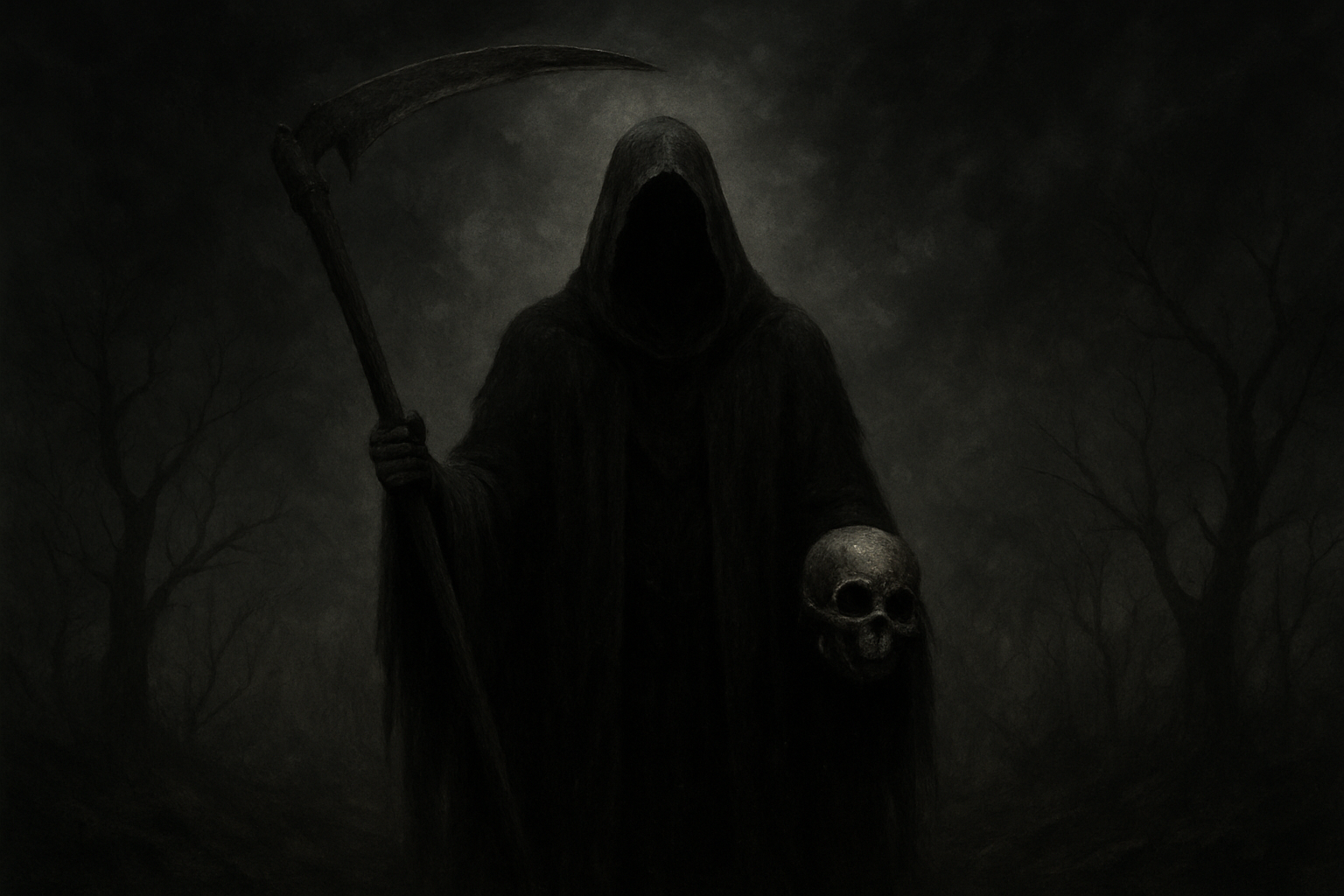
    • The Grim Reaper: Often depicted as a cloaked figure wielding a scythe, this archetype captures the inevitability of death. Its image serves as a stark reminder of mortality, urging individuals to reflect on life’s impermanence.
    • Anubis: In ancient Egyptian mythology, Anubis was the god who guided souls to the afterlife. With its canine head, Anubis represents protection and the godly assurance of the transitions between life and death.
    • Kali: In Hinduism, Kali is the goddess of death, time, and change. Although fierce and formidable, she embodies the destruction necessary for renewal and transformation, underlining death’s role in the cycle of rebirth.

    The Psychological Dance

    Engaging with archetypes of death goes beyond mythological understanding; it is a psychological journey. In Jungian terms, these archetypes emerge from our subconscious and manifest in dreams, literature, and art, influencing how we perceive death both personally and culturally.

    Conforming to these archetypes can result in fear, avoidance, and anxiety, whereas understanding them can foster acceptance and peace. The dance between fear and understanding can lead to personal insights and growth. As we confront our views on death subconsciously and consciously, we may find that life’s meaning is vividly highlighted against the backdrop of mortality.

    Cultural Reflections

    Different cultures embrace death in varied ways, often shaped by archetypal representations. In the Mexican festival Día de los Muertos, death is celebrated as part of life. Vibrant colors and joyous celebrations honor ancestors, integrate past lives into present society, and illuminate the notion of death as familial reunion rather than separation.

    Similarly, Tibetan Buddhist practices engage with death as an integrated step towards enlightenment. The Bardo Thodol, or Tibetan Book of the Dead, is read to the deceased to guide them through the processes of afterlife, reinforcing the idea of death as a journey rather than an end.

    Conclusion: Embracing the Shadows

    Darkness and the archetypes of death compel us to reflect deeply on life’s purpose. By understanding and embracing these shadows, we move closer to self-awareness and acceptance of life’s inevitable cycle. The existential awareness brought about by contemplating death can heighten our appreciation for life and the interwoven narratives that darkness and light create.

    Ultimately, the primordial shadows whisper of a shared human experience, nudging us to coexist with the mysteries of life and death. Engaging with these archetypal themes enriches our understanding and embraces the paradoxical nature of existence.

    For more insights on archetypes, you can visit the University of Cambridge’s research on Carl Jung’s shadow concept.
  • Ashes and Eternity – Meditations on Life’s Transience

    Ashes and Eternity – Meditations on Life’s Transience

    Ashes and Eternity: Meditations on Life’s Transience

    Throughout the ages, humanity has pondered the fleeting nature of life and the eternal mysteries that lie beyond. From ancient mythologies to modern philosophical explorations, the concepts of ashes and eternity have been central to our understanding of existence. This meditation aims to explore the themes of impermanence and eternity, drawing from diverse cultural and philosophical perspectives.

    The Symbolism of Ashes

    Ashes have historically been symbolic of both death and rebirth. In many cultures, ashes are what remain after fire—a powerful element of transformation—consumes the material. They remind us of the transient nature of life, how all things ultimately decay and return to the earth. Yet, they also symbolize what remains eternal.

    • Hindu Philosophy: In Hindu rituals, ashes are used in last rites and are scattered in sacred rivers. This symbolizes the body’s return to nature and the soul’s journey towards rebirth. The Bhagavad Gita, a sacred Hindu text, notes, “As a man casts off worn-out garments and puts on new ones, so the soul casts off the body and takes on a new one” (Bhagavad Gita 2:22).
    • Christianity: On Ash Wednesday, Christians don ashes on their foreheads, symbolizing repentance and mortality. The phrase “Remember that you are dust, and to dust you shall return” (Genesis 3:19) emphasizes human mortality and the promise of eternal life through faith.
    • Buddhism: The Buddhist concept of Anicca, or impermanence, reminds followers that all forms are transient. Ashes, as remnants of fire, teach the lesson that clinging to material life leads to suffering. This is encapsulated in teachings found in the Pali Canon, which urge detachment from the material world.

    Eternity in Philosophy and Religion

    While ashes symbolize the transient, eternity represents the timeless and boundless. The pursuit of understanding what exists beyond life’s fleeting moments has been a central theme in philosophy and religion.

    • Plato’s Eternal Forms: Plato posited that beyond the physical world lies a world of perfect forms, eternal and immutable. In his work, “The Republic,” he described the cave allegory, highlighting the belief that true knowledge comes from understanding the eternal world beyond our sensory experiences.
    • Christian Afterlife: Christianity promises eternal life through salvation. The Bible speaks of an everlasting realm where “God will wipe away every tear from their eyes, there will be no more death or mourning” (Revelation 21:4), offering hope of transcendence beyond mortal life.
    • Islamic Perspective: In Islam, life after death is a fundamental tenet. The Qur’an describes a day “when the Earth is flattened out and the mountains are crushed to powder” (Qur’an 56:4-5), preceding eternal paradise or punishment, emphasizing accountability beyond this world.

    The Interplay Between Temporality and Eternity

    The tension between life’s brevity and the promise of eternity offers profound reflections on how we live our lives. This duality encourages individuals to seek meaning and connection within the finite scope of their existence.

    “Man is the only creature who refuses to be what he is.” – Albert Camus

    Camus’ existential philosophy suggests that the quest for meaning is uniquely human, driven by awareness of mortality and the aspiration for transcendence. His idea of “The Absurd” revolves around the tension between the desire for meaning and the silence of the universe.

    • Mindfulness and Presence: Practices like mindfulness teach embracing each moment, aware of its impermanence. This philosophy draws from Buddhist traditions, reminding practitioners that life’s great beauty lies in its transience.
    • Legacy and Influence: Many find solace in the belief that their actions, contributions, and influences remain long after they are gone. As Maya Angelou once said, “Your legacy is every life you’ve touched.”
    • Spiritual Enlightenment: For some, spiritual enlightenment offers a path to understanding eternity. The concept of nirvana in Buddhism exemplifies liberating oneself from the cycle of death and rebirth, reaching an eternal state through inner peace and understanding.

    Conclusion

    The meditation on ashes and eternity is a reflection of the perennial human endeavor to understand and reconcile the finite with the infinite. Whether through cultural traditions, philosophical inquiry, or spiritual contemplation, the journey through life’s temporary nature onto the threshold of eternity offers us insights into the essence of existence. As we contemplate these themes, we are reminded of the wisdom in embracing life’s transience while aspiring for the eternal values that define our legacy and the cosmic continuity.

    In the end, as the Greek philosopher Heraclitus observed, “The only constant in life is change.” In acknowledging this, we find a pathway not to despair, but to profound appreciation and inspiration.