Tag: love

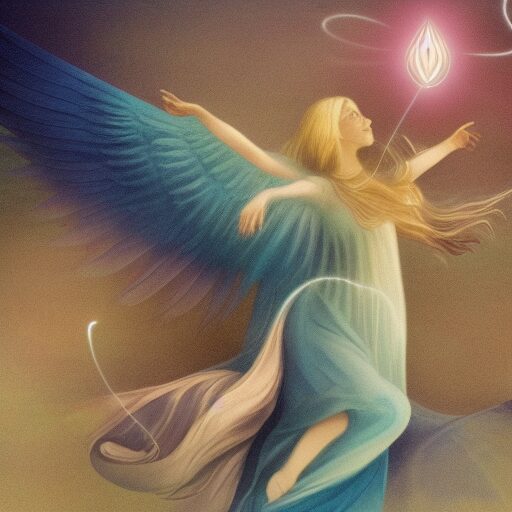
  • Light-Speed Love – How fast can a blessing travel?

    Light-Speed Love – How fast can a blessing travel?

    Light-Speed Love – How Fast Can a Blessing Travel?

    As the great mystic, Aleister Crowley, once said, “The love that travels fastest is the love that travels in thought.” But just how quickly can this love traverse the vast expanse of space and time? In other words, what’s the speed limit on blessings?

    Ancient Wisdom

    In many spiritual traditions, the concept of energy and its transmission are deeply rooted. The idea is that every thought, emotion, and intention sends ripples into the fabric of reality, affecting the world around us. This concept is often referred to as the “law of attraction” or the “power of prayer.”

    • Thou shalt not judge: When we send loving thoughts towards another, we are essentially breaking down barriers and opening ourselves up to the possibility of connection.
    • “Love is a force that transcends time and space.” – Eckhart Tolle, spiritual teacher
    • Intention is key: The power of our intentions can manifest in ways both seen and unseen. By focusing on love and compassion, we become beacons of positivity.

    Quantum Physics

    In the realm of quantum physics, particles are known to entangle and communicate with one another instantaneously, regardless of distance. This phenomenon has led scientists to propose theories about the interconnectedness of all things.

    “Consciousness is not an emergent property of the brain but a fundamental aspect of the universe.” – Stuart Hameroff, neurosurgeon

    So, can love travel faster than light? Well, in the quantum realm, particles have been observed to maintain their entanglement even when separated by vast distances. This has led some scientists to suggest that information may be transmitted faster than the speed of light.

    Conclusion

    While we may not fully comprehend the intricacies of love and its transmission, it’s clear that the power of intention can have a profound impact on our reality. As we cultivate compassion and empathy towards ourselves and others, we become part of an intricate web of interconnectedness.

    In the words of the renowned physicist, Brian Greene: “The universe is not just a collection of particles, but a tapestry of relationships.”

    Learn more about quantum physics.

  • The Mourning Altar: Personal Rituals

    The Mourning Altar: Personal Rituals

    The Mourning Altar: Personal Rituals

    The Mourning Altar: Personal Rituals

    Coping with loss is an intensely personal journey, one that is profoundly nuanced and unique to each individual. While the path to healing varies, many find solace and meaning in creating a mourning altar—a sacred space that encapsulates memories, love, and the cherished essence of those who have passed.

    The Tradition of Mourning Altars

    Though the creation of altars is often associated with religious practices, personal mourning altars have been part of human tradition across cultures and time. In Mexican culture, for example, altars or ofrendas are essential components of the Día de los Muertos celebrations, offering a vibrant, tangible means of honoring deceased loved ones. These altars might be adorned with photographs, favorite foods, and cempasúchil flowers to encourage the spirit’s return.

    “It is a place to pay respect and provide an inviting greeting to the spirits.”National Geographic

    What Constitutes a Mourning Altar?

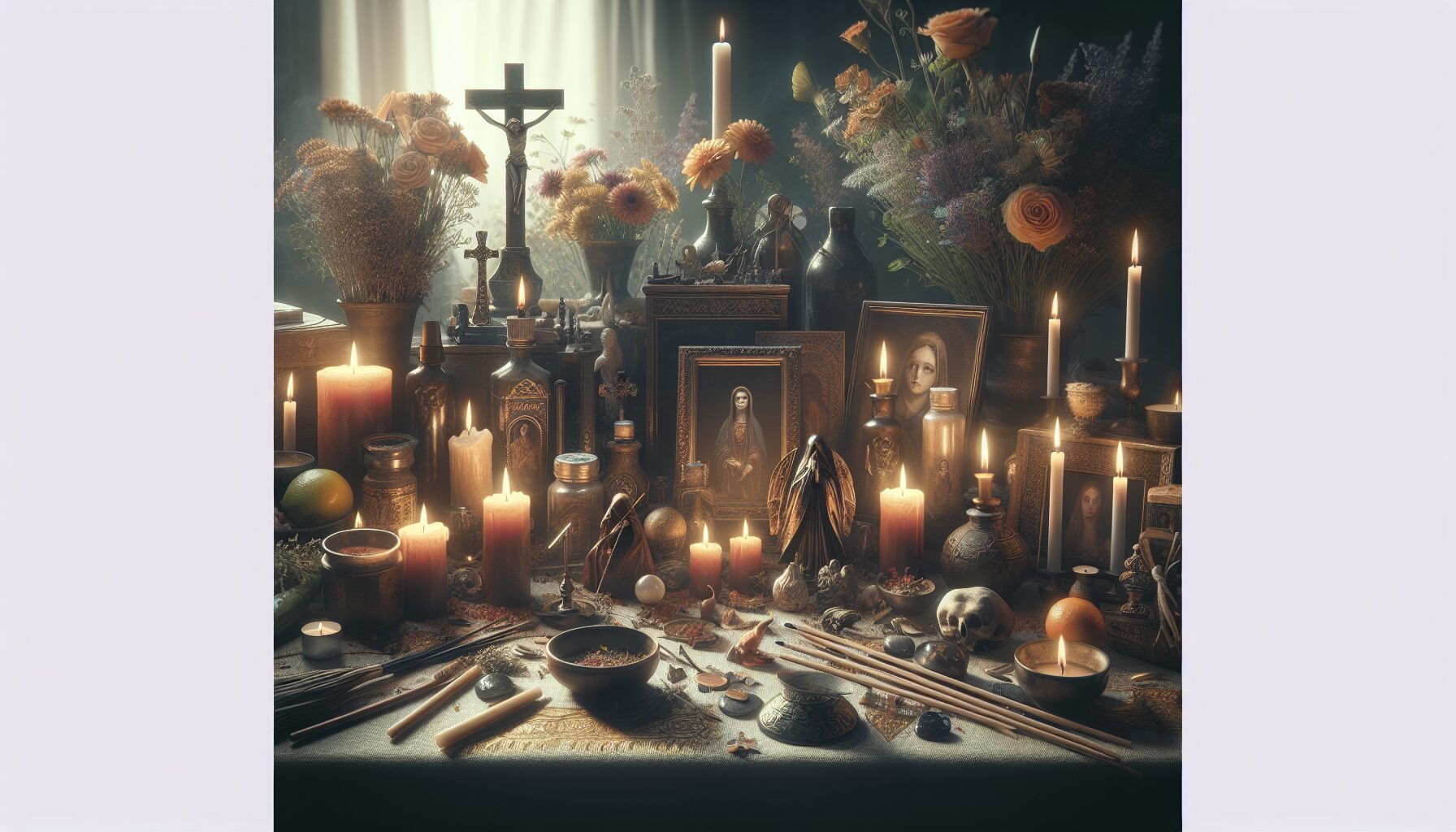
    A personal mourning altar might be a small shelf in a quiet corner of a house or a dedicated room filled with memories. The essence lies not in the grandeur of the space but in the items chosen to represent the loved one lost.

    • Photographs: A visual remembrance encapsulating shared moments and experiences.
    • Personal Items: Belongings that were significant to the deceased, such as a favorite book or piece of jewelry, add depth to the altar.
    • Candles: Often used to symbolize the continuation of the soul and the light they brought into the lives of others.
    • Flowers: Specific flowers may hold personal or cultural significance, symbolizing beauty and transience.
    • Written Messages: Letters written to the deceased can serve as a cathartic outlet for expressions of love, regret, or unspoken words.
    • Religious Icons: If faith is a part of the individual’s life, religious symbols or icons can be incorporated to seek peace or blessings.

    The Therapeutic Aspect of Mourning Altars

    Creating a mourning altar is an act of psychological and emotional healing. As James E. Miller notes in his book Personal Mourning Rituals, the process allows individuals to “externalize feelings of loss and fortify the grieving journey with tangible acts of love.”

    “Such rituals provide structure to the amorphous experience of sorrow, offering a point of focus and a measure of comfort.” — James E. Miller

    The construction and tending of a mourning altar offer a meditative process that invites reflection, remembrance, and reverence. This ritual not only honors the departed but also facilitates a connection with them, serving as a bridge of love between realms.

    Personal Expressions and Cultural Variance

    The beauty of a mourning altar is its inherent flexibility, allowing it to be tailored to personal and cultural beliefs. In Japan, for example, the Butsudan is a household Buddhist altar that commemorates deceased family members and spiritual figures. Similarly, in West African traditions like those observed by the Akan people, offering libations and creating shrines are central elements of ancestor veneration.

    Despite cultural differences, a universal thread among mourning rituals is the underlying desire to maintain a bond with the departed. The altar becomes a sacred domain where grief transforms gradually, enabling the living to continue a narrative of love and remembrance.

    Conclusion: A Sanctuary of Solace

    In conclusion, a mourning altar represents more than a collection of objects; it is a sanctuary of solace, reflection, and continuity. Through this personal ritual, individuals can navigate the complexities of grief, embrace transformation, and celebrate the lives of those held dear. In the words of Henri Nouwen, whose work frequently explores themes of spirituality and healing, “A death transforms the world for those who live on, and healing is found in the sanctity of remembering.”

  • Letters of Lament: Reader Submissions

    Letters of Lament: Reader Submissions

    You need to be logged in to view this content. Please . Not a Member? Join Us