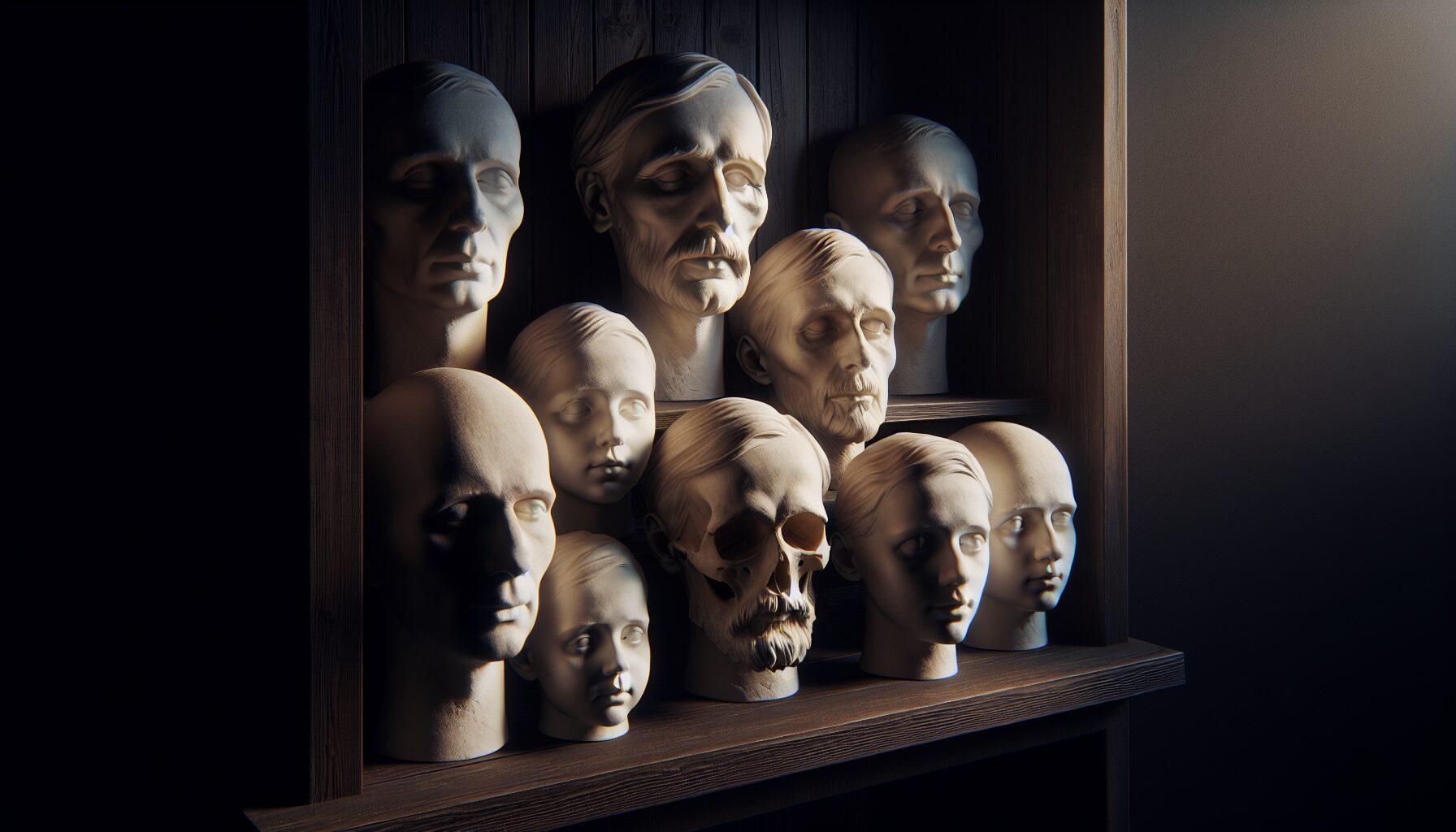
Throughout history, humanity has sought ways to remember and commemorate the dead. One of the most intriguing methods is the creation of death masks. These somber yet fascinating artifacts not only preserve a moment frozen in time but also serve as a bridge between the living and the dead, capturing the very essence of individuals long after their passing.
The Origins of Death Masks
Death masks have a storied history that dates back thousands of years. Traditionally, they were made shortly after death, capturing the features of the deceased with remarkable accuracy. This practice was prevalent in several ancient cultures, including the Egyptians, who used similar techniques to create masks for mummified pharaohs. The Ancient Romans and Greeks also made death masks, often as part of funerary rites that celebrated the lives of revered leaders and citizens.
“Death masks served as a model for portraits, or as a means of remembering the famous dead.” – Encyclopaedia Britannica
Techniques and Materials Used
Historically, death masks were created using a variety of materials and techniques, reflective of the technological advancements of their time. The most common method involved applying wax or plaster to the face of the deceased, capturing a detailed mold that was later cast in more durable materials, such as bronze or marble. In some instances, future technologies have enabled the creation of digital replicas of these masks, further preserving the likenesses of historical figures.
- Wax and Plaster: These materials were used by artists to capture the intricate details of a subject’s face, serving as the primary medium for creating the original mold.
- Metal Casting: Once a detailed mold was made, it could be cast in metals such as bronze, creating lasting memorials that could withstand the ravages of time.
The Cultural Significance of Death Masks
Beyond their function as a means of physical remembrance, death masks have held profound cultural significance. In many cases, they were used in the creation of effigies for funerals, enabling mourners to feel a continued connection with their loved ones. They were also employed as tools in ancestor worship and other cultural practices, often serving as time capsules that provided insight into the customs and values of long-lost societies.
Notable Death Masks Throughout History
Several famous death masks have captured public imagination over the years. Some of the most notable include:
- Tutankhamun: The young Egyptian pharaoh’s mask, crafted from gold and precious stones, is perhaps one of the most iconic symbols of Ancient Egypt’s grandeur.
- Napoleon Bonaparte: A plaster cast made shortly after his death in exile, this mask remains a vital piece of Napoleonic memorabilia, studied and revered by historians and collectors alike.
- Ludwig van Beethoven: Beethoven’s death mask allows admirers to gaze upon the visage of one of classical music’s greatest legends, providing a tangible connection to the composer’s tumultuous life.
Preservation and Modern-Day Relevance
In contemporary times, death masks are not as common, but they retain a relevant cultural and historical significance. Museums and educational institutions continue to display these artifacts, engaging audiences and offering unique insights into the lives of individuals from various periods.
In the digital age, efforts have been made to preserve these masks through 3D scanning and printing technologies. Projects like the Europeana Death Mask Collection provide public access to high-quality reproductions, extending the reach and influence of these historical treasures.
Conclusion
Death masks remain an enduring testament to the human desire for remembrance. They bridge the divide between history and memory, art and science, offering a way to preserve stories and legacies for future generations. As both a cultural relic and an artistic endeavor, death masks celebrate the human experience, immortalizing faces beyond life and reminding us of the transient nature of existence.