Tag: messengers

  • Angels and the Collective Unconscious

    Angels and the Collective Unconscious

    Angels and the Collective Unconscious

    Written by John Dee

    Published 2022

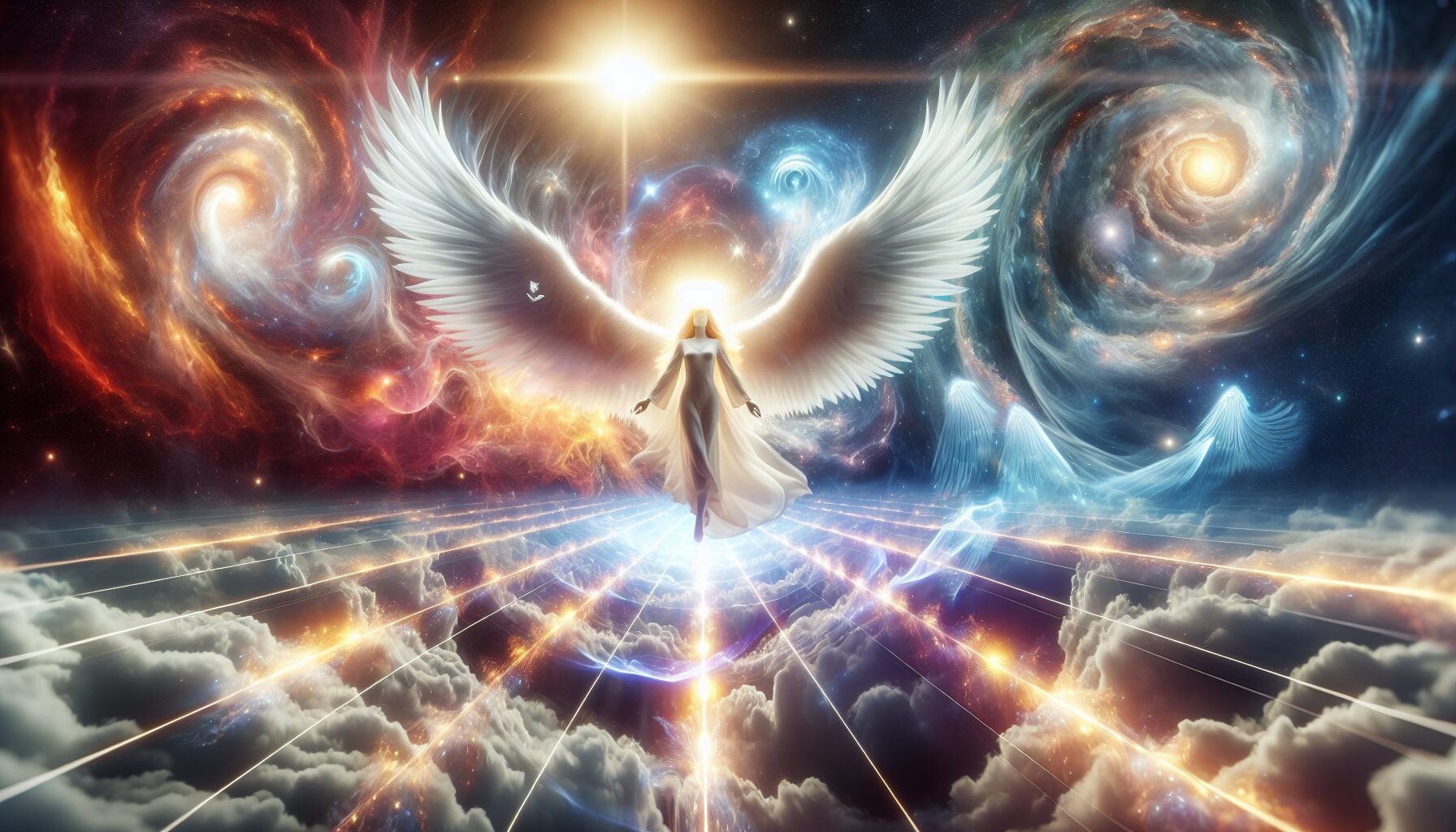
    Angels have been an important aspect of human culture throughout history. They have been seen as messengers from the divine, protectors of the world and the faithful messengers of the gods. In many cultures, angels are often depicted as powerful entities, with wings, a halo, and divine symbols.

    However, angels are not a topic of popular science. The general public has no idea of what they are or where they come from. As a result, many misconceptions and myths have been perpetuated regarding angels. In order to dispel these misconceptions, we need to take a closer look at the concept of the collective unconscious.

    The collective unconscious is a concept introduced by Carl Jung, which is a metaphor for the collective thoughts and feelings of an entire society or culture. It is similar to the concept of the unconscious mind, which is comprised of all the thoughts, feelings, and memories that an individual is not consciously aware of.

    We can think of the collective unconscious as a collective consciousness, which encompasses all the beliefs and beliefs of an entire society. It is believed that the collective unconscious can contain spiritual, mythological, and religious beliefs that are believed to be universal.

    From a psychological standpoint, the collective unconscious is made up of a collective body of thought that is often used as a means to help individuals come to terms with their own personal issues. It is often used to explain the “voices” people hear in their heads, which may be related to thoughts, emotions, or ideas that are not consciously known.

    The concept of angels, in particular, is often associated with the collective unconscious. Angels are believed to be powerful messengers of the divine that can provide guidance, spiritual protection, and comfort to those in need. In terms of this definition, angels can be thought of as spiritual entities that are often seen as messengers from the divine. They can be thought of as celestial beings that are sometimes associated with the godly or the holy.

    In terms of cultural and religious beliefs, angels have been an integral part of many religions for centuries. They are often depicted as powerful beings and are often depicted in art, religion, and folklore. In some religions, angels are believed to be messengers of the god and the goddess, and are often depicted as beings of light and divine beings.

    In conclusion, angels are a fundamental part of human culture that has been associated with the collective unconscious for centuries. They are often seen as powerful messengers of the divine that can provide spiritual guidance, comfort, and protection. They are often associated with the concept of the collective unconscious and are seen as celestial beings that are sometimes associated with the gods and goddesses.
    User
  • The Language of Light: Angels in Art and Liturgy

    The Language of Light: Angels in Art and Liturgy

    The Language of Light: Angels in Art and Liturgy

    Introduction

    The most common depiction of angels in art is a beautiful, radiant, heavenly being perched on top of a hill or a mountain. In their most traditional forms, these angels are depicted as heavenly beings that have been cast out from heaven or who were once part of the heavenly host. Angels have been depicted in various forms of art for centuries, from paintings, sculptures and frescoes to stained glass.

    The language of angels

    The language of angels is one that is largely unfamiliar to most of us. It is not a language in the same sense as human language, but is a form of communication through which the divine communicates with those on Earth.

    In Christian tradition, angels are believed to be messengers from God, sent to deliver messages or news of His creation. In some traditions, such as that of Eastern Orthodox Christians, they are believed to carry messages from the saints and prayers of the faithful.

    Angels have been depicted in art as messengers, messengers of God, or messengers of the saints, as well as being depicted as protectors of the faithful. They are often depicted in an upright position on top of a hill or a mountain, or suspended in the air.

    Angels in art

    The history of angels in art dates back to the ancient world, and many examples have been found on walls, pillars and other artworks. It was not until the Renaissance that angels became common motifs in art, and it was only in the nineteenth century that their role in the arts became significant.

    Many artists, both painters and sculptors, depicted angels in the same traditional forms of the traditional depiction of angels, while others painted them in contemporary roles or depicted them in a more abstract form. Angels were also frequently depicted in paintings of religious events, including the Annunciation and the birth of Jesus, as well as depictions of saints and other Christian figures.

    There are many forms of angels in art, from frescoes to stained glass. These can be found in churches and religious buildings, or in public galleries and private collections.

    Angels and their language in liturgy

    In Christian liturgy, the language of angels is often used in prayers for healing, for comfort and for assistance during prayer. The language of angels is also frequently used in the liturgy of the Anglican Church, where it is often used in prayers and in songs.

    In the Catholic Church, the language of angels is often used in prayers and in the Liturgy of the Hours. In the Roman Catholic Church, this language can also be found in the Sacrament of Confession.

  • Angelic Messengers in Art and Literature

    Angelic Messengers in Art and Literature

    The article focuses on the representation of angels in art and literature as messengers of the divine. It begins by exploring the origins of the concept of angels in various cultures and religions, and examines the significance of their portrayal as messengers in art and literature. The article also provides examples of famous artworks that feature angels, as well as literary works by authors such as William Blake and John Donne. The article ends by emphasizing the importance of the depiction of angels as messengers, as opposed to just being depicted as purely religious figures.

  • Celestial Messengers – Angels Between Dimensions

    Celestial Messengers – Angels Between Dimensions

    Celestial Messengers: Angels Between Dimensions

    Throughout history, angels have been prominent figures in various religious and spiritual traditions. Often depicted as divine messengers, these celestial beings are believed to exist between the human world and higher dimensions. But what role do they play in our lives, and how have they been perceived across cultures?

    The Role of Angels in Religious Texts

    In many religious texts, angels are portrayed as intermediaries between humans and the divine. The Bible frequently references angels delivering God’s messages to humans, as in the story of Gabriel announcing to Mary that she would bear the Son of God.

    “The angel went to her and said, ‘Greetings, you who are highly favored! The Lord is with you.’” – Luke 1:28

    Similarly, in Islamic tradition, angels (“malāʾika” in Arabic) are essential to the faith. According to Islamic belief, the angel Jibril (Gabriel) revealed the Quran to Prophet Muhammad.

    Angels Across Cultures

    Various cultures around the world have different interpretations and depictions of angels:

    • Hinduism: While the concept does not align directly with the Abrahamic traditions, deities and celestial beings like devas play a similar role.
    • Ancient Greece: The daimon or daemon was an intermediary spirit, somewhat akin to an angelic figure.
    • Indigenous Beliefs: Many indigenous cultures have spirit guides or ancestral spirits serving as protectors and messengers.

    The Concept of Angels in Modern Spirituality

    In contemporary spirituality, the belief in angels has transcended traditional religion, often embraced by individuals seeking guidance from higher dimensions. Angel therapy, which involves harnessing the perceived power of angels to heal and guide individuals, gained popularity due in part to figures like Doreen Virtue.

    “People love to believe in angels because they’re like a bridge between the known and unknown, seen and unseen. Angels are associated with goodness, purity, and bringing light.” – Doreen Virtue

    This movement typically promotes personal empowerment through the idea that angels can be invoked to assist in facing life challenges.

    Scientific Perspectives

    Despite a lack of empirical evidence, interest in the metaphysical aspects of angels has piqued some scientific curiosity. Several psychologists and researchers analyze why humans are drawn to angelic imagery and the notion of protective, otherworldly beings. For many, angels serve as a comforting symbol that transcends the limitations of the mortal world, offering hope and solace.

    “Humans have long been fascinated by the possibility of a higher power looking out for us. Angels personify the spiritual and emotional security that many people crave.” – Dr. Andrew Newberg, neuroscientist at the University of Pennsylvania

    Angels in Art and Literature

    Angels have been a source of inspiration in art and literature throughout history. From Renaissance paintings of cherubic beings to contemporary fiction featuring angels as protagonists, these celestial entities continue to captivate artists and audiences alike.

    • Art: During the Renaissance, artists like Michelangelo and Raphael depicted angels in their iconic frescoes and canvases, often using them to portray themes of divinity and salvation.
    • Literature: In John Milton’s Paradise Lost, angels play pivotal roles in the narrative, exploring themes of obedience and rebellion.

    The Enduring Mystery of Angels

    Angels remain enduring symbols of the mystical and the divine across human history. Whether as guardians, messengers, or guides, they represent humanity’s timeless quest for connection with something greater. While their existence between dimensions may lack scientific substantiation, their presence in cultural and spiritual consciousness endures, continuing to intrigue and inspire.

    As our understanding of the universe expands, the question of angels existing between dimensions may someday find ground in science or remain a cherished mystery of human belief.