
Tag: moment

  • Petit Mort Mechanics – The Physics of Spiritual Collapse

    Petit Mort Mechanics – The Physics of Spiritual Collapse

    The phrase petit mort, or “little death,” poetically describes the sensation following orgasm, considered by some as a moment of vulnerable transcendence. But what are the physical and metaphysical implications of this experience, often likened to a temporary soul’s surrender? Let’s dissect the curious mechanics behind this fleeting collapse.

    The Physiological Perspective

    On a purely physiological level, orgasm triggers a cascade of neurological and hormonal events. According to an article published in Frontiers in Psychology, “orgasms involve a complex interplay of the autonomic nervous system, the release of dopamine, and oxytocin secretion,” which not only offer a sense of satisfaction but momentarily rearrange our cognitive functions.

    “The release of hormones during orgasm can result in a profound sense of relaxation and transient reduction of mental and emotional tension.” – Psychology Today

    The Metaphysical Implications

    Beyond the biochemical, the petit mort has long been embraced by poets and philosophers as a metaphor for spiritual ephemera. In her essay in the New Yorker, Joan Acocella hinted at the mysterious surrender intrinsic to passion, suggesting that each climax might echo a microcosmic rehearsal of our ultimate end, a paradoxical blend of creation and dissolution.

    • Transience: The fleeting nature of orgasm symbolizes the ephemeral quality of life.
    • Surrender: Letting go into bliss can be seen as a metaphor for relinquishing life.
    • Unified Experience: In the peak moment, the distinction between self and other may blur, suggesting a spiritual oneness.

    The Cultural Significance

    The concept of petit mort is not merely a biological or mystical phenomenon—it reflects deeply entrenched cultural beliefs about intimacy, vulnerability, and mortality. In literature and art, this moment captures an essence of both existential dread and divine ecstasy. As noted in The Atlantic, the overlap of sexual and spiritual experiences is a timeless interchange explored across cultures.

    Ultimately, the physics of spiritual collapse in petit mort mechanics are as much about our corporeal reactions as they are about the intangible tunnels of wonder and demise. In unveiling these interrelations, we discover a nuanced narrative of human existence itself—an eternal dance between life and its inevitable cessation.
  • The Soul’s Journey – Tibetan Cosmology of Afterlife

    The Soul’s Journey – Tibetan Cosmology of Afterlife

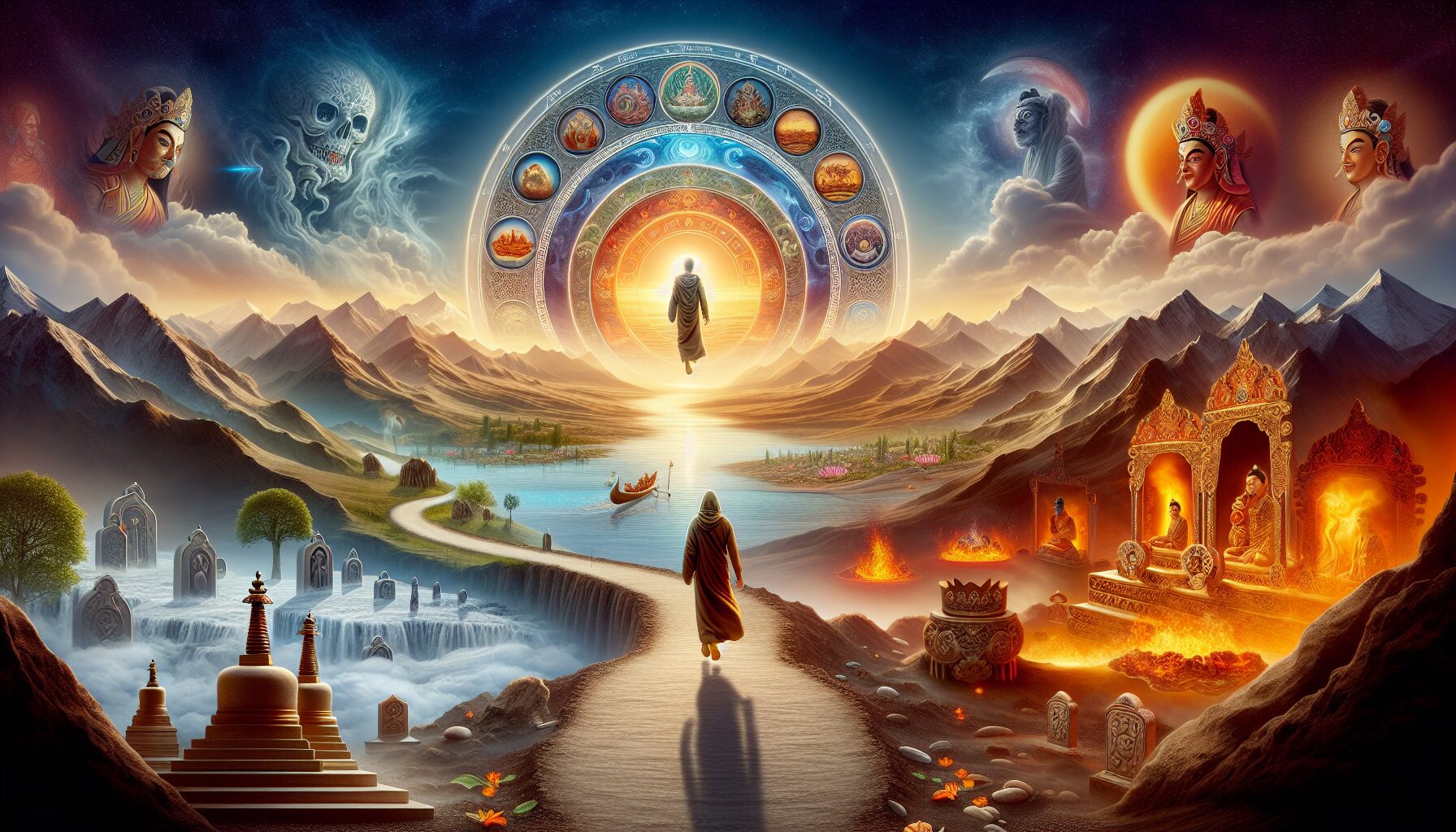
    Tibetan cosmology presents a richly detailed map of the afterlife, offering insights into what many believe awaits beyond death. Rooted in a fusion of Buddhist teachings and ancient Bon traditions, this view is closely tied to the essential aspects of Tibetan spiritual philosophy.

    The Bardo States

    Central to Tibetan beliefs about the afterlife is the concept of the bardo. The term “bardo” translates to “in-between state” and refers to the transitional phases a soul undergoes from the moment of death until rebirth. There are traditionally three major bardo states described in the Bardo Thodol, or “The Tibetan Book of the Dead”:

    • Chikhai Bardo: The moment of death, where the individual experiences the “Clear Light of Reality.” This is a moment of profound opportunity, where the soul can recognize the true nature of the mind.
    • Chonyid Bardo: Following the initial moment of death, the soul encounters various manifestations stemming from its own mind. These visions can range from peaceful to wrathful and are believed to provide insight into one’s karma.
    • Sipa Bardo: The phase leading to rebirth. Here, based on accumulated karma and clarity of awareness, the soul is guided towards its next incarnation.

    Karma and Rebirth

    The Tibetan understanding of the afterlife is deeply interwoven with the concept of karma. As the Dalai Lama explains, “From the Buddhist perspective, the ideas of karma and rebirth form a natural extension of the evolutionary process” (Dalai Lama’s Messages).

    Each action performed in life—whether thought, word, or deed—imprints a karmic residue that influences the soul’s journey within the bardo states. Hence, one’s conduct can critically impact the conditions of rebirth, potentially leading a soul toward a higher or lower existence in its next life.

    Practical Applications

    The Tibetan approaches to death and dying are not merely theoretical. They offer practical paths for preparation and assistance for those facing death. Meditative practices, such as phowa (transference of consciousness), are employed to secure a more favorable rebirth by directing the mind’s attention at crucial moments.

    Conclusion

    The Tibetan cosmology of the afterlife provides a profound and structured vision of post-mortem existence that emphasizes personal responsibility and the potential for spiritual evolution. By understanding these processes, individuals can engage more mindfully with life, cultivating the positive conditions necessary for an auspicious continuation beyond this existence.

    “Understanding the bardo states can help us become less fearful of death and more mindful of how we live.” — Tricycle Magazine