Tag: mystical

  • Catholic Mysticism and Magical Correspondences

    Catholic Mysticism and Magical Correspondences

    When discussing Catholic Mysticism and its many forms of magic, it is important to understand the two are inextricably connected. In fact, it can be said that the Catholic Mysticism is a specific type of magic, as it involves the use of magic as a means to deepen the spiritual life of Catholics. In this article, we will explore the relationship between mysticism and magic and how they are often intertwined in Catholic culture.

    Within the Catholic Church, there are a number of different types of mysticism that have been practiced. These include the mystical theology of St. John of the Cross, the mystical experience of St. Teresa of Avila, and the mystical art of St. Francis of Assisi. The mystical theology of St. John of the Cross, for example, is considered to be a type of Catholic mysticism as it is concerned with the union of the individual with the divine. This type of mysticism involves a number of different practices, such as prayer, meditation, and the use of icons.

    The mystical experience of St. Teresa of Avila is also considered to be a type of Catholic mysticism. In this form of mystical experience, individuals are able to experience the presence of God directly and often through the use of icons and sacred objects. The mystical experience of St. Francis of Assisi is a different form of Catholic mysticism, but one that is also closely related to Catholic mysticism. In this form of mystical experience, individuals are often able to experience the presence of God through the use of sacred objects, as well as through the physical environment.

    When it comes to the practical application of Catholic mysticism, there are a number of different techniques that can be used. For example, the use of sacred objects, such as crucifixes, statues of saints, and candles, can be used as a means to deepen the spiritual life of individuals. In addition, prayer and meditation are also commonly used as a means to deepen the spiritual life of individuals. Finally, it is often said that the use of sacred symbols, such as icons, can be used as a means to deepen the mystical experience of individuals.

    In conclusion, it is clear that Catholic mysticism and its forms of magic are closely intertwined. The mystical theology of St. John of the Cross, the mystical experience of St. Teresa of Avila, and the mystical art of St. Francis of Assisi are all different forms of Catholic mysticism, but each of them is also closely related to one another. By deepening the spiritual life of individuals and helping them to connect with the divine, Catholic mysticism can be seen as a type of magical practice.

  • The Mystical Heart of Catholic Saints

    The Mystical Heart of Catholic Saints

    Voyage of the mind-bending Saint’s heart! In this mystical journey, I’ll guide you through the hidden worlds of Catholic Saints. From St. John of Avila to St. Joan of Arc, these incredible figures have been venerated for centuries. As we uncover their lives, let us see why these incredible Saints have been deemed worthy of our devotion and reverence.
    User

  • Heavenly Humor Challenges: Playful Mysticism Online

    Heavenly Humor Challenges: Playful Mysticism Online

    Heavenly Humor Challenges: Playful Mysticism Online

    The mystical forces of the universe have long been at play on the internet, and more than a few have attempted to harness that energy and humor in order to spread their teachings and offer spiritual guidance. In this article, we look at some of the more interesting and innovative examples of people using the internet to practice magic and to find their place in the world.

    Some of the more popular ways of tapping into the energy of the internet include creating one’s own website, and offering online courses and workshops. These tools are often used by people who work as spiritual teachers, psychics, and other professionals, as well as those who are simply interested in understanding the mystical and the spiritual.

    The internet has also been a source of entertainment for those who are looking for a quick and easy laugh. Sites like 4Chan and Reddit are notorious for their humorous images, memes, and videos, and have even been known to feature some of the more bizarre and ridiculous occurrences on the web.

    For those who are interested in the mystical and the spiritual, however, the internet is often a place where one can turn to for more information and guidance. Many websites offer detailed instructions on specific rituals, spells, and other techniques, and some of these can be found through the use of search engines and other tools.

    It’s true that there are always risks when using the internet, whether it is to find information or to share and promote ideas. But there is also an opportunity for those who are seeking to grow and expand their awareness, whether it is through spiritual practices or entertainment, to find their own place on the internet.

    User

  • Catholic Mysticism and the Jungian Shadow

    Catholic Mysticism and the Jungian Shadow

    In recent years, there has been a renewed interest in exploring the mystical dimensions of the Catholic faith. Scholars have increasingly recognized that, by understanding the mystical, we can gain insights into the religious dimension of the faith, particularly how it relates to contemporary life. This article will explore the connections between Catholic mysticism and the Jungian Shadow.

    The article begins by exploring the mystical dimension of the Catholic faith, which has been largely ignored in the past. It examines the nature of mystical experience in the tradition of St. John of the Cross, before moving on to consider contemporary applications of mystical theology in the works of James Hillman, John Paul II, and Eugene B. McLean. The article goes on to explore how the Jungian Shadow relates to this mystical dimension, before considering a number of contemporary mystics and their experiences.

    The article concludes by emphasizing the importance of the mystical dimension in the Catholic faith, particularly in relation to contemporary life. While the mystical dimension is often ignored or downplayed, this article argues that it has profound relevance for understanding both our own spiritual lives and our place in the world.
    User

  • Sacred Sticker Packs: Playful Symbols

    Sacred Sticker Packs: Playful Symbols

    Welcome to a world of mystical symbols and powerful, playful stickers! These mystical symbols are often used in magical practices and have been used throughout history to convey important messages. They can be found on ancient religious symbols, runes and even on ancient magical artifacts. The power of these symbols is rooted in their ability to create strong connections and offer guidance. In this article, we’ll take a look at the history of these powerful, playful symbols and learn how they are used today in various forms of play.
    User

  • Mystic Muffins – Baking intentions into every bite.

    Mystic Muffins – Baking intentions into every bite.

    Mystic Muffins

    There is something undeniably mystical about the way these humble muffins transform a mundane day into something special. From the first bite to the last, your taste buds are awakened to a symphony of flavors and textures unlike any other bakery item.

    It’s no secret that these magic muffins are created with a touch of mysticism – the secret ingredients are a blend of fresh fruits and nuts, combined with a secret mixture of herbs, spices, and other special ingredients to create the perfect blend. The dough is carefully crafted from only the freshest ingredients to ensure a moist, fluffy texture that melts in your mouth. To complete the experience, each muffin is topped with a sweet glaze made from fresh cream and a dash of nutmeg.

    To make a batch of these mystical muffins, start by preheating your oven to 375°F. In a large bowl, mix together your dry ingredients such as flour, baking powder, salt, and sugar. In another bowl, mix together fresh ingredients such as ripe bananas, sweetened condensed milk, and your favorite nuts and fruits. Slowly add these ingredients to the bowl with the dry ingredients, stirring until everything is evenly distributed. Finally, grease a muffin tin and add the batter. With the remaining batter, create a sweet glaze, and drizzle it over the top of each muffin. Bake for 18-20 minutes, or until a toothpick inserted into the center of a muffin comes out clean. When cooled, the muffins will be moist and fluffy. And with each bite, the magic of the mystical muffin is sure to put a smile on your face.

    Mystic Muffins – the perfect breakfast, mid-afternoon pick-me-up, or a sweet treat to end the day.

  • Frozen Halo Rings – Mystical Weather Phenomena Explained

    Frozen Halo Rings – Mystical Weather Phenomena Explained

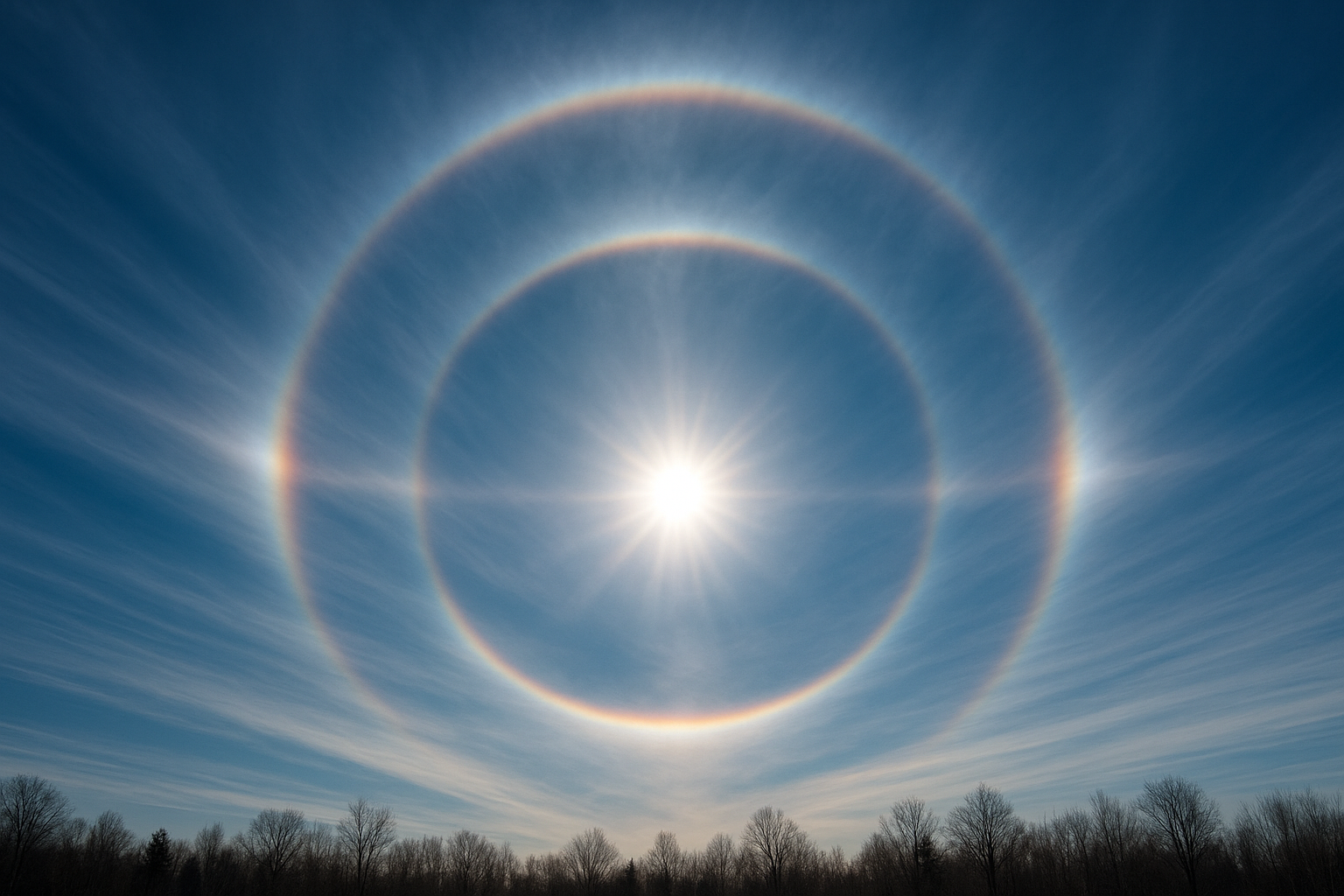
    Among the fascinating displays Mother Nature has to offer, the ethereal beauty of frozen halo rings stands out. These halo rings, with their mystical appearance, have captured human imagination and wonder throughout history. But what exactly are they, and how are they formed?

    The Science Behind Frozen Halo Rings

    Frozen halo rings are circular optical phenomena that encircle the sun or the moon. They occur due to the refraction, reflection, and dispersion of light through ice crystals suspended in the atmosphere. According to the American Meteorological Society, these halos typically appear when cirrostratus clouds—which are high-altitude ice crystal clouds—are present in the sky.

    • Refraction: As light passes through the hexagonal ice crystals, it is bent at a 22-degree angle. This bending of light causes the halo to be visible as a circle around the sun or moon.
    • Reflection: Some light is also internally reflected within the crystals, contributing to the brightness and defined edges of the halo.
    • Dispersion: The dispersion of light into different colors can sometimes result in the halo exhibiting a faint spectrum of colors.

    Historical and Cultural Significance

    Throughout history, frozen halo rings have been regarded as omens or mystical signs. Ancient cultures interpreted these halos as messages or warnings from gods. In a study conducted by the History Channel, researchers found that Vikings considered halos to be the shields of their gods, anticipating events of great importance.

    “Halos are a common atmospheric optical phenomenon observed all over the world, yet they never fail to capture the awe and curiosity of everyone who sees them.” — National Weather Service

    When and Where to See Frozen Halo Rings

    Frozen halo rings are most commonly seen during the winter months in polar and temperate regions, where cold temperatures and ice crystal clouds are more prevalent. However, they can appear at any time of year when the atmospheric conditions are right.

    Next time you spot a halo around the sun or moon, take a moment to appreciate this stunning atmospheric spectacle—a reminder of the beautiful intricacies of our planet’s weather systems. As science continues to unravel the mysteries behind such phenomena, our appreciation for these natural wonders only grows deeper.

  • Starlit Snowball Fights – How Angels Playfully Bless Us

    Starlit Snowball Fights – How Angels Playfully Bless Us

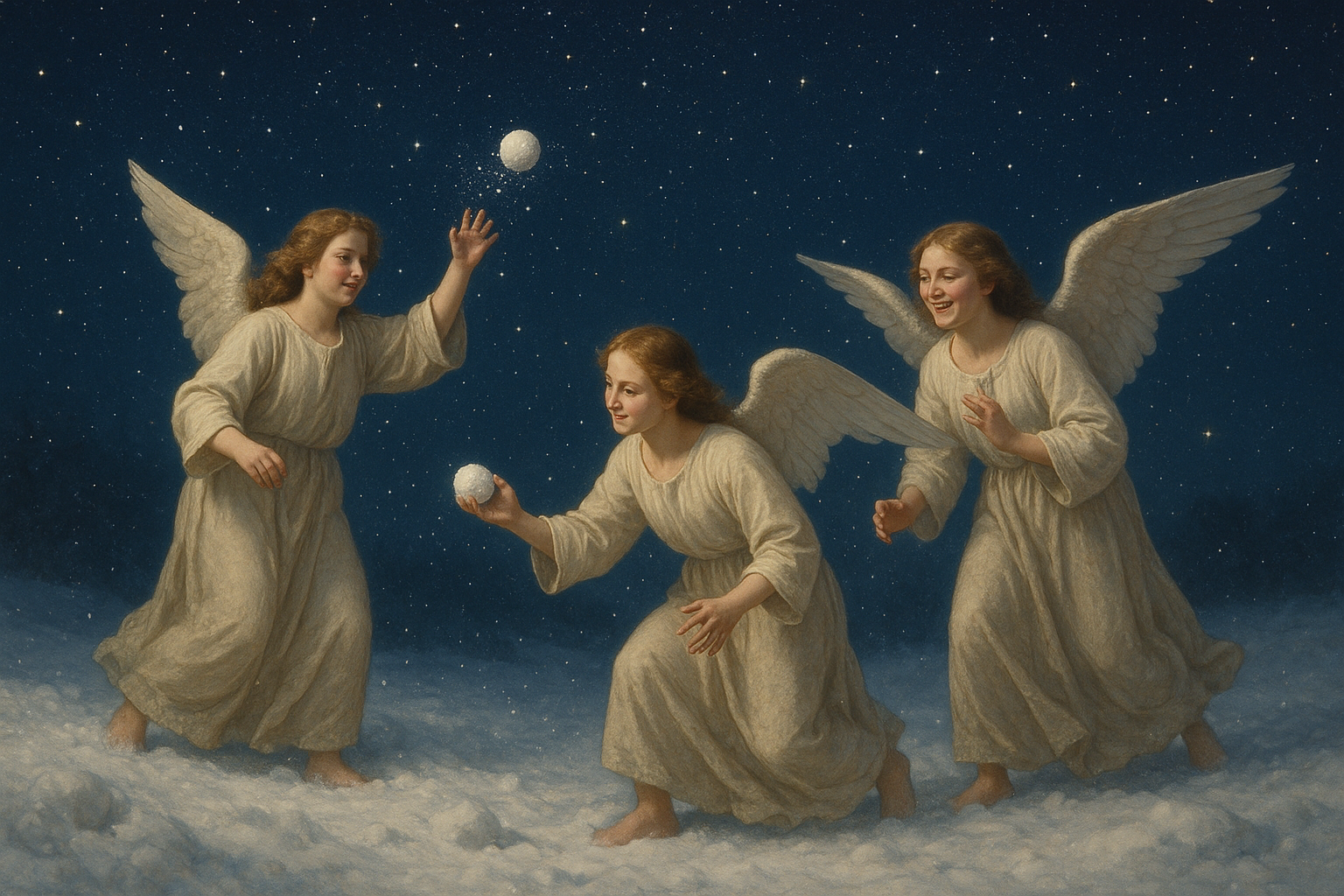
    The mystical playfulness of angels has long been a subject of fascination for those who believe in their existence. Among the many ways angels are said to interact with our world, few are as whimsical and enchanting as the idea of a starlit snowball fight.

    “The angels are nearer than we think, shining down on us, simple and patient as snow.”

    — Joan Walsh Anglund

    Picture a moonlit night, snowflakes gently dancing through the air, each flake a tiny celestial messenger. As the snow covers the earth in a blanket of purity and light, those who look closely might just imagine that angels are near, partaking in a divine frolic we might call a snowball fight.

    The Symbolism of Snow and Starlit Nights

    In many spiritual traditions, snow symbolizes the purity and peace brought forth by angels. The soft, untouched snow represents a fresh start, a clean slate gifted to us by celestial beings, embodying the divine nature of angelic presence. Starlit nights, with their ethereal glow, create a perfect backdrop for these mystical encounters, suggesting a universe alive with secrets.

    • Snowflakes, each unique, are often seen as gifts from angels, signifying individuality and divine beauty.
    • Stars symbolize guidance, and when they shine upon the earth, it’s as if the heavens are watching over us, joining in our earthly experiences.
    • Angelic play is thought to remind us to embrace joy and innocence, akin to the snowball fights of our childhood.

    How to Envision A Starlit Angelic Gathering

    Embrace the wintery chill with a heart open to possibilities. Stand beneath the stars, breathing in the frosty air. Let your imagination wander, picturing angels as ethereal beings who gather to play among the snow drifts. Listen for the delicate laughter of angels as they toss snowballs woven from magical, stardust-infused flakes.

    Author and angelologist Doreen Virtue writes, “Angels are pure souls who help us in any situation, and their love is abundant like freshly fallen snow.” This belief inspires us to feel their presence most keenly amidst the beauty of winter nights, when all seems possible.

    In essence, the concept of angels engaging in a starlit snowball fight serves as a gentle reminder that we are not alone. The universe may be vast, but perhaps it is also a place where divine beings share in our joy and innocence. Next time the snow falls thick and stars gleam bright, let this magic infuse your spirit, and you might just find yourself catching a snowball softly thrown by an angelic hand.

    For more on the mystical world of angels, visit Beliefnet.

  • Cinnamon and Celestials – Gentle Kitchen Magic

    Cinnamon and Celestials – Gentle Kitchen Magic

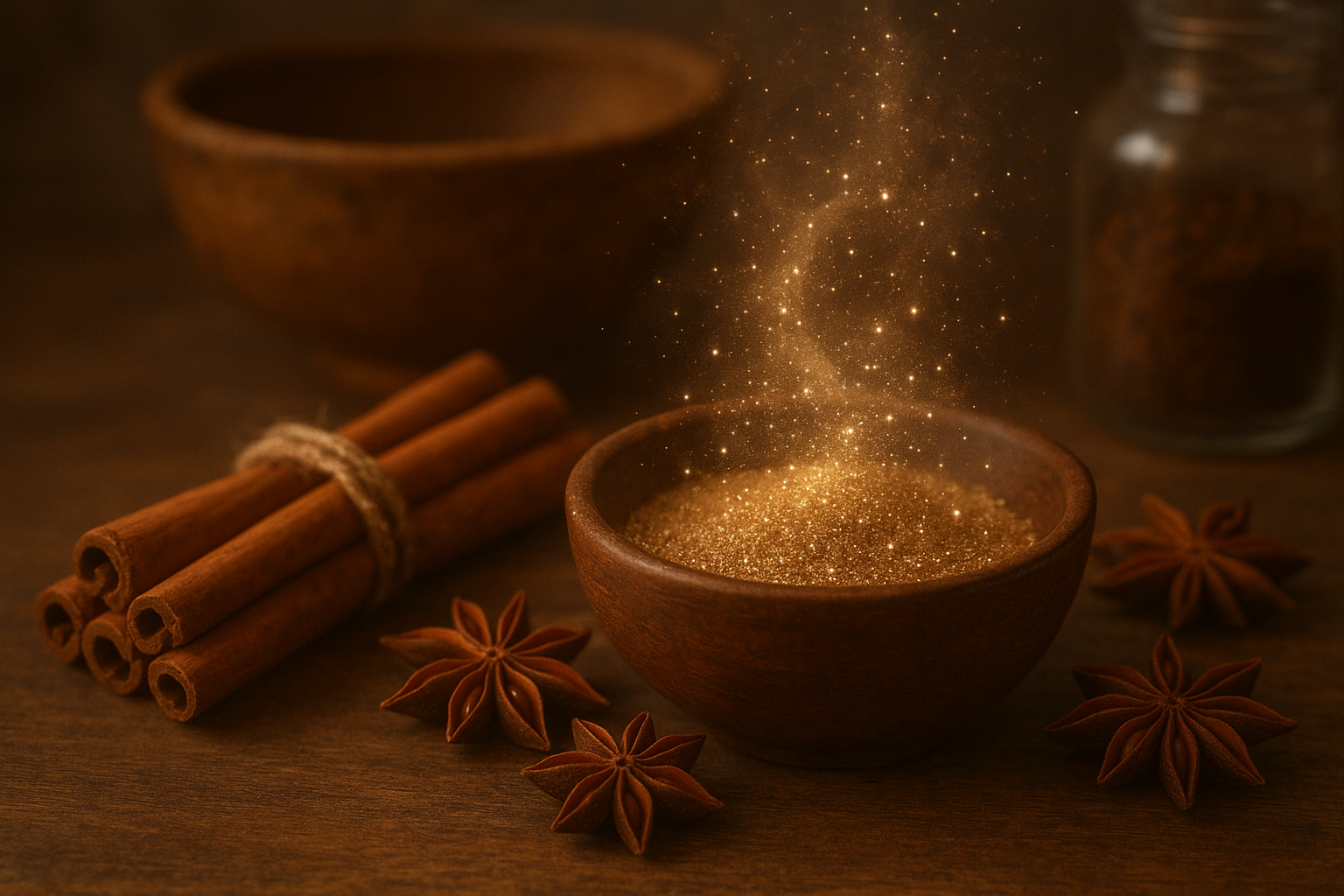
    The allure of the kitchen has always been intertwined with the mysterious and magical. Among the myriad of spices that adorn our pantry shelves, cinnamon holds a particularly mystical significance. Known not only for its warm, sweet flavor but also for its rich history in folklore and magic, cinnamon is celebrated by many cultures for its purported celestial powers.

    The Mystical Properties of Cinnamon

    For centuries, cinnamon has been cherished as more than just a culinary spice. In ancient times, it was a highly prized commodity, often worth more than gold. Its mystical aura is noted in numerous traditions:

    • Egyptian Rituals: Used in ancient Egypt for embalming and as an offering to deities, showcasing its otherworldly associations.
    • Ancient Rome: The Romans would burn cinnamon during funerals, as it was believed to purify the soul and aid its journey to the afterlife.
    • Traditional Chinese Medicine: Valued for its ability to increase circulation and warmth, cinnamon is seen as a remedy for cold, stagnant energies.

    These traditions reflect the belief that cinnamon carries an energy that transcends its physical properties, bridging the earthly and the celestial.

    Cinnamon in Modern-Day Magic

    Today’s practitioners of kitchen magic often incorporate cinnamon into their practices for its association with prosperity, protection, and love. Using it in simple, everyday rituals can bring a sense of magic and intention into the mundane:

    • Prosperity and Abundance: Sprinkle a pinch of cinnamon into your morning coffee or tea, while visualizing wealth and success coming your way.
    • Protection Spells: Place a small bowl of cinnamon sticks at your home’s entrance to ward off negative energies.
    • Enhancing Love: Add cinnamon to homemade treats to infuse them with warmth and affection. As famed culinary author Julia Child once said, “People who love to eat are always the best people.”

    The Celestial Connections

    “In astrology, cinnamon is linked to the sun, bringing warmth and a spark of divine creativity to those who embrace its energy.”

    The celestial connection of cinnamon suggests it can be used to channel energy from the cosmos, offering a cosmic boost to your physical and spiritual wellbeing.

    Whether through culinary delights or magical rituals, cinnamon remains a potent spice that bridges the earthly and cosmic realms. Its gentle energy is a reminder that the kitchen is not just a place of sustenance, but also a sanctuary where magical possibilities can unfold.

  • The Playful Sigil – Arcane Symbols That Wink Back

    The Playful Sigil – Arcane Symbols That Wink Back

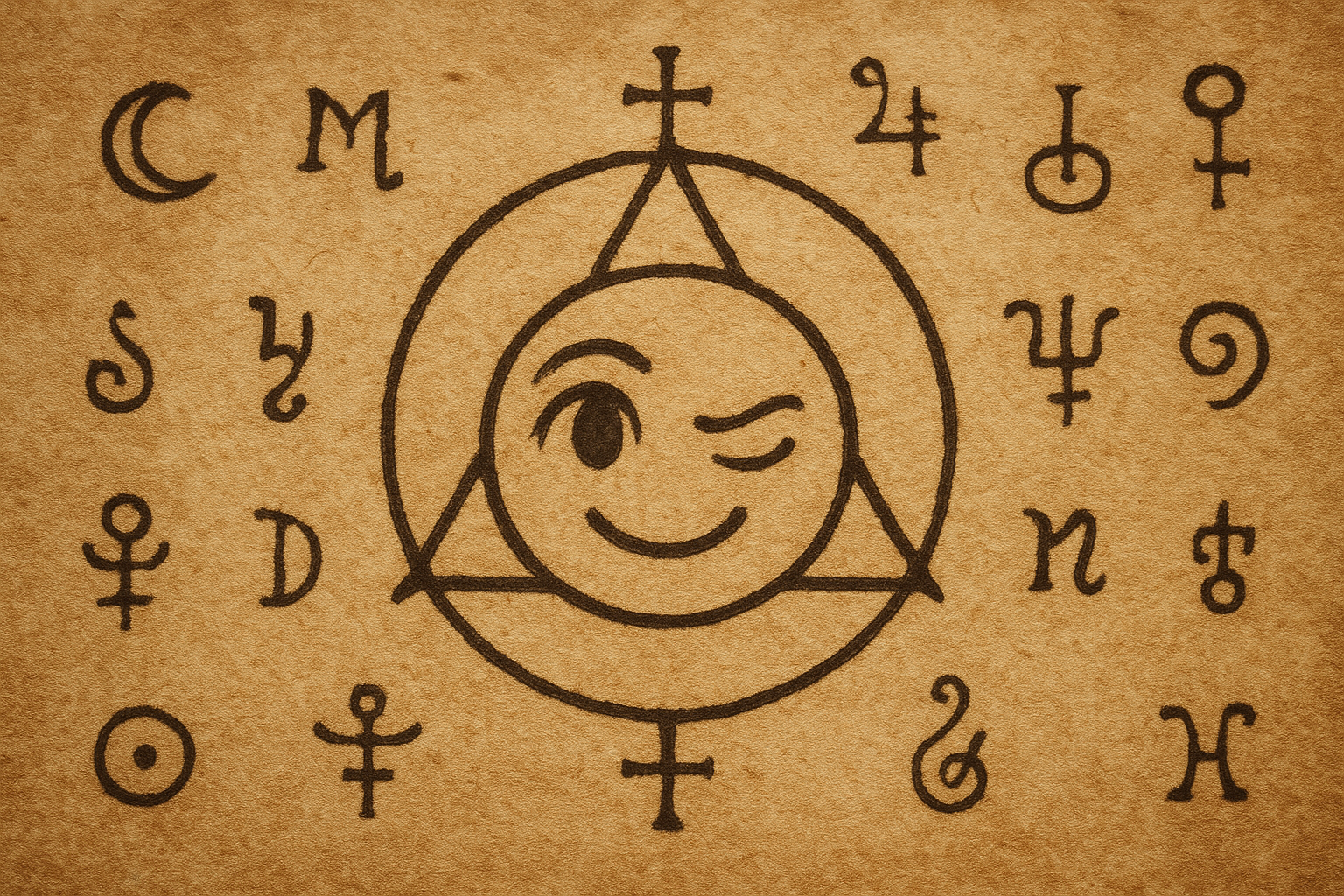
    In the realm of the mystical, where imagination intertwines with belief, the concept of sigils stands out as a curious bridge between the unseen forces of the universe and the tangible reality of the human psyche. Often depicted as scribbled symbols that encapsulate intent, sigils are more than mere doodles of the mystical world—they are whispers of ancient magic, designed to manifest desires, alter consciousness, or invoke protective energies. Yet, some of these arcane symbols seem to carry with them a playful hint, a suggestion of mirthful, hidden knowledge that winks back at their creators.

    A Brief History of Sigils

    Sigils have roots that stretch deep into antiquity, with their usage documented across various cultures and epochs. The term “sigil” itself is derived from the Latin word sigillum, meaning “seal.” Historically, these symbols served as a representation of divine names, often carved into amulets and talismans that were thought to possess protective or magical properties.

    • Ancient Cultures: In Mesopotamia, scholars invoked the god Enki through symbols etched into clay tablets, while in Norse traditions, runes were inscribed to call upon the power of deities like Odin.
    • Medieval Times: The grimoires of medieval Europe are replete with sigils, crafted often as part of complex rituals designed to summon spirits or angels. The “Lesser Key of Solomon,” a notorious collection of occult manuscripts, describes numerous sigils used to bind demons to the magician’s will.
    • Modern Occultism: The resurgence of interest in the occult during the 19th and 20th centuries furthered the development of sigils, with figures like Aleister Crowley and Austin Osman Spare refining the practice into contemporary forms.

    The Craft of the Sigil

    The process of creating a sigil can be as structured or as free-form as the practitioner desires. Typically, it involves a series of steps designed to focus intention and harness energies:

    1. Statement of Intent: The practitioner begins by clearly articulating a desire or wish, such as “I attract prosperity and health.”
    2. Letter Elimination: Repetitive letters are removed from the phrase, simplifying it to its essence.
    3. Symbolic Design: The remaining letters are creatively merged or distorted into a unique symbol, personal and powerful in its obscurity.
    4. Charging and Release: The sigil is then charged, often through meditation, visualizations, or rituals, and finally “released” into the subconscious or the universe to do its work.

    Sigils With a Sense of Humor

    While the solemnity of ceremonial magic has historically dominated the use of sigils, there exists a realm where symbols lighten up, reflecting the whimsical nature of their crafters. These are the playful sigils—arcane marks that seem to have a cheeky character of their own.

    “The essence of magic is intent and humor, always remember that magic is about will,” said Terry Pratchett, whose works often reflect the subtle connections between the mystical and the mundane.

    A playful sigil may appear as a jest, capturing the dynamic and humorous side of magical practice. For some practitioners, injecting humor into their work with sigils allows them not only to demystify magic but also to celebrate life’s unpredictable and joyful nature.

    The Psychology of Playful Sigils

    Magic requires belief, but belief comes easier with the suspension of disbelief, often achievable through humor. Psychologically, playfulness in sigils could serve as a method to bypass the conscious mind’s filters and engage directly with the subconscious. When the conscious mind is distracted by a laugh or a smirk, the subconscious can more easily accept and work with the intent encoded within the sigil.

    Moreover, humor can alleviate the pressure of high-stakes outcomes often associated with magic. By infusing sigils with a playful spirit, practitioners can approach their craft with a detachment, allowing them to release their desires without overattachment—paradoxically a key principle in magical success.

    Modern Adaptations and Cultural References

    The playful sigil has found its way into modern pop culture, particularly in fiction and art, emphasizing its broad and flexible appeal. Consider the whimsical glyphs found in works like “Harry Potter”, where the very language of magic can sometimes feel like a dance of imagination as much as a tool of wizardry.

    Additionally, the internet has become a fertile ground for these modern mystical expressions. Online communities centered around chaos magic and personal spirituality frequently share instructional stories on creating sigils focused on the absurd, manifesting everything from minor miracles to true love through a blend of intention and lightheartedness.

    Conclusion

    The world of sigils is as vast and varied as the human spirit. While many approach this practice with solemnity and gravity, there is undeniable power in approaching the mystical with a sly grin. The playful sigil, with its humble origin as a seal and mark of intent, has evolved into an element of arcane expression where humor, creativity, and the sacred intersect. Whether seeking to manifest profound change or simply to giggle at the cosmic joke, these symbols offer more than just a path to power—they offer a gentle wink from the universe itself.