Tag: mythology

  • The Forgotten Pantheon – Mythology of Lost Civilizations

    The Forgotten Pantheon – Mythology of Lost Civilizations

    The Forgotten Pantheon: Mythology of Lost Civilizations

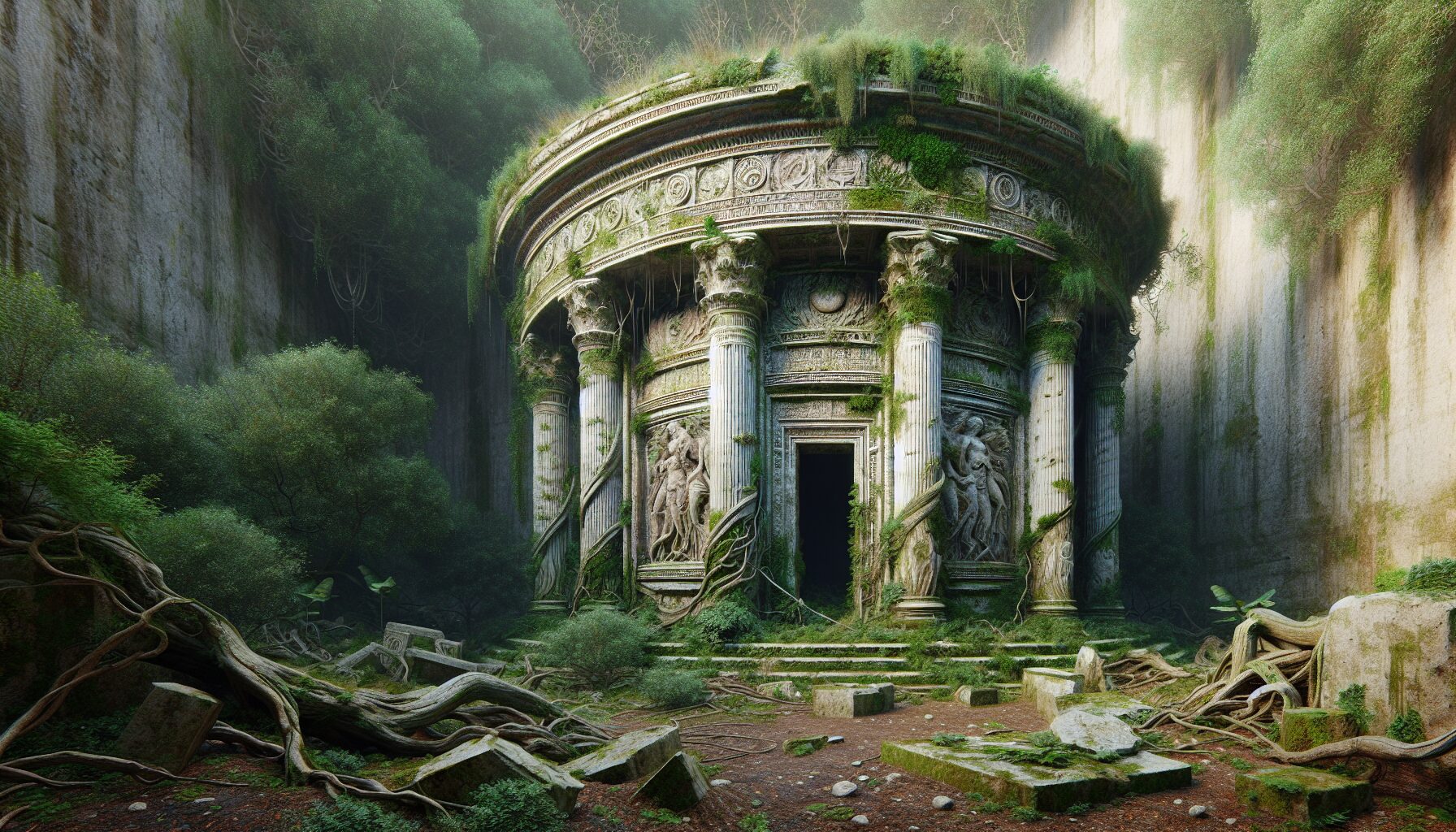
    The world is replete with myths and legends that have shaped the cultural and spiritual landscapes of societies throughout history. However, there are myths from ancient civilizations that have been largely forgotten, overshadowed by the tales of more dominant cultures. This article delves into the mythology of these lost civilizations, exploring the divine narratives that once held profound significance for peoples whose stories have been partially erased by time.

    The Hittites: Masters of Anatolia

    Among the lesser-known civilizations that thrived in the ancient world were the Hittites, who reigned over much of Anatolia from approximately 1600 to 1178 BCE. Their pantheon was as elaborate as those of their more renowned contemporaries, encapsulating a fusion of indigenous gods and deities assimilated from surrounding cultures.

    • Teshub: The storm god, Teshub was a central figure in Hittite mythology. Symbolizing power and might, he was often portrayed wielding thunderbolts and was deemed the ruler of heaven and earth. According to myth, Teshub’s struggle and ultimate victory over his father, Kumarbi, is reminiscent of other divine succession myths, including the Greek tale of Zeus and Cronus.
    • Hannahanna: The mother goddess, Hannahanna, played a vital role in Hittite religious life. Her story often intertwines with agricultural cycles, depicting themes of death and rebirth. Her association with the earth and fertility mirrors that of goddesses such as Demeter in Greek mythology.

    To learn more about the Hittite pantheon, see Hittite mythology on Wikipedia.

    The Olmec Civilization: Giants of Mesoamerica

    Moving westward, the Olmecs of Mesoamerica, flourishing from around 1500 to 400 BCE, were another civilization whose legends have largely faded into obscurity. The Olmecs are often referred to as the “mother culture” of Mesoamerica, laying the groundwork for subsequent civilizations like the Aztec and Maya.

    • The Maize God: Central to Olmec religion and later Mesoamerican mythologies was the Maize God, illustrating the immense importance of maize as both a staple and a sacred symbol of life. Representations of the Maize God reveal the interconnection between agriculture and divine providence.
    • Feathered Serpent: Known as Quetzalcoatl in later Aztec religion, the Feathered Serpent was a figure of both creation and destruction among the Olmecs. This deity represented the dual nature of life, balancing creation with chaos, and was significant in shaping the worldviews of Mesoamerica’s inhabitants.

    Explore further about the Olmec civilization and mythology in Olmec Religion.

    The Etruscans: Divine Mysteries of Italy

    In the heart of Italy, the Etruscans flourished between the 8th and 3rd centuries BCE. While overshadowed by their Roman successors, the Etruscans possessed a vibrant and complex pantheon that has intrigued historians and archaeologists alike.

    • Tinia: As the supreme deity, Tinia presided over the heavens and was often equated with the Greek Zeus and the Roman Jupiter. Tinia’s capacity to wield lightning affirmed his role as a powerful enforcer of cosmic order.
    • Uni: Uni, often identified with Juno, was the Etruscan goddess of fertility and marriage. Her worship highlights the Etruscan focus on family and social stability as integral to community life.

    The Etruscans also practiced religious rites that remain partially mysterious, but their texts and tombs suggest a belief system rich in divination and ancestral veneration. For additional insights, refer to Etruscan religion on Wikipedia.

    Legacy and Influence

    Despite their relative obscurity in the modern world, the myths and legends of these civilizations have had lasting impacts on cultural and religious thought. As historian Joseph Campbell famously remarked, “Myths are public dreams, dreams are private myths,” capturing the enduring truth that such narratives shape both collective and individual identities.

    Through archaeological discovery and scholarly interpretation, the pantheons of these lost civilizations come to life, reminding us of the diverse tapestries of belief that woven through human history. These myths serve as crucial windows into the ways ancient societies understood the cosmos and their place within it.

    “Myths are public dreams, dreams are private myths.” – Joseph Campbell

    As we continue to unearth and reexamine these forgotten stories, their resurrection offers invaluable insight into the complexities and commonalities of human experience across the ages. By remembering the forgotten pantheon, we honor the rich legacies of civilizations that might otherwise be lost to the shadows of history.

  • Nightfall Synchronicity – Darkness as Cosmic Signal

    Nightfall Synchronicity – Darkness as Cosmic Signal

    The concept of nightfall synchronicity and its exploration as a cosmic signal is an intriguing facet of mythology, philosophy, and even astronomical studies. Darkness, the absence of light, has captivated human imagination for millennia, serving as a canvas for stories, theories, and spiritual insights that extend across various cultures and epochs.

    The Mythological Foundations of Darkness

    Across cultures, darkness has often been personified and revered in mythology. In ancient Egypt, Nun, the primordial waters of chaos represented not only a lack of illumination but the potential for creation. Similarly, the Greek mythological figure Nyx, the goddess of the night, embodied the profound respect and awe associated with darkness. Hesiod, in his work Theogony, stated, “Nyx carried great power and mystery, ruling the night effortlessly and silently with a presence that even the mighty Zeus refrained from challenging.”

    Philosophical Interpretations of Darkness

    Darkness extends beyond mythology into the realm of philosophical inquiry. Nietzsche, in his contemplations on existentialism, mused on the interplay between light and shadow, offering a perspective that darkness is not merely the absence but a component of all existence. He once remarked, “All truly great thoughts are conceived by walking in the dark.” This Nietzschean perspective invites introspection on the potential revelations hidden within the nocturnal shroud.

    “In order for the light to shine so brightly, the darkness must be present.” – Francis Bacon

    Cosmic Signals: Astrological and Astronomical Perspectives

    • Astrology: Many astrological traditions associate nightfall with a change in cosmic influences. In Vedic astrology, the Rahu and Ketu cycles highlight shadow periods, considered significant for introspection and spiritual growth.
    • Astronomy: Astronomically, the onset of night heralds the opportunity to observe celestial bodies, free from the sun’s overpowering light. It is during these hours that the vastness of the universe unfolds. Neil deGrasse Tyson, a modern advocate for cosmic appreciation, stated, “The real voyage of discovery consists not in seeking new landscapes, but in having new eyes”—a testament to nightfall’s role in unveiling our place in the cosmos.

    Psychological Dimensions of Darkness

    Psychologically, darkness often symbolizes the deeper, unknown parts of the psyche. Carl Jung famously included the concept of the “shadow” aspect of the psyche, an exploration of the unconscious. Jung proposed that engaging with our personal darkness can lead to profound personal insights and transformation.

    “Knowing your own darkness is the best method for dealing with the darknesses of other people.” – Carl Jung

    Ritual and Spiritual Practices

    Many spiritual traditions emphasize the importance of darkness in rituals and meditative practices:

    • Dhyana: In Hinduism, the practice of Dhyana or deep meditation often occurs before dawn or as night falls, harnessing the tranquility of darkness to aid in spiritual focus.
    • Samhain: The Celtic festival of Samhain marks the transition into the darker half of the year. It is a time when the veil between worlds is believed to thin, allowing for spiritual communication.

    Cultural Depictions of Nightfall Synchronicity

    Art and literature have long explored the symbolism of darkness. The Romantic poets, for instance, found in nightfall a source of inspiration and introspection. In Lines Composed a Few Miles Above Tintern Abbey by Wordsworth, the serenity of twilight evokes deep contemplation and connection with nature.

    In contemporary art, the concept of darkness continues to inspire. The works of James Turrell, an artist known for his explorations of light and space, utilize darkness to enhance the perception of light, creating meditative experiences that echo the themes of nightfall synchronicity.

    Conclusion: Embracing Darkness as a Cosmic Signal

    In conclusion, nightfall synchronicity and the perception of darkness as a cosmic signal extend through various domains—from mythology and philosophy to astrology, psychology, and culture. It encourages us to embrace the unknown and the unseen as integral parts of not only our existence but the universe itself. In an age dominated by constant illumination and rapid information exchange, the wisdom within darkness offers a timeless reminder to look inward and upward, to converse with the cosmos as our ancestors once did beneath the starlit canopy of night.

  • The Titan\’s Atlas – Mythology of Other Worlds

    The Titan\’s Atlas – Mythology of Other Worlds

    The Titan’s Atlas – Mythology of Other Worlds

    Throughout human history, myths and legends have served as windows into the intriguing cultures and values of societies. One such myth, captivating in its depth and symbolism, is that of Atlas, the mighty Titan tasked with holding up the sky. From ancient Greece to modern interpretations, Atlas symbolizes the enduring burdens and responsibilities that transcend the earthly realm, hinting at a mythology of other worlds.

    The Burden of Atlas

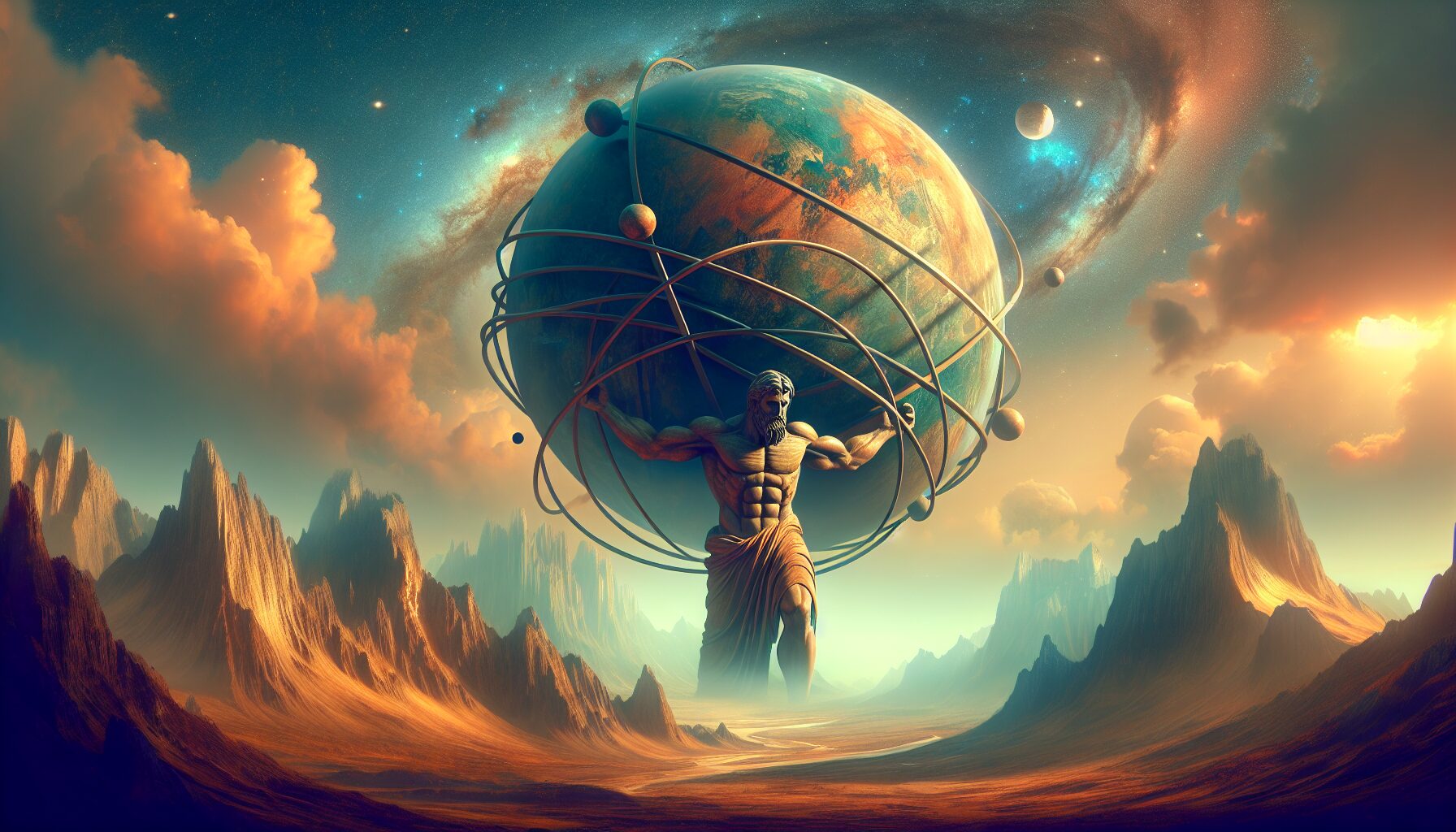
    In Greek mythology, Atlas was a Titan condemned to hold up the heavens for eternity as a punishment for his role in the Titanomachy, the epic battle between Titans and Olympians. This image of Atlas, muscles straining under the celestial weight, has been immortalized in art and literature, representing more than just physical strength. The story of Atlas reflects the theme of enduring responsibility and perseverance through insurmountable challenges.

    “Atlas, the founder of astronomy, showed mankind the turning sky, holding up celestial forces which are the source of our understanding of the universe.” – Diodorus Siculus

    Interpreting Atlas Across Cultures

    As the myth of Atlas spread, it evolved, intertwining with various cultural motifs and philosophies. In Roman interpretations, Atlas became associated with astronomical knowledge, a fitting representation of the Titan’s connection to the cosmos. The enduring power of Atlas’s image invites parallels to mythologies from across the globe, where colossal figures often depict links between earth and the divine.

    In Norse mythology, for instance, the cosmic ash tree Yggdrasil holds the universe together. According to the Encyclopedia Britannica, it symbolizes the structure of the cosmos, much like the myth of Atlas embodies a foundational pillar connecting earthly and celestial realms. Both myths convey the intricate balance and interconnectedness of all existence.

    The Titan’s Role in Modern Culture

    Today, Atlas’s legacy continues in a myriad of ways, from literature and film to brand names and logos, underscoring its enduring influence. The symbolism of Atlas has even transcended into scientific exploration, with namesakes like the National Aeronautics and Space Administration (NASA) Atlas program, which hints at the quest to support new realms beyond Earth.

    • Atlas as an icon of resilience
    • Representation in art and pop culture
    • Inspiration for scientific exploration

    The story of Atlas reminds us of the broader human struggle to understand our place in the universe while carrying our own burdens. As we explore other worlds, both mythological and physical, Atlas serves as a powerful symbol of strength, perseverance, and curiosity.

  • The Demon\’s Mirror – Archetypes of the Underworld

    The Demon\’s Mirror – Archetypes of the Underworld

    The Demon’s Mirror – Archetypes of the Underworld

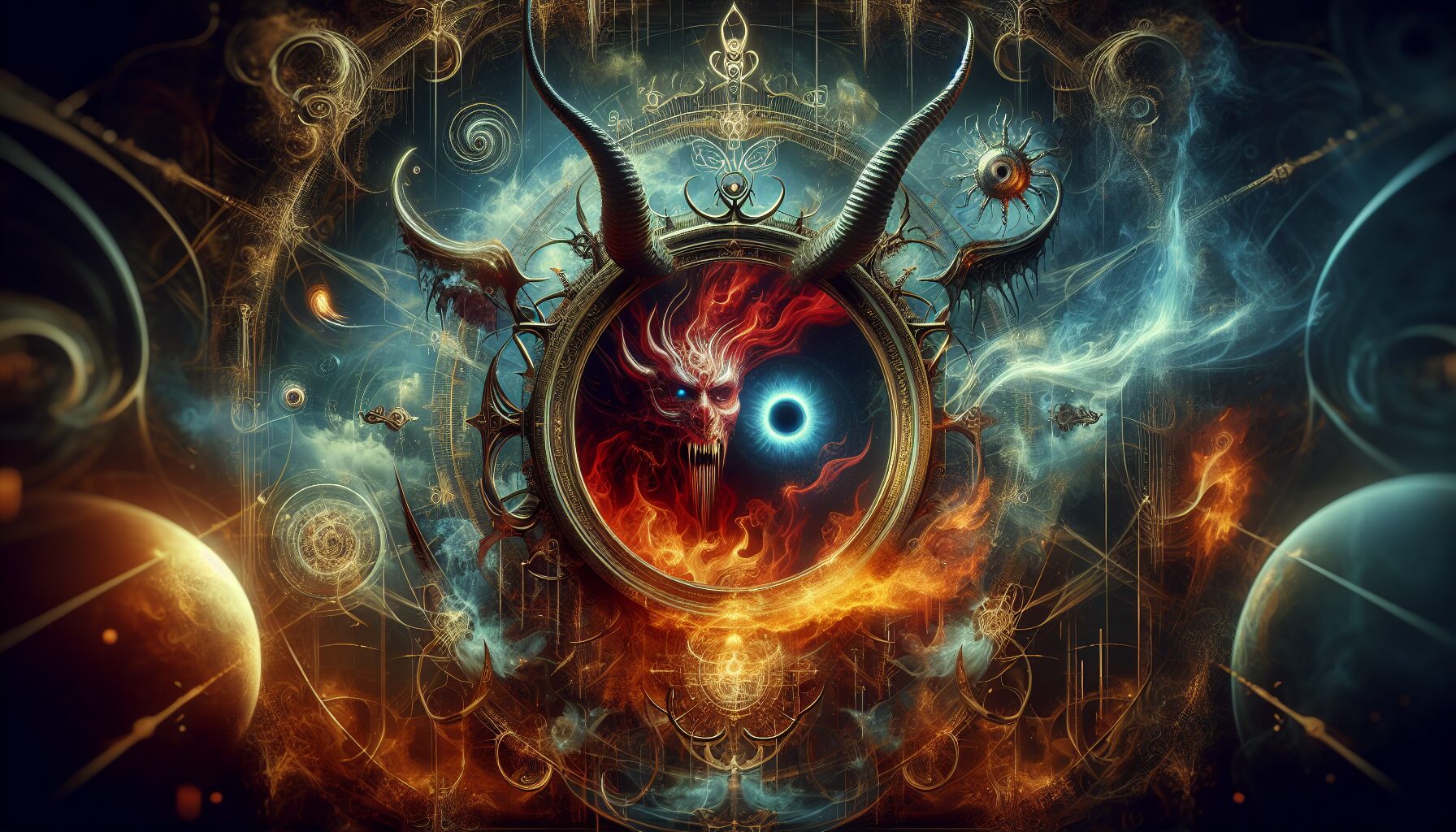
    The underworld has captivated human imagination for millennia, serving as a repository for fears, anxieties, and dark reflections of the human condition. In this exploration, we delve into the rich tapestry of archetypes that populate these shadowy realms, drawing from mythology, literature, and psychology. From terrifying demons to cursed souls, the dwellers of the underworld echo the complexities and dualities of humanity itself.

    The Descent into Darkness: Mythological Origins

    Mythologies around the world depict the underworld as not only a final destination but also a realm of transformation. In Greek mythology, the underworld ruled by Hades was a place where the souls of the deceased resided, a domain as inevitable as it was forbidding. Hades himself is an archetype of the ruler of shadows, embodying both the impartiality and the inexorability of death.

    Similarly, in Norse mythology, Hel, the underworld presided over by the goddess Hel, acts as a realm of both the living and the dead, a place where the boundaries between life and oblivion blur. These mythology-rich realms highlight the duality of the underworld as a place of both punishment and essential transformation.

    The Archetypes of the Underworld

    • The Gatekeepers

      The guardians of the underworld are often fearsome and imposing figures, such as the multi-headed canine Cerberus in Greek mythology, whose presence prevents souls from escaping and the living from intruding. In Egyptian mythology, Anubis serves as a protector of graves and a guide of souls, embodying both protection and judgment.

    • The Judges

      Figures who weigh the hearts and deeds of souls are prevalent across cultures. In the Egyptian afterlife, Osiris oversees the weighing of the heart against the feather of Ma’at—truth. This archetype speaks to humanity’s intrinsic understanding of justice and moral reckoning beyond mortal life.

    • The Spirits of the Damned

      These lost souls inhabit the shadowy recesses of the underworld, tormented by their choices or as victims of cruel fates. Their narratives serve as moral lessons or warnings about vice and folly. Dante’s Inferno richly depicts these archetypes, with sinners consigned to various circles of hell as representations of their earthly vices.

    • The Demonic Intruders

      From infernal tempters to corruptive spirits, demons represent the chaotic forces of the underworld that intrude upon the mortal realm. They often act as adversaries to humanity, challenging moral integrity and resilience. In religious texts, demons test faith and seek to disrupt the cosmic order, encapsulating the eternal struggle between good and evil.

    • The Guides and Saviors

      In many tales, figures emerge to lead others safely through the perils of the underworld. For instance, Dante’s Virgil is a guiding presence through the infernal depths to the hope of salvation. These archetypes symbolize wisdom, hope, and the possibilities of redemption and resurgence even in the darkest of times.

    The Psychological Underpinnings

    The archetypes of the underworld are not confined to mythology alone but also resonate deeply within the field of psychology. Carl Jung’s theories of the collective unconscious and archetypes suggest that these stories reflect universal patterns of human experience. Jung describes the “Shadow” as the dark side of the psyche, which we contain within us.

    “The shadow is the moral problem that challenges the whole ego-personality, for no one can become conscious of the shadow without considerable moral effort.” – Carl Jung

    These archetypes are embodiments of the shadow self, representing the repressed elements of our identity that, when acknowledged, lead to self-discovery and healing. The journey through the underworld becomes a metaphor for introspection—a necessary confrontation with the self’s darker aspects.

    The Cultural Reflections

    The portrayals of underworld archetypes across different cultures invite us to consider how societies have understood death, morality, and existence. The underworld, with its narratives, propels us to reflect on existential questions—what lies beyond our mortal experience, and how do our choices reverberate in the eternal schemes of existence?

    Literature and film continue to engage with these themes, with stories from Edgar Allan Poe to modern cinematic portrayals like The Lord of the Rings and Harry Potter, where protagonists brave their own underworlds as part of their heroic journeys.

    These cultural artifacts uphold the legacy of the archetype, each contributing to the evolving tapestry of how the underworld is perceived and imagined throughout human history.

    Conclusion: Embracing the Shadows

    The archetypes of the underworld reflect multidimensional aspects of life and the human psyche. They offer insight into the balance of light and dark, of creation and destruction, serving as invaluable mirrors to our deepest fears and hopes. Within these narratives lie profound truths about the self and society, inviting us to embrace both our light and our shadows for a fuller understanding of the human experience.

    To explore these archetypes and their modern interpretations further, you might visit resources such as Britannica’s Underworld Page and Carl Jung’s works on archetypes and the collective unconscious.

    Ultimately, the underworld, with its mystique and terror, serves as an essential component of human identity—a perpetual reflection of our inner struggles and quest for meaning beyond the veil of death.