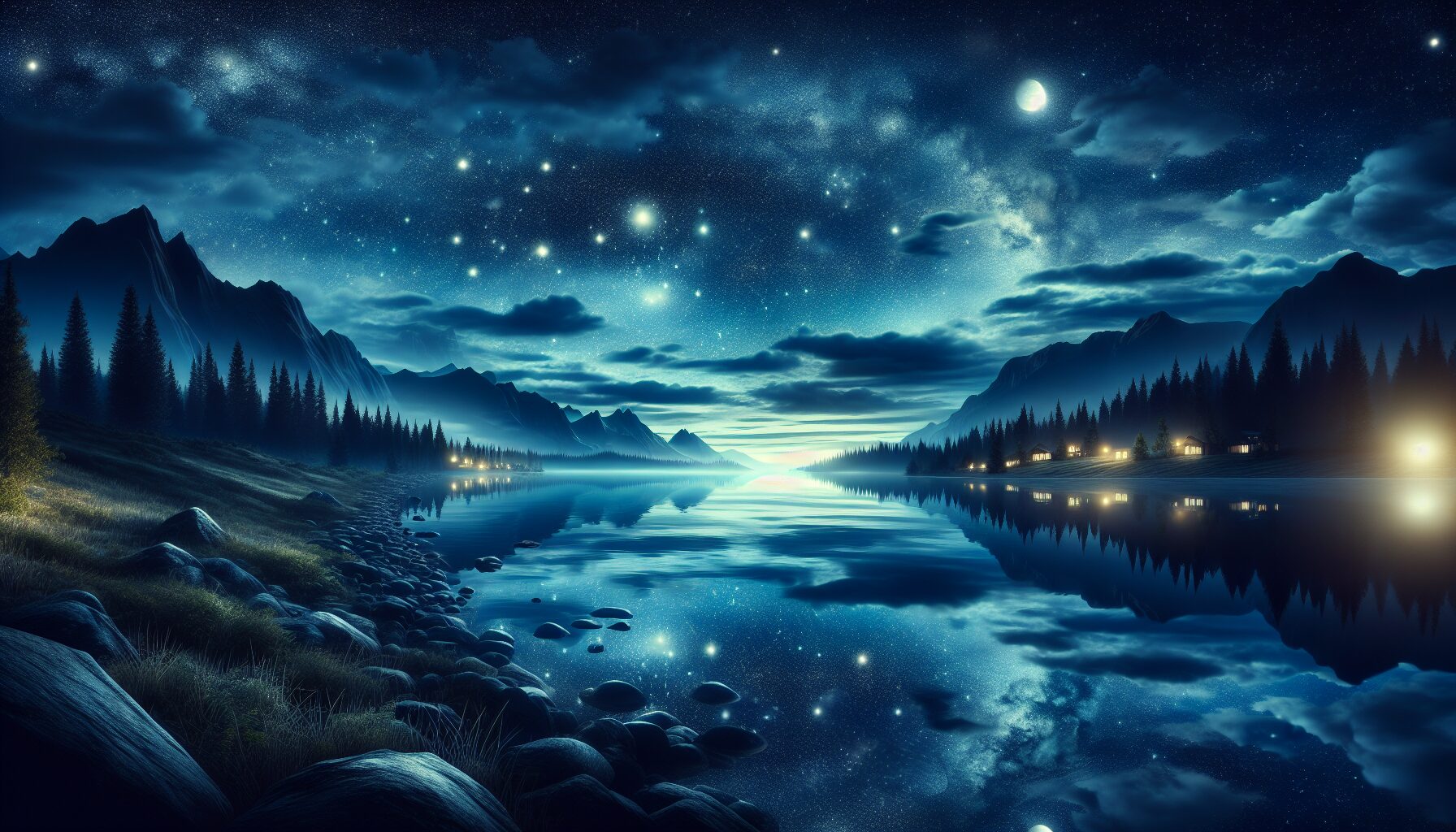
Tag: night

  • The Night’s Whisper – Darkness as Mystic Teacher

    The Night’s Whisper – Darkness as Mystic Teacher

    The Night’s Whisper: Darkness as Mystic Teacher

    In the quiet embrace of night, when the clamor of day subsides, darkness emerges as a profound teacher. It is often when the world seems stillest that the most profound lessons are whispered. Embracing the night, with its mysteries and shadows, offers unique insights into the human psyche and the universe at large.

    The Mystical Allure of Darkness

    For centuries, darkness has been shrouded in awe and mystery. Philosophers and poets alike have sought to understand its allure and the truths it holds. According to Khalil Gibran, “Darkness may hide the trees and the flowers from the eyes but it cannot hide love from the soul.” This suggests that darkness, far from merely obscuring, invites introspection and reveals deeper truths.

    Embracing the Shadow

    The concept of the ‘shadow self’ has long been discussed in psychological circles. Carl Jung, the Swiss psychiatrist and psychoanalyst, emphasized the importance of acknowledging and integrating our shadow. He believed that acknowledging this hidden part of ourselves is crucial for personal growth. As Jung asserted, “One does not become enlightened by imagining figures of light, but by making the darkness conscious.” This act of facing the darkness within allows individuals to uncover and understand their true nature.

    “Into the darkness they go, the wise and the lovely.” — Edna St. Vincent Millay

    Nurturing Creativity and Reflection

    The night, with its enveloping darkness, becomes a canvas for the imagination. Many creative minds have found inspiration in the solitude and stillness of the night. For instance, Mary Shelley famously conceived the idea for Frankenstein during a dark and stormy night. Darkness provides a space for reflection and innovation, unencumbered by the distractions of the daytime.

    Conclusion: Lessons in Silence

    In a society that often fears the unknown and glorifies constant activity, the night serves as a gentle reminder of the importance of pause and reflection. Embracing darkness can lead not only to self-discovery but also to a deeper connection with the world around us.

    • Find solace in the tranquility of night.
    • Listen to the lessons that shadows impart.
    • Embrace the mysteries that darkness offers.

    Through the whispers of the night, one finds a pathway to understanding and enlightenment, guided by the silence and darkness that surrounds.

  • Nocturnal Scriptures – Darkness and Arcane Ritual

    Nocturnal Scriptures – Darkness and Arcane Ritual

    Nocturnal Scriptures – Darkness and Arcane Ritual

    body {
    font-family: Arial, sans-serif;
    line-height: 1.6;
    margin: 20px;
    }
    h1, h2 {
    color: #333;
    }
    em {
    color: #555;
    }

    Nocturnal Scriptures – Darkness and Arcane Ritual

    The mysteries of the night have long captivated the human imagination, inspiring legends, myths, and religious texts that delve into the heart of darkness. Across cultures and centuries, nocturnal scriptures have emerged that illuminate the sacred and the mystical aspects of the night.

    The Symbolism of Darkness

    Darkness often symbolizes the unknown—the realm of potential and fear. In many religious and mystical traditions, night is seen as a time of reflection and inner discovery. The cover of darkness invites not only physical rest but also a spiritual and intellectual journey into the depths of the psyche.

    In his book, The Secret Teachings of All Ages, Manly P. Hall writes,

    “The darkness of the night signifies the mystic veil which shrouds divinity.”

    This concept of darkness being a veil or a medium for divine understanding is a recurring theme across many nocturnal scriptures.

    Arcane Rituals and Cult Practices

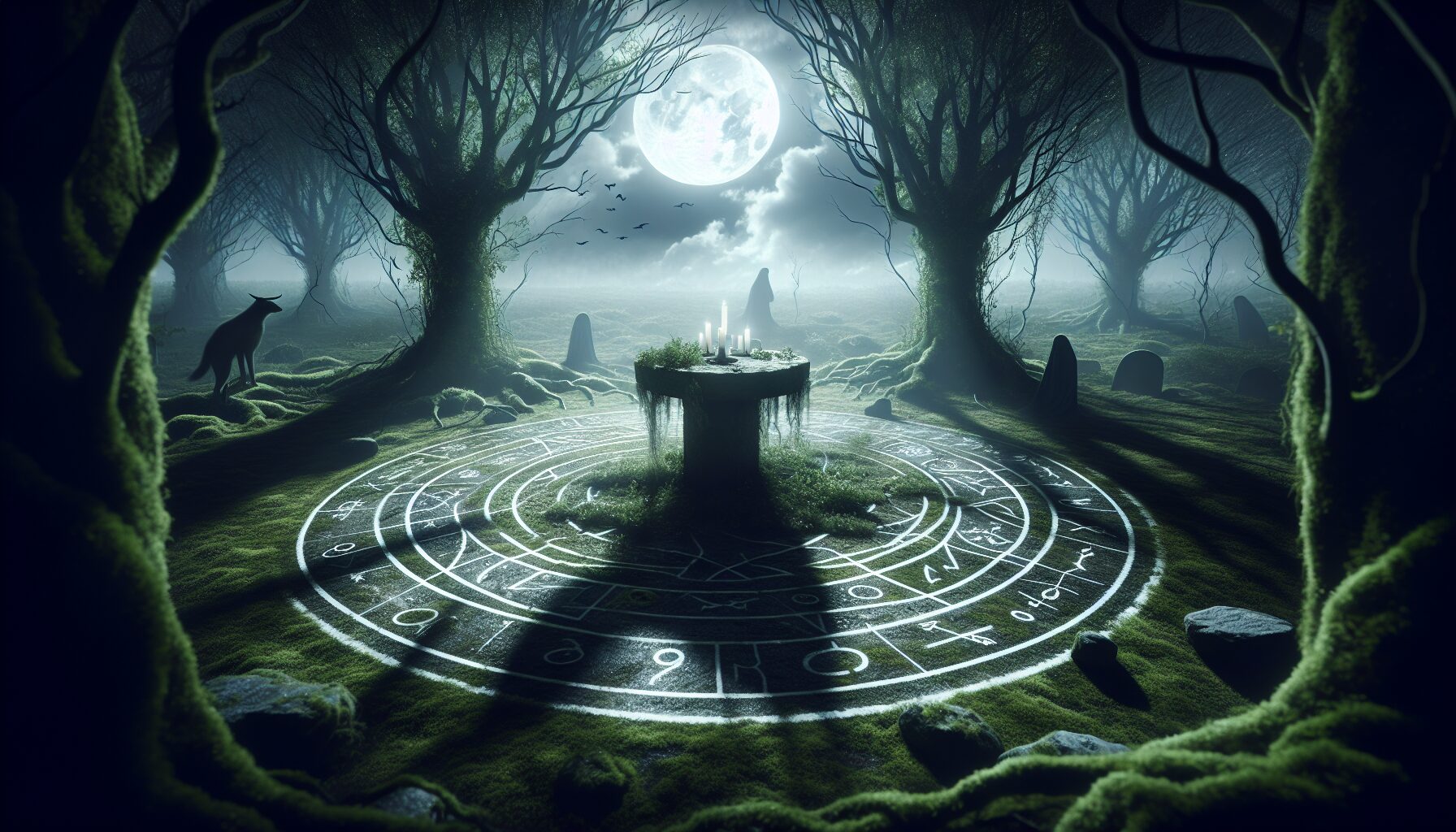
    Whether through the quiet solitude of a monk’s prayer or the clandestine gathering of an esoteric society, nocturnal rituals have been a way to connect with the divine or dabble in the arcane. These rituals often involve engaging with the elements of nature—fire, water, air, and earth—under the cloak of night.

    • Wiccan Esbats: These are full moon gatherings where practitioners perform rituals to honor the goddess and deepen their connection with the lunar cycle.
    • Hindu Shivaratri: Devotees fast and maintain a vigil, chanting and meditating through the night in reverence of Lord Shiva.

    The night’s rituals are designed not only to seek communion with deities but also to unveil hidden truths. In ancient Greece, the Eleusinian Mysteries were celebrated in darkness and only revealed to initiated members, emphasizing transformation through understanding hidden knowledge.

    Cultures and Scriptures: An Overview

    Across the world, nighttime spirituality has found expression in various forms. The Zohar, a foundational work in Jewish mysticism, often describes night as a metaphor for the mysteries of the universe. Within this work, the concept of “the secret of the night” represents profound spiritual wisdom accessible only through devout study and contemplation.

    Similarly, in Islam, the Night of Destiny (Laylat al-Qadr) is believed to be when the Quran was revealed to Prophet Muhammad. This sacred night is an exemplar of divine encounter and spiritual revelation.

    The Psychology of Night: Embracing the Shadow

    Dark hours are not only spiritual but psychological realms, where the Jungian concept of the shadow comes into play. Carl Jung posited that individuals must confront their shadow selves—the darkest aspects of their psyche—understanding and integrating these to achieve wholeness. Rituals conducted in darkness offer a controlled setting to encounter and embrace these shadows.

    Modern Interpretations and Evolving Practices

    In contemporary society, night rituals are evolving. Urban spiritual movements often adapt ancient practices, celebrating a reconnection with nature and self-awareness through nighttime yoga, meditation retreats, and digital detoxes. Akin to their ancient counterparts, these modern practices aim to develop inner peace and understanding amidst the distraction-heavy daylight hours.

    As we navigate a world increasingly dominated by artificial lighting and constant connectivity, reclaiming the spiritual and restorative aspects of night becomes ever more crucial.

    Conclusion: Embracing the Sacred Night

    Nocturnal scriptures and rituals invite us to rediscover the sanctity within the darkness. As pathways to understanding both the divine and the innermost depths of the human soul, these traditions challenge us to look beyond the illuminated world and respect the arcane wisdom lying in shadow.

    As Manly P. Hall famously noted, “The ideal mystic is not a visionary but a realist “whose vision is not blurred by illusion and fantasy, but inspired by reality and spirit.” This call to embrace the sacredness of the night—and its powerful rituals—promises rich rewards for those bold enough to listen.

  • Ethereal Darkness – Spiritual Lessons in Night

    Ethereal Darkness – Spiritual Lessons in Night

    Ethereal Darkness: Spiritual Lessons in Night

    Nighttime has always been a canvas upon which humanity has projected its deepest fears, dreams, and reflections. Where the daytime is filled with the bustle of activity and the relentless pursuit of goals, night embraces us in its quietude, offering valuable spiritual lessons for those willing to listen. Through the ages, philosophers, mystics, and poets have sought to unravel the mysteries of the night, finding in its shadows profound insights into the human experience.

    The Symbolism of Night

    Throughout history, the night has served as a powerful symbol in many cultures, representing both the unknown and the unseen. The dichotomy between day and night often mirrors the dual nature of human existence, balancing between light and shadow, knowledge and mystery.

    “We all have a dark side to our personalities. We all have a dark side and it’s essential because half the world is dark and half the world is light.” ― David Lynch

    For David Lynch, an iconic filmmaker known for exploring the bizarre facets of reality, this balance is crucial. The darkness within us parallels the literal darkness outside—a part of the cosmic order, a necessary component of the universe’s wholeness.

    Night as a Time for Reflection

    Unlike the chaotic distractions of the day, night provides a serene backdrop against which we can reflect on our lives. The quietude of night invites introspection, allowing us to delve into the deeper layers of our consciousness, where truths often lie hidden beneath the surface.

    • Silence and Insight: In the stillness of night, we find the opportunity to listen to our inner voice. Silence provides the mental space needed for contemplation and self-discovery, honing our ability to gauge our emotions and thoughts without the interference of external clatter.
    • Dreams as Guides: Night brings with it the realm of dreams—a fertile ground for spiritual and psychological exploration. As Carl Jung posited, “Who looks outside, dreams; who looks inside, awakes.” Dreams can serve as a bridge to the unconscious, revealing insights that are often ignored by our waking minds.

    The Spirit of the Wilderness

    Another profound aspect of nighttime is its invitation to connect with the natural world. Starlit skies and the nocturnal sounds of nature beckon us to step outside the boundaries of human constructs and embrace the vastness of the cosmos. This connection can foster a sense of humility and wonder, grounding us in the reality that we are but a small part of a larger universe.

    “We are not human beings having a spiritual experience; we are spiritual beings having a human experience.” ― Pierre Teilhard de Chardin

    Teilhard de Chardin’s words remind us that our identities are not confined to our physical selves. By attuning ourselves to the rhythms of nature, especially those unveiled by night, we gain insights into our spiritual essence—our connection to the universe and everything in it.

    Lessons of Letting Go

    The rhythm of day transitioning into night speaks to the natural cycles of endings and new beginnings. Night encourages us to let go of the day’s burdens, fostering a spirit of renewal and acceptance.

    • The Art of Surrender: In yielding to the darkness, we learn the art of surrender—acknowledging what we cannot control and embracing the present moment.
    • Embracing the Unknown: As night obscures our vision, it challenges us to trust beyond what we can see, teaching us resilience and faith.

    Conclusion

    In the embrace of night, we find more than just a counterpart to day; we discover an opportunity for profound spiritual growth. While darkness may often be feared or misunderstood, it holds within it the potential for transformation and enlightenment. By engaging with the ethereal qualities of nighttime, we embark on a journey towards greater self-awareness and cosmic connection.

    As you next find yourself enveloped by the mystique of night, consider the lessons it quietly imparts. Welcome the silence, look within, and embrace the freedom that comes with traversing the shadows. For it is here, in the midst of darkness, that some of the most luminous truths reside.

    For further reading on the spiritual significance of night, you might explore articles by and about Carl Jung and works discussing the philosophies of Pierre Teilhard de Chardin and others.

  • Nightfall Synchronicity – Darkness as Cosmic Signal

    Nightfall Synchronicity – Darkness as Cosmic Signal

    The concept of nightfall synchronicity and its exploration as a cosmic signal is an intriguing facet of mythology, philosophy, and even astronomical studies. Darkness, the absence of light, has captivated human imagination for millennia, serving as a canvas for stories, theories, and spiritual insights that extend across various cultures and epochs.

    The Mythological Foundations of Darkness

    Across cultures, darkness has often been personified and revered in mythology. In ancient Egypt, Nun, the primordial waters of chaos represented not only a lack of illumination but the potential for creation. Similarly, the Greek mythological figure Nyx, the goddess of the night, embodied the profound respect and awe associated with darkness. Hesiod, in his work Theogony, stated, “Nyx carried great power and mystery, ruling the night effortlessly and silently with a presence that even the mighty Zeus refrained from challenging.”

    Philosophical Interpretations of Darkness

    Darkness extends beyond mythology into the realm of philosophical inquiry. Nietzsche, in his contemplations on existentialism, mused on the interplay between light and shadow, offering a perspective that darkness is not merely the absence but a component of all existence. He once remarked, “All truly great thoughts are conceived by walking in the dark.” This Nietzschean perspective invites introspection on the potential revelations hidden within the nocturnal shroud.

    “In order for the light to shine so brightly, the darkness must be present.” – Francis Bacon

    Cosmic Signals: Astrological and Astronomical Perspectives

    • Astrology: Many astrological traditions associate nightfall with a change in cosmic influences. In Vedic astrology, the Rahu and Ketu cycles highlight shadow periods, considered significant for introspection and spiritual growth.
    • Astronomy: Astronomically, the onset of night heralds the opportunity to observe celestial bodies, free from the sun’s overpowering light. It is during these hours that the vastness of the universe unfolds. Neil deGrasse Tyson, a modern advocate for cosmic appreciation, stated, “The real voyage of discovery consists not in seeking new landscapes, but in having new eyes”—a testament to nightfall’s role in unveiling our place in the cosmos.

    Psychological Dimensions of Darkness

    Psychologically, darkness often symbolizes the deeper, unknown parts of the psyche. Carl Jung famously included the concept of the “shadow” aspect of the psyche, an exploration of the unconscious. Jung proposed that engaging with our personal darkness can lead to profound personal insights and transformation.

    “Knowing your own darkness is the best method for dealing with the darknesses of other people.” – Carl Jung

    Ritual and Spiritual Practices

    Many spiritual traditions emphasize the importance of darkness in rituals and meditative practices:

    • Dhyana: In Hinduism, the practice of Dhyana or deep meditation often occurs before dawn or as night falls, harnessing the tranquility of darkness to aid in spiritual focus.
    • Samhain: The Celtic festival of Samhain marks the transition into the darker half of the year. It is a time when the veil between worlds is believed to thin, allowing for spiritual communication.

    Cultural Depictions of Nightfall Synchronicity

    Art and literature have long explored the symbolism of darkness. The Romantic poets, for instance, found in nightfall a source of inspiration and introspection. In Lines Composed a Few Miles Above Tintern Abbey by Wordsworth, the serenity of twilight evokes deep contemplation and connection with nature.

    In contemporary art, the concept of darkness continues to inspire. The works of James Turrell, an artist known for his explorations of light and space, utilize darkness to enhance the perception of light, creating meditative experiences that echo the themes of nightfall synchronicity.

    Conclusion: Embracing Darkness as a Cosmic Signal

    In conclusion, nightfall synchronicity and the perception of darkness as a cosmic signal extend through various domains—from mythology and philosophy to astrology, psychology, and culture. It encourages us to embrace the unknown and the unseen as integral parts of not only our existence but the universe itself. In an age dominated by constant illumination and rapid information exchange, the wisdom within darkness offers a timeless reminder to look inward and upward, to converse with the cosmos as our ancestors once did beneath the starlit canopy of night.

  • The Eternal Night of Space – Decay Beyond the Sun’s Reach

    The Eternal Night of Space – Decay Beyond the Sun’s Reach

    In the vast, inky blackness that lies beyond our solar system’s gentle warmth exists a realm of perpetual darkness. This realm, where the sun’s nurturing rays cannot penetrate, offers a haunting yet fascinating glimpse into the inevitable fate of stars and planets alike. Here, objects die a slow death, succumbing to the unrelenting grasp of entropy.

    The Concept of Stellar Decay

    Stellar decay is an inexorable process that defines the lifecycle of celestial bodies. When a star exhausts its nuclear fuel, it enters a terminal phase, either collapsing into a white dwarf, neutron star, or, for more massive stars, a black hole. Each of these remnants contributes to the eerie tapestry of decay beyond the sun’s reach, fascinating astronomers and fueling numerous theories.

    “The long-term future of the universe is bleak, filled with fading and dying stars, burnt-out remnants drifting through the cosmos,” said Dr. Brian Cox, physicist and cosmologist.

    Space.com

    Planetary Decay in the Dark

    Not just stars, but planets too face a ghostly demise. Far from the warming embrace of a star, planets see their atmospheres freeze and oceans turn to ice. Without sunlight, photosynthesis ceases, leading to the collapse of ecosystems and the extinction of any life that might have thrived there.

    • Ice Deserts: Without stellar warmth, even the most hospitable planets transform into ice-covered wastelands.
    • Atmospheric Escape: Over time, a planet’s atmosphere can be stripped away by cosmic winds, leaving barren rocky or icy landscapes.
    • Orbital Decay: If a planet orbits too close to a stellar corpse, it may eventually spiral inward and be consumed or flung into the void.

    The Interplay of Time and Space

    This eternal night in space underpins the enthralling cycle of destruction and rebirth that governs the cosmos. As matter decays, it often seeds the formation of new stars and planets, suggesting a poignant, cyclical dance of life and death on a cosmic scale.

    Yet, as we ponder this eternal decay, we are reminded of the transient nature of our own existence. Here on Earth, under the gentle hearth of our sun, life remains, for now, a vibrant salute to the ephemeral and the enduring. Exploring the eternal night of space enriches our understanding of the Universe’s relentless march towards entropy, echoing across time.

  • Angels of Night – Mythcore Lessons in Darkness

    Angels of Night – Mythcore Lessons in Darkness

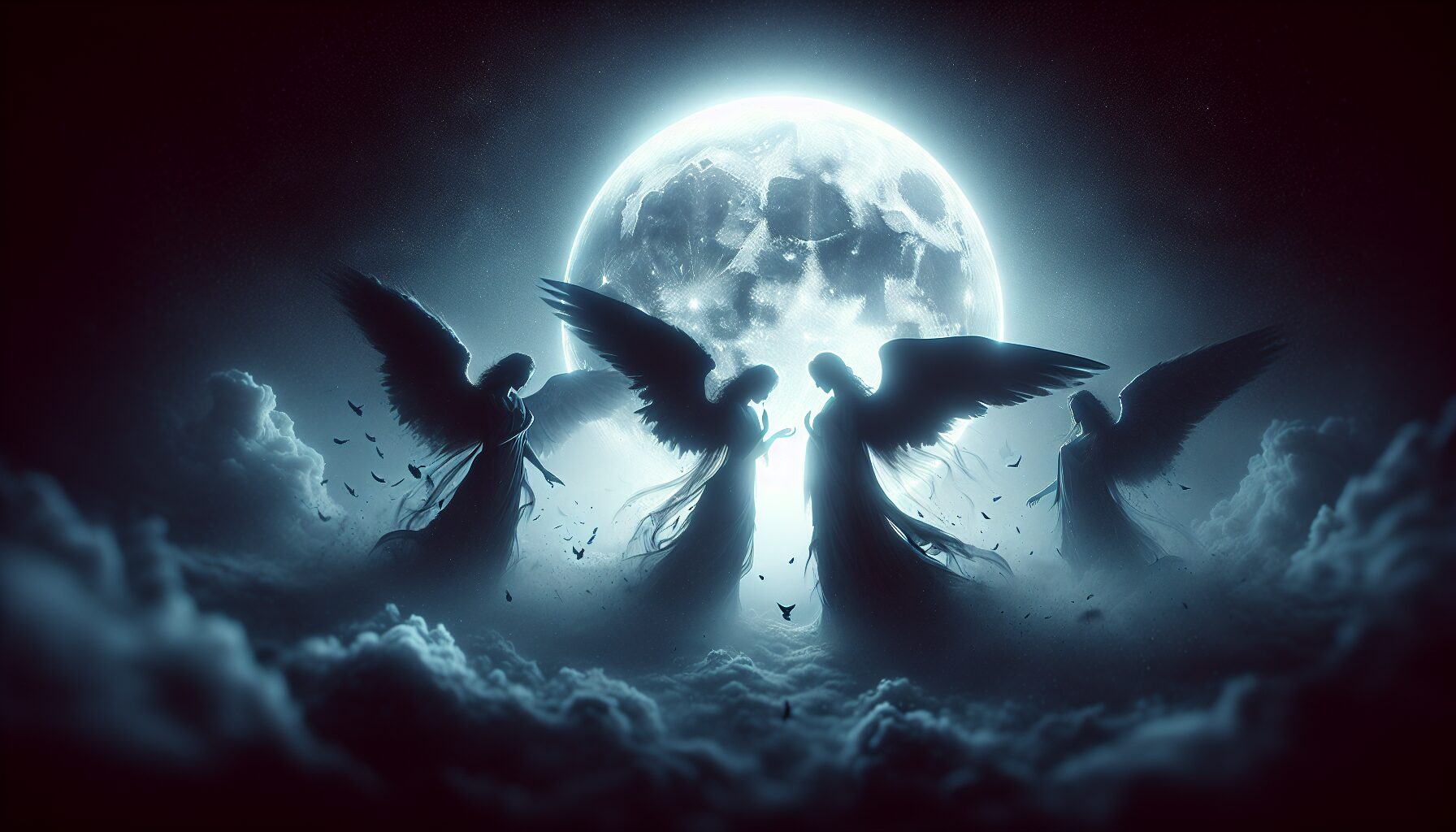
    In the lexicon of contemporary aesthetics, Mythcore speaks to the collision of ancient mythological narratives with modern cultural ethos. Among its various symbolisms, none is as captivating or as deeply entrenched in symbolic duality as the Angels of Night. These ethereal beings are portrayed not as harbingers of doom, but as messengers and guardians of the night, guiding wanderers through the shadows of their own subconscious.

    The Archetypes of Darkness

    The concept of the Angels of Night draws heavily from mythologies across cultures, blending diverse narratives into a tapestry that reveals more than just the fear of darkness. In many legends, night angels serve as protectors against the unseen terrors that lurk in the shadows, embodying the complex relationship humanity holds with the night.

    Hecate, the Greek goddess of the moon, night, and necromancy, often symbolizes the wisdom found in the absence of light. In her nocturnal aspects, Hecate was seen as a guide to those lost in darkness, offering visions to those brave enough to journey into their own depths.

    “Hecate is seen holding torches, leading the way to the underworld; a reminder that even in darkness, there is guidance and power.”

    This idea of guidance through darkness is echoed in numerous mythological constructs, emerging as a central Mythcore theme that resonates with modern audiences seeking meaning in shadowy uncertainties.

    Twilight as Transformation

    Among literary and artistic expressions, the motif of the night angel transcends mere protective symbolism. It embodies transformation—a journey from fear to acceptance, ignorance to enlightenment. The twilight represents the threshold; a moment of potential where the known and the unknown intersect, echoing Joseph Campbell’s concept of the “hero’s journey.”

    Twilight is portrayed as a realm of magic and transformation, where the dichotomy of light and darkness is nuanced. Here, the angels of night serve as guides or companions to those navigating the transformative process.

    • In Dante’s Divine Comedy, as Dante traverses Hell, Purgatory, and Paradise, it is through guidance that he comes to terms with his soul’s darkness and seeks ultimate redemption.
    • In a more modern context, Gaiman’s Sandman series explores the mythology of dreams where the nocturnal landscape is a place of both terror and revelation, illustrating how night can become a canvas for storytelling and personal growth.

    Navigating the Mythcore Shadows

    With the resurgence of Mythcore aesthetics in popular culture, understanding the complex nature of the Angels of Night becomes significant. In an age where the modern psyche is often shrouded in anxiety and the rapid pace of life, these mythological figures remind us of the intrinsic power in embracing the unknown.

    The Angels of Night in Mythcore reveal lessons through allegorical journeys:

    • Embrace the Unknown: Darkness symbolizes the unknown, and engaging with it fosters resilience. Like the mythic heroes who dare to venture into the night, facing our fears can lead to profound personal growth.
    • Seeking Guidance: The role of the guide—be it angelic or psychological—reminds us of the importance of mentorship and connection in navigating life’s complexities.
    • Transformation and Renewal: Through the darkness comes personal evolution. Like a phoenix reborn from ashes, the night heralds new beginnings once the lessons are learned.

    Conclusion: The Modern-Day Relevance

    The Angels of Night through a Mythcore lens implore us to consider the richness of ancient myths as a framework for understanding modern existential themes. As artistic movements continue to blend the mythological with the contemporary, these symbols offer solace and insight into the human condition.

    Whether it is through literature, art, or fashion, Mythcore speaks to a universal need for stories that connect us to our primal origins, providing a window into the eternal dance of light and shadow, and the enduring hope found within. As Hecate’s torch once illuminated the path through the underworld, so too do today’s mythic narratives light the way for those seeking to find beauty and wisdom in the night.


    Note: Content inspiration and references drawn from mythological interpretations and cultural analyses of mythcore trends, as listed in historical and pop culture citations.

  • Ritual of Night – Practices for Shadowed Awareness

    Ritual of Night – Practices for Shadowed Awareness

    In the silent embrace of night, a veil lifts to reveal a realm of introspection and mystery. For millennia, humans have cultivated rituals that engage the darkness, seeking illumination within the shadows. Enter the fascinating world of night rituals, where shadowed awareness emerges as both an art and science.

    The Historical Roots of Night Rituals

    Since the dawn of civilization, night has been considered a time for reflection and spirituality. Ancient tribes all over the world used the cover of darkness to delve deeper into their consciousness and the mysteries of life.

    “The Celts, for instance, situated many of their spiritual activities during the night, believing the veil between worlds was thinnest then,” notes historian Dr. Maeve O’Connor in her analysis of ancient European religious practices (History.com).

    Night rituals often included fire-based activities, chants, and meditation, all aimed at connecting individuals with the divine or understanding the human psyche more deeply.

    Modern Interpretations of Night Rituals

    In today’s world, night rituals have evolved, but the core remains surprisingly consistent. Contemporary practices blend ancient traditions with modern insights into the mind and spirit. Let’s explore some practices that can enrich one’s understanding of shadowed awareness through night rituals.

    Meditative Reflection

    • Engage in guided meditation, focusing on embracing darkness as a space of safety rather than fear.
    • Use candlelight to enhance focus, allowing the mind to drift between light and shadow, echoing Carl Jung’s words: “Knowing your own darkness is the best method for dealing with the darknesses of other people.”
    • Capitalize on the quietude of night to center your thoughts and reflect on the day’s events without distraction.

    Dream Journaling

    One of the simplest yet most profound night rituals involves recording dreams upon waking from sleep. Dreams are natural doorways to the subconscious, and night-time offers a unique opportunity to access this aspect of ourselves.

    • Keep a journal by your bedside. Write down any dreams immediately upon waking — a practice echoed by psychoanalyst Sigmund Freud’s assertion that “dreams are the royal road to the unconscious.”
    • Identify themes within your dreams. Consider how these might relate to your current life circumstances.

    Moonlit Nature Walks

    Engaging with nature at night provides an unparalleled connection to the universe. The quiet beauty of a moonlit landscape can be both humbling and awe-inspiring.

    • Choose safe, familiar routes for moonlit strolls, ensuring you remain mindful of your surroundings.
    • Notice the differences of the nocturnal world — the shift in sounds, the introspective solitude, the play of shadows — all providing insight into your own hidden depths.

    Ritualistic Arts

    Art speaks where words are unable to explain. Use nocturnal quietude as a backdrop for creativity. The unrestricted expression can often unlock shadowed awareness like nothing else.

    • Painting or drawing using only shades of black, white, and gray to explore contrasts and balance, mimicking the dichotomies of night and day.
    • Write poetry or prose inspired by nocturnal musings, capturing the fluid nature of darkness and insight.

    Cultural Variations and the Embrace of Night

    Every culture has its unique approach to night rituals. In Japan, tsukimi or moon-viewing, is a time-honored tradition where people gather to admire the moon, often incorporating poetry readings and quiet reflection.

    In the bustling cities of India, lamps are lit during Diwali, the festival of lights, which celebrates the triumph of light over darkness, knowledge over ignorance.

    As National Geographic describes, “During Diwali, the night becomes a canvas of flickering lights, each flame a promise of spiritual enlightenment and awakening” (National Geographic).

    The Science Behind Night-Time Awareness

    Recent studies emphasize the night’s impact on the human psyche. According to neuroscientists, darkness naturally encourages deeper, more meditative states of consciousness (Psychology Today). The reduction of visual stimuli at night lessens mental distractions, fostering a state where thoughts can roam more freely.

    The Impact of Melatonin

    As night falls, the body releases melatonin, a hormone that facilitates sleep but also encourages a state of mental tranquility conducive to reflection and creativity.

    • Utilize this natural state by meditating or engaging in a quiet activity, leveraging the body’s chemistry to explore deeper facets of the self.

    Embracing the Ritual of Night

    In the frenetic pace of modern life, night rituals offer a sanctuary, a doorway to enhanced awareness through the symbiotic relationship of darkness and light. The shadowed awareness cultivated through these practices doesn’t just reveal our personal mysteries—it realigns us with the universe itself.

    Consider the night not as a time of mere rest but as an opportunity for enriching and nurturing one’s spirit. Whether through mindful meditation, creative expression, or simply taking a moment to listen to the night, the rituals of night invite us into a world where “the shadow proves the sunshine” (Switchfoot).

    As every shadowed night folds into another dawn, the knowledge and insights you gain from these practices can be carried into your day, informing, guiding, and enriching your wakeful journey in profound and unexpected ways.

  • The Eternal Night – Darkness as Spiritual Teacher

    The Eternal Night – Darkness as Spiritual Teacher

    Throughout history, darkness has been depicted as a realm of fear and uncertainty. Yet, many spiritual traditions see it as a powerful teacher, offering profound lessons in introspection, resilience, and transformation. In this perspective, darkness becomes an essential component of the human experience, a time for reflection and growth rather than just absence of light.

    The Symbolism of Darkness

    Darkness, in spiritual terms, often symbolizes the unknown or the hidden aspects of the self. It prompts the shedding of external distractions to delve deep within. As psychologist Carl Jung suggested, “One does not become enlightened by imagining figures of light, but by making the darkness conscious.” (Goodreads). Embracing darkness involves confronting one’s shadows and emerging with a greater understanding of the self.

    Darkness in Different Spiritual Traditions

    • Buddhism: The concept of mara describes forces that obstruct enlightenment, often equated with inner darkness. Overcoming these forces is crucial for achieving spiritual progress.
    • Christian Mysticism: The “Dark Night of the Soul,” popularized by St. John of the Cross, refers to a period of spiritual desolation. It is a necessary phase one must endure to attain union with the divine.
    • Hinduism: The deity Kali, often depicted in dark hues, represents destruction and creation. She embodies the dark power of time and change, essential for transformation.

    Lessons from the Darkness

    Embracing darkness can lead to unparalleled personal transformation. Here are some key lessons this spiritual experience can impart:

    • Reflection: Darkness provides a quiet space necessary for introspection. It allows individuals to confront their thoughts and emotions without distraction.
    • Resilience: The challenges associated with periods of darkness build resilience. They teach individuals how to confront fear and uncertainty with courage.
    • Transformation: The process of navigating through personal darkness often results in profound transformation, similar to the metamorphosis of a caterpillar in a cocoon.

    Conclusion

    “The darker the night, the brighter the stars, the deeper the grief, the closer is God!” — Fyodor Dostoevsky

    The interplay between light and darkness is intrinsic to life. Embracing darkness as a spiritual teacher is about recognizing its role in our journey towards enlightenment. When seen not as a void but as a beginning, darkness becomes a friend and guide, leading to deeper understanding and spiritual renewal.

  • Nightly Pilgrimage – Journeys Through Dark Spiritual Landscapes

    Nightly Pilgrimage – Journeys Through Dark Spiritual Landscapes

    You need to be logged in to view this content. Please . Not a Member? Join Us
  • The Nocturnal Eye – Observing the World Beyond Daylight

    The Nocturnal Eye – Observing the World Beyond Daylight

    The mysteries of the night sky have long captivated human imagination. Since the dawn of civilization, people have looked up at the cosmos, pondering the countless stars shimmering like scattered diamonds on a velvet canvas. Yet, Earth’s night offers an array of enigmas beyond the celestial. The nocturnal world, teeming with life and phenomena unseen during daylight, presents a rich tapestry worthy of exploration.

    The Biological Symphony of the Night

    Nighttime unveils a distinct world of creatures that thrive in darkness. These nocturnal beings have adapted uniquely to life without light, using highly evolved senses such as enhanced hearing and night vision. Owls, for example, are equipped with exceptional auditory abilities, enabling them to hunt with precision. According to a study by the Royal Society Publishing, the owl’s silent flight and acute sense of hearing give them an edge in the nocturnal landscape.

    Bats, another quintessential night dweller, navigate through echolocation, emitting calls that bounce off objects, revealing their surroundings. According to the American Association for the Advancement of Science, this form of biological sonar is so precise that some bats can detect textures and sizes of objects they encounter.

    Ethereal Light of the Night

    While the absence of sunlight defines night, it doesn’t imply darkness in absolute terms. The moon and stars provide a subtle luminescence, but the nocturnal world boasts its sources of light. Bioluminescence is a natural wonder where organisms like fireflies and certain deep-sea creatures produce light. This phenomenon, explained by researchers at Oxford Academic, involves chemical reactions within these organisms, often for attracting mates or deterring predators.

    Moreover, the night sky occasionally becomes a stage for spectacular light displays known as auroras. These occur when charged particles from the sun collide with Earth’s atmosphere, leading to shimmering curtains of green, red, and purple. The National Geographic delineates the science behind these awe-inspiring displays, illustrating how Earth’s magnetic poles harness solar particles to paint the sky.

    Human Perception and the Night

    The human relationship with night has evolved significantly over centuries. From early fire-lit evenings to modern artificial lighting, our capacity to conquer the dark has grown. However, this has not come without consequences. Light pollution, a glaring by-product of modern society, obscures our view of the stars and impacts nocturnal wildlife.

    Documented by the International Dark-Sky Association, light pollution disrupts natural ecosystems, confuses animal navigation and affects hormonal cycles, making it an ecological concern. “The ability to see the Milky Way is a heritage we should strive to preserve for future generations,” states Dr. John Barentine, an advocate for night sky preservation.

    Technological Eyes in the Dark

    Our quest to unveil the secrets of the nocturnal world extends into technology. Night vision devices, developed initially for military use, now aid in wildlife observation and exploration. Using infrared technology, these devices translate invisible light into visible images, granting humans the power to see in the dark.

    Furthermore, space telescopes such as the Hubble have revolutionized our understanding of the night sky. By observing at various wavelengths, including those invisible to the naked eye, these telescopes reveal the universe’s hidden textures and phenomena, from distant galaxies to nebulae. Research published by the Hubble Space Telescope expands our cosmic comprehension, showcasing the vibrant tapestry of the cosmos.

    Emotion and Inspiration: How the Night Articulates the Human Soul

    Nights have always inspired artists, philosophers, and scientists alike. The starry firmament encourages contemplation and reflection, a thematic constant in art and literature. Van Gogh’s The Starry Night, painted during his stay in an asylum, remains an enduring testament to the emotional power of the night.

    Reflecting on the allure of darkness, author Neil Gaiman eloquently encapsulates the human fascination with the night sky: “The night is also a kingdom. It’s not only that great musings and ideas are born out of this darkness, but also that in the night we encounter mysteries that stir our imagination” (Neil Gaiman).

    The Future of Observing the Nocturnal World

    As technology advances, our capacity to explore and understand the night will only expand. Innovations in satellite technology, deep-space exploration, and microscopic assessments of nocturnal creatures promise to unlock new chapters in our understanding of the world after dusk.

    The quest continues, driven by an age-old wonder and a modern curiosity. In the words of the astronomer Carl Sagan: “Somewhere, something incredible is waiting to be known.” This voyage into the nocturnal realm exemplifies our intrinsic desire to explore beyond our daily experiences, opening our eyes to a universe suffused with unseen beauty and mystery beyond daylight.

    “Night conceals a world lit by the beauty of stars and governed by a different rhythm of life,” recognizes astronomer Jane Houston. “In embracing the night, we embrace the unknown and expand our realm of discovery.”

    The journey of the nocturnal eye invites us to uncover the layers of the world that thrive beyond the sun’s dominion—a testament to the enduring allure of darkness and its dazzling offerings.