Tag: often

  • Alien Lore – Extraterrestrial Influences on Earthly Myths

    Alien Lore – Extraterrestrial Influences on Earthly Myths

    Alien Lore: Extraterrestrial Influences on Earthly Myths

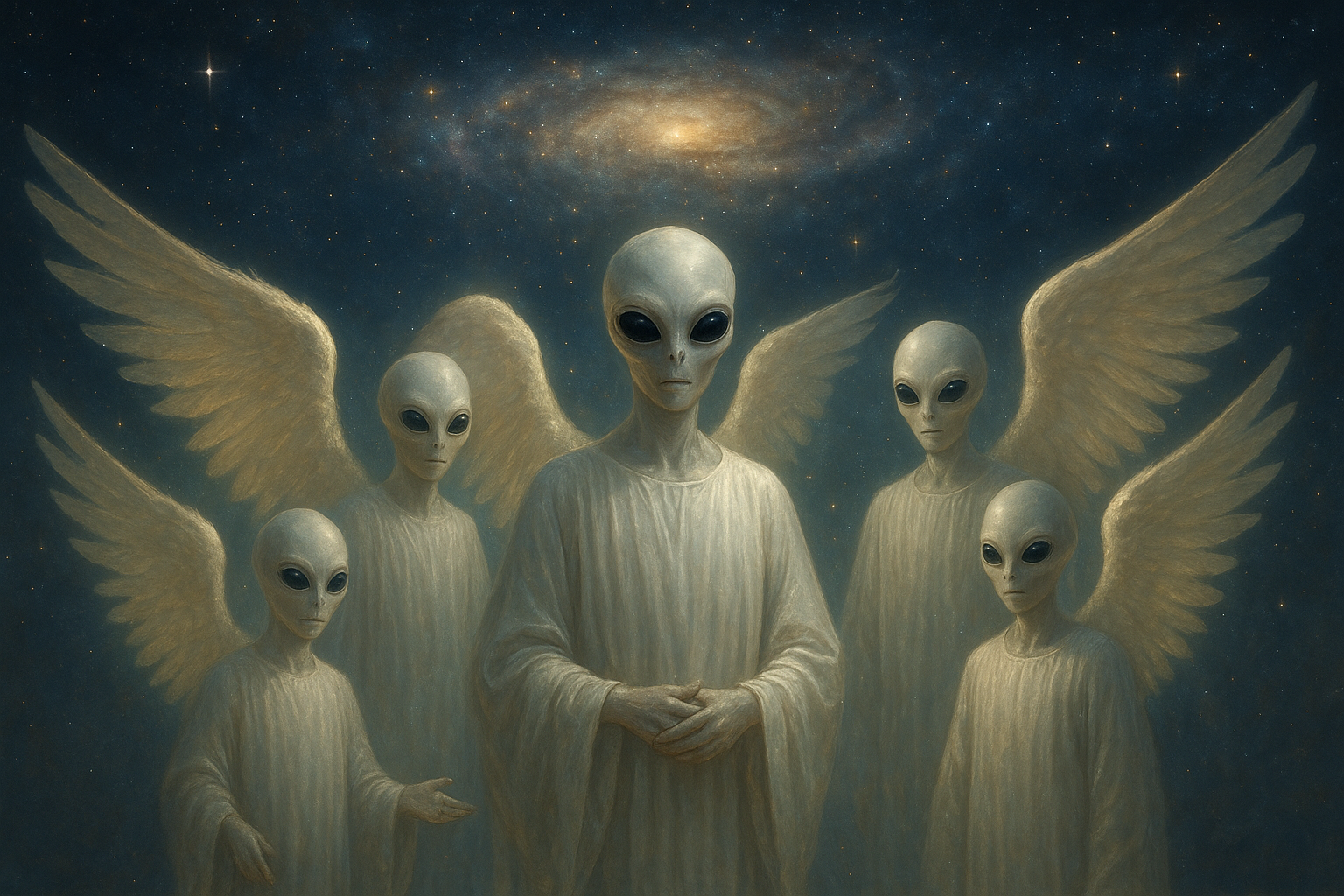
    Throughout the ages, humanity has looked to the stars for explanations, guidance, and inspiration. The mysterious twinkling lights above have undoubtedly fueled countless stories, myths, and legends across cultures worldwide. As we continue our search for extraterrestrial life, the intriguing possibility arises that many ancient myths might be rooted in alien encounters. Here, we delve into how extraterrestrial influences may have indeed shaped our planet’s lore.

    The Outspread Wings of Ancient Deities

    Numerous civilizations boast myths where gods descended from the sky, bearing wisdom or destruction. Often depicted as possessing extraordinary knowledge and technology, these deities are sometimes suggested to resemble astronauts.

    • Sumerians: The Sumerians, one of the first known civilizations, worshiped the Anunnaki, deities that some theorists suggest might have been alien visitors. According to texts, they came from the heavens to create mankind (Encyclopedia Britannica).
    • Ancient Egypt: The Egyptian god Thoth, credited with inventing writing and hieroglyphs, was often depicted as a man with the head of an ibis bird. His depiction as a being transcending normal human features aligns with those who theorize about his possible extraterrestrial origins.
    • India: In Hindu texts, vimanas are described as flying palaces or chariots. Could these ancient flying machines have been influenced by tales of alien spacecrafts (Sanskriti Magazine)?

    Existence Written in Stone: The Nazca Lines

    “The lines were not made by removing rocks, but by moving a dark layer of stone from the desert surface to expose the lighter ground below.” — Smithsonian Magazine

    The Nazca Lines in Peru, vast geoglyphs etched into the Earth and best viewed from above, stir considerable debate. Speculations have arisen that these lines could have served as landing strips for alien craft or messages to the sky gods.

    Mythical Visitors and Modern-Day UFOs

    Modern UFO sightings often echo the descriptions found in ancient myths, which raises intriguing questions about recurring themes throughout human history.

    • The Pacific Northwest: Local Native American tribes have folklore about star people visiting from the sky, akin to contemporary reports of UFO sightings in those regions.
    • Mesoamerican Cultures: The feathered serpent god Quetzalcoatl of the Aztecs and Kukulkan of the Maya are frequently interpreted as beings who descended upon Earth from the cosmos, reminiscent of modern extraterrestrial narratives.

    The Influence of Extraterrestrial Narratives in Culture

    Alien lore has cemented itself in modern consciousness, influencing media, literature, and even scientific inquiry:

    • Literature: H.G. Wells’ The War of the Worlds and Arthur C. Clarke’s Childhood’s End explore themes of alien visitation and influence, continuing the tradition of cosmic speculation.
    • Film and Media: Movies like Close Encounters of the Third Kind and Arrival delve into human-alien interactions, often entwining them with ancient mystique.
    • Science: Projects like SETI (Search for Extraterrestrial Intelligence) have organized efforts around the very real pursuit of uncovering intelligent life beyond our planet (SETI Institute).

    Conclusion: Myth or Reality?

    While there is no definitive evidence yet that directly links ancient myths with extraterrestrial influence, the patterns and parallels provoke curiosity and debate that span generations. As the boundaries of our knowledge and technology expand, who knows? The truth might indeed lie among the stars, waiting to reinterpret our myths and relore our reality.

  • Demonic Labyrinths – Archetypes of Inner Chaos

    Demonic Labyrinths – Archetypes of Inner Chaos

    The concept of demonic labyrinths has fascinated humanity for centuries, representing both the physical and psychological mazes we navigate in our lives. These labyrinths, often depicted in mythology and literature, symbolize the inner chaos and turmoil within the human psyche.

    Historical and Mythical Foundations

    From the Minotaur’s labyrinth in Greek mythology to Dante’s dark, infernal circles in the Divine Comedy, the archetype of the labyrinth has served as a powerful metaphor for the soul’s journey. These mythological mazes are often inhabited by creatures reflecting our deepest fears—monsters that must be confronted to find clarity and peace.

    “In the middle of the journey of our life, I found myself within a dark woods where the straight way was lost.” — Dante Alighieri

    Psychological Interpretations

    • The Inner Quest: Psychologists, such as Carl Jung, have interpreted labyrinths as symbols of the unconscious mind, representing the complex network of thoughts and emotions one must navigate to achieve self-awareness.
    • Shadow Work: Jung emphasized the importance of confronting the ‘Shadow,’ the darker, hidden aspects of our personality, akin to battling the demons in a labyrinth.

    “One does not become enlightened by imagining figures of light, but by making the darkness conscious.”Carl Jung

    Cultural Reflections

    The portrayal of labyrinths in modern culture often mirrors contemporary fears and societal pressures. For instance, films like “The Cell” (2000) use labyrinthine structures to depict the twisted pathways of the mind affected by trauma or evil, portraying how the human spirit can emerge from the darkness.

    Architectural Representations

    Labyrinths are not only abstract concepts but have been physically constructed throughout history. Ancient cathedrals, like the one in Chartres, France, feature labyrinths embedded in flooring, symbolizing a journey towards spiritual enlightenment. These architectural wonders invite introspection and a meditative experience.

    Conclusion

    The metaphor of the demonic labyrinth continues to resonate, providing a canvas onto which individuals project their fears and aspirations. Whether traversing mind or myth, the labyrinth remains a potent symbol of human struggle and triumph over inner chaos.

  • Shadowed Altars – Darkness in Ritual Practice

    Shadowed Altars – Darkness in Ritual Practice

    Shadowed Altars – Darkness in Ritual Practice

    Shadowed Altars – Darkness in Ritual Practice

    Throughout history, rituals have played a significant role in human culture. They are events imbued with symbolism, tradition, and often, a sense of the mystical. Across civilizations, rituals have provided structure, meaning, and a sense of order. However, alongside the light-filled ceremonies etched in vibrant recollection, there exists a fascination with darkness in ritual practice. These darker rituals are often shrouded in mystery, fear, and misunderstanding.

    The Mystique of Darkness in Rituals

    Darkness, both literal and metaphorical, has often been associated with the unknown, the feared, and the revered. Many cultures have used darkness in rituals to symbolize mystery, the afterlife, and the realm beyond the human realm. Anthropologist Victor Turner described rituals as transformative processes, sometimes involving the liminal space, the in-between state of normality and the unknown. This in-between can often involve elements of darkness, representing a disconnection from reality and a passage to a deeper understanding.

    Historical Contexts

    Historical evidence of the use of darkness in rituals can be found across different cultures and religions:

    • Ancient Egyptians: In ancient Egypt, darkness played a crucial role in rituals honoring Osiris, the god of the afterlife. The Rites of Osiris were performed in darkened chambers, symbolizing the journey to the underworld.
    • Greek Mysteries: In the Greek Eleusinian Mysteries, initiates experienced rituals in complete darkness, symbolizing death and rebirth, to understand the secret rites of Demeter and Persephone.
    • Norse Traditions: In Norse traditions, the long nights of winter were seen as the time of spirits and darkness, where rituals such as Blót would be performed to honor and appease the gods and ancestors.

    The Role of Darkness in Modern Rituals

    Modern interpretations of ritualistic darkness continue to captivate and offer insights into human psychology and spirituality. Today, certain practices still seek the veil of night to enhance the spiritual atmosphere:

    • Wicca and Neo-Paganism: These modern spiritual paths often celebrate rituals known as Esbats, which occur on full moons and incorporate rituals during the night.
    • Shamanic Practices: In many shamanic traditions, the use of darkness is a gateway to deeper consciousness. The absence of light enables practitioners to connect more profoundly with inner visions and spiritual guides.

    Exploring the Psychological Dimension

    Darkness in rituals also bears significant psychological implications. The absence of light heightens other senses, drawing participants inward. Renowned psychoanalyst Sigmund Freud proposed that the unconscious mind reveals itself in the absence of sensory interference, which darkness can provide. Thus, rituals conducted in darkness can facilitate self-discovery and revelation.

    “For the unconscious is the true psychical reality; in its innermost nature it is as much unknown to us as the reality of the external world, and it is as incompletely presented to us by the data of consciousness as is the external world by the communications of our sense organs.” – Sigmund Freud

    Cultural Misunderstandings and Misconceptions

    Despite its profound role, darkness in rituals often suffers from cultural misconceptions. The westernization and demonization of certain rituals have led to an association of darkness with evil or maleficent forces. This view overlooks the richness of darkness as a cultural symbol and its practical value in spiritual practice.

    For instance, the Hollywood portrayal of witchcraft often emphasizes the malevolent aspects, overshadowing the positive and healing aspects practiced by many Wiccan groups. This misleading representation perpetuates fear and misunderstanding about the complexity and purpose of these rituals.

    The Contrast and Balance

    Just as light plays a crucial role in rituals, so does darkness. The Yin and Yang philosophy, which is deeply embedded in Chinese tradition, exemplifies this balance. Just as light defines darkness, it emphasizes that understanding spiritual wholesomeness requires acknowledging both aspects.

    Moreover, the balance of light and dark in rituals can teach valuable lessons about the importance of harmony and acceptance in life. It challenges individuals to confront their fears of the unknown and embrace the transformative journey offered by the darkness.

    Conclusion

    Shadowed altars and dark rituals offer a profound glimpse into the human consciousness and the complex nature of spirituality. They remind us that darkness does not inherently equate to negativity; instead, it holds the potential for transformation, exploration, and balance.

    As we continue to evolve in our understanding of these practices, it is crucial to approach them with openness, curiosity, and respect. Understanding the history and cultural significance of darkness in rituals can lead to a more holistic comprehension of the very nature of human spirituality.

    Explore further insights and historical references in literature and online resources such as JSTOR and The Atlantic for a deeper understanding of this intriguing subject.

  • Infernal Codes – Demonic Symbols and Meaning

    Infernal Codes: Demonic Symbols and Meanings

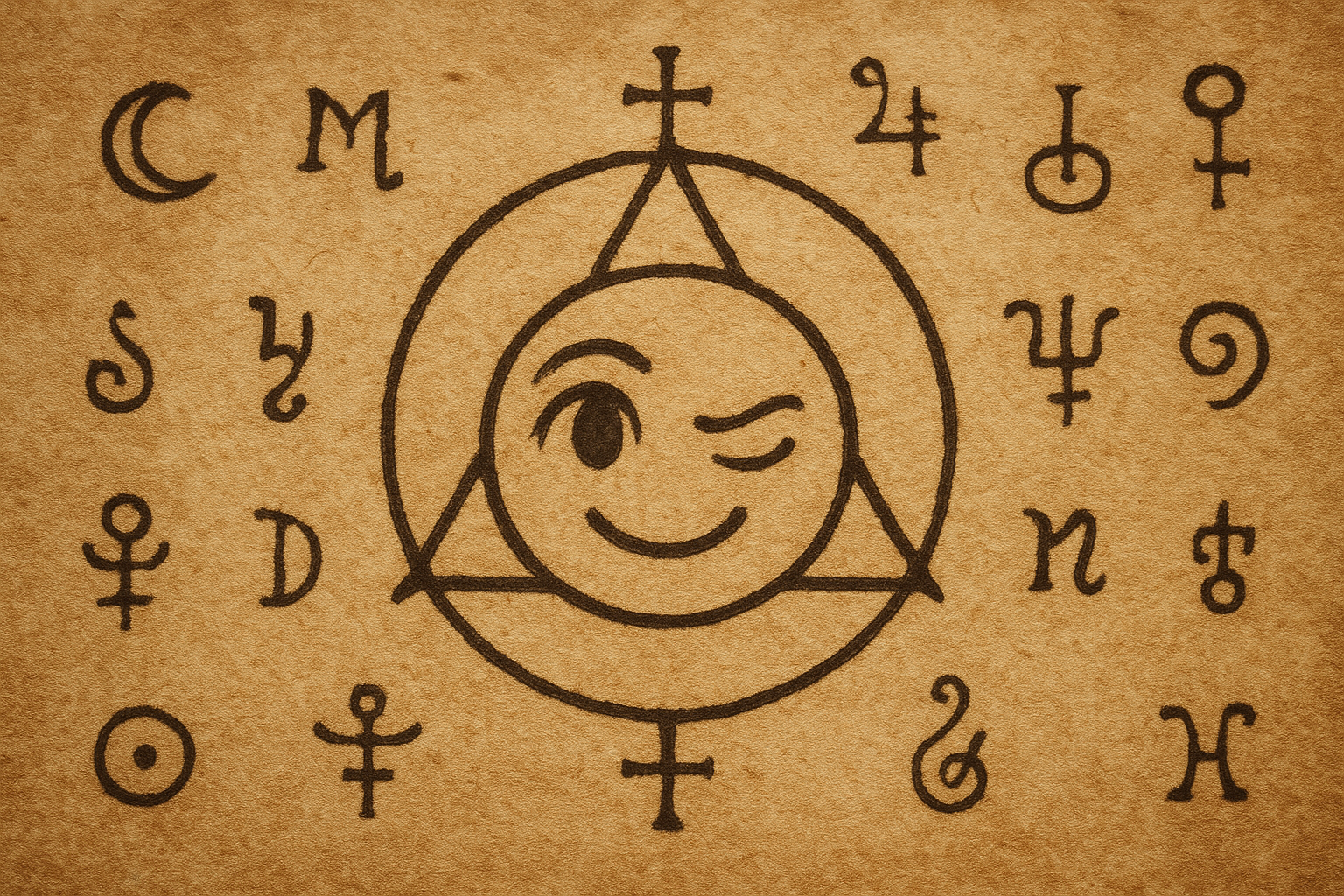
    Throughout history, symbols have served as a powerful means of communication, transcending language barriers and cultural differences. In the realm of the arcane and the esoteric, demonic symbols hold a particularly captivating allure, often shrouded in mystery and misunderstood. This article delves into some of the most intriguing demonic symbols, the meanings ascribed to them, and their cultural significance.

    1. Understanding Demonic Symbols

    Demonic symbols are often associated with occult practices, black magic, and demonology. While many of these symbols originate from ancient religious texts and folklore, they have evolved over time, taking on new interpretations and meanings.

    “Symbols are the imaginative signposts of life.” — Margot Asquith

    2. Notable Demonic Symbols

    Below is an exploration of some of the most prominent demonic symbols and their purported meanings:

    • The Sigil of Baphomet

      Often associated with Satanism, the Sigil of Baphomet features a goat’s head enclosed within an inverted pentagram. This symbol is commonly used by the Church of Satan, where it signifies the rejection of traditional religious beliefs in favor of individualism and spiritual freedom.

    • The Leviathan Cross

      Also known as the Satanic cross, the Leviathan Cross consists of an infinity symbol at its base, topped with a double cross. This emblem represents balance between the physical and spiritual realms and is a symbol of the diabolical duality.

    • The Seal of Solomon

      Historically used in the Key of Solomon, a grimoire attributed to King Solomon, this symbol incorporates the Star of David but recontextualized in occult practices. It’s believed to control demons and protect against evil forces.

    • The Black Sun

      With its origins in ancient Germanic mysticism, the Black Sun consists of twelve radial runes forming a circular image. It has been (mis)appropriated by various groups but originally was associated with occult power and esoteric knowledge.

    3. The Cultural and Historical Context

    These symbols and others like them have been imbued with different meanings throughout history, influenced by the contexts in which they were used. Understanding their cultural significance is essential to appreciating their power and allure.

    • Religious Texts and Folklore

      The origins of demonic symbols often lie in ancient religious texts and folklore that aimed to explain and demystify the unknown forces of the world. In the Bible and other sacred texts, demons are frequently depicted as antagonists to divine beings, bestowing these symbols with a sense of fear and reverence.

    • Art and Literature

      Artistic representations of demonic symbolism have appeared in numerous forms, from classic literature like Goethe’s Faust to modern films and video games. These representations help to both cement their cultural significance and transform their meanings over time.

    4. Misconceptions and Stereotypes

    Demonic symbols can often be misinterpreted, especially when removed from their cultural and historical contexts. The modern portrayal of these symbols in popular culture can lead to a one-dimensional view that ignores their rich and varied significance.

    “The symbol of progress is one of direction, not of location.” — James Russell Lowell

    5. Conclusion: The Power of Symbols

    The enduring intrigue of demonic symbols demonstrates the profound impact of symbols as tools of expression, representation, and power. Whether they serve as objects of fear, veneration, or fascination, their meanings evolve with society and continue to inspire—or terrify—generations. For anyone interested in deeper explorations of the occult and the esoteric, understanding these symbols is crucial as a key to unlocking the mysteries of the human psyche and culture.

    Through exploration and education, these ancient and enigmatic symbols reveal their complexity and their capacity to adapt and maintain relevance in an ever-changing world.

  • Abstract Divinities – Symbols Beyond Form

    Abstract Divinities – Symbols Beyond Form

    In the vast tapestry of human history, art and spirituality have danced together in a timeless ballet, resulting in a profound repository of symbols that transcend the mere physicality of form. “Abstract divinities” signify more than just visual interpretations; they represent the essence of cultures, beliefs, and the progression of human thought.

    The Nature of Abstract Divinities

    Abstract divinities are not confined to the limits of anthropomorphic representations. Instead, they dwell in the realm of the intangible, the metaphysical, and the esoteric. These symbols may appear in a myriad of forms—including geometric shapes, patterns, or even color arrangements—that encapsulate deeper meanings recognized across cultures.

    • Universal Connectivity: Many abstract symbols signify universal concepts such as infinity, movement, or unity. The circle, for example, is found in countless cultures symbolizing eternity and completeness.
    • Transcendent Ideals: Not concerned with the literal portrayal of the divine, abstract symbols focus on transcending earthly ideals, allowing believers and viewers alike to reach for higher spiritual planes.
    • Expressive Potential: Abstract art permits a breadth of interpretation that accommodates personal experiences and beliefs, encouraging introspection and spiritual exploration.

    Historical Perspectives

    Throughout history, the abstract has been an intrinsic part of religiosity and art:

    Ancient Civilizations

    The ancient Egyptians, with their complex pantheon, employed abstract art forms alongside the more widely recognized imagery of gods like Ra and Anubis. The Ankh, with its looped top, is more than a depiction of life and eternity; it is an abstract representation of the balance between male and female energies, life’s dualities.

    Eastern Philosophies

    In Eastern religions such as Buddhism and Hinduism, abstract representation thrives. The Mandala, a circular symbol used in various meditative practices, represents the universe and is a powerful tool for sacred contemplation. According to Learn Religions, “its apparent simplicity transcends our understanding to unfold deeper psychological awareness and spiritual growth.”

    Modern Artistic Movements

    The 20th century witnessed an explosion of abstract art with figures like Kandinsky and Rothko. In Kandinsky’s words, “Color is a power which directly influences the soul.” Artists used this language to evoke spiritual and emotional responses, much like abstract symbols in religious contexts.

    Symbolism Across Cultures

    Abstract divinities often carry varying meanings across different cultural landscapes but share a commonality in their abstract representations. They convey spiritual truth that, while maybe culturally specific, resonates globally:

    • Yin and Yang: In Taoist philosophy, the yin yang symbol represents balance—a dance between opposing forces that is essential to the harmony of the universe.
    • The Eye of Horus: An ancient Egyptian symbol often associated with health, protection, and royal authority, embodying abstract qualities that transcend its origin.
    • The Om: Vibrating through the cosmology of Hinduism, Buddhism, and Jainism, the Om symbol is an abstract representation of the sacred sound, often described as “the vibration of the universe.”

    The Influence of Technology and Science

    As our world becomes increasingly intertwined with technology, abstract symbols continue to evolve. Code, with its enigmatic algorithms and binary systems, is an abstract language with its own set of divinities—shaping the digital universe in much the same way symbols shaped the spiritual one.

    Space exploration has given rise to new abstract symbols. The NASA insignia, known as the ‘meatball’, incorporates abstract elements that reflect grand ideas of discovery and innovation while paying homage to the astronomical landscapes beyond Earth.

    Modern Reflection and the Future of Abstract Divinities

    In modern times, there is a renaissance of interest in abstract divinities. With global connectivity, ancient symbols are rediscovered and reinterpreted. Individuals seek new forms of spirituality and expression outside traditional frameworks, often turning to abstract symbols to guide their inward journeys.

    “Symbols and archetypes present us with universal motifs that transcend time and place, leading us gently into layers of the unconscious. Here we connect with something profoundly innate and intimately human,” says Joshua Anderson, a noted Jungian therapist.

    Closing Thoughts

    Abstract divinities, those symbols beyond form, are more than archaic relics or esoteric curiosities; they are an ongoing human effort to articulate the inarticulable, to visualize the invisible. They remind us that beneath our differences exists a shared pursuit—finding meaning and connection within the grand, sometimes abstract, architectures of life and the universe.

    In an era where the visual is manufactured, consumed, and discarded at lightning speed, the enduring nature of abstract symbols holds invaluable lessons. Their timelessness and adaptability offer both a lens into our collective past and a beacon lighting the path for future spiritual exploration.

  • Angelic Echoes – Messages Through Mysticism

    Angelic Echoes – Messages Through Mysticism

    Angelic Echoes: Messages Through Mysticism

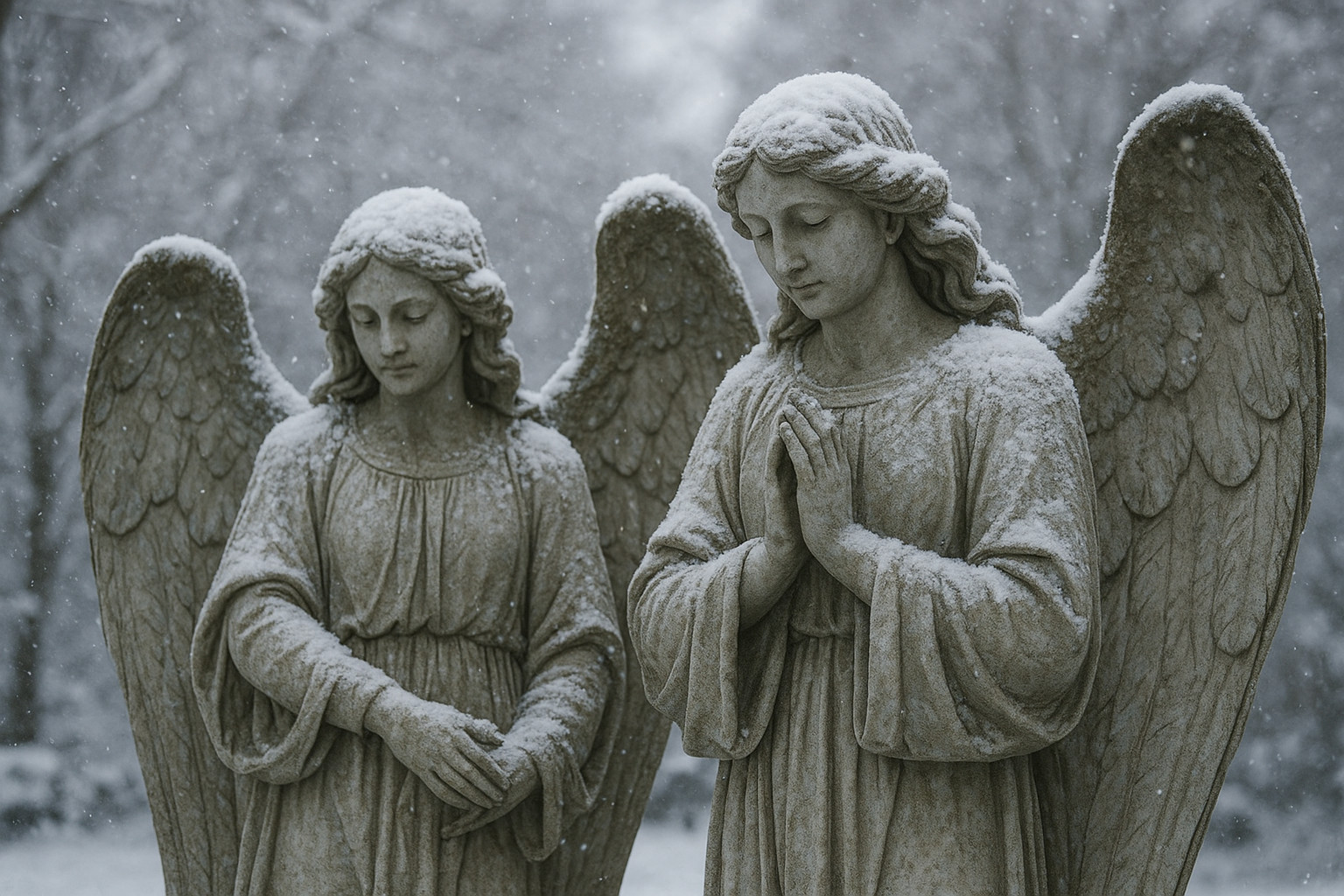
    Throughout human history, the concept of angels has woven itself into the fabric of numerous cultures, carrying with them profound messages from the divine. From Biblical accounts to contemporary mystical experiences, angelic figures are often considered messengers of God, guiding and protecting humanity through times of turmoil and uncertainty.

    The Role of Angels in Different Cultures

    Angels appear as central figures in Christianity, Judaism, and Islam, each tradition offering unique insights into their purpose and nature. In Christianity, the Bible describes angels as God’s servants, delivering His messages and enacting His will. The Angel Gabriel is a prominent figure, known for announcing the birth of Jesus to Mary, as depicted in the Gospel of Luke (Luke 1:26–38).

    In Islam, angels are seen as creatures of light who worship Allah unceasingly and execute His commands. Jibril, or Gabriel, is regarded as the greatest of angels, having revealed the Quran to the Prophet Muhammad. As explained in the Encyclopaedia Britannica, “the tasks assigned to angels include delivering messages, receiving the souls of the dead, and recording the deeds of mankind.”

    Similarly, Jewish tradition describes angels as messengers and protectors who act on God’s behalf, guiding the Israelites through their struggles and triumphs. The book of Genesis recounts Jacob’s dream of a ladder reaching to heaven, upon which angels ascended and descended, symbolizing continual communication between God and man (Genesis 28:12).

    Modern Mysticism and Angelic Guidance

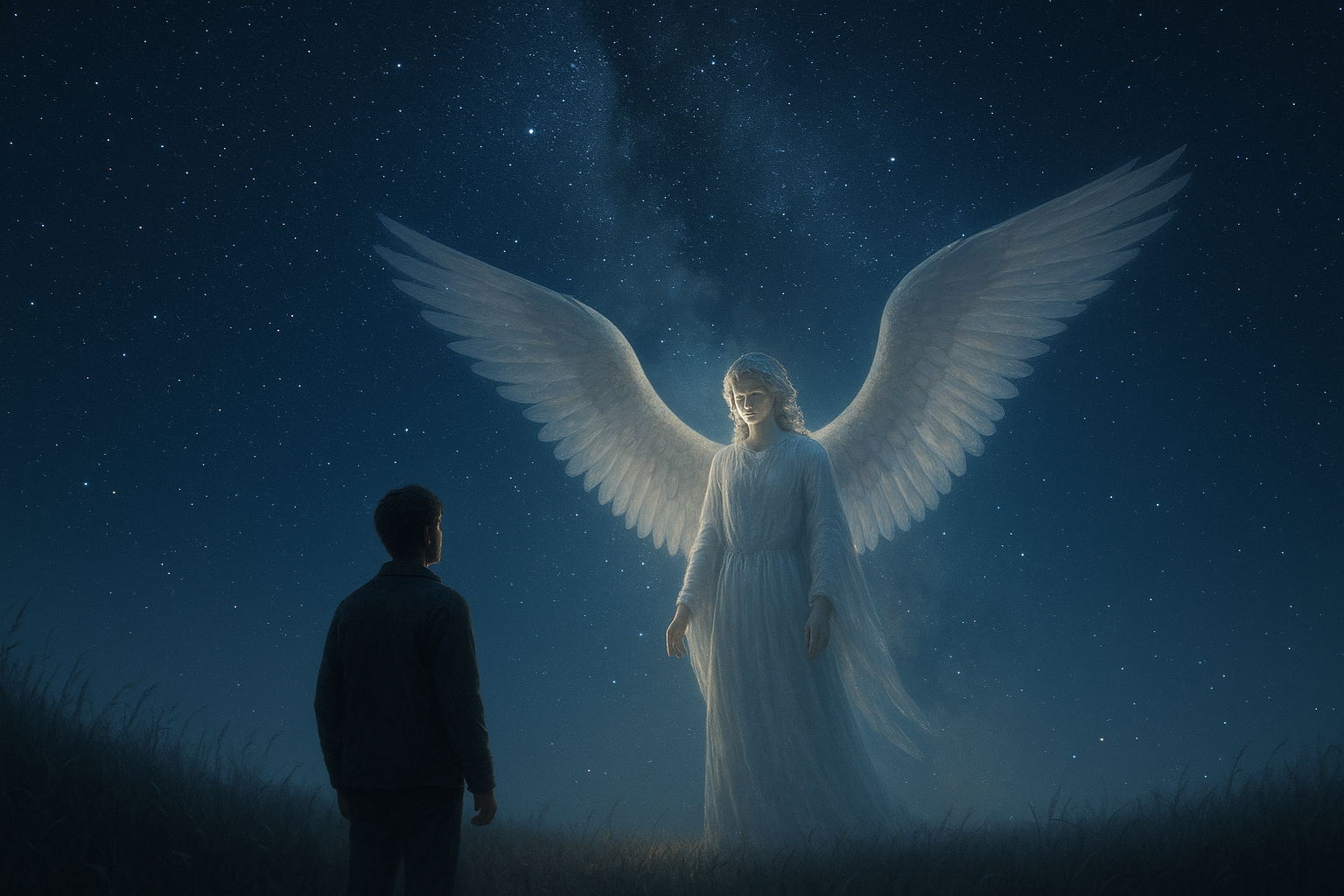
    In contemporary spirituality, the notion of angels extends beyond religious texts, as mystics and spiritual seekers report encounters with these ethereal beings. People often describe feeling a comforting presence or receiving guidance during meditation or in times of crisis, interpreting these sensations as angelic interventions.

    “We may not physically see angels as they are often depicted in art, but many claim to feel their presence, particularly when seeking comfort or guidance,” writes Karla McLaren in Psychology Today.

    Such experiences are often personal and subjective, yet they resonate deeply with those who encounter them, fostering a belief in a benevolent force working behind the scenes of daily life. Whether through vivid dreams, inexplicable coincidences, or moments of intuitive clarity, these angelic whispers can leave a lasting impact.

    Understanding Angelic Communication

    How might one recognize angelic communication in their own lives? Spiritual practitioners suggest being open and receptive to subtle signs and messages, emphasizing the importance of mindfulness and meditation. Here are a few ways individuals report experiencing angelic guidance:

    • Dreams and Visions: Many people report receiving messages from angels through dreams, often involving symbolic imagery or direct conversations.
    • Signs and Synchronicities: Repeated symbols, numbers, or events are often interpreted as signs from angels, guiding one along their path.
    • Intuition and Inner Voice: An unexplained feeling or inner knowing, often nudging one towards a decision or action that aligns with their greater good.
    • Physical Sensations: Some describe feeling a gentle touch, warmth, or presence during their interactions with angelic beings.

    While skeptics might dismiss these occurrences as mere coincidences or psychological phenomena, those who experience them often find reassurance and strength in their perceived encounters with the divine.

    The Significance of Angelic Echoes

    The allure of angels and their messages persists across time due to their capacity to embody hope, protection, and guidance. In a world often marked by uncertainty, the notion that a higher power is watching over us can provide comfort and reassurance.

    As Karen Armstrong, a well-regarded scholar of religion, notes, “Angels are not primarily guides to New Age psychology, but can embody powerful aspects of our humanity — ambition, curiosity, compassion, and awe.”

    The connection between humans and angels, whether viewed through a religious prism or a mystical lens, highlights a universal yearning for connection, understanding, and peace. As people navigate the complexities of existence, their hope for divine guidance remains steadfast, echoing through the ages and coloring the mystical conversations of today.

    This intricate dance with the celestial adds depth to the human experience, weaving tales of light and spirituality that resonate within the hearts of those who seek solace in the angelic echoes of mysticism.

  • Ethereal Darkness – Spiritual Lessons in Night

    Ethereal Darkness – Spiritual Lessons in Night

    Ethereal Darkness: Spiritual Lessons in Night

    Nighttime has always been a canvas upon which humanity has projected its deepest fears, dreams, and reflections. Where the daytime is filled with the bustle of activity and the relentless pursuit of goals, night embraces us in its quietude, offering valuable spiritual lessons for those willing to listen. Through the ages, philosophers, mystics, and poets have sought to unravel the mysteries of the night, finding in its shadows profound insights into the human experience.

    The Symbolism of Night

    Throughout history, the night has served as a powerful symbol in many cultures, representing both the unknown and the unseen. The dichotomy between day and night often mirrors the dual nature of human existence, balancing between light and shadow, knowledge and mystery.

    “We all have a dark side to our personalities. We all have a dark side and it’s essential because half the world is dark and half the world is light.” ― David Lynch

    For David Lynch, an iconic filmmaker known for exploring the bizarre facets of reality, this balance is crucial. The darkness within us parallels the literal darkness outside—a part of the cosmic order, a necessary component of the universe’s wholeness.

    Night as a Time for Reflection

    Unlike the chaotic distractions of the day, night provides a serene backdrop against which we can reflect on our lives. The quietude of night invites introspection, allowing us to delve into the deeper layers of our consciousness, where truths often lie hidden beneath the surface.

    • Silence and Insight: In the stillness of night, we find the opportunity to listen to our inner voice. Silence provides the mental space needed for contemplation and self-discovery, honing our ability to gauge our emotions and thoughts without the interference of external clatter.
    • Dreams as Guides: Night brings with it the realm of dreams—a fertile ground for spiritual and psychological exploration. As Carl Jung posited, “Who looks outside, dreams; who looks inside, awakes.” Dreams can serve as a bridge to the unconscious, revealing insights that are often ignored by our waking minds.

    The Spirit of the Wilderness

    Another profound aspect of nighttime is its invitation to connect with the natural world. Starlit skies and the nocturnal sounds of nature beckon us to step outside the boundaries of human constructs and embrace the vastness of the cosmos. This connection can foster a sense of humility and wonder, grounding us in the reality that we are but a small part of a larger universe.

    “We are not human beings having a spiritual experience; we are spiritual beings having a human experience.” ― Pierre Teilhard de Chardin

    Teilhard de Chardin’s words remind us that our identities are not confined to our physical selves. By attuning ourselves to the rhythms of nature, especially those unveiled by night, we gain insights into our spiritual essence—our connection to the universe and everything in it.

    Lessons of Letting Go

    The rhythm of day transitioning into night speaks to the natural cycles of endings and new beginnings. Night encourages us to let go of the day’s burdens, fostering a spirit of renewal and acceptance.

    • The Art of Surrender: In yielding to the darkness, we learn the art of surrender—acknowledging what we cannot control and embracing the present moment.
    • Embracing the Unknown: As night obscures our vision, it challenges us to trust beyond what we can see, teaching us resilience and faith.

    Conclusion

    In the embrace of night, we find more than just a counterpart to day; we discover an opportunity for profound spiritual growth. While darkness may often be feared or misunderstood, it holds within it the potential for transformation and enlightenment. By engaging with the ethereal qualities of nighttime, we embark on a journey towards greater self-awareness and cosmic connection.

    As you next find yourself enveloped by the mystique of night, consider the lessons it quietly imparts. Welcome the silence, look within, and embrace the freedom that comes with traversing the shadows. For it is here, in the midst of darkness, that some of the most luminous truths reside.

    For further reading on the spiritual significance of night, you might explore articles by and about Carl Jung and works discussing the philosophies of Pierre Teilhard de Chardin and others.

  • The Infernal Mirror – Demons Reflecting the Self

    The Infernal Mirror – Demons Reflecting the Self

    The Infernal Mirror: Demons Reflecting the Self

    For centuries, demons have plagued the imagination, serving as both terrifying adversaries and potent symbols of humanity’s inner struggles. Whether through literature, art, or religion, these diabolical figures manifest an intricate web of meanings that reflect the multifaceted nature of human psychology and morality.

    The Historical Context of Demonic Imagery

    Demons have been a significant part of mythologies and religions throughout history. From the Assyrian Alû spirits to the malevolent forces described in the New Testament, these entities have personified the darker aspects of the human condition. As Jeffrey Burton Russell, a prominent historian of theology, states, “Demons reflect the social, psychological, and moral dilemmas of their times” (Harvard University Press).

    The role of demons evolved from mere external threats to intricate symbols that cast a spotlight on human imperfections and fears. In many early texts, they were seen as literal beings causing havoc, while later interpretations view them as metaphors for internal battles.

    Psychoanalytic Perspectives: Demons as Archetypes

    The psychoanalytic approach offers a compelling framework for understanding demons as projections of the self. Sigmund Freud’s theories on the subconscious mind suggest that our deepest fears and desires often manifest as external symbols. Carl Jung expanded on this by introducing the concept of archetypes.

    “Demons are symbolic of the shadow – the repressed aspects of our psyche that we refuse to acknowledge.” – Carl Jung

    In Jungian analysis, the shadow is a part of the unconscious mind composed of repressed weaknesses and instincts. When these elements remain unexamined, they can project outwardly in the form of ‘demons,’ representing the struggle between our conscious ideals and subconscious drives.

    Demons in Literature: A Mirror to Morality

    Literature has long been a medium through which the struggle between good and evil is explored. Demonic figures in stories often serve as mirrors of the protagonists’ internal conflicts and societal dilemmas. In John Milton’s “Paradise Lost,” Satan is depicted not just as the ultimate evil but as a complex character embodying rebellion, pride, and ambition.

    William Blake, a well-known critic of Milton, argues that Milton was “of the Devil’s party without knowing it,” suggesting that the poet subconsciously aligned more with Satan’s rebellious nature than with divine authority. This notion underscores how demons can symbolize the attractive yet destructive qualities within ourselves.

    Religious Interpretations: Redemption and Damnation

    In religious contexts, demons often embody the struggle between sin and virtue. The Catholic Church’s depiction of demonic possession symbolizes a soul at war, torn between divine grace and mortal sin. Exorcisms traditionally serve as rituals of purification, the ultimate battle between good and evil fought within the individual.

    Father Gabriel Amorth, a renowned exorcist, described in his writings that “demons are terrifying reminders of the consequences of human error and the potential for redemption through faith” (Catholic Education Resource Center).

    The Artistic Depiction: A Reflection of Culture

    In art, demons have been depicted in myriad forms, reflecting cultural attitudes toward sin, morality, and human nature. The Medieval period saw an intense focus on demonic forms as both literal creatures of Hell and allegories for earthly vices. Hieronymus Bosch’s nightmarish landscapes and figures represent not only religious warnings but also a mirror to the human imagination.

    Mary Douglas, a social anthropologist, observed that “artistic depictions of demons often reflect societal boundaries, embodying the chaos and disorder that lie just beyond the borders of accepted norms” (Oxford Reference).

    The Modern Demon: Technology and Isolation

    In contemporary society, demons have taken on new forms, often embodying the challenges presented by modern technology and urban isolation. Films and literature explore themes of technological corruption, where artificial intelligence and digital landscapes spawn new ‘demons’—manifestations of our fear of losing control to an increasingly automated world.

    For instance, the demon in Fyodor Dostoevsky’s The Possessed can be seen as a precursor to modern interpretations of societal upheaval and ideological madness, reflecting fears of personal and communal transformation.

    Conclusion: The Everlasting Presence of Demonic Reflection

    Demons, in their myriad forms, continue to serve as powerful symbols reflecting the deepest conflicts within the human soul. Their presence persists as a testament to our continued struggle with personal and societal challenges. As external manifestations of our inner fears and desires, demons compel us to confront aspects of the self that we would rather hide.

    From ancient texts to modern cinema, these infernal reflections question, challenge, and ultimately, illuminate the complexities of the human experience.

    As we continue to evolve, so too will our demons, adapting to new contexts and challenges, yet always holding up the mirror to our innermost beings, forcing us to question who we are and what we might become.

  • Obsidian Dreams – Darkness in the Subconscious

    Obsidian Dreams – Darkness in the Subconscious

    Obsidian Dreams: Darkness in the Subconscious

    Throughout history, dreams have been a captivating subject of interpretation, speculation, and intrigue. These nighttime narratives offer glimpses into the complex tapestry of our subconscious mind. One particularly intriguing type, often overlooked, is the phenomenon of obsidian dreams.

    The Enigma of Obsidian Dreams

    Obsidian dreams, named for their dark and mysterious nature akin to the volcanic glass, delve deep into the uncharted territories of the subconscious. They are characterized by their haunting qualities, often invoking profound emotions or troubling visions that linger long after waking. These dreams, while unsettling, are believed to hold significant psychological importance.

    The Psychological Perspective

    “Dreams are the royal road to the unconscious.” – Sigmund Freud

    The study of dreams has its roots in psychology, where pioneers like Sigmund Freud proposed that dreams are manifestations of our innermost desires, fears, and thoughts. From this perspective, obsidian dreams may surface as a way for the subconscious to process unresolved conflicts, anxiety, or trauma.

    • Anxiety: Often, obsidian dreams arise in times of heightened stress, reflecting the inner turmoil experienced when awake.
    • Symbolism: These dreams may contain dense symbolism, requiring careful analysis to uncover underlying meanings.
    • Lucid Elements: At times, obsidian dreams can lead to lucid dreaming, offering the dreamer a sense of control or understanding over their internal darkness.

    Artistic and Cultural Influences

    Beyond psychology, the allure of obsidian dreams permeates art and culture. Artists have long drawn inspiration from the darkness within, creating works that explore themes such as mystery, fear, and introspection. The Persistence of Memory by Salvador Dalí, an exploration into dream-like states, epitomizes the surreal and shadowy nature of these dreams.

    In Literature: Renowned authors such as Edgar Allan Poe and Franz Kafka have captured the essence of obsidian dreams in their narratives, weaving tales of unease and existential dread. These writers understood the power of the surreal to evoke reflection and emotional depth within their readership.

    The Intricate Dance of Light and Shadow

    The metaphor of obsidian is apt not only for describing the nature of these dreams but also for understanding the delicate balance between light and darkness inherent in the human psyche. Just as obsidian glass is forged from volcanic heat and pressure, the subconscious mind molds obsidian dreams through a combination of emotional intensity and suppressed thoughts.

    Exploring these dreams can be likened to an intricate dance between light and shadow. The goal is not necessarily to banish the darkness but to understand it, embrace it, and allow it to inform an enriched self-awareness.

    Unlocking the Subconscious Through Interpretation

    While intimidating, interpreting obsidian dreams can lead to significant personal growth and healing. Experts in dream analysis suggest several methods for individuals to decode the messages hidden within these shadowy experiences:

    • Dream Journals: Keeping a detailed dream journal helps identify recurring themes, symbols, and emotions expressed during obsidian dreams.
    • Professional Analysis: Engaging in therapy or discussion with an analyst experienced in dream interpretation can shed light on personal associations and deeper meanings.
    • Reflective Meditation: Meditative practices aimed at introspection may provide clarity and a sense of peace regarding the dark themes encountered in obsidian dreams.

    Conclusion: The Value of Embracing Darkness

    While darkness is often equated with fear and uncertainty, the exploration of obsidian dreams reveals that there is much to be gained from acknowledging and embracing the shadowy sides of our consciousness. By understanding these dreams, we may not only alleviate their unsettling effects but also unravel complex emotions and hidden truths about ourselves.

    “The dream is a little hidden door in the innermost and most secret recesses of the soul, opening into that cosmic night.” – Carl Jung

    As we continue to navigate the intricacies of our subconscious, obsidian dreams stand as a compelling testament to the depth and darkness within us all, challenging and inviting us to grow.

  • The Demon’s Labyrinth – Occult Journeys Through Shadow

    The Demon’s Labyrinth – Occult Journeys Through Shadow

    The world of the occult, veiled in mystery and intrigue, is often seen as a realm where shadows intertwine with the human psyche’s darkest recesses. It is a place where the lines between reality and fantasy blur, creating a labyrinth of fear and enlightenment for those who dare to enter.

    The Allure of the Occult

    For centuries, individuals have been drawn to the occult in search of power, knowledge, and sometimes, a deeper understanding of existence itself. The allure of the unknown is irresistible, enticing seekers into a labyrinthine journey fraught with peril and revelation.

    “Do not be deceived; I was not drawn to the occult by lurid spookeries or quests for power. I sought the occult for truths of the universe that I felt had been hidden too long.” – H.P. Lovecraft

    H.P. Lovecraft, a master of the mysterious, encapsulates this allure beautifully. The occult is not just about dark rituals and enigmatic symbols; it is an exploration of the hidden truths of the universe.

    Charting the Labyrinth: Common Themes and Symbols

    Within the demon’s labyrinth, seekers encounter a plethora of themes and symbols, each carrying a narrative as old as time:

    • The Pentagram: Often misrepresented, the pentagram serves as a powerful symbol in many occult traditions, representing the elements and the spirit interconnected.
    • The Ouroboros: An ancient symbol depicting a serpent eating its own tail, symbolizing the cyclical nature of life and the death-rebirth continuum.
    • The Shadow: Inspired by Carl Jung’s Shadow Archetype, representing the repressed parts of the human psyche, often explored and confronted within occult practices.

    These symbols are prevalent not just in occult manuscripts but also in literature, art, and even modern media, often sparking curiosity and sometimes fear.

    The Journey Through Shadow

    Walking through the demon’s labyrinth is as much an internal journey as it is an external one. It forces the seeker to confront the darker aspects of their personality and the fears they hold. Carl Jung once posited,

    “Knowing your own darkness is the best method for dealing with the darknesses of other people.” – Carl Jung

    This journey is transformative, as it often leads to a reconciliation with one’s own shadow, fostering self-awareness and inner strength.

    The Hazards of the Occult Path

    However, navigating the labyrinth is not without risk. The potential for losing oneself to the darkness can lead to fragmented identities and existential dread. Throughout history, there are numerous accounts of individuals who have delved too deeply, losing touch with reality or falling into hopeless despair.

    Therefore, responsible exploration of the occult requires a grounding in self-awareness and often guidance from mentors or structured groups, such as those found in traditions like Wicca or Hermeticism, which offer frameworks for understanding and growth.

    The Modern Perspective

    In the contemporary era, interest in the occult has resurged. With the rise of digital communities and resources, more people are exploring these ancient practices than ever before. Some seek empowerment, others a sense of community, and many simply wish to explore their spiritual beliefs outside mainstream religion.

    This renewed interest sometimes leads to what has been termed “new-age occultism”, characterized by a blend of ancient wisdom with modern beliefs. The digital age has democratized access, allowing a wealth of information and misinformation to coexist.

    Conclusion

    The demon’s labyrinth remains a potent metaphor for the occult journey: a venture through the unknown, testing our fears and beliefs, and offering the potential for profound self-discovery. Whether approached with reverence, skepticism, or curiosity, it continues to challenge and enthrall those who walk its shadowed paths.

    Ultimately, the journey is as personal as it is universal, a timeless exploration of the human spirit in search of meaning and transcendence in the labyrinth of shadows.