Tag: pantheon

  • The Vanishing Pantheon – Mythology of Dissolution

    The Vanishing Pantheon – Mythology of Dissolution

    The Vanishing Pantheon – Mythology of Dissolution

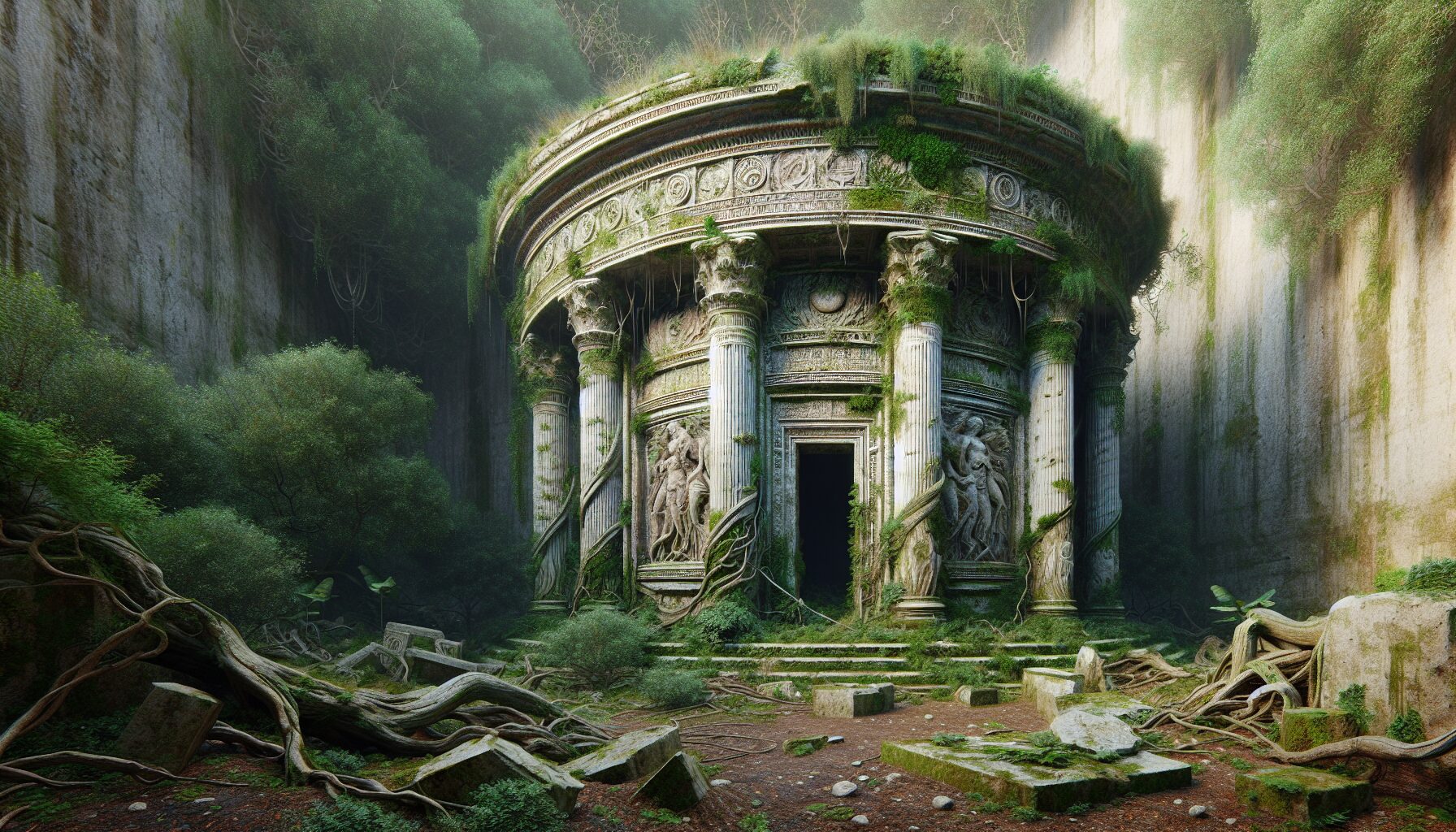
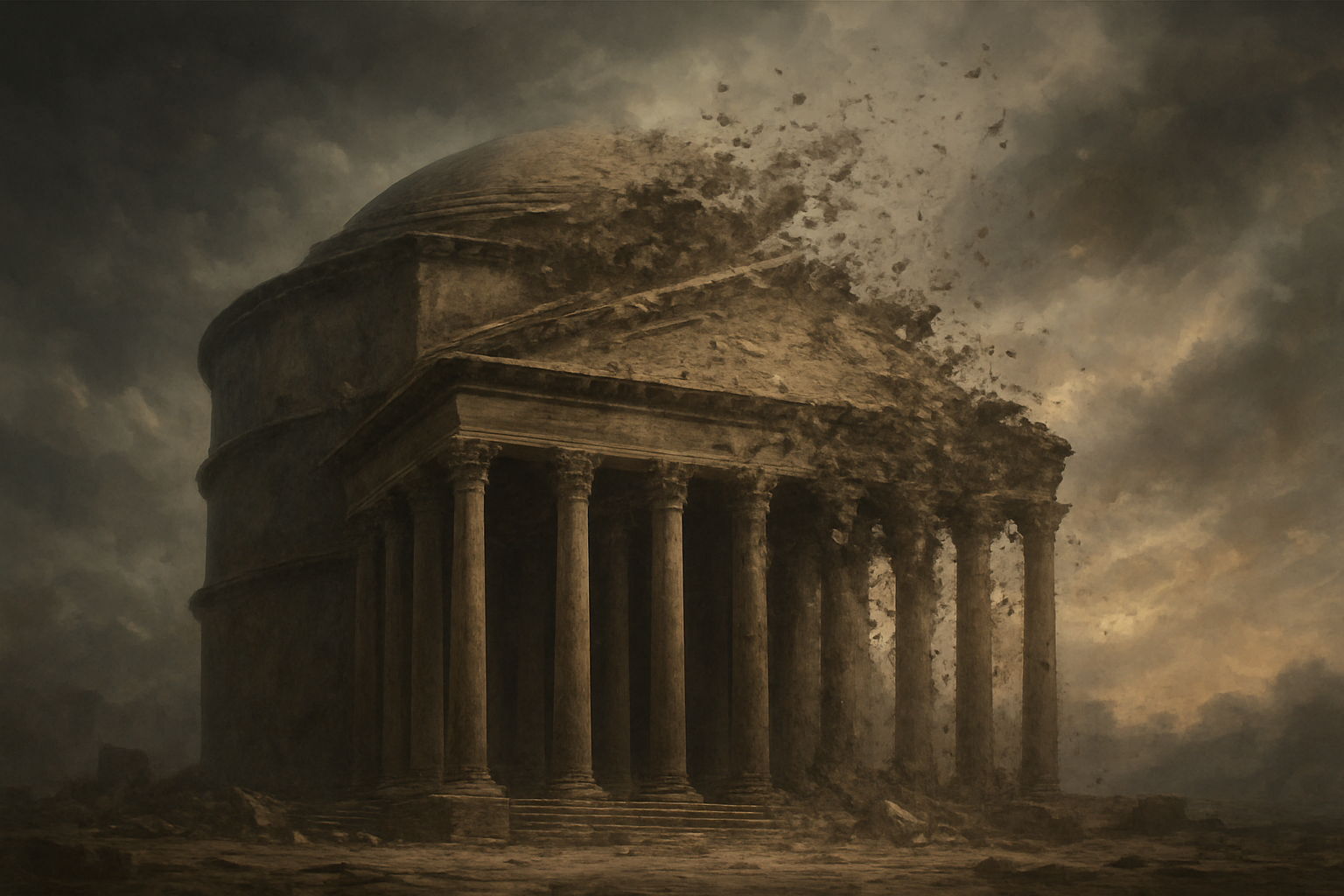
    Throughout human history, myths and legends have served as powerful lenses through which cultures interpret the mysteries of existence. As societies change, so too do their divine pantheons, sometimes expanding but often contracting, as gods and stories fade into obscurity. This phenomenon—a vanishing pantheon—is where mythologies dissolve and reshape, reflecting the evolving beliefs and priorities of civilizations.

    The Mythical Landscape

    In antiquity, civilizations like the Greeks and Romans possessed complex pantheons with gods who personified natural elements, human emotions, and societal values. These deities were integral to everyday life, with rituals and stories reinforcing their presence. As time passed, however, factors such as cultural shifts, the rise of monotheistic religions, and colonial conquests led to the disintegration or transformation of these mythologies.

    Factors Leading to the Dissolution of Pantheons

    • Religious Evolution: The rise of monotheistic faiths often resulted in the collapse or assimilation of polytheistic beliefs. For instance, the spread of Christianity throughout the Roman Empire significantly reduced the prominence of Roman gods.
    • Cultural Syncretism: As cultures interacted through trade and conquest, pantheons merged. The Egyptian and Greek integrations resulted in hybrids like the god Sarapis, reflecting both traditions.
    • Societal Change: Shifts in societal structures and priorities can render certain deities obsolete. In times of societal upheaval, such as the fall of empires, the old gods often fade away with the civilizations that worshipped them.

    A Modern Reflection

    In contemporary times, the allure of ancient mythologies persists, yet their roles have transformed. Today, these stories often serve more as cultural touchstones or inspirations for literature and film rather than as active religious beliefs. Neil Gaiman, in his novel American Gods, explores this theme, depicting old gods struggling to survive in a modern world dominated by new “gods” of technology and commerce. Gaiman’s work is a testament to the ongoing relevance and reinterpretation of myth in understanding human culture.

    “A myth is a lie that conveys a truth.”

    — Neil Gaiman

    The vanishing pantheon is not merely about loss but transformation. As the gods of old disappear into the folds of history, their stories continue to resonate, echoing the eternal human quest to find meaning in the world.
  • The Phantom Pantheon – Myth of Vanishing Gods

    The Phantom Pantheon – Myth of Vanishing Gods

    The Phantom Pantheon: Myth of Vanishing Gods

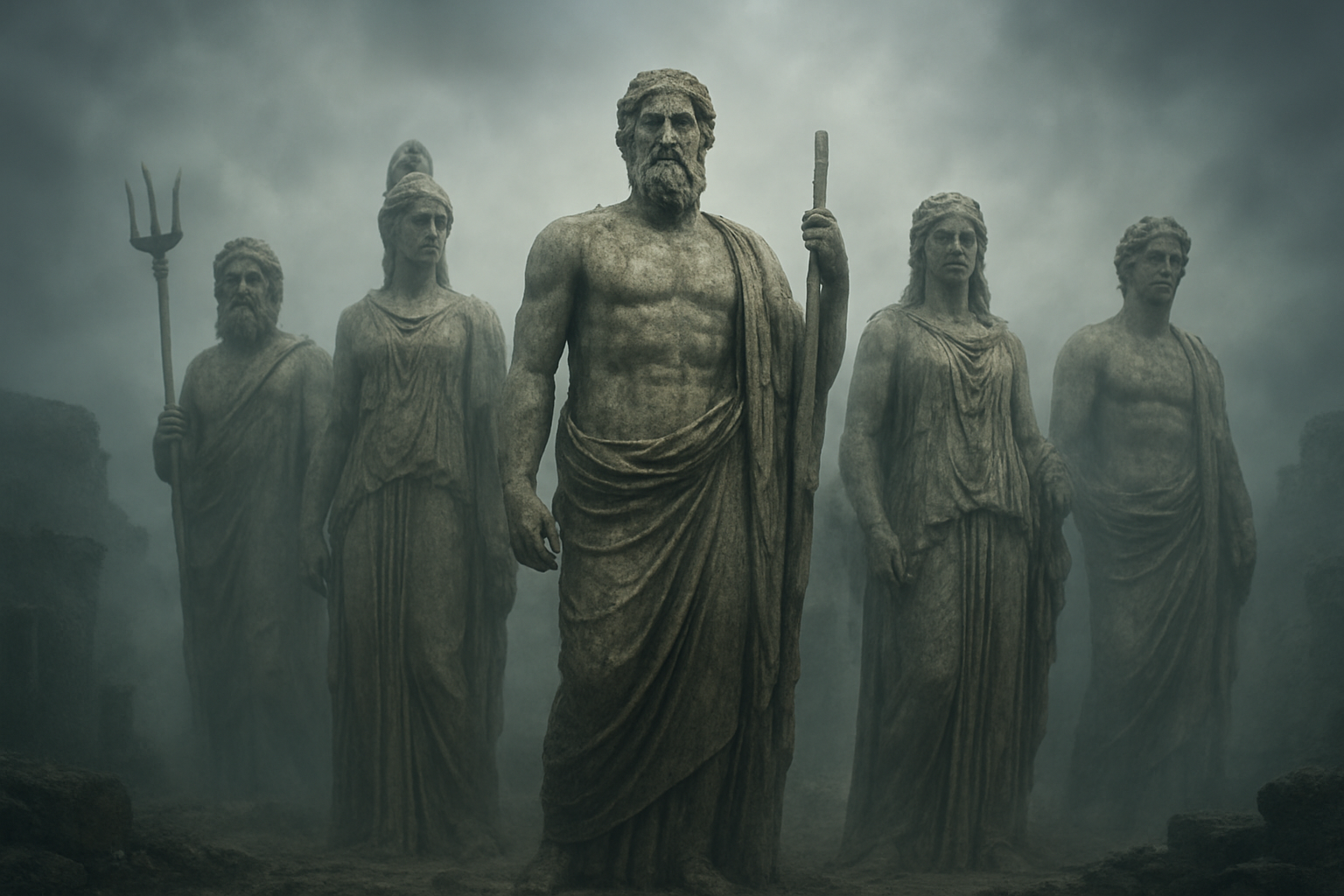
    Throughout human history, gods have played an integral role in shaping culture, morality, and civilization. However, not all deities have stood the test of time. Many gods who were once worshipped fervently have faded into obscurity, becoming part of what some call the “Phantom Pantheon.” These vanishing gods raise intriguing questions about the nature of belief, memory, and the evolution of spirituality.

    The Rise and Fall of Divine Beings

    In ancient times, polytheistic religions thrived across various cultures, each with its own pantheon of gods. As societies evolved, many of these gods slipped into the shadows, replaced by new beliefs. This phenomenon poses an interesting puzzle: why do some gods endure while others vanish?

    For instance, Ra, the sun god of ancient Egypt, was once central to Egyptian religion but receded as new religious currents, like Christianity and Islam, spread across the globe. Neil Gaiman captures the essence of this phenomenon when he writes in American Gods, “Gods die when they are forgotten.”

    The Factors Behind Vanishing Gods

    Several factors can contribute to the decline of a deity:

    • Cultural Shifts: As cultures merge and societies change, religious beliefs often evolve. For example, the Greek pantheon diminished as Roman religion grew and Christianity spread.
    • Political Influence: New political powers may enforce their own religious ideologies, leading to the abandonment of old gods. The Roman Empire’s adoption of Christianity is a classic example.
    • Changing Nature of Worship: The nature of worship itself can change, as seen in the movement from animism to organized religions with centralized gods.

    Mythological Memory: The Role of Storytelling

    Despite their disappearance from active worship, these ancient gods often continue to exist in mythological memory. Storytelling plays a crucial role in preserving their legends. The tales of Thor and Odin from Norse mythology, for instance, endure in literature and popular culture, despite the decline of Norse heathenism.

    “Myth is much more important and true than history. History is just journalism and you know how reliable that is.” – Joseph Campbell

    Campbell’s words highlight the enduring nature of myths beyond their religious origins, living on in stories and symbols.

    Modern Reflections and Reinterpretations

    Today, many ancient gods find new life in modern contexts. Pagan and neo-pagan movements have revived interest in old traditions, often reinterpreting these deities in contemporary spiritual practices.

    • Pop Culture Influence: Cinematic universes, video games, and literature breathe new life into old gods. Characters like Zeus and Athena appear in works like the Percy Jackson series, bringing ancient stories to a new audience.
    • Spiritual Revival: Groups like the Order of Bards, Ovates, and Druids focus on Celtic gods and practices, reflecting a desire to reconnect with ancestral heritage.

    The Mystery and Appeal of the Phantom Pantheon

    The concept of vanishing gods is compelling because it forces us to confront the impermanence of belief. It also raises existential questions about the nature of divinity and the human need for connection with something greater than ourselves.

    The Phantom Pantheon symbolizes the power of belief and the capacity for change inherent in human spirituality. As we navigate the complexities of modern life, these ancient stories may continue to provide insights and inspiration.

    Conclusion

    The myth of vanishing gods serves as a reminder of the fluid nature of faith through ages. While some deities have faded from immediate recollection, their essence lingers in cultural memory, art, and narrative. The Phantom Pantheon invites us to explore how spiritual endurance transcends time, offering new perspectives and guidance even in the modern era.

    Ultimately, the myth of disappearing deities resonates with the continuity of human longing for meaning, connection, and understanding in an ever-changing world.

  • Abstract Magic – Arcane Structures Beyond FormThe Hollow Pantheon – Mythology of Lost Souls

    Abstract Magic – Arcane Structures Beyond FormThe Hollow Pantheon – Mythology of Lost Souls

    Abstract Magic – Arcane Structures Beyond Form

    Abstract Magic – Arcane Structures Beyond Form

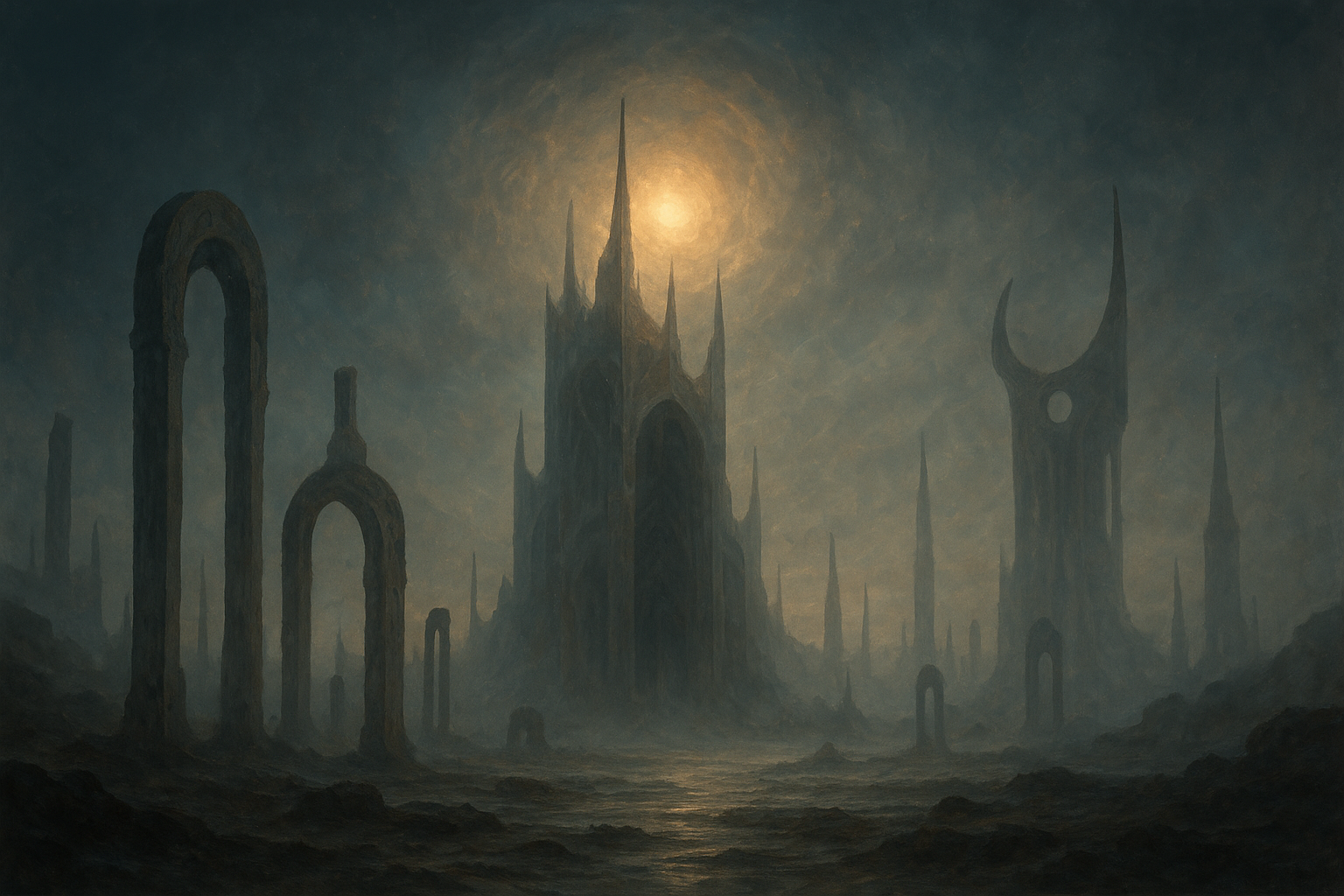
    The concept of magic transcends the boundaries of what is tangible and logical. Throughout history, magic has been described as a mysterious force that lies beyond the grasp of conventional wisdom, shaping civilizations and inspiring awe. As humanity delves deeper into the mysteries of its existence, a new breed of magic, termed here as Abstract Magic, has arisen—one that defies traditional forms to embrace the ethereal and the arcane.

    The New Age of Magic: Boundless and Formless

    In the ages of yore, magic was often associated with arcane rituals, enchanted objects, and powerful incantations. Today’s Abstract Magic, however, eclipses these earlier forms, presenting itself as an entity beyond substance and structure. It suggests that magic is not confined to the physical realm; instead, it resides within the psychic landscapes of collective consciousness.

    “Magic may just be humanity’s attempt to reach beyond the constraints of reality, to touch the divine chaos of creation.” — Dr. Elise Manning, Mythologist and Ancient History Scholar

    This abstract understanding of magic is both revolutionary and reminiscent of older mystical philosophies. It aligns with the theories of quantum mechanics, where certainty and predictability evaporate at the subatomic level, leaving only the strange dance of possibilities.

    The Hollow Pantheon: Mythology of Lost Souls

    Every civilization has spun tales of gods, heroes, and spirits, embodying virtues and vices that reflect the human condition. Among these myths lies a lesser-known assembly known as The Hollow Pantheon. Unlike the classical deities, the gods and goddesses of The Hollow Pantheon are spectral forms, embodiments of concepts rather than anthropomorphic figures.

    • Eratos: The God of Aether, a formless deity representing unlimited potential and the chaotic energy of creation.
    • Nebula: The Goddess of the Veil, reigning over mysteries and unseen truths, her influence felt in the enigmatic whispers of the wind.
    • Morpheon: The Liminal Guide, who navigates the boundary between dreams and reality, offering visions that reshape destiny.

    The Hollow Pantheon draws its mythology from the lost souls of time—those untethered spirits who wander the annals of history. Each story within the Pantheon speaks to themes of transcendence, transformation, and the stark beauty of an unknowable force.

    Resonance with Modern Thought

    The contemporary embrace of The Hollow Pantheon aligns with the evolving understanding of identity and purpose among modern societies. As technological advances blur the lines between digital and physical realms, the ethereal nature of The Pantheon finds its place in the tapestry of today’s worldview. The digital nomad, the interconnected soul seeking meaning in a virtual world, may find comfort in the narratives of The Hollow Pantheon.

    “Perhaps these myths are not lost but merely waiting to be rediscovered, speaking to the parts of ourselves that yearn for something more than the material.” — Roselyn Fields, Modern Mythologist

    The Future of Magic and Myth

    As humanity stands on the brink of a new epoch, the lines between science, magic, and mythology continue to blur, merging into an indivisible trinity. The Abstract Magic that once seemed as elusive as a whisper in the wind now finds expression in digital art, virtual realities, and the expanding horizon of quantum science. Similarly, The Hollow Pantheon serves as a reminder of where humanity has been and where it is heading—toward a synergy of the seen and unseen, the real and fantastical.

    In this age of digital enlightenment, magic is not just something one witnesses in the performance of a conjuror but something one carries within—a spark, a potential, an arcane structure beyond form.

  • The Forgotten Pantheon – Mythology of Lost Civilizations

    The Forgotten Pantheon – Mythology of Lost Civilizations

    The Forgotten Pantheon: Mythology of Lost Civilizations

    The world is replete with myths and legends that have shaped the cultural and spiritual landscapes of societies throughout history. However, there are myths from ancient civilizations that have been largely forgotten, overshadowed by the tales of more dominant cultures. This article delves into the mythology of these lost civilizations, exploring the divine narratives that once held profound significance for peoples whose stories have been partially erased by time.

    The Hittites: Masters of Anatolia

    Among the lesser-known civilizations that thrived in the ancient world were the Hittites, who reigned over much of Anatolia from approximately 1600 to 1178 BCE. Their pantheon was as elaborate as those of their more renowned contemporaries, encapsulating a fusion of indigenous gods and deities assimilated from surrounding cultures.

    • Teshub: The storm god, Teshub was a central figure in Hittite mythology. Symbolizing power and might, he was often portrayed wielding thunderbolts and was deemed the ruler of heaven and earth. According to myth, Teshub’s struggle and ultimate victory over his father, Kumarbi, is reminiscent of other divine succession myths, including the Greek tale of Zeus and Cronus.
    • Hannahanna: The mother goddess, Hannahanna, played a vital role in Hittite religious life. Her story often intertwines with agricultural cycles, depicting themes of death and rebirth. Her association with the earth and fertility mirrors that of goddesses such as Demeter in Greek mythology.

    To learn more about the Hittite pantheon, see Hittite mythology on Wikipedia.

    The Olmec Civilization: Giants of Mesoamerica

    Moving westward, the Olmecs of Mesoamerica, flourishing from around 1500 to 400 BCE, were another civilization whose legends have largely faded into obscurity. The Olmecs are often referred to as the “mother culture” of Mesoamerica, laying the groundwork for subsequent civilizations like the Aztec and Maya.

    • The Maize God: Central to Olmec religion and later Mesoamerican mythologies was the Maize God, illustrating the immense importance of maize as both a staple and a sacred symbol of life. Representations of the Maize God reveal the interconnection between agriculture and divine providence.
    • Feathered Serpent: Known as Quetzalcoatl in later Aztec religion, the Feathered Serpent was a figure of both creation and destruction among the Olmecs. This deity represented the dual nature of life, balancing creation with chaos, and was significant in shaping the worldviews of Mesoamerica’s inhabitants.

    Explore further about the Olmec civilization and mythology in Olmec Religion.

    The Etruscans: Divine Mysteries of Italy

    In the heart of Italy, the Etruscans flourished between the 8th and 3rd centuries BCE. While overshadowed by their Roman successors, the Etruscans possessed a vibrant and complex pantheon that has intrigued historians and archaeologists alike.

    • Tinia: As the supreme deity, Tinia presided over the heavens and was often equated with the Greek Zeus and the Roman Jupiter. Tinia’s capacity to wield lightning affirmed his role as a powerful enforcer of cosmic order.
    • Uni: Uni, often identified with Juno, was the Etruscan goddess of fertility and marriage. Her worship highlights the Etruscan focus on family and social stability as integral to community life.

    The Etruscans also practiced religious rites that remain partially mysterious, but their texts and tombs suggest a belief system rich in divination and ancestral veneration. For additional insights, refer to Etruscan religion on Wikipedia.

    Legacy and Influence

    Despite their relative obscurity in the modern world, the myths and legends of these civilizations have had lasting impacts on cultural and religious thought. As historian Joseph Campbell famously remarked, “Myths are public dreams, dreams are private myths,” capturing the enduring truth that such narratives shape both collective and individual identities.

    Through archaeological discovery and scholarly interpretation, the pantheons of these lost civilizations come to life, reminding us of the diverse tapestries of belief that woven through human history. These myths serve as crucial windows into the ways ancient societies understood the cosmos and their place within it.

    “Myths are public dreams, dreams are private myths.” – Joseph Campbell

    As we continue to unearth and reexamine these forgotten stories, their resurrection offers invaluable insight into the complexities and commonalities of human experience across the ages. By remembering the forgotten pantheon, we honor the rich legacies of civilizations that might otherwise be lost to the shadows of history.