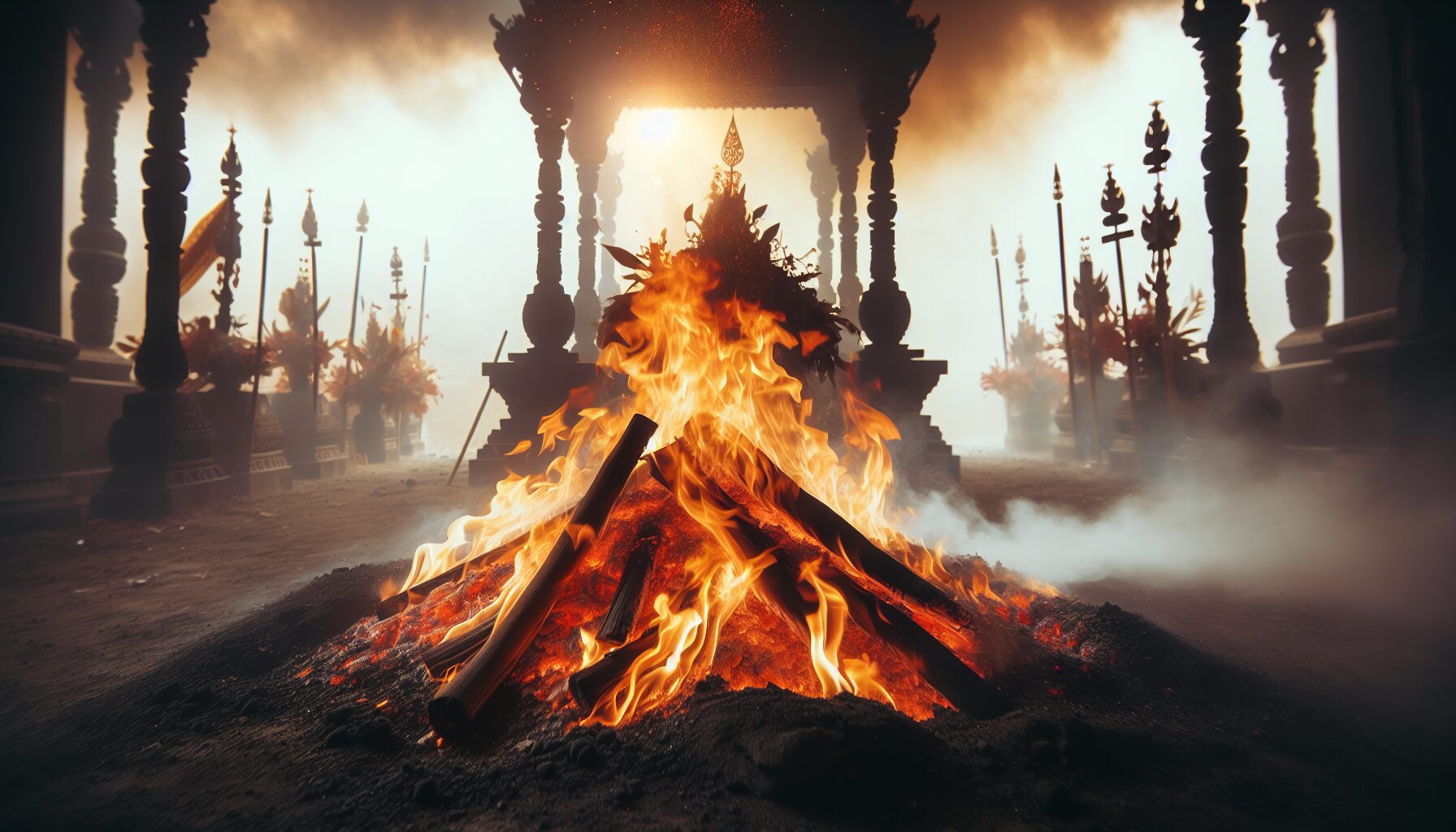
Funerary Chant – Sound as Passage Beyond Form
Sound has always been an intrinsic part of human ritual and celebration, nowhere more so than in the practices surrounding death and the honoring of those who have passed. Funerary chants are poetic articulations meant to transcend the physical world, guiding the spirit to the next realm with the aid of resonant vibrations. This article delves into the significance of funerary chants, exploring their form, function, and the cultural variances that color their expression worldwide.
The Universality of Song in Ritual
Among the many cultural practices, the funerary chant bridges the corporeal and the ethereal, allowing mourners a channel to express grief while celebrating the life of the departed. As Joseph Campbell once reflected, “Ritual is the enactment of a myth, and by participating in it, the individual paves the way to experience the transcendent.” Such rituals embody the collective emotions and spiritual beliefs of a community, offering comfort and a sense of continuity.
The Mechanics of the Chant
Funerary chants often rely on simple, repetitive melodies and rhythms that enable participants to enter a meditative or trance-like state. This repetition is not merely a characteristic of the chant but forms the essence of its power. It creates an altered state of consciousness where participants might feel the presence of those who have left the material world. The use of echoes, reverberations, and harmonics can enhance this effect, producing a soundscape that feels otherworldly.
Variations Across Cultures
- Tibetan Buddhist Chants: Tibetan Buddhists perform chants known as Thoday during funerals. These chants involve deep harmonic undertones and the use of Tibetan singing bowls to facilitate meditation and connection with the divine. The Culture Change Life describes the purpose of these chants as aiding the soul’s journey through the Bardo, the state between death and rebirth.
- Gregorian Chants: Originating in the Western Christian tradition, Gregorian chants are marked by their monophonic and free-flowing style. They are used in liturgical settings to evoke a sense of peace and contemplation, employing Latin verses to elevate the sacredness of the ceremony. The melodic lines of these chants guide the spirit with reverence and serenity.
- Native American Songs: Native American tribes each have their unique funerary practices. These often include chants that incorporate natural elements, such as wind and water sounds, aligning the passage of an individual with the sacred cycles of nature. The significance of these chants is honored in the belief that they help restore balance and harmony to the cosmos.
Modern Interpretations and Evolutions
In current times, funerary chants are evolving as cultures mingle and technology advances. Electronic music artists and modern composers have begun to draw inspiration from traditional chants, reimagining them with synthesized sounds and global influences. This fusion reflects the ever-changing landscape of human spirituality and our eternal quest to understand and express life’s transitions.
“Music, in particular, possesses an extraordinary power to evoke deep and varied emotions. In the context of funerals, chants lull mourners into a state of shared remembrance and consolation.”
As discussed in Psychology Today, our relationship with musical rituals is emblematic of an innate, shared comprehension underscoring human experience—offering solace and connection.
Conclusion: The Soundtrack of Passage
Funerary chants, in their diverse forms, serve as a bridge between worlds, a manifestation of our yearning to connect with what lies beyond the visible and tangible. Through sound, humans find a way to communicate the inexpressible, to house grief and hope in melodies that echo through time. Whether traditional or modern, the funerary chant remains a vital part of how humans celebrate, mourn, and transcend, embodying sound as the passage beyond form.