Tag: practice

  • The Shadow of the Moon – Darkness in Spiritual Practice

    The Shadow of the Moon – Darkness in Spiritual Practice

    In many spiritual traditions, the moon is revered not only as a celestial body but also as a symbol of various aspects of human spirituality. While the full moon often represents clarity and the culmination of energies, the shadow of the moon—or the new moon—holds its own significance in spiritual practice.

    The New Moon: A Time for Reflection

    The new moon phase, when the moon is not visible from Earth, is considered a powerful period for introspection and setting intentions. This dark lunar phase prompts practitioners to retreat inwards, relying on the absence of lunar illumination as a metaphor for exploring the unknown aspects of themselves. As the psychotherapist and author Carl Jung noted, “One does not become enlightened by imagining figures of light, but by making the darkness conscious.”

    Darkness as a Symbol of Potential

    • The darkness of the new moon is often seen as a blank slate, ripe with potential. It encourages the release of what no longer serves an individual to make room for new beginnings.
    • Spiritual practitioners view this period as an opportunity for healing and renewal. The absence of light is thought to provide a unique environment where one can face hidden fears and desires without distraction.
    • Many traditions, such as those observed in Wicca and some branches of Hinduism, include specific rituals to honor this introspective period, fostering a connection to the inner self.

    Embracing the Unknown

    The practice of engaging with spiritual darkness is not without its challenges. In a world that cherishes clarity and certainty, embracing the shadow requires courage and an open mind. Jessica Dore, a licensed social worker and tarot practitioner, states, “The dark moon is a reminder that much of what we seek lies in places we’d rather not look.” The journey into this lunar shadow is thus an essential part of spiritual growth.

    “True transformation is birthed through experiencing and understanding the darkness within us,” says Dr. Steve Taylor, a psychology lecturer and author on spiritual science. “In our shadows lie the dormant seeds of our true potential.”

    This exploration of darkness is not an ode to negativity but an acknowledgment of its role in the balance of light and dark within the human psyche. As spiritual seekers navigate the shadow of the moon, they learn to embrace all facets of their being, leading to more profound self-understanding and spiritual enlightenment.

    The dance between shadow and light is perpetual. By embracing periods of darkness as vital components of spiritual practice, individuals carve out a path to deeper awareness and personal growth. Just as the seasons change, so too must practitioners honor the cyclical nature of their spiritual journey.

  • Necromancy and Memory – Raising the Shadows of the Dead

    Necromancy and Memory – Raising the Shadows of the Dead

    The concept of necromancy has long fascinated and terrified the human imagination, entwining myth and memory in a dance as ancient as the shadows themselves. Once considered a dark art reserved only for the brave (or perhaps the foolhardy), necromancy evokes images of sorcerers and midnight rituals, where the veil between the living and the dead is perilously thin.

    A Historical Overview

    Necromancy, derived from the Greek words nekros (dead) and manteia (divination), refers to the practice of communicating with the dead. This practice was widely employed in ancient cultures to glean secrets from the spirits. The ancient Greeks, for instance, included necromancy as part of their religious rituals, with notable mentions in Homer’s The Odyssey, where Odysseus seeks guidance from the deceased prophet Tiresias.

    In medieval Europe, necromancy was often conflated with witchcraft, leading to prosecution and persecution. According to a History.com article, the Inquisition led to the loss of countless lives, often targeting those believed to engage with necromancy.

    The Intersection of Memory and Magic

    At its core, necromancy is as much about memory as it is about magic. This mystical practice taps into the human desire to connect with those who have passed away, a means to keep their memories alive. As the poet Robert Penn Warren aptly put it, “The past is always a rebuke to the present.”

    “To live in hearts we leave behind is not to die.”

    — Thomas Campbell

    This desire, to keep loved ones present through memory, fuels the practice’s persistence through the ages. In a way, necromancy serves as a spiritual archaeology, digging through layers of time to resurrect what once was.

    Modern Perceptions and Practices

    Today, necromancy has taken on a more symbolic form, often associated with séances and the paranormal. Modern practitioners might use necromancy as a tool for self-reflection or to achieve closure with departed loved ones. However, it remains shrouded in controversy due to ethical and religious concerns.

    According to Britannica, contemporary necromancers often use methods such as meditation and tarot alongside more traditional rituals, seeking guidance rather than power over the dead.

    Raising Shadows: Ethical Considerations

    The practice of necromancy raises significant ethical questions: Is it right to disturb the rest of the deceased? Could such practices unintentionally harm the living? Many religious doctrines argue that the dead should be left undisturbed, emphasizing their place in the afterlife.

    • Consent: The issue of consent looms large, as the dead cannot agree to participate in these rituals.
    • Intention: Much hinges on the intention behind the practice—whether it is pursued out of love, grief, or a desire for power.
    • Impact on the Living: Engagement with necromancy might lead individuals into the depths of their grief, delaying acceptance and healing.

    Thus, practitioners and skeptics alike must tread carefully in this mysterious realm, respecting both its power and its limits.

    The Cultural Influence of Necromancy

    Despite—or perhaps because of—its eerie nature, necromancy has inspired countless cultural works. From Shakespeare’s Hamlet to popular video games like the Diablo series, the notion of communicating with the dead remains a potent narrative tool.

    This fascination reflects humanity’s perennial struggle with mortality and the unknown, as well as the hope that, through memory, the departed never truly leave us.

    Conclusion: A Dance with Shadows

    In the grand tapestry of human belief, necromancy serves as both a reminder and a warning. It is a reminder of our deep-seated desire to connect with those we have lost, and a warning of the potential perils that such connections might bring. In our pursuit of these shadowy paths, may we honor the memories we cherish while respecting the mysteries that lay beyond our understanding.

    In the words of William Wordsworth, “Though nothing can bring back the hour of splendor in the grass, we will grieve not, but rather find strength in what remains behind.”

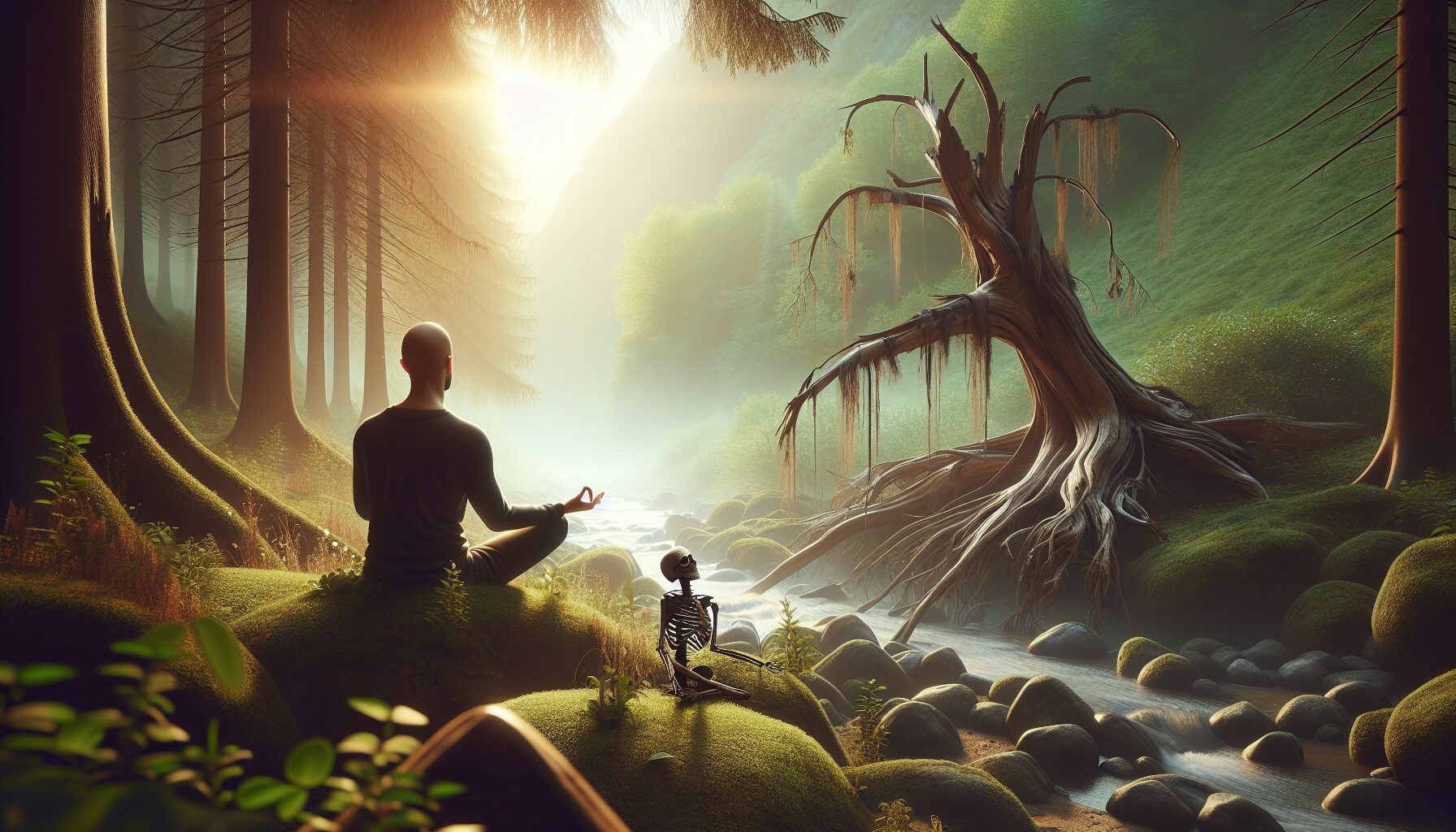
  • Corpse Meditation – Facing Decay as Spiritual Practice

    Corpse Meditation – Facing Decay as Spiritual Practice

    Corpse Meditation: Facing Decay as a Spiritual Practice

    Meditation has long been revered as a pathway to inner peace and enlightenment, yet one of its more unusual and lesser-known forms involves contemplating death and decay. Known as Corpse Meditation, or Marana Sati, this practice originated in ancient Buddhist traditions and invites practitioners to engage deeply with the ephemeral nature of life.

    Understanding Corpse Meditation

    At its core, Corpse Meditation is a way to contemplate mortality by visualizing or even observing the decomposition of a body. Although the practice may seem morbid at first glance, its profound insights often lead to a greater sense of peace and acceptance of the natural cycles of life.

    “By contemplating a corpse, one learns the impermanence of life, reducing attachment and turning the mind towards spiritual growth,” notes Thanissaro Bhikkhu, a contemporary Buddhist monk and author. (Source)

    Historical Roots

    Corpse Meditation traces back to early Buddhist teachings where monks would meditate in charnel grounds. This practice is detailed in the Satipatthana Sutta, an essential discourse in the Pali Canon, where Buddha describes it as a way to develop mindfulness and the understanding of anicca (impermanence).

    • Practitioners would meditate on different stages of bodily decomposition.
    • The stages included the body bloating, decaying, and eventually turning to bones.
    • This meditation aimed at overcoming fear of death and eliminating attachment to the physical body.

    The Process of Corpse Meditation

    The practice of Corpse Meditation can be done in both physical settings—such as a certified retreat—and through guided imagery in personal spaces. The meditation involves several stages:

    • Visualization: Practitioners visualize a lifeless body going through various stages of decay.
    • Reflection: Each stage is reflected upon with understanding and acceptance of the inevitability of death.
    • Mindfulness: The meditator remains present with sensations and emotions, observing their transient nature.

    In some traditional settings, practitioners might actually meditate in morgues or places where bodies naturally decompose, an experience that provides a direct confrontation with death.

    The Psychological and Spiritual Benefits

    While confronting death might sound alarming, many find profound benefits in the practice:

    • Reduced Fear of Death: By repeatedly exposing oneself to the concept of decay, practitioners often report a diminished fear of their own mortality.
    • Decreased Attachment: Understanding the transient nature of the body helps reduce attachment to material possessions as well.
    • Heightened Mindfulness: The intense focus on present moment reality strengthens overall mindfulness and mental clarity.

    Robert Thurman, a scholar of Buddhism, mentions, “Coming face to face with death can bring a unique and profound awakening that life is fleeting. This realization can instill a renewed urgency to live authentically and lovingly.” (Source)

    Challenges and Considerations

    Despite its deep benefits, Corpse Meditation can be challenging and isn’t suitable for everyone. Those interested should proceed with caution and guidance:

    • Emotional Reactions: Some might find the practice triggering or overwhelming, particularly if they have unresolved grief or fear associated with death.
    • Guidance Required: Beginners are encouraged to seek guidance from experienced meditation teachers.
    • Personal Readiness: It’s critical to assess one’s comfort level with the practice’s themes before engaging deeply.

    Peter Harvey, an expert in Buddhist studies, warns of the intensity of the practice, stating, “This meditation requires mental fortitude and should be approached with sensitivity and respect for one’s emotional boundaries.” (Source)

    Modern Adaptations and Alternatives

    In today’s context, Corpse Meditation has been adapted for various cultures and spiritual practices, integrating modern therapeutic techniques to address its challenging aspects:

    • Yoga and Mindfulness: Practices such as Savasana in yoga can incorporate elements of Corpse Meditation by allowing relaxation and reflection on the body’s stillness.
    • Guided Imagery: Audio guides and virtual retreats offering gentle introductions to the practice are becoming popular.
    • Therapeutic Approaches: Psychotherapists may use death-related meditative techniques to help clients work through existential anxiety.

    Conclusion: Embracing Life Through Death

    Though unconventional, Corpse Meditation provides a transformative lens through which to view life and death. By facing decay, meditators not only diminish the fear of their own mortality but also cultivate a deeper appreciation and acceptance of life’s impermanence. Through mindful reflection, one can unlock profound spiritual insights, leading to a more authentic and fulfilled existence.

    In a society often in denial about death, embracing the practice of Corpse Meditation invites a foundational shift in perspective—one that acknowledges the beauty and necessity of both life’s beginning and its inevitable end.

  • Meditating on Death – Ancient Practices of Impermanence

    Meditating on Death – Ancient Practices of Impermanence

    Across cultures and epochs, the contemplation of death has been a profound practice to gain wisdom and serenity. Such meditations on impermanence encourage a deeper appreciation for life, urging individuals to live with intention. This article explores some ancient practices that have continued to offer solace and insight into the fleeting nature of existence.

    Tibetan Buddhism and the Bardo Thödol

    Among Tibetan Buddhists, the Bardo Thödol, commonly known in the West as the Tibetan Book of the Dead, offers profound teachings on the transitional states between death and rebirth. According to Encyclopaedia Britannica, the text serves as a guide for the deceased during the state of transition, called bardo. This practice not only prepares the living to confront mortality but offers a vision of life’s transitory beauty.

    Stoic Reflections on Mortality

    The Stoics, ancient philosophers of Greece and Rome, often reflected on death to cultivate wisdom. Marcus Aurelius, in his Meditations, advises, “You could leave life right now. Let that determine what you do and say and think.” Through daily reminders of death, known as Memento Mori, stoics embraced the impermanence of life to instill courage and clarity in their actions. Such teachings continue to captivate modern seekers of wisdom.

    The Egyptian Practice of Ritual Mourning

    For ancient Egyptians, death was a journey, not an end. They held elaborate rituals to prepare for the afterlife, but also practiced personal mourning as a meditation on loss and transformation. According to the History Channel, the preservation of bodies through mummification further highlighted their belief in the ongoing process of death and rebirth. Engaging in these practices allowed them to maintain a deep connection with both the deceased and the sacred journey of life.

    Japanese Zen Buddhism and Impermanence

    In Japanese Zen Buddhism, the concept of Mono no Aware—the pathos of things—emphasizes the beauty of transience. This aesthetic, drawn from Japanese poetry and art, encourages mindfulness of life’s ephemeral nature. As author William R. Lafleur notes in his work on Zen practices, “The beauty of life lies in its impermanent stages.” Such insights foster a nurturing appreciation for every fleeting moment of existence.

    “You could leave life right now. Let that determine what you do and say and think.” – Marcus Aurelius

    By embracing these ancient practices, individuals can embark on a journey toward understanding life’s impermanence. Such reflections not only bring solace to those contemplating the end but also illuminate the preciousness of every moment we have.

  • Sky Burial – Feeding Death to the Vultures of Heaven

    Sky Burial – Feeding Death to the Vultures of Heaven

    High up in the Tibetan plateau, where the sky stretches endlessly and the air is thin with the whispers of ancient rituals, lies a practice both profound and deeply spiritual: the sky burial. Known locally as “jhator,” this sacred rite reflects a unique understanding of life, death, and the cyclical nature inherent to both.

    “The Tibetans have learned to see death as a bridge to a better life, and the sky burial is a heartfelt acknowledgment of that journey,”

    Sky burial is a funerary tradition primarily observed by the Tibetan Buddhists, a people who perceive the earthly body as an empty vessel once life has departed. This ritual serves not only as a means to dispose of the body but also as an act of charity, offering sustenance to the creatures who are integral to their highland ecosystem: the vultures.

    • Symbolic Rebirth: The practice underscores the belief in samsara, the cycle of death and rebirth. The body’s consumption by vultures is seen as an act of returning to nature, an important step in the deceased’s spiritual journey.
    • Practicality and History: In the rocky terrains of Tibet, traditional burial or cremation is often impractical. The historical context adds a layer of practicality to this ethereal tradition.
    • Ecosystem Connection: The ritual is deeply connected to the surrounding ecology. Vultures, regarded as heavenly emissaries, help maintain the environmental balance by consuming carrion that could otherwise spread disease.

    The process is carefully orchestrated. Monks or designated attendants commence by ritually preparing the body, which is often draped in white cloth, symbolizing purity. Chanting sacred mantras, the monks invite the vultures, who descend upon the scene with the quiet dignity that seems almost reverent.

    Despite its apparent starkness, the sky burial is viewed not with horror but with reverence. It is a gentle reminder of impermanence, nudging the living towards mindfulness and compassion. In a world often marked by the fear of death, this practice boldly embraces it, fostering a serene acceptance of life’s ultimate passage.

    For those unacquainted with Tibetan rituals, sky burial might initially provoke unease. Yet, in understanding its spiritual essence, one finds profound beauty in the cycle of life and death. As NPR noted, “In vulture’s flight from mountain to sky, the soul is said to take its journey to the heavens.” In this cycle, the sky burial stands as a poignant tribute to the timelessness of life itself, a ceremony that feeds both the earth and the heavens.

  • Sleep as Mini-Death – Biology’s Daily Practice of Dying

    Sleep as Mini-Death – Biology’s Daily Practice of Dying

    Sleep as Mini-Death: Biology’s Daily Practice of Dying

    Sleep has long been a source of fascination and mystery, often described as a “mini-death” by various cultures and philosophies. The comparison arises from the significant loss of consciousness and physical inactivity, resembling the stillness of death, which occurs every night. But is this analogy purely poetic, or does it hold some biological truth?

    The Biological Perspective

    The phenomenon of sleep as a daily practice of dying can be explored through a biological lens. Matthew Walker, a renowned sleep scientist, explains that during sleep, “we go through cycles of non-REM and REM sleep, essentially disconnecting from our environment as we temporarily ‘die’ to the world” ([source](https://www.sleepfoundation.org/)). This disconnection is critical for numerous bodily functions, including memory consolidation, immune system regulation, and cellular repair.

    Comparative States: Sleep and Death

    • Loss of Consciousness: Just as death leads to a permanent loss of awareness, sleep temporarily suspends conscious experience, bringing a sense of oblivion.
    • Physical Inactivity: During deep sleep, the body experiences temporary paralysis, known as atonia, particularly in the REM phase. This is reminiscent of the immobility observed in death.
    • Metabolic Changes: Sleep induces a state of reduced metabolic rate, which is also a characteristic of biological decay processes after death.

    Philosophical and Cultural Reflections

    The idea of sleep as a mini-death is not just biological but also philosophical. For instance, the ancient Greek philosopher Heraclitus noted, “Even sleepers are workers and collaborators in what goes on in the universe” ([source](https://www.goodreads.com/author/quotes/4090.Heraclitus)). This suggests that despite its apparent inertness, sleep plays an essential role in life’s cyclical process, much like death does in the broader ecological context.

    “The only time I have problems is when I sleep. Perhaps I’m a unique being, being in dormancy while alive.” – René Descartes

    Conclusion

    While sleep is a revival waiting to happen, it serves as a reminder of the temporary nature of life and perpetuates the cycle of birth, growth, and decay. As a biological necessity deeply intertwined with our survival, sleep deserves reverence rather than fear, much like death itself.

    Understanding sleep as a mini-death enhances our appreciation for the necessity and benefits of this nightly ritual, allowing us to embrace it as a rehearsal that sustains and revitalizes our daily lives.

  • The Hidden Choir – Spiritual Lessons in Silence

    The Hidden Choir – Spiritual Lessons in Silence

    In an era dominated by the clamor of everyday life, the profound depth of silence can often seem elusive. Yet, for millennia, spiritual seekers have turned to silence as a sanctuary. This quietude offers a hidden choir of lessons, inviting introspection, connection, and transcendence.

    The Concept of Silence in Spiritual Traditions

    Across various spiritual practices, silence is more than the absence of sound; it is an embodiment of presence.

    • Buddhism: In Zen Buddhist practice, silence is an essential aspect of meditation. Zen master Shunryu Suzuki remarked, “Silence is not the absence of sound, but the absence of self.” In sitting silently, practitioners aim to transcend the noise of their ego.
    • Christianity: In Christian monasticism, the practice of “the Great Silence” after night prayers is a tradition revered for its contemplative power. The desert fathers and mothers sought God in the solitude of the desert, where St. John Climacus pointed out, “The friend of silence draws near to God.”
    • Sufism: Sufi mystics often practice khalwa – a form of retreat to attain spiritual closeness to God. The Sufi poet Rumi wrote, “Silence is the language of God; all else is poor translation.”

    Silence and Inner Communion

    Silence facilitates a deep, inner communion with oneself. It allows individuals to ponder life’s essential questions free from external distractions:

    “We need silence to be able to touch souls.” —Mother Teresa

    In the muted moments, individuals can reflect on their motivations and desires, seeking clarity without the clutter of external voices. This introspective nature of silence promotes self-awareness, leading to a greater understanding of oneself and one’s place in the universe.

    The Therapeutic Nature of Silence

    The healing power of silence has been acknowledged in modern psychology and wellness practices. Mindfulness and silent meditation retreats have gained popularity as means to detoxify the mind from stress.

    • Stress Reduction: Silence empowers the mind to recalibrate. Studies, such as those by Dr. Herbert Benson at Harvard Medical School, highlight how the relaxation response induced by silence reduces stress and anxiety.
    • Emotional Healing: Deep silence allows suppressed emotions to surface, offering the individual opportunities to process and release them effectively.
    • Cognitive Benefits: According to a study published in the journal Brain Structure and Function, silence can regenerate brain cells, enhancing cognitive capabilities and promoting mental clarity.

    The Social Dimension of Silence

    While often considered a solitary pursuit, silence possesses profound social implications. In communication, silence can be more powerful than words.

    “All things have their time. Silence too has its time.” —Euripides

    In cultures such as the Japanese, silence in conversation is revered. It offers space for contemplation and reflects respect and understanding. Moreover, silent presence in times of grief or elation can be a more significant comfort than verbal sympathy or congratulation.

    Embracing Silence in the Modern World

    The journey towards embracing silence begins with intentionality. Modern life, with its constant barrage of notifications, requires disciplined practice to reclaim the silence that nurtures the soul.

    • Digital Detox: Adopting periods, even hours, each day, devoted to being away from screens can help reclaim lost silence.
    • Meditative Practices: Daily meditation, even for ten minutes, can anchor individuals in quiet peace, offering spiritual and emotional nourishment.
    • Nature Retreats: Immersing oneself in nature, far from urban noise, amplifies the spirit of silence. The natural world is inherently silent yet filled with the wisdom of life’s simplicity.

    The Wisdom of the Hidden Choir

    Silence teaches patience, humility, and the acceptance of what is beyond our control. It is in silence that we begin to understand the concept of being without the urge to do.

    The “hidden choir” of silence continually sings the praises of life unencumbered by superficial constraints, inviting us to listen closer and hear the deeper truths about existence. As philosopher Blaise Pascal once mused, “All of humanity’s problems stem from man’s inability to sit quietly in a room alone.”

    Conclusion

    The spiritual lessons in silence are profound, leading us back to an unadulterated essence of being. In this fast-paced world, discovering the hidden choir within silence could be the key to unlocking profound peace and a more meaningful existence. Engaging with the stillness within us opens doors to a more harmonious life, both internally and with the world around us.

  • The Hidden Abyss – Exploring Consciousness Through Darkness

    The Hidden Abyss – Exploring Consciousness Through Darkness

    The journey into darkness may sound like a quest into the void, yet it holds unparalleled potential for self-discovery and enlightenment. This article explores how navigating through darkness can profoundly impact and expand human consciousness.

    The Ancient Practice of Darkness Retreats

    Darkness retreats have been a spiritual practice for centuries, with roots in various cultural and religious traditions. These retreats involve spending extended periods in complete darkness to achieve heightened states of awareness, emotional healing, and deep introspection.

    “In total darkness, you can’t tell what’s real. When there’s no light to assure you of your path, it becomes about trust—trust in yourself, your mind, and your inner guiding light.”

    Sadhguru

    This practice is akin to the Buddhist tradition known as Toglen and the Taoist concept of Zhong Hua, where the absence of light is used to purge the mind and spirit of distractions.

    The Science Behind the Dark

    From a scientific perspective, darkness affects our neurology and biology in several profound ways:

    • Melatonin Production: Extended exposure to darkness boosts melatonin production, a hormone that regulates sleep and is known to enhance the immune system and reduce the risks of neurodegenerative diseases.
    • Brain Chemistry: Deep darkness influences the production of certain neurotransmitters like serotonin and dopamine, essential for mood regulation.
    • Cognitive Reset: In the absence of visual distractions, the brain can reset, often leading to new insights and perspectives.

    Embracing the Shadows: Techniques and Practices

    Various techniques can be employed during darkness retreats to facilitate a deeper exploration of consciousness:

    • Meditation: Practicing meditation in darkness can help focus the mind on the inner self, fostering clarity and peace.
    • Breath Work: Techniques such as pranayama can heighten the senses and deepen emotional resilience.
    • Mindfulness: Being fully present in the dark sharpens awareness and cultivates a profound appreciation for the unseen aspects of life.

    According to Psychology Today, such practices are essential for reducing anxiety and boosting mental health.

    Personal Revelations and Insights

    Many who engage in darkness retreats report a transformation in their understanding of themselves and the world. By eliminating the visual stimuli, the mind is freed from its usual constraints and can explore deeper consciousness layers.

    “Darkness reveals itself not as an absence of light, but as a stage set for thoughts, ideas, and profound revelations.”

    Unknown Practitioner

    This experience can lead to a renewed sense of self, providing illumination on personal issues that were previously misunderstood or ignored.

    Challenges and Considerations

    Despite its potential benefits, darkness retreats are not without challenges. Those new to the practice may experience discomfort, fear, or anxiety when faced with prolonged darkness. It requires a certain degree of mental preparedness and willingness to confront internal obstacles. Participants are advised to enter these retreats with an open mind and set intentions for their journey.

    A Message from Contemporary Practice

    Modern spiritual leaders and psychologists have begun to recognize the benefits of darkness retreats as part of a holistic approach to mental health.

    “In the darkness lies not the absence of light, but the birth of clarity, grounded in the self and the universe.”

    Alan Watts

    Integrating these practices into modern life can combat stress, improve mental focus, and enhance emotional resilience. Resources such as Headspace offer guidance for those looking to explore mindfulness and meditation both in darkness and light.

    Conclusion

    The hidden abyss of darkness, rather than a void, is a fertile ground for the seeds of consciousness to grow. As humanity explores these depths, we find that what was once feared as an endless chasm is full of potential for healing and insight.

    In the pursuit of understanding consciousness through darkness, we embark on a transformative journey that can illuminate our paths, not with external light, but with an inner glow of wisdom and serenity.

    Ultimately, embracing darkness is about embracing the unknown parts of ourselves and the universe around us—an odyssey as enlightening as any journey into the physical world.

  • The Hidden Sanctum – Secret Practices for the Modern Mystic

    The Hidden Sanctum – Secret Practices for the Modern Mystic

    In an age where technology distracts and busyness prevails, the pursuit of spiritual depth often seems elusive. Yet, for the modern mystic, the search for inner peace and deeper understanding continues unabated. This journey involves secret practices that may seem ancient but remain relevant in fostering personal growth and connection with the divine.

    The Call of the Mystic

    Throughout history, mystics have been individuals committed to the exploration of inner worlds and the cultivation of spiritual wisdom. This path isn’t fixed by religious affiliation; rather, it is a personal journey that transcends dogma. The modern mystic is often characterized by a deep sense of intuition, a quest for authenticity, and a yearning for meaning in an increasingly complex world.

    “Mysticism, in its simplest and most general definition, is the search for intercourse with the divine, which leads to the communion, or even identification, of the soul with it.” – William Ralph Inge

    Secret Practices of Mystics

    Though the world has evolved in countless ways, mystical practices have persisted, adapting to suit the new environments of their practitioners. Here are some of the timeless practices that are gaining renewed interest among the modern mystics:

    1. Meditation and Contemplation

    Meditation is perhaps the most widely recognized mystical practice. Many spiritual traditions emphasize the importance of meditation in quieting the mind and opening the heart to divine presence.

    • Mindfulness Meditation: The practice of being present and fully engaged with the current moment without judgment.
    • Transcendental Meditation: A form of silent mantra meditation developed by Maharishi Mahesh Yogi.
    • Contemplative Prayer: Practiced particularly in Christian mysticism, it involves silent awareness and an intimate dialogue with the divine.

    Contemplation goes hand-in-hand with meditation. It involves deep reflection and immersion in spiritual texts or the natural world, allowing insight to emerge. As Thomas Merton, a prominent mystic, once said:

    “Contemplation is the highest expression of man’s intellectual and spiritual life. It is that life itself, fully awake, fully active, fully aware that it is alive.” – Thomas Merton

    2. Sacred Sound and Chanting

    The use of sound in mystical practice is rooted in the belief that sound vibrations can alter consciousness and connect the practitioner with the divine. From OM, the primal sound in Hinduism, to Gregorian chants in Christianity, sacred sounds hold a special place in the mystic traditions.

    • Kirtan: A form of call-and-response chanting, originating from the Indian saint tradition.
    • Gregorian Chant: A methodical and spiritual form of singing developed by Western Christians.
    • Sound Healing: Utilizing instruments like singing bowls and gongs to induce meditative states and healing.

    3. Rituals and Symbols

    Rituals serve as powerful conduits for mystical experiences, often utilizing symbols imbued with personal or collective significance. These could be as elaborate as ceremonial magic or as simple as lighting a candle.

    • Ceremonial Magic: Complex rituals that often employ the four elements—earth, air, fire, and water.
    • Simple Altar Creation: Establishing a sacred space with objects that hold personal spiritual significance.
    • Moon Phases: Conducting rituals in accordance with lunar phases is an ancient practice that continues to captivate the modern mystic.

    4. Nature Immersion

    Mystics often find the divine in the natural world, where the perceived separation between the divine and mundane is blurred. Many modern mystics make nature a significant part of their practice, following the footsteps of thinkers like Henry David Thoreau.

    “Heaven is under our feet as well as over our heads.” – Henry David Thoreau

    Practices include:

    • Forest Bathing: A Japanese practice known as Shinrin-yoku, immersing oneself in the forest atmosphere.
    • Solitary Retreats: Time spent alone in nature to foster deep contemplation and spiritual awakening.

    5. Dreamwork

    Dreams have long been seen as gateways to the subconscious and the divine. Many mystics engage in dreamwork to gain insights and guidance.

    • Lucid Dreaming: The practice of becoming aware of the dream state, allowing conscious interaction within the dream.
    • Dream Journaling: Recording dreams shortly after waking to capture the elusive messages conveyed.

    The Guided Path

    The journey of the modern mystic is both personal and universal, a path that fosters both individuality and a collective awakening. While secret practices offer tools for the journey, they are not ends in themselves. The ultimate goal remains transformative and profound—to strip away illusions and perceive the divine unity in all.

    In fostering this journey, mystics often gain not only personal peace but also contribute profoundly to a more conscious and connected society. As the world continues to change rapidly, the secret practices of mystics old and new will undoubtedly continue to guide us toward deeper understanding and enlightenment.

    For more insights and resources on mysticism, consider visiting platforms like The Mystic or Spirituality and Practice, where ancient wisdom meets modern seekers.

  • The Edge of Being – Existential Philosophy in Practice

    The Edge of Being – Existential Philosophy in Practice

    In a world where individuals often find themselves lost amidst overwhelming information and societal norms, existential philosophy serves as a guiding compass, propelling one into a journey of self-discovery and authenticity. At its core, existentialism is a philosophy that emphasizes individual freedom, choice, and responsibility in an indifferent universe.

    The gripping narrative of existential thought can be traced back to the profound works of philosophers like Jean-Paul Sartre, Simone de Beauvoir, and Albert Camus. As Sartre famously declared, “Man is condemned to be free,” underscoring the daunting yet liberating truth of our inherent freedom and the accountability it demands.

    The Practice of Freedom

    Practicing existential philosophy requires embracing a few key principles:

    • Embrace Authenticity: To live authentically is to act in accordance with one’s true self rather than conforming to external pressures or deceptive facades. This involves a deep understanding of oneself and a rejection of bad faith – the act of deceiving oneself to escape unwelcome truths.
    • Make Meaning: Existentialism posits that life lacks inherent meaning. It is our responsibility to forge personal meaning through our decisions and actions. Camus encapsulated this need in his essay, The Myth of Sisyphus, where he explored the concept of embracing life’s absurdity yet creating meaning nonetheless.
    • Embrace Anxiety: Existential “angst” or anxiety is part and parcel of navigating life’s unpredictable nature. Rather than being paralyzed by it, existentialists advocate for acknowledging and accepting life’s uncertainties, using them as a catalyst for growth.

    Existentialism in Action

    The modern application of existential philosophy extends beyond academia; it permeates everyday life, influencing therapy and personal development. Existential therapy, for instance, focuses on self-exploration and personal freedom, enabling clients to understand and reshape their existence.

    The one who follows the crowd will usually go no further than the crowd,” said Albert Einstein, shaking off the chains of social conformity and urging individuals to pursue their unique path.

    In essence, the practice of existential philosophy is a testament to the enduring quest for self-actualization and personal truth. It invites us to live at the edge of being, where the depth and breadth of human existence relentlessly challenge and inspire individuals to become more than mere spectators in the theatre of life.