The concept of ritual cartography might initially appear as an intersection of disparate fields—geography and spirituality. However, this unique blend offers profound insights into how humans interpret and interact with spiritual spaces and landscapes. Exploring this concept involves understanding how spiritual practices are mapped out, both physically and metaphorically, across landscapes and within communities. This journey highlights the significance of ritual spaces and their transformative impact on human consciousness.
Understanding Ritual Spaces
Ritual spaces are locations where spiritual practices and ceremonies are performed. These can range from ancient stone circles, like Stonehenge, to modern-day places of worship. As anthropologist Victor Turner noted, “A ritual is like a journey, and the ritual space a map that traces the road.” These spaces are imbued with significance, often marked by cultural, historical, and symbolic layers that communicate profound meanings to their participants.
Humans have been creating and using ritual spaces for millennia, and these spaces serve as focal points for communal identity, storytelling, and spiritual practices. Today, ritual spaces continue to be dynamically linked to how communities envision the sacred and enact their beliefs.
The Cartographer’s Role in Ritual Spaces
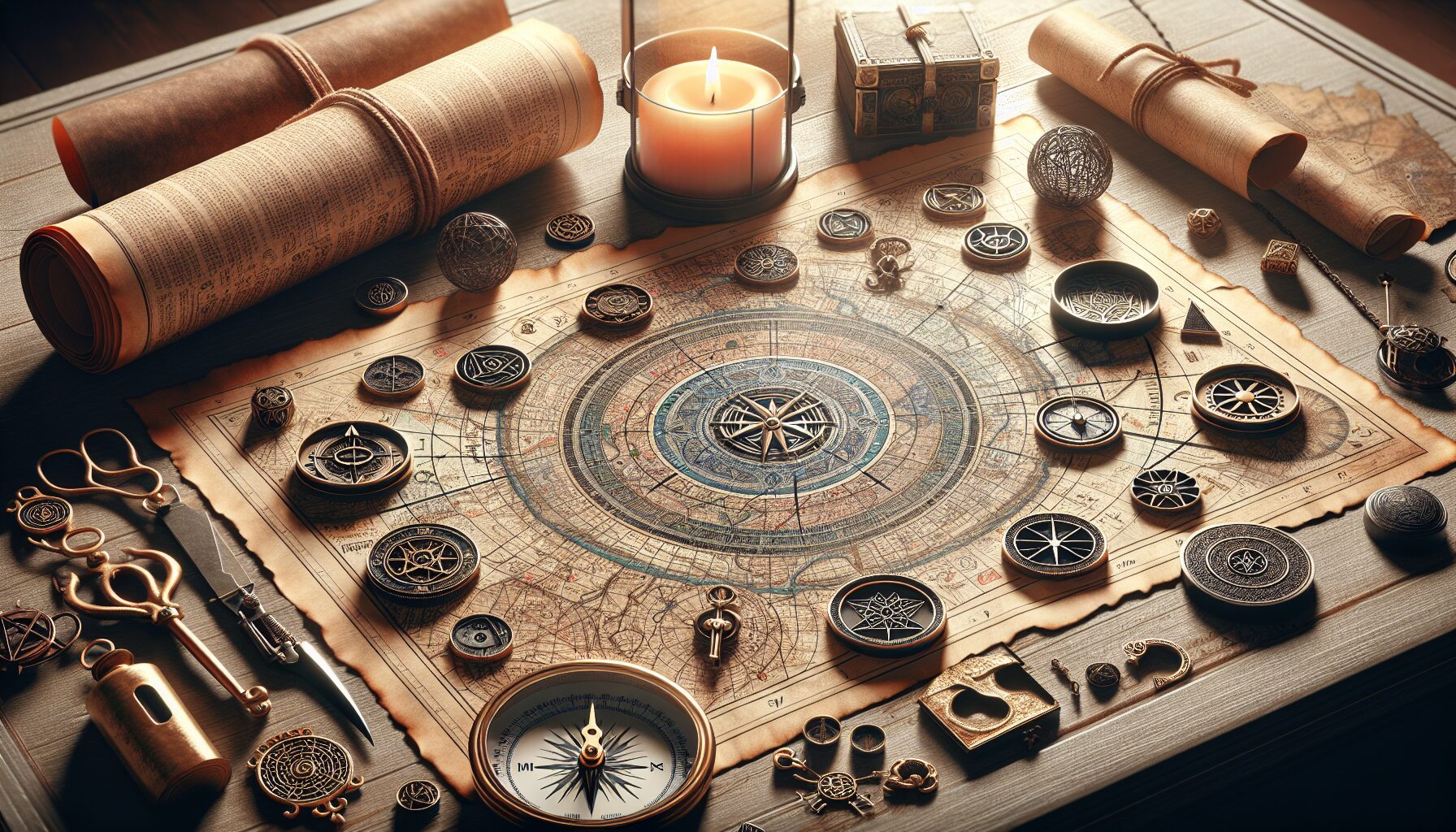
Cartography, the study and practice of making maps, plays a crucial role in ritual spaces. The act of mapping these spaces not only marks physical locations but also brings to light their symbolic dimensions. Cartographers translate spiritual and ritualistic practices into visual forms that can be interpreted and studied.
Cartographers often rely on a combination of traditional mapping techniques and ethnography. They consider geographical features and the spiritual narratives that overlay them. For instance, the mapping of Mount Kailash in Tibet offers insight into how a physical space is perceived spiritually. Mount Kailash is revered in several religions including Hinduism, Buddhism, and Jainism, each of which ascribes different spiritual meanings to its features.
Symbolic Landscape and Spiritual Narratives
Ritual cartography often transcends physical dimensions, delving into the metaphysical space created by spiritual narratives. This symbolic landscape is populated with myths, legends, and religious teachings that are grounded in physical locations. These narratives serve to deepen the spiritual resonance of a site, transforming simple geographical locations into sacred spaces.
For example, the Plains of Abraham in Canada host a rich tapestry of history and spirituality. Initially a battleground, they now symbolize various socio-cultural identities intertwined with ecological and ceremonial practices of the First Nations. Such sites demonstrate how ritual cartography can encompass both cultural remembrance and spiritual renewal, charting a path between past and present.
Modern Technologies and Spiritual Mapping
In recent years, advancements in technology have revolutionized how we engage with ritual spaces. Technologies such as GIS (Geographic Information Systems) and remote sensing are now being employed to map spiritual sites across the globe. These technologies provide new insights into the layout and scope of historical ritual spaces, revealing hidden structures or previously unknown aspects of known sites.
“By interpreting spiritual landscapes through GIS, we can appreciate not only the physical but also the symbolic connections these sites maintain,” says Maria Lobo, a geospatial analyst specializing in cultural landscapes.
Virtual reality (VR) has also made it possible to experience ritual spaces in previously unimaginable ways, offering digital pilgrimages and immersive encounters with sacred spaces that may be inaccessible due to distance or preservation concerns.
The Impact of Ritual Cartography
Mapping spiritual spaces allows us to preserve sacred narratives and comprehend the geographical expressions of faith. It enables present and future generations to connect with inherited and evolving spiritual identities. Understanding the spatial dimensions of rituals encourages appreciation for cultural diversity and promotes cross-cultural dialogue.
Ritual cartography also highlights the geopolitical aspects of spiritual spaces: the conflicts over sacred sites, accessibility issues, and the interplay between different religions and cultural practices. By documenting and recognizing these spaces, peace-building and community engagement initiatives can be fostered, offering reconciliation and mutual understanding in areas fraught with historical tensions.
Conclusion
Ritual cartography serves as a bridge between the physical and metaphysical, documenting human interactions with sacred spaces throughout history. It respects and preserves the myriad expressions of human spirituality, allowing for a deeper understanding of our world and ourselves. As technology continues to evolve, so too will our methods of capturing and interpreting the stories contained within ritual maps, continually offering fresh insights into the sacred dimensions of our landscapes.
“`