Tag: realms

  • The Feathered Doorway – Walking Into Gentle Realms

    The Feathered Doorway – Walking Into Gentle Realms

    The Feathered Doorway – Walking Into Gentle Realms

    The Feathered Doorway – Walking Into Gentle Realms

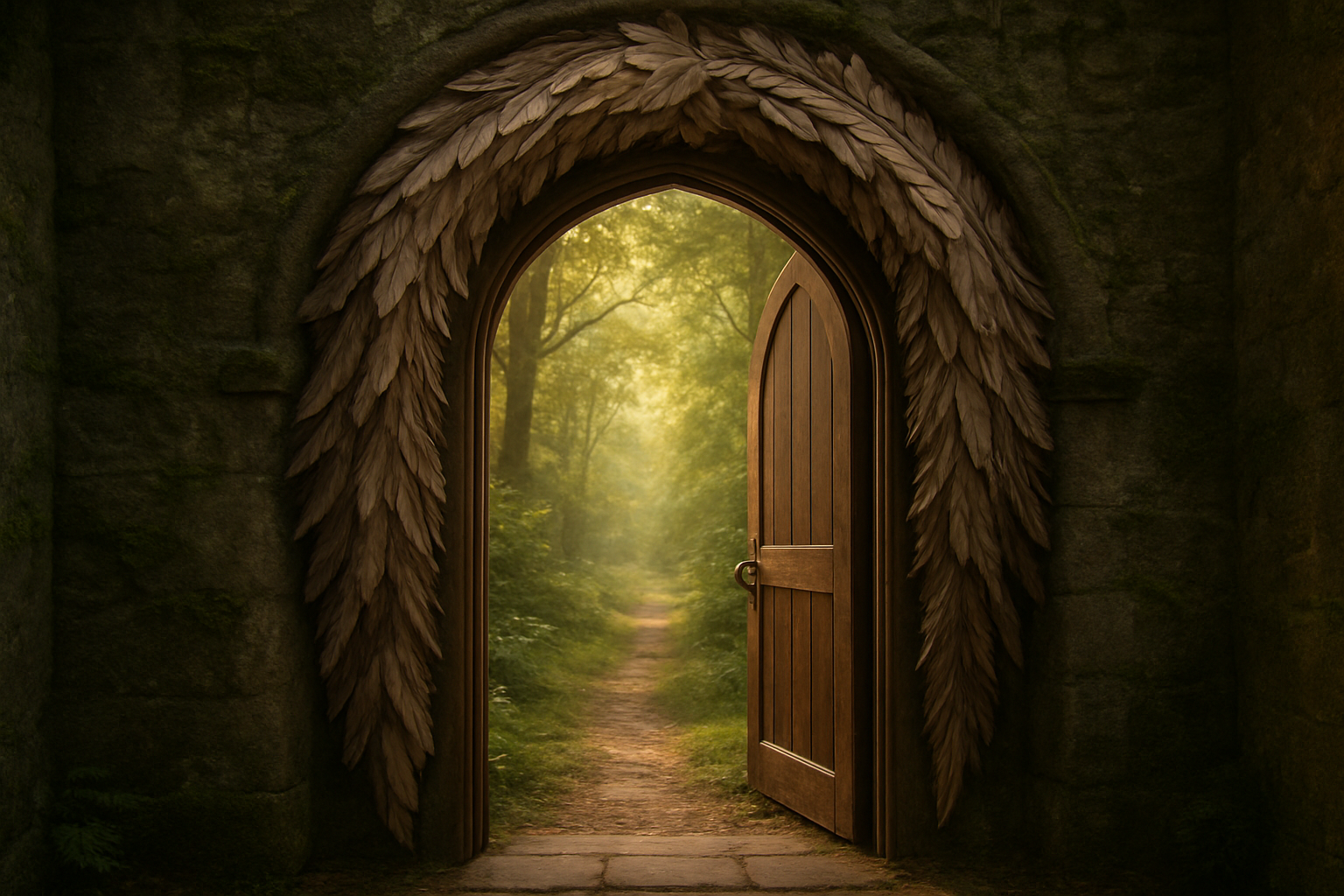
    Throughout history, feathers have held a significant place in culture, art, and spiritual practice across the globe. Often seen as symbols of hope and spiritual growth, feathers are believed to be messages from other worlds, gateways into gentle realms that exist beyond our immediate perception.

    The Symbolism of Feathers

    Feathers are more than just a part of a bird’s anatomy; they are imbued with symbolism and meaning. Across many cultures, feathers are considered to be sacred, representing a myriad of emotions and concepts:

    • Freedom: Feathers denote the lightness and liberty of birds in flight, unencumbered by earthly concerns.
    • Connection with Spirits: Many Native American tribes view feathers as a tangible connection to the spiritual world, a conduit for prayers to reach the Creator.
    • Ascension: In many mythologies, feathers symbolize the soul’s ability to travel and ascend to higher realms.

    “In almost every part of the world, feathers are recognized as harbingers of messages from God, a means of communicating with the divine.” – Denise Linn, international healer and author.

    Feathers in Various Cultures

    The use of feathers transcends time and geography, with each culture providing a unique perspective on their use and significance:

    • Native American Traditions: In Native American cultures, feathers represent trust, honor, strength, wisdom, power, and freedom. They were often used in rituals and are seen as gifts from the sky, the sea, and the trees. Certain feathers were thought to hold specific meanings tied to the bird from which they came.
    • Ancient Egypt: In ancient Egyptian mythology, the feather was associated with Ma’at, the goddess of truth and justice. The Feather of Ma’at was central to the weighing of the heart ceremony, determining the soul’s passage into the afterlife.
    • Celtic Beliefs: Feathers were symbols of celestial wisdom and transcendence in Celtic culture. They were thought to bring knowledge from the otherworldly realms and were often included in cloaks of warriors and leaders.

    Modern Interpretations and Uses

    While the traditional uses of feathers continue to hold spiritual weight, there has been an evolution in how they are perceived in the modern age. Art, literature, and spirituality continue to adapt their usage:

    • Art and Design: In contemporary fashion and design, feathers often symbolize elegance, grace, and creativity, appearing in everything from haute couture to interior design.
    • Personal Totems and Protection: Many people keep feathers as personal totems, believing them to be protective charms that invoke the spirit of the birds they came from.
    • Mindfulness and Meditation: Feathers are used in mindfulness practices, often incorporated in meditation spaces to provide tranquility and a reminder of the gentle realms beyond the physical world.

    Personal Experiences: Walking Into Gentle Realms

    The concept of the Feathered Doorway is intimately tied to personal experiences and stories from those who have felt its impact:

    “Finding a feather during a significant turning point in my life gave me a profound sense of connection to something much greater than myself. It was as if this simple feather was a gentle invitation to walk through a spiritual doorway and explore unknown realms.” – Anonymous Participant Statement

    Conclusion: Embracing the Feathered Journey

    In a world increasingly focused on the tangible and the immediate, feathers remind us of the potential for freedom, spiritual grounding, and connection to realms beyond the seen. Whether they are encountered unexpectedly in nature or consciously incorporated into personal rituals, feathers invite us to open our hearts to higher vibrations and the mystical dimensions of life.

    As we continue to walk into these gentle realms, guided by the wisdom and grace of feathers, we are reminded of their long standing presence as a beacon of hope and transcendence. In embracing their symbolism, we step softly into new horizons, welcoming the transformative potential that awaits.

    Further Resources

    For those interested in exploring the mystical and symbolic properties of feathers further, consider the following resources:

  • Petit Mort Shadows – Death in the Hidden Realms

    Petit Mort Shadows – Death in the Hidden Realms

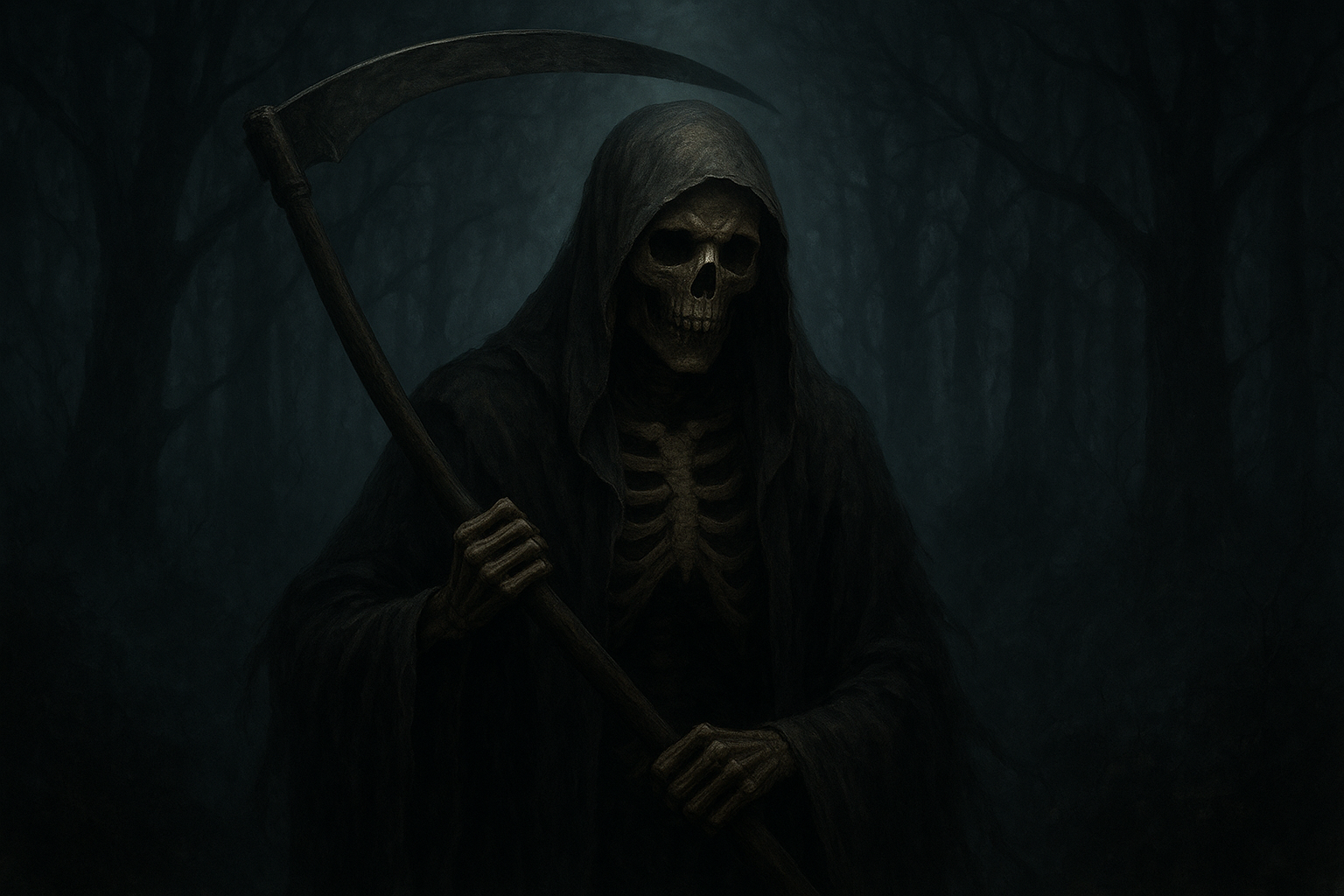
    Throughout the myths and legends of the world, the concept of death has been portrayed in numerous intriguing forms. In many cultures, it’s not merely an end but a passage to another existence or a rebirth into new dimensions. This transition has often been personified and depicted through various captivating tales.

    “Death is nature’s way of telling you to slow down.” – Dick Sharples

    Understanding the Enigma of Death

    In the mythological cosmos, death is rarely portrayed as a definitive cessation. It resides as a petit mort—a ‘little death’—which symbolizes the cyclical nature of existence and consciousness.

    Across the shadows of hidden realms, mythologies offer a spectrum of interpretations where death becomes both an ending and a transformation. In these narratives, it’s a gateway that leads to enlightenment or renewal, rather than despair.

    Death in Mythology – Beyond the Veil

    • Hades in Greek Mythology: The Greek god of the underworld, Hades, ruler of the dead, is often depicted as a stern figure, yet not one to instill fear. His realm is a place of transition where the souls of the deceased proceed through various stages.
    • Yama in Hindu Mythology: Yama, the god of death, represents not just an end but a return to one’s origins. As the judge of the dead, he oversees the rebirth of souls and their karmic destinies.
    • Hel in Norse Mythology: A goddess presiding over a realm of the same name, Hel guides the souls of those who have not died a warrior’s death. Her domain represents an integral part of the Norse eschatology.

    Each of these depictions emphasizes that death is woven into the very fabric of mythological narratives, an essential component of life’s tapestry.

    The Personal Journey Beyond

    Many contemporary interpretations view death as an intimate counterpart to life’s journey. As the Guardian articulately states, understanding death is fundamental to appreciating life itself. This awareness fosters a deep exploration of not just the afterlife, but of the values and purposes of our current existence.

    Thus, whether it’s through the shadowy domains of gods or the personal journey of souls, death in the hidden realms symbolizes more than an end. It presents a poignant reminder of the transient beauty and cyclical essence residing at the heart of all life and mythology.

  • The Secret Void – Mystery in Hidden Realms

    The Secret Void – Mystery in Hidden Realms

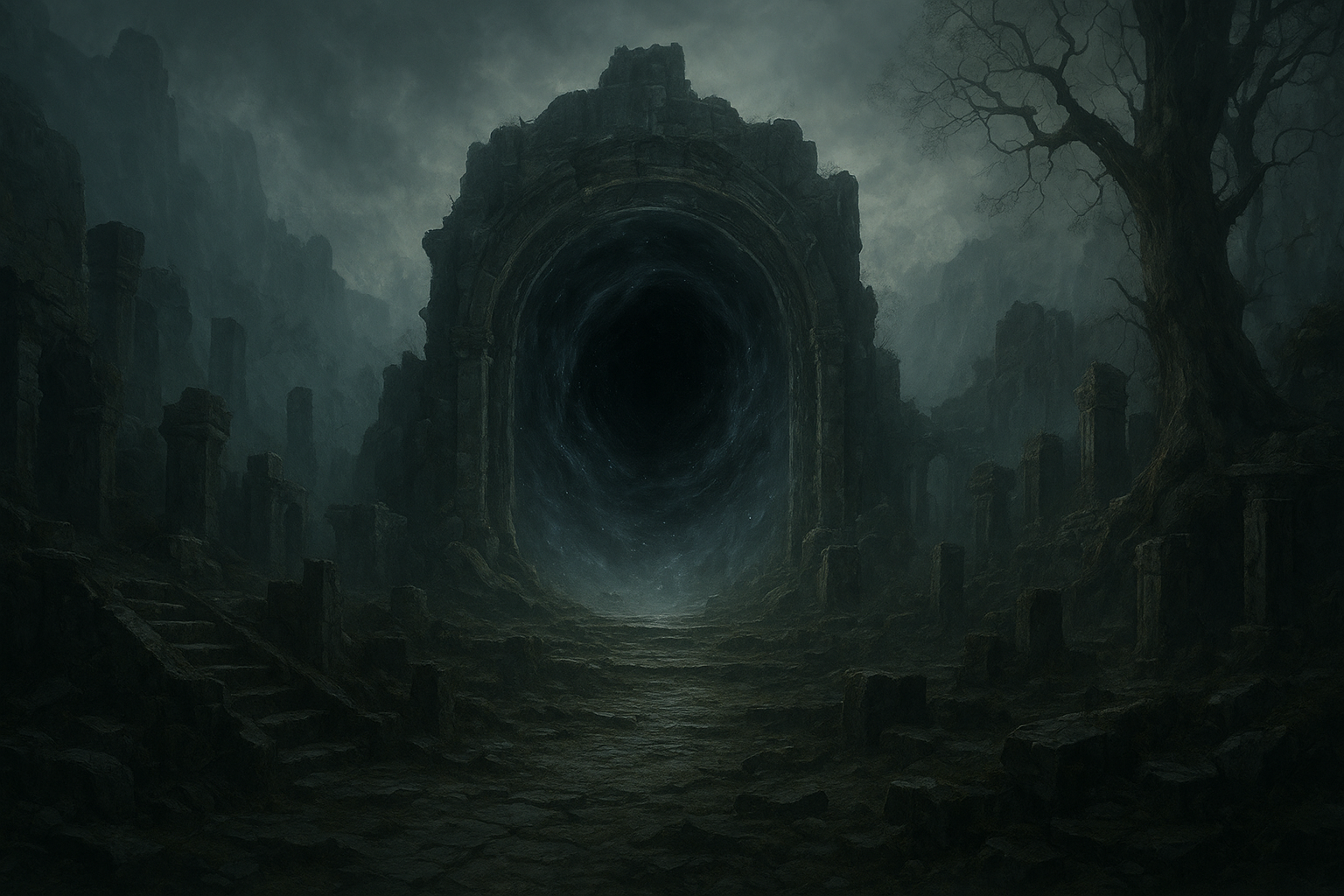
    For centuries, the allure of hidden realms has captivated the human imagination. Whether woven into the fabric of ancient mythologies, explored in literary works, or depicted in modern cinema, the concept of secret voids and mysterious realms evokes a sense of wonder and intrigue. What lies beneath the surface of these enigmatic domains? And why are they so compelling?

    The Allure of the Unknown

    Human beings have always been fascinated by the unknown. This fascination is evident in the ancient myths passed down through generations, tales of realms hidden from ordinary view, accessible only to the chosen few. The idea of secret worlds—be they under the sea, beneath the earth, or in parallel dimensions—has fueled stories that stretch across time and culture.

    “The oldest and strongest emotion of mankind is fear, and the oldest and strongest kind of fear is fear of the unknown.” – H.P. Lovecraft

    Lovecraft’s observation underscores why these secret voids leave such a profound impact on our psyche. They tap into a primal curiosity, a need to explore the borders of our understanding.

    Mythological Precedence

    Many cultures feature hidden realms in their mythologies. In Greek mythology, Hades is not just a god but also the underworld—a vast domain hidden beneath the earth. Similarly, Norse mythology speaks of Svartalfheim, the land of the dark elves, and Helheim, the realm of the dead.

    These stories often position hidden realms as places of extraordinary power and danger. They are secretive worlds that test the heroes’ courage and wisdom, revealing essential truths about life and death.

    Literary Explorations

    Authors have long drawn inspiration from these mythical concepts, crafting narratives that explore the depth and breadth of hidden realms. Lewis Carroll’s Alice’s Adventures in Wonderland takes readers down a rabbit hole to a whimsical and nonsensical world. Similarly, C.S. Lewis’s Narnia series invites protagonists through a seemingly ordinary wardrobe into a realm filled with magic and mystery.

    • J.R.R. Tolkien’s Middle-earth: With its intricate history, unique languages, and expansive wilderness, Middle-earth serves as a reminder that the most profound secrets are often hidden in plain sight.
    • J.K. Rowling’s Wizarding World: Accessible through fleetingly visible portals, this magical realm continues to captivate audiences with its blend of enchantment and intrigue.

    The Science of Hidden Dimensions

    Beyond myths and literature, the notion of hidden realms finds relevance in scientific discourse. Concepts like string theory propose the existence of multiple dimensions beyond the three we perceive.

    String theory suggests that the universe comprises tiny, vibrating strings of energy that exist in higher-dimensional spaces. While these dimensions remain imperceptible to us, they might hold the key to understanding the very nature of reality.

    “There is more in heaven and earth, Horatio, than is dreamt of in your philosophy.” – William Shakespeare, Hamlet

    Shakespeare’s words encapsulate the scientific quest to uncover the mysteries concealed within these hidden realms. The search for knowledge fuels our imagination and propels our technological advances, allowing us to glimpse what may once have seemed impossible.

    Exploration Through Modern Media

    Cinema and digital media continue to explore and expand upon the idea of hidden realms. Films like Inception delve into layered realities and subconscious worlds, while series like Stranger Things unveil pocket dimensions fraught with danger and enchantment.

    With the advent of virtual reality, audiences can now experience hidden realms, blurring the line between the virtual and the real. These technological advancements have redefined how we explore the unknown, making the investigation of hidden realms more interactive and immersive.

    Conclusion

    The secret voids and hidden realms of myth, literature, science, and media remind us of humanity’s inherent drive to explore and understand the unknown. They are places where the impossible becomes possible, where the boundaries of reality stretch and sometimes blur.

    As we continue to ponder these mysteries, our fascination with hidden realms is unlikely to fade. Instead, it will drive us to deeper inquiries and investigations, encouraging us to delve into the depths of imagination and reality alike.

    What do these enigmatic realms say about our world and ourselves? The answers may be closer than we think, hidden in the nexus between myth and reality.

  • Arcane Cartography – Mapping the Unseen

    Arcane Cartography – Mapping the Unseen

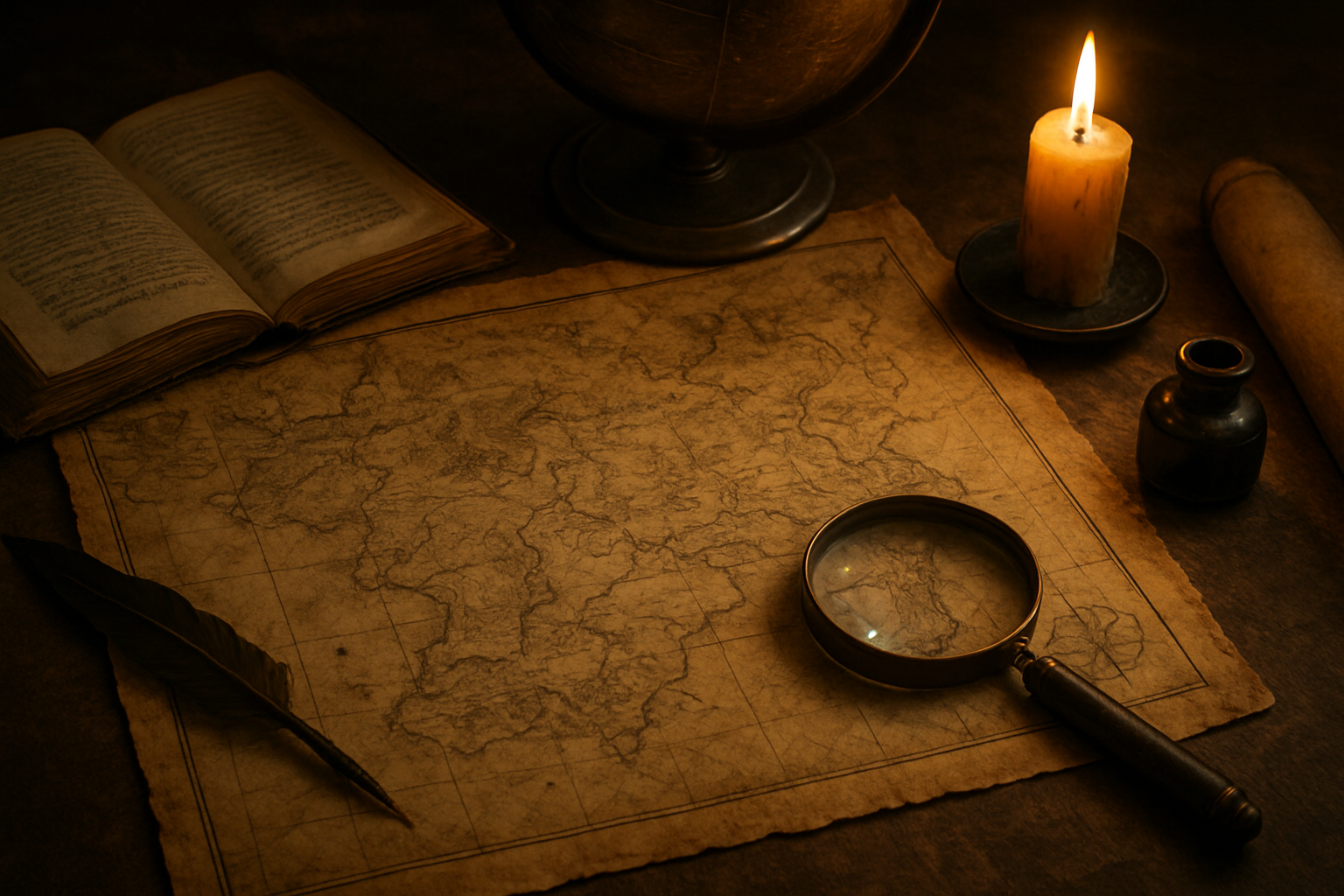
    From the mystical aeons of ancient civilizations to the digital realms of modern fantasy, the art of arcane cartography has always captured the human imagination. This map-making of the unseen intertwines myth, legend, and imagination with geographical representation, creating a tapestry that challenges our understanding of what maps are meant to convey.

    The Ancient Origins: Mapping the Cosmos and the Underworld

    Early examples of arcane cartography can be traced back to ancient civilizations where maps were infused with spiritual and mythical significance. The Babylonians created star maps and cosmological charts which not only illustrated celestial bodies but also their perceived divine paths.

    • Babylonian Star Maps: These were not just scientific instruments but served as a guide to understanding the fate and divine will associated with certain stars and constellations. [British Museum]
    • Egyptian Duat Maps: The ancient Egyptians drew detailed visual guides to the Duat, the realm of the dead, illustrating the journey one would take in the afterlife, complete with deities and obstacles encountered along the way.

    Medieval Manuscripts: Imaginary Lands and Floating Islands

    In the Middle Ages, cartographers embraced a more imaginative approach, blending real geography with folklore. This era saw the birth of mappa mundi, medieval European world maps which often disregarded accurate scaling in favor of a more symbolic representation.

    • Hereford Mappa Mundi: A famous example, it includes not only geographical locations but also imaginary realms like the land of the Sciapods, people with one giant foot.
    • Isle of Avalon: Mystical islands, such as Avalon from Arthurian legends, were often placed at the fringes of world maps, representing realms that transcended the known world.

    Renaissance and Enlightenment: The Birth of Scientific Cartography with Arcane Echoes

    With advancements in navigation and physics during the Renaissance, maps became more scientific, yet the mystical element never fully disappeared. Thus, maps of this era often reflected both scientific rigor and an acknowledgment of worlds unseen and unexplored.

    “Maps encourage boldness. They’re like cryptic love letters. They make anything seem possible.” – Mark Jenkins

    The pursuit of mapping unknown realms extended into the maritime charts, where mythical creatures like sea serpents and leviathans were commonly illustrated to denote uncharted waters and potential dangers.

    The Modern Embrace of Fantasy Worlds

    In contemporary times, arcane cartography has found a flourishing home in the realm of fantasy literature and video games. The advent of digital technology has enabled maps to become interactive, layered, and more elaborate than ever before.

    • J.R.R. Tolkien’s Middle-earth: Perhaps the most renowned fantasy map, it provides an intricate and highly detailed vision of the lands, political territories, and journeys trademark to the epic tales of The Lord of the Rings.
    • Video Game Realms: Games such as The Elder Scrolls and The Legend of Zelda capitalize on detailed cartographic systems, allowing players to navigate and uncover layer upon layer of hidden lore.

    A Continuing Journey into the Unknown

    The legacy of arcane cartography urges us to question and explore realms beyond the mere physical. Our need to map the intangible and the mystical is a testament to our boundless curiosity. While technology advances and our world becomes increasingly mapped and measured, it is clear that there will always remain “places” beyond our understanding, waiting to be charted by the cartographers of the future.

    In the words of renowned cartographer and explorer Peter Whitfield, “The great affair is to move.” This encapsulates the essence of arcane cartography – it is a call to venture continuously into the unknown, to chart the undiscovered, and to embrace the eternal mystery of the unseen.

    The tradition of mapping the unseen marries our past with our future, reminding us that as long as there are dreams and stories yet to be told, there will always be new maps to draw.