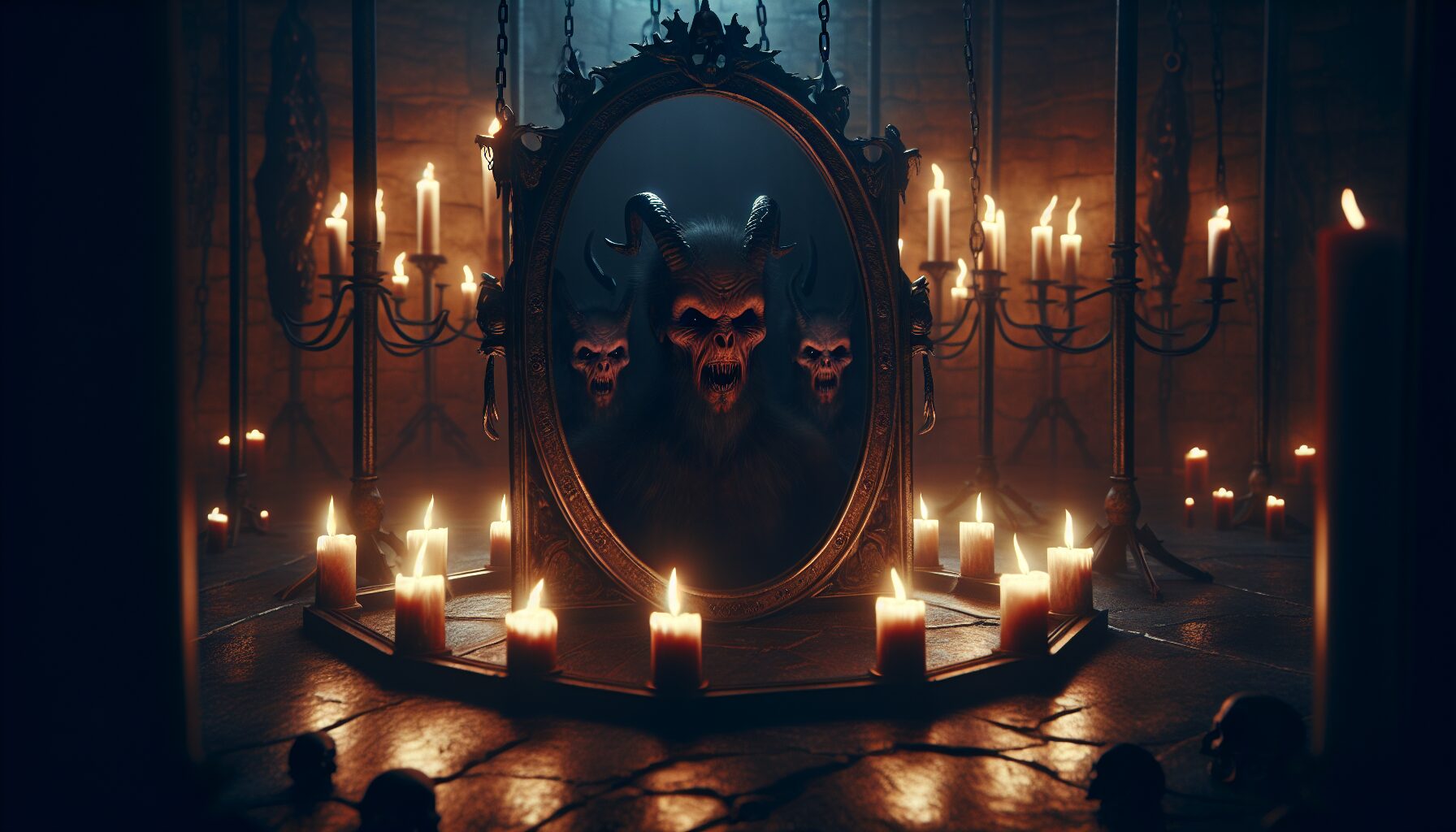
The Infernal Mirror: Demons Reflecting the Self
For centuries, demons have plagued the imagination, serving as both terrifying adversaries and potent symbols of humanity’s inner struggles. Whether through literature, art, or religion, these diabolical figures manifest an intricate web of meanings that reflect the multifaceted nature of human psychology and morality.
The Historical Context of Demonic Imagery
Demons have been a significant part of mythologies and religions throughout history. From the Assyrian Alû spirits to the malevolent forces described in the New Testament, these entities have personified the darker aspects of the human condition. As Jeffrey Burton Russell, a prominent historian of theology, states, “Demons reflect the social, psychological, and moral dilemmas of their times” (Harvard University Press).
The role of demons evolved from mere external threats to intricate symbols that cast a spotlight on human imperfections and fears. In many early texts, they were seen as literal beings causing havoc, while later interpretations view them as metaphors for internal battles.
Psychoanalytic Perspectives: Demons as Archetypes
The psychoanalytic approach offers a compelling framework for understanding demons as projections of the self. Sigmund Freud’s theories on the subconscious mind suggest that our deepest fears and desires often manifest as external symbols. Carl Jung expanded on this by introducing the concept of archetypes.
“Demons are symbolic of the shadow – the repressed aspects of our psyche that we refuse to acknowledge.” – Carl Jung
In Jungian analysis, the shadow is a part of the unconscious mind composed of repressed weaknesses and instincts. When these elements remain unexamined, they can project outwardly in the form of ‘demons,’ representing the struggle between our conscious ideals and subconscious drives.
Demons in Literature: A Mirror to Morality
Literature has long been a medium through which the struggle between good and evil is explored. Demonic figures in stories often serve as mirrors of the protagonists’ internal conflicts and societal dilemmas. In John Milton’s “Paradise Lost,” Satan is depicted not just as the ultimate evil but as a complex character embodying rebellion, pride, and ambition.
William Blake, a well-known critic of Milton, argues that Milton was “of the Devil’s party without knowing it,” suggesting that the poet subconsciously aligned more with Satan’s rebellious nature than with divine authority. This notion underscores how demons can symbolize the attractive yet destructive qualities within ourselves.
Religious Interpretations: Redemption and Damnation
In religious contexts, demons often embody the struggle between sin and virtue. The Catholic Church’s depiction of demonic possession symbolizes a soul at war, torn between divine grace and mortal sin. Exorcisms traditionally serve as rituals of purification, the ultimate battle between good and evil fought within the individual.
Father Gabriel Amorth, a renowned exorcist, described in his writings that “demons are terrifying reminders of the consequences of human error and the potential for redemption through faith” (Catholic Education Resource Center).
The Artistic Depiction: A Reflection of Culture
In art, demons have been depicted in myriad forms, reflecting cultural attitudes toward sin, morality, and human nature. The Medieval period saw an intense focus on demonic forms as both literal creatures of Hell and allegories for earthly vices. Hieronymus Bosch’s nightmarish landscapes and figures represent not only religious warnings but also a mirror to the human imagination.
Mary Douglas, a social anthropologist, observed that “artistic depictions of demons often reflect societal boundaries, embodying the chaos and disorder that lie just beyond the borders of accepted norms” (Oxford Reference).
The Modern Demon: Technology and Isolation
In contemporary society, demons have taken on new forms, often embodying the challenges presented by modern technology and urban isolation. Films and literature explore themes of technological corruption, where artificial intelligence and digital landscapes spawn new ‘demons’—manifestations of our fear of losing control to an increasingly automated world.
For instance, the demon in Fyodor Dostoevsky’s The Possessed can be seen as a precursor to modern interpretations of societal upheaval and ideological madness, reflecting fears of personal and communal transformation.
Conclusion: The Everlasting Presence of Demonic Reflection
Demons, in their myriad forms, continue to serve as powerful symbols reflecting the deepest conflicts within the human soul. Their presence persists as a testament to our continued struggle with personal and societal challenges. As external manifestations of our inner fears and desires, demons compel us to confront aspects of the self that we would rather hide.
From ancient texts to modern cinema, these infernal reflections question, challenge, and ultimately, illuminate the complexities of the human experience.
As we continue to evolve, so too will our demons, adapting to new contexts and challenges, yet always holding up the mirror to our innermost beings, forcing us to question who we are and what we might become.