Tag: release

  • Petit Mort Frequencies – Death as Energy

    Petit Mort Frequencies – Death as Energy

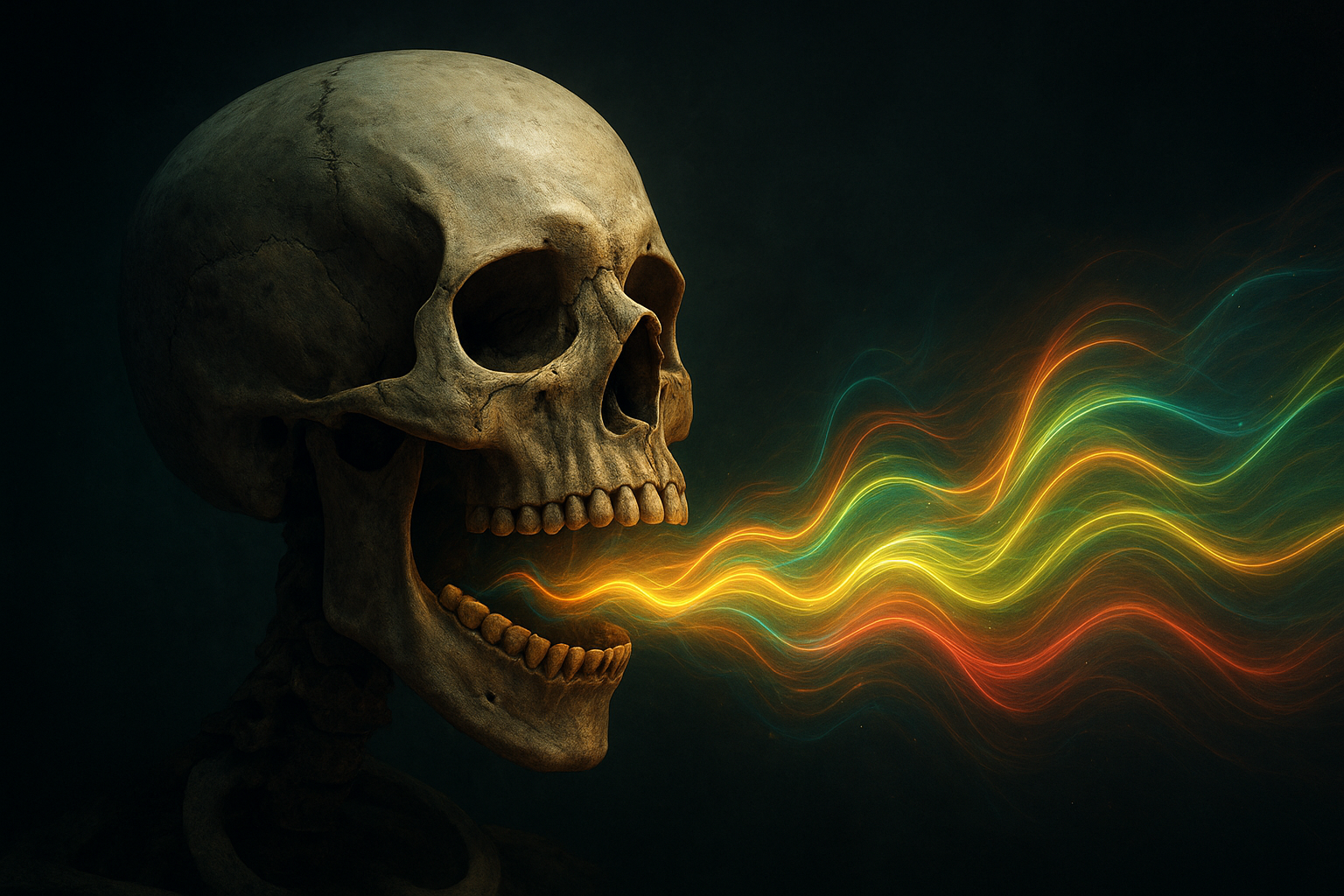
    The concept of petit mort, or “little death,” is often associated with the momentary sensation of post-orgasmic release, yet the metaphor extends well beyond the confines of human sexuality. This mystical phrase suggests a diminutive experience of cessation, a microcosmic reflection of life’s final chapter—death. Understanding death as a form of energy transformation is an age-old notion found in various philosophical and spiritual traditions around the world.

    In much of the occult and esoteric literature, the idea that death represents a transformation rather than an end is a recurrent theme. The French term petit mort symbolizes transitions and temporary states of consciousness that mimic the discontinuity of life processes. This idea is poetically encapsulated by the philosopher Ralph Waldo Emerson, who wrote,

    “Our life is an apprenticeship to the truth that around every circle another can be drawn; that there is no end in nature, but every end is a beginning.”

    The Energetic Continuum

    The concept of energy never truly disappearing but merely transforming is a cornerstone of both scientific and mystical inquiry. In physics, energy cannot be created or destroyed, only changed from one form to another—a principle known as the Law of Conservation of Energy. Similarly, many spiritual beliefs hold that the soul or spirit carries on beyond the physical cessation of the body, altering in form and frequency.

    • Hinduism: The cycle of birth, death, and reincarnation underscores energy’s perpetual motion through numerous lives.
    • Ancient Egyptian Beliefs: Death was seen not as an end but a journey through the afterlife, guided by sacred texts like the Book of the Dead.
    • Modern Mysticism: Many contemporary practitioners view death as a vibrational shift, a transition into another plane of existence.

    Resonance of the “Little Death”

    Experiencing a petit mort involves a temporary release that some compare to an ephemeral taste of what lies beyond. This momentary seductive dance with death can offer insight into the cyclical nature of life and energy. It is not merely an erotic phenomenon but also a symbolic passage that echoes the broader journey of life and death.

    Suzanne Somers, an American actress and author, once said,

    “Forgiveness is a gift you give yourself. It’s not a tool to manipulate others, nor is it something to be taken lightly. It releases the thing that holds energy and allows it to transform.”

    This suggests deeper levels of release and transformation, resonating with the ideological essence of petit mort.

    In contemplating the energetic aspects of death, individuals may find comfort and understanding in accepting that death is not merely a point of cessation but a transmutative passage of energy—a step along the continuum of existence.
  • Petit Mort Epiphanies – Death as Spiritual Release

    Petit Mort Epiphanies – Death as Spiritual Release

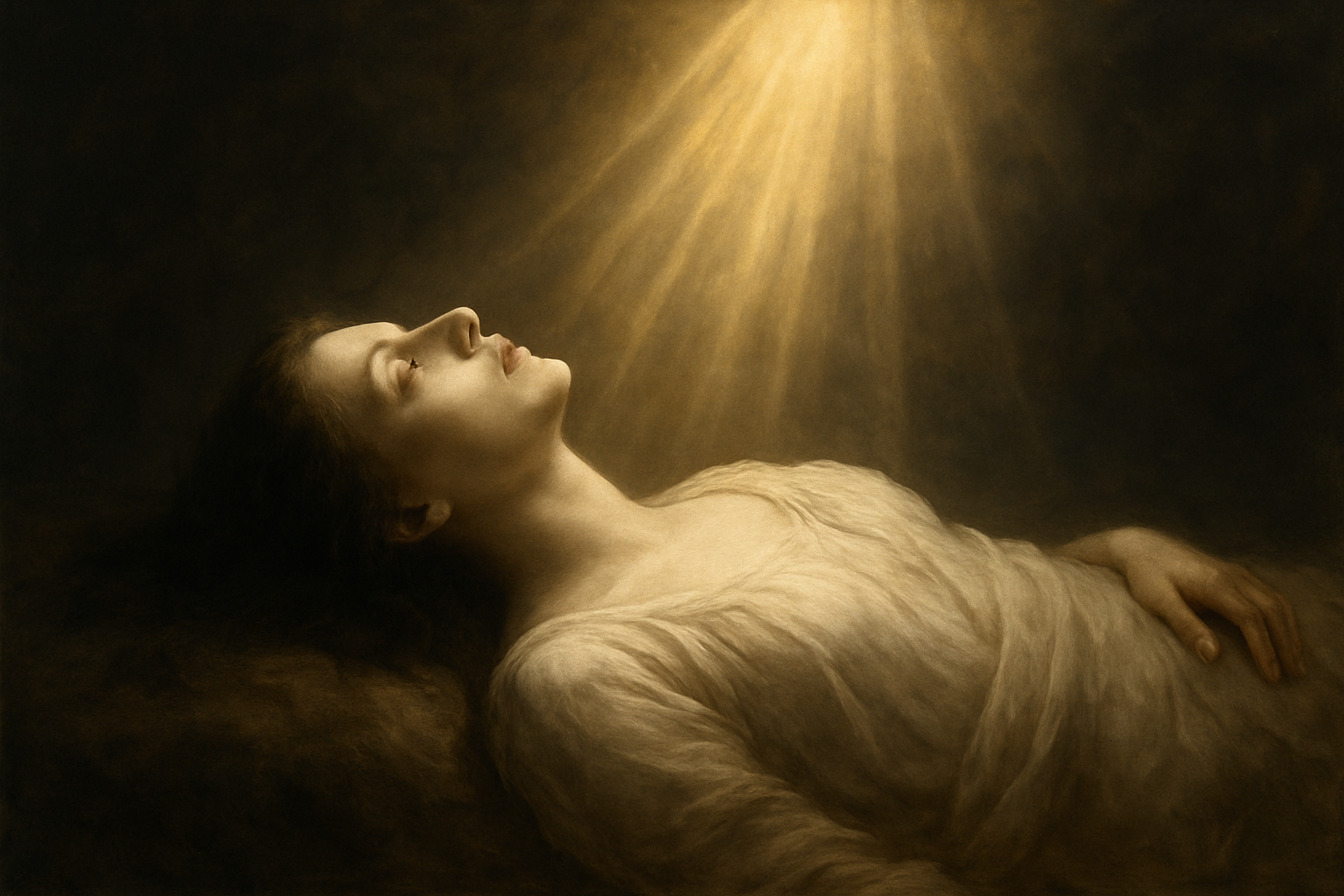
    In many cultures and mythologies, death is often seen not just as an end, but rather as a literal and symbolic release from the confinements of the earthly realm. While the phrase petit mort, French for “little death,” is typically associated with the afterglow following orgasm, there exists a profound parallel in how different traditions interpret death as a gateway to spiritual freedom and enlightenment.

    The Concept of Petit Mort in Mythology

    The idea of death being closely tied with spiritual liberation is not new. Many ancient cultures have woven narratives that portray death as a passage to a more profound existence. In Greek mythology, death was personified by Thanatos, a benign spirit associated with peaceful demise who escorted souls to the underworld, a reflection of death as a calm release rather than a violent end.

    • Thanatos: Unlike other Greek deities, Thanatos was not associated with fear or horror, as evident in references from literary texts like Euripides’ plays and Homer’s epics.
    • Hinduism’s Moksha: In Hindu philosophy, death plays a crucial role in breaking the cycle of rebirth and suffering (samsara), offering moksha, or liberation, from earthly bondage and unity with the divine.
    • Rebirth and Release in Buddhism: In Buddhism, the cycle of rebirth is seen as a recurring bondage, and achieving nirvana is akin to achieving a state beyond death, where consciousness transcends earthly existence.

    Death as Enlightenment in Cultural Narratives

    Across different cultures, literature and art have depicted death not just as an inevitable reality but as a potential spiritual awakening. This portrayal serves not only to comfort the living about the afterlife of the deceased but also to provide a meditative understanding of life and spiritual imperatives.

    • Dante’s Divine Comedy: The character of Virgil guides Dante through Hell and Purgatory, symbolizing a journey of enlightenment that can be interpreted as emerging from the “little deaths” of sin and ignorance to ultimate enlightenment and divine understanding.
    • Tibetan Book of the Dead: This text provides guidance within the intermediate state (bardo) between death and rebirth, detailing how embracing death as a spiritual transition can lead to higher awareness and liberation from the cycle of karma.
    • Egyptian Book of the Dead: Ancient Egyptians viewed death as a journey necessitating the guidance of spells and charms to navigate spiritual challenges, ultimately leading to a rebirth in the field of reeds—in essence, a spiritual release into an ideal afterlife.

    The Epiphanies of Near-Death Experiences

    In contemporary studies, near-death experiences (NDEs) often reveal profound changes in personal perceptions of life and spirituality. Following such experiences, individuals frequently report epiphanies regarding their life’s purpose and the nature of consciousness.

    “I saw my own death and rebirth, momentarily free of bodily restrictions,” reported a subject in a study conducted by the Johns Hopkins University School of Medicine. “The feeling was surprisingly liberating.”

    These shared experiences often lead to a renewed understanding of death not as a feared conclusion but as a doorway to a heightened state of spiritual awareness.

    Death and Personal Transformation in Modern Perspectives

    In a modern age where technological advancements often distance individuals from natural cycles, exploring death’s spiritual dimensions can instill a unique view of human experience.

    • Albert Einstein’s Reflection: Famous physicist Albert Einstein once remarked on death, “A human being is part of the whole, called by us ‘Universe,’ a part limited in time and space,” suggesting a view of death as an integration into a larger cosmic order.
    • Contemporary Spirituality: Many spiritual movements today focus on consciousness beyond the physical realm. Practices such as meditation and astral projection explore petit mort as metaphorical, intentional exits from the mundane consciousness towards spiritual revelations.

    Conclusion: Embracing the Spiritual Release

    The idea of death as a spiritual release offers a transformative way of viewing our existence, urging us to transcend our fears and reframe death as part of life’s natural cycle. The epiphanies around petit mort serve as metaphors for breaking away from the fears and attachments that bind us, inviting a fuller, more liberated experience of both life and death.

    As we contemplate our mortality and the spiritual dimensions of death, we tap into a deeper understanding of ourselves and the universe. By welcoming small “deaths”—moments of surrender and release—we may find ourselves closer to the divine and more at peace with the mystery of existence.