Tag: rites

  • Abstract Mourning Rites – Emptiness Expressed in Symbol

    Abstract Mourning Rites – Emptiness Expressed in Symbol

    Abstract Mourning Rites: Emptiness Expressed in Symbol

    As the 21st century progresses, the way societies process grief undergoes continuous transformation. The practices that bind us in shared sorrow and remembrance evolve alongside technological advances and cultural shifts. Within this context, abstract mourning rites emerge as a poignant reflection of humanity’s grappling with loss, employing symbols and metaphors to express the profound emptiness left by those who have departed.

    The Evolution of Mourning Practices

    The history of mourning rites is rich and varied, stretching from the ritualistic burial ceremonies of ancient Egypt to the dirgelike elegies of the Victorian era. Each culture has developed its unique way of honoring the dead, reflecting its beliefs, values, and technological capabilities. In recent times, the rise of digital technology has ushered in new forms of remembrance. Online memorials, virtual funerals, and social media tributes have become commonplace, providing platforms for collective mourning beyond geographical constraints.

    However, beyond these technological transformations lies a more subtle shift towards abstraction in mourning rituals. As societies increasingly prioritize individual expression and personalized memorials, symbolic gestures and abstract representations become integral to modern mourning practices.

    Symbolism in Mourning: A Language of Loss

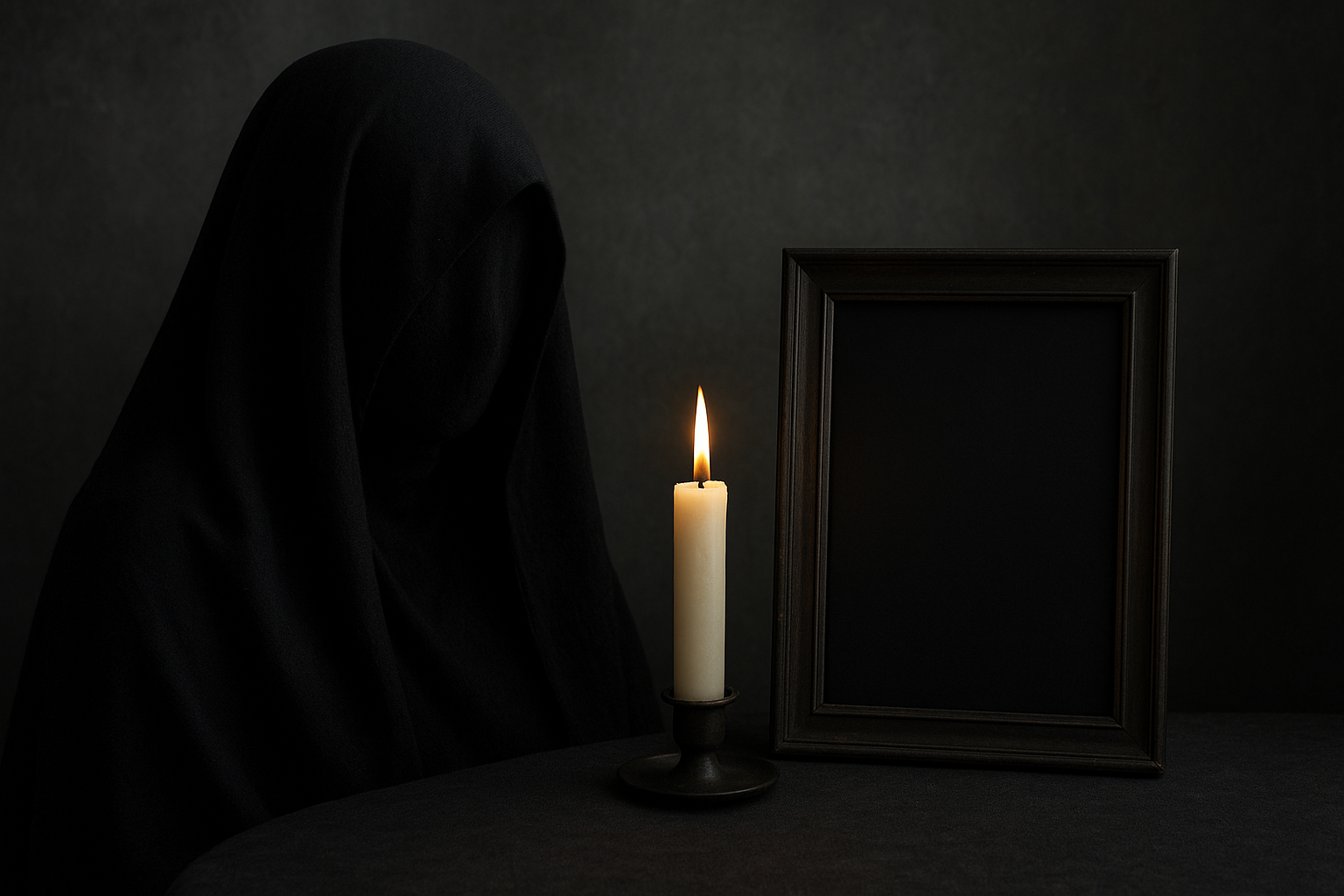
    Symbolism serves as a bridge between the tangible and the intangible, offering a language through which the ineffable nature of grief can be conveyed. The empty chair at a family gathering, the candle flame flickering in a dark room, or a single white rose — all are symbols that speak volumes about absence.

    “Art is not what you see, but what you make others see.” – Edgar Degas

    Degas’s observation resonates profoundly in the context of mourning. Abstract symbols in ritual and art allow individuals to express their inner turmoil and connect with others who share similar experiences. The emptiness experienced in loss is articulated through these artistic expressions, making the invisible, visible.

    Contemporary Artists and Abstract Mourning

    The contemporary art world plays a significant role in shaping abstract mourning rites. Artists like Anish Kapoor and Olafur Eliasson utilize large-scale installations that often explore themes of absence and memory. Kapoor’s “Descent into Limbo”, for example, features a dark void that beckons viewers into contemplation. Such works challenge the perception of space and presence, metaphorically echoing the void left in the wake of death.

    In a similar vein, Yayoi Kusama‘s Infinity Rooms envelop individuals in endless reflections, suggesting the infinite nature of memory and the enduring legacy of those lost. Through immersive environments, these artists foster spaces where individuals can reflect, mourn, and find solace in shared experiences of absence.

    The Role of Collective Memory

    Abstract mourning rites are not solely individualistic; they often serve as conduits for collective memory. Public memorials, such as the 9/11 Memorial in New York City, utilize abstract design to evoke a communal sense of mourning and resilience. The memorial’s twin reflecting pools mark the footprints of the towers, symbolizing both the loss suffered and the enduring memory of those who perished.

    Similarly, the Memorial to the Murdered Jews of Europe in Berlin employs a field of concrete stelae of varying heights, inviting visitors to wander through its labyrinthine structure. The memorial’s abstract design encourages introspection and confrontation with the immensity of historical grief.

    The Psychological Impact of Abstract Mourning

    Abstract mourning rites offer psychological benefits by acknowledging the complexities of grief. The ambiguity in symbolic representations allows individuals to project their personalized emotions, leading to catharsis and healing. In a Psychology Today article, grief counselor David Kessler describes this as the need for narrative—where symbols facilitate storytelling in the absence of words.

    “Each person’s grief is as unique as their fingerprint, but what everyone has in common is that no matter how they grieve, they share a need for their grief to be witnessed.” – David Kessler

    By engaging with abstract representations in art and ritual, mourners find spaces for witnessing and validation, crucial elements in the healing process.

    The Future of Mourning Rites

    As societies continue to grapple with the presence of technology and its impact on interpersonal connections, the future of mourning rites will likely see further abstraction and digital integration. Augmented reality (AR) and virtual reality (VR) could provide new dimensions for mourning, creating interactive memorial spaces that bridge the gap between the living and the deceased.

    Moreover, there is potential for developing new symbols and metaphors that resonate with contemporary experiences of loss. In this dynamic interplay between tradition, innovation, and abstraction, mourning rites will continue to evolve, providing a vital outlet for expressing the universal human experience of grief.

    Conclusion

    Abstract mourning rites underscore the need for symbolic representation in processing loss and commemorating the departed. As contemporary societies navigate the complexities of modernity, these abstract expressions offer profound insights into the human condition, creating spaces for healing and reflection amidst the void of absence.
  • Arcane Funeral Rites – Occult Ceremonies of Passage

    Arcane Funeral Rites – Occult Ceremonies of Passage

    Arcane Funeral Rites: Occult Ceremonies of Passage

    Humanity has long been fascinated by the mysteries of life and death. From the dawn of civilization, various cultures have devised elaborate rituals to honor the dead, reflect beliefs about the afterlife, and soothe the living. In the tapestry of global funeral practices, occult ceremonies hold a shadowy allure, promising insight into the unknown and a connection to ancient wisdom.

    The Origins of Occult Funeral Rites

    The term “occult” originally meant “hidden” or “secret.” While today it often carries connotations of dark magic or forbidden practices, many occult funeral rites were simply rituals shrouded in secrecy, passed down within small communities or chosen families. These rites often reflect an intimate relationship with the natural world and the forces believed to govern life and death.

    Occult funeral practices can be found across the globe, from the venerable traditions of the Druids to the mystical ceremonies of Ancient Egyptian priests. Understanding these rituals provides us with a glimpse into the metaphysical worldviews of our ancestors and their nuanced relationship with mortality.

    Celtic Funeral Rites: Communion with the Spirit World

    The Druids, the spiritual leaders of the ancient Celts, played a crucial role in Celtic funeral rites. These rituals were less about mourning and more about celebration, signaling a passage to the Otherworld—a place rich with wisdom and eternal joy.

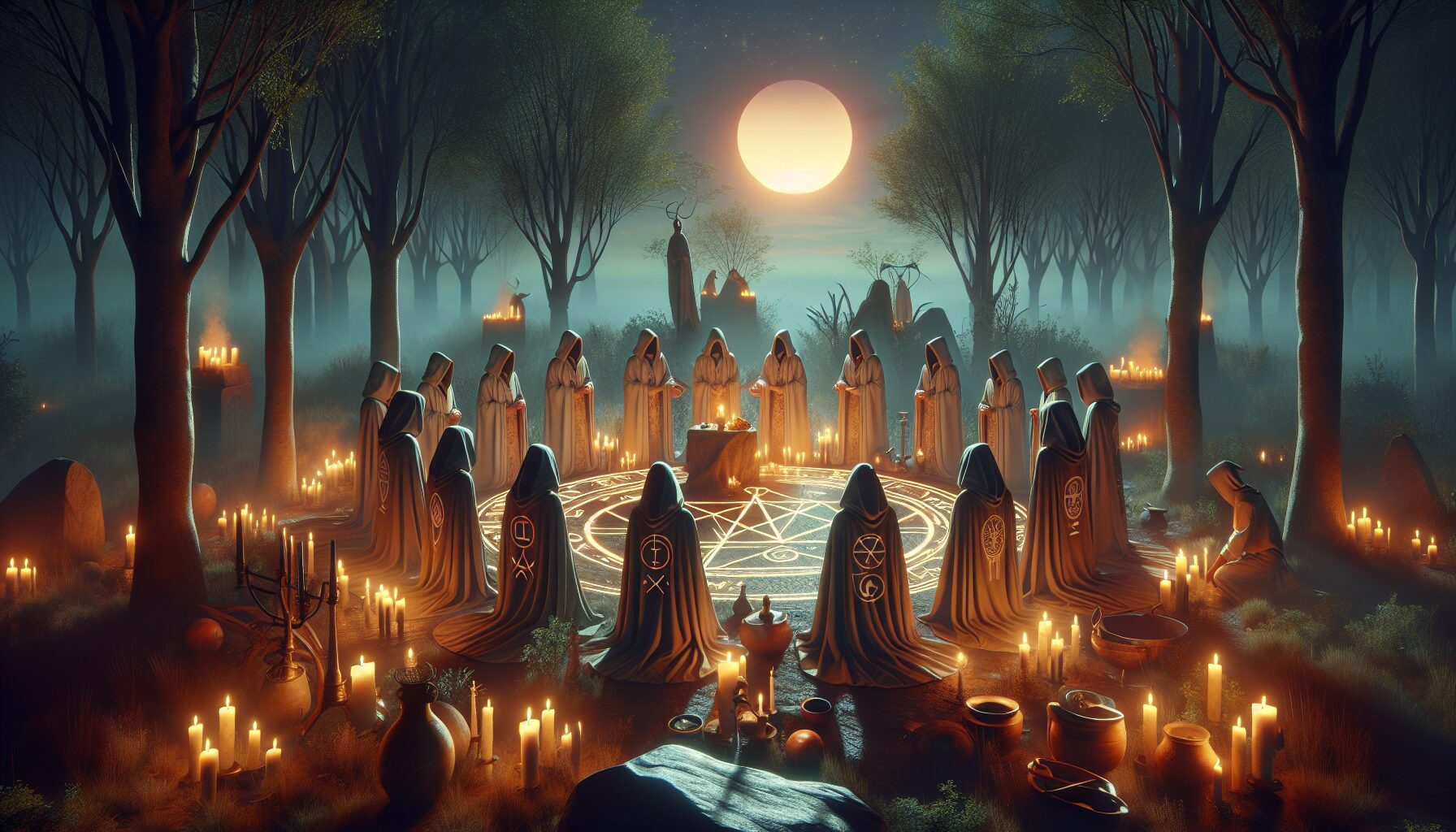
    Druids often performed ceremonies in sacred groves, believed to be the nexus between our world and the next. These places resonated with the spirits of nature, aligning the energies required for safe passage into the afterlife. Ceremonies included chanting, offerings to the gods, and the use of sacred fires to purify and guide the soul.

    “The Druid tradition teaches that death is not the end, but a transformation—a journey to the Otherworld. Their rites provided communion with the spirits and ensured no journey was undertaken alone,” says John Matthews, a renowned historian and mycologist, in his book The Element Encyclopedia of the Celts.

    Egyptian Book of the Dead: Guiding the Departed

    Ancient Egyptian funerary practices stand as one of the most documented and intricate occult traditions in history. Egyptians believed in preserving the body through mummification, ensuring the soul’s continuance in the afterlife. The Book of the Dead served as a spiritual guide, containing spells, hymns, and instructions to navigate the afterlife’s challenges.

    Each deceased individual was provided with a personalized scroll, unique to their journey. This sacred text was believed to protect and assist the spirit, equipping it with the wisdom necessary to face judgment and gain entry into the Field of Reeds, their vision of paradise.

    “For the Egyptians, death was another adventure. Their meticulous rituals reflected a society deeply connected to spiritual exploration and the mysteries of the universe,” writes Egyptologist Dr. Salima Ikram in Ancient Egypt and the Afterlife.

    Voodoo: Living Amongst the Spirits

    Voodoo (or Vodou) offers another fascinating perspective on death and the afterlife. Primarily practiced in Haiti and the African diaspora, Voodoo funerals involve elaborate rituals to ensure the deceased’s soul passes safely into the afterlife, where ancestors guide and watch over the living.

    The Voodoo ceremony, or Waka, typically takes place a year and a day after death. During this time, the soul is believed to reside in the spirit world, waiting for the ceremony that will release it to embark towards eternal rest.

    Voodoo rituals are vibrant, involving rhythmic drumming, dancing, and singing. Offerings are made to the loa, deities that serve as intermediaries between the human and spirit worlds. These acts are performed with the hope of gaining favor and securing a peaceful afterlife for the departed.

    “Voodoo rites present a profound communion with the invisible world. They remind us that life and death are two sides of the same coin, eternally entwined,” according to Wade Davis, an anthropologist and author of The Serpent and the Rainbow.

    Wiccan Traditions: Embracing the Cycle of Life and Death

    Modern Wiccan traditions echo ancient pagan practices, viewing death as a part of the natural cycle of life. Wiccans celebrate the departed through rituals that emphasize the soul’s rebirth and the continuity of life.

    • Samhain: Celebrated on October 31, Samhain represents a time when the veil between the worlds is thinnest, making communication with the dead easier. Wiccans pay homage to their ancestors by lighting candles and setting places for the deceased at the table.
    • The Wiccan Requiem: Conducted in a coven, this ceremony involves chanting and casting a circle of protection. Participants call upon deities to guide the spirit into the Summerland, the Wiccan paradise, where the soul rests before reincarnation.

    “In Wiccan beliefs, death is not to be feared but welcomed as a return home, a reunion with the earth and the sacred cycle of life,” writes Marion Green in The Path of the Hedge Witch.

    Implications and Continuing Influence

    Occult funeral rites continue to fascinate and resonate within contemporary spiritual practices. These ceremonies speak to a universal desire to understand what lies beyond, and to assure the living that their loved ones’ spirits are at peace.

    As today’s societies seek meaningful ways to honor their dead, such mystical traditions offer rich sources of inspiration. They remind us that while death may be the ultimate mystery, it is an integral component of the human experience, inviting us into a larger and timeless journey.

    In exploring these hidden paths and secret traditions, we find that death, though cloaked in shadows, can also illuminate the pathways of spirituality, connecting us profoundly to those who have come before us.

    Whether through rituals that celebrate rebirth, guide spirits to paradise, or seek the favor of deities, occult funeral rites invite reflection on the deepest mysteries of existence, reminding us that in every ending lies a new beginning.

  • Abstract Rites – Arcane Practices of Hidden Knowledge

    Abstract Rites – Arcane Practices of Hidden Knowledge

    Abstract Rites: Arcane Practices of Hidden Knowledge

    Humanity has always been captivated by the enigmatic and the mysterious. From the earliest civilizations to the modern age, individuals and groups have explored abstract rites—arcane practices shrouded in secrecy and clandestine rituals, embodying our collective quest for hidden knowledge. How do these traditions intertwine with the very fabric of human curiosity and understanding? This article delves into the depths of such practices and their enduring legacy.

    The Roots of Arcane Practices

    The origin of secretive rites and arcane traditions can be traced back to ancient cultures that thrived on myth, mystery, and the divine. These ancient practices were often designed to ensure the harmony between the spiritual and earthly realms. Some of the most notable early examples include:

    • Egyptian Mysteries: Profoundly spiritual, these ceremonies often revolved around the deities Osiris and Isis, aiming to impart sacred knowledge to initiates and ensure the perpetuation of cosmic order. The “Book of the Dead” is a quintessential work that details the rituals associated with death and the afterlife.
    • Eleusinian Mysteries: Rooted in Greek mythology, these ancient rites associated with Demeter and Persephone promised initiates special knowledge and a hopeful prospect in the afterlife. As Gregory Nagy, a classicist at Harvard University, describes, “The Eleusinian Mysteries… involved a series of rituals believed to effect a transformation, a transition into a newer life of awareness and enlightenment.”
    • Druidic Traditions: The Druids of the Celtic lands held rich oral traditions and spiritual practices that have intrigued historians. While much remains unknown, their rites were intimately woven with nature, the cycles of the sun and moon, and the storytelling method of transmitting wisdom across generations.

    Modern Takes on Ancient Practices

    In today’s world, arcane practices have evolved yet retain their core essence, adapting attractive narratives to contemporary seekers of hidden knowledge. One of the most famous examples is the Hermetic Order of the Golden Dawn, a society established in the late 19th century that synthesized various esoteric traditions into a cohesive system aimed at spiritual enlightenment. As noted by historian Christopher McIntosh, “The Golden Dawn… was a syncretic blend of Kabbalah, Tarot, astrology, and alchemy… serving as a bridge from traditional magic to modern spiritual practices.”

    Another prominent modern practice deeply rooted in ancient wisdom is Wicca, which draws on various diverse traditions to form a nature-based belief system that centers on the veneration of the Goddess and the God. It emphasizes a deep connection with nature, lunar cycles, and the magic inherent in the natural world.

    The Allure of the Secret

    The allure of secretive rites lies in their promise of imparting those who participate with transformative wisdom and power. Many individuals are drawn to these practices by a profound desire for:

    • Belonging: Initiates often develop a strong bond with fellow practitioners. Being part of an exclusive group that shares esoteric knowledge can satisfy a fundamental human need for connection and community.
    • Personal Transformation: Arcane practices often promise significant spiritual or psychological transformation. Participants may hope to gain insight into life’s mysteries or achieve deeper self-understanding.
    • Power and Control: For some, secretive rituals might offer perceived power over the unknown, facilitating control over aspects of life considered to be beyond ordinary influence.

    Charges of Secrecy and Controversy

    The clandestine nature of these practices has often led to controversy, confusion, and sometimes fear. Throughout history, secret societies and arcane rituals have been met with suspicion, their practices sometimes exaggerated or vilified by those outside their folds. Whether viewed as harbingers of hidden truth or threats to societal order, they frequently occupy a contentious place in cultural discourse.

    “The secrecy inherent in such practices breeds a kind of mystique and sometimes fear, making them subjects of speculation and, in some cases, cultural fascination.” – Dan Harms, Folklorist

    Why Hidden Knowledge Still Matters

    As humanity transitions deeper into the 21st century, the persistence of arcane practices and their appeal remains intact. Hidden knowledge continues to capture the imagination, serving as a reminder of the continuous blending of the mystical and the rational, the spiritual and the empirical in the human quest for understanding.

    In spaces where science has not yet penetrated, where empirical evidence is elusive, or where subjective experience reigns supreme, arcane practices find fertile ground. They act as placeholders for the unknown, as conduits through which modern individuals can tangibly engage with concepts as abstract as truth, consciousness, and the cosmos.

    Conclusion

    From the sacred halls of Egyptian temples to modern urban gatherings, the pull of abstract rites remains a powerful aspect of human culture. Whether invoking past gods, engaging with nature’s rhythm, or questing for hidden knowledge, these arcane practices stitch together humanity’s past, present, and future aspirations.

    With mystery as their constant companion and spiritual enlightenment as their goal, abstract rites continue to thrive in the modern age—inviting this generation and the next into the ever-expanding search for the secrets they hold.

  • Whispered Rites – Secret Ceremonies for Seekers

    Whispered Rites – Secret Ceremonies for Seekers

    Whispered Rites: Secret Ceremonies for Seekers

    In the quiet corners of the world where the ordinary meets the mystical, whispered rites are practiced. These secret ceremonies cater to seekers of deeper truths—those yearning to connect with the beyond or to unravel the mysteries of hidden worlds. Throughout history, whispers of these rites have both intrigued and intimidated, shrouded in secrecy but rich with tradition and meaning.

    The Enigma of Secret Ceremonies

    Secret ceremonies have existed since time immemorial, often acting as the beating heart of mystical practices. These rites are typically veiled in secrecy not only to protect the sanctity of the practices but also to preserve the knowledge from misinterpretation or misuse. In many cultures, the veiling itself adds to the allure and respect surrounding them.

    The Historical Tapestry of Rites

    The tapestry of secret ceremonies is interwoven with threads from diverse traditions:

    • The Eleusinian Mysteries: Practiced in ancient Greece, these rites were associated with the goddess Demeter and her daughter Persephone. Initiates were promised a deeper insight into life and death, although the specifics remain a mystery. According to Britannica, “these Mysteries were the most famous of the secret religious rites of ancient Greece”.
    • Sufi Whirling: A mystical Islamic ceremony where participants achieve spiritual ecstasy and connect with the divine through rhythmic spinning. The poet Rumi, an influential figure in Sufism, spoke of the dance as a form of embracing the divine. He professed, “The only lasting beauty is the beauty of the heart”—a testament to the spiritual connection the dance seeks.
    • Gnostic Rituals: These early Christian ceremonies focused on personal spiritual knowledge (gnosis) over orthodox teachings of dogma. Many of their texts, discovered in the mid-20th century, emphasize personal enlightenment and inner discovery.
    • The Native American Vision Quest: An individual journey of solitude in the wilderness intended to offer insight and personal growth. Participants often emerge with a new understanding and a strengthened bond with the natural and spiritual world.

    The Modern Seeker

    Today’s seekers are often drawn to whispered rites for a variety of reasons—spiritual awakening, personal growth, or a longing to experience a deeper connection with an intangible world. In our digital age, where information is abundant yet often shallow, the depth offered by these rites provides a sanctuary for reflection and discovery.

    Marianne Williamson, a spiritual teacher, explained the longing entailed in modern spiritual searching: “Our desire to grow as soul initiates is a quest for ultimate reality.” For many individuals involved in whispered rites, this quest for reality is intertwined with the ceremonies that provide a structured path toward spiritual enlightenment.

    Preservation and Adaptation of Rites

    While the allure of secret ceremonies is undeniable, their preservation presents a unique challenge in our interconnected world. Amidst the exploration and adaptation within different cultural contexts, these rites risk losing their authenticity. Many traditionalists argue that adaptation can dilute the significance of the ceremonies, while others believe adaptation ensures survival and relevance.

    Certain forward-thinking traditions have found ways to maintain the spirit of these ancestral practices while allowing for cautious integration into modern lifestyles. This intricate balance allows whispered rites to survive and continue captivating new generations of seekers without falling into obscurity or becoming mere cultural artifacts.

    The Ethical Dilemma

    The exploration of secret ceremonies in contemporary times brings with it ethical questions that seekers must address. Respect and cultural sensitivity are paramount when engaging with rites originating from cultures or beliefs outside one’s own. With the increasing accessibility of information, there arises a responsibility to approach these ceremonies with deep respect and reverence.

    “Understanding rites that do not belong to our own heritage is a form of honoring them, not a right to possess them,” suggests cultural anthropologist Rachel MacFarlane.

    The Personal Journey

    Each seeker embarks on their own journey with these whispered rites, creating a unique tapestry of personal insights and revelations. For some, the journey is internal—a quest for personal growth. For others, it serves as a bridge connecting them to unknown dimensions of existence.

    A key aspect of participating in these ceremonies is the nature of active engagement. It’s not merely about participating in the motions but about entwining oneself in the essence of the practice. The secret ceremonies invite seekers to shed the layers of the everyday and to face the profound with vulnerability and courage.

    The Road Ahead

    As we navigate forward into the uncharted territories of personal and collective spirituality, secret ceremonies will likely continue to play a significant role. They offer seekers a gateway to spiritual awakening, personal discovery, and a sense of profound connection. While the world outside becomes increasingly transparent, these rites preserve pockets of sacred mysteries—not to be solved, but to be experienced.

    Ultimately, whispered rites serve as a testament to the human spirit’s enduring quest for deeper meaning—a reminder that even in an age of information, some truths can only be whispered.