Tag: ritual

  • The Candle Path: Walking Nighttime Rituals

    The Candle Path: Walking Nighttime Rituals

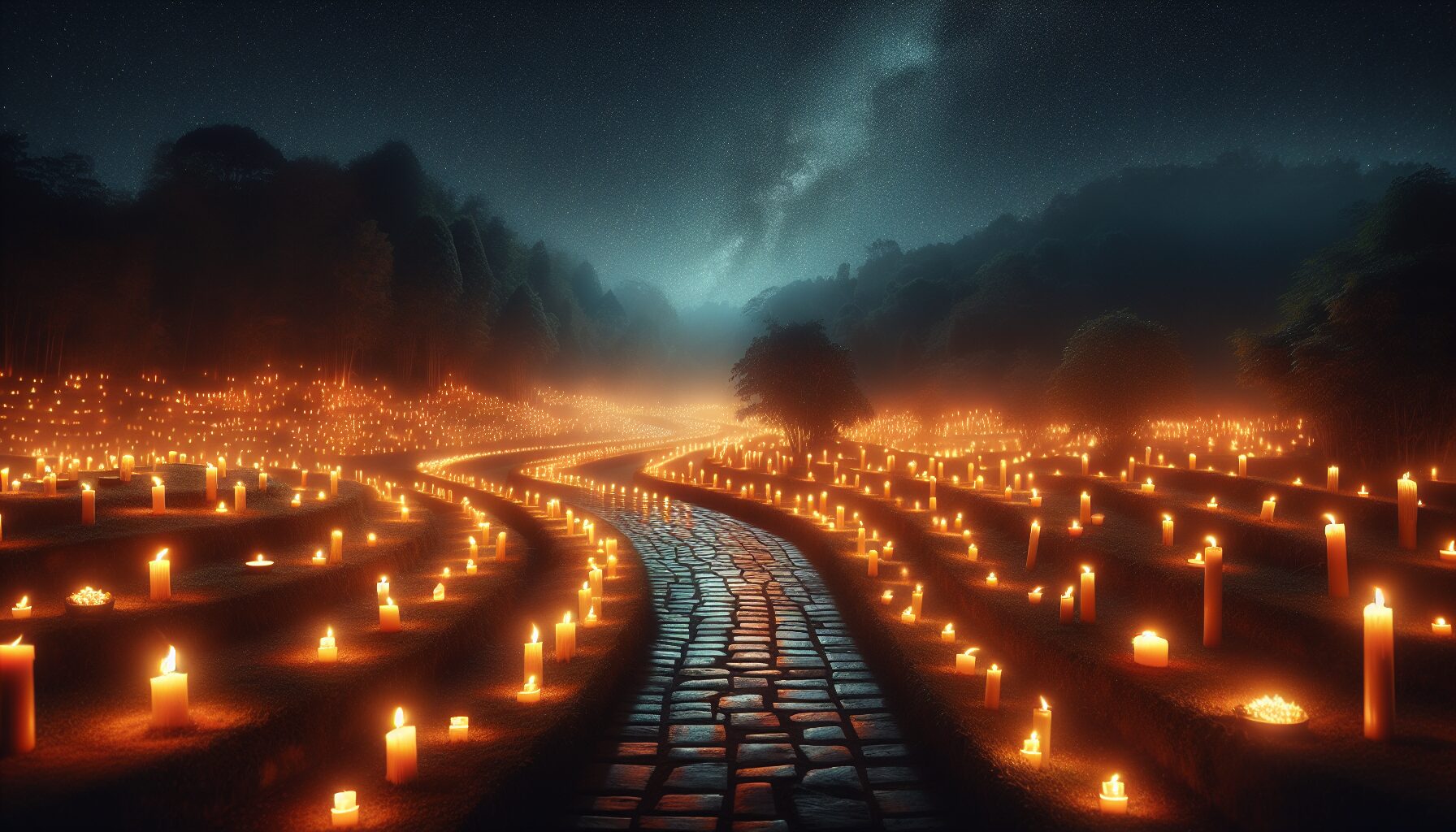
    Nighttime rituals have been a significant part of human culture for millennia. They serve not only as a transition into the realm of sleep but also as a symbolic journey through darkness, uncertainty, and self-reflection. One such evocative ritual is the practice of walking a candle-lit path.

    The Historical Significance

    The use of candles in spiritual and meditative practices dates back to ancient times. The flame, representing both purification and enlightenment, has been a focal point in many religious and philosophical traditions. In the words of Confucius, “Better to light a candle than curse the darkness.” The candle path, therefore, is not merely about walking in the physical sense but about undertaking a journey inward, moving towards understanding and clarity.

    Creating the Path

    To create a candle path for a nighttime ritual, practitioners typically line a path with candles or lanterns, allowing the flickering light to guide their steps. Here are the basic steps to create your own candle path ritual:

    • Choose a Safe Location: Ideally, the path should be outdoors, such as in a garden or park, free from flammable materials or adverse weather conditions.
    • Select Your Candles: Opt for long-burning candles or lanterns. Ensure they are stable and risk-free to minimize hazards.
    • Set Your Intention: Before lighting each candle, set a clear intention or meditate briefly to infuse the act with purpose.
    • Walk the Path: With mindful steps, walk the path reflecting on each candle as a milestone or a point of reflection in your spiritual journey.

    The Philosophical Underpinning

    The candle path ritual embodies the philosophical notion of moving from ignorance towards enlightenment. It is a personal journey, symbolic of the journey every human must undertake in search of truth. Carl Jung once stated, “Knowing your own darkness is the best method for dealing with the darkness of other people.” The candle path ritual allows individuals to confront their own inner darkness, guided and comforted by the gentle flicker of light.

    Conclusion

    Whether done alone or shared with others, the candle path ritual offers a profound experience of meditation and contemplation. These rituals serve as a gentle reminder of the light within us, always ready to guide us through the shadows. Delving into such practices may very well illuminate paths not just within our night walks, but also in the ongoing journey of life.

    For those interested in incorporating this into their spiritual practices, the candle path offers both a literal and metaphorical journey from darkness into light, emphasizing our eternal quest for illumination.
  • The Forgotten Rituals: DIY Guide

    The Forgotten Rituals: DIY Guide

    The Forgotten Rituals: DIY Guide

    The Forgotten Rituals: DIY Guide

    In a world that races ahead at the speed of technological breakthroughs and constant connectivity, the quiet
    undertones of ancient rituals are often forgotten. Yet, these rituals, steeped in tradition and cultural
    significance, offer a serene counterbalance to our otherwise hectic lives. This guide provides a glimpse into
    some lesser-known rituals across the world and how you can incorporate aspects of these forgotten traditions
    into your daily routine to find meaning and mindfulness.

    The Power of Rituals

    Rituals have been an intrinsic part of human culture for millennia. They offer us a sense of identity and
    community and provide a moment to pause and reconnect with ourselves. As Joseph Campbell once
    said,

    “Rituals are an enactment of myth. By moving into altered space with intention, we invite in something
    sacred that regularly gets ignored in the hustle and bustle of life.”

    Exploring Forgotten Rituals

    Although many rituals are tied to specific cultural events or religious beliefs, others simply celebrate life and
    the rhythm of nature. Here, we delve into a few fascinating rituals from around the globe that you can adapt for
    personal use.

    • The Japanese Tea Ceremony

      The Japanese Tea Ceremony, or Chanoyu, is more than just sipping brewed leaves—it’s a performative art that celebrates mindfulness and simplicity. The ritual is deeply rooted in Zen Buddhism, emphasizing a serene and contemplative atmosphere. To incorporate this into your life:

      • Designate a small space in your home as a tea corner, where you can escape from daily distractions.
      • Choose your favorite tea, and prepare it mindfully, focusing on each step from boiling water to steeping the leaves.
      • Invite a friend or loved one to share in the experience, emphasizing presence and silence.
    • Balinese Offerings

      In Bali, Canang Sari are offerings made to thank the Hindu deities for peace and harmony on Earth. These small, handmade baskets are filled with flowers, rice, and fragrance, symbolizing self-sacrifice. To create your own version:

      • Craft a simple basket using banana leaves or any natural material readily available.
      • Fill it with fresh flowers, herbs, or other items that hold personal significance.
      • Set your intention for the day as you place your offering, focusing on gratitude.
    • Native American Smudging Rituals

      Smudging involves burning sacred herbs like sage to cleanse one’s space and self. It’s an ancient ritual for purifying and bringing balance to the energy in a space. To incorporate smudging:

      • Gather a bundle of sage or palo santo and light the end until it smolders, producing smoke.
      • Move through your space, allowing the smoke to enter every corner, while setting an intention to remove negativity.
      • Once finished, extinguish the sage and express gratitude for the cleansing.

      Note: Always respect the origins of this practice, understanding it’s a sacred tradition for Native Americans.

    Creating Your Own Rituals

    Alongside adopting historical practices, crafting your own rituals can be just as powerful. Here are steps to
    create meaningful rituals tailored to your personal needs:

    • Identify the Purpose: Decide whether your ritual aims to cultivate gratitude, promote relaxation, or achieve another personal goal.
    • Create a Sacred Space: Find a quiet and comfortable area where you won’t be disturbed.
    • Gather Personal Objects: Use candles, crystals, music, or scents that evoke the desired emotions.
    • Set an Intention: Begin your ritual with a clear intention, focusing your thoughts on what you wish to achieve.
    • Reflect and Adjust: After completing your ritual, reflect on how it made you feel and adjust to enhance its effectiveness.

    The Return to Rituals

    The revival of traditional rituals offers a pathway to restoring balance in our lives. Whether you choose to delve
    into an ancient culture’s practice or develop something entirely personal, the grounding effect of rituals is
    undeniable. As we navigate the future with its inevitable innovations, let us not forget the past’s wisdom that
    can guide us to more mindful living.

    Conclusion

    Rekindling the forgotten rituals is akin to rediscovering parts of ourselves that long to be acknowledged. As
    Maria Popova
    writes,

    “Rituals are the placeholders of meaning in our lives, reminders of heritage and habit.”

    Embrace them, and in doing so, embrace a richer, more centered existence.

  • Ritual Cartography: Mapping Spiritual Spaces

    Ritual Cartography: Mapping Spiritual Spaces

    The concept of ritual cartography might initially appear as an intersection of disparate fields—geography and spirituality. However, this unique blend offers profound insights into how humans interpret and interact with spiritual spaces and landscapes. Exploring this concept involves understanding how spiritual practices are mapped out, both physically and metaphorically, across landscapes and within communities. This journey highlights the significance of ritual spaces and their transformative impact on human consciousness.

    Understanding Ritual Spaces

    Ritual spaces are locations where spiritual practices and ceremonies are performed. These can range from ancient stone circles, like Stonehenge, to modern-day places of worship. As anthropologist Victor Turner noted, “A ritual is like a journey, and the ritual space a map that traces the road.” These spaces are imbued with significance, often marked by cultural, historical, and symbolic layers that communicate profound meanings to their participants.

    Humans have been creating and using ritual spaces for millennia, and these spaces serve as focal points for communal identity, storytelling, and spiritual practices. Today, ritual spaces continue to be dynamically linked to how communities envision the sacred and enact their beliefs.

    The Cartographer’s Role in Ritual Spaces

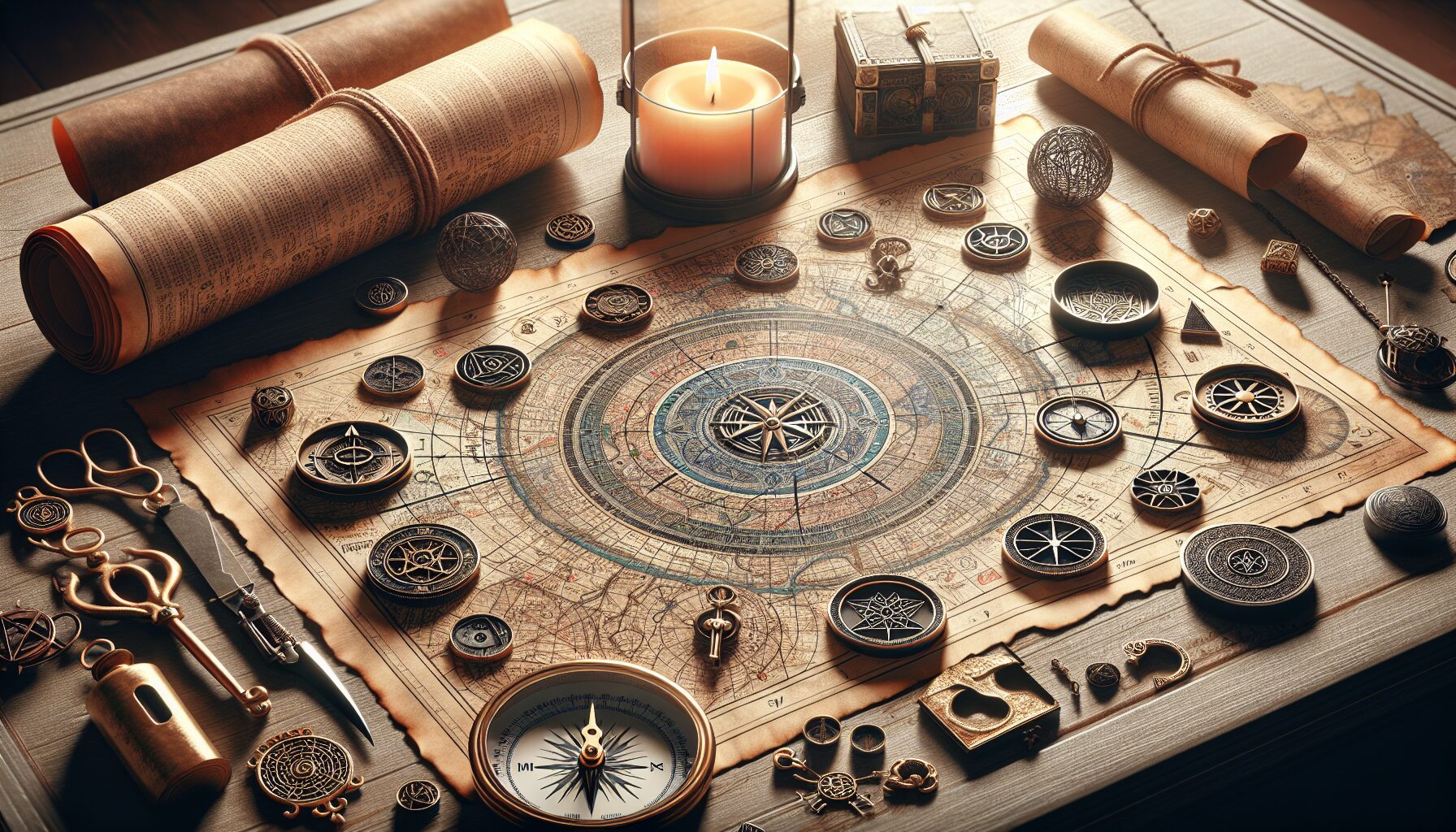
    Cartography, the study and practice of making maps, plays a crucial role in ritual spaces. The act of mapping these spaces not only marks physical locations but also brings to light their symbolic dimensions. Cartographers translate spiritual and ritualistic practices into visual forms that can be interpreted and studied.

    Cartographers often rely on a combination of traditional mapping techniques and ethnography. They consider geographical features and the spiritual narratives that overlay them. For instance, the mapping of Mount Kailash in Tibet offers insight into how a physical space is perceived spiritually. Mount Kailash is revered in several religions including Hinduism, Buddhism, and Jainism, each of which ascribes different spiritual meanings to its features.

    Symbolic Landscape and Spiritual Narratives

    Ritual cartography often transcends physical dimensions, delving into the metaphysical space created by spiritual narratives. This symbolic landscape is populated with myths, legends, and religious teachings that are grounded in physical locations. These narratives serve to deepen the spiritual resonance of a site, transforming simple geographical locations into sacred spaces.

    For example, the Plains of Abraham in Canada host a rich tapestry of history and spirituality. Initially a battleground, they now symbolize various socio-cultural identities intertwined with ecological and ceremonial practices of the First Nations. Such sites demonstrate how ritual cartography can encompass both cultural remembrance and spiritual renewal, charting a path between past and present.

    Modern Technologies and Spiritual Mapping

    In recent years, advancements in technology have revolutionized how we engage with ritual spaces. Technologies such as GIS (Geographic Information Systems) and remote sensing are now being employed to map spiritual sites across the globe. These technologies provide new insights into the layout and scope of historical ritual spaces, revealing hidden structures or previously unknown aspects of known sites.

    “By interpreting spiritual landscapes through GIS, we can appreciate not only the physical but also the symbolic connections these sites maintain,” says Maria Lobo, a geospatial analyst specializing in cultural landscapes.

    Virtual reality (VR) has also made it possible to experience ritual spaces in previously unimaginable ways, offering digital pilgrimages and immersive encounters with sacred spaces that may be inaccessible due to distance or preservation concerns.

    The Impact of Ritual Cartography

    Mapping spiritual spaces allows us to preserve sacred narratives and comprehend the geographical expressions of faith. It enables present and future generations to connect with inherited and evolving spiritual identities. Understanding the spatial dimensions of rituals encourages appreciation for cultural diversity and promotes cross-cultural dialogue.

    Ritual cartography also highlights the geopolitical aspects of spiritual spaces: the conflicts over sacred sites, accessibility issues, and the interplay between different religions and cultural practices. By documenting and recognizing these spaces, peace-building and community engagement initiatives can be fostered, offering reconciliation and mutual understanding in areas fraught with historical tensions.

    Conclusion

    Ritual cartography serves as a bridge between the physical and metaphysical, documenting human interactions with sacred spaces throughout history. It respects and preserves the myriad expressions of human spirituality, allowing for a deeper understanding of our world and ourselves. As technology continues to evolve, so too will our methods of capturing and interpreting the stories contained within ritual maps, continually offering fresh insights into the sacred dimensions of our landscapes.

    “`

  • The Candle’s Edge: Minimalist Ritual Projects

    The Candle’s Edge: Minimalist Ritual Projects

    You need to be logged in to view this content. Please . Not a Member? Join Us
  • The Candle’s Edge: Minimalist Rituals

    The Candle’s Edge: Minimalist Rituals

    You need to be logged in to view this content. Please . Not a Member? Join Us
  • Ritual Recipes: Everyday Ceremonies Made Strange

    Ritual Recipes: Everyday Ceremonies Made Strange

    In the hustle and bustle of modern life, rituals serve as a grounding force, offering rhythm and structure to our days. But what happens when we twist these ceremonies, adding a touch of the strange and unexpected? In embracing the peculiar, we can elevate our mundane routines into extraordinary experiences. This article explores how traditional rituals can be transformed into creative acts that bring a new dimension to our daily lives.

    The Art of Ritual

    Rituals are defined as “a series of actions or type of behavior regularly and invariably followed by someone” (Oxford English Dictionary). Traditionally, these are ceremonies or acts that hold cultural or personal significance. However, by infusing a little strangeness into them, we bring fresh life to the ordinary.

    Rituals in Everyday Life

    • Morning Coffee: That first sip of coffee can turn from a sleepy-eyed necessity into a moment of mindful meditation. Consider adding a daily mantra or setting an intention as the coffee brews.
    • Commuting: Turn the mundane shuttle to work into a journey of discovery. Try listening to a foreign language podcast, engaging in people-watching, or capturing the essence of strangers’ lives in small sketches.
    • Meal Preparation: Cooking a meal is a ritual in its own right. Spice things up by incorporating exotic ingredients or following a recipe from a culture you know little about.

    Infusing Wonder: Everyday Ceremonies Made Strange

    Now, let’s look at some ritual recipes you can employ to imbue your daily practices with a touch of the unusual.

    1. The Solstice Breakfast Ceremony

    Embrace the changing of the seasons by creating a solstice breakfast ritual. As the sun rises, set your table with symbols of the new season—such as autumn leaves or spring blossoms. Garnish your meal with spices that evoke the time of year, like cinnamon in winter or mint in summer.

    “Food, in the end, in our own tradition, is something holy. It’s not about nutrients and calories. It’s about sharing. It’s about honesty. It’s about identity.” – Louise Fresco

    2. The Commuter’s Pilgrimage

    We often think of pilgrimage as a journey to a sacred place, but why not transform your daily commute? Choose a different route weekly, or find a small token to bless each step—like pausing to notice flowers along the path. Slow down to savor the journey itself instead of merely focusing on the destination.

    3. Bedtime Oracle Readings

    Before surrendering to sleep, draw a card from a deck—Tarot, oracle, or simply shuffled quotations. Consider it as advice for tomorrow. Even if you don’t believe in divination, this can become a time of reflection and peace before rest.

    Why Make the Ordinary Strange?

    Infusing the unusual into rituals can disrupt habituated thinking patterns and spark creativity. Making the ordinary unusual invites curiosity, encouraging a mindful and present interaction with the world.

    “The real voyage of discovery consists not in seeking new landscapes, but in having new eyes.” – Marcel Proust

    By consciously crafting our rituals with elements of strangeness, we allow ourselves to experience life more fully. This act also highlights the significance of embracing imperfection and novelty, engendering resilience and flexibility.

    Conclusion: A Call to the Unusual

    In conclusion, rituals are powerful tools that organize our lives and provide meaning. By embracing the strange, we transform quotidian tasks into moments brimming with potential and wonder. Whether it is through setting new intentions over morning coffee or charting pilgrim paths during your commute, each strange ceremony can become a precious moment of mindfulness and a celebration of the vibrant tapestry of life.

    As T.S. Eliot once observed, “We shall not cease from exploration, and the end of all our exploring will be to arrive where we started and know the place for the first time.” Let us embark on these minute explorations with open hearts and minds, and perhaps learn to see the world—and ourselves—anew.

  • Ceremonies for the Living Dead: DIY Rituals

    Ceremonies for the Living Dead: DIY Rituals

    You need to be logged in to view this content. Please . Not a Member? Join Us
  • Ink and Ash: Creating Ritual in Everyday Life

    Ink and Ash: Creating Ritual in Everyday Life

    You need to be logged in to view this content. Please . Not a Member? Join Us