Tag: rituals

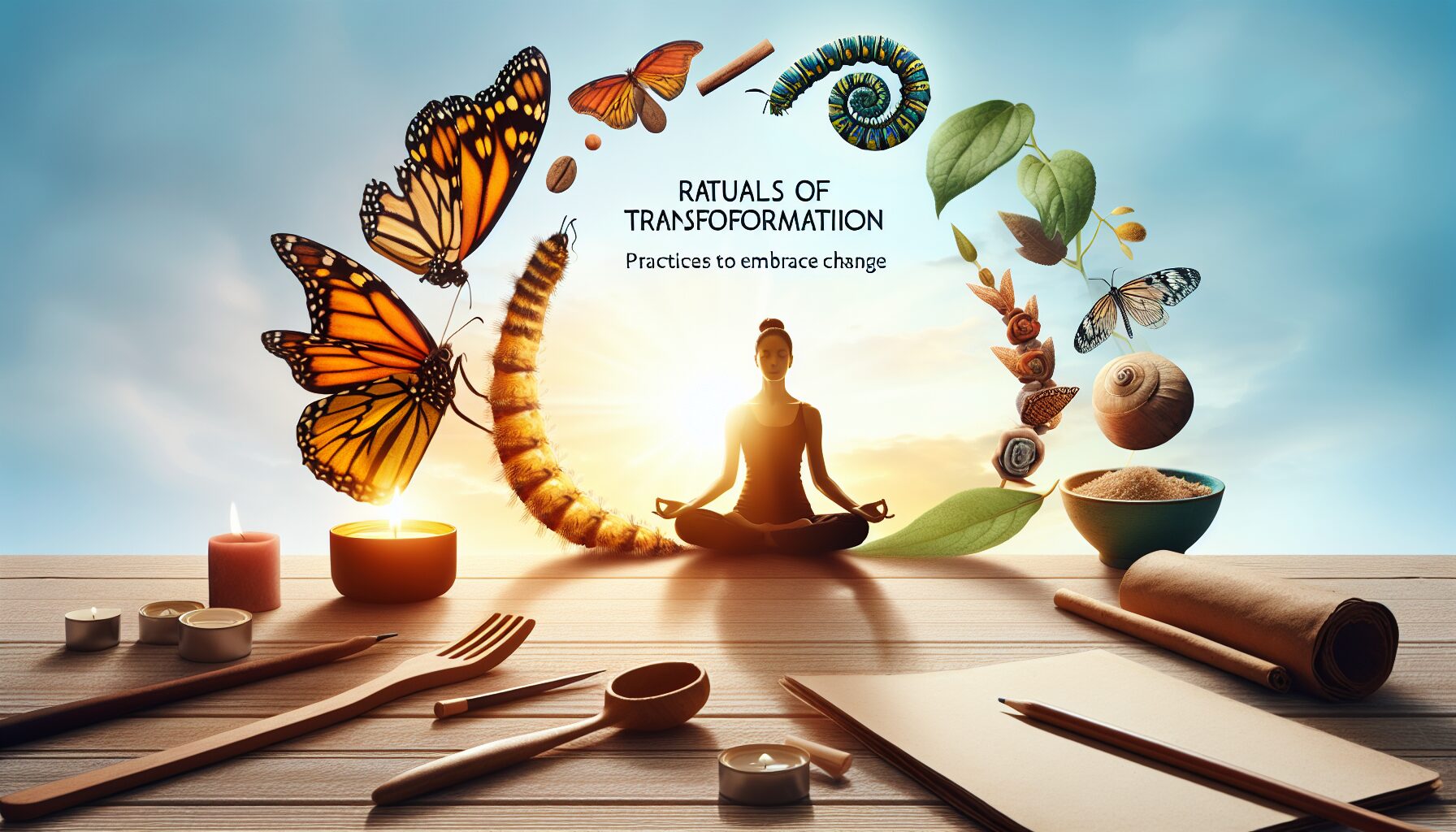
  • Rituals of Transformation – Practices to Embrace Change

    Rituals of Transformation – Practices to Embrace Change

    Throughout human history, rituals have played a vital role in helping individuals and communities transition through periods of change. Whether it’s a significant life event or a subtle personal transformation, these practices offer a structured approach to embrace new beginnings and let go of the past.

    The Power of Rituals

    Rituals provide a sense of comfort and stability amid change. They often involve symbolic actions designed to convey personal values or goals. Margaret Mead, the famous cultural anthropologist, once said,

    “Rituals are the way we carry the thoughts and traditions from one generation to another.”

    They help anchor us, creating an intentional space for reflection and growth.

    Rituals for Personal Transformation

    • Journaling: This is a personal favorite for many undergoing transformation. Set aside time each day to document your thoughts, feelings, and progress. According to a study published in the Journal of Personality and Social Psychology, journaling can lead to improved well-being and clarity during times of change.
    • Meditation: As change can bring stress and anxiety, meditation serves as a calming practice. Engaging in mindfulness can help stay grounded and focused. Mindful.org offers a wealth of resources to guide you through starting your meditation practice.
    • Burning Ceremonies: Many cultures hold burning ceremonies as a way of releasing old patterns or negative energies. By writing down thoughts or worries and literally turning them to ash, individuals can symbolically let go of the past.
    • Nature Walks: Disconnect from the hustle and bustle of daily life and reconnect with nature. Being outdoors has profound effects on mental health and can aid in the transition process.

    Community-Based Rituals

    Communal rituals often support collective change and transformation. They can be formal or informal but always bring people together to share experiences and create bonds.

    • Potlucks and Gatherings: Sharing meals and stories fosters community and belonging. You can celebrate milestones or simply be there for one another during challenging times.
    • Seasonal Ceremonies: Many cultures hold events to mark the changing of the seasons. These ceremonies remind us that change is natural and cycle-based, offering opportunities to set new intentions.
    • Group Meditation or Yoga: Engaging in shared meditation or yoga practices amplifies the transformative energies and promotes a sense of common purpose and support.

    Global Rituals of Change

    Certain rituals have gained widespread recognition for their effectiveness in facilitating change.

    • Vision Quests: Originating from Indigenous cultures, vision quests involve a period of solitude in nature meant for reflection and gaining insight about one’s path forward.
    • Rites of Passage: Cultures worldwide celebrate passages from one stage of life to another with elaborate rituals. Whether it’s a bar mitzvah, a quinceañera, or graduation, these rites play an essential role in acknowledging transformation.
    • Fasting or Cleansing Rituals: Used by many religions and spiritual practices, fasting or cleansing can purify the body and mind, aligning them for new insights and directions.

    Embracing the Unknown with Grace

    Facing change is never easy, but rituals offer a structured way to navigate the unknown. As Joseph Campbell noted in his exploration of the hero’s journey,

    “The cave you fear to enter holds the treasure you seek.”

    By embracing rituals, we aren’t just marking a momentary shift; we are stepping forward with intention and courage.

    These practices, whether personal or communal, allow us to process transitions effectively. By honoring these sacred actions, we become attuned to the rhythms of life, embracing its inherent changes with grace and wisdom. As the Navajo say,

    “Bless the way as you walk the path.”

    To dive deeper into building and incorporating rituals into your own life, consider exploring resources at Rituals.com or joining community circles that focus on healing and transformation.

    In conclusion, although change can be daunting, approaching it through transformative rituals provides grounding and support. As we navigate the many changes life presents, these practices offer a potent reminder of our resilience and capacity for growth.

  • Ritual of Night – Practices for Shadowed Awareness

    Ritual of Night – Practices for Shadowed Awareness

    In the silent embrace of night, a veil lifts to reveal a realm of introspection and mystery. For millennia, humans have cultivated rituals that engage the darkness, seeking illumination within the shadows. Enter the fascinating world of night rituals, where shadowed awareness emerges as both an art and science.

    The Historical Roots of Night Rituals

    Since the dawn of civilization, night has been considered a time for reflection and spirituality. Ancient tribes all over the world used the cover of darkness to delve deeper into their consciousness and the mysteries of life.

    “The Celts, for instance, situated many of their spiritual activities during the night, believing the veil between worlds was thinnest then,” notes historian Dr. Maeve O’Connor in her analysis of ancient European religious practices (History.com).

    Night rituals often included fire-based activities, chants, and meditation, all aimed at connecting individuals with the divine or understanding the human psyche more deeply.

    Modern Interpretations of Night Rituals

    In today’s world, night rituals have evolved, but the core remains surprisingly consistent. Contemporary practices blend ancient traditions with modern insights into the mind and spirit. Let’s explore some practices that can enrich one’s understanding of shadowed awareness through night rituals.

    Meditative Reflection

    • Engage in guided meditation, focusing on embracing darkness as a space of safety rather than fear.
    • Use candlelight to enhance focus, allowing the mind to drift between light and shadow, echoing Carl Jung’s words: “Knowing your own darkness is the best method for dealing with the darknesses of other people.”
    • Capitalize on the quietude of night to center your thoughts and reflect on the day’s events without distraction.

    Dream Journaling

    One of the simplest yet most profound night rituals involves recording dreams upon waking from sleep. Dreams are natural doorways to the subconscious, and night-time offers a unique opportunity to access this aspect of ourselves.

    • Keep a journal by your bedside. Write down any dreams immediately upon waking — a practice echoed by psychoanalyst Sigmund Freud’s assertion that “dreams are the royal road to the unconscious.”
    • Identify themes within your dreams. Consider how these might relate to your current life circumstances.

    Moonlit Nature Walks

    Engaging with nature at night provides an unparalleled connection to the universe. The quiet beauty of a moonlit landscape can be both humbling and awe-inspiring.

    • Choose safe, familiar routes for moonlit strolls, ensuring you remain mindful of your surroundings.
    • Notice the differences of the nocturnal world — the shift in sounds, the introspective solitude, the play of shadows — all providing insight into your own hidden depths.

    Ritualistic Arts

    Art speaks where words are unable to explain. Use nocturnal quietude as a backdrop for creativity. The unrestricted expression can often unlock shadowed awareness like nothing else.

    • Painting or drawing using only shades of black, white, and gray to explore contrasts and balance, mimicking the dichotomies of night and day.
    • Write poetry or prose inspired by nocturnal musings, capturing the fluid nature of darkness and insight.

    Cultural Variations and the Embrace of Night

    Every culture has its unique approach to night rituals. In Japan, tsukimi or moon-viewing, is a time-honored tradition where people gather to admire the moon, often incorporating poetry readings and quiet reflection.

    In the bustling cities of India, lamps are lit during Diwali, the festival of lights, which celebrates the triumph of light over darkness, knowledge over ignorance.

    As National Geographic describes, “During Diwali, the night becomes a canvas of flickering lights, each flame a promise of spiritual enlightenment and awakening” (National Geographic).

    The Science Behind Night-Time Awareness

    Recent studies emphasize the night’s impact on the human psyche. According to neuroscientists, darkness naturally encourages deeper, more meditative states of consciousness (Psychology Today). The reduction of visual stimuli at night lessens mental distractions, fostering a state where thoughts can roam more freely.

    The Impact of Melatonin

    As night falls, the body releases melatonin, a hormone that facilitates sleep but also encourages a state of mental tranquility conducive to reflection and creativity.

    • Utilize this natural state by meditating or engaging in a quiet activity, leveraging the body’s chemistry to explore deeper facets of the self.

    Embracing the Ritual of Night

    In the frenetic pace of modern life, night rituals offer a sanctuary, a doorway to enhanced awareness through the symbiotic relationship of darkness and light. The shadowed awareness cultivated through these practices doesn’t just reveal our personal mysteries—it realigns us with the universe itself.

    Consider the night not as a time of mere rest but as an opportunity for enriching and nurturing one’s spirit. Whether through mindful meditation, creative expression, or simply taking a moment to listen to the night, the rituals of night invite us into a world where “the shadow proves the sunshine” (Switchfoot).

    As every shadowed night folds into another dawn, the knowledge and insights you gain from these practices can be carried into your day, informing, guiding, and enriching your wakeful journey in profound and unexpected ways.

  • Ritual of Liminality – Crossing Thresholds of Consciousness

    Ritual of Liminality – Crossing Thresholds of Consciousness

    In the intricate web of human cultures, one finds the recurring theme of crossing thresholds. Among these symbolic crossings, the ritual of liminality occupies a pivotal role, serving as a conduit between different realms of existence. Rooted deeply in anthropological and psychological studies, liminality is a concept that helps us understand transitional moments, be they personal, communal, or cosmic. This article explores the significance, structures, and psychological impacts of these rituals as humanity delves into the essence of transformation and consciousness.

    The Concept of Liminality

    Liminality, a term popularized by Victor Turner, an anthropologist who expanded upon the work of Arnold van Gennep, revolves around the idea of being ‘in-between.’ Turner describes liminality as “the quality of ambiguity or disorientation that occurs in the middle stage of a rite of passage.” In this state, participants “stand at the threshold” between their previous way of structuring their identity, time, or community, and a new way, which is yet to be realized.

    Structure of Liminal Rituals

    Liminal rituals often encompass three stages as delineated by van Gennep:

    • Separation – This initial phase involves detachment or dissociation from a current status or identity. In many cultures, this can be represented by leaving physical spaces associated with one’s prior social role.
    • Liminality – Here lies the heart of the ritual. Within this threshold, participants often experience states of communitas, or intense community spirit, which transcends previous social hierarchies.
    • Reincorporation – This final phase sees the individual or group emerging with a new identity, reintegrated into society with full recognition of their altered state.

    Each stage functions symbiotically, creating a fluid cycle of death and rebirth, growth and transformation.

    Examples Across Cultures

    Rituals of liminality manifest, perhaps universally, across human societies.

    • Rites of Passage – In Indigenous cultures, such as the Native American vision quest or the Australian Aboriginal walkabout, young individuals undergo solitary ordeals, seeking spiritual guides or visions to transform adolescence into adulthood.
    • Religious Pilgrimages – The Islamic Hajj or the Christian pilgrimage to Santiago de Compostela are quintessential examples where individuals traverse geographical, spiritual, and metaphorical thresholds toward enlightenment.
    • Modern Ceremonies – Graduation ceremonies, weddings, and even team-building workshops can serve as modern iterations of liminal rituals, escorting individuals across personal or professional thresholds with community acknowledgment.

    The Psychological Perspective

    The psychological dimensions of liminality can be profound. Carl Jung and others in the field of psychology suggest that liminal experiences may facilitate individuation, the holistic integration of the self. These moments become “times out of time,” where usual boundaries blur, freeing the mind to explore and adopt new perspectives.

    “It all comes down to that moment of clarity when you realize you are not who you were yesterday, and yet not quite who you will be tomorrow.”

    These states of flux can incite anxiety or fear, yet they simultaneously offer thereception of profound insight, catalyzing personal growth and understanding.

    Science Meets Tradition

    Modern neuroscience provides a fascinating lens on how ritual can rewire consciousness. According to research studies, rhythmic stimuli prevalent in rituals—such as drumming, dancing, or chanting—can induce altered states of consciousness by stimulating the brain’s limbic system. This aligns with findings from the National Institutes of Health, which document ritual’s capability to transcend ordinary awareness, thereby facilitating healing and transformation.

    The Sacred and the Profane

    The dichotomy of the sacred and the profane becomes apparent through the lens of liminal rituals. As outlined by Mircea Eliade, a renowned historian of religion, “By entering a temple or engaging in ritual, one is essentially exiting the realm of the mundane and stepping into a sacred space.” During these sacred periods, the worldly concerns of participants recede, allowing for profound encounters with the divine or spiritual realms.

    Liminality in the Modern Era

    With a rapid-paced modern society, one might assume that the role of liminal rituals has diminished; however, they remain vitally important, morphing to meet contemporary needs. Consider the global rise of mindfulness retreats, meditation workshops, and yoga festivals. These experiences seek to offer a respite from modern life, providing structured spaces where individuals can explore inner landscapes, detached from ordinary routines.

    Transformative Journeys

    The stories of those who have undertaken transformative journeys speak to the power of liminality. Accounts from participants often describe a sense of rebirth, shedding old habits or beliefs, and embracing new trajectories for their lives. As Joseph Campbell might suggest in “The Hero with a Thousand Faces,” each individual’s journey through the liminal phase represents a microcosm of the hero’s journey, epitomized by trials, revelations, and an eventual return to the ordinary world enriched and transformed.

    Conclusion

    The ritual of liminality remains an essential facet of human spirituality and psychology. Whether emerging through ancient rites or modern workshops, the crossing of thresholds encourages both personal evolution and communal continuity. Within these sacred spaces, we find the opportunity to pause, reflect, and ultimately transcend toward new phases of life.

    By embracing liminal rituals, we learn to navigate the spaces between, accept transformation, and proceed with enriched understanding of our consciousness and existence.

  • Necrotic Rituals – Practices to Embrace Impermanence

    Necrotic Rituals – Practices to Embrace Impermanence

    In the rich tapestry of human civilization, the inevitability of death has always been a profound muse. Across cultures and eras, necrotic rituals have offered a lens through which societies understand impermanence and the art of letting go. Far from being mere macabre observances, these rituals are testaments to humanity’s enduring endeavor to embrace the transient nature of life.

    The Philosophical Underpinnings of Necrotic Rituals

    Impermanence is a central theme in many spiritual philosophies, serving as a reminder that everything that begins also has an end. This concept is especially pronounced in the philosophical traditions of Buddhism. Thich Nhat Hanh, a renowned Buddhist monk, once said, “Thanks to impermanence, everything is possible.” (Thich Nhat Hanh) This quote underscores the potential for growth and change, highlighting the importance of accepting life’s ephemerality.

    Necrotic rituals manifest this understanding by providing frameworks within which communities can process loss, celebrate life, and transition between states of being. By engaging with death in a structured way, participants can find peace and closure.

    Historical Practices Acknowledging Impermanence

    • Ancient Egyptian Mummification: The intricate processes involved in mummification demonstrate the Egyptians’ profound respect for the afterlife. By preserving the bodies of the deceased, Egyptians viewed death not as an end but a transition to another state, underscoring the cyclical nature of existence.
    • Mexican Día de los Muertos: Celebrated primarily in Mexico, the Day of the Dead is a vibrant remembrance of ancestors. Altars, or ofrendas, are adorned with photographs, marigold flowers, and favorite foods of the deceased, illustrating a joyous acceptance of death as a natural part of life’s continuum.
    • Tibetan Sky Burials: This practice is based on the Vajrayana Buddhist belief in transmigration of spirits. The ritual involves exposing the body to the elements and scavengers, symbolizing the return of the body to nature and the continuous cycle of life and death.

    The Modern Resurgence of Necrotic Rituals

    In contemporary times, there is a growing movement to rekindle traditional necrotic rituals. This resurgence is often driven by a desire to counteract the often sterile and impersonal modern treatment of death. By re-engaging with these ancient practices, individuals can find solace and meaning in death’s inevitability.

    “Death is not the opposite of life but a part of it.” —Haruki Murakami

    This recognition has led to the development of new ceremonies that emphasize sustainability and community. Green funerals and natural burials, for instance, reflect a growing awareness and respect for the environment, resonating with the ethos of returning to the Earth.

    Ritual as a Personal Journey

    Participation in necrotic rituals is often a deeply personal journey. For many, these practices provide a space for reflection, catharsis, and the fostering of connections. Here are a few ways individuals engage with these practices today:

    • Personal Altars: Inspired by traditions such as Día de los Muertos, individuals create small altars at home. These spaces often include photographs, mementos, and offerings, serving as a daily reminder of loved ones who have passed.
    • Journaling and Creative Expression: Many turn to writing, art, or music as a means to process grief and explore the concept of impermanence. Through these creative outlets, people can transform pain into something beautiful and enduring.
    • Mindful Practices: Meditation and mindfulness are powerful tools for embracing change and impermanence. These practices can cultivate a deeper appreciation for the present moment and foster acceptance of life’s fleeting nature.

    Embracing Impermanence in Everyday Life

    While traditional rituals provide structured ways to engage with death, there are countless opportunities to embrace impermanence in daily life. Simple activities such as mindful breathing, spending time in nature, or appreciating the ephemeral beauty of a sunset can serve as reminders of life’s transient beauty.

    Moreover, rethinking our relationship with material possessions can lead to greater peace and fulfillment. Adopting a minimalist lifestyle, for instance, encourages the notion that less is more, emphasizing experiences over things.

    A Global Dialogue on Death

    The conversation surrounding necrotic rituals is becoming increasingly global. With platforms that connect people from around the world, there is a unique opportunity to share and learn from diverse cultural practices. As societies continue to evolve, the integration of traditional and contemporary rituals can provide a holistic approach to embracing impermanence.

    In conclusion, necrotic rituals offer profound opportunities for reflection and growth. By engaging with these practices, individuals and communities around the world can find deeper meaning and connection with the cycle of life and death. Through understanding and acceptance, the acceptance of impermanence becomes not a source of fear, but a catalyst for living more fully.

    For more insights into these practices, explore resources from cultural studies, browsing through collections such as the fascinating articles at The Metropolitan Museum of Art.

  • Ritual of the Moon – Lunar Practices for Contemplation

    Ritual of the Moon – Lunar Practices for Contemplation

    You need to be logged in to view this content. Please . Not a Member? Join Us
  • Rituals of the Forgotten – Rediscovering Lost Practices

    Rituals of the Forgotten – Rediscovering Lost Practices

    In our fast-paced, modern world, many ancient rituals and practices have been forgotten, buried under the sands of time. Yet, there is a growing interest in rediscovering these lost rituals, driven by a desire to reconnect with our past and enrich our present lives.

    The Resonance of Rituals

    Rituals have long served as powerful tools for creating meaning and continuity. They are more than just routines; they provide a sense of identity, community, and purpose. Anthropologist Victor Turner emphasized the importance of rituals by stating,

    “Rituals and symbols are crucial elements in establishing cultural cohesion and personal wellbeing.”

    Many forgotten rituals are being unearthed and appreciated again for their cultural and spiritual significance. Here are some notable examples:

    Revived Rituals

    • Mindful Tea Ceremonies: Originating from Japanese traditions, these ceremonies offer a meditative experience, emphasizing mindfulness in every sip and movement.
    • Samhain Celebrations: Known as the precursor to Halloween, Samhain is re-emerging as a festival to honor ancestors and embrace seasonal changes.
    • Indigenous Smudging Practices: Native American rituals using smoke from herbs like sage are gaining popularity for their purifying and spiritual grounding effects.

    Creating Contemporary Connections

    Rediscovering and practicing these rituals today allows individuals to foster a meaningful connection to the past. It also serves as a counterbalance to the disconnection often felt in our digital age. Professor Felicia Keesing, an expert in cultural history, notes,

    “Embracing ancient practices can become a form of resistance against the homogenization of cultures and help preserve diversity.”

    (History.com)

    The resurgence of these practices also opens conversations about the conservation of endangered traditions. As we embrace these rituals, we also commit to preserving them for future generations, inspiring a renewed appreciation of history and heritage.

    The beauty of re-integrating forgotten rituals lies in their ability to bring individuals back into a greater awareness of themselves and their surroundings. As we seek to find balance in our hectic lives, these age-old practices offer a profound sense of belonging and continuity amidst change.

  • Ritual of Ash – Transforming Loss into Spiritual Practice

    Ritual of Ash – Transforming Loss into Spiritual Practice

    Losing a loved one is one of the most profound experiences of human life. Throughout history, communities and cultures have devised rituals to navigate this challenging journey, transforming mourning into a healing process. Among these, the ritual of using ash has emerged as a practice imbued with spiritual significance, offering solace and continuity to the bereaved.

    A Tradition Rooted in History

    The use of ash in death rituals can be traced back to ancient civilizations. The ancient Greeks and Romans, for instance, practiced cremation, viewing it as a way to return the body to the divine cosmos. In the ashes, they saw a metaphor for life’s cycle of death and rebirth.

    “To everything there is a season,
    a time to be born and a time to die.”
    Ecclesiastes 3:1-2

    The Symbolism and Meaning of Ash

    Ashes symbolize both endings and beginnings. This dual nature makes them a powerful symbol of transformation and renewal. In many spiritual practices, ash represents the potential for growth emerging from destruction. It embodies the understanding that from death comes new life, a belief that is central to many Eastern and Western philosophies.

    A Modern Take on Ancient Practices

    Today, the ritual of ash is experiencing a resurgence as more people seek personalized and meaningful ways to honor their deceased. This modern adaptation often blends tradition with contemporary values, creating rituals that respect both spiritual beliefs and environmental consciousness.

    • Eco-Friendly Cremation: As awareness of environmental impacts rises, practices like green cremation are becoming more popular. Instead of traditional methods, these use less energy and reduce harmful emissions.
    • Memorial Ashes: Families often choose to incorporate ashes into memorial objects such as jewelry or reef structures that support marine life.
    • Scattering Ceremonies: The act of scattering ashes in significant places is another profound ritual. It provides a space for reflection, connection to nature, and a sense of returning the loved one to the earth.

    Transforming Grief Through Ritual

    Engaging in a ritualized process can be exceptionally cathartic. According to grief therapist Dr. Kevin Skinner, “Rituals provide a structure that helps individuals express and manage their grief in a healthy and communal way.” By participating in these ceremonies, individuals can work through their emotions in a supportive environment, often finding a profound sense of peace.

    The Role of Community and Connection

    Rituals engage community members, fostering a sense of connection among those affected by the loss. In many cultures, communal aspects of ash rituals help ensure that no one grieves alone. Shared experiences can bridge differences, creating bonds rooted in shared humanity and understanding.

    “Grief is the price we pay for love.”
    Queen Elizabeth II

    Bringing Closure with Ceremony

    Creating a meaningful end to the mourning process is as vital as its beginning. The act of returning ashes to the earth or sea provides closure. It is a symbolic gesture of letting go while celebrating the life that was lived. Many find comfort in the idea that their loved ones become part of the eternal cycle, enriching the world they left behind.

    A Personal Journey

    Ultimately, the ritual of ash is a deeply personal journey. It is a testament to how we choose to honor those we have lost, reflecting our beliefs, values, and hopes for continued connection. Whether traditional or innovative, these practices offer a path to healing that resonates across time and cultures.

    In embracing the ritual of ash, we acknowledge that loss, while painful, is also a powerful catalyst for spiritual growth and transformation.

  • Twilight Rituals – Practices for the Modern Occultist

    Twilight Rituals – Practices for the Modern Occultist

    As the sun sets and the shadows lengthen, many modern occultists find this liminal time ideal for engaging in rituals that bridge the mystical and the mundane. Twilight, a time of transition, carries ancestral memories of practices repeated throughout history. Here, we delve into some contemporary twilight rituals that continue to inspire and connect practitioners with their spiritual paths.

    Understanding the Significance of Twilight

    Twilight signifies a magical in-between time; neither fully day nor night. It has always represented a gateway between worlds, a time ripe for reflection and introspection. As Marie-Louis von Franz, a Swiss psychologist and scholar of Jungian psychology, once remarked, “Twilight is that place between where one thing becomes another, and anything is possible.” (Source)

    Popular Twilight Rituals

    • Shadow Work Meditation: This practice is about delving into one’s subconscious to acknowledge and heal hidden aspects of the self. As shadows blend in during twilight, practitioners sit in meditative states, often outdoors, to merge and reconcile their darker sides.
    • Elemental Invocation: In this ritual, practitioners call upon the four elements—earth, water, air, and fire—during twilight. This can involve lighting candles for fire, pouring water for the element of water, standing barefoot on grass for earth, and taking deep breaths for air, typically in an open space where the fading light can be embraced.
    • Creating a Sigil: Sigil magic involves creating an abstract symbol that holds personal meaning or intent. With twilight’s fading light, many find it conducive to focus and silently meditate on these symbols, infusing them with purpose and intention.

    The Role of Community in Modern Practices

    The sense of community and shared experience can greatly enhance individual practices. Many occultists participate in group rituals, often conducted during twilight to harness collective energy. These gatherings may include exchanging knowledge, performing group spells, or simply being present with others who share similar beliefs. As noted by Dion Fortune, a prominent occultist, “Magic is the art of changing consciousness at will,” a process that can be amplified in communal settings. (Source)

    Conclusion

    Twilight rituals offer a profound way for modern practitioners to bridge the old and the new, the mystical and the tangible. Whether practiced in solitude or community, these rituals remain a testament to the enduring human quest for spiritual connection and transformation.

  • The Forgotten Rituals: DIY Guide

    The Forgotten Rituals: DIY Guide

    The Forgotten Rituals: DIY Guide

    The Forgotten Rituals: DIY Guide

    In a world that races ahead at the speed of technological breakthroughs and constant connectivity, the quiet
    undertones of ancient rituals are often forgotten. Yet, these rituals, steeped in tradition and cultural
    significance, offer a serene counterbalance to our otherwise hectic lives. This guide provides a glimpse into
    some lesser-known rituals across the world and how you can incorporate aspects of these forgotten traditions
    into your daily routine to find meaning and mindfulness.

    The Power of Rituals

    Rituals have been an intrinsic part of human culture for millennia. They offer us a sense of identity and
    community and provide a moment to pause and reconnect with ourselves. As Joseph Campbell once
    said,

    “Rituals are an enactment of myth. By moving into altered space with intention, we invite in something
    sacred that regularly gets ignored in the hustle and bustle of life.”

    Exploring Forgotten Rituals

    Although many rituals are tied to specific cultural events or religious beliefs, others simply celebrate life and
    the rhythm of nature. Here, we delve into a few fascinating rituals from around the globe that you can adapt for
    personal use.

    • The Japanese Tea Ceremony

      The Japanese Tea Ceremony, or Chanoyu, is more than just sipping brewed leaves—it’s a performative art that celebrates mindfulness and simplicity. The ritual is deeply rooted in Zen Buddhism, emphasizing a serene and contemplative atmosphere. To incorporate this into your life:

      • Designate a small space in your home as a tea corner, where you can escape from daily distractions.
      • Choose your favorite tea, and prepare it mindfully, focusing on each step from boiling water to steeping the leaves.
      • Invite a friend or loved one to share in the experience, emphasizing presence and silence.
    • Balinese Offerings

      In Bali, Canang Sari are offerings made to thank the Hindu deities for peace and harmony on Earth. These small, handmade baskets are filled with flowers, rice, and fragrance, symbolizing self-sacrifice. To create your own version:

      • Craft a simple basket using banana leaves or any natural material readily available.
      • Fill it with fresh flowers, herbs, or other items that hold personal significance.
      • Set your intention for the day as you place your offering, focusing on gratitude.
    • Native American Smudging Rituals

      Smudging involves burning sacred herbs like sage to cleanse one’s space and self. It’s an ancient ritual for purifying and bringing balance to the energy in a space. To incorporate smudging:

      • Gather a bundle of sage or palo santo and light the end until it smolders, producing smoke.
      • Move through your space, allowing the smoke to enter every corner, while setting an intention to remove negativity.
      • Once finished, extinguish the sage and express gratitude for the cleansing.

      Note: Always respect the origins of this practice, understanding it’s a sacred tradition for Native Americans.

    Creating Your Own Rituals

    Alongside adopting historical practices, crafting your own rituals can be just as powerful. Here are steps to
    create meaningful rituals tailored to your personal needs:

    • Identify the Purpose: Decide whether your ritual aims to cultivate gratitude, promote relaxation, or achieve another personal goal.
    • Create a Sacred Space: Find a quiet and comfortable area where you won’t be disturbed.
    • Gather Personal Objects: Use candles, crystals, music, or scents that evoke the desired emotions.
    • Set an Intention: Begin your ritual with a clear intention, focusing your thoughts on what you wish to achieve.
    • Reflect and Adjust: After completing your ritual, reflect on how it made you feel and adjust to enhance its effectiveness.

    The Return to Rituals

    The revival of traditional rituals offers a pathway to restoring balance in our lives. Whether you choose to delve
    into an ancient culture’s practice or develop something entirely personal, the grounding effect of rituals is
    undeniable. As we navigate the future with its inevitable innovations, let us not forget the past’s wisdom that
    can guide us to more mindful living.

    Conclusion

    Rekindling the forgotten rituals is akin to rediscovering parts of ourselves that long to be acknowledged. As
    Maria Popova
    writes,

    “Rituals are the placeholders of meaning in our lives, reminders of heritage and habit.”

    Embrace them, and in doing so, embrace a richer, more centered existence.

  • Ash and Echoes: Tracing Forgotten Rituals

    Ash and Echoes: Tracing Forgotten Rituals

    In the quiet corners of the world where tradition and time intermingle, rituals long forgotten by mainstream society are experiencing a subtle resurgence. These ancient practices, echoing through the corridors of history, offer a profound connection to an era when spirituality and daily life were closely woven together. Ash and Echoes: Tracing Forgotten Rituals unveils the journey of rediscovering these practices, revealing their enduring relevance and beauty.

    The Significance of Rituals in Human Culture

    Rituals have been an intrinsic part of human culture for millennia, often serving to mark significant life stages, agricultural cycles, and celestial events. As noted by cultural anthropologist Victor Turner,

    “Rituals can be seen as the performance of social dramas, reaffirming the community’s values and beliefs.”

    From ancient Egyptian burial ceremonies to Native American healing circles, these practices have shaped societies and cultures.

    Rituals Hidden in the Ashes

    Many rituals, though forgotten by the modern world, continue to exist in the ashes of tradition. Practices such as the Celtic festival of Samhain, which marks the end of the harvest season and the beginning of winter, are seeing a revival. According to a study by Harvard University, interest in these rituals has increased over the past decade, largely driven by a growing desire for authentic connection and mindfulness.

    Celtic Rooted Practices like Samhain provide a lens into how ancient communities understood and celebrated the natural world. Today, people are observing this festival not only for its historical significance but also as a means to connect with the land and its cycles.

    The Revival of Mindful Practices

    In an era dominated by technology and constant connectivity, many individuals are turning to ancient practices to find solace and grounding. The resurgence of interest in rituals such as meditation, yoga, and seasonal ceremonies reflects a yearning for introspection and presence. Psychology Today suggests that these practices contribute significantly to mental health and well-being by fostering a sense of community and shared intention.

    Seasonal Ceremonies, once primarily agricultural in intent, are now celebrated as moments of reflection and gratitude. This shift transforms these historical markers into contemporary moments of mindfulness.

    Echoes Across Borders

    The revival of forgotten rituals is not confined to any single culture or region. In Asia, the ancient art of tea ceremonies is celebrated for its meditative qualities and emphasis on mindfulness. Meanwhile, the African continent’s traditional dance and storytelling rituals are being rediscovered as forms of cultural preservation and identity. As anthropologist Margaret Mead eloquently stated,

    “A culture is only as great as its dreams, and its dreams are dreamed by artists.”

    Through these revived rituals, the stories of ancestors are retold, renewing cultural pride and continuity.

    Challenges in Revival

    While there is a surge in interest, reviving forgotten rituals presents challenges. Questions of authenticity and cultural appropriation often arise. It’s crucial to approach these practices with respect and understanding of their roots, as the line between appreciation and appropriation can sometimes blur. Ensuring that rituals are conducted authentically and with respect to their origins is essential to their revival.

    The Cultural Appropriation and Arts organization emphasizes the importance of engaging with the communities to whom these rituals belong, to ensure they are celebrated correctly and respectfully.

    The Future of Rituals

    As these echoes from the past gain new life, their future looks promising. The integration of old rituals with contemporary practices has the potential to enrich collective human experience and foster deeper connections between past and present. The rediscovery and revival of such practices can illuminate pathways toward a more mindful, interconnected society.

    Ultimately, the journey of tracing forgotten rituals is one of rekindling humanity’s collective memory, drawing on the ashes of the past to create an echoing symphony of cultural resurgence that resonates across the globe.