Tag: sightings

  • UFO Codex – Extraterrestrial Messages Deciphered

    UFO Codex – Extraterrestrial Messages Deciphered

    UFO Codex: Extraterrestrial Messages Deciphered

    For decades, humanity has looked to the stars with wonder, curiosity, and a tinge of apprehension. The allure of the unknown has fueled countless stories of UFO sightings and encounters with beings from other worlds. Now, newfound insights into the UFO Codex promise to unravel some of the deepest mysteries surrounding extraterrestrial communications.

    The History of UFO Sightings

    Reports of unidentified flying objects (UFOs) date back to ancient times, with art and literature depicting enigmatic objects in the skies. In the modern era, sightings have become more frequent, often accompanied by photographic or video evidence. Notable incidents, such as the Roswell crash in 1947 and the Phoenix Lights in 1997, have captivated the public’s imagination and spurred scientific inquiry.

    A pivotal moment came in 2020 when the Pentagon officially verified the authenticity of several UFO videos, leading to increased governmental interest and funding in UFO research. As the world scrutinizes these mysterious phenomena, the focus has shifted to understanding the potential messages they might carry.

    Cracking the UFO Codex

    The UFO Codex, a term coined by researchers, refers to patterns and signals allegedly present in close encounters and sightings. It suggests that certain events may have communicative intent from otherworldly intelligences. Linguists and cryptographers across the globe have begun analyzing these patterns to break the code.

    “We are at a potential turning point in humanity’s search for extraterrestrial life. If we can understand these patterns, we might unlock a new mode of communication,” says Dr. Elena Rodriguez, a leading linguistics expert and cryptographer.

    Analyzing Patterns and Signals

    At the core of deciphering the UFO Codex is the belief that certain repeated sightings and formations could be messages. Researchers have identified a few key patterns:

    • Geometric Configurations: Several sightings include formations of lights or craft that move in precise geometric patterns. Such formations raise the question of intent and direction.
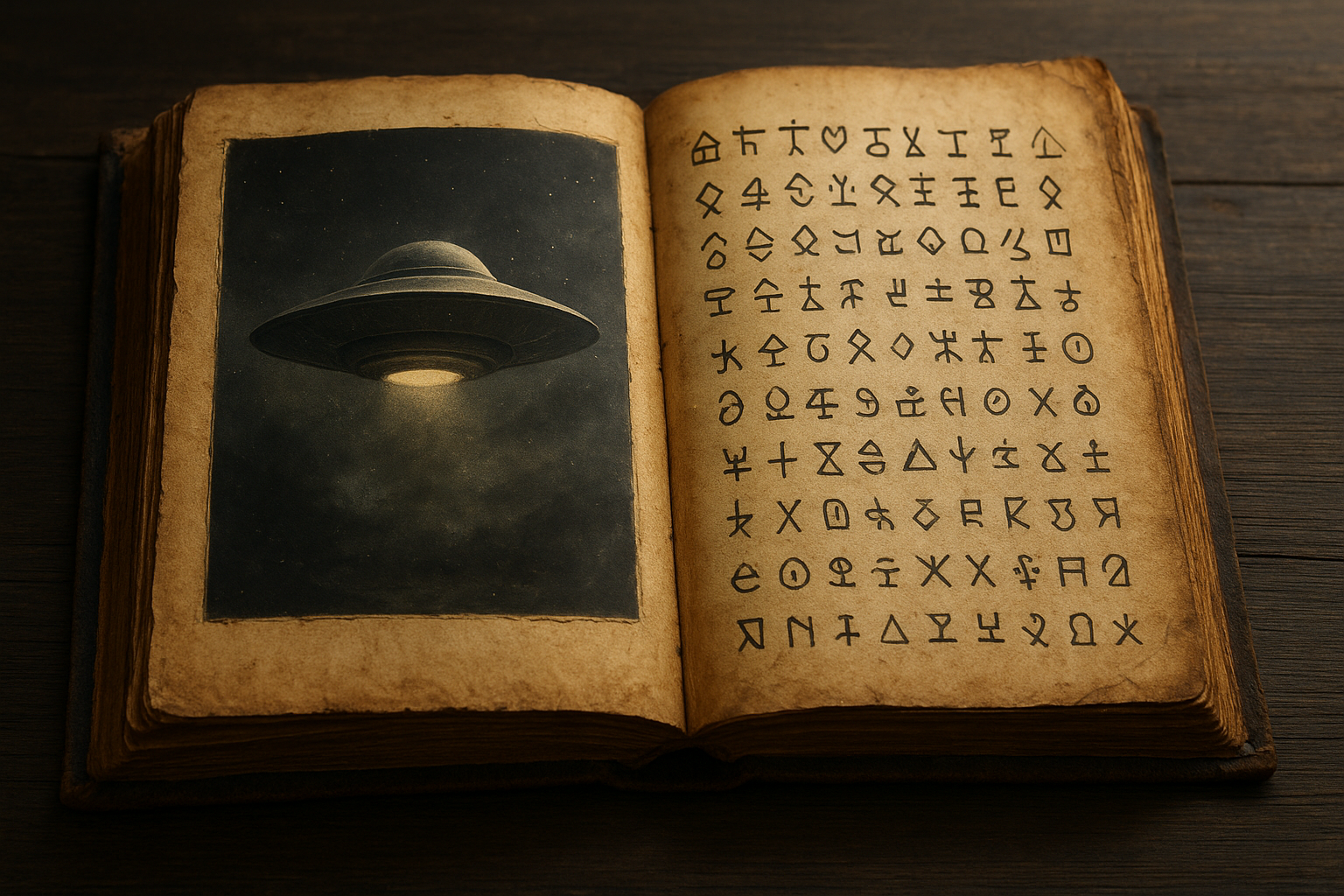
    • Hieroglyphic-like Symbols: Witnesses from various encounters have reported seeing symbols, either on the crafts themselves or projected onto surfaces. These symbols bear resemblance to ancient hieroglyphs but remain undeciphered.
    • Auditory Signals: Some incidents include reports of strange sounds or broadcasts heard in conjunction with UFO sightings. These signals exhibit characteristics akin to language rather than random noise.

    Each of these patterns represents a potential piece of the puzzle in the broader UFO Codex, suggesting intentional communication rather than mere chance.

    Collaborative Efforts and Technological Advances

    Breaking the UFO Codex is not a task confined to one academic discipline. It requires a symbiotic approach, combining insights from astrophysics, linguistics, cryptography, and even artificial intelligence. Institutions and private organizations are pooling resources to advance this groundbreaking research.

    Cutting-edge technologies, such as machine learning and quantum computing, are being employed to process large datasets of reported UFO encounters. By identifying patterns previously invisible to the human eye, researchers hope to distill potential messages:

    • Machine Learning Algorithms: Capable of analyzing patterns in visual and auditory data, these algorithms may identify correlations that suggest communication.
    • Quantum Computing: With its vast computational power, quantum computing can process complex cryptographic possibilities that might underlie any extraterrestrial code.

    The Implications of Decoding Extraterrestrial Messages

    The potential rewards of deciphering the UFO Codex are as immense as they are tantalizing. Successfully understanding an extraterrestrial message could lead to:

    • Scientific Breakthroughs: Communication with advanced extraterrestrial civilizations could accelerate technological and scientific advancements.
    • Cultural and Philosophical Paradigms: Direct contact with alien intelligence would profoundly influence our cultural narratives and philosophical frameworks.
    • Diplomatic Initiatives: Humanity might engage in unprecedented diplomacy, suggesting both incredible opportunities and significant ethical challenges.

    “Deciphering an extraterrestrial message could be the keystone for humanity’s greatest leap forward—contacting an intelligence far beyond our own,” remarks Professor Samir Patel, a noted astrophysicist, in an interview with Space.com.

    The Road Ahead

    As researchers delve deeper into the mysteries of the UFO Codex, the world watches with bated breath. The prospect of unraveling communications from out of this world is as daunting as it is exhilarating. What awaits humanity on the other side of this discovery might redefine our very understanding of life and the universe itself.

    For now, the scientific community continues its tireless work, driven by the possibility that we are not alone, and somewhere amidst the stars, our cosmic neighbors await a response. The deciphered secrets of the UFO Codex might one day become our shared legacy, bridging worlds across the unknown expanse of space.
  • UFO Myths – Extraterrestrial Stories in Culture

    UFO Myths – Extraterrestrial Stories in Culture

    UFO Myths: Extraterrestrial Stories in Culture

    For centuries, unidentified flying objects (UFOs) have captivated the human imagination. Whether seen as vessels piloted by otherworldly beings or as symbols of impending doom, UFOs feature prominently in many cultural narratives and myths. This fascination transcends generations and borders, reflecting humanity’s enduring quest to understand the unknown.

    A Brief History of UFO Sightings

    The intrigue surrounding UFOs is not a contemporary phenomenon. Historical accounts suggest that strange aerial phenomena have been recorded for millennia. The ancient Egyptians, for instance, have depictions that some interpret as potential UFO sightings. According to the Tulli Papyrus, an Egyptian document dating back to the 18th Dynasty, pharaohs supposedly witnessed fiery discs in the sky.

    In more modern times, one of the earliest and most famous UFO sightings occurred in 1947 when a private pilot named Kenneth Arnold reported seeing nine high-speed crescent-shaped objects flying near Mount Rainier in Washington State. His descriptions helped coin the term “flying saucers” and marked the beginning of the U.S.’s fascination with UFOs.

    The Rise of Ufology

    With increasing reports of UFO sightings in the mid-20th century, the study of these phenomena—otherwise known as ufology—gained prominence. Scientific exploration, along with rampant media coverage, fueled public interest. However, skepticism remains prevalent in the scientific community.

    “The search for extraterrestrial intelligence is a legitimate scientific pursuit,” says Dr. Jill Tarter, co-founder of the SETI Institute, “but interpreting UFO sightings as evidence of alien spacecraft is fraught with complications.”

    UFOs in Popular Culture

    Extraterrestrial stories have ingrained themselves into cultural narratives, driven by literature, film, and art. Iconic movies like Close Encounters of the Third Kind and E.T. the Extra-Terrestrial portray aliens as curious explorers, extending a hand in friendship rather than conquest. Contrastingly, films like Independence Day depict aliens through a more menacing lens, as invaders intent on Earth’s domination.

    Television and literature further broaden the dialogue around UFOs. Shows such as The X-Files explore government conspiracies and alien abductions, heightening intrigue around potential extraterrestrial life. The combination of suspense and speculative science fiction continues to fascinate audiences worldwide, making UFOs a staple in pop culture.

    The Social Impact of Extraterrestrial Myths

    UFO stories often reveal more about society’s fears and desires than about life beyond Earth. These narratives frequently reflect prevailing anxieties about technology, government overreach, and existential threats. As Dr. David Clarke, a folklore expert, notes, “UFO sightings often occur during periods of social stress or transformation. They provide a canvas on which fears can be painted through the language of myth.”

    • Technological Anxiety: As technological innovation accelerates, the gap between human understanding and technological impact can foster fear. UFOs personify these concerns, often depicted as highly advanced machines beyond human comprehension.
    • Government Distrust: The secrecy and mystery surrounding official responses to UFOs fuel conspiracy theories. Notable events like the Roswell UFO incident contribute to suspicions about government cover-ups.
    • Existential Reflection: UFOs prompt contemplation of humanity’s place in the cosmos. Are we alone, or are there other intelligences exploring the universe? Such contemplation lifts the mundane into a broader cosmic narrative.

    The Continuous Allure of the Unknown

    As discussions about UFOs persist in scientific and popular discourse, they signify humanity’s relentless curiosity and our drive to explore the unknown. While the overarching scientific consensus remains skeptical of alien visitations, the narrative of UFOs extends an invitation to imagine, speculate, and probe the mysteries of the universe.

    The stories embedded in UFO myths continue to serve a dual purpose: fueling scientific inquiry and enriching our cultural fabric with tales of the fantastic. As we advance into the future, one thing is certain: the sky will always captivate, inspire, and challenge our understanding of what lies beyond.

  • UFO Cartographies – Mapping Unknown Visitors

    UFO Cartographies – Mapping Unknown Visitors

    UFO Cartographies: Mapping Unknown Visitors

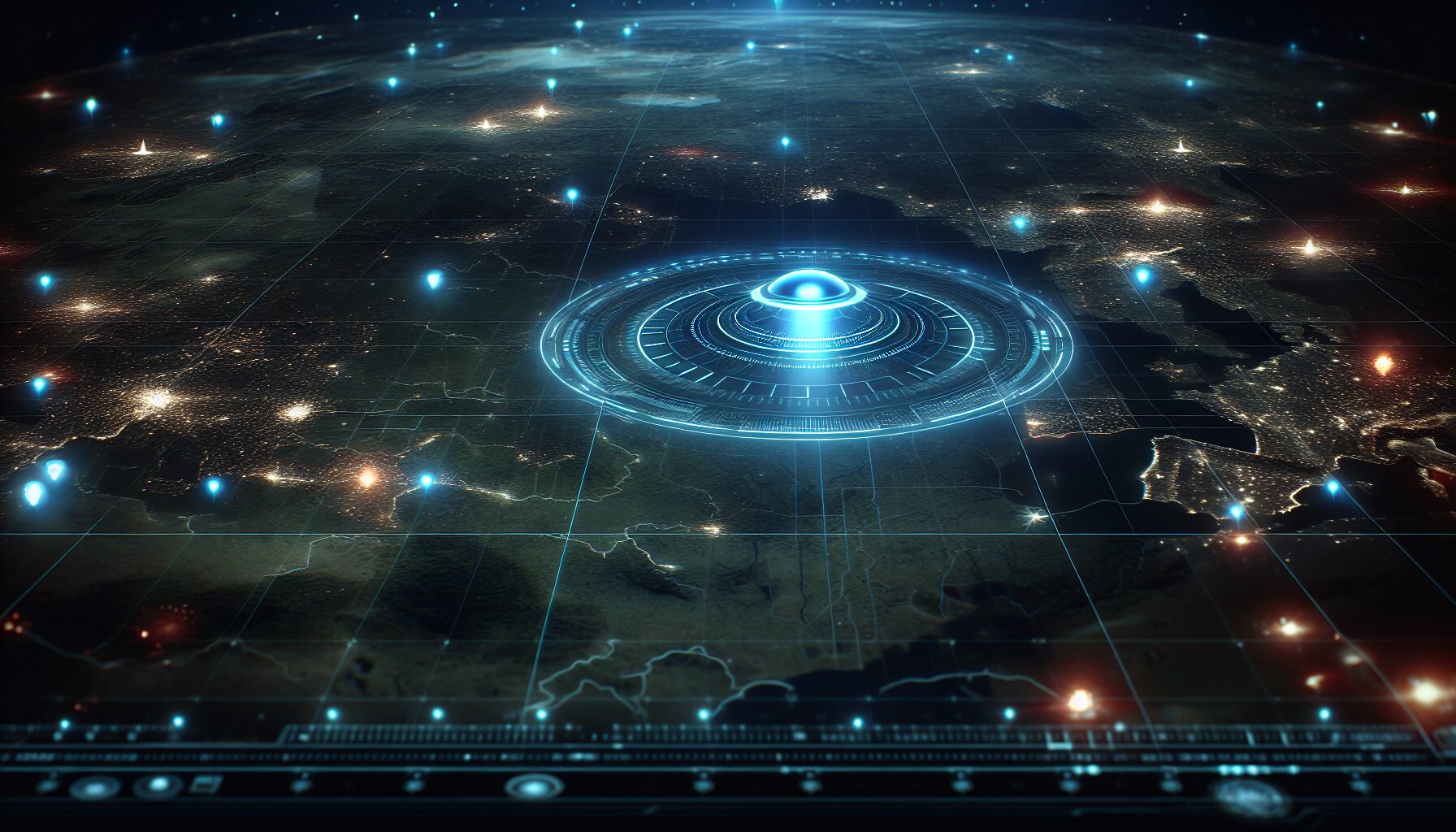
    Throughout history, humanity has been captivated by the mysterious and the unknown. One of the most enduring enigmas is the phenomenon of Unidentified Flying Objects (UFOs). While many theories attempt to unravel these mysteries, one fascinating approach is the art and science of mapping UFO sightings—a discipline we might call UFO Cartography. This article explores how mapping these unexplained encounters can reveal patterns, provoke questions, and offer insights into those unexplained visitors to our skies.

    Historical Background

    The modern era of UFO sightings began around the mid-20th century, a time already buzzing with developments in aviation and space exploration. It was June 24, 1947, when pilot Kenneth Arnold reported seeing nine high-speed objects near Mount Rainier, Washington. As news spread, sightings increased, spurring interest in charting these occurrences geographically.

    “I said they flew like a saucer would if you skipped it across the water,” Arnold described (History.com), coining the term “flying saucer.” The sighting frenzy led to increased efforts in recording and mapping such events, leading to the first attempts at UFO cartography.

    The Need for UFO Mapping

    Understanding the spread and concentration of UFO sightings is invaluable not just for enthusiasts and researchers but also for skeptics seeking clarity. Mapping these sightings can help in the following ways:

    • Identifying Patterns: Are there specific locations that are hotbeds for sightings?
    • Temporal Analysis: Are there times of the year or specific periods during the day when sightings peak?
    • Correlation with Technology: How do UFO sighting patterns correspond with technological advancements, flight paths, and satellite developments?

    Mapping these unknown visitors can thus offer compelling insights into their nature and possible origins.

    Famous Maps and Studies

    Several initiatives have contributed to the cartographic study of UFOs. One notable effort is the National UFO Reporting Center (NUFORC), a database that logs and maps sightings. Similarly, MUFON (Mutual UFO Network) boasts an extensive catalog of mapped sightings worldwide.

    “The maps highlight clusters and trends helping to focus our investigation efforts,” says Peter Davenport, director of NUFORC (NUFORC).

    These maps have revealed surprising trends, such as increased sightings around nuclear facilities and notable celestial events. Significant maps have also documented waves of sightings, from the mysterious “Phoenix Lights” incident in 1997 to more recent occurrences in North Carolina’s Brown Mountain region.

    Technological Advancements and Modern Mapping

    Today’s mapping techniques have evolved significantly since the rudimentary methods of the 1950s. With advancements in GIS (Geographic Information Systems) and high-resolution satellite imagery, researchers can now create precise maps overlaying multiple data sources:

    • Geospatial Analysis: Utilizing GIS software to analyze spatial data related to UFO sightings.
    • Public Access and Collaboration: Interactive maps on platforms like Google Earth allow for public contributions, enriching data sets.
    • Machine Learning Algorithms: AI analyses enable pattern recognition and anomaly detection across large datasets.

    These technologies have taken UFO cartography leaps and bounds forward, allowing for comprehensive studies that were not possible in earlier decades.

    The Sociocultural Impact of UFO Maps

    UFO maps do more than chart the skies—they resonate with the public’s imagination, inciting curiosity and sometimes fear. They have been utilized in films, literature, and art, becoming iconic symbols of the mysterious unknown. Cartographs serve as cultural artifacts, reflecting the zeitgeist of their times.

    Furthermore, these maps have political implications, often used to argue for increased transparency and the declassification of government documents regarding unexplained phenomena. As noted by former Senator Harry Reid, a proponent of greater disclosure, “The American people deserve to be informed” about UFO activities (New York Times).

    The Future of UFO Cartography

    As technology evolves, so will the methods and accuracy of mapping UFOs. Future directions for this field may include:

    • Integration with Astronomical Observations: Using advanced telescopes and space observation to corroborate sightings with astronomical data.
    • Global Network of Observers: Building a real-time, global web of citizen scientists contributing data.
    • Enhanced Data Visualization: Transforming raw data into dynamic and interactive visual formats for broader public engagement.

    By fusing traditional cartographic techniques with cutting-edge technology, the discipline of UFO mapping will continue to provide valuable insights into one of humanity’s greatest mysteries. The maps of the future might just hold the key to unlocking secrets of our universe yet to be understood.

    UFO cartography, at its core, is not just about mapping terrain or plotting a course; it is about capturing a story—a story woven into the fabric of human curiosity and the quest for understanding. As we continue to chart these unknown visitors, may our maps guide us to boundaries beyond where fact meets fiction.

  • UFOs as Death Omens – Portents of the Sky

    UFOs as Death Omens – Portents of the Sky

    The sight of unexplained phenomena in the sky has long captivated human imagination and curiosity. These sightings, often described as unidentified flying objects (UFOs), not only fascinate but also instill fear and wonder. Throughout history, many cultures have regarded these mysterious skyward occurrences as omens, particularly foretelling death or disaster. But where does this belief originate, and how has it evolved over time?

    Historical Context and Folklore

    Historically, strange lights and aerial phenomena have been recorded in various parts of the world, often associated with significant events. Ancient texts, like those from the Roman and Chinese civilizations, document instances where unusual objects in the sky preceded critical occurrences. According to Roman historian Titus Livius, during the consulship of Gnaeus Octavius and Gaius Scribonius, “a phantom navy was seen shining in the sky” before the defeat of the Roman armies.

    “In the Withered Hill was the dwelling-place of the spirits. They said that the spirits would come down in their ships and set fire to the world.” – Arthur George, Mythology and Folklore of the Ermte Region

    Modern Encounters and Interpretations

    In more recent times, UFO sightings have continued to be linked with ominous predictions. The 20th century saw a surge in these sightings, coinciding with times of conflict and social upheaval. The infamous “[Phoenix Lights](https://www.history.com/news/the-phoenix-lights-20-years-later)” event in 1997, which involved a series of widely sighted UFOs over Arizona, has been interpreted by some as a prelude to significant geopolitical and environmental changes.

    Modern interpretations often blend ancient beliefs with contemporary fears, associating UFO activity with apocalyptic themes prevalent in popular media. UFOs have become fixed symbols in our cultural imagination, often viewed as harbingers of doom in films and literature.

    Psychological and Cultural Influences

    The human mind has always sought to find patterns in chaos. As such, when unidentified phenomena appear, it is often tempting to link them with significant life events, such as death. Carl Jung suggested that UFOs could be projections of our collective unconscious—a representation of the psyche grappling with uncertainty in the world.

    “The disks do not behave in accordance with physical laws, but as though they were weightless, or even had their own remote control.” – Carl Jung, Flying Saucers: A Modern Myth of Things Seen in the Skies

    Conclusion

    Whether seen as signs of impending doom or as mere curiosities, UFOs have occupied a unique place in our cultural narrative. While some see them as objectively mysterious, others interpret them through the lens of fear and reverence, grounded in ancient beliefs. As we continue to explore the skies and seek understanding, the narratives surrounding UFOs as death omens will likely persist, echoing humanity’s age-old intrigue with the unknown.