Tag: stars

  • Life After Stars – Imagining Consciousness in a Cold Universe

    Life After Stars – Imagining Consciousness in a Cold Universe

    Life After Stars: Imagining Consciousness in a Cold Universe

    For millennia, the night sky has been a tapestry of glittering stars, each one a sun burning brightly in the immensity of the cosmos. Yet stars are not eternal; they are born, they age, and eventually, they extinguish. What, then, becomes of consciousness when the universe reaches its endgame—when the stars have all died, and the cosmos has grown cold and dark?

    The Far Future: A Cold and Dark Universe

    Astrophysicists predict a variety of fates for the universe, depending on how the laws of physics shape its destiny. Among these possibilities is the scenario known as the “heat death” of the universe. The term is somewhat misleading, as it refers not to a cataclysmic burst of energy, but rather to the gradual loss of usable energy throughout the cosmos. William Thomson, also known as Lord Kelvin, was one of the first to suggest this inevitable thermodynamic end in the 19th century:

    “The result of this doctrine is that all physical change may be represented by motion. The dissipation of mechanical energy as it transforms into thermal energy will eventually lead to the ‘heat death.’”

    At this point, stars will cease to shine, leaving behind black dwarfs—stellar remnants so cold that they no longer emit light. In such an environment, what becomes of life and consciousness? Could awareness and cognition persist in a universe devoid of stars?

    Redefining Life and Consciousness

    The stoic nature of a starless universe challenges our fundamental assumptions about life and consciousness. Traditionally, life as we know it relies on the energy provided by stars. With the absence of stellar energy, any surviving consciousness must rethink its requirements.

    Post-Biological Evolution

    • Machines and Intelligence: As humanity advances technologically, we create increasingly sophisticated machines. Could post-biological entities, like artificial intelligences, find means to sustain themselves using minimal energy? Concepts such as these have been explored in works like Ray Kurzweil’s The Singularity is Near, where technological evolution outpaces biological evolution.
    • Mathematic and Quantum Computation: Perhaps consciousness could exist as a form of computation, operating on reduced energy systems such as quantum computers. As physicist Seth Lloyd suggests, “The universe is a quantum computer,” implying that computation could potentially continue even as the universe cools. (Source).

    Energy Sources in a Starless Universe

    Even in a universe devoid of stars, some energy sources might remain. Here are potential avenues for sustaining ‘life’ or consciousness in such an environment:

    • Dark Matter and Energy Harnessing: Though mysterious, dark matter and energy comprise most of the universe’s mass and energy. Advancements in understanding how to harness these resources might provide a viable energy source to sustain consciousness.
    • Black Hole Radiation: Particles could theoretically be extracted from black holes through Hawking radiation, which might allow a near-zero-energy entity to persist. Stephen Hawking proposed this concept, suggesting that even black holes aren’t entirely permanent, as they lose mass via radiation (Source).
    • Tidal Forces: In a universe where celestial bodies interact, the gravitational effect of these interactions – or tidal forces – might be utilized as a consistent, though weak, energy source.

    Cultural and Philosophical Implications

    As we imagine life in a starless universe, we must grapple with the psychological and cultural dimensions of consciousness in such a scenario.

    Consciousness and Memory

    Would consciousness endure long after the stars have died? Alan Lightman, in his book The Accidental Universe, writes:

    “We are ephemeral creatures living in an ephemeral world. At some point, we must confront the disappearance of all things cherished.”

    This existential reflection forces us to consider how consciousness might be maintained when disconnected from the cultural touchstones of the past.

    Purpose and Meaning

    If consciousness persists post-starlight, its essence may need reevaluation. A universe without stars is one vast in its silence, demanding a redefinition of purpose absent the familiar cycles and symbols provided by stars.

    Imagining New Forms of Existence

    What we face in a universe devoid of stars is nothing short of rediscovery. From darkness come possibilities—novel forms of cognitive existence that adapt to extreme environments:

    • Virtual Realities: If consciousness is computational, then virtual worlds could be crafted to fill the void left by the physical universe, offering a refuge and a platform for continued interaction and evolution.
    • Collective Consciousness: To conserve resources, consciousness may operate communally, shared across vast distances through advanced fields or networks, overcoming individual isolation and preserving knowledge collectively.

    Conclusion

    While the concept of a universe devoid of stars is daunting, it challenges us to confront fundamental questions about the nature of life and consciousness. By imagining creative solutions and alternative existences, this bleak scenario prompts a reflection on resilience and ingenuity.

    Indeed, the true story of life after stars is unwritten. With current scientific understanding, we can only forecast hazily—but within mystery lies potential, an opportunity to reimagine consciousness thriving amid the cold and the dark.

  • Light Years as Epitaphs – The Last Words of Stars

    Light Years as Epitaphs – The Last Words of Stars

    Light Years as Epitaphs: The Last Words of Stars

    In the cosmic theatre, stars are the luminaries in an enormous universe, illuminating the void with their radiant brilliance. Just like all performers, they have their final act. The demise of a star is an awe-inspiring spectacle, leaving behind remnants that continue to speak their stories across light years. These stellar epitaphs are not merely tales of endings but are also the beggings of new cosmic journeys.

    The Lifecycle of a Star

    Stars form from massive clouds of gas and dust, where gravity pulls these materials together into a dense ball. Adventure begins when the heat and pressure within these nascent stars ignite nuclear fusion. This balance between gravitational collapse and outward pressure creates a harmony that can last billions of years, during which stars shine brightly in the cosmic panorama.

    “We are stardust, we are golden, and we’ve got to get ourselves back to the garden.” – Joni Mitchell

    The Spectacular End: Supernovae and Beyond

    As a star exhausts its nuclear fuel, the scales of balance tip inevitably toward collapse. For massive stars, this results in a supernova, a cataclysmic explosion that outshines entire galaxies for brief periods. According to NASA, “The supernova explosion blasts most of the star’s material away in a tremendous burst of energy that can be observed for weeks or even months.”

    Following a supernova, the core that remains can become a neutron star or, if sufficiently massive, a black hole. These remnants remain as celestial tombstones, silently dictating the narratives of their past lives. The light and material they eject fertilize the cosmos to create the next generation of stars.

    White Dwarfs: Twilight of the Stars

    Lesser stars like our Sun end their lives more quietly. They shed outer layers to create a planetary nebula, encasing the core that becomes a white dwarf. These remnants, according to the European Southern Observatory, are “extremely dense, with temperatures exceeding 100,000 degrees.”

    White dwarfs slowly cool and fade over billions of years, eventually becoming black dwarfs—stars that have ceased to emit light. However, since the universe is not old enough for any to have formed yet, this stage remains hypothetical—a silent epitaph yet to be written.

    The Cosmic Legacy of Stars

    • Black Holes: These enigmatic phenomena result when stars of more than 20 solar masses collapse, leaving behind a point of infinite density known as a singularity.
    • Neutron Stars: The remnants of exploding massive stars, with densities so extreme that a sugar-cube sized amount would weigh about a billion tons on Earth.
    • Planetary Nebulae: These colorful clouds of gas were once the outer layers of a red giant star. They brightly paint the universe with elements essential for planet formation and life.

    Astronomical Artifacts as Cultural Symbols

    The echoes of these celestial events permeate cultural narratives and scientific exploration. The Crab Nebula, the remnant of a supernova witnessed by Chinese astronomers in 1054, continues to fascinate with its vibrant threads of gas and pulsing neutron star at its heart.

    In striking contrast, the eventual collapse of our Sun into a white dwarf will silently illuminate the far reaches of our galaxy, leaving what astrophysicists like Neil deGrasse Tyson describe as “a cosmic monument, a lighthouse in the dark sea of cosmic oblivion.”

    The Eternal Reverberation of Stars

    Just as poets and philosophers have sought immortality through words, stars leave enduring legacies that echo through time and space. The last words of stars, as cosmic epitaphs etched in light years, are not final farewells but interstellar whispers that narrate the continuing evolution of the universe. They teach us about the past, illuminate the present, and point toward the enigmatic destinies that await in the unfathomable future.

  • Entropy in the Sky – Why Stars Fade Like Human Memory

    Entropy in the Sky – Why Stars Fade Like Human Memory

    The vast expanse of the universe is a tapestry woven with countless stars, each shining with the promise of eternal light. However, much like human memory, these astral beacons are subject to the inexorable law of entropy, eventually fading over eons. In this article, we delve into the parallels between the lifespan of stars and the fading memories in human minds, exploring the scientific and philosophical dimensions of this celestial and cognitive phenomenon.

    Understanding Entropy: The Common Thread

    At its core, entropy is a measure of disorder or randomness within a system. In thermodynamics, it is the principle that systems naturally evolve from a state of order to disorder. The second law of thermodynamics posits that the total entropy of an isolated system can never decrease over time.

    “The tendency of isolated systems to increase in entropy explains why, for example, a cup of hot coffee placed in a cold room eventually cools down.” — Scientific American

    This principle of entropy applies not only to physical systems but also metaphorically to human memory. Over time, memories can fade, distort, and lose their order, akin to the gradual fading of stars.

    The Life Cycle of Stars

    Stars are born from massive clouds of gas and dust, known as nebulae. Over millions of years, gravitational forces pull the material together, igniting nuclear fusion in their cores. This process, which fuses hydrogen into helium, releases vast amounts of energy, causing stars to shine brightly.

    Eventually, stars exhaust their nuclear fuel. Depending on their initial mass, stars may undergo different end-of-life transformations:

    • Low-Mass Stars: These stars swell into red giants and eventually shed their outer layers to form planetary nebulae, leaving behind a white dwarf that cools over billions of years.
    • High-Mass Stars: Such stars may explode as supernovae, leaving behind neutron stars or black holes.

    Throughout these stages, the entropy of the stellar system increases until thermal equilibrium is reached, leading to the inevitable dimming of the star’s light.

    The Fading of Human Memory

    Human memory, much like the stars, begins with a creation phase—when an experience is first encoded by the brain. Initially vivid and detailed, memories can gradually become fragmented as they are stored and transformed within the neural landscape.

    Several factors influence the fade of memories:

    • Aging: As individuals age, the brain undergoes changes that can affect memory retention and retrieval.
    • Decay Theory: This theory suggests that memories fade simply through the passage of time if not actively recalled.
    • Interference: New information can interfere with existing memories, causing them to become distorted or forgotten.

    “Memory is the diary that we all carry about with us.” — Oscar Wilde, The Importance of Being Earnest

    Parallels Between Stellar and Memory Fading

    The connection between stars and memory lies in their shared journey towards entropy. While one occupies the vastness of the cosmos and the other the confines of the human mind, both are subject to forces that dictate their fading.

    • Energy Dissipation: Just as stars gradually lose the energy produced by nuclear fusion, memories dissipate over time if not reinforced.
    • Inevitability of Change: Both stars and memories undergo transformation through external and internal processes, which lead to their eventual dimming.
    • Continuity and Legacy: Although stars fade, they leave behind elements that seed new stars and planets. Similarly, even faded memories contribute to the broader tapestry of one’s identity and experience.

    The Significance of Entropy

    Through the lens of entropy, we gain an understanding of the transient nature of both stars and human memory. While some might view this inevitability as disheartening, it also underscores the importance of appreciation and presence. The fleeting moments of brilliance, whether a star’s light or a cherished childhood memory, remind us of the beauty inherent in impermanence.

    “For the memory of a star, much like the memory of those who have left us behind, is to be cherished, as it is a perpetual reminder of existence.” — Anonymous

    Conclusion

    The saga of entropy continues to unfold across the universe and within us. By contemplating stars and memories, we gain insights not only into the cosmos and consciousness but also into how we choose to live and remember. Let every star and recollection, even as they fade, serve as a beacon of our shared journey through the tapestry of time and space.

    In appreciating both stars and our memories, we are called to marvel at the mystery of existence, echoing the sentiment expressed by Carl Sagan who said, “We are made of star stuff. We are a way for the cosmos to know itself.”

  • Stars as Timekeepers – Burning Until Their Own Deaths

    Stars as Timekeepers – Burning Until Their Own Deaths

    Stars as Timekeepers – Burning Until Their Own Deaths

    Stars as Timekeepers – Burning Until Their Own Deaths

    Introduction

    The cosmos has always been a vast, enigmatic expanse, filled with mysteries that boggle the human mind. Among these enigmas lies the life cycle of stars—those luminous celestial bodies that have served as beacons in the night sky, guiding travelers and acting as cosmic timekeepers.

    The Role of Stars in Celestial Timekeeping

    Stars have been central to how we measure time and comprehend the universe. Since ancient civilizations, stars have governed the passage of time, marking seasons and aiding in navigation. According to NASA, “By mapping the motions and distances of stars, astronomers measure the expansion of the universe and unlock the secrets of its origin.”

    The Life Cycle of a Star

    The life cycle of a star is a testament to the dynamic, ever-changing universe. Every star begins its journey in a nebula, a vast cloud of gas and dust. Here’s an overview of the stages involved:

    • Nebula: Stars are born within nebulae. The gravitational forces within these nebulae cause the gas and dust to collapse, forming protostars.
    • Main Sequence: A star spends most of its life in this phase. Here, it fuses hydrogen into helium in its core—a process that can take billions of years.
    • Red Giant/Supergiant: As the hydrogen depletes, the core contracts, and the outer layers expand. The star becomes a red giant or supergiant, depending on its initial mass.
    • Death: A star’s death can result in various outcomes, such as a white dwarf, neutron star, or black hole, contingent upon its mass.

    The Impact of Stellar Deaths

    Each dying star contributes significantly to the cosmic tapestry. During the final phases of their lives, stars return materials to space, which later become part of new stars, planets, and even life itself. As Carl Sagan famously noted, “We are made of star stuff.” This cycle of creation and destruction is integral to the cosmic balance.

    Stars and Human Perspective on Time

    The appreciation of stars as timekeepers transcends mere scientific observation. They inspire introspection and art, inquiring about the ephemeral nature of human existence in contrast to the longevity of the stars. As astrophysicist Neil deGrasse Tyson articulates, “We are in the universe and the universe is in us.”

    “Astronomy compels the soul to look upward, and leads us from this world to another.” – Plato

    Modern Measurements and Discoveries

    The advancements in technology have augmented our understanding of stellar dynamics. Space observatories, such as the Hubble Space Telescope, have provided unprecedented insights into stellar births, evolutions, and deaths.

    Moreover, projects like the Gaia mission have been crucial in charting the positions, distances, and motions of stars, further honing our understanding of the galaxy’s structure and evolution. This, in turn, helps in measuring cosmic distances and ages with unparalleled precision.

    The Future of Star Studies

    The study of stars is far from over. Upcoming missions, including the James Webb Space Telescope, aim to delve deeper into the history and evolution of cosmic bodies. These efforts will hopefully unravel more secrets about the universe’s origins and the inevitable fates of these celestial timekeepers.

  • Cosmic Decay – From Nuclear Fusion to Eternal Stillness

    Cosmic Decay – From Nuclear Fusion to Eternal Stillness

    Cosmic Decay: From Nuclear Fusion to Eternal Stillness

    The universe, a seemingly eternal expanse of stars, planets, and galaxies, is constantly in flux, driven by the inexorable processes of cosmic decay. Central to this majestic theatre of destruction and creation is the process of nuclear fusion, a powerful force that fuels the stars yet is destined to fade, leading the universe towards a state of eternal stillness.

    The Birth of Stars and the Role of Nuclear Fusion

    Stars are born from the gravitational collapse of gas and dust in the interstellar medium. As particles draw closer, pressure and temperature rise, eventually igniting nuclear fusion at the star’s core. This process powers the star, converting hydrogen into helium, and releasing colossal amounts of energy in the form of light and heat.

    Nuclear fusion, as noted by Dr. Steven E. Plate, an astrophysicist at Harvard-Smithsonian Center for Astrophysics, is the process that “not only provides the energy necessary for stars to shine but also synthesizes new elements, building the chemical complexity of the universe.”

    The Life Cycle of a Star

    Throughout their lives, stars balance the outward pressure of thermal radiation from fusion against the inward pull of gravity. However, this balance is not eternal. As stars exhaust their nuclear fuel, their fates diverge based on mass. Small stars fade gently into white dwarfs, while massive ones can explode violently as supernovae, creating neutron stars or black holes.

    During their endings, stars enrich the cosmos with heavier elements, a process poetically called stellar alchemy. As Carl Sagan famously said, “We are made of starstuff.” This cycle not only creates the building blocks for planets and, eventually, life but also dictates the ultimate fate of the cosmos.

    Heat Death: The Universe’s Quiet Demise

    Despite the seeming immortality of the stars, they too will succumb to the cosmic entropy that dictates the universe’s expansion. As stated by Sir Roger Penrose, a prominent mathematician and physicist, “In the far future, the universe will have expanded to the point where stars can no longer form, as the concentrations of gas and dust necessary will be too diffuse.” This concept aligns with the theory of heat death, a potential end scenario for the universe.

    In a heat-dead universe, all energy will be evenly distributed, leaving no room for the temperature differentials necessary for energy transfers—a state of uniform thermodynamic equilibrium. All processes, including life and stellar activity, would cease, entailing an eternal stillness.

    The Implications for Time and Space

    Contemplating the cessation of cosmic events impacts our understanding of time itself. If the universe achieves complete disorder, will time, defined by change and events, hold any meaning?

    “Time is what keeps everything from happening at once,” mused the physicist John Archibald Wheeler, yet in a universe of stillness, this essential distinction blurs.

    As astrophysicist Brian Cox explains, “The universe appears from our vantage point to be a place that is moving from order to disorder… In the fullness of time, it will evolve to a place that is pure disorder.”

    Beyond Eternity: The Potential for Renewal

    While the heat death scenario paints a bleak picture, some theories suggest possible outcomes where the cosmic story is not one of finite decay. Theorists speculate about potential cycles of cosmic collapse and rebirth, akin to a “Big Bounce” following a Big Crunch.

    Moreover, quantum mechanics introduces uncertainties, including the emergence of new structures from apparent vacuums as posited by Heisenberg’s principle. These concepts infer that even at the universe’s end, there could be opportunities for rebirth amidst the decay.

    Ultimately, the story of cosmic decay, from nuclear fusion to a potential stillness, encapsulates both the grandiosity and transience of existence. Each star’s life and death echo the cosmic dance of creation and dissolution, a fleeting act within the vast play of the universe.

    While our understanding continues to evolve, engaging with these profound cosmic narratives reminds us of our own temporality and connection to the cosmos. As the universe unfolds in its inevitable journey towards entropy or rebirth, humanity’s quest to understand these mysteries endures, perpetually lighting the dark with curiosity and wonder.

  • Nebulas of Dust and Ash – Cosmic Remains of Dead Stars

    Nebulas of Dust and Ash – Cosmic Remains of Dead Stars

    Amidst the vast cosmic tapestry that is our universe, nebulas stand as striking, monumental clouds composed of dust, hydrogen, helium, and other ionized gases. These celestial structures are not just breathtakingly beautiful but are also the remnants of once-mighty stars, marking the ongoing cycle of stellar birth, death, and regeneration.

    The Stellar Cycle

    When stars deplete their nuclear fuel, they undergo dramatic transformations. For stars much larger than our Sun, their death is often characterized by a supernova explosion, which is powerful enough to outshine entire galaxies for a short while. The remnants of such cosmos-shaking events are dispersed as the intricate, colorful formations we call nebulas.

    These nebulae are referred to as “supernova remnants” and are instrumental in enriching the interstellar medium with heavier elements. Carl Sagan famously said, “We are made of star-stuff,” and indeed, it is through these particular stellar deaths that heavier elements are spread throughout the galaxy, eventually coalescing into new stars, planets, and perhaps life itself.

    Types of Nebulae

    • Emission Nebulae: These nebulae emit their own light and are typically found surrounding new, hot stars. An example is the famous Orion Nebula, illuminating the night sky some 1,344 light-years away, as a nursery shaping new generations of stars.
    • Reflection Nebulae: Unlike emission nebulae, these reflect the light of nearby stars. They do not have enough gas to emit light themselves. The Pleiades reflection nebulae are some of the closest and most prominent examples.
    • Planetary Nebulae: Don’t let the name fool you; planetary nebulae have nothing to do with planets. Instead, they are formed when a dying star expels its outer layers, as seen in the striking Ring Nebula.

    The Beauty of Cosmic Dust

    Nebulas are often called “stellar nurseries” due to their role in star formation. As regions rich in gas and dust, they serve as the raw materials from which new stars are born. Elizabeth Tasker, in her article for Scientific American, explains, “The elements in the nebula would go on to form the next generation of stars and planets and the building blocks of everything seen in the universe today.”

    We are like butterflies who flutter for a day and think it is forever,” mused Carl Sagan. Nebulas remind us of the universe’s constant state of flux and the perpetual cycle of life and death among the stars.

    As we gaze upon these cosmic works of art, we are reminded of the transient nature of existence and the incredible grandeur woven throughout the very fabric of space and time.

  • Dying Suns – Red Giants and Their Final Collapse

    Dying Suns – Red Giants and Their Final Collapse

    Dying Suns – Red Giants and Their Final Collapse

    The life cycle of a star is a fascinating journey through the cosmos, marked by spectacular transformations and, ultimately, a dramatic end. One of the most mesmerizing phases in a star’s life is its transition into a red giant, a stellar phase heralding the end of its life. This phase unveils both the beauty and eventual demise of these celestial giants.

    The Lifecycle of a Star

    Stars form from clouds of dust and gas, known as nebulas. Over millions of years, gravity draws these particles together, causing them to coalesce into a core that eventually ignites nuclear fusion, giving birth to a new star. This process is beautifully described by NASA as “the star begins to shine, and the radiation from the new star removes the surrounding nebula.”

    Transformation Into Red Giants

    As stars like our Sun exhaust their hydrogen fuel over billions of years, they begin to burn helium and other heavier elements. This causes the star to expand significantly, often enveloping nearby planets in its expanding mantle. The outward appearance transforms into what astronomers refer to as a red giant, characterized by its massive size and cooler surface temperature, giving it a distinctive reddish hue.

    “This expansion is so vast that if our Sun were to become a red giant, its outer layers would likely engulf Mercury, Venus, and possibly even Earth.” — NASA

    Final Collapse

    The transition from red giant to the final stages of a star’s life is a dramatic collapse. Eventually, the fusion processes within the core change drastically. For stars with lower masses, like our Sun, the outer layers are ejected, creating a spectacular planetary nebula, leaving behind a remnant core known as a white dwarf. According to the European Space Agency (ESA), “these cores eventually cool and fade over billions of years.”

    In the case of more massive stars, the process can lead to a supernova explosion. What’s left behind could be a neutron star or even a black hole, depending on the original mass of the star. These outcomes offer further insight into the complex processes governing our universe.

    The Legacy of Red Giants

    The destruction and creation associated with red giants are integral to the cosmic recycling process. They scatter elements across the universe which serve as building blocks for new stars, planets, and potentially life itself. As science educator Carl Sagan famously noted, “We are all made of star stuff,” highlighting the profound connection between these dying suns and our own existence.

    For more information on stellar evolution, visit the NASA website or explore the vast resources available at the European Space Agency.

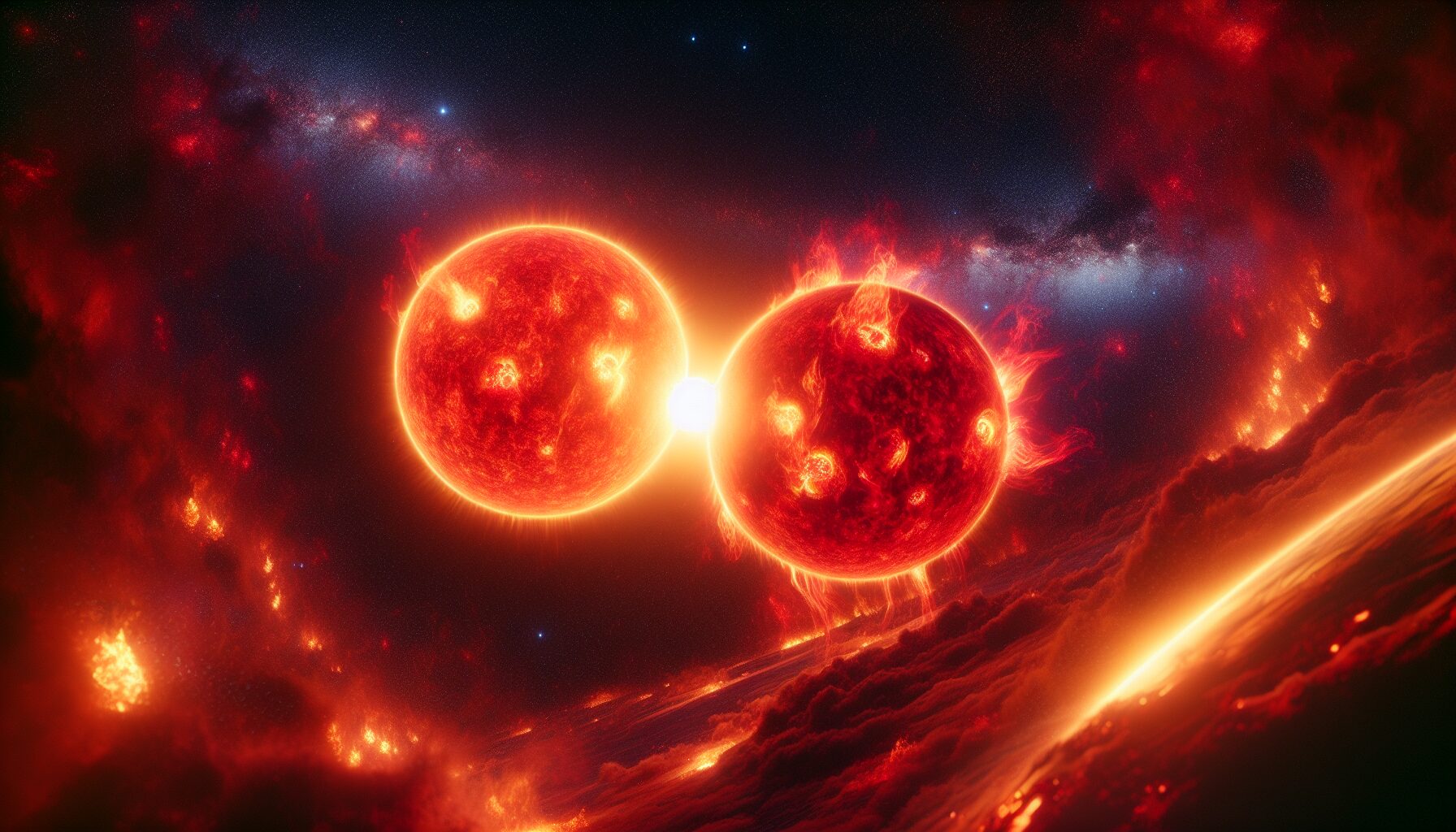
  • Galactic Cannibalism – When Stars Are Consumed by Other Stars

    Galactic Cannibalism – When Stars Are Consumed by Other Stars

    Galactic Cannibalism: When Stars Are Consumed by Other Stars

    In the vast universe, the interactions between celestial bodies can sometimes result in phenomenal cosmic events. Among these intriguing phenomena, galactic cannibalism stands out as an evocative term capturing the violent and transformative processes by which galaxies consume one another. But, how often does it happen that entire stars are swallowed in this celestial banquet?

    Understanding Galactic Cannibalism

    At its core, galactic cannibalism refers to the process by which a larger galaxy absorbs a smaller one. This process often unfolds over billions of years and can significantly alter the structure and composition of the absorbing galaxy. But why does this happen?

    • Galactic cannibalism is primarily driven by gravitational forces. As galaxies move through space, they are bound by gravity, which can pull them together, especially when they are in close proximity.
    • When galaxies collide or come close enough, the gravitational pull becomes strong enough to draw stars, gas, and dust from the smaller galaxy into the larger one.
    • This process leads to stellar mergers, formation of new stars, and the enrichment of the galactic halo with new materials.

    Do Stars Really Get Consumed?

    The term “consumed” might be a bit misleading when speaking of stars in the context of galactic cannibalism. Stars themselves are not literally devoured like food; rather, they are incorporated into the structure of the larger galaxy during the merging process. Here’s how:

    • As the galaxies merge, stars from the smaller galaxy are stripped away and become part of the larger galaxy’s halo, bulge, or disk through dynamic interactions.
    • Some stars may end up in newly formed tidal streams—long, thin regions of stars located on the periphery of galaxies—indicating the path of a disrupted galaxy.
    • In more extreme cases, stellar collisions can occur, though they are typically rare even in densely packed galaxies.

    The Evidence: Galactic Archaeology

    Galactic cannibalism is not just a theoretical concept—it is an observable phenomenon. Astronomers have gathered substantial evidence through observations and simulations that illustrate how galaxies grow and evolve.

    “The Milky Way is currently cannibalizing several smaller galaxies, including the Sagittarius Dwarf Spheroidal Galaxy.” – Linda Smith, a researcher at the Space Telescope Science Institute.

    Some of the most compelling evidence includes:

    • Stellar streams: These are trails of stars stripped from cannibalized galaxies. Observations of streams around our own Milky Way reveal ongoing mergers.
    • Computer simulations: Simulations that recreate the gravitational interactions between galaxies support the existence of tidal streams and other observable features.
    • Galactic bulges and halos: Many galaxies have thick halos and bulges containing older stars, indicative of past mergers and a history of cannibalism.

    Impact of Galactic Cannibalism

    While destructive in nature, galactic cannibalism is a pivotal force shaping the universe. The impacts are manifold:

    • Star formation: The influx of gas during mergers can trigger starburst events, leading to the birth of new stars.
    • Evolution: Galactic cannibalism plays a significant role in galaxy evolution, helping smaller galaxies coalesce into massive elliptical galaxies.
    • Black holes: The collision of galaxies can lead to the mergers of supermassive black holes, contributing to their growth and potentially impacting galaxy dynamics.

    Astronomer Kathryn Johnston states in Scientific American, “The Milky Way has the habit of tearing apart and ingesting its celestial companions, leaving recognizable traces far from its own center.”

    The Future of Galactic Cannibalism

    The universe continues to evolve, and with it, the dance of galaxies. Our own Milky Way is on course to merge with the Andromeda Galaxy in approximately 4.5 billion years. What can we expect?

    • The resulting merger is expected to create an entirely new galaxy, often referred to as Milkomeda or Milkdromeda.
    • This merger will redefine the local galactic group, creating vast tidal tails and likely sparking new waves of star formation.
    • While the event will be spectacular, the vast distances between stars mean individual stellar collisions are unlikely, ensuring the Sun and solar system face little direct threat.

    Conclusion

    Galactic cannibalism, far from being a metaphor for cosmic destruction, represents a fundamental process of creation and transformation. Through the complex dance of gravitational attraction, galaxies evolve, merge, and transform into new cosmic structures.

    As we uncover more about these processes, we gain crucial insights into the dynamic nature of the universe and our own galactic origins—reminding us of the ever-changing and interconnected cosmos we inhabit.

  • The Eternal Night of Space – Decay Beyond the Sun’s Reach

    The Eternal Night of Space – Decay Beyond the Sun’s Reach

    In the vast, inky blackness that lies beyond our solar system’s gentle warmth exists a realm of perpetual darkness. This realm, where the sun’s nurturing rays cannot penetrate, offers a haunting yet fascinating glimpse into the inevitable fate of stars and planets alike. Here, objects die a slow death, succumbing to the unrelenting grasp of entropy.

    The Concept of Stellar Decay

    Stellar decay is an inexorable process that defines the lifecycle of celestial bodies. When a star exhausts its nuclear fuel, it enters a terminal phase, either collapsing into a white dwarf, neutron star, or, for more massive stars, a black hole. Each of these remnants contributes to the eerie tapestry of decay beyond the sun’s reach, fascinating astronomers and fueling numerous theories.

    “The long-term future of the universe is bleak, filled with fading and dying stars, burnt-out remnants drifting through the cosmos,” said Dr. Brian Cox, physicist and cosmologist.

    Space.com

    Planetary Decay in the Dark

    Not just stars, but planets too face a ghostly demise. Far from the warming embrace of a star, planets see their atmospheres freeze and oceans turn to ice. Without sunlight, photosynthesis ceases, leading to the collapse of ecosystems and the extinction of any life that might have thrived there.

    • Ice Deserts: Without stellar warmth, even the most hospitable planets transform into ice-covered wastelands.
    • Atmospheric Escape: Over time, a planet’s atmosphere can be stripped away by cosmic winds, leaving barren rocky or icy landscapes.
    • Orbital Decay: If a planet orbits too close to a stellar corpse, it may eventually spiral inward and be consumed or flung into the void.

    The Interplay of Time and Space

    This eternal night in space underpins the enthralling cycle of destruction and rebirth that governs the cosmos. As matter decays, it often seeds the formation of new stars and planets, suggesting a poignant, cyclical dance of life and death on a cosmic scale.

    Yet, as we ponder this eternal decay, we are reminded of the transient nature of our own existence. Here on Earth, under the gentle hearth of our sun, life remains, for now, a vibrant salute to the ephemeral and the enduring. Exploring the eternal night of space enriches our understanding of the Universe’s relentless march towards entropy, echoing across time.

  • Supernovae as Cosmic Graves – Stars Ending in Fire and Light

    Supernovae as Cosmic Graves – Stars Ending in Fire and Light

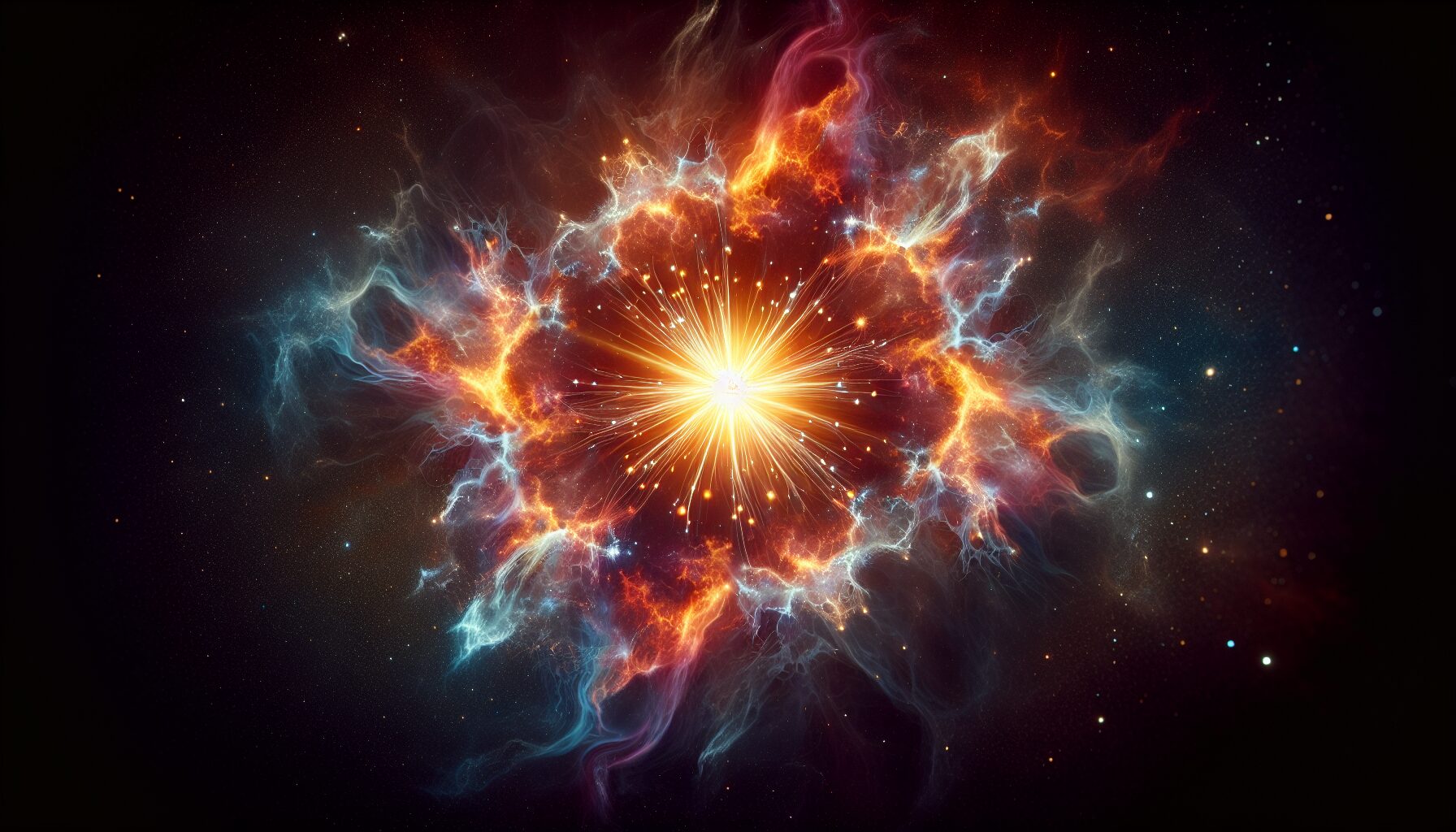
    In the vast tapestry of the universe, where stars are the showpieces illuminating the cosmic stage, supernovae serve as the dramatic finales. These celestial events, characterized by dazzling brilliance and immense energy release, signify the violent deaths of stars. Although they mark the end of stellar life, supernovae play an essential role in enriching the cosmos and influencing the cosmic order.

    The Stellar Life Cycle

    Stars, the building blocks of galaxies, have life cycles that span millions to billions of years. Born from clouds of gas and dust, stars spend most of their lives fusing hydrogen into helium in a stable phase known as the main sequence. As they exhaust their nuclear fuel, the fate of stars diverges. For massive stars, it is a fate intertwined with the phenomenon of supernovae.

    “Supernovae are one of the key processes that shape the structure of galaxies and distribute elements throughout the universe,” says Dr. Alex Filippenko, an astronomer at the University of California, Berkeley.

    Types of Supernovae

    • Type I Supernovae: These occur in binary systems where a white dwarf exceeds its critical mass, leading to a catastrophic collapse and explosion.
    • Type II Supernovae: Result from the gravitational collapse of massive stars, at least eight times the mass of the Sun, when they run out of nuclear fuel.

    The differences in these types highlight the varied conditions under which stars end their life, often determined by their initial mass and environment.

    The Lightshow of Cosmic Death

    The explosion of a supernova is an astronomical spectacle visible across vast distances. The Hubble Space Telescope has captured stunning images of supernova remnants, colorful tapestries marking the sites of stellar demise. The light from these explosions can outshine entire galaxies for weeks or even months.

    “The light curves and spectra of supernovae allow us to understand the composition and dynamics of the explosions,” notes Dr. Robert Kirshner of the Harvard-Smithsonian Center for Astrophysics.

    Elemental Alchemy

    As supernovae explode, they act as cosmic forges, creating heavy elements that are essential for life. Elements such as iron, nickel, and even gold owe their existence to these celestial cataclysms. These materials are ejected into space, seeding the interstellar medium with the raw elements necessary for forming new stars and planets. Supernovae thus contribute to the ongoing cycle of creation and destruction in the universe.

    This process of stellar alchemy has profound implications for our understanding of the cosmos. It highlights the interconnectedness of life and death on a galactic scale, where the end of one star offers the building blocks for another.

    Impact on the Cosmos

    Beyond their role in element formation, supernovae impact their galactic neighborhoods in multiple ways:

    • Shockwaves: The forceful shockwaves generated by supernovae can trigger the formation of new stars by compressing nearby gas clouds.
    • Remnants: The beautiful, often complex shapes of supernova remnants provide clues about the nature of the original explosions and the material ejected.
    • Cosmic Rays: Supernovae are believed to be a source of cosmic rays, high-energy particles that travel across the universe and affect planetary atmospheres.

    Such far-reaching effects emphasize how supernovae, while destructive in nature, play a vital role in the dynamic and evolving universe. They are not merely ends but also catalysts for new beginnings.

    The Future Study of Supernovae

    With advancements in technology, astronomers are uncovering more about supernovae and their integral role in the universe. Missions like the Chandra X-ray Observatory and upcoming projects like the Nancy Grace Roman Space Telescope aim to pierce deeper into the mechanisms behind these powerful explosions.

    “Future observations will help us better understand the exact mechanisms that lead to stellar explosions,” predicts Dr. Mark Sullivan from the University of Southampton.

    Through these ongoing investigations, astronomers hope to unravel more about the life cycles of stars, the distribution of elements, and the overall dynamics of galaxies themselves.

    Conclusion

    Supernovae, in all their fiery glory, serve as cosmic graves marking the end of stellar lives. Yet, from their ashes, new possibilities arise—new stars, planets, and perhaps even life itself. They are celestial reminders of the universe’s cycle of death and rebirth, a dance of destruction that creates, indeed, the cosmos as we know it.