Tag: symbols

  • Celestial Vanishing – Angels and Dissociation

    Celestial Vanishing – Angels and Dissociation

    Celestial Vanishing: Angels and Dissociation

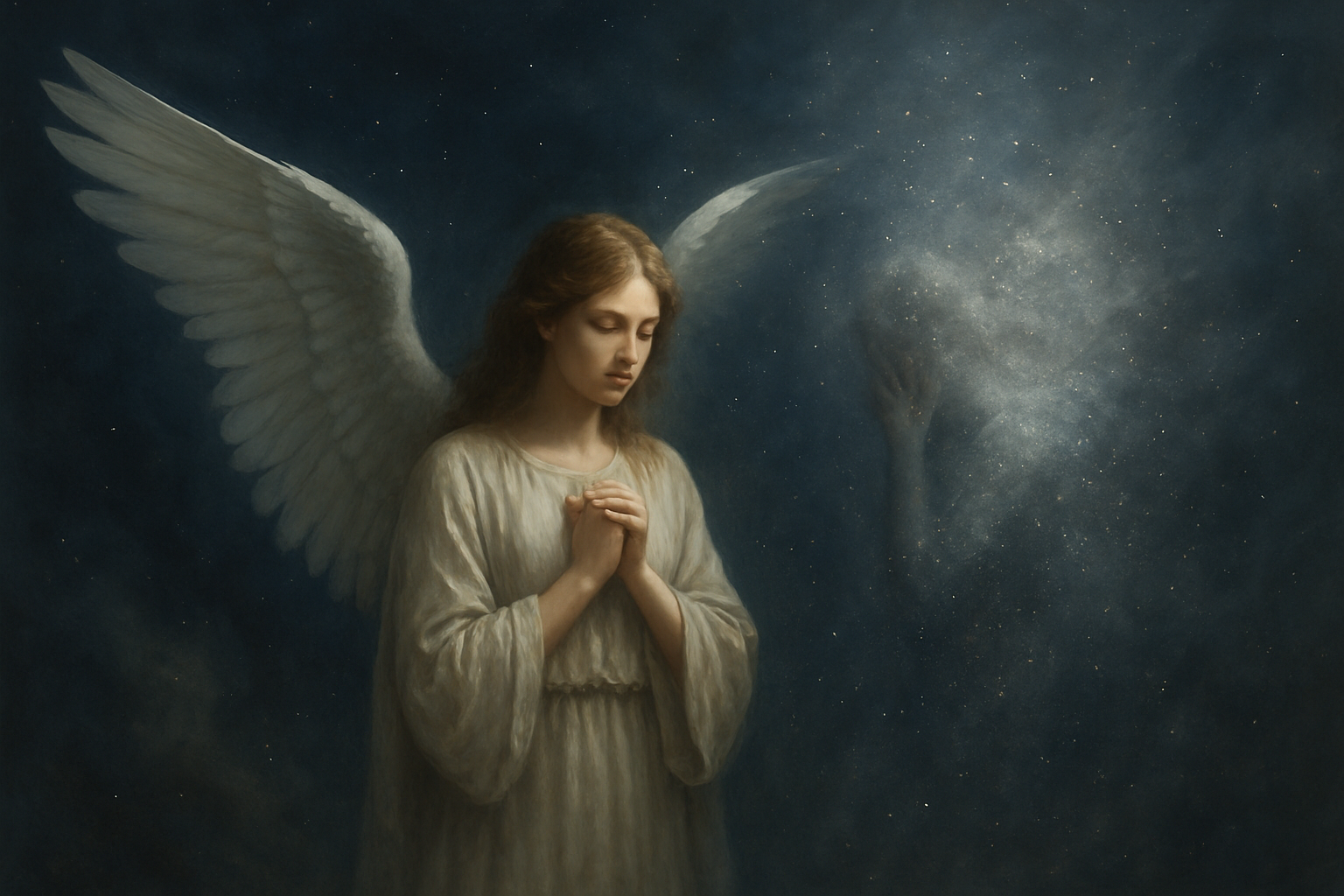
    The ethereal realm of angels has long captivated human imagination. With wings of alabaster and halos of light, these celestial beings have been depicted as messengers, protectors, and guides bridging the divine and earthly realms. Yet, within the folds of spirituality and psychological phenomena, a new metaphor emerges: angels as emblems of dissociation.

    The Mystical and the Mind

    Angels, as depicted in religions and art, are more than figures of faith. They are symbols of hope, transcendence, and an innate longing for connection with something greater than oneself. However, in the depths of psychology, these heavenly figures may embody a different concept entirely—dissociation.

    Dissociation, often described as a disconnection between thoughts, identity, consciousness, and memory, can manifest in various forms. According to the American Psychiatric Association, it ranges from mild detachment from immediate surroundings to more severe forms, like dissociative identity disorder.

    “Dissociation is a mental process of disconnecting from one’s thoughts, feelings, memories, or sense of identity.”

    In this context, the ‘celestial vanishing’ of angels might be understood as a psychological metaphor for the loss of self or a retreat into a place untouched by worldly concerns—a mental sanctum where the conscious mind can float free.

    Angels as Symbols of Dissociation

    Historically, angels have been viewed as divine intermediaries, capable of navigating realms beyond human limitation. This portrayal finds resonance in the dissociative experience, where individuals might perceive themselves as existing outside their body or mind.

    • Dissociation as Flight: Much like angels, the act of dissociation provides an escape from distress or trauma, allowing the individual to ‘fly away’ from negative experiences.
    • Purity and Protection: Angels represent purity and safety, which can be comforting symbols for those dissociating as a defense mechanism against threat.
    • Guidance and Revelation: The sensation of guidance by an angelic figure during dissociation echoes the need for inner clarity and direction when the psyche is divided.

    In the words of Carl Jung, a prominent figure in psychology and mysticism, the interplay between symbolism and the subconscious is profound:

    “The meeting of two personalities is like the contact of two chemical substances: if there is any reaction, both are transformed.”

    The Therapeutic Perspective

    Contemporary therapy approaches like Internal Family Systems (IFS) and Jungian analysis often explore the role of symbols and imagery in mental health. Here, angels can serve as a therapeutic proxy for examining facets of one’s psyche that feel detached or ‘other.’ This exploration allows individuals to re-integrate these aspects into a cohesive sense of self.

    In therapeutic settings, the acknowledgment of dissociative dynamics by reimagining them through the lens of angelic symbolism can be particularly potent. By recognizing the ‘angelic’ aspects of themselves—the elements that seek to protect, to transcend, to fly—they can begin the journey of self-reconciliation and healing.

    The Spiritual Journey and Psychological Healing

    Marianne Williamson, an author known for her spiritual teachings, captures the essence of this dual exploration:

    “Our deepest fear is not that we are inadequate. Our deepest fear is that we are powerful beyond measure.”

    The journey through one’s spiritual and psychological landscape is deeply intertwined with notions of power and vulnerability. Facing dissociation as an angelic disappearance offers not just an understanding of the mind’s protective mechanisms but also an appreciation of the profound resilience and capacity for healing inherent in every individual.

    As we navigate these inner realms, the metaphorical flight of the angels reminds us of the transformative potential within us all. In the end, whether one views angels as celestial beings or psychological constructs, they remain a testament to humanity’s enduring quest for meaning, connection, and self-discovery.

    Through the lens of Celestial Vanishing, angels transcend their traditional boundaries and offer a new perspective on dissociation, urging us to explore our inner heavens and uncover the sacred truths of our psyche.

  • Abstract Mourning Rites – Emptiness Expressed in Symbol

    Abstract Mourning Rites – Emptiness Expressed in Symbol

    Abstract Mourning Rites: Emptiness Expressed in Symbol

    As the 21st century progresses, the way societies process grief undergoes continuous transformation. The practices that bind us in shared sorrow and remembrance evolve alongside technological advances and cultural shifts. Within this context, abstract mourning rites emerge as a poignant reflection of humanity’s grappling with loss, employing symbols and metaphors to express the profound emptiness left by those who have departed.

    The Evolution of Mourning Practices

    The history of mourning rites is rich and varied, stretching from the ritualistic burial ceremonies of ancient Egypt to the dirgelike elegies of the Victorian era. Each culture has developed its unique way of honoring the dead, reflecting its beliefs, values, and technological capabilities. In recent times, the rise of digital technology has ushered in new forms of remembrance. Online memorials, virtual funerals, and social media tributes have become commonplace, providing platforms for collective mourning beyond geographical constraints.

    However, beyond these technological transformations lies a more subtle shift towards abstraction in mourning rituals. As societies increasingly prioritize individual expression and personalized memorials, symbolic gestures and abstract representations become integral to modern mourning practices.

    Symbolism in Mourning: A Language of Loss

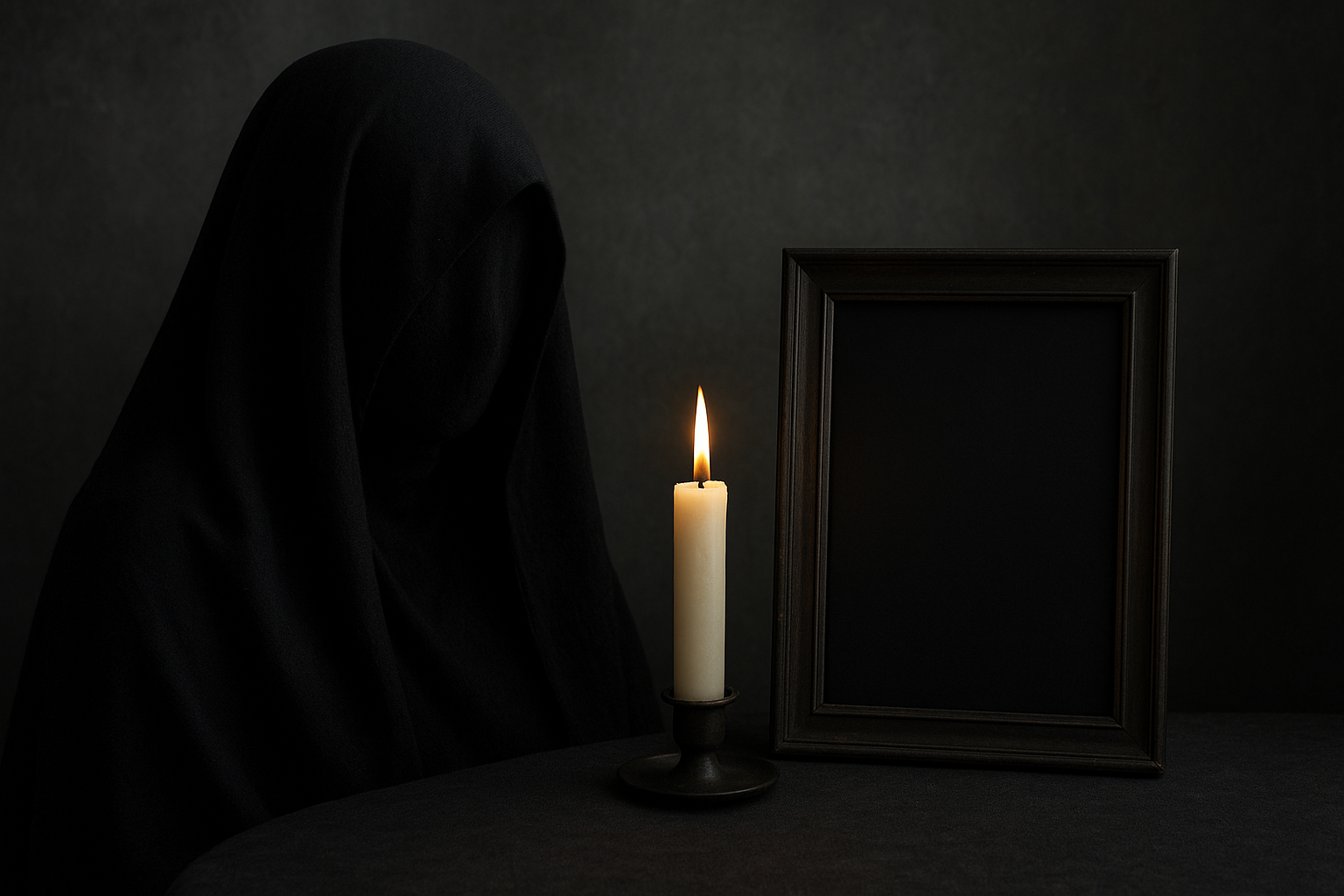
    Symbolism serves as a bridge between the tangible and the intangible, offering a language through which the ineffable nature of grief can be conveyed. The empty chair at a family gathering, the candle flame flickering in a dark room, or a single white rose — all are symbols that speak volumes about absence.

    “Art is not what you see, but what you make others see.” – Edgar Degas

    Degas’s observation resonates profoundly in the context of mourning. Abstract symbols in ritual and art allow individuals to express their inner turmoil and connect with others who share similar experiences. The emptiness experienced in loss is articulated through these artistic expressions, making the invisible, visible.

    Contemporary Artists and Abstract Mourning

    The contemporary art world plays a significant role in shaping abstract mourning rites. Artists like Anish Kapoor and Olafur Eliasson utilize large-scale installations that often explore themes of absence and memory. Kapoor’s “Descent into Limbo”, for example, features a dark void that beckons viewers into contemplation. Such works challenge the perception of space and presence, metaphorically echoing the void left in the wake of death.

    In a similar vein, Yayoi Kusama‘s Infinity Rooms envelop individuals in endless reflections, suggesting the infinite nature of memory and the enduring legacy of those lost. Through immersive environments, these artists foster spaces where individuals can reflect, mourn, and find solace in shared experiences of absence.

    The Role of Collective Memory

    Abstract mourning rites are not solely individualistic; they often serve as conduits for collective memory. Public memorials, such as the 9/11 Memorial in New York City, utilize abstract design to evoke a communal sense of mourning and resilience. The memorial’s twin reflecting pools mark the footprints of the towers, symbolizing both the loss suffered and the enduring memory of those who perished.

    Similarly, the Memorial to the Murdered Jews of Europe in Berlin employs a field of concrete stelae of varying heights, inviting visitors to wander through its labyrinthine structure. The memorial’s abstract design encourages introspection and confrontation with the immensity of historical grief.

    The Psychological Impact of Abstract Mourning

    Abstract mourning rites offer psychological benefits by acknowledging the complexities of grief. The ambiguity in symbolic representations allows individuals to project their personalized emotions, leading to catharsis and healing. In a Psychology Today article, grief counselor David Kessler describes this as the need for narrative—where symbols facilitate storytelling in the absence of words.

    “Each person’s grief is as unique as their fingerprint, but what everyone has in common is that no matter how they grieve, they share a need for their grief to be witnessed.” – David Kessler

    By engaging with abstract representations in art and ritual, mourners find spaces for witnessing and validation, crucial elements in the healing process.

    The Future of Mourning Rites

    As societies continue to grapple with the presence of technology and its impact on interpersonal connections, the future of mourning rites will likely see further abstraction and digital integration. Augmented reality (AR) and virtual reality (VR) could provide new dimensions for mourning, creating interactive memorial spaces that bridge the gap between the living and the deceased.

    Moreover, there is potential for developing new symbols and metaphors that resonate with contemporary experiences of loss. In this dynamic interplay between tradition, innovation, and abstraction, mourning rites will continue to evolve, providing a vital outlet for expressing the universal human experience of grief.

    Conclusion

    Abstract mourning rites underscore the need for symbolic representation in processing loss and commemorating the departed. As contemporary societies navigate the complexities of modernity, these abstract expressions offer profound insights into the human condition, creating spaces for healing and reflection amidst the void of absence.

  • Abstract Mourning – Symbols of Loss and Absence

    Abstract Mourning – Symbols of Loss and Absence

    The human experience of loss is both universal and deeply personal. Across cultures and throughout history, societies have developed various ways to express grief and commemorate those who have departed. These expressions often take on symbolic forms, allowing individuals to channel their emotions into tangible abstractions. This article delves into the abstract symbols of mourning and how they manifest the profound sensations of loss and absence.

    The Evolution of Mourning Symbols

    From ancient rituals to modern memorials, symbols of mourning have evolved, yet their core purpose remains the same—to provide solace and facilitate the grieving process. According to Dr. Susan Williams, a grief therapist, “Symbols can convey complex emotions more powerfully than words, bridging the gap between the conscious and unconscious aspects of our mourning.”

    Historically, mourning symbols have ranged from physical objects to color associations. For example, in Victorian England, it was customary to wear black clothing as a sign of grief—a practice that still persists in various forms today.

    Floral Symbolism: The Language of Flowers

    Flowers have long been associated with mourning, each variety representing different sentiments. The lily, for instance, often symbolizes the restored innocence of the soul of the deceased. Meanwhile, chrysanthemums are popular in many cultures as mourning flowers due to their association with death, especially in Europe. The act of laying flowers at a grave serves as a poignant symbol of remembrance, beauty, and the ephemeral nature of life.

    “The flower that you hold in your hands was born today and already it is as old as you are.” — Antonio Porchia

    Symbols of Light: Candles and Lanterns

    Light has an age-old connection to life, purity, and the soul. Lighting a candle for someone who has passed away is a ritual practiced across many faiths and cultures. In Judaism, the Yahrzeit candle is lit in memory of the departed, illuminating the darkness and symbolically representing the spirit of the deceased.

    During Bon Festival in Japan, families light lanterns and set them afloat on water to guide the souls of their ancestors back to the spirit world. This ancient custom, known as toro nagashi, is both a celebration of life and a solemn farewell.

    Stone and Monument: The Eternal Presence

    Stone is a powerful symbol of endurance and permanence, making it an ideal medium for memorials. Tombstones and cenotaphs serve not only as physical reminders of those who have left this world but also as symbols of the unyielding presence of memory.

    The National Memorial Arboretum in the UK and the Vietnam Veterans Memorial in Washington, D.C., are significant examples where stones and names serve as enduring symbols of sacrifice and absence. These spaces provide places for reflection, allowing mourners to connect with the past and bring personal closure.

    Colors and Fabrics: The Palette of Grief

    While black is predominantly associated with mourning in Western cultures, other colors have different connotations globally. In China and other East Asian cultures, white is the color of mourning, symbolizing purity and rebirth. This divergence highlights the diversity in emotional expression and cultural interpretations of grief.

    %The use of fabrics, such as veils and shrouds, carries symbolic meanings as well. The act of veiling, for example, can symbolize the separation between the grieving person and the outside world, providing a sheltered space to process sorrow.

    Emptiness and Absence: The Artistic Dimension

    Contemporary art has embraced the abstract nature of mourning through installations and performances that evoke a sense of emptiness and absence. Artists like Yoko Ono and Marina Abramovic have explored these themes, creating works that invite viewers to confront and reflect on their own experiences of loss.

    For instance, Ono’s “Cut Piece” performance piece involved allowing viewers to cut away pieces of her clothing. This interactive approach to mourning emphasizes participation, vulnerability, and the shared nature of grief.

    The Personal Aspects of Mourning Symbols

    While public symbols of grief offer communal spaces for mourning, individuals often possess their own personal symbols of loss. These might include cherished photographs, handwritten notes, or even favorite places that evoke the presence of the deceased. As poet Sylvia Plath wrote, “I am myself, that is not enough,” capturing the search for connection with lost loved ones through personal mementos.

    Conclusion: The Ongoing Journey of Grieving

    Mourning is a deeply personal process, and symbols of loss offer a means to express and interpret this complex emotion. Whether through traditional rituals or modern artistic expressions, these symbols help mourners navigate their grief, ensuring that the memory of the departed remains an indelible part of the living world.

    Ultimately, abstract mourning extends beyond mere representation; it transforms the intangible into something that can be held, seen, and felt, enabling those who grieve to find solace and strength in the face of absence.

  • Shadow Scripts – Darkness Written in Symbols

    Shadow Scripts – Darkness Written in Symbols

    Shadow Scripts: Darkness Written in Symbols

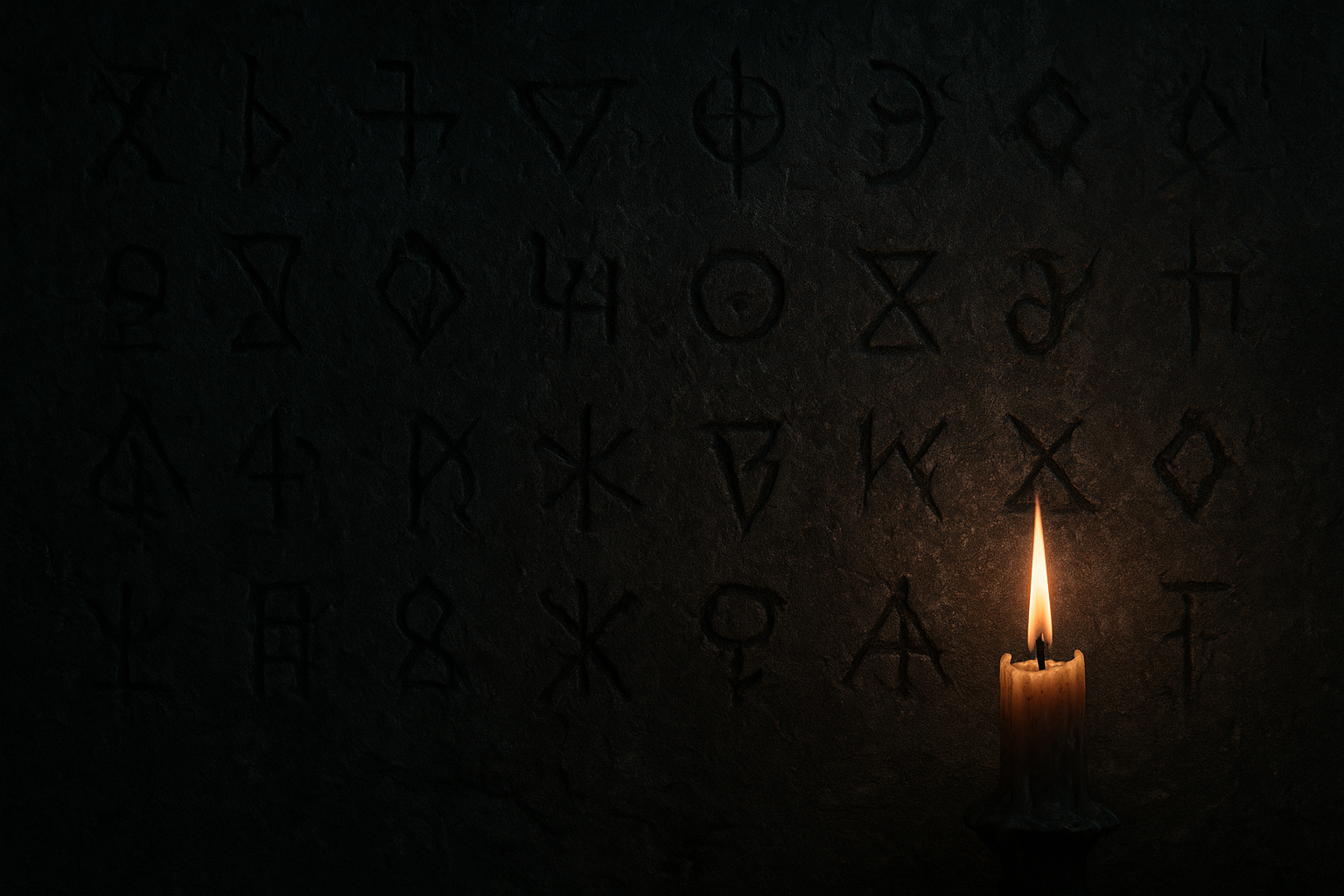
    From the earliest cave paintings to the digital texts of today, writing systems have evolved as a means of communication, expression, and documentation. Amongst the tapestry of written languages, some scripts are imbued with an air of mystery and enigma. These are the Shadow Scripts, a language borne of darkness, etched in symbols that convey messages shrouded in secrecy and myth.

    The Origin of Shadow Scripts

    The term “Shadow Scripts” is used to describe symbolic languages that possess an inherent mystique, often associated with esotericism and clandestine societies. These scripts are not solely confined to the annals of history but weave their presence into contemporary narratives, art, and cryptography.

    “Scripts are the fingerprints of human thought,” said Dr. Jane Rosenthal, a linguist specializing in archaic languages, “Shadow Scripts, in particular, offer a glimpse into the crevices of cultural consciousness, where shadows play with light.”

    Historical Context

    The history of Shadow Scripts is convoluted and often speculative. They are typically associated with ancient civilizations where written language served both mundane and mystical purposes.

    • The Oracle Bones of China: These were used in divination processes, and many inscriptions on these bones remain undeciphered.
    • Linear A Script of the Minoans: While contemporary to the Greeks, much of Linear A’s meaning is yet to be understood, holding the key to secrets of a vanished civilization.
    • The Voynich Manuscript: A more modern enigma, this manuscript is filled with unidentifiable symbols and mysterious illustrations.

    Esotericism and Hidden Meanings

    Many Shadow Scripts are intertwined with esoteric traditions where meanings are purposefully obscured. Secret societies such as the Freemasons have adopted coded languages, where symbols hold layered meanings, only revealed to the initiate.

    Taking inspiration from such historical underpinnings, many authors and philosophers have explored Shadow Scripts in their works.

    • Umberto Eco’s “Foucault’s Pendulum”: A novel that delves into secret languages and symbols.
    • Neal Stephenson’s “The Baroque Cycle”: Featuring complex codes and cryptography rooted in real history.

    Contemporary Usage

    In today’s digital age, Shadow Scripts find a unique place in cryptography and cybersecurity.

    “In the realm of data protection, encryption becomes our own form of Shadow Script,” explains cryptographer Dr. Eric Tran. “Only the one with the correct key can unveil the story hidden within the data.”

    The development of digital cryptographic systems is seen as a modern evolution of ancient shadowy scripts, where instead of ink and stone, sequences of bits and bytes forge seals of secrecy.

    Shadow Scripts in Popular Culture

    Shadow Scripts have also found their way into popular culture, reigniting interest in symbolic languages. Films, books, and video games often employ cryptic symbols that echo the allure of these ancient scripts.

    • In Cinema:
      • “The Da Vinci Code” explores secret messages hidden in art and sculpture.
      • “National Treasure” sees cryptic symbols leading to hidden fortunes.
    • In Literature:
      • “The Name of the Rose” by Umberto Eco, which combines mystery and historical linguistics.
      • “Good Omens” by Neil Gaiman and Terry Pratchett, featuring a book of prophecy written in a cryptic language.
    • In Video Games:
      • “The Legend of Zelda” series, where players often encounter incomprehensible scripts on ancient ruins.

    Decoding the Future

    The intrigue surrounding Shadow Scripts lies not just in what they reveal but in what they promise—an endless quest for meaning. As technology evolves, there might come a day when AI could assist in uncovering the layers of these mysterious symbols.

    Yet, some argue that perhaps the true purpose of Shadow Scripts is not to be fully understood. As Dr. Rosenthal pointed out, “Perhaps, it is in the pursuit of their understanding that we grasp more about our own psyche and the shadows it casts.”

    In the end, while technology may advance, the shadows will always remain, offering a tantalizing dance of light for those who dare to decipher the darkness written in symbols.

    If you are interested in diving deeper into the history and evolution of writing systems, UNESCO provides a comprehensive resource database on cultural heritage and preservation efforts.

  • Alien Sigils – UFOs as Occult Symbols

    Alien Sigils – UFOs as Occult Symbols

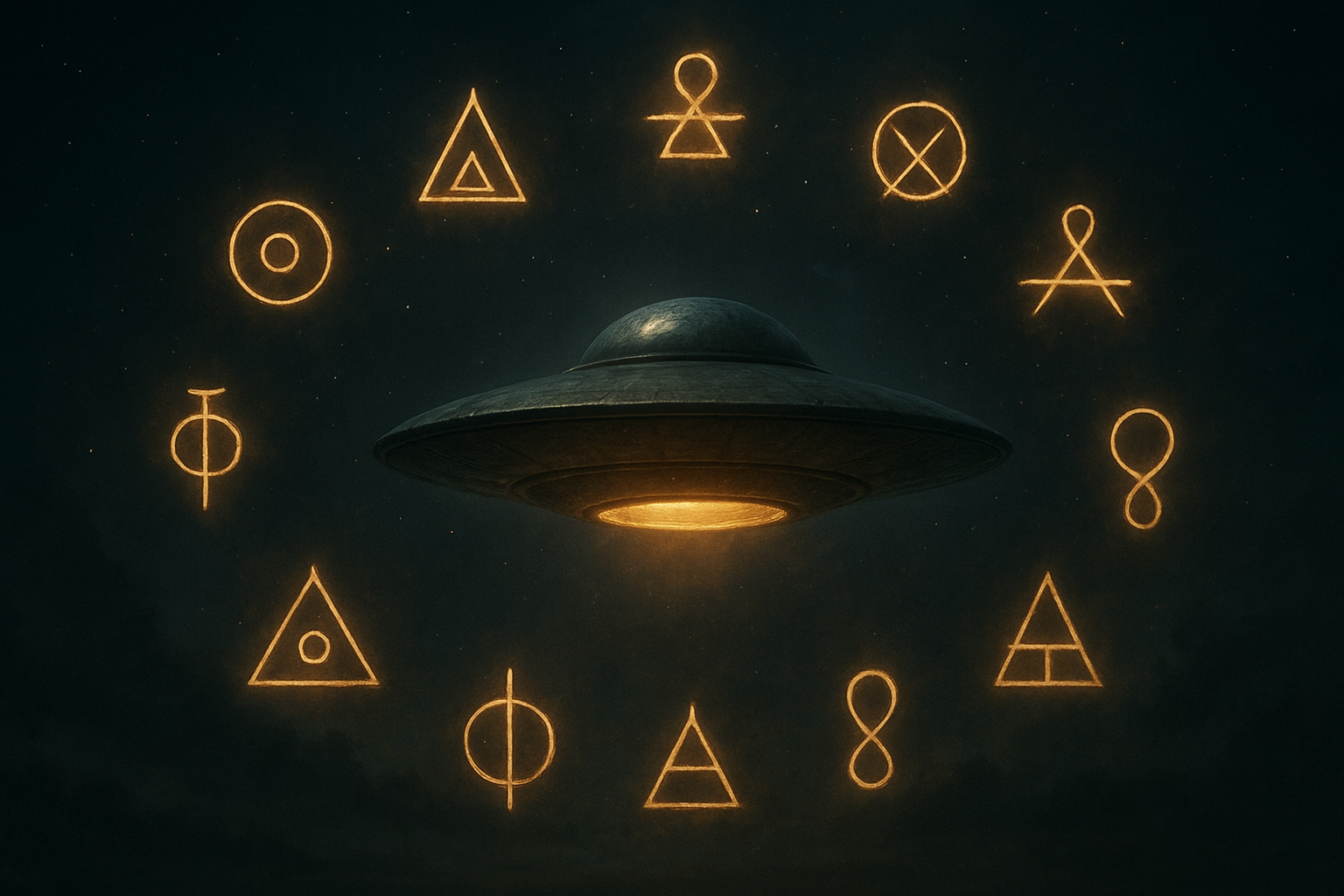
    The fascination with UFOs has transcended beyond the realms of science fiction and conspiracy theories into the multifaceted world of the occult. The intersection of extraterrestrial encounters and mystical symbols forms a unique cultural tapestry where UFOs are not just unexplained flying objects but are perceived as sacred or occult symbols—or sigils—evoking communication with otherworldly realms.

    The term sigil generally refers to a symbol considered to have magical power. In the context of UFOs, enthusiasts and researchers have begun to explore how these arial phenomena might represent or communicate unknown energies and potential messages. This idea is presented in various works linking the appearances of UFOs to ritualistic and spiritual events. As noted by author Jacques Vallée, “UFOs are essentially a response from the unknown, with symbols that inhabit our consciousness as both a challenge and an enigma.”

    There is historical precedence for interpreting unusual signs in the sky as omens or messages from the divine. Throughout ancient history, celestial phenomena have often been cataloged as direct communications from gods or symbols of impending change. Translating this historical lens to modern UFOs opens the door for a variety of interpretations:

    • Occult Practitioners: Some practitioners see UFOs as modern-day archetypes or sigils emerging from collective consciousness. These sightings challenge logical perceptions, serving as a conduit for expanded introspection and spiritual transformation.
    • Synchronicity: Just as Carl Jung explored the concept of synchronicity, UFOs can serve as synchronistic beacons that defy logical explanation and require interpreting the symbols enfolded within their appearances. As Jung described, “It is the intersecting moment of meaning between inner and outer experience.”
    • Magical Thinking: Aligning UFOs with sigils introduces the idea that witnessing an unexplained aerial phenomenon might be an unintentional invocation—a magical call to comprehend a realm that humans do not yet understand.

    Viewing UFOs as occult symbols and sigils invites a redefinition of their traditional meanings. Rather than simply perceiving UFOs as potential evidence of extraterrestrial life—or dismissing them as hoaxes or misidentified earthly aircraft—these concepts allow one to explore the consciousness connection between humanity’s inner world and the universe’s vast mysteries.

    Ultimately, alien sigils challenge observers to ponder the nature of reality itself, exploring spaces that bridge science, spirituality, and the enduring human quest for understanding. By embracing the possibility that UFOs may act as cosmic sigils, we uncover new ways of interpreting age-old questions about our place in the universe.

  • Infernal Codes – Demonic Symbols and Meaning

    Infernal Codes: Demonic Symbols and Meanings

    Throughout history, symbols have served as a powerful means of communication, transcending language barriers and cultural differences. In the realm of the arcane and the esoteric, demonic symbols hold a particularly captivating allure, often shrouded in mystery and misunderstood. This article delves into some of the most intriguing demonic symbols, the meanings ascribed to them, and their cultural significance.

    1. Understanding Demonic Symbols

    Demonic symbols are often associated with occult practices, black magic, and demonology. While many of these symbols originate from ancient religious texts and folklore, they have evolved over time, taking on new interpretations and meanings.

    “Symbols are the imaginative signposts of life.” — Margot Asquith

    2. Notable Demonic Symbols

    Below is an exploration of some of the most prominent demonic symbols and their purported meanings:

    • The Sigil of Baphomet

      Often associated with Satanism, the Sigil of Baphomet features a goat’s head enclosed within an inverted pentagram. This symbol is commonly used by the Church of Satan, where it signifies the rejection of traditional religious beliefs in favor of individualism and spiritual freedom.

    • The Leviathan Cross

      Also known as the Satanic cross, the Leviathan Cross consists of an infinity symbol at its base, topped with a double cross. This emblem represents balance between the physical and spiritual realms and is a symbol of the diabolical duality.

    • The Seal of Solomon

      Historically used in the Key of Solomon, a grimoire attributed to King Solomon, this symbol incorporates the Star of David but recontextualized in occult practices. It’s believed to control demons and protect against evil forces.

    • The Black Sun

      With its origins in ancient Germanic mysticism, the Black Sun consists of twelve radial runes forming a circular image. It has been (mis)appropriated by various groups but originally was associated with occult power and esoteric knowledge.

    3. The Cultural and Historical Context

    These symbols and others like them have been imbued with different meanings throughout history, influenced by the contexts in which they were used. Understanding their cultural significance is essential to appreciating their power and allure.

    • Religious Texts and Folklore

      The origins of demonic symbols often lie in ancient religious texts and folklore that aimed to explain and demystify the unknown forces of the world. In the Bible and other sacred texts, demons are frequently depicted as antagonists to divine beings, bestowing these symbols with a sense of fear and reverence.

    • Art and Literature

      Artistic representations of demonic symbolism have appeared in numerous forms, from classic literature like Goethe’s Faust to modern films and video games. These representations help to both cement their cultural significance and transform their meanings over time.

    4. Misconceptions and Stereotypes

    Demonic symbols can often be misinterpreted, especially when removed from their cultural and historical contexts. The modern portrayal of these symbols in popular culture can lead to a one-dimensional view that ignores their rich and varied significance.

    “The symbol of progress is one of direction, not of location.” — James Russell Lowell

    5. Conclusion: The Power of Symbols

    The enduring intrigue of demonic symbols demonstrates the profound impact of symbols as tools of expression, representation, and power. Whether they serve as objects of fear, veneration, or fascination, their meanings evolve with society and continue to inspire—or terrify—generations. For anyone interested in deeper explorations of the occult and the esoteric, understanding these symbols is crucial as a key to unlocking the mysteries of the human psyche and culture.

    Through exploration and education, these ancient and enigmatic symbols reveal their complexity and their capacity to adapt and maintain relevance in an ever-changing world.

  • Arcane Symbols – Hidden Knowledge Revealed

    The language of symbols has always played a crucial role in various cultures and disciplines. These cryptic icons, often steeped in history and shrouded in mystery, hold a wealth of knowledge waiting to be deciphered. From ancient alchemical glyphs to modern-day esoteric signs, arcane symbols are the keys to understanding hidden wisdom.

    The Historical Significance of Symbols

    Throughout history, symbols have been used to convey complex ideas succinctly and powerfully. For instance, the Ouroboros, represented as a serpent devouring its tail, is a symbol of eternal renewal, deriving from the ancient Egyptians and later adopted by the Gnostics.

    “Symbols are the language of something unseen and unconscious.” – Carl Jung

    This idea from psychologist Carl Jung underscores the profound impact symbols have on shaping human thought and culture. They serve as bridges between the known and the unknown, allowing us to tap into the deeper layers of human consciousness.

    Symbolic Interpretation in Modern Times

    In today’s world, the study of arcane symbols continues to fascinate students and scholars alike. In a world driven by technology and logic, symbols represent a connection to our intuitive and mystical roots. Mystical traditions such as the Kabbalah or the symbolism found within Freemasonry continue to influence modern spiritual and esoteric practices.

    • The Alchemical Elements: Alchemy, known as a precursor to modern chemistry, is rich with symbols. The classical elements such as earth, air, fire, and water symbolize foundational principles of existence.
    • Sacred Geometry: Patterns like the Flower of Life and Metatron’s Cube are revered for their mathematical precision and spiritual significance, believed to chart the fundamental aspects of space and time.
    • Tarot Symbols: Tarot cards, adorned with a complex system of symbols, are employed as tools for divination and self-reflection from the major arcana like The Fool to the minor arcana suits.

    The Future of Symbolic Understanding

    As digital communication continues to dominate, the timeless nature of symbols ensures their relevance. Their ability to convey profound insights in a single image makes them invaluable in an ever-evolving world seeking balance between the tangible and the mystical.

    In the quest for knowledge, understanding and interpreting arcane symbols could be likened to solving a puzzle. The deeper the dive into these symbols, the more wisdom emerges, often revealing the interconnectedness of cultural wisdom across eras and societies.

  • Abstract Divinities – Symbols Beyond Form

    Abstract Divinities – Symbols Beyond Form

    In the vast tapestry of human history, art and spirituality have danced together in a timeless ballet, resulting in a profound repository of symbols that transcend the mere physicality of form. “Abstract divinities” signify more than just visual interpretations; they represent the essence of cultures, beliefs, and the progression of human thought.

    The Nature of Abstract Divinities

    Abstract divinities are not confined to the limits of anthropomorphic representations. Instead, they dwell in the realm of the intangible, the metaphysical, and the esoteric. These symbols may appear in a myriad of forms—including geometric shapes, patterns, or even color arrangements—that encapsulate deeper meanings recognized across cultures.

    • Universal Connectivity: Many abstract symbols signify universal concepts such as infinity, movement, or unity. The circle, for example, is found in countless cultures symbolizing eternity and completeness.
    • Transcendent Ideals: Not concerned with the literal portrayal of the divine, abstract symbols focus on transcending earthly ideals, allowing believers and viewers alike to reach for higher spiritual planes.
    • Expressive Potential: Abstract art permits a breadth of interpretation that accommodates personal experiences and beliefs, encouraging introspection and spiritual exploration.

    Historical Perspectives

    Throughout history, the abstract has been an intrinsic part of religiosity and art:

    Ancient Civilizations

    The ancient Egyptians, with their complex pantheon, employed abstract art forms alongside the more widely recognized imagery of gods like Ra and Anubis. The Ankh, with its looped top, is more than a depiction of life and eternity; it is an abstract representation of the balance between male and female energies, life’s dualities.

    Eastern Philosophies

    In Eastern religions such as Buddhism and Hinduism, abstract representation thrives. The Mandala, a circular symbol used in various meditative practices, represents the universe and is a powerful tool for sacred contemplation. According to Learn Religions, “its apparent simplicity transcends our understanding to unfold deeper psychological awareness and spiritual growth.”

    Modern Artistic Movements

    The 20th century witnessed an explosion of abstract art with figures like Kandinsky and Rothko. In Kandinsky’s words, “Color is a power which directly influences the soul.” Artists used this language to evoke spiritual and emotional responses, much like abstract symbols in religious contexts.

    Symbolism Across Cultures

    Abstract divinities often carry varying meanings across different cultural landscapes but share a commonality in their abstract representations. They convey spiritual truth that, while maybe culturally specific, resonates globally:

    • Yin and Yang: In Taoist philosophy, the yin yang symbol represents balance—a dance between opposing forces that is essential to the harmony of the universe.
    • The Eye of Horus: An ancient Egyptian symbol often associated with health, protection, and royal authority, embodying abstract qualities that transcend its origin.
    • The Om: Vibrating through the cosmology of Hinduism, Buddhism, and Jainism, the Om symbol is an abstract representation of the sacred sound, often described as “the vibration of the universe.”

    The Influence of Technology and Science

    As our world becomes increasingly intertwined with technology, abstract symbols continue to evolve. Code, with its enigmatic algorithms and binary systems, is an abstract language with its own set of divinities—shaping the digital universe in much the same way symbols shaped the spiritual one.

    Space exploration has given rise to new abstract symbols. The NASA insignia, known as the ‘meatball’, incorporates abstract elements that reflect grand ideas of discovery and innovation while paying homage to the astronomical landscapes beyond Earth.

    Modern Reflection and the Future of Abstract Divinities

    In modern times, there is a renaissance of interest in abstract divinities. With global connectivity, ancient symbols are rediscovered and reinterpreted. Individuals seek new forms of spirituality and expression outside traditional frameworks, often turning to abstract symbols to guide their inward journeys.

    “Symbols and archetypes present us with universal motifs that transcend time and place, leading us gently into layers of the unconscious. Here we connect with something profoundly innate and intimately human,” says Joshua Anderson, a noted Jungian therapist.

    Closing Thoughts

    Abstract divinities, those symbols beyond form, are more than archaic relics or esoteric curiosities; they are an ongoing human effort to articulate the inarticulable, to visualize the invisible. They remind us that beneath our differences exists a shared pursuit—finding meaning and connection within the grand, sometimes abstract, architectures of life and the universe.

    In an era where the visual is manufactured, consumed, and discarded at lightning speed, the enduring nature of abstract symbols holds invaluable lessons. Their timelessness and adaptability offer both a lens into our collective past and a beacon lighting the path for future spiritual exploration.

  • Abstract Runes – Symbols Beyond Understanding

    Abstract Runes – Symbols Beyond Understanding

    Runes are ancient symbols that hold a mystic allure through their complex and enigmatic nature. Often associated with Northern European cultures, these symbols have transcended their historical roots to become a powerful element in modern mysticism and artistic expression. Runes have traditionally been employed not just as an alphabet, but as tools of divination, symbols of power, and gateways into the unknown realms.

    “Runes embody the universal energies and experiences of life. They are abstract, esoteric, and connect us to the ineffable.” – Freya Aswynn, British author and practitioner of Germanic Neopaganism.

    The allure of runes lies in their abstract symbolism, which goes beyond the mere conveyance of linguistic messages. Each rune carries a meaning, a story that connects with fundamental aspects of life, nature, and the cosmos. Collectively, they form a language of symbolism that continues to mystify and inspire.

    The Origin of Runes

    The earliest runes date back to around 150-800 AD and are part of the Futhark family. The most well-known versions are the Elder Futhark and Younger Futhark. Each rune is made up of straight lines, a design choice likely made for ease of carving into wood, stone, or bone.

    • Elder Futhark: Consisting of 24 runes, it is the oldest form of the runic alphabets and was widely used before the Christianization of Scandinavia.
    • Younger Futhark: This simplified version contains only 16 characters and was developed around the 9th century.

    While runes were used for practical communication, they also held magical properties for the Germanic peoples, serving as potent talismans and instruments of mystical operations.

    Runes in Divination and Magic

    In modern times, runes are often used in divination, much like tarot cards and astrology. Each rune embodies a specific archetype or energy, representing different facets of the human experience. For instance:

    • Fehu: Signifies wealth and abundance, often associated with material gain.
    • Uruz: Represents strength, health, and the untamed power of nature.
    • Raido: Symbolizes the journey of life, travel, and rhythm.

    When used in divination, these symbols invite the practitioner to engage in reflection, tapping into their subconscious to garner insights and guidance. They are drawn with hands veiled in reverence, acknowledging the energies they represent.

    Magic and runes are inseparably intertwined. Norse mythology hints at the runes as gifts to humanity from the gods, with Odin himself said to have discovered them by sacrificing himself on the Yggdrasil, the World Tree. This myth underscores the divine nature of these symbols and their role as mediums between the human and divine.

    Modern Interpretations and Artistic Expression

    Today, runes have found a place in modern culture, extending beyond their original spiritual use. They appear in various forms of contemporary media, illustrating their persistent and versatile nature. Runes are featured in artworks, tattoos, and even digital media, each new context breathing fresh interpretations and meanings into these ancient symbols.

    For instance, runes have become a key element in the design of video games, such as in “God of War” and “The Elder Scrolls,” where they serve as both decorative and functional in-game elements. This broadens their reach to new generations, captivating them with a sense of mystery and ancient wisdom.

    The Eternal Mystery of Abstract Runes

    At the heart of the fascination with runes is their abstract nature. Unlike languages constrained by grammar and syntax, runes traverse beyond the linear confines of understanding. Their very ambiguity allows for diverse interpretations, resonating deeply with those who seek personal and spiritual growth.

    “The runes themselves are not just letters, but keys to unlocking the mysteries of the universe and the soul.” – Norse Mythology for Smart People

    This abstract nature is both a challenge and a gift. It calls upon individuals to delve into their intuition, experiencing the runes not as static symbols but as dynamic forces woven into the fabric of existence. The true beauty of runes lies in this mystical dance of understanding and the perpetual discovery of the unknown.

    Conclusion

    Runes, with all their mystery and magic, remain an enticing realm for explorers of the mind and spirit. They remind us of our connection to nature and the divine, urging us to look beyond the visible and the known. In understanding these abstract symbols, we embark on a journey not just of knowledge, but of existential curiosity and personal transformation.

  • Time-Scribed Scrolls – Archetypes Written in the Stars

    Time-Scribed Scrolls – Archetypes Written in the Stars

    Time-Scribed Scrolls: Archetypes Written in the Stars

    For millennia, humans have looked to the stars for guidance, inspiration, and understanding of the world and themselves. The night sky, with its twinkling tapestry of celestial bodies, has served as an eternal canvas where humanity has projected myths, hopes, and cosmic archetypes. These heavenly symbols become time-scribed scrolls, filled with timeless wisdom that speaks to both personal and collective unconsciousness.

    The Origins of Celestial Archetypes

    Celestial archetypes originate from a blend of astrology, mythology, and astronomy. Ancient civilizations, from the Babylonians and Egyptians to the Greeks and Chinese, each saw the cosmos as a series of narratives that explained human traits and events. These cosmic symbols were not just stories but served as guiding principles or archetypes.

    • Babylonian Zodiac: The Babylonians were among the first to map the stars into what we know as the zodiac. This ancient system relies on twelve divisions of the sky, each associated with specific qualities and myths.
    • Greek Influence: The Greeks further enshrined these celestial symbols, linking gods and legendary heroes to the stars. Their tales of Hercules, Aries, and others still resonate, illustrating human virtues and flaws.
    • Chinese Astronomy: In the East, the Chinese developed their own celestial system, where the animals of the zodiac embody qualities such as wisdom, courage, and perseverance.

    “Astronomy compels the soul to look upwards and leads us from this world to another.” – Plato

    Psychological Insights: Jung and Universal Archetypes

    Carl Jung, a seminal figure in psychology, introduced the concept of the collective unconscious—a part of the unconscious mind shared by all human beings, containing memories and images of common experiences. Jung described these shared motifs as archetypes: symbols deeply embedded in our collective psyche.

    Jung’s work bridges the understanding of celestial archetypes as more than just ancient stories—they are integral to understanding human behavior and consciousness. He believed that these archetypes are manifested in dreams, myths, and legends, pointing out that these symbols are expressions of our inner realities and the broader human experience.

    The Zodiac and Personality

    The twelve signs of the zodiac are perhaps the most recognized celestial archetypes today. Each sign corresponds to specific personality traits that, like mythological characters, embody different facets of the human experience:

    • Aries: The warrior spirit, symbolizing courage and initiative.
    • Taurus: Represents stability, reliability, and a love for beauty.
    • Gemini: The twins, denoting duality, communication, and adaptability.
    • Cancer: The nurturer, embodying emotion, intuition, and protection.
    • Leo: The leader, with qualities of creativity, warmth, and valor.
    • Virgo: Associated with diligence, detail, and service.
    • Libra: The scales, signifying balance, harmony, and justice.
    • Scorpio: The transformative force, with depth, passion, and mystery.
    • Sagittarius: The seeker, adventurous, optimistic, and philosophical.
    • Capricorn: The strategist, symbolizing ambition, discipline, and perseverance.
    • Aquarius: The innovator, representing idealism, originality, and reform.
    • Pisces: The dreamer, embodying empathy, healing, and imagination.

    Myth and Meaning in the Stars

    Human cultures have always bred stories to explain the celestial movements, ascribing deities and legends to the movements of heavenly bodies. Consider the mythos of Orion, the mighty hunter from Greek mythology, whose constellation tells a story of strength, pride, and eventual humility. His tale serves as a reminder of human limitations and the beauty of the journey, regardless of the outcome.

    Constellations such as the Pleiades have been revered across cultures, from the ancient Greeks to the Indigenous Australians, each interpreting these stellar patterns in ways that reflect their worldview.

    The Modern Resonance of Celestial Archetypes

    In contemporary society, these ancient symbols continue to provide comfort and reflection, even for those who no longer see them as divinities but rather as metaphoric guides. Astrology remains a popular discipline, not solely for predicting the future but as a tool for introspection and understanding.

    The movement of celestial bodies is said to align with human experiences, offering a celestial backdrop to personal growth and change. In astrology, the concept of transits describes how current planetary movements interact with an individual’s birth chart, illuminating patterns, challenges, and opportunities.

    “It is not in the stars to hold our destiny but in ourselves.” – William Shakespeare

    Embracing the Cosmic Journey

    The sky continues to act as a mirror reflecting our hopes, dreams, and fears. As we embrace this deep connection with the cosmos, we can see these constellations and celestial bodies as reminders of our interconnectivity with the universe and with each other. Whether used for entertainment, introspection, or spiritual guidance, the stories written in the stars offer an opportunity to explore the depths of our psyche.

    The celestial archetypes are more than ancient symbols—they are signposts on our journey of understanding, offering wisdom and insight written in the stars. They remind us of our shared humanity and the timeless stories that bridge the gaps between past and present, earth and sky.