Tag: tibetan

  • The Skeleton Dance – Ritualized Death in Tibetan Tantra

    The Skeleton Dance – Ritualized Death in Tibetan Tantra

    In the high-altitude enclaves of the Tibetan Himalayas, spiritual practices blend the formidable power of nature with an intricate tapestry of cultural traditions. One of the most captivating manifestations of this synthesis is the Skeleton Dance, a ritual deeply embedded in the Tibetan tantric tradition. This dance serves as a symbolic representation of death, rebirth, and the transitory nature of life.

    Origins and Meaning

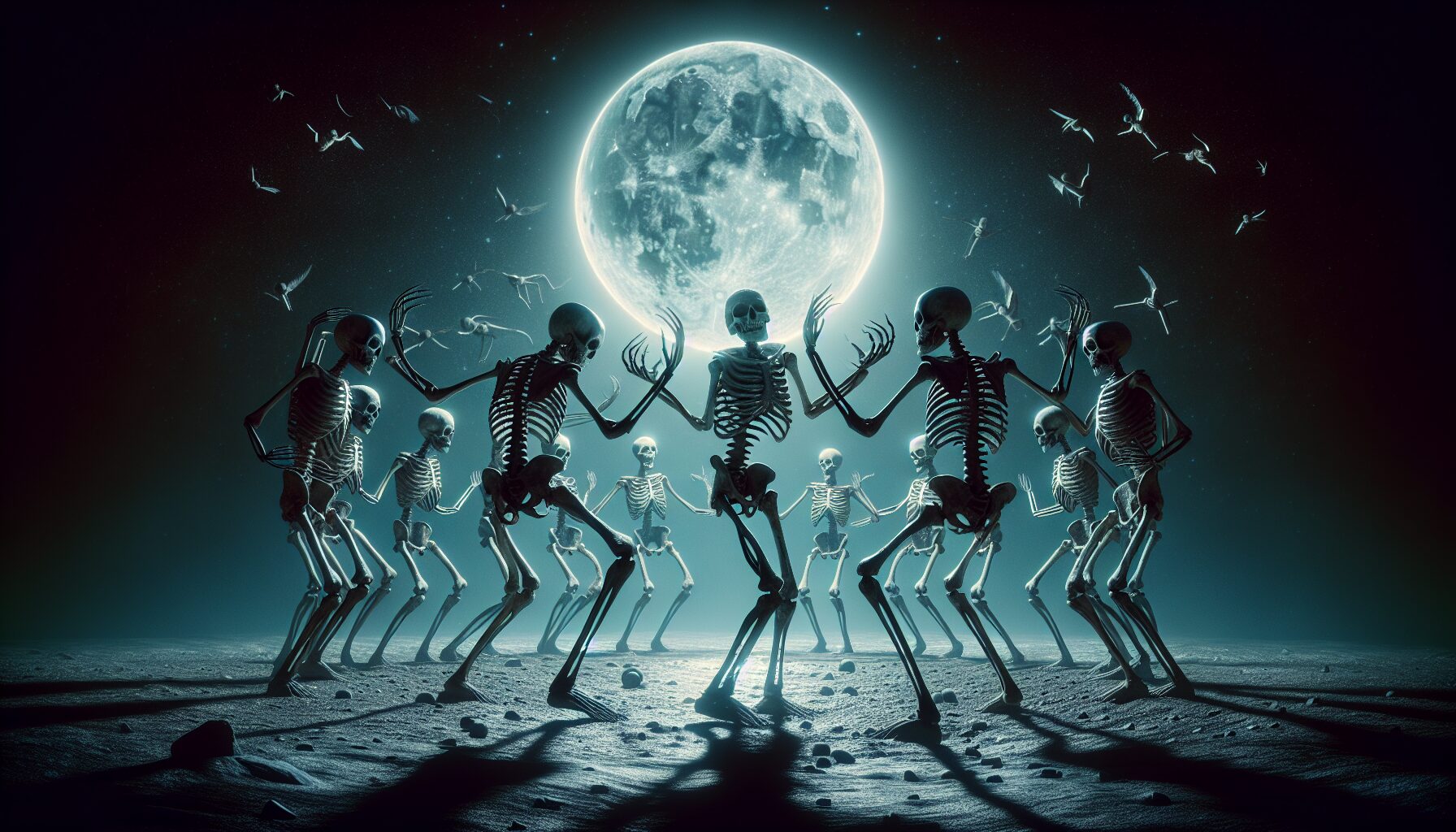
    The Skeleton Dance, or “Durdak Garcham”, is traditionally performed by monks during the annual Tibetan Buddhist ceremony known as Cham. This ritual is performed with vibrant masks and costumes, aiming to vanquish evil spirits. At its core, the dance represents the impermanence of life and the constant cycle of life and death.

    According to Buddhist teachings, accepting the inevitability of death is essential in transcending fear and facilitating spiritual enlightenment. The Royal Library of Britannica states, “Unlike Western perspectives that often fear death, Tibetan Buddhism encourages an embrace of mortality, viewing death not as an end but as a transitional state.”

    The Dance of the Skeletons

    The performers, usually monks, don impressively intricate costumes that transform them into eerie apparitions of skeletons. Each movement is deliberate and filled with symbolic meaning, intended to invoke contemplation among the spectators. The dancers move rhythmically to the beat of drums and the resonant chimes of cymbals, communicating the transient nature of life.

    A vivid portrayal of life’s fragility, the Skeleton Dance underscores the idea that death is a mere transition rather than a cessation. By confronting the audience with the inevitability of death, the dance aims to awaken them to the beauty and importance of ethical living.

    Symbolism in the Dance

    • Costumes: The skeleton costumes symbolize both literal and metaphorical death. The stark white bones against a dark background are a reminder of mortality lurking behind the facade of life.
    • Movements: The ethereal movements of the skeletons symbolize the fleeting nature of existence, reflecting the constant change inherent in life.
    • Music: The rhythm created by the instruments mimics the heartbeat of life, with intermittent silences representing deathly pauses, an acknowledgment of the cycle of life and rebirth.

    Ritual Function and Cultural Impact

    The Skeleton Dance fulfills a crucial role in the spiritual festivals of Tibetan Buddhism, particularly those marking the Lunar New Year. Its primary function is purgative—cleansing the spiritual ether of malevolent forces through the dance’s powerful symbolism and ritual purification.

    “In Tibetan Buddhism, the ritual dance is not just a performance but a means of achieving spiritual insight. It functions as a meditative exercise which holds the power to transform both performer and audience,” says renowned Tibetan scholar Dr. Lobsang Sangye.

    Throughout the years, the Skeleton Dance has garnered significant interest from anthropologists, spiritual seekers, and tourists alike. Its captivating symbolism continues to educate the global community on Tibetan culture and spiritual beliefs, offering a glimpse into a world where life and death coexist seamlessly.

    Modern Interpretations and Influences

    While primarily practiced in the secluded monasteries of Tibet, the Skeleton Dance has begun to transcend its traditional boundaries, influencing various art forms around the world. Modern interpretations by performance art troupes and filmmakers attest to its enduring legacy.

    Moreover, as discussions around death become increasingly open in Western cultures, there is a growing appreciation for the Skeleton Dance’s ability to demystify and depersonalize mortality. This has sparked dialogue on how such traditions might contribute to modern-day understandings of life and death.

    In Conclusion

    The Skeleton Dance stands as a powerful testament to the rich cultural and spiritual traditions of Tibetan Buddhism. It invites viewers to engage with difficult questions of mortality through the captive spectacle of dance, allowing for a deeper understanding and acceptance of life’s impermanence.

    By bridging the realms of life and death through ritual and art, the Skeleton Dance elevates the human condition, reminding us all of the fleeting nature of life. It’s more than just a dance; it is a profound meditation on existence itself—a timeless ritual that continues to inspire and transform.

  • The Soul’s Journey – Tibetan Cosmology of Afterlife

    The Soul’s Journey – Tibetan Cosmology of Afterlife

    Tibetan cosmology presents a richly detailed map of the afterlife, offering insights into what many believe awaits beyond death. Rooted in a fusion of Buddhist teachings and ancient Bon traditions, this view is closely tied to the essential aspects of Tibetan spiritual philosophy.

    The Bardo States

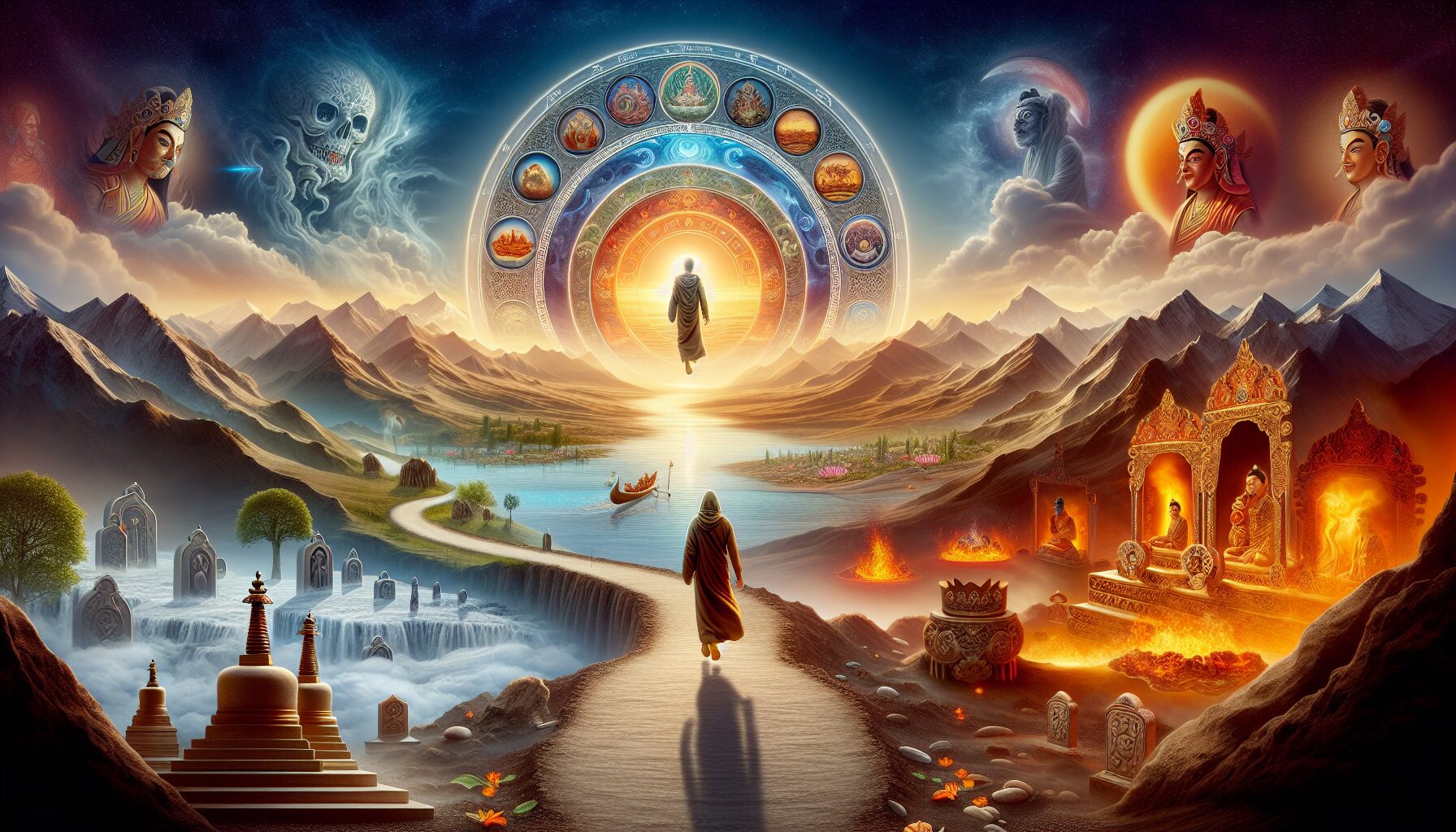
    Central to Tibetan beliefs about the afterlife is the concept of the bardo. The term “bardo” translates to “in-between state” and refers to the transitional phases a soul undergoes from the moment of death until rebirth. There are traditionally three major bardo states described in the Bardo Thodol, or “The Tibetan Book of the Dead”:

    • Chikhai Bardo: The moment of death, where the individual experiences the “Clear Light of Reality.” This is a moment of profound opportunity, where the soul can recognize the true nature of the mind.
    • Chonyid Bardo: Following the initial moment of death, the soul encounters various manifestations stemming from its own mind. These visions can range from peaceful to wrathful and are believed to provide insight into one’s karma.
    • Sipa Bardo: The phase leading to rebirth. Here, based on accumulated karma and clarity of awareness, the soul is guided towards its next incarnation.

    Karma and Rebirth

    The Tibetan understanding of the afterlife is deeply interwoven with the concept of karma. As the Dalai Lama explains, “From the Buddhist perspective, the ideas of karma and rebirth form a natural extension of the evolutionary process” (Dalai Lama’s Messages).

    Each action performed in life—whether thought, word, or deed—imprints a karmic residue that influences the soul’s journey within the bardo states. Hence, one’s conduct can critically impact the conditions of rebirth, potentially leading a soul toward a higher or lower existence in its next life.

    Practical Applications

    The Tibetan approaches to death and dying are not merely theoretical. They offer practical paths for preparation and assistance for those facing death. Meditative practices, such as phowa (transference of consciousness), are employed to secure a more favorable rebirth by directing the mind’s attention at crucial moments.

    Conclusion

    The Tibetan cosmology of the afterlife provides a profound and structured vision of post-mortem existence that emphasizes personal responsibility and the potential for spiritual evolution. By understanding these processes, individuals can engage more mindfully with life, cultivating the positive conditions necessary for an auspicious continuation beyond this existence.

    “Understanding the bardo states can help us become less fearful of death and more mindful of how we live.” — Tricycle Magazine

  • Sky Burial – Feeding Death to the Vultures of Heaven

    Sky Burial – Feeding Death to the Vultures of Heaven

    High up in the Tibetan plateau, where the sky stretches endlessly and the air is thin with the whispers of ancient rituals, lies a practice both profound and deeply spiritual: the sky burial. Known locally as “jhator,” this sacred rite reflects a unique understanding of life, death, and the cyclical nature inherent to both.

    “The Tibetans have learned to see death as a bridge to a better life, and the sky burial is a heartfelt acknowledgment of that journey,”

    Sky burial is a funerary tradition primarily observed by the Tibetan Buddhists, a people who perceive the earthly body as an empty vessel once life has departed. This ritual serves not only as a means to dispose of the body but also as an act of charity, offering sustenance to the creatures who are integral to their highland ecosystem: the vultures.

    • Symbolic Rebirth: The practice underscores the belief in samsara, the cycle of death and rebirth. The body’s consumption by vultures is seen as an act of returning to nature, an important step in the deceased’s spiritual journey.
    • Practicality and History: In the rocky terrains of Tibet, traditional burial or cremation is often impractical. The historical context adds a layer of practicality to this ethereal tradition.
    • Ecosystem Connection: The ritual is deeply connected to the surrounding ecology. Vultures, regarded as heavenly emissaries, help maintain the environmental balance by consuming carrion that could otherwise spread disease.

    The process is carefully orchestrated. Monks or designated attendants commence by ritually preparing the body, which is often draped in white cloth, symbolizing purity. Chanting sacred mantras, the monks invite the vultures, who descend upon the scene with the quiet dignity that seems almost reverent.

    Despite its apparent starkness, the sky burial is viewed not with horror but with reverence. It is a gentle reminder of impermanence, nudging the living towards mindfulness and compassion. In a world often marked by the fear of death, this practice boldly embraces it, fostering a serene acceptance of life’s ultimate passage.

    For those unacquainted with Tibetan rituals, sky burial might initially provoke unease. Yet, in understanding its spiritual essence, one finds profound beauty in the cycle of life and death. As NPR noted, “In vulture’s flight from mountain to sky, the soul is said to take its journey to the heavens.” In this cycle, the sky burial stands as a poignant tribute to the timelessness of life itself, a ceremony that feeds both the earth and the heavens.

  • Bardo States – The Space Between Death and Rebirth

    Bardo States – The Space Between Death and Rebirth

    The concept of Bardo is an integral part of Tibetan Buddhism and offers a unique perspective on death and the transition to rebirth. The word “Bardo” translates to “intermediate state” and refers to the transitional phases experienced between death and the next life. Within Tibetan Buddhist teachings, these states are pivotal in determining the fate of the soul and offer opportunities for spiritual awakening and growth.

    The Origins of Bardo

    The concept of Bardo is primarily derived from the Tibetan Book of the Dead, or Bardo Thodol, which is a revered text in Tibetan Buddhism. According to Robert A.F. Thurman, a professor of Buddhist Studies at Columbia University, the Tibetan Book of the Dead is “a manual of the transcendence through the different stages that the spirit goes through after death” (Encyclopedia Britannica).

    The text is believed to have been composed in the 8th century by Padmasambhava, an influential figure in bringing Buddhism to Tibet. It has since served as a spiritual guide for those navigating the journey from death to rebirth, offering insights into how individuals can achieve liberation from the cycle of birth and death, known as Samsara.

    The Six Bardo States

    • Chikhai Bardo: This state occurs at the moment of death. It is characterized by the dissolution of the body’s elements and the release of consciousness from its physical vessel. During this phase, individuals experience the “clear light of reality,” which provides an initial opportunity for liberation if recognized and embraced.
    • Chonyid Bardo: Following the moment of death, this state encompasses the experiences of visions and hallucinatory phenomena. It is characterized by encounters with various peaceful and wrathful deities. Recognizing these visions as projections of one’s own mind can lead to enlightenment.
    • Sidpa Bardo: This state involves the process leading to rebirth. During Sidpa Bardo, individuals confront their karmic imprints, which influence their next incarnation. Recognizing the nature of these imprints offers opportunities to influence a positive rebirth.
    • Meditative Bardo: This state occurs during deep meditation in the current life. It offers a glimpse into the nature of Bardo experiences, emphasizing the importance of meditation in preparing for the death and rebirth cycles.
    • Dream Bardo: The state experienced during dreams, where practitioners develop the ability to recognize and use dreams as opportunities for spiritual practice.
    • Living Bardo (or Kyeney Bardo): The present moment of life, viewed as a transitional state conducive to spiritual growth and preparation for death.

    The Role of Bardo in Spiritual Practice

    For practitioners of Tibetan Buddhism, understanding and practicing the teachings related to the Bardo states are essential for spiritual development. By meditating on the Bardo states, practitioners cultivate mindfulness and a deeper awareness of life’s transient nature.

    “The bardo teachings offer a clear view of the ultimate nature of mind, which is the basis of both samsara and nirvana. Through the teachings, one can gain freedom from delusion and attain wisdom” — Sogyal Rinpoche, author of The Tibetan Book of Living and Dying.

    This awareness, combined with proper guidance and practice, can lead individuals to recognize the true nature of consciousness and attain liberation.

    Contemporary Perspectives on Bardo

    While Bardo teachings are deeply rooted in Tibetan Buddhism, their concepts have also attracted the interest of Western thinkers and psychologists. The parallels drawn between Bardo experiences and psychological models of transformation and transition have led to a broader understanding and appreciation of these ancient teachings.

    Notably, Swiss psychologist Carl Jung referenced Bardo teachings, noting the parallels between Tibetan Buddhist concepts and Western psychological thought. Jung writes that the Bardo Thodol presents a “way of liberation” that involves confronting “the archetypal figures which personify the spirits of the dead” (International Journal of Jungian Studies).

    Furthermore, researchers in the fields of thanatology and consciousness studies explore Bardo states as valuable models for understanding death, dying, and the transformative potential inherent in these experiences.

    The Relevance of Bardo in Today’s World

    In the contemporary world, Bardo teachings address universal themes of mortality and transformation. By offering a structured framework for understanding the processes of death and rebirth, these teachings encourage individuals to live with greater intentionality and compassion. The philosophical underpinnings of Bardo challenge practitioners to cultivate a deeper sense of presence and adaptability—a message particularly relevant in times of social upheaval and change.

    Through meditative practices and contemplation on the Bardo states, both Buddhists and those from different spiritual backgrounds can gain insights into the essence of consciousness and the interconnectedness of all life. Recognizing the transient nature of our current existence fosters qualities of mindfulness, empathy, and a commitment to live life ethically, honoring the interconnected web of all beings.

    Conclusion

    The teachings on Bardo states offer profound wisdom about the nature of existence, emphasizing transformation through awareness and spiritual practice. By exploring these intermediate states, practitioners are encouraged to live authentically, embrace impermanence, and ultimately seek liberation from the cycle of samsara. In doing so, they not only prepare for their journeys beyond this life but also enrich their current life’s purpose and meaning.

    Whether one approaches Bardo from a traditional Buddhist perspective or as a universal symbol of growth and transformation, its teachings continue to illuminate the path toward awareness and liberation, guiding individuals through the mysterious terrain that bridges life, death, and rebirth.

  • Death as Teacher – What Tibetan Masters Tell Us

    Death as Teacher – What Tibetan Masters Tell Us

    In the realm of Tibetan Buddhism, death is not the end but a profound teacher that guides us through life’s transformations. Tibetan masters have long imparted wisdom on how understanding and embracing death can lead to a more fulfilling and enlightened life.

    The Tibetan Book of the Dead

    Among the most significant texts in Tibetan Buddhism is the Bardo Thodol, commonly known in the West as The Tibetan Book of the Dead. This ancient scripture is a guide for the living and the dead alike. It offers teachings on how to navigate the bardo—the transitional state between death and rebirth—to achieve liberation.

    “The concept of death in Buddhism is not about the end; it’s the great transformation that can lead to enlightenment.” — Lama Thubten Yeshe

    The Lessons of Impermanence

    Tibetan masters teach that death reminds us of the impermanent nature of all things. This understanding encourages practitioners to relinquish attachments and ego, which are viewed as barriers to spiritual growth. The awareness of impermanence serves as a catalyst for living more consciously.

    • Meditation on Death: Through meditation practices, individuals learn to visualize their own death, which helps diminish fear and increase appreciation for life.
    • Compassion and Detachment: By contemplating death, one is often led to cultivate greater compassion for others and reduce unhealthy attachments to material possessions and trivial concerns.

    Practical Guidance

    Tibetan masters also offer practical advice for facing death with dignity and peace. They emphasize the importance of mental preparation and mindfulness. Lama Surya Das advises, “The key is to stay focused, to maintain awareness and equanimity.”

    The Living Wisdom

    Contemplating death is not an innate tendency in many cultures, yet Tibetan spiritual leaders find great wisdom in this practice. It is a reminder of the preciousness of human life and a prompt to live with purpose and authenticity.

    “Death is our greatest teacher because it instills in us the understanding that everything is temporary.” — Sogyal Rinpoche

    In conclusion, Tibetan masters have turned death from a feared specter into a teacher of profound wisdom. By embracing the inevitability of death, they argue one learns how to live fully and authentically. This timeless wisdom offers not only solace but also practical steps for those seeking a deeper understanding of life’s ultimate journey.