Alien Ghosts: Memories of Species Long Gone
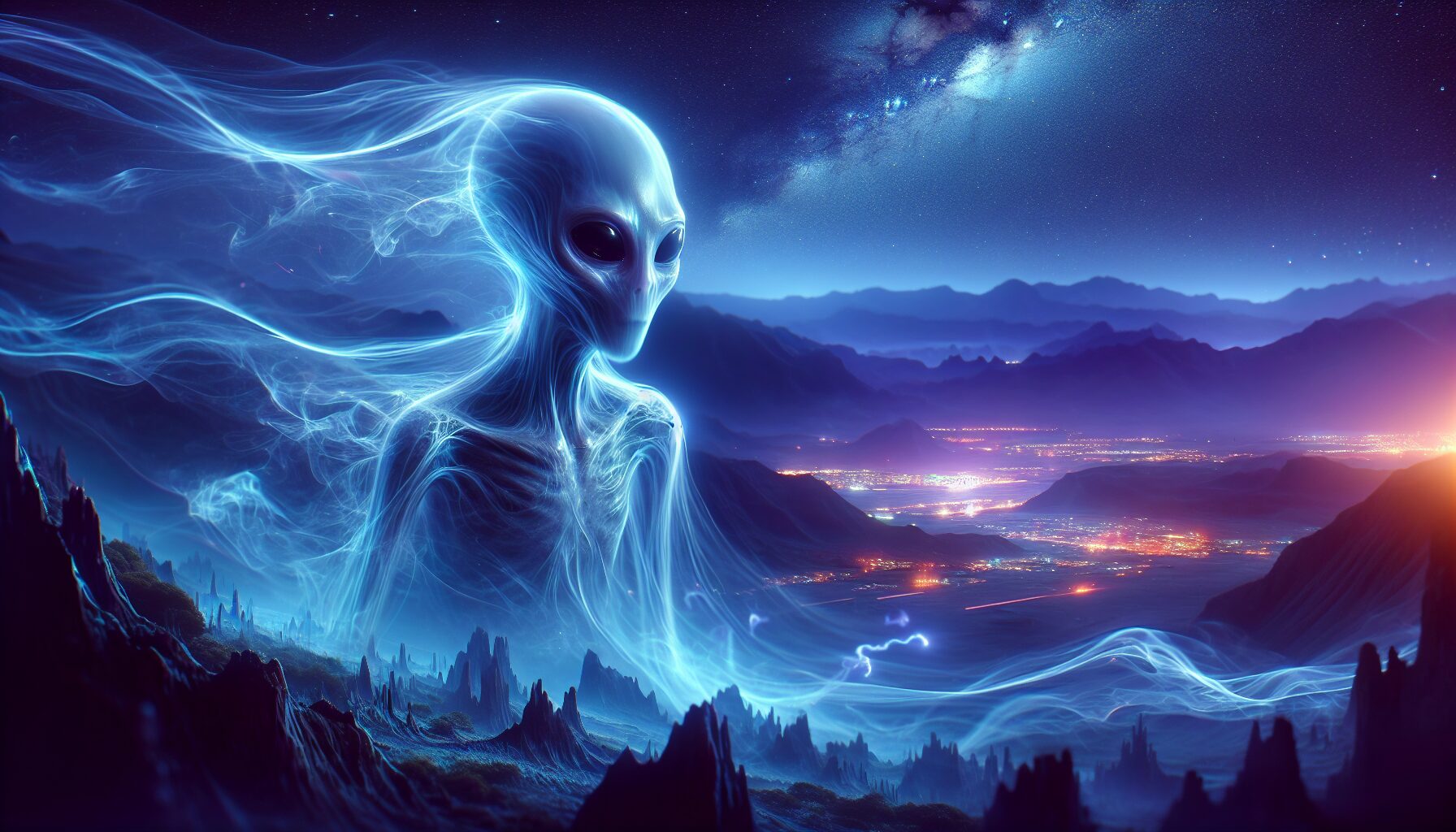
In the vast expanse of the universe, countless star systems harbor their secrets, whispers of the past echo through time and space. While humanity has yet to discover conclusive evidence of extraterrestrial life, the concept of Alien Ghosts—the memories of species long gone—continues to captivate our imagination and scientific inquiry. This article delves into the hypothetical realm of alien ghosts, exploring how these spectral remnants might manifest, how they relate to Earth’s own extinctions, and what they can tell us about the fragility of life.
The Ghosts of Our Past
Understanding alien ghosts requires an examination of our own planet’s history. Earth has witnessed several mass extinctions, each reshaping the planet’s biological tapestry. From the Permian extinction’s devastation to the cataclysmic asteroid impact that ended the reign of the dinosaurs, these events serve as stark reminders of life’s vulnerability.
Extinction-level events, whether caused by natural phenomena or potential anthropogenic effects, highlight a crucial fact: Life, regardless of its complexity, is ephemeral. As paleontologist Jack Horner suggests, “Extinction is the rule. Survival is the exception.” The idea that a civilization, no matter how advanced, could perish is not far-fetched.
How Alien Ghosts Might Manifest
But how might we detect these alien ghosts? The answer might lie in the concept of technosignatures—evidence of technology that survives the demise of its creators. Potential technosignatures could take many forms:
- Ruins and Artifacts: Just as archaeologists unearth ancient relics on Earth, future space explorers may discover remnants of alien civilizations on distant planets or moons.
- Radio Signals: Bouncing through the cosmos, radio waves can travel vast distances. If an advanced civilization communicated via radio signals, traces might still be detectable, ghosts of their presence.
- Dyson Spheres: Proposed by physicist Freeman Dyson, these theoretical megastructures could encapsulate stars to harness their energy. A partially constructed Dyson Sphere might signify a civilization that once thrived.
Lessons from Fermi’s Paradox
Fermi’s Paradox, named after physicist Enrico Fermi, questions why we have not yet observed evidence of alien life, given the vast number of potentially habitable planets. This conundrum aligns with the idea of alien ghosts, as it poses the question: Could the aliens we seek already be extinct?
Several hypotheses attempt to address Fermi’s Paradox, including the possibility that advanced civilizations self-destruct—a sobering thought that holds lessons for humanity. As noted by theoretical physicist Michio Kaku, “The real threat facing the future of humanity is not the universe, but ourselves.” If we hope to avoid the fate of becoming our own ghosts, understanding the paths and pitfalls of extinct civilizations could be vital.
The Importance of Cosmic Archeology
The study of alien ghosts ties into the emerging field of cosmic archeology. Just as terrestrial archaeologists decipher the history of human societies, cosmic archaeologists seek to uncover the stories of extraterrestrial civilizations. This discipline aims to explore several key questions:
- What causes civilizations to fall? Understanding the factors that lead to the demise of advanced societies can offer insights into longevity and resilience.
- How can we interpret alien cultural artifacts? Developing methodologies for understanding potential alien languages and symbols is a critical task.
- What technological advancements did they achieve? Uncovering the technologies of lost civilizations could provide humanity with technological blueprints for the future.
Humanity’s Role in Preserving Memories
While we ponder the existence of alien ghosts, we must also consider our role in preserving our own legacy. In an era characterized by unprecedented technological advancements and existential threats, the actions we take today have long-lasting implications.
“We are a way for the cosmos to know itself,” Carl Sagan famously said. Our quest to understand the universe and our place within it compels us to ensure that our story doesn’t become another silent echo in the vast theater of stars.
The construction of resilient societies, the pursuit of sustainable development, and the exploration of space are all steps toward preserving the human narrative. Through such endeavors, we not only secure our future but also ensure that, should we encounter another life-bearing world, we do so as equal participants in the cosmic dance.
Conclusion
The allure of alien ghosts lies in their ability to reflect our own potential destinies. While they remain hypothetical, they encourage us to look to the stars not just with wonder, but with caution and responsibility. They implore us to ask critical questions about our survival and our legacy.
As we turn our gaze skyward, let us remain vigilant stewards of our world. Let us learn from the silence of the stars and the whispers of worlds past. In doing so, we may one day encounter the echoes of another’s existence—an exchange not with ghosts but with living, thriving comrades among the stars.