Tag: visitors

  • UFO Cartographies – Mapping Unknown Visitors

    UFO Cartographies – Mapping Unknown Visitors

    UFO Cartographies: Mapping Unknown Visitors

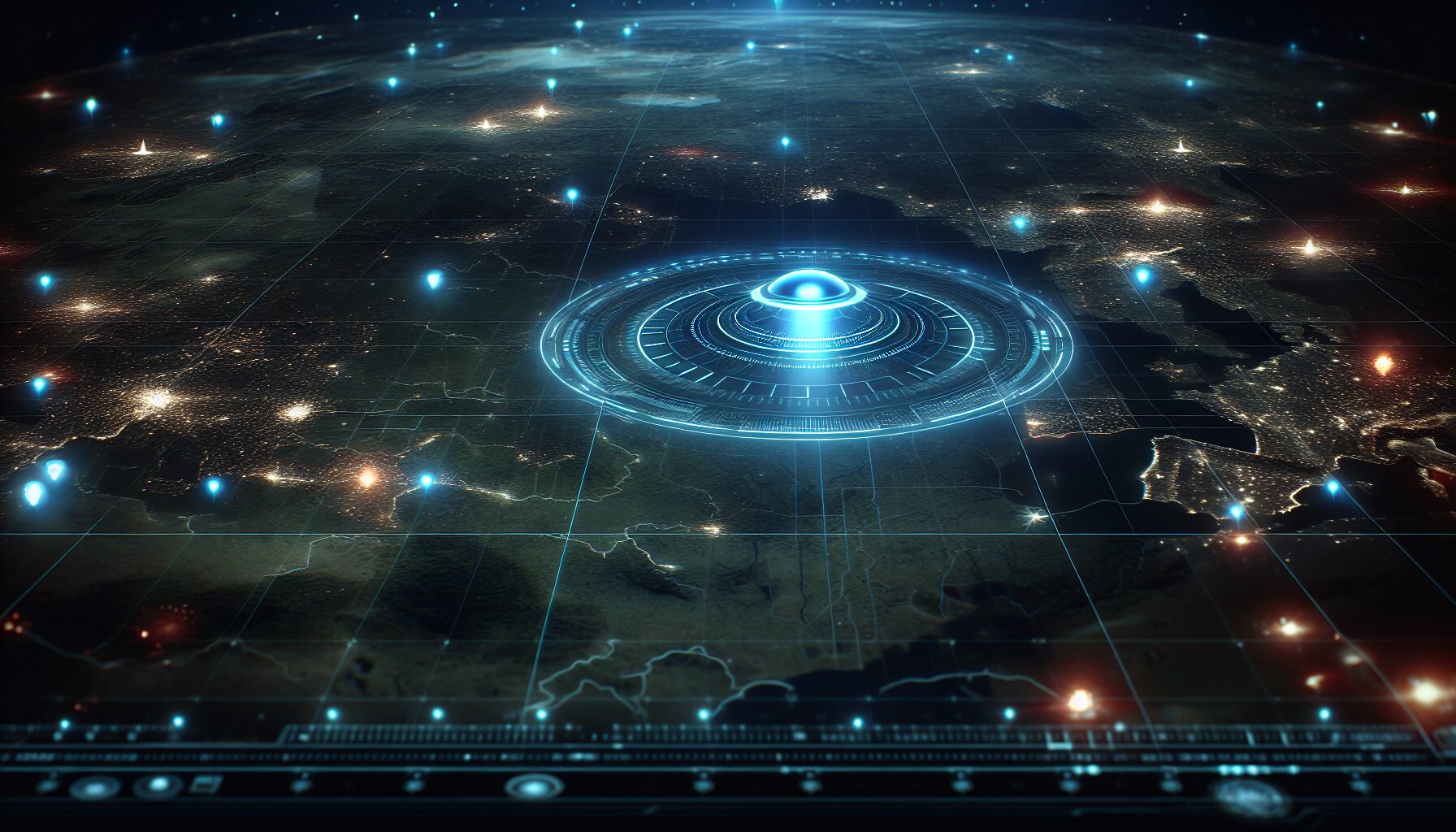
    Throughout history, humanity has been captivated by the mysterious and the unknown. One of the most enduring enigmas is the phenomenon of Unidentified Flying Objects (UFOs). While many theories attempt to unravel these mysteries, one fascinating approach is the art and science of mapping UFO sightings—a discipline we might call UFO Cartography. This article explores how mapping these unexplained encounters can reveal patterns, provoke questions, and offer insights into those unexplained visitors to our skies.

    Historical Background

    The modern era of UFO sightings began around the mid-20th century, a time already buzzing with developments in aviation and space exploration. It was June 24, 1947, when pilot Kenneth Arnold reported seeing nine high-speed objects near Mount Rainier, Washington. As news spread, sightings increased, spurring interest in charting these occurrences geographically.

    “I said they flew like a saucer would if you skipped it across the water,” Arnold described (History.com), coining the term “flying saucer.” The sighting frenzy led to increased efforts in recording and mapping such events, leading to the first attempts at UFO cartography.

    The Need for UFO Mapping

    Understanding the spread and concentration of UFO sightings is invaluable not just for enthusiasts and researchers but also for skeptics seeking clarity. Mapping these sightings can help in the following ways:

    • Identifying Patterns: Are there specific locations that are hotbeds for sightings?
    • Temporal Analysis: Are there times of the year or specific periods during the day when sightings peak?
    • Correlation with Technology: How do UFO sighting patterns correspond with technological advancements, flight paths, and satellite developments?

    Mapping these unknown visitors can thus offer compelling insights into their nature and possible origins.

    Famous Maps and Studies

    Several initiatives have contributed to the cartographic study of UFOs. One notable effort is the National UFO Reporting Center (NUFORC), a database that logs and maps sightings. Similarly, MUFON (Mutual UFO Network) boasts an extensive catalog of mapped sightings worldwide.

    “The maps highlight clusters and trends helping to focus our investigation efforts,” says Peter Davenport, director of NUFORC (NUFORC).

    These maps have revealed surprising trends, such as increased sightings around nuclear facilities and notable celestial events. Significant maps have also documented waves of sightings, from the mysterious “Phoenix Lights” incident in 1997 to more recent occurrences in North Carolina’s Brown Mountain region.

    Technological Advancements and Modern Mapping

    Today’s mapping techniques have evolved significantly since the rudimentary methods of the 1950s. With advancements in GIS (Geographic Information Systems) and high-resolution satellite imagery, researchers can now create precise maps overlaying multiple data sources:

    • Geospatial Analysis: Utilizing GIS software to analyze spatial data related to UFO sightings.
    • Public Access and Collaboration: Interactive maps on platforms like Google Earth allow for public contributions, enriching data sets.
    • Machine Learning Algorithms: AI analyses enable pattern recognition and anomaly detection across large datasets.

    These technologies have taken UFO cartography leaps and bounds forward, allowing for comprehensive studies that were not possible in earlier decades.

    The Sociocultural Impact of UFO Maps

    UFO maps do more than chart the skies—they resonate with the public’s imagination, inciting curiosity and sometimes fear. They have been utilized in films, literature, and art, becoming iconic symbols of the mysterious unknown. Cartographs serve as cultural artifacts, reflecting the zeitgeist of their times.

    Furthermore, these maps have political implications, often used to argue for increased transparency and the declassification of government documents regarding unexplained phenomena. As noted by former Senator Harry Reid, a proponent of greater disclosure, “The American people deserve to be informed” about UFO activities (New York Times).

    The Future of UFO Cartography

    As technology evolves, so will the methods and accuracy of mapping UFOs. Future directions for this field may include:

    • Integration with Astronomical Observations: Using advanced telescopes and space observation to corroborate sightings with astronomical data.
    • Global Network of Observers: Building a real-time, global web of citizen scientists contributing data.
    • Enhanced Data Visualization: Transforming raw data into dynamic and interactive visual formats for broader public engagement.

    By fusing traditional cartographic techniques with cutting-edge technology, the discipline of UFO mapping will continue to provide valuable insights into one of humanity’s greatest mysteries. The maps of the future might just hold the key to unlocking secrets of our universe yet to be understood.

    UFO cartography, at its core, is not just about mapping terrain or plotting a course; it is about capturing a story—a story woven into the fabric of human curiosity and the quest for understanding. As we continue to chart these unknown visitors, may our maps guide us to boundaries beyond where fact meets fiction.

  • Aliens as Angels of Death – Visitors or Harbingers?

    Aliens as Angels of Death – Visitors or Harbingers?

    Aliens as Angels of Death: Visitors or Harbingers?

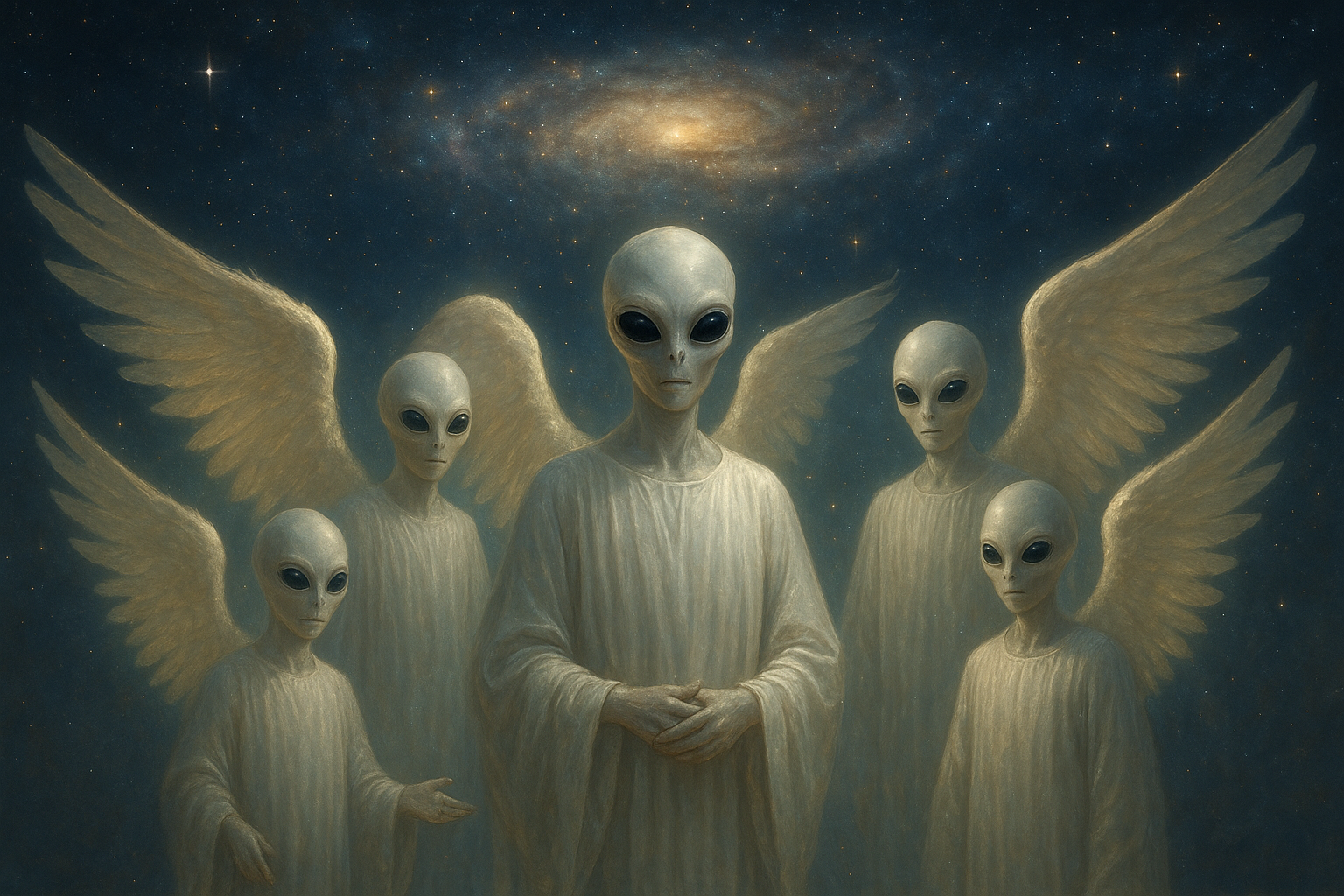
    The thought of extraterrestrial beings has captivated the human imagination for centuries. From ancient mythologies to modern science fiction, aliens are often depicted as mysterious entities with vast powers and unfathomable motives. A particularly intriguing theme is the portrayal of aliens as “Angels of Death,” enigmatic visitors who may serve as harbingers of doom or catalysts for transformation.

    Historical Perspectives on Extraterrestrial Visitations

    Humans have long wondered about the existence of life beyond our world. Ancient scriptures and texts occasionally mention celestial beings descending from the skies. In some interpretations, these beings were seen as angels or messengers who delivered divine decrees or catastrophic warnings.

    • The Book of Ezekiel in the Bible describes visions of heavenly crafts and interactions with divine beings.
    • In Hindu mythology, gods traversed the skies in flying chariots known as Vimanas. These vehicles sometimes served as tools of war and vengeance.

    While these interpretations are heavily saturated with the belief systems of their times, the parallels to modern-day UFO sightings and alleged alien abductions are hard to ignore.

    The Modern Mythology of UFOs and Aliens

    Since the late 20th century, the phenomenon of UFO sightings has become a focal point of both scientific inquiry and popular culture. Rigorous investigations by agencies such as the US Air Force’s Project Blue Book have attempted to categorize these occurrences, often with inconclusive results.

    The depiction of aliens in contemporary media ranges from benevolent saviors to annihilating forces—entities capable of both creation and destruction. This duality is highlighted in films and literature where extraterrestrial visitors serve as a mirror for humanity’s hopes and fears.

    Aliens as Harbingers of Destruction

    The idea of aliens acting as agents of annihilation is not just a construct of Hollywood. In The War of the Worlds by H.G. Wells, Martians invade Earth with superior technology, wreaking havoc on civilization. This narrative suggests a profound vulnerability in human endeavors, an existential risk posed by encounters with technologically advanced beings.

    Movies like Independence Day and The Day the Earth Stood Still further echo these themes, portraying alien invasions as warnings to humanity, urging a focus on global unity and peace. In both speculative and philosophical discussions, aliens are often posited as sentinels, whose encounters offer stark reflections on our self-destructive tendencies.

    “The most terrifying fact about the universe is not that it is hostile but that it is indifferent. But if we can come to terms with this indifference and accept the challenges of life within the boundaries of death—however mutable he may be—our existence as a species can have genuine meaning and fulfillment. However vast the darkness, we must supply our own light.”

    —Stanley Kubrick

    Angels of Death: Transformative or Terminal?

    It’s possible to envision aliens as heralds of transformation, serving as cosmic agents of evolutionary pressure. This perspective often shifts the narrative from one of destruction to one of change.

    • The transformative power of alien contact is explored in films like Contact, where communications with extraterrestrials challenge humanity’s place in the universe.
    • In the realm of speculative fiction, Arthur C. Clarke’s Childhood’s End depicts aliens as catalysts for human transformation, blending the apocalyptic with the transcendental.

    From this viewpoint, aliens as “Angels of Death” force humanity to confront its flaws and catalyze growth beyond its limitations. The threat of death is a powerful motivator for innovation and unity, driving the species to transcend its primal fears.

    Scientific Perspectives: Are We Alone?

    From a scientific standpoint, the question remains: are there truly extraterrestrial entities out there, and are they aware of us? The search for extraterrestrial intelligence (SETI) has long been a spearhead in this quest, analyzing signals from the cosmos for signs of alien life.

    The SETI Institute continues to monitor radio waves and investigate potential communication from other lifeforms. While no definitive signals have been confirmed, the vastness of the universe suggests numerous possibilities.

    The philosophical debate around aliens as either visitors or conquerors reflects broader existential questions about universal morality. If more advanced civilizations exist, would they share the same ethical principles, or would they impose their own?

    Conclusion: Navigating the Uncertainty

    As humanity ventures further into space, the possibility of encountering otherworldly beings becomes increasingly probable. Whether these aliens act as “Angels of Death” or benevolent allies may ultimately depend on how we perceive and prepare for their arrival.

    In contemplating aliens as either visitors or harbingers, humanity is reminded of its own vast capacity for creation and destruction. Whether these encounters will mark an end or a new beginning is a narrative yet to be written, an odyssey awaiting its heroes.

    As the philosopher Carl Sagan wisely noted, “For small creatures such as we, the vastness is bearable only through love.” The message is clear: whether the threat comes from within or without, the ultimate struggle is to preserve the light of civilization as we journey through the cosmic night.