Tag: void

  • The Arcane Void – Mystery Encoded in Emptiness

    The Arcane Void – Mystery Encoded in Emptiness

    The Arcane Void: Mystery Encoded in Emptiness

    The concept of the void, an enigmatic emptiness that resonates across various disciplines, stretches beyond mere absence. It embodies profound philosophies, stirring emotions and inciting a relentless quest for understanding. What makes the void so captivating is its ubiquity and its haunting presence that continues to challenge our perceptions of reality. In delving into the arcane void, we explore a space where science, art, psychology, and philosophy intersect, creating a tapestry rich with mysteries encoded in emptiness.

    The Philosophical Perspective

    The void as a philosophical concept dates back to ancient Greek thought, particularly with the pre-Socratic philosopher Parmenides, who posited that emptiness, or “nothingness,” was an impossibility. In direct contrast, the atomists, including Democritus, perceived the void as essential for motion and existence. This dichotomy set the stage for ongoing debates.

    “Nothingness—or the void—engages philosophers’ minds since it raises questions about existence itself, challenging assumptions about space, time, and the nature of reality.”

    The existentialists, such as Jean-Paul Sartre, later explored the void in human emotions and psychology, suggesting that humans often face an inherent void at the core of their existence. This void can evoke anxiety, compelling individuals to seek meaning or face an unsettling freedom. Sartre is famously quoted as stating, “Existence precedes essence,” interpreting the void as a backdrop against which humans define themselves.

    The Scientific Enigma

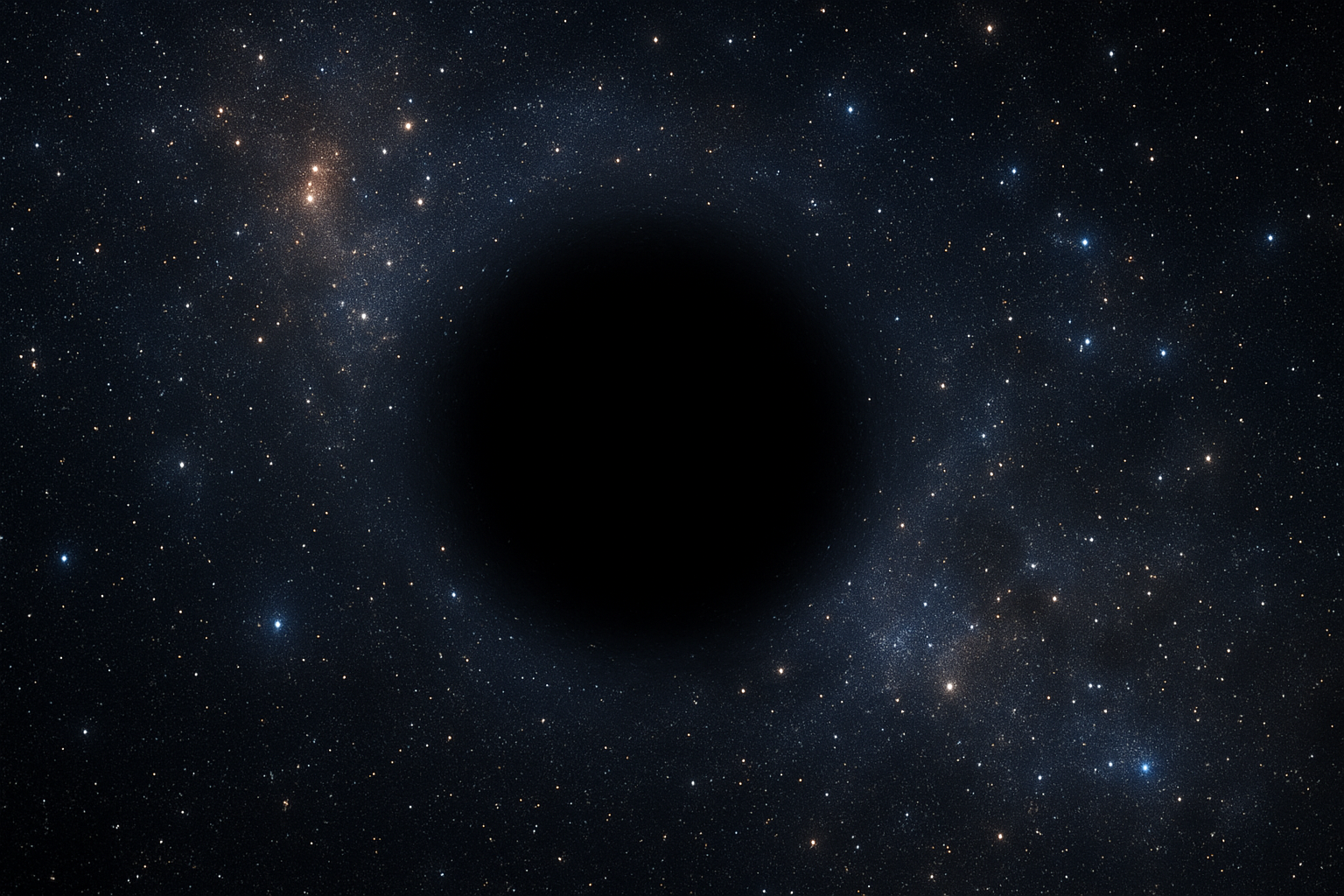
    In the realm of science, the void takes on a tangible form in terms of cosmic spaces and quantum physics. The universe’s vastness, marked by dark voids between celestial bodies, is both a literal and figurative expanse of emptiness. In cosmology, these voids challenge our understanding of the universe’s structure.

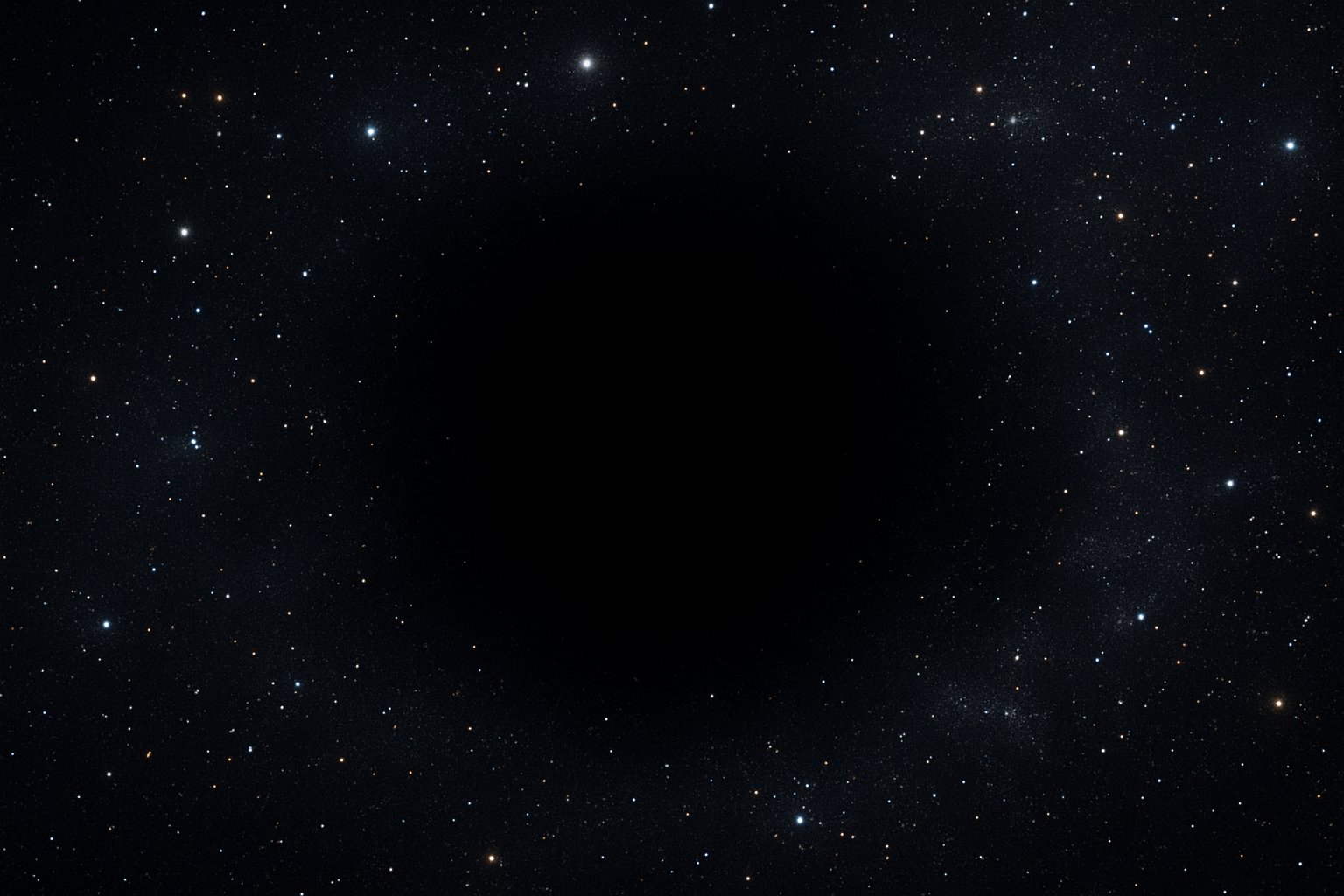
    Astronomically speaking, voids are large expanses between galaxy filaments, with few or no galaxies. Dr. J. Richard Gott, a professor of astrophysical sciences, remarked in a Space.com article, “Our current understanding of the universe’s architecture emerges largely from studying these cosmic voids—they are as informative as the galaxies themselves.”

    Quantum Mechanics and the Void

    In quantum theory, the emptiness of the void is deceptive. According to the principles of quantum mechanics, what appears as empty space is teeming with transient quantum particles that continuously flicker in and out of existence. The vacuum, therefore, is a seething medium of potentials—a background that challenges the very definition of emptiness.

    “These virtual particles lend the vacuum a curious kind of presence, capable of affecting the real world in observable, albeit extremely subtle, ways.”

    The Artistic Interpretation

    The void has served as a potent source of inspiration for artists throughout history, often used to reflect existential themes and the human condition. Artists employ the concept to evoke emotion, leaving spaces deliberately unfilled to generate tension and evoke contemplation.

    Yves Klein, the French artist known for his monochrome paintings, famously explored the void through his work. In his “Leap into the Void” photograph, he symbolized a transcendence into nothingness—engaging viewers in a conversation about the nature of existence and the role of the unknown in art.

    “The void not only frames the known but becomes part of the narrative, provoking the viewer to engage with the absence and its implications.”

    Psychological Dimensions

    On the psychological front, the void often symbolizes an emotional state of emptiness or alienation. It is akin to feelings of hollow despair or the lack of meaning that individuals may experience. Viktor Frankl, a psychologist and Holocaust survivor, identifies this sense of a void or “existential vacuum” in his work “Man’s Search for Meaning.”

    Frankl observed:

    “This emptiness manifests in boredom and apathy, which he refers to as the ‘existential vacuum,’ a reflection of the loss of meaning in modern life.”

    In modern psychology, the void is often explored within existential therapies, which focus on helping individuals find meaning amidst the emptiness. This approach aligns with humanistic theories that emphasize personal growth and self-actualization.

    Concluding Thoughts

    The arcane void persists as a canvas upon which humanity projects its fears, inquiries, and creative impulses. From ancient philosophy to contemporary science, art, and psychology, the void remains a space that is both forbidding and inviting, drawing us into its depths. In attempting to decode the mysteries held within the void, we embark on an endless journey of exploration, discovery, and, perhaps, occasional comprehension.

    The void, it seems, might always remain partly elusive, inviting us to engage with its enigma, prompting us to define our own existence against its shadowy backdrop. As we continue to explore, both physically and intellectually, we may seek not to fill the void, but to understand and embrace the profound truths it harbors.
  • Mystery of the Astral Void – Emptiness Beyond Form

    Mystery of the Astral Void – Emptiness Beyond Form

    The Mystery of the Astral Void – Emptiness Beyond Form

    The astral void is a concept often steeped in mystery and intrigue, evoking images of an uncharted realm beyond the physical world. This metaphysical construct, discussed by mystics and philosophers throughout the ages, suggests a plane where form gives way to the ephemeral, blurring the lines between reality and imagination.

    “The astral body, the psychic ‘double’, believed to be able to detach itself from the physical body and travel at will, represents man’s quest for transcendence.” – Encyclopedia Britannica

    Historical Perspectives

    Throughout history, the notion of an astral void, or a realm beyond the tangible, has captivated human imagination. In ancient times, various cultures perceived the astral plane as an extension of spiritual and religious belief systems. The Egyptians, for instance, believed that the soul or Ka could traverse worlds, bridging the gap between the earthly and the divine.

    • Ancient Egypt: Their profound spiritual beliefs included intricate understandings of life after death and the soul’s journey beyond.
    • Greek Philosophy: Philosophers like Plato considered the astral dimension as a realm of perfect forms—beyond the shadowy cave of perceptual reality.
    • Hinduism and Buddhism: These traditions describe multiple planes of existence, transcending the illusory nature of the material world, with meditation and enlightenment as paths to reach these higher realms.

    Modern Interpretations

    In recent times, the exploration of the astral void has taken on new dimensions. With the advent of the New Age movement, interest in astral travel and out-of-body experiences surged, intertwining ancient wisdom with contemporary practices. This has brought about a modern yet esoteric understanding of astral phenomena.

    Modern science, while largely skeptical, notes that altered states of consciousness can be achieved through various means, potentially explaining the sensations experienced during perceived astral projections. Studies suggest that these experiences could be linked to deep meditative states, lucid dreaming, or neurological phenomena.

    The Mechanics of Astral Projection

    Astral projection is often depicted as a journey where consciousness separates from the physical form, allowing for exploration of the astral plane. While documented occurrences are largely anecdotal, some believe that specific techniques can facilitate this practice.

    • Relaxation and Meditation: Finding a calm and comfortable setting can be crucial in inducing the necessary state of mind.
    • Visualization: Imagining oneself floating or gently leaving the body is a common methodology.
    • Mind-Awakening Techniques: Some practitioners employ visualization exercises where they rotate or manipulate their perceived ‘astral self’ to induce an out-of-body state.

    “Numerous people have reported waking suddenly, feeling an intense pressure on their chest—like a ‘body asleep and mind awake’ situation, a sensation not wholly unlike what some astral projectors describe.” – Scientific American

    Mind, Myth, or Metaphor?

    The validity of the astral plane remains a topic of debate. For some, it is a profound metaphysical reality, while others see it as a manifestation of the mind’s limitless imaginative capabilities. Psychological and spiritual interpretations abound, presenting the astral realm as either a tangible experience or a symbolic representation of subconscious exploration.

    From a psychological standpoint, the astral void could be interpreted as a metaphorical space where one’s unconscious processes conflicts, desires, and existential ponderings absent from the constraints of the physical world.

    The Astral Void in Popular Culture

    Beyond philosophical and spiritual realms, the astral void has permeated popular culture. Media portrayals range from fantastical to philosophical, often serving as a potent narrative device:

    • Film and Literature: Movies like Doctor Strange and books like Paulo Coelho’s The Alchemist touch on themes that resonate with the idea of journeying beyond the physical self.
    • Video Games: Titles such as Control and fantastical role-playing games incorporate the astral plane, allowing players to navigate parallel dimensions.

    Conclusion: The Endless Quest

    The astral void remains shrouded in the allure of the unknown, enticing seekers both ancient and modern to gaze beyond the veil. Whether a literal space, a psychological construct, or a spiritual metaphor, this void invites us to explore the enigma of our consciousness. As long as humanity longs to transcend the limitations of the physical realm, the mystery of the astral void will persist as a testament to our ever-evolving quest for understanding.

    In contemplating the astral, one reflects on the very nature of existence, the boundless potential of the human mind, and the universal quest for meaning. The astral void may yet hold secrets waiting to unravel for those willing to venture into its depths.

  • Arcane Emptiness – Symbols of Void

    Arcane Emptiness – Symbols of Void

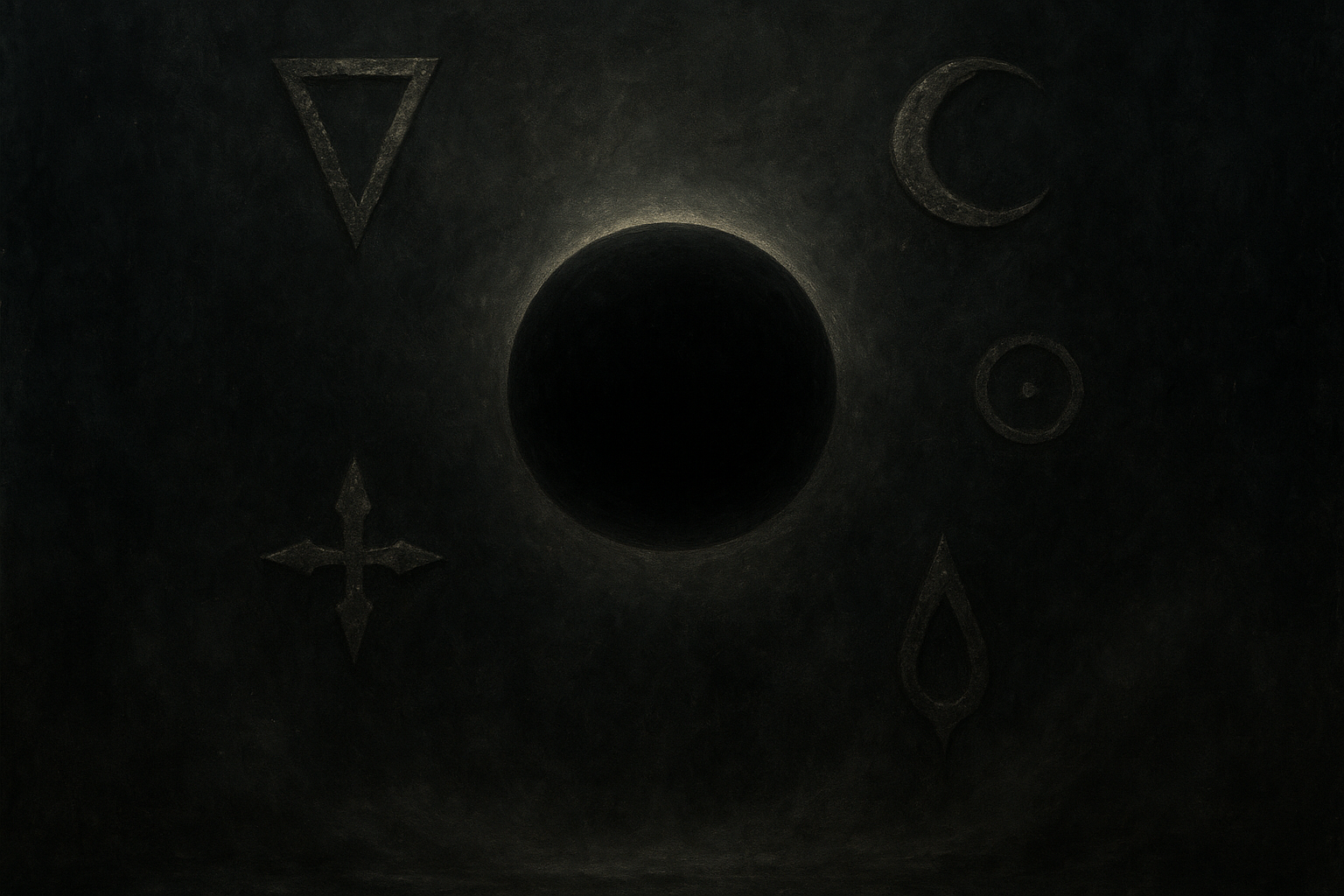
    The concept of the void has intrigued philosophers, mystics, and artists throughout history. Often shrouded in mystery, the void represents an absence—yet paradoxically, it is filled with potential and profound significance. From ancient symbols and alchemical concepts to modern interpretations in art and literature, the void invites contemplation of the unknown and the unseen. This article delves into the symbols and meanings of the void, unearthing the arcane emptiness that has captivated human thought for centuries.

    The Philosophy of the Void

    “If you gaze long into an abyss, the abyss also gazes into you.” — Friedrich Nietzsche

    Nietzsche’s famous phrase captures the essence of the void as not only a space but an active presence. In philosophy, the void often represents a fundamental question about the reality and existence itself. The ancient Greeks, particularly the Atomists like Democritus, posited the void as an essential component of the universe, crucial for the movement of atoms and thus, for life itself.

    In Eastern philosophy, concepts such as Śūnyatā in Buddhism describe the void as emptiness, an intrinsic nature of the universe where inherent existence is denied, suggesting that everything is interconnected. This perspective invites one to refocus on the transient and interdependent nature of reality.

    Symbols of the Void Across Cultures

    • The Ouroboros: An ancient symbol depicting a snake eating its own tail, the Ouroboros represents the cyclical nature of the universe, life, and death. It symbolizes the eternal return and the void as both the beginning and end of existence.
    • The Circle: Found in many cultures, the circle symbolizes wholeness and infinity. In Zen Buddhism, the Enso is often used in art to represent the void, emptiness, and the beauty of imperfection.
    • The Vesica Piscis: A geometric shape formed by the intersection of two circles, this symbol represents the intersection of the material and spiritual worlds. It is the void or ‘womb of the universe,’ a space of creation out of nothingness.
    • The Black Hole: In modern cosmology, the black hole serves as a dynamic representation of the void. A region in space where gravity is so strong that nothing, not even light, can escape. It is the literal emptiness that invites infinite questions about the nature of the universe.

    Alchemy and the Alchemical Void

    Alchemy, the forerunner of modern chemistry, interweaves scientific and mystical insights. Central to alchemical beliefs is the concept of prima materia—the raw, formless base of all substances, akin to the void. Alchemists viewed the void as a stage in the Magnum Opus or the Great Work, necessary for the transformation of lead into gold, symbolizing spiritual enlightenment.

    The void in alchemy is associated with the nigredo stage, characterized by decomposition and putrefaction, leading ultimately to rebirth. This notion of destruction as a path to new creation echoes throughout esoteric traditions and highlights the cyclical nature inherent in the void’s symbology.

    The Void in Modern Art and Literature

    Artists and writers in the modern era continue to explore the theme of the void, often navigating the boundaries between emptiness and existence. Abstract expressionism, notably the works of Yves Klein, emphasizes void and sublimity through minimalist approaches. Klein’s Monotone-Silence Symphony and Blue Epoch pieces engage with expanses of color to evoke an emptiness that is simultaneously rich and inviting.

    “The explanation is always more complex, and still more complex, than you imagined.” — John Ashbery

    In literature, novels such as Samuel Beckett’s Waiting for Godot express existential voidness through sparse narratives and settings that reflect the emptiness and ennui of the modern human condition. Science fiction often utilizes the cosmic void to question humanity’s place in an incomprehensibly vast universe, evoking both wonder and existential dread.

    The Spiritual Dimension of Emptiness

    Emptiness is intimately linked with spiritual practices where the void is an invitation to transcend mundane concerns and connect with a deeper spiritual truth. Practices such as meditation or contemplative prayer aim to empty the mind of busy thoughts, allowing one to immerse in a state of ‘void’ that can lead to profound personal insight and enlightenment.

    This spiritual emptiness is not one of lack but of potential—a creative space where one can reflect and grow. It is the shedding of the ego and worldly attachments to embrace a more comprehensive view of self and universe, a concept deeply embedded in both Eastern religions and Western mystical traditions.

    Conclusion: Embracing the Arcane Emptiness

    The exploration of the void is a journey that delves into the depths of being and existence. The arcane emptiness that symbolizes the void is both mysterious and instructive, urging humanity to look beyond the confines of immediate perception and embrace the vast unknown. This engagement with the void can provoke fear or inspire revelation, often at the same time.

    Recognizing the void’s omnipresence in cultural symbols and philosophical thoughts enriches one’s understanding of life itself, offering a lens through which to explore the constant dance between nothingness and creation. In embracing the void, perhaps we embrace the very essence of what it means to exist.

    For further exploration into the philosophical and cultural implications of the void, you might consider works such as “The Void” by Frank Close or delve into the depths of Buddhist teachings on Śūnyatā.

  • Mystery of the Void – Emptiness in the Cosmos

    Mystery of the Void – Emptiness in the Cosmos

    In the vast expanse of the universe, humans are but mere specks amidst an almost incomprehensible sea of stars and galaxies. Yet, it is not the teeming stars or the brightness of galaxies that capture the imagination the most—it is the overwhelming emptiness that lies between them. This profound void has mystified astronomers and philosophers alike for centuries.

    The Nature of Cosmic Emptiness

    The universe is predominantly made of space that appears empty, a concept both simple and elusive. Known as the “void,” this emptiness accounts for a significant part of the universe. But this does not mean that voids are entirely vacuum—they contain low-density gases and dark matter. According to astrophysicist Brian Greene, “In those vast, cold portions of the universe… the environment is as close to absolute nothingness as any we know of in nature.”

    Cosmic Voids and Their Significance

    Cosmic voids are regions with significantly lower density compared to the average cosmic density. These voids make up about 80% of the universe’s volume and play an essential role in the universe’s large-scale structure, influencing the gravitational dynamics of surrounding galaxies.

    • Dark Matter Mysteries: Voids are expected to be less influenced by dark matter compared to denser regions, providing unique conditions to study this elusive substance.
    • Gravitational Lensing: The interaction between voids and dark matter affects gravitational lensing, helping astronomers map dark matter distribution across the universe.
    • Expansion Insights: Voids expand as the universe does, offering clues about cosmic expansion and the universe’s fate.

    The Philosophical Implications of Emptiness

    The idea of a void is not just a scientific curiosity; it also poses significant philosophical questions. What does it mean to exist in a universe predominantly devoid of matter? The void challenges our notions of presence and absence and compels us to redefine them. Philosopher Parmenides, famously mused, “What is not, is not,” emphasizing the difficulty of speaking about nothingness.

    “For the stuff of the universe, take the emptiness of space and everything in it,” —Brian Greene, The Elegant Universe.

    Emptiness and Human Understanding

    Our understanding of the void has evolved over time. Aristotle believed that “nature abhors a vacuum,” a view superseded by discoveries in physics demonstrating that emptiness is an integral part of our cosmos. Quantum mechanics further complicates the picture by suggesting that even the emptiest space teems with virtual particles popping in and out of existence.

    1. From Aristotle to Einstein: The shift from Aristotle’s interpretations to Einstein’s theories of relativity marks a profound evolution in comprehending the void.
    2. Quantum Fluctuations: Subatomic interactions showcase that even the void is full of potential activities, challenging our perception of ’emptiness.’
    3. Cognitive Reflection: Human perception has always grappled with the notion of the void, mostly filling it with myth, art, and philosophy.

    The Emotional and Existential Impact

    On an emotional and existential level, the void resonates deeply. It symbolizes the unknown, the unexplained, and sometimes, the feared. This emptiness is often used allegorically to express existential dread or the feeling of insignificance. Carl Sagan eloquently remarked, “The cosmos is within us. We are made of star-stuff. We are a way for the universe to know itself.” This interplay of connection and detachment can lead to a deeper understanding of our place in the universe.

    Conclusion

    The mystery of the void goes beyond science, touching the realms of philosophy, psychology, and art. It forces a reflection on the nature of existence and our place within the universe. The cosmic void, far from being a barren wasteland, is a field rich in scientific and existential inquiries. As we continue to explore these vast, empty spaces, we may inch closer to understanding not just the universe, but ourselves.

    In considering the mystery of the void, we are reminded of the complexity of the universe and the fact that sometimes, the truest mysteries are not about what is there, but what is not.

  • Abstract Nightfall – Emptiness Encounters the Soul

    Abstract Nightfall – Emptiness Encounters the Soul

    The concept of nightfall often symbolizes more than the mere end of daylight. It represents the deeper dive into our existential fears and desires. In the poetic and philosophical realm, this transition into darkness beckons introspection, vulnerability, and the encounter with the self amidst the vacuum of existence.

    The Philosophy of Emptiness

    Philosophers from various traditions have grappled with the idea of emptiness, attempting to decipher its implications for human consciousness and fulfillment. In Buddhism, for instance, emptiness (or śūnyatā) is a pivotal concept. It suggests the absence of an inherent, independent self or essence, positing that all phenomena are interdependent and ultimately void of a permanent identity.

    “Form is emptiness, emptiness is form,” a profound assertion found in the Heart Sutra, encapsulates this philosophical view. It challenges us to perceive the ephemeral nature of existence.

    The existentialists also explore emptiness, though often with a more disquieting lens. Jean-Paul Sartre famously opined that “existence precedes essence,” proposing an existence fraught with the absence of predetermined purpose, thus thrusting humanity into a “nothingness” from which meaning must be carved.

    Nightfall: A Metaphor for the Internal Journey

    Nightfall serves as a potent metaphor in literature and art, representing the segue into the subconscious mind. As daylight wanes, the outer world recedes, prompting exploration into the uncharted territories of our interior landscapes. The encounter with this internal “night” often uncovers fears, desires, and truths we otherwise keep at bay under the sunlit veneer of day-to-day existence.

    • Fearlessness in Vulnerability: The cloak of night can either amplify our anxieties or ironically serve as a comforting veil, a space where deeper truths can emerge free from the harsh light of rational scrutiny.
    • The Canvas of Dreams: Dreams serve as a conduit, a negotiation space between the conscious and the unconscious. In this creative nightscape, the soul grapples with unresolved conflicts, constructing meaning from the abstract chaos.

    The Art of Embracing The Void

    Confronting emptiness at nightfall demands a willingness to engage with the void, affirming life not through external validations but through intrinsic understanding and acceptance.

    “Our task is to kiss the earth and do our best to keep it, and to build as much zing into it as we can,” Hans Hofmann once said, illustrating an artist’s resolve to transform void into vital presence (Brain Pickings).

    This transformation is an active, creative engagement with life’s inherent uncertainties. By embracing the void, we allow ourselves the courage to dream and craft personal meaning.

    Contemplative Cultures and Nightfall Rituals

    Many cultures have ritualized the transition of day into night, recognizing it as not just a temporal shift but a sacred passageway. Practices such as meditation, prayer, or journaling during this time serve as tools to decode personal narratives hidden within the folds of darkness.

    • Japanese Zen Gardens: The Zen garden exemplifies the beauty and power of simplicity, encouraging contemplation on the often overlooked spaces of silence and shadow.
    • Western Contemplative Traditions: The Christian practice of Compline, for instance, marks the end of the day’s labors, fostering a moment of reflection and peace.

    In these rites, the soul finds both chaos and clarity, mirroring the metaphysical dance of nightfall and the dawn. Through allowing the darkness to speak to us, we embark on a journey that often finds its narrative in the profoundly personal.

    Conclusion: Embracing the Abstract Night

    In the abstract night, emptiness and the soul encounter one another in a dance as old as time. Navigating this encounter involves acknowledging the intertwined fabric of fear and inspiration, void and fulfillment.

    The challenge remains to wield the night’s potential for introspection not as a source of dread but rather as an opportunity for renewal and profound self-awareness. Through engaging with the abstract nightfall—by witnessing and embracing the soul’s encounter with emptiness—we truly discover what it means to be human.

  • The Empty Throne – Emptiness in Archetypal Power

    The Empty Throne – Emptiness in Archetypal Power

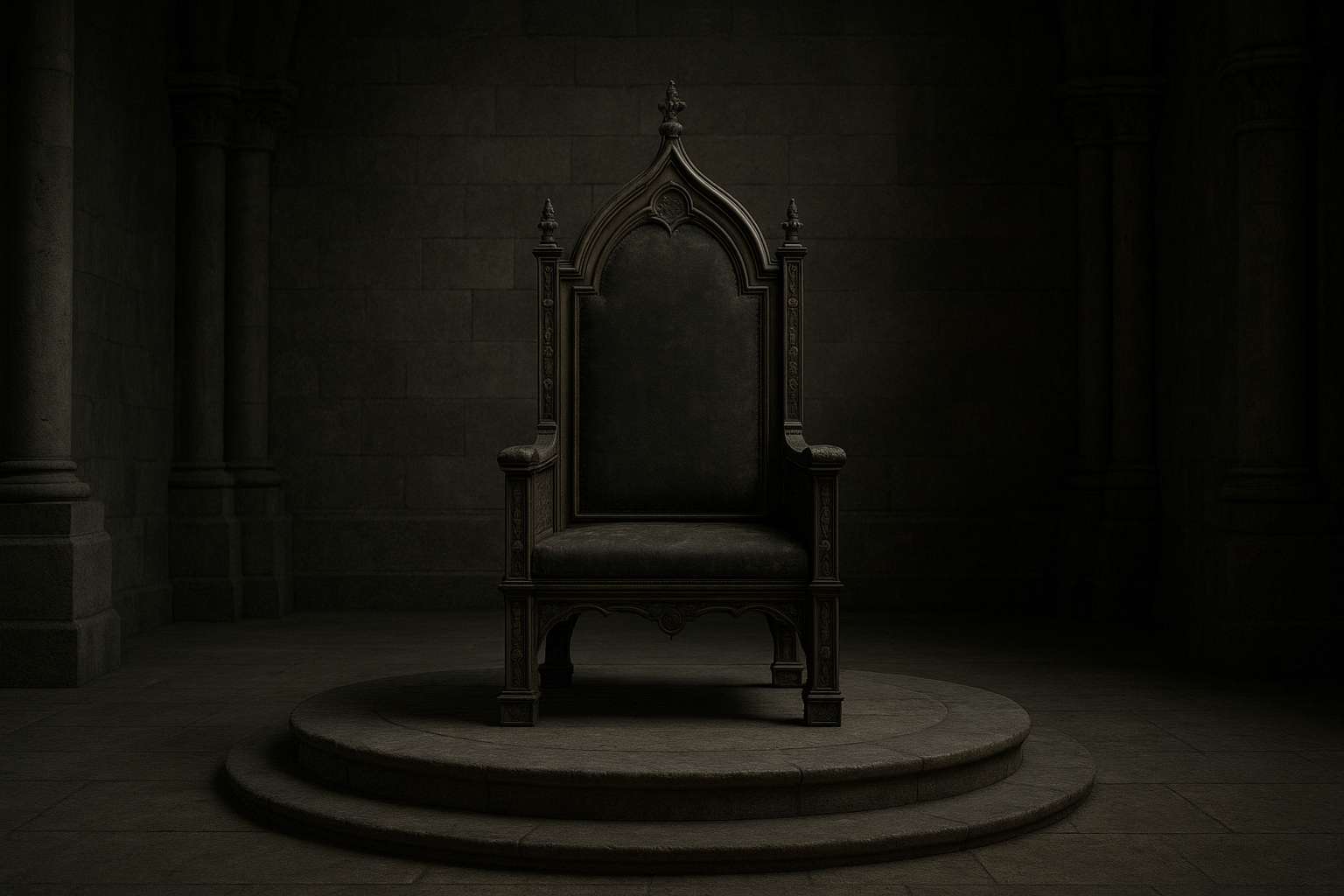
    For millennia, the throne has stood as a symbol of power and authority in human civilization. However, the concept of an “empty throne” invites a more profound exploration of the nature of power and its archetypal significance. When the seat of power remains unoccupied, it suggests both an absence of leadership and a tantalizing opportunity for change. In mythology, literature, and modernity, the empty throne symbolizes the complex dynamics of power, the void it creates, and the possibilities it offers.

    The Archetype of the Throne

    The throne is more than just a seat—it is an archetype embodying the pinnacle of authority. According to Carl Jung, archetypes derive from the collective unconscious and represent universal symbols that transcend time and culture (Wikipedia). In this light, the throne becomes a manifestation of power revered and recognized by all. From King Arthur’s legendary Round Table to the Iron Throne in George R.R. Martin’s A Song of Ice and Fire, it encapsulates legitimacy, leadership, and the burden of command.

    The Dynamics of Emptiness

    Yet, when devoid of an occupant, the throne takes on a different attribute—emptiness. This emptiness can lead to an environment ripe with uncertainty and expectation. As philosopher Jean-Paul Sartre once implied, emptiness allows for freedom and potential but also calls forth anxiety and instability (Stanford Encyclopedia of Philosophy). In the context of power structures, an empty throne challenges the status quo, questioning who is deserving to fill the void and with what new ideals.

    A Catalyst for Change

    Throughout history, empty thrones have often preceded significant transformations. The fall of mighty empires or the demise of influential rulers frequently left thrones unoccupied, ushering in periods of both turmoil and growth. Such vacancies provide a critical juncture where new narratives can emerge, releasing the old guard and inviting novel ideas and leadership.

    “Power is like being a lady… if you have to tell people you are, you aren’t.” — Margaret Thatcher

    In essence, Thatcher’s words highlight that a throne’s authority flows not from its existence but from the capacity of its occupant to command respect and enact meaningful change. Therefore, an empty throne becomes not just a void, but a canvas on which the future is painted. In either a metaphorical or literal sense, the empty throne serves as an ever-present reminder of the transient nature of power and the enduring quest for authenticity and transformation.

    • Archetypal Power: Represents universal symbols recognized across cultures.
    • Emptiness and Opportunity: Suggests potential for growth and change.
    • Historical Catalysts: Often precedes dynamic shifts in power structures.
  • Emptiness Between Stars – Mystery in the Void

    Emptiness Between Stars – Mystery in the Void

    Emptiness Between Stars: Mystery in the Void

    The universe is an ever-expanding void, filled with celestial bodies that have fascinated humankind since time immemorial. However, what’s even more intriguing than these stellar phenomena is the vast emptiness that surrounds them—the seemingly endless stretch of nothingness that scientists have dubbed interstellar space. Although it is often overlooked amidst the brilliance of stars and galaxies, this profound emptiness between stars holds the deepest mysteries of our cosmos.

    The Nature of Interstellar Space

    Interstellar space is the region beyond the outer boundary of the solar system’s influence, a domain where the Sun’s gravitational pull gives way to the dynamics of the Milky Way galaxy. In terms of volume, it dominates our galaxy, yet it is populated by sparse specks of matter, remnants of supernovae, and invisible forces that we are only beginning to understand. This cosmic void is not entirely devoid of matter or energy—particles of gas and dust, magnetic fields, and cosmic rays wander through it, creating a rich medium for exploration.

    “Space is hard—and it is because we are standing at the epoch of new space exploration that we are confronted more than ever with the crunchiness of the universe that lies beyond.” — Nicole Stott, NASA Astronaut

    The Interstellar Medium

    At the heart of the mystery of interstellar space lies the interstellar medium (ISM), a tenuous collection of gas, dust, and energetic particles. Approximately 99% of the ISM consists of gas in ionic, atomic, and molecular forms, while the remaining 1% is made up of dust particles. Although sparse, this medium plays a crucial role in the life cycle of stars, acting as both a womb and a grave for these celestial giants.

    • Cosmic Clouds: The ISM isn’t homogeneous; instead, it forms vast clouds known as nebulae. These cosmic entities serve as the birthplaces of stars and planets, with their gravitational collapse leading to the formation of these bodies.
    • Stellar Nurseries: The most famous of these stellar nurseries, like the Orion Nebula, paint a picture of how this seemingly void space can become a cradle for new stars.

    Understanding the ISM’s composition and behavior is key to unravelling the nature of star formation and the dynamics of galactic evolution.

    Mysteries in the Void

    The vast emptiness between stars also raises numerous questions—a dance of mystery and knowledge. Among the most fascinating of these are the concepts of dark matter and dark energy, enigmatic forces thought to make up the majority of our universe.

    • Dark Matter: Unlike baryonic matter (the ordinary matter that makes up planets, stars, and galaxies), dark matter does not interact with electromagnetic forces, making it invisible and detectable only through its gravitational effects.
    • Dark Energy: Even more perplexing, dark energy is hypothesized to be responsible for the universe’s accelerated expansion, a discovery awarded the Nobel Prize in Physics in 2011.

    “We know that dark matter makes up about 27% of the content of the universe. The only problem is, we don’t know what it is.” — Jan Tauber, European Space Agency

    These invisible phenomena suggest that the empty spaces between stars may not be as empty as they seem, hiding forces that could fundamentally alter our understanding of physics and the universe itself.

    The Voyagers’ Journey Through the Void

    No discussion of interstellar space would be complete without mentioning humanity’s first forays into the void—the Voyager spacecraft. Launched in 1977, Voyagers 1 and 2 have traveled beyond the heliosphere, our Sun’s domain, into interstellar space. These craft have provided invaluable data about the properties of the void and continue to push the boundaries of human exploration.

    • Pioneering Discoveries: The Voyagers have measured changes in particle densities, magnetic fields, and cosmic rays, offering direct evidence of the ISM’s elusive nature.
    • Endurance in Space: Their longevity and the continuous data they provide are testaments to human ingenuity, acting as beacons of exploration beyond our solar neighborhood.

    “Every time we obtain a new data set, we find ourselves asking more questions.” — Ed Stone, Voyager Project Scientist

    As the Voyagers journey onwards, they symbolize the flame of curiosity that drives us to explore and understand these cosmic blank slates.

    The Philosophical Implications of Emptiness

    The notion of emptiness carries profound philosophical implications transcending the boundaries of science. Throughout history, space has been a metaphor for infinity, an infinite backdrop to our existence that has fueled both existential pondering and artistic expression.

    The Cosmic Perspective:

    • Renowned astrophysicist Carl Sagan eloquently summarized this notion: “The cosmos is within us. We are made of star-stuff. We are a way for the universe to know itself.” Sagan’s words emphasize our intrinsic connection to the universe, encouraging us to reflect on our place within it.
    • The void inspires not only scientific inquiry but also existential thought, prompting questions about our role in a seemingly indifferent universe.

    Whether through the eye of a telescope or the lens of philosophical inquiry, the emptiness between stars challenges us to look beyond the confines of our blue planet and reach for answers in the great unknown.

    Looking Forward

    The empty spaces between stars hold questions that beckon future generations of astronomers and philosophers alike. As our technology progresses, new missions and telescopes may one day peer deeper into the void, uncovering secrets that have been veiled by darkness and distance.

    As the universe continues to expand, so too does our understanding. The emptiness between the stars is more than just nothingness—it is a tantalizing invitation to explore, to discover, and to contemplate the infinite possibilities that lie within the shadowy realms of space.

  • The Silence Between Stars – Why the Void Feels Like Death

    The Silence Between Stars – Why the Void Feels Like Death

    When we gaze up at the night sky, we often marvel at the beauty of the stars, those distant points of light that punctuate the darkness. However, it’s not the stars themselves that captivate the most introspective among us, but rather the vast stretches of nothingness—the void that exists between them. This silence, this cosmic emptiness, evokes a profound existential reflection, one that is eerily akin to the notion of death.

    “The eternal silence of these infinite spaces frightens me,” said Blaise Pascal, encapsulating a common sentiment about the universe’s expanses.

    The Intimidating Silence

    The space between stars is not merely empty in a physical sense—it’s evocatively silent. Consider the void not as an absence of sound but as a presence of silence. This silence has a unique way of reflecting our own fears and uncertainties about life and death. It’s a mirror reflecting the depths of the universe while simultaneously revealing the limitations of our understanding.

    Why the Darkness Feels Like Death

    The void can feel like death because it echoes our primal fears. Here are a few reasons why these vast spaces affect us so:

    • Certainty vs. Uncertainty: In life, we yearn for certainty, for security and understanding. The spaces between stars challenge these desires by confronting us with the unfathomable.
    • Isolation: Many describe death as the ultimate isolation, a final departure into the unknown. Similarly, the cosmic void represents a separation from the warmth and awareness that light and life impart.
    • Timelessness: The void is ancient. It’s a direct reminder of the time before time, challenging our perception of existence within our brief, ephemeral lives.

    Scientific Mysteries and Philosophical Inquiry

    The mysteries of the void also captivate scientists and philosophers alike. For scientists, it represents an area of potential discovery. Dark matter and dark energy, which constitute the majority of the universe’s mass-energy content, remain elusive. As astrophysicist Avi Loeb notes, “We are but wayfarers on the shores of a vast cosmic ocean.” The unknown elements of the cosmos continue to invite inquiry, evoking both wonder and humility.

    On a philosophical level, the silence of the cosmic void propels us into deeper existential contemplation. As human beings, we are aware of our mortality and driven to seek meaning in our transient existence. The vastness of space offers no answers, only questions about the nature of our consciousness and our place in the universe. Is the silence of the stars a backdrop to our significance, or a reminder of our inconsequential presence?

    Finding Comfort in the Vastness

    Despite its intimidating nature, the vast emptiness of space also offers solace. Through meditation, one can overcome the fear associated with silence. In many spiritual practices, silence is valorized as a state of purity and enlightenment, a retreat into the self where external chaos dissipates.

    • Meditative Embrace: Engaging with the void meditatively can lead to a broader acceptance of death as a natural part of life. It helps us appreciate the continuity and unity of the universe.
    • Perspective Shift: Accepting the silence of the cosmos can shift our perspective, fostering gratitude and appreciation for the life and light we currently experience.
    • Creation of Meaning: The absence of inherent meaning in the void challenges us to create our own narratives and values.

    Conclusion

    The silence between the stars acts as a profound reminder of both the terror and beauty of our existence. It manifests our deepest fears while also inviting us to meditate on the wonders of the universe. As we contemplate the cosmic void, we are given a choice: to succumb to the fear of death’s isolation, or to find peace in the infinite potential that silence brings. In the words of poet Rainer Maria Rilke, “Let everything happen to you: beauty and terror. Just keep going. No feeling is final.”

    Whether we see the void as a reflection of death or as an invitation to marvel at the expanse of life is a choice that, ultimately, shapes how we define our own lives.